



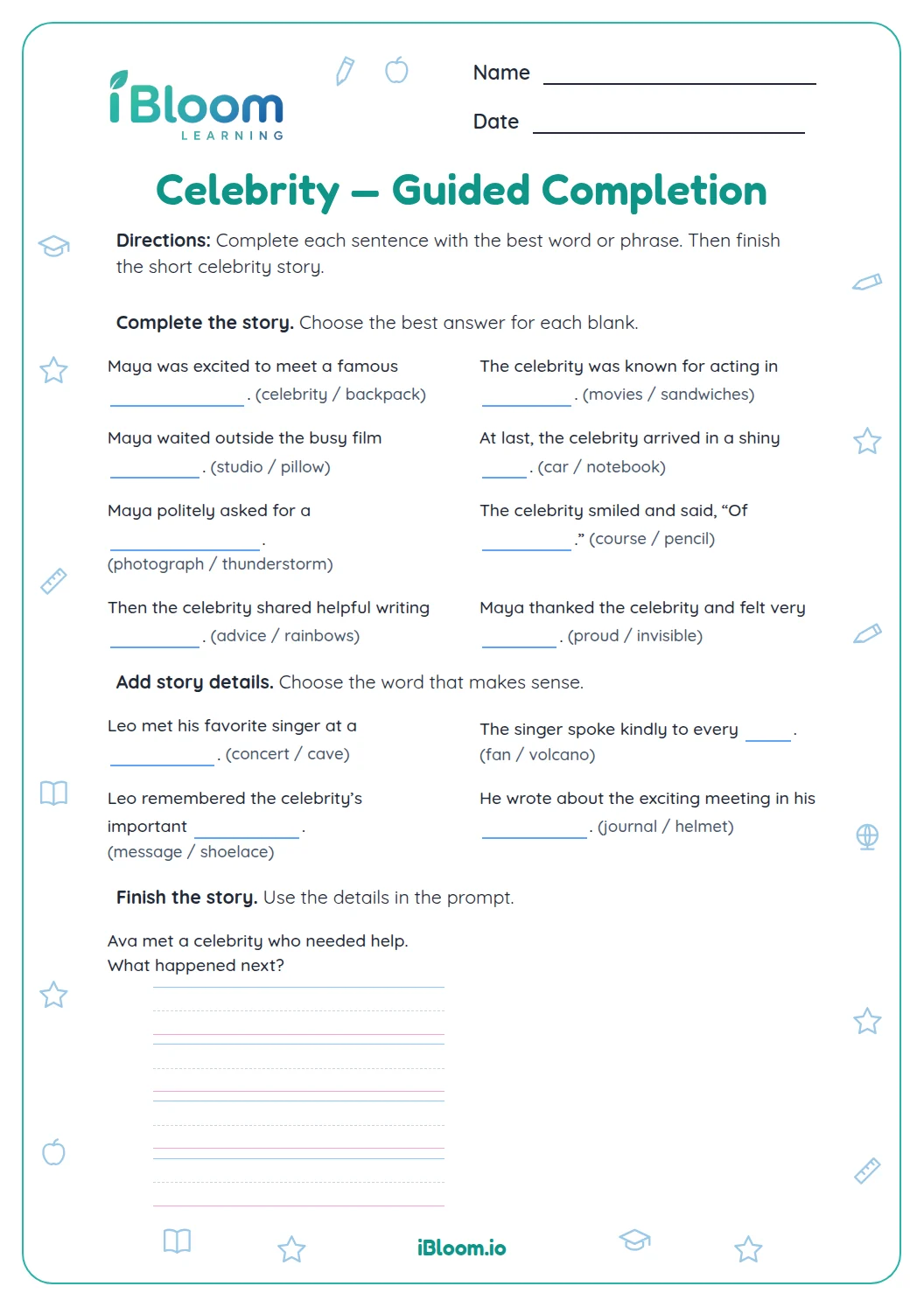

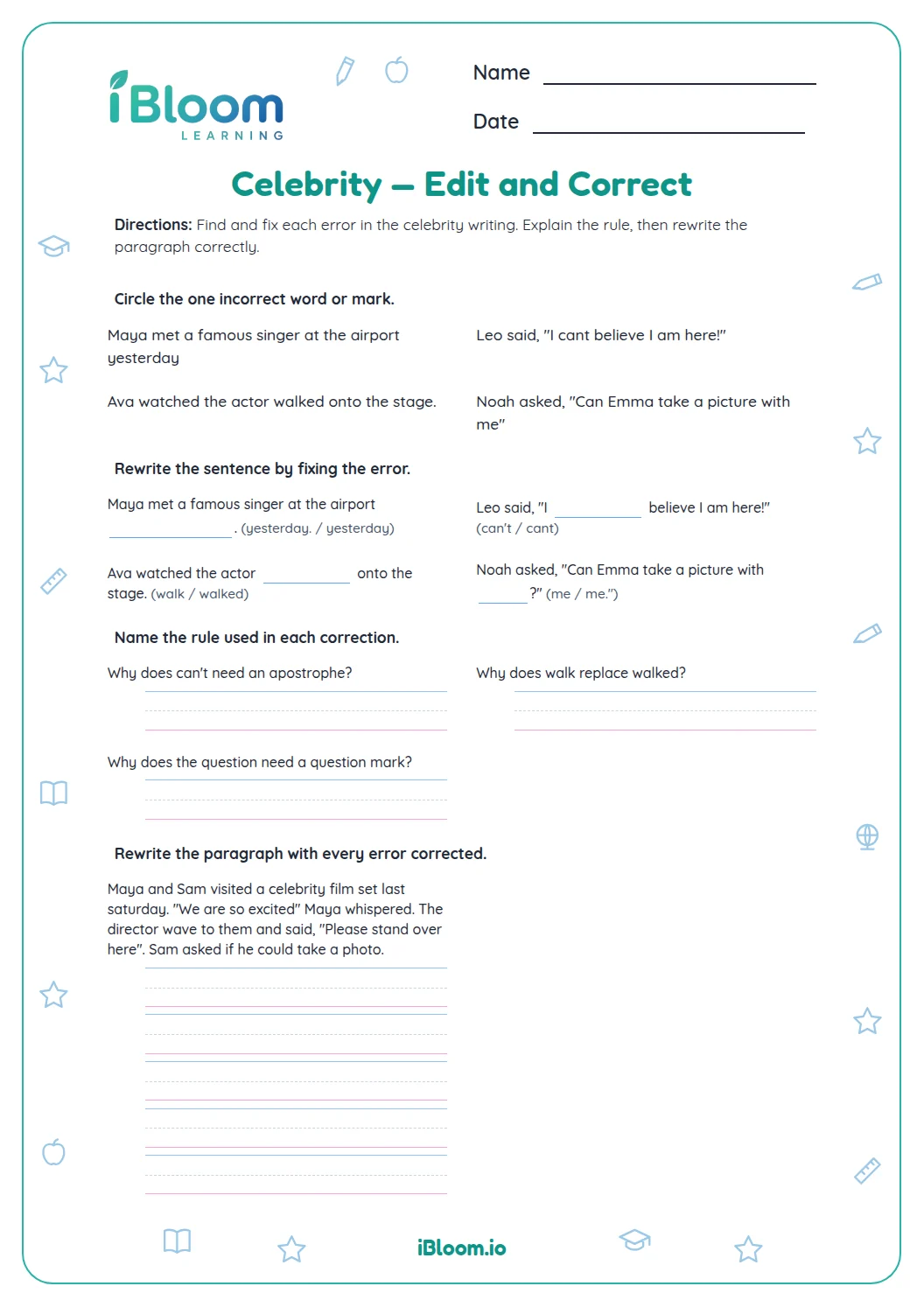
About this worksheet
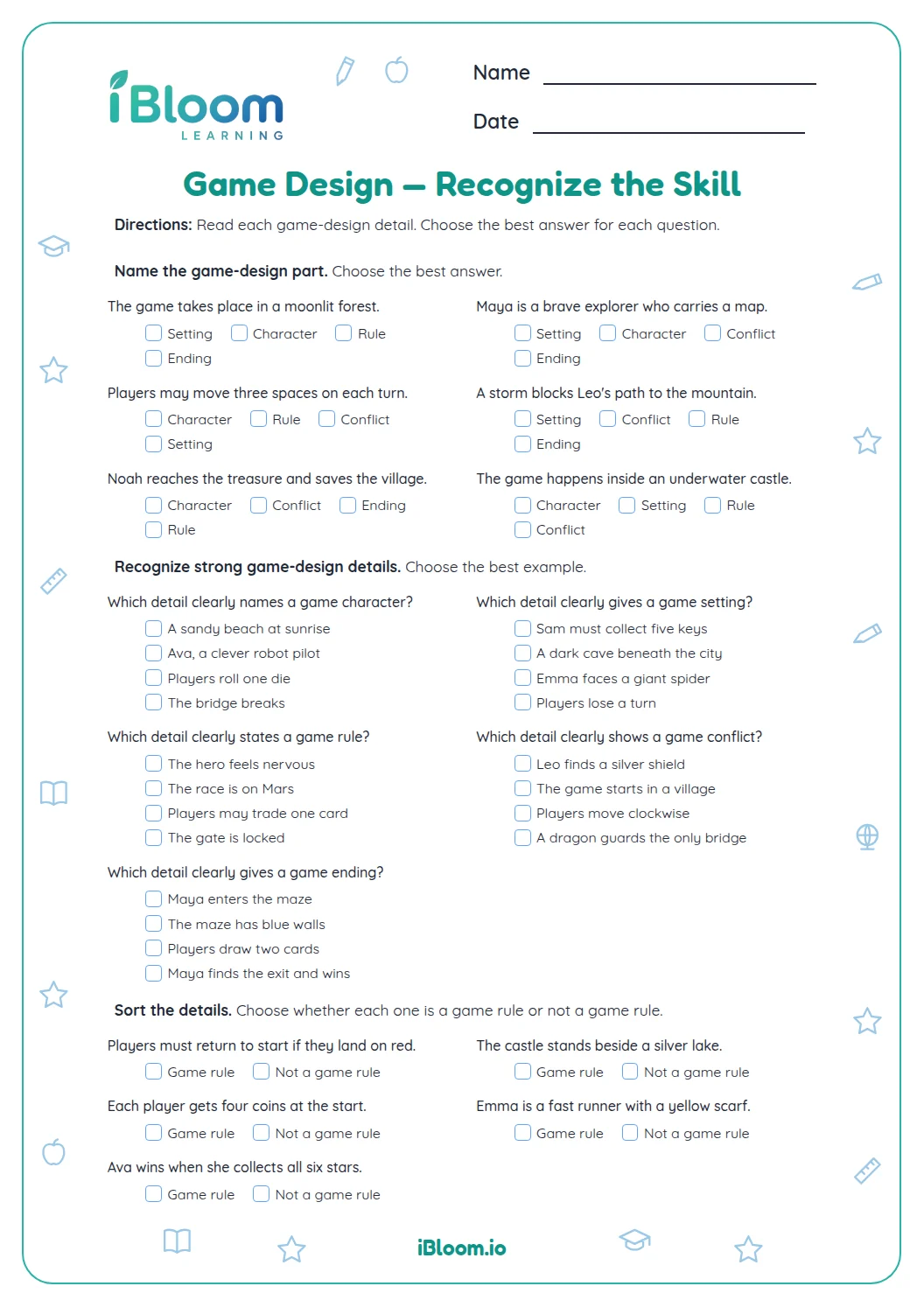
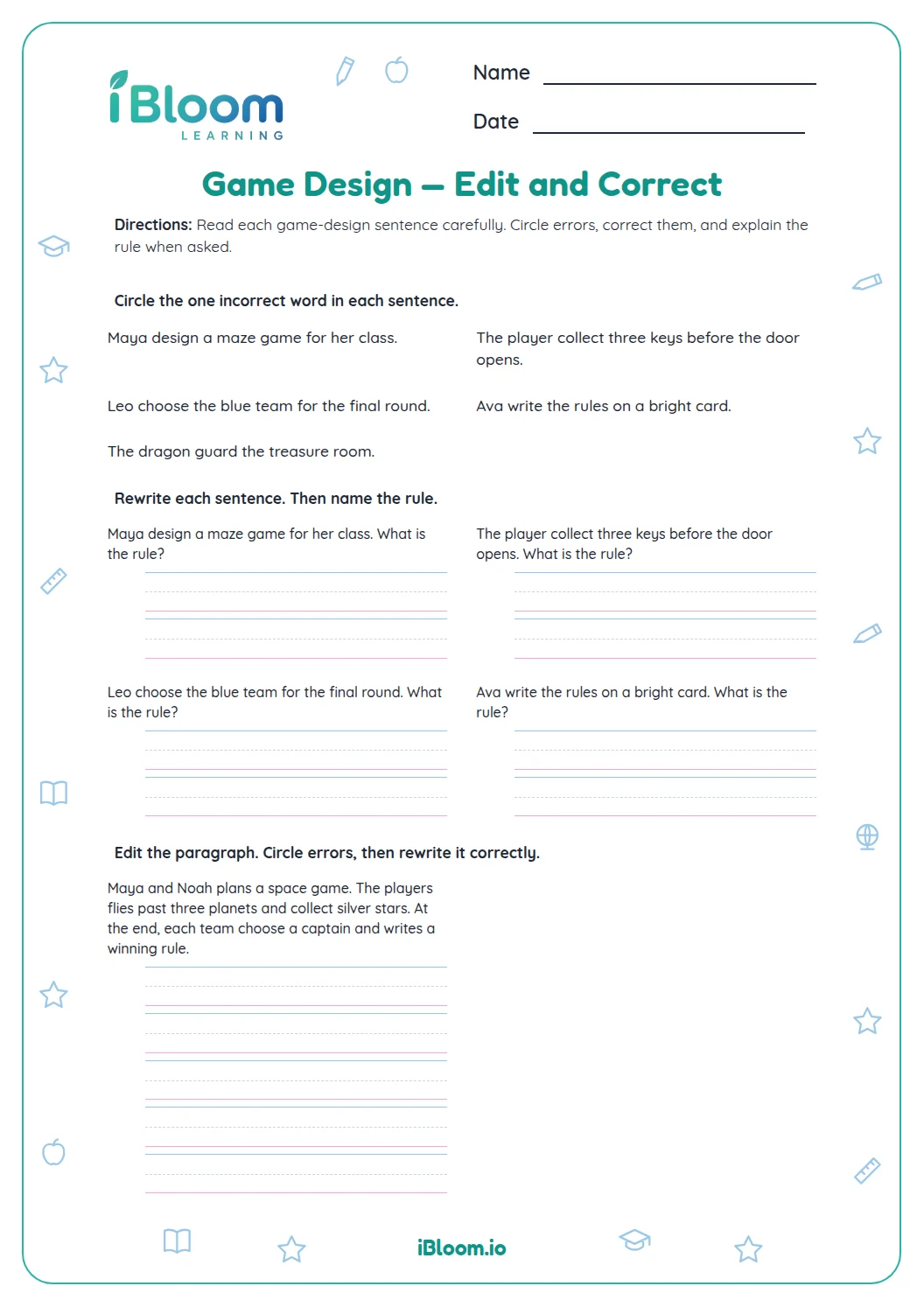
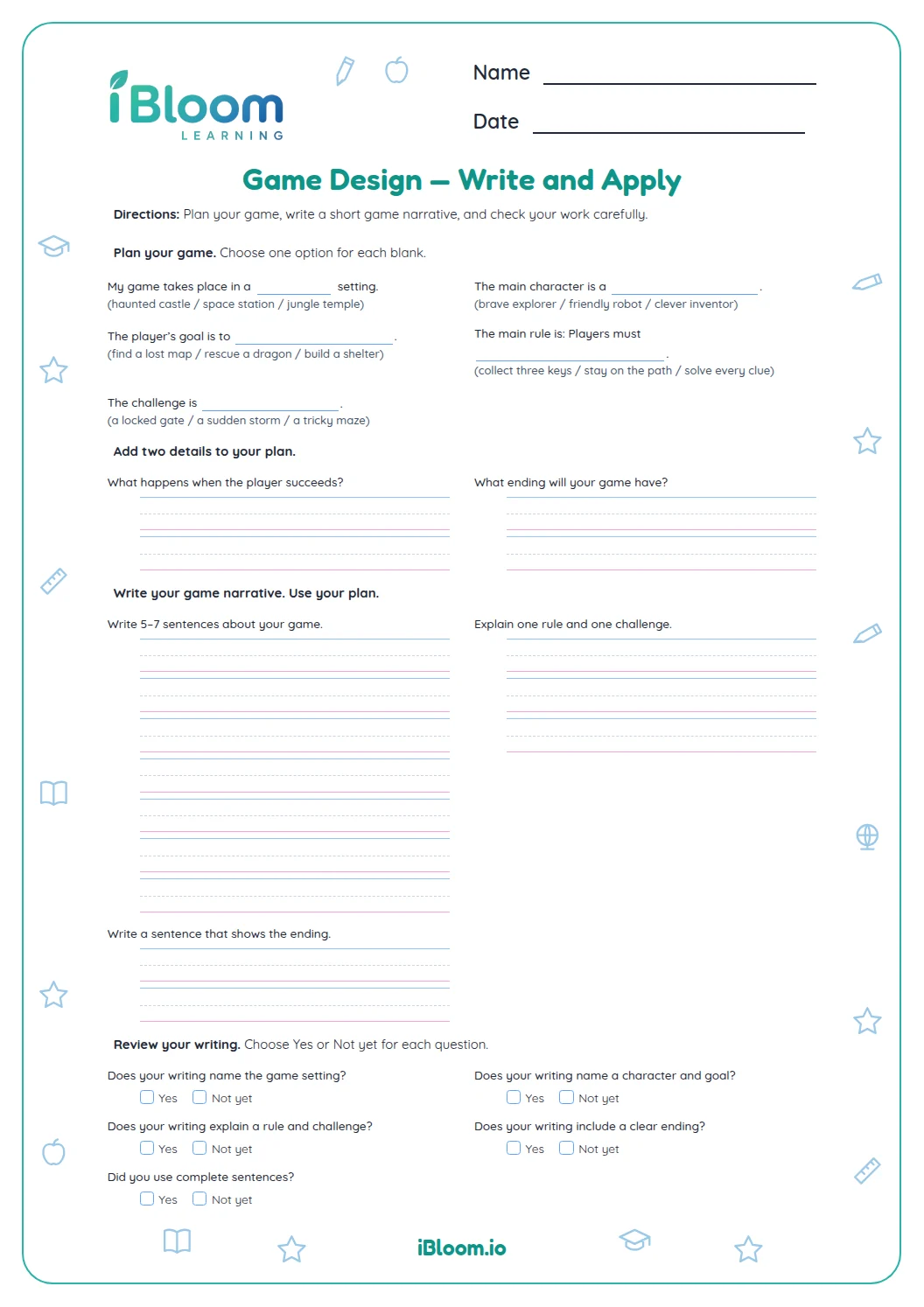
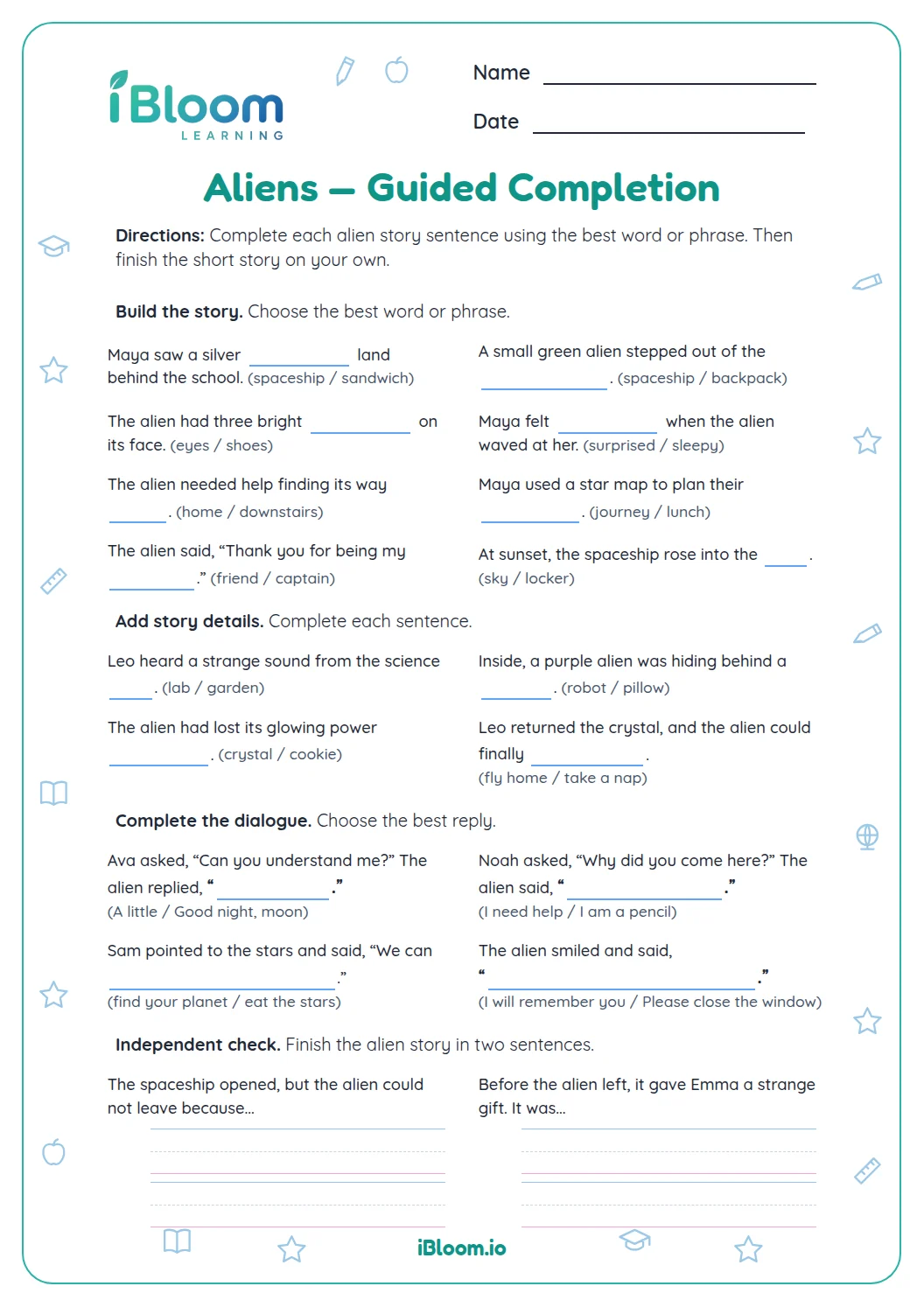
This Grade 4 game-design worksheet guides students through a short narrative: identify story elements, plan a hero’s goal and obstacle, then write a mini-scene with action, dialogue, and a resolution. It contains 14 questions in three parts and a separate answer key with sample responses. The writing tasks practice organizing events and developing characters under CCSS W.4.3.
Aligned to W.4.3
What will students practice?
Part A checks how a narrative begins, establishes a setting, introduces a problem, signals an event, and resolves the conflict. Part B turns those elements into a plan for a game story. In Part C, students draft five sentences using that plan.
The answer key includes sample responses for open-ended prompts. Students may write different answers if they form complete sentences and address each prompt.
- Part A: Build a Story (5 choices)
- Part B: Plan the Game Story (4 responses)
- Part C: Draft a Mini Scene (5 sentences)
How can students work through an example?
Question 3 asks which sentence shows a problem. A key falling through a floor crack creates an obstacle the character must address; a sentence about smiling at the start does not.
- 1Question 3: Which sentence shows a problem?
- 2The final key fell through a floor crack.
- 3The character now has something to solve.
How can an adult support practice?
A story plan gives the hero a goal and an obstacle. Then connect actions so the events move toward solving that problem.
In the mini-scene, check that each sentence does the job in its prompt: introduce the designer, show an action, resolve a problem, include revealing dialogue, or show a feeling.
What can students do next?
Use a related worksheet to practice the next small step, then return to this page later for a quick review.
How to use this worksheet
- 1Read the one-sentence directions together.
- 2Complete the first item and explain the clue used.
- 3Work through each part in order.
- 4Check answers with the key after finishing a part.
- 5Redo any missed item and say what changed.
Common mistakes and quick fixes
The mistake
Answering before reading the whole prompt.
The fix
Read it once for meaning, then look for the specific clue.
The mistake
Using a familiar pattern without checking every detail.
The fix
Compare the answer with the prompt one piece at a time.
The mistake
Treating a missed answer as a reason to stop.
The fix
Use the key to find the rule, then try the item again without looking.
Common Core alignment
This page supports the listed Common Core skill through its printed practice.
Develop a narrative with a clear sequence and descriptive details.
On this sheet: Students plan and compose a game-design narrative with characters, events, and a resolution.
Show the official wordingHide the official wording
Write narratives to develop real or imagined experiences or events using effective technique, descriptive details, and clear event sequences.
What to practice next
Make more practice
Further reading
Questions parents and teachers ask
How many questions are on this worksheet?
There are 14 questions in three parts: five choices about story elements, four short planning responses, and five sentence-writing prompts. The planning and writing questions invite different answers; the key provides samples rather than one required story. Students use a game-design setting throughout.
Can students use the answer key while working?
Students can draft their responses before looking at the key. The key gives sample answers for planning and writing prompts, so compare each response with the prompt: it should include the requested story detail and be a complete, clear sentence when asked. Similar answers may also work.
How long should this worksheet take?
Plan for about 25 minutes because the page includes nine written planning and sentence prompts in addition to five choices. Students may take longer to develop a setting, character goal, obstacle, and resolution that fit together into a coherent game story.
What if a student misses an item?
Plan for about 25 minutes because the page includes nine written planning and sentence prompts in addition to five choices. Students may take longer to develop a setting, character goal, obstacle, and resolution that fit together into a coherent game story.
Can I use the worksheet in a small group?
Students can plan independently, then share one sentence with a partner and check whether it fits the assigned story role. A teacher can use the sample key to discuss how different goals, obstacles, and resolutions can all work together in a game-design narrative.