




About this worksheet
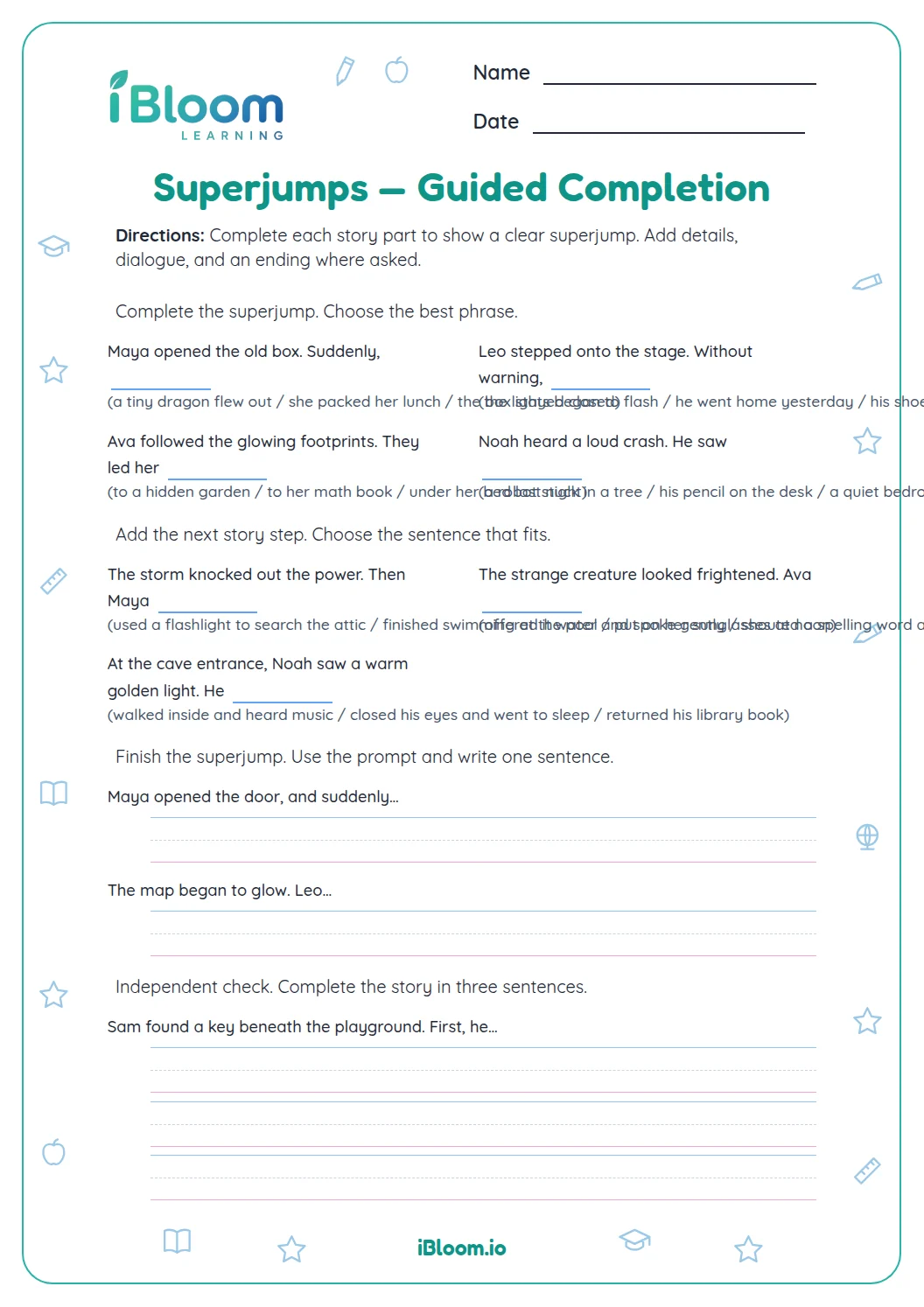
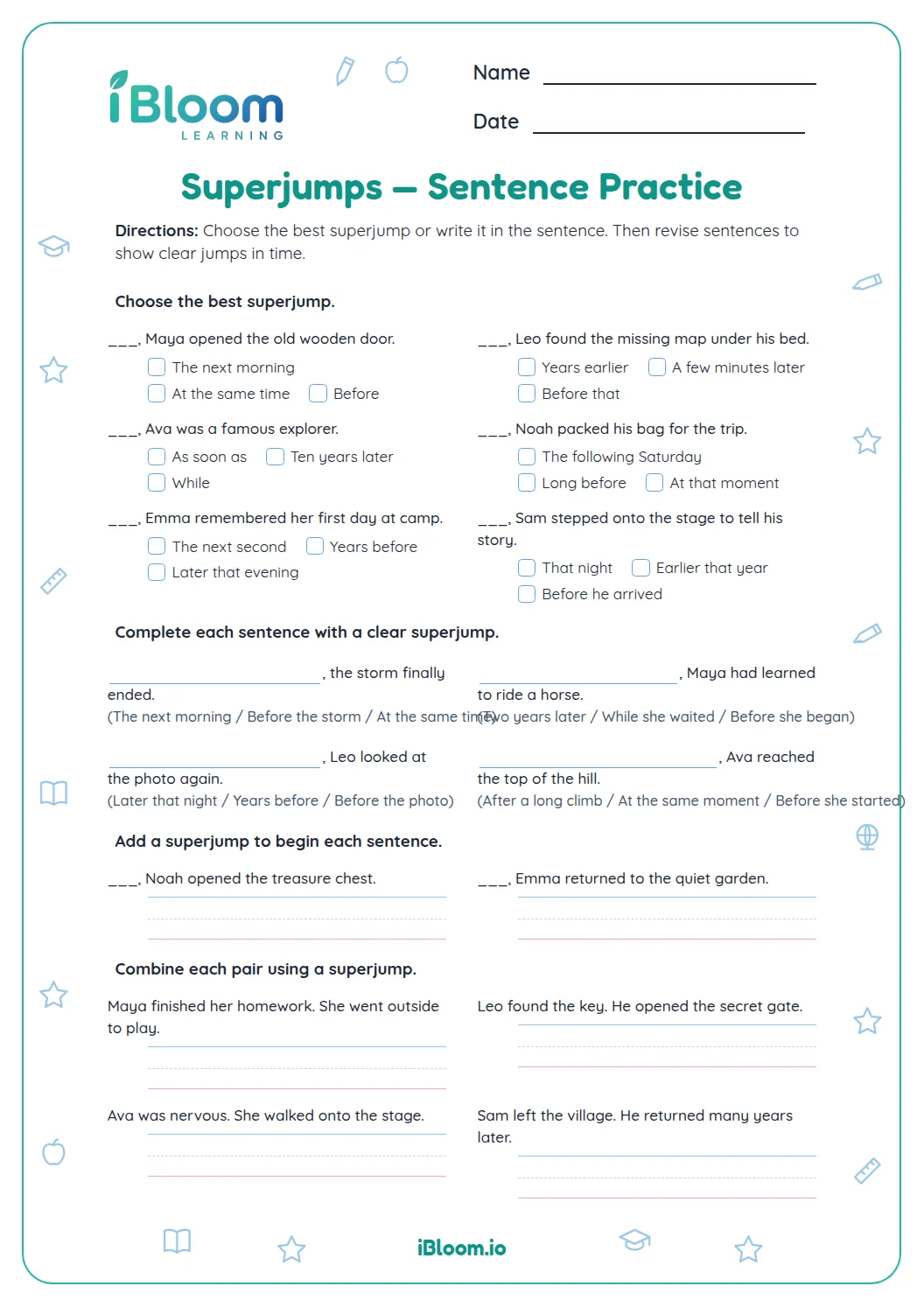
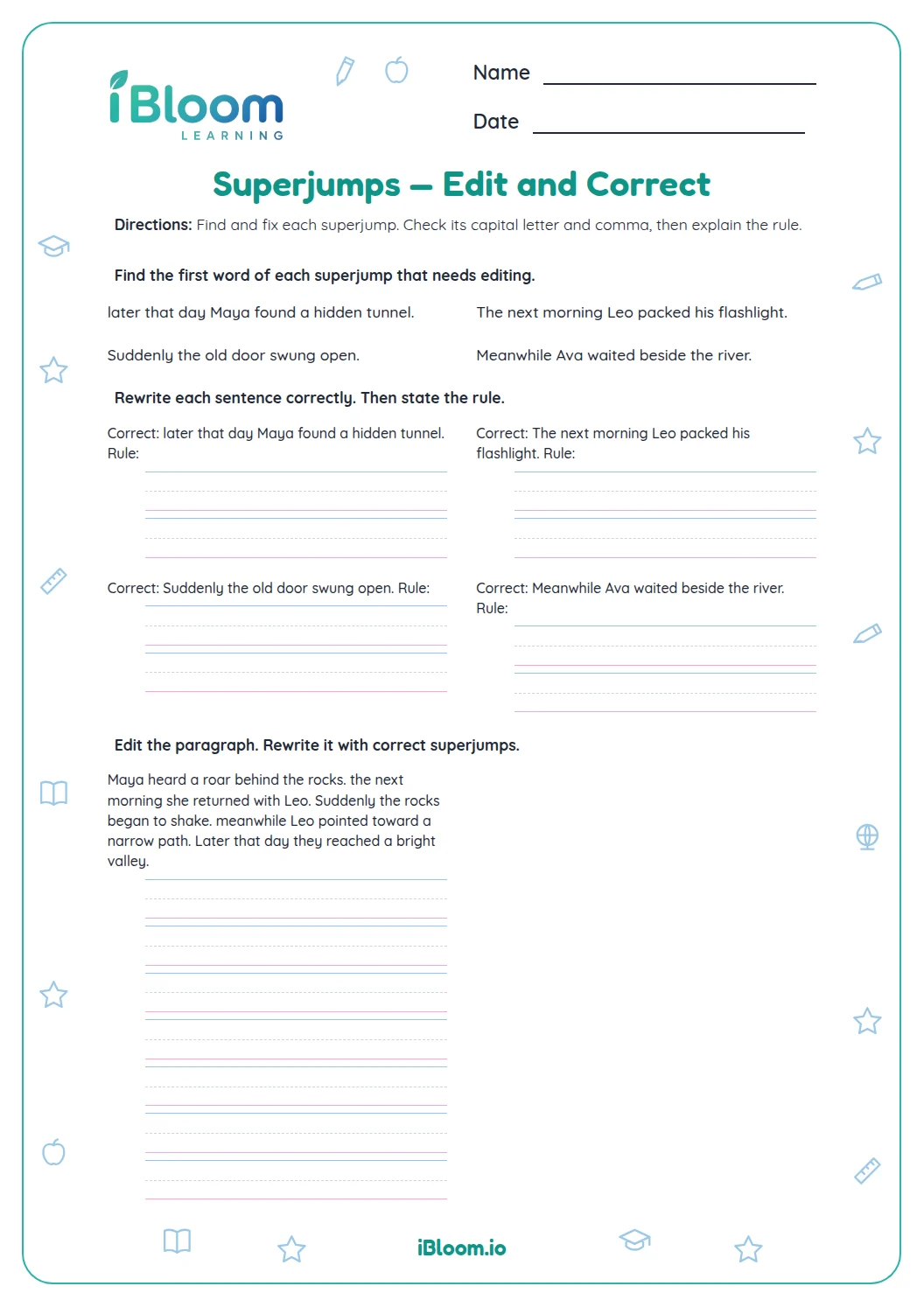
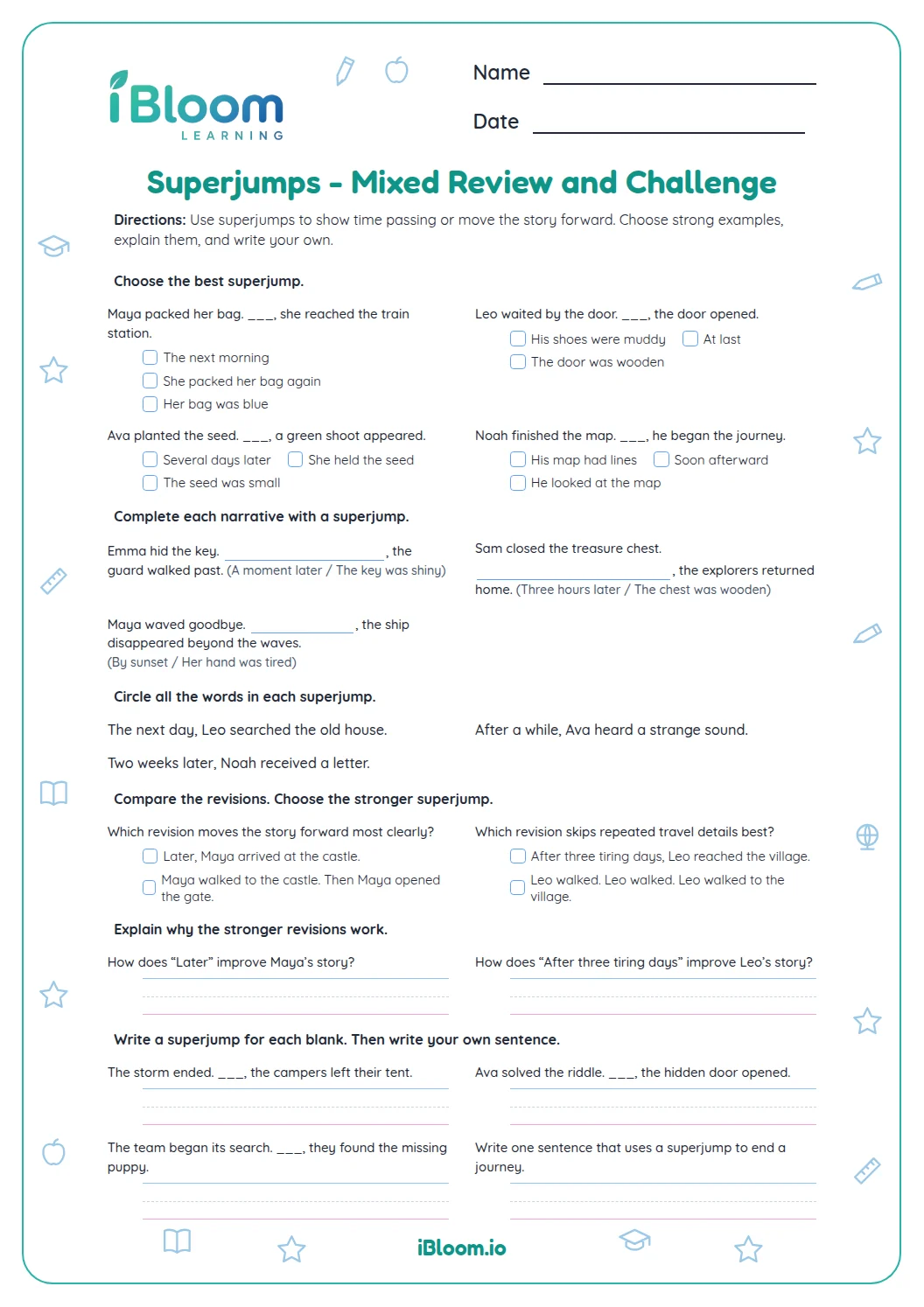
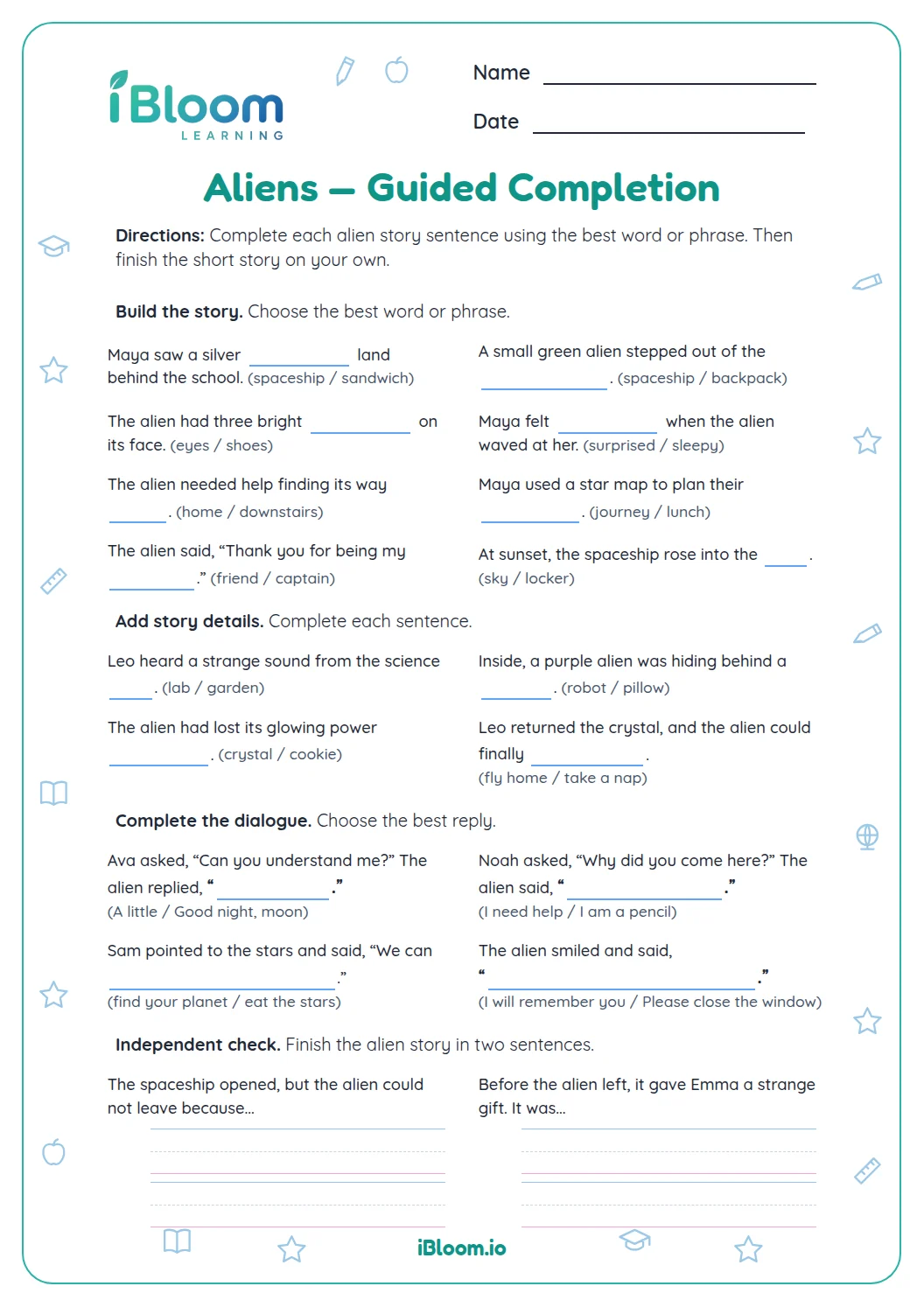
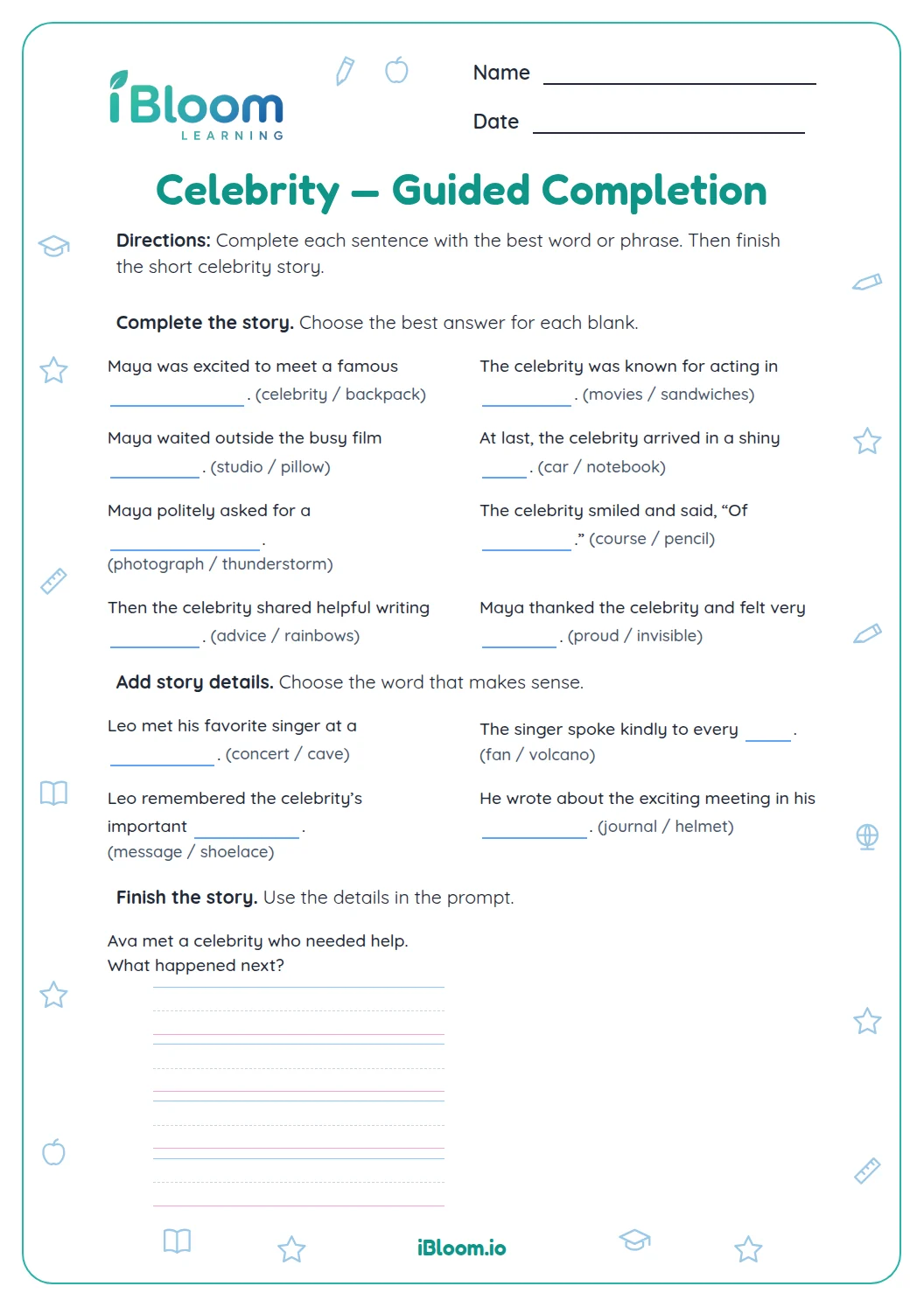
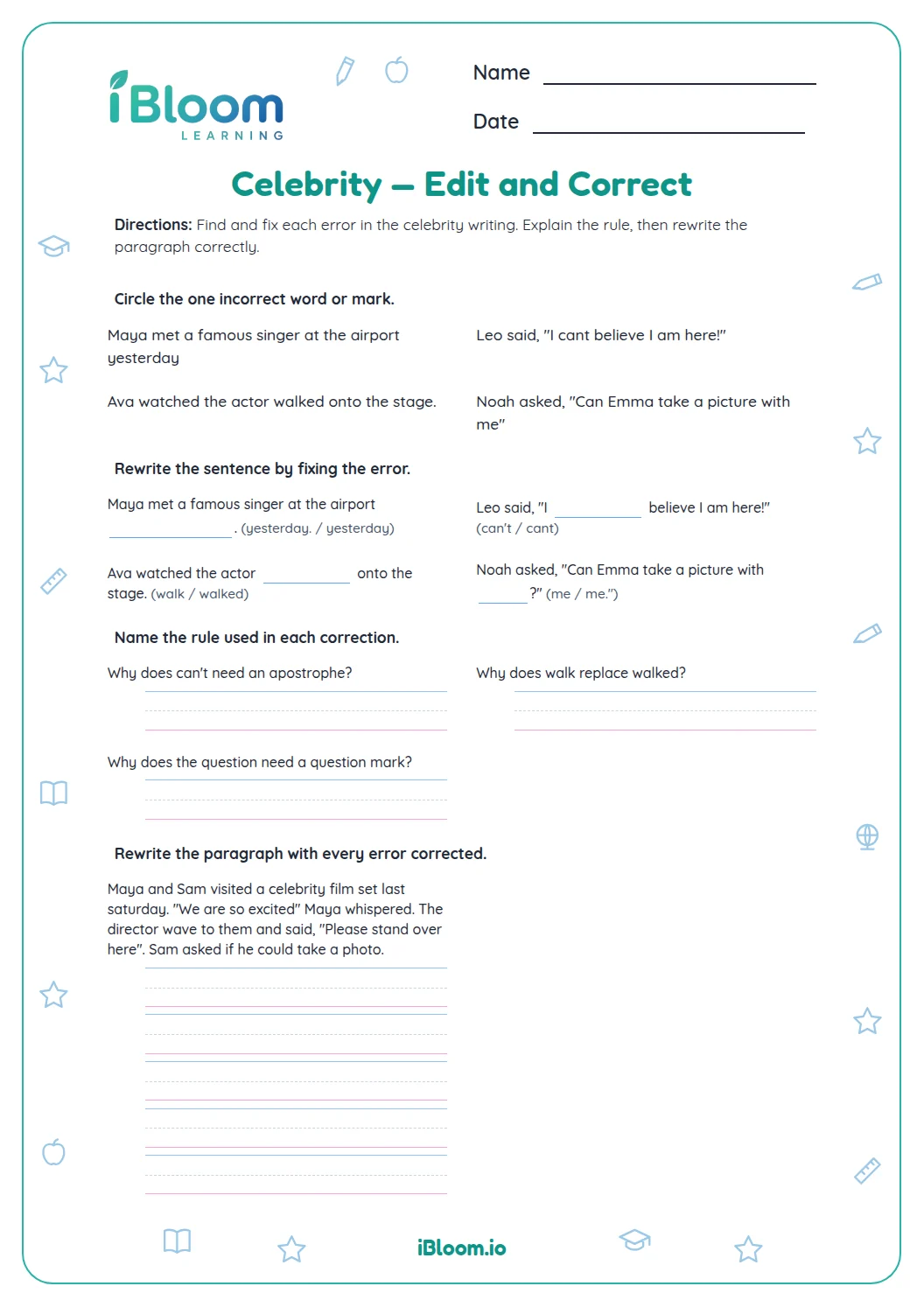
This Grade 4 printable uses 14 Superjumps narrative prompts to help children shape story moments. The tasks include openings, a decision, dialogue, a problem, a rescue, and endings; one prompt asks writers to create a tiny adventure in three sentences. The answer key offers a brief sample response for each prompt, while children can invent different characters and events. The writing practices clear event sequences and descriptive details (CCSS W.4.3).
Aligned to W.4.3
What makes a story moment clear?
A clear narrative moment gives the reader a character, a setting, and an action. A complication or decision gives that moment somewhere to go.
How can a prompt turn into a story?
Choose a character and place, then decide what changes. Add a specific action or line of dialogue so the reader can picture the event.
- 1Prompt: A child finds a tiny door.
- 2Character and setting: Mina, at the back of a closet
- 3Action: She opens it and hears a bell.
- 4Opening: At the back of the closet, Mina found a tiny blue door.
What can a writer check when revising?
Reread to see whether the character, place, and action are clear. Then check that details support the event and that an ending finishes the moment or problem when the prompt asks for one.
How to use this worksheet
- 1Read the prompt and picture its situation.
- 2Choose a character and a setting.
- 3Write a complete story moment with an action or detail.
- 4For longer prompts, connect the beginning, middle, and ending.
- 5Use the sample response as one possible way to begin.
Common mistakes and quick fixes
The mistake
Starting with action but never naming who acts.
The fix
Name the character near the action so the reader knows who is acting.
The mistake
Adding details that do not help the reader follow the event.
The fix
Keep details that help show the setting, goal, problem, or next event.
The mistake
Ending before the character’s problem or goal becomes clear.
The fix
Show what the character wants or what changes before ending the moment.
Common Core alignment
Write a narrative with clear events, details, and an ending.
On this sheet: Write narratives to develop real or imagined experiences or events using effective technique, descriptive details, and clear event sequences.
Show the official wordingHide the official wording
Write narratives to develop real or imagined experiences or events using effective technique, descriptive details, and clear event sequences.
What to practice next
Make more practice
Further reading
Questions parents and teachers ask
How many writing prompts are included?
There are 14 writing tasks: openings, dialogue, decisions, complications, problem-solving scenes, endings, and one revision response. The last item asks writers to clarify when and where a character jumps by adding details to a sentence. The other thirteen tasks build story moments through characters, events, and endings.
Are the sample responses the only correct answers?
No. Each key entry is one brief model, not required wording. A different response can work when it addresses the prompt and gives the reader a clear story moment with relevant details. The prompts allow many valid ideas as long as the response follows the situation it gives.
What makes a story moment clear?
A reader needs to know who is acting and where the moment takes place. A specific action, decision, or problem helps the scene move forward. Some prompts also invite dialogue or an ending that shows what changed. A quick plan naming the character and place can help organize the action before writing.
Can a child complete one prompt at a time?
Yes. The prompts work one at a time. A child can choose a prompt, write the requested moment in complete sentences, and reread to check that the character’s action and the event are easy to follow. After a first draft, rereading for character, place, and action gives the writer a concrete revision check.
What does the answer key contain?
It gives a short sample response for each of the 14 prompts. The examples model one way to respond, including a character action or story event, while leaving room for children to make their own choices. The short models keep the focus on responding to the prompt rather than copying a long passage.
How can an adult help without writing the story?
Ask what the character wants, where the event happens, and what changes next. Those questions can help a child plan details while keeping the story in the child’s own words. These questions can guide planning while leaving the child responsible for the characters and events.