







About this worksheet
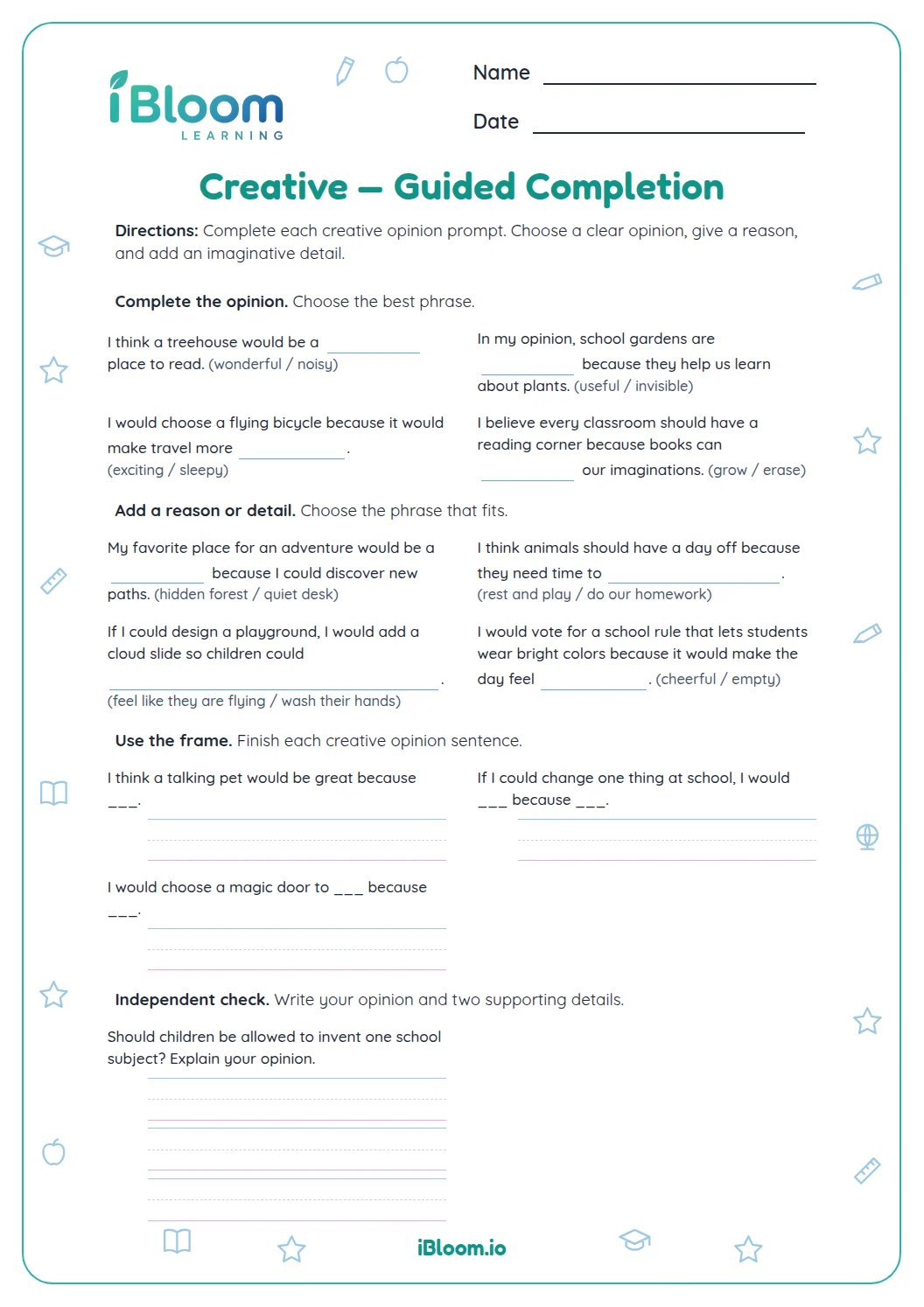
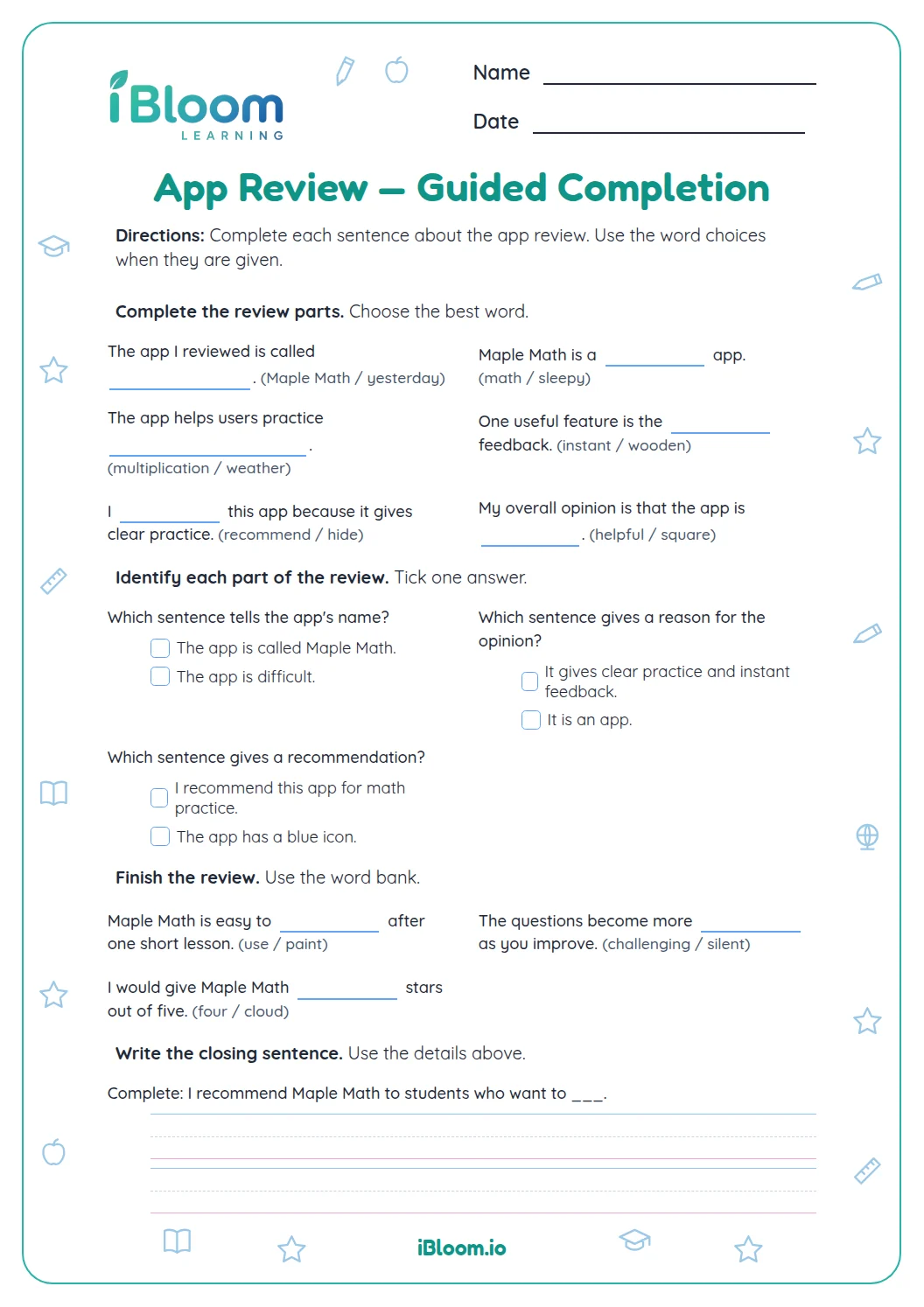
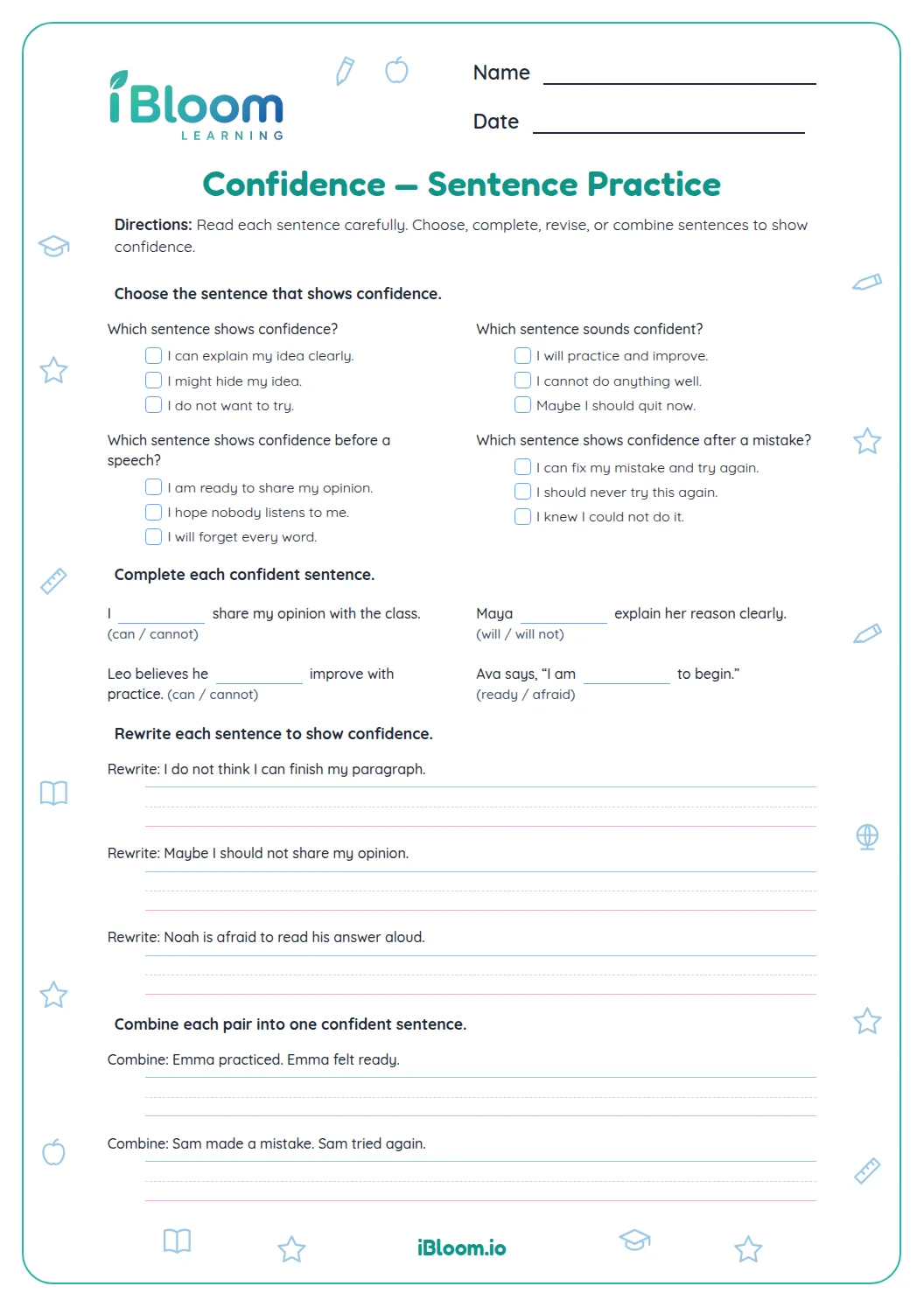
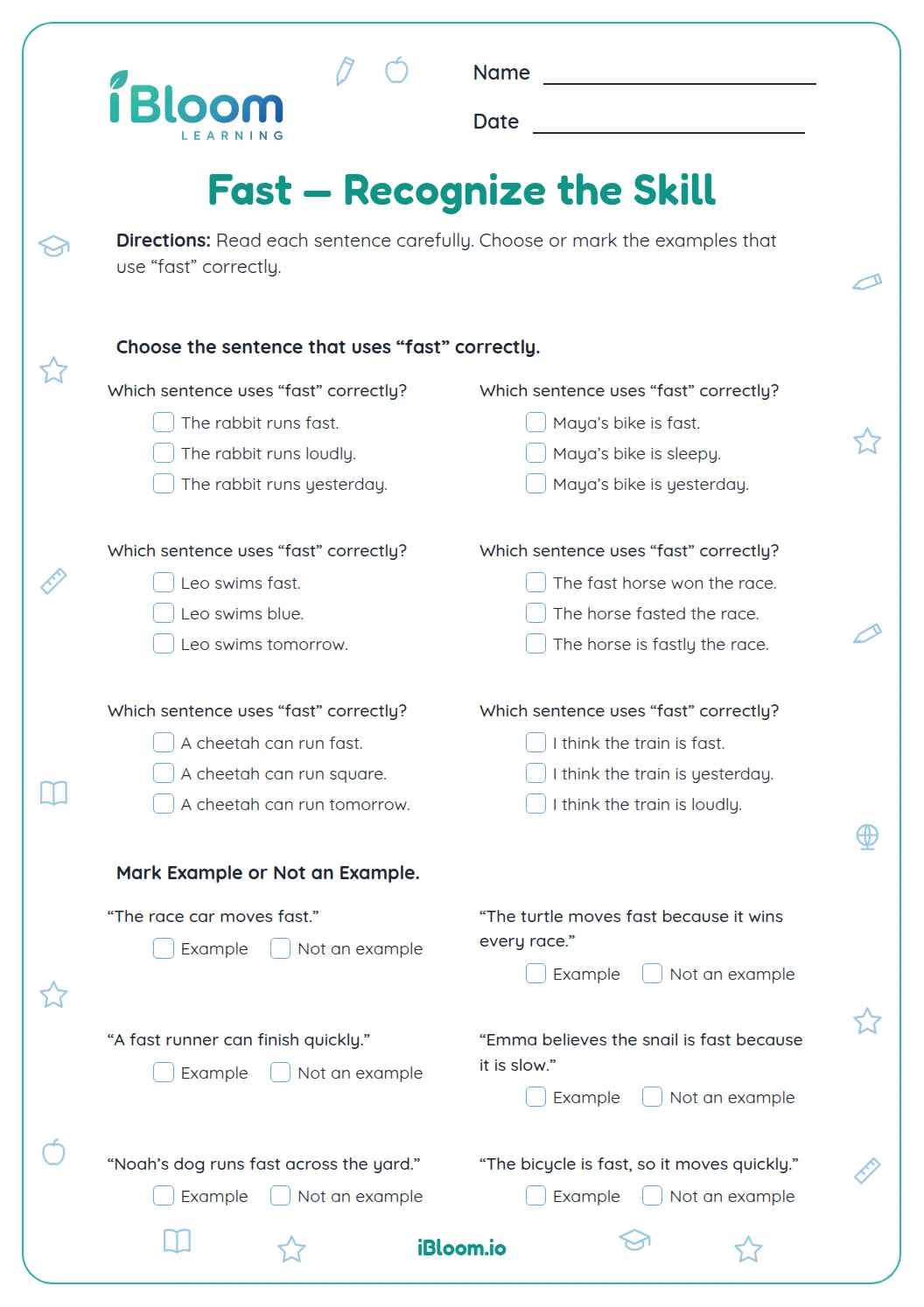
This Grade 4 printable pairs creative opinion statements with short editing practice. In Part A, students identify opinions, choose supporting reasons, and recognize transitions and conclusions. In Part B, they complete six sentences with capitals or end punctuation. The answer key gives the choices and completed edits. The examples use ideas such as a moon library, a class mural, and a talking robot.
Aligned to L.4.2
How can a reader find the opinion?
An opinion tells what a writer thinks should happen or what choice the writer favors. Part A asks students to distinguish complete opinion statements from facts and details.
- 11) “A garden would make school more fun.” → opinion
- 2It states a judgment about what would make school better.
What makes a reason useful?
A useful reason explains why the writer holds the opinion. “A garden would make science lessons hands-on” supports the claim that a school garden would help students.
Which conventions should students check?
Begin each sentence with a capital letter and finish it with suitable end punctuation. Keep the original idea while correcting the sentence.
How to use this worksheet
- 1Read the whole sentence before choosing or editing.
- 2Identify whether it states an opinion, a reason, or a fact.
- 3For a correction, keep the writer’s meaning.
- 4Check the first letter and sentence-ending punctuation.
- 5Compare your edits with the answer key and discuss equivalent wording.
Common mistakes and quick fixes
The mistake
Choosing a fact when asked for an opinion.
The fix
Look for a statement that tells what someone thinks should happen.
The mistake
Adding an unrelated detail instead of a reason.
The fix
Make sure the reason explains why the claim is a good choice.
The mistake
Fixing capitalization but leaving two sentences joined without punctuation.
The fix
Read the corrected sentence aloud and add a period where one complete thought ends.
Common Core alignment
The sentence-editing questions practice capitalization and punctuation.
Use capitalization and punctuation when editing opinion sentences.
On this sheet: Students correct sentence capitalization and end punctuation in opinion writing.
Show the official wordingHide the official wording
Demonstrate command of the conventions of standard English capitalization, punctuation, and spelling when writing.
What to practice next
Make more practice
Further reading
Questions parents and teachers ask
What does an opinion sentence do?
An opinion sentence states what someone thinks, recommends, or prefers. On this sheet, “A creative garden would make school more exciting” expresses a judgment, while “The garden is at school” gives a location. Students identify the full claim rather than one descriptive word.
What makes a detail support an opinion?
A supporting detail gives a reason that helps explain the writer’s view. Making parade floats together supports the idea of holding an art parade because it describes a shared activity. A date by itself does not explain why the parade is a good choice.
Which sentence conventions do students edit?
The six completion items focus on capital letters at the start of sentences and end punctuation. Students choose an appropriately capitalized starter or add the missing period, while keeping each creative idea intact. The examples keep the topics familiar while giving students different opinions to evaluate.
How many questions are on this worksheet?
There are 14 questions in two parts. Part A has eight choices about opinions, reasons, transitions, and conclusions. Part B has six short sentence edits. The separate two-page key lists the choices and completed edits. The support detail should explain why the writer favors the choice, not just add a time or place.
How should I use the answer key?
Check the eight selected answers against the key, then compare each sentence edit. For the fill-ins, look for a capitalized sentence beginning or the correct period. Ask the student to read the completed sentence aloud to confirm it makes sense.