





About this worksheet
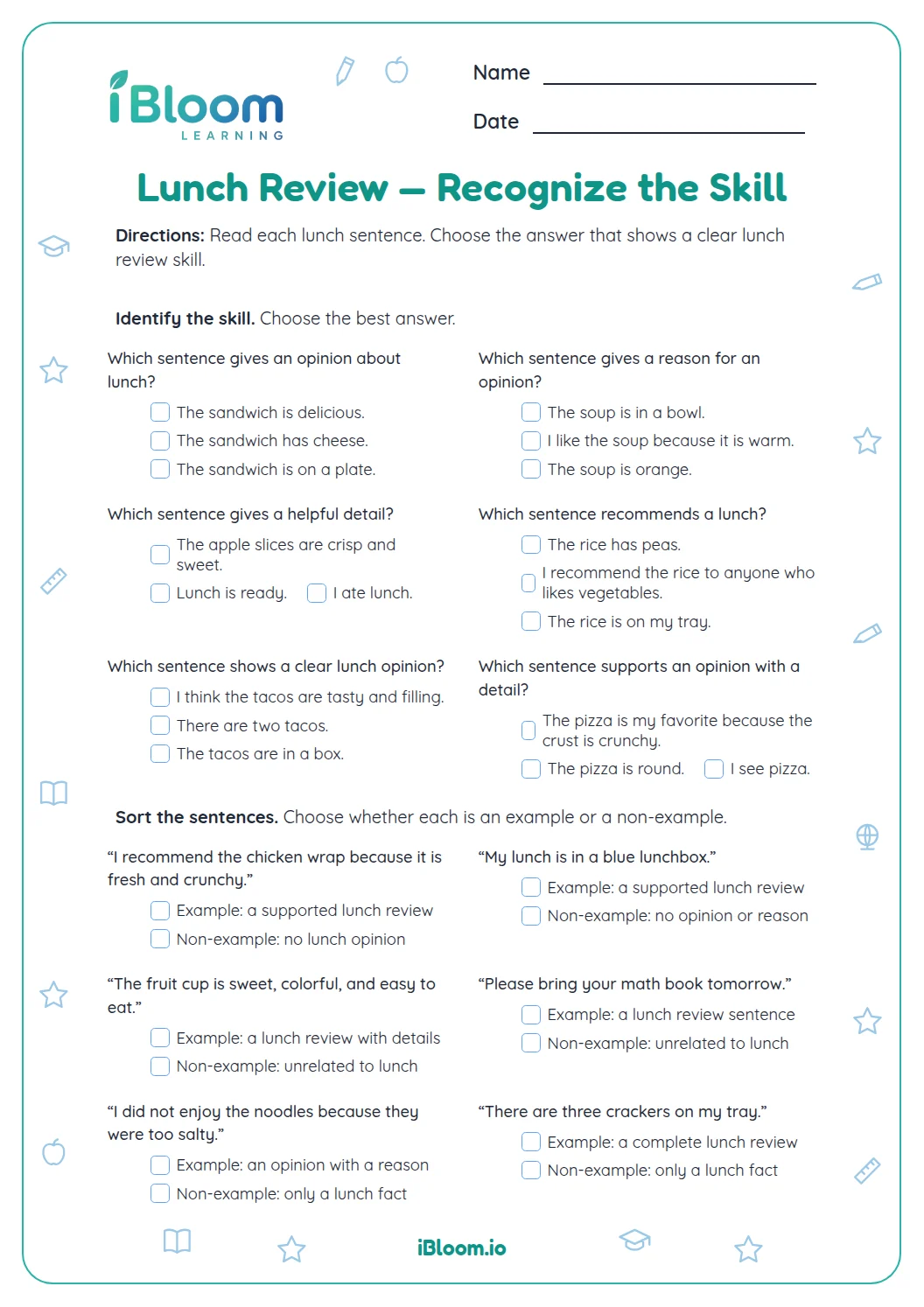
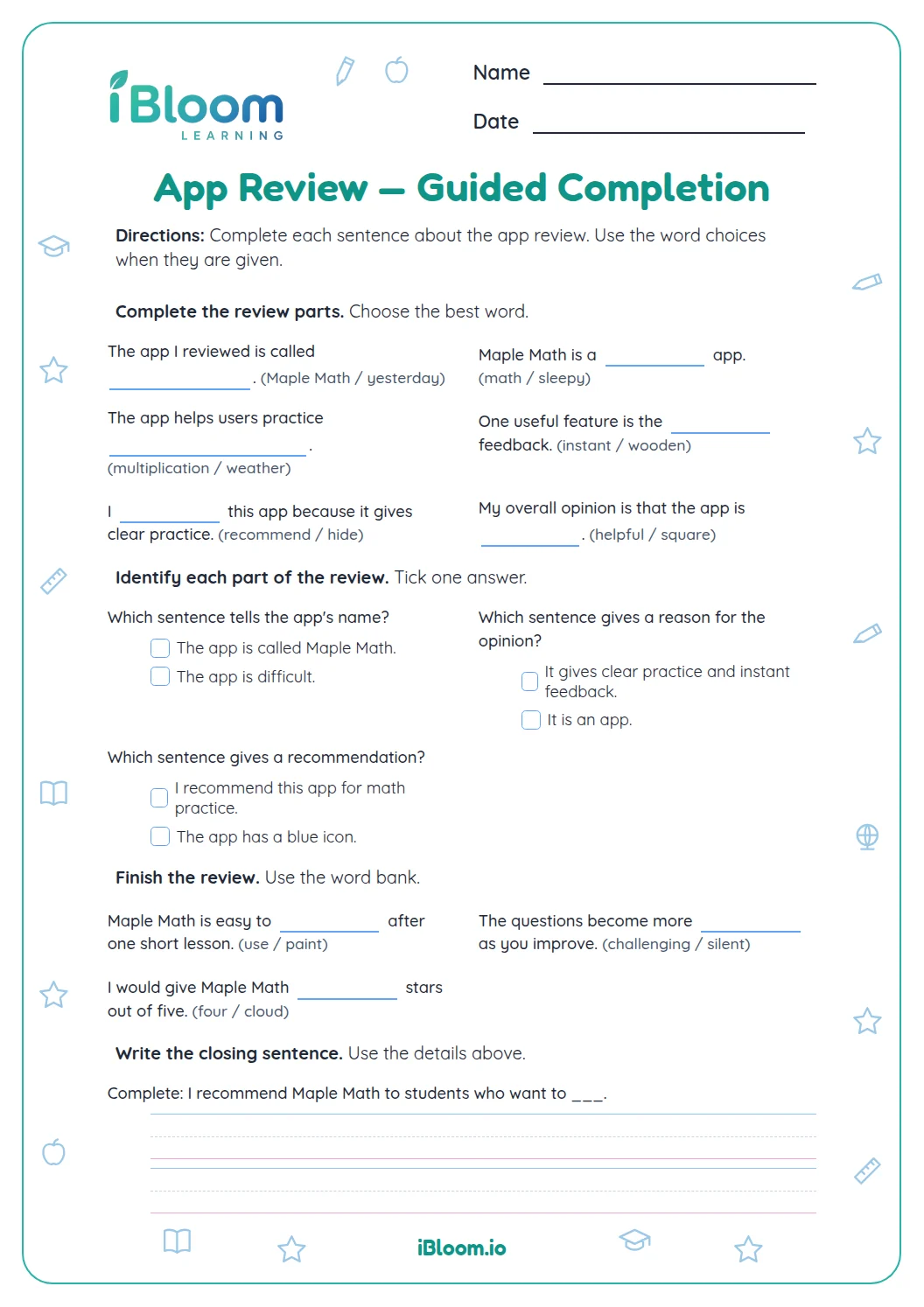
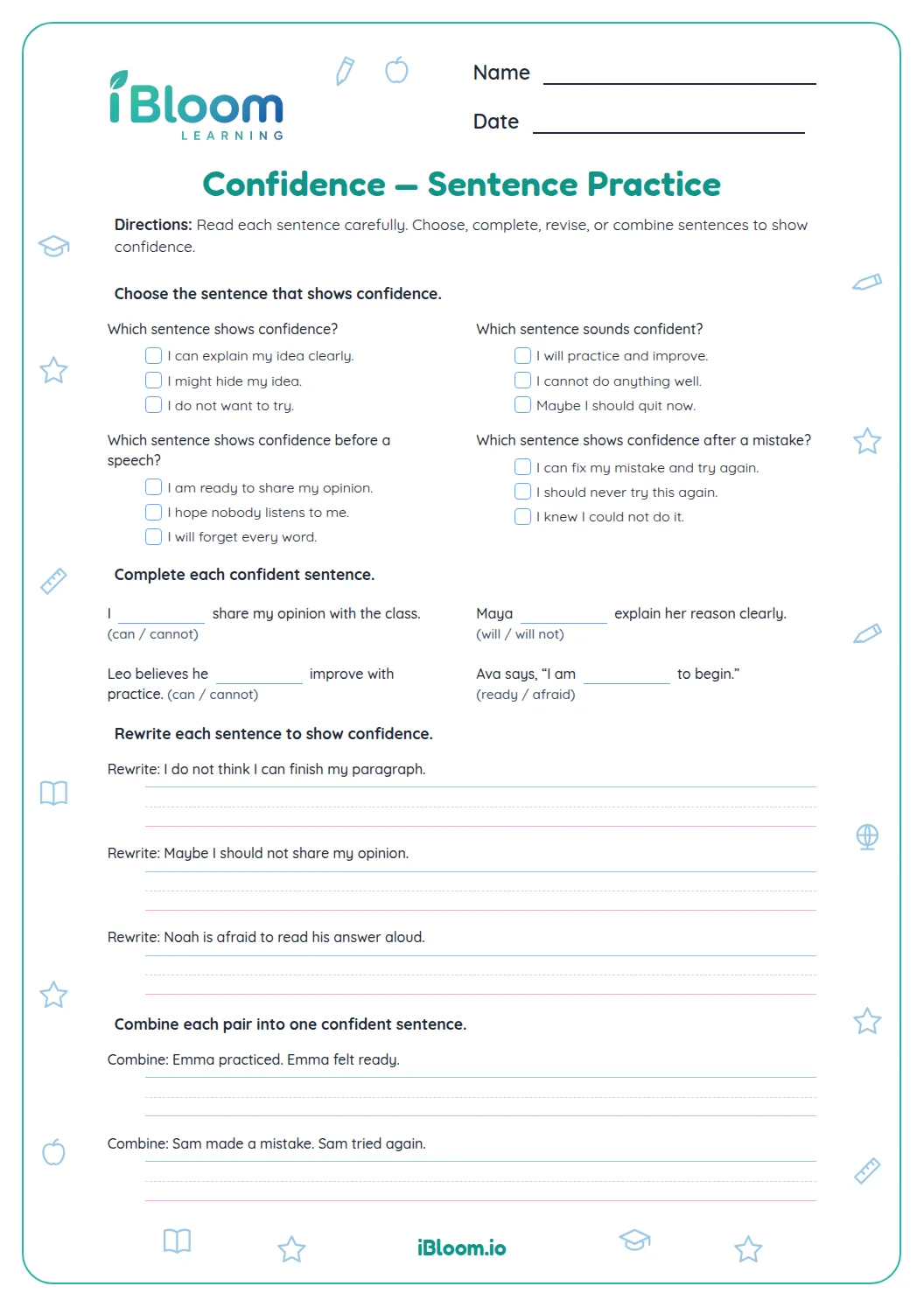
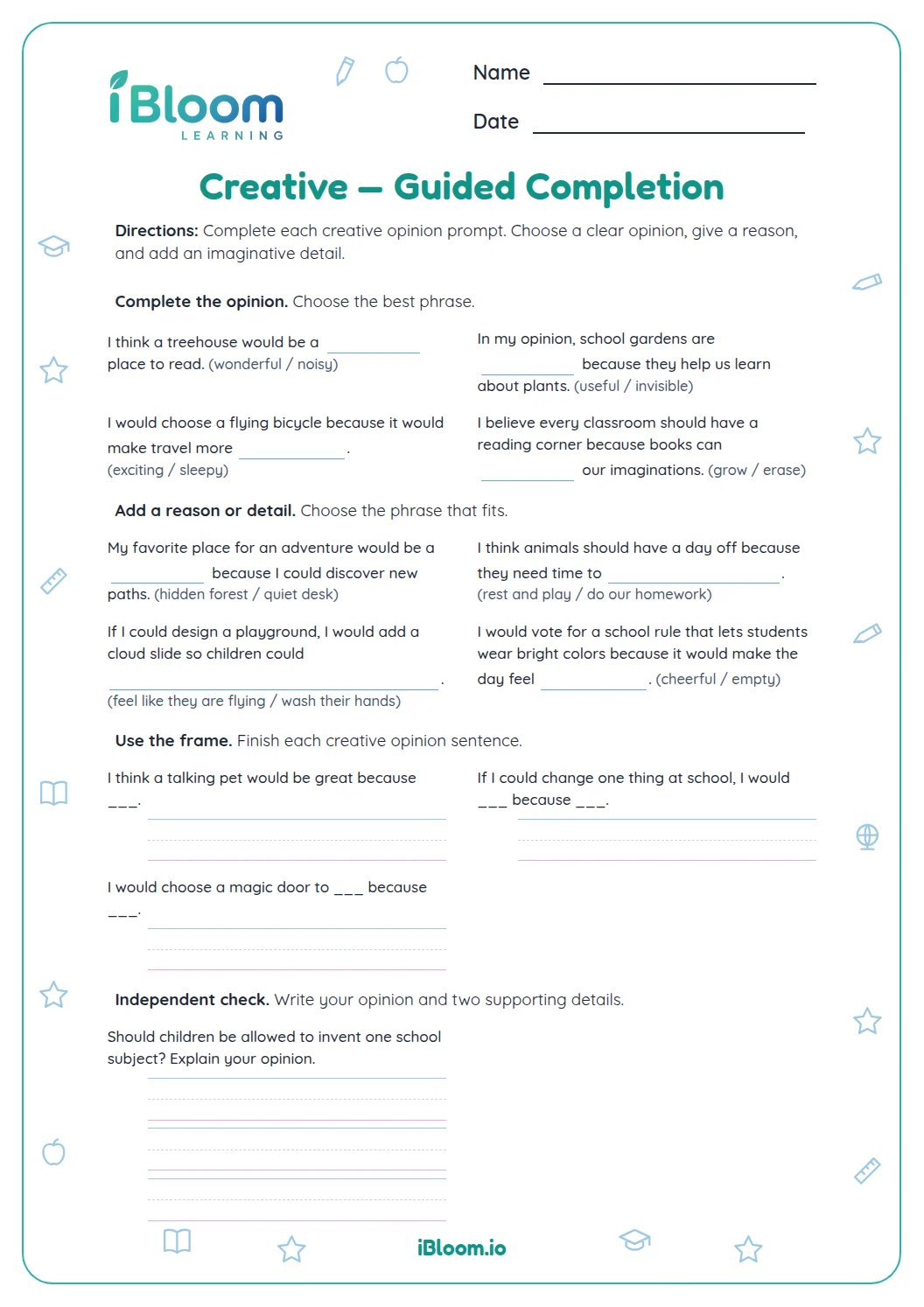
This Grade 4 lunch review worksheet helps children tell opinions from facts, choose reasons that support a food preference, and revise review sentences. Its 15 questions include multiple-choice items and short responses about reasons, details, contrasts, and kind suggestions. A separate answer key gives the selected answers and sample responses. The practice aligns with Common Core W.4.1, which calls for opinion writing supported by reasons and information.
Aligned to W.4.1
How can you tell an opinion from a fact?
An opinion states a preference or judgment; a fact can be checked. Part A asks children to identify each kind before building a review.
For example, “Soup is my favorite” expresses a preference, while “A lunch tray can hold food” can be checked.
- 1“Soup is my favorite” is an opinion because it tells what the writer prefers.
What makes a reason support an opinion?
A reason explains why the writer holds the opinion. A detail makes that reason more concrete, such as describing the food’s taste or texture.
In Part B, children add reasons and details, join ideas with because, and make a contrast with but.
How can feedback stay useful and kind?
Name a specific feature and suggest a change. “Rice is dry; add sauce” focuses on the food and offers a next step.
Part C asks children to select useful supporting details and respectful feedback.
How to use this worksheet
- 1Read each sentence and decide whether it states a preference or a checkable fact.
- 2For a review, name the food and state a clear opinion.
- 3Add a reason that explains the opinion, then include a concrete detail.
- 4Use because to connect a claim and reason, or but to show a contrast.
- 5Keep a suggestion focused on the food and make it specific.
Common mistakes and quick fixes
The mistake
Treating a preference as a fact
The fix
Ask whether the sentence can be checked or tells what someone likes.
The mistake
Adding a detail that does not explain the preference
The fix
Choose a reason connected to the food or experience.
The mistake
Giving feedback that insults the meal
The fix
Name one specific feature and suggest a respectful change.
Common Core alignment
This worksheet practices build a lunch opinion with a clear reason, a supporting detail, and respectful feedback.
Build a lunch opinion with a clear reason, a supporting detail, and respectful feedback.
On this sheet: Build a lunch opinion with a clear reason, a supporting detail, and respectful feedback.
Show the official wordingHide the official wording
Write opinion pieces on topics or texts, supporting a point of view with reasons and information.
What to practice next
Make more practice
Further reading
Questions parents and teachers ask
What does this lunch review worksheet practice?
It practices identifying opinions and facts, adding reasons and details, joining ideas, and giving respectful feedback. The 15 items use familiar lunch foods so children can focus on how a review is built. The answer key includes selected answers and sample responses for open-ended prompts.
How many questions and pages are included?
There are 15 questions in three parts: identifying opinions and facts, building a review, and choosing useful details. The printable includes three worksheet pages and three matching answer-key pages. You can print the worksheet pages for practice and keep the key nearby for checking.
What is one example of an opinion?
“Soup is my favorite” is an opinion because it states a preference. “A lunch tray can hold food” is a checkable statement. Part A asks children to distinguish those kinds of sentences before they write reasons for a food choice.
Can a child use a different answer from the key?
Yes, for prompts that ask for a reason, detail, or suggestion, a different answer can work if it follows the direction and supports the opinion. The printed key gives sample wording, not the only possible wording, for those open responses.
How can I help my child revise a review?
Ask what the child thinks about the food, then ask why. Help them add a concrete detail and connect it with because. If they suggest a change, have them name the food feature and phrase the suggestion kindly, as the final part models.