




About this worksheet
This Grade 4 writing worksheet uses everyday money topics to help learners distinguish opinions from facts and reasons before writing short opinion responses. This printable gives learners carefully sequenced practice, with an answer key for checking each response. It supports W.4.1 and keeps the examples focused on the named skill.
Aligned to W.4.1
What will learners practice?
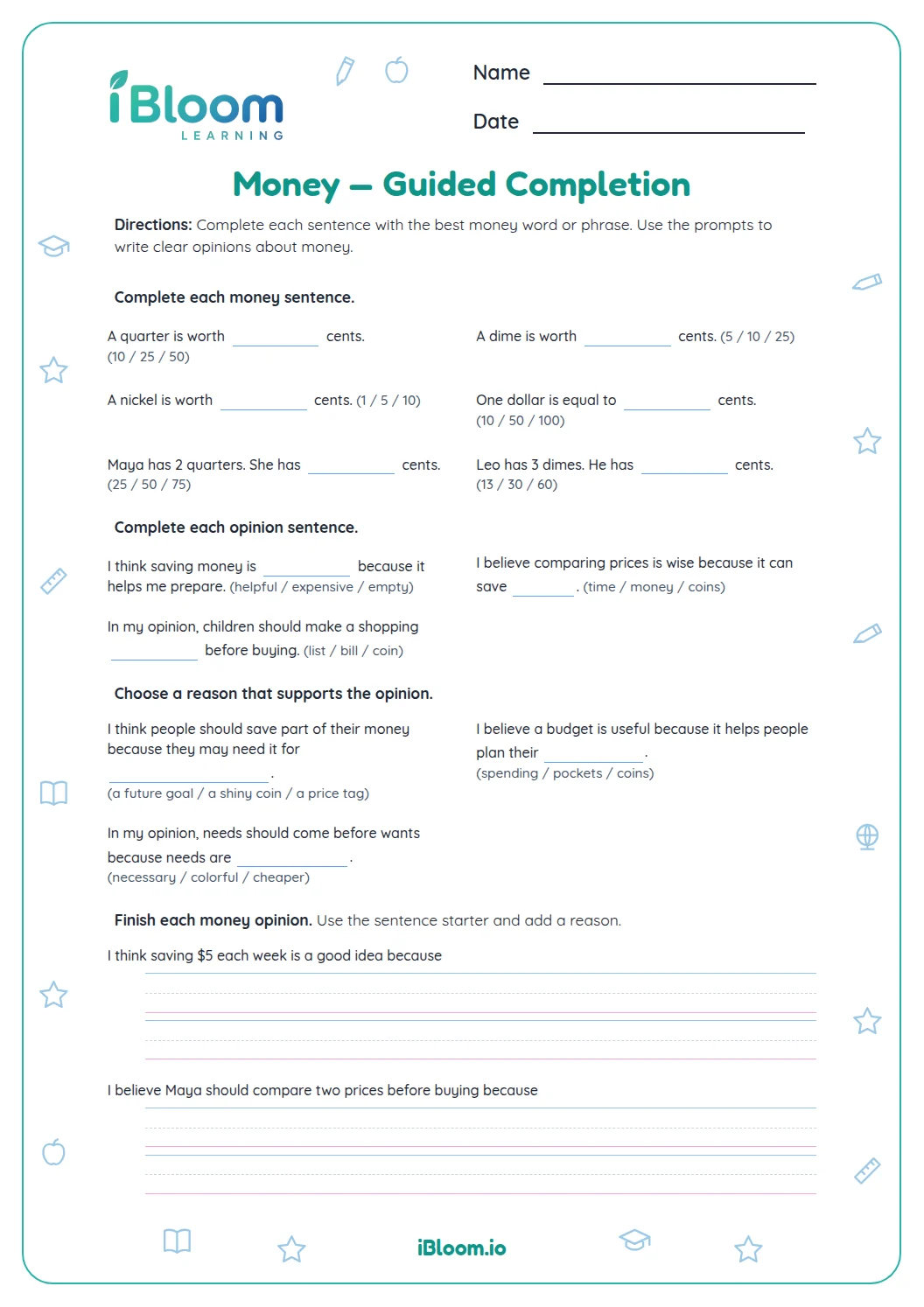
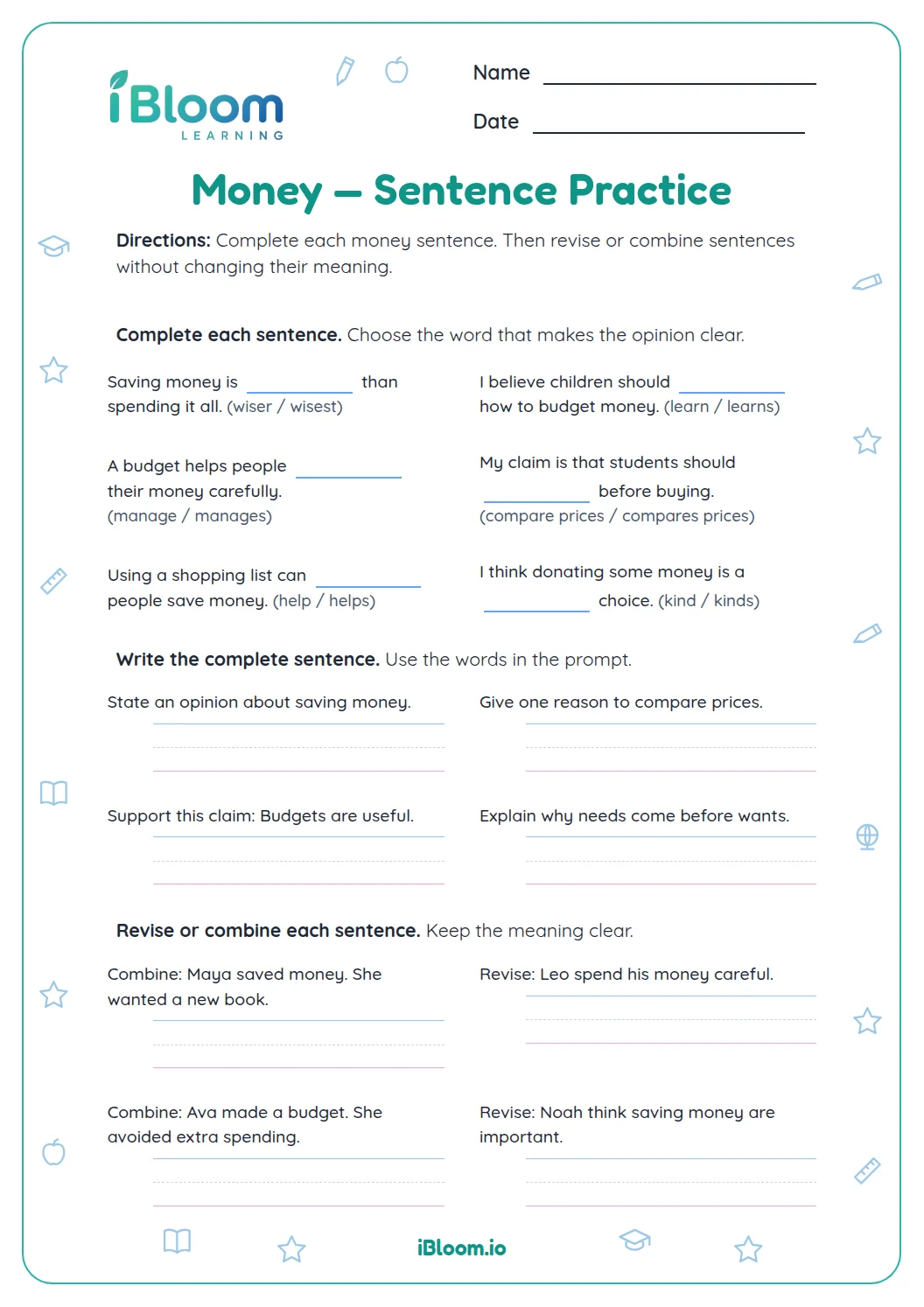
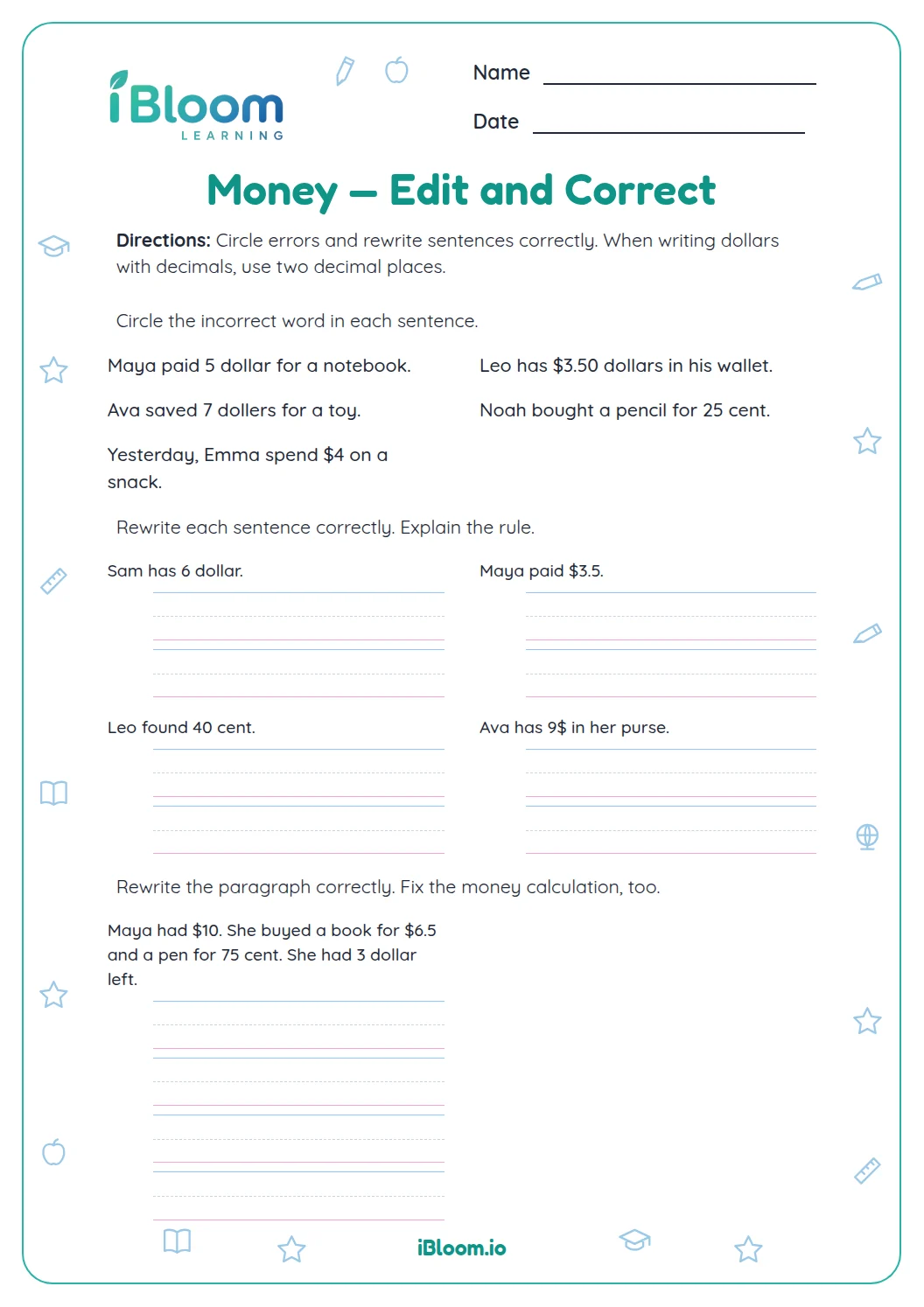
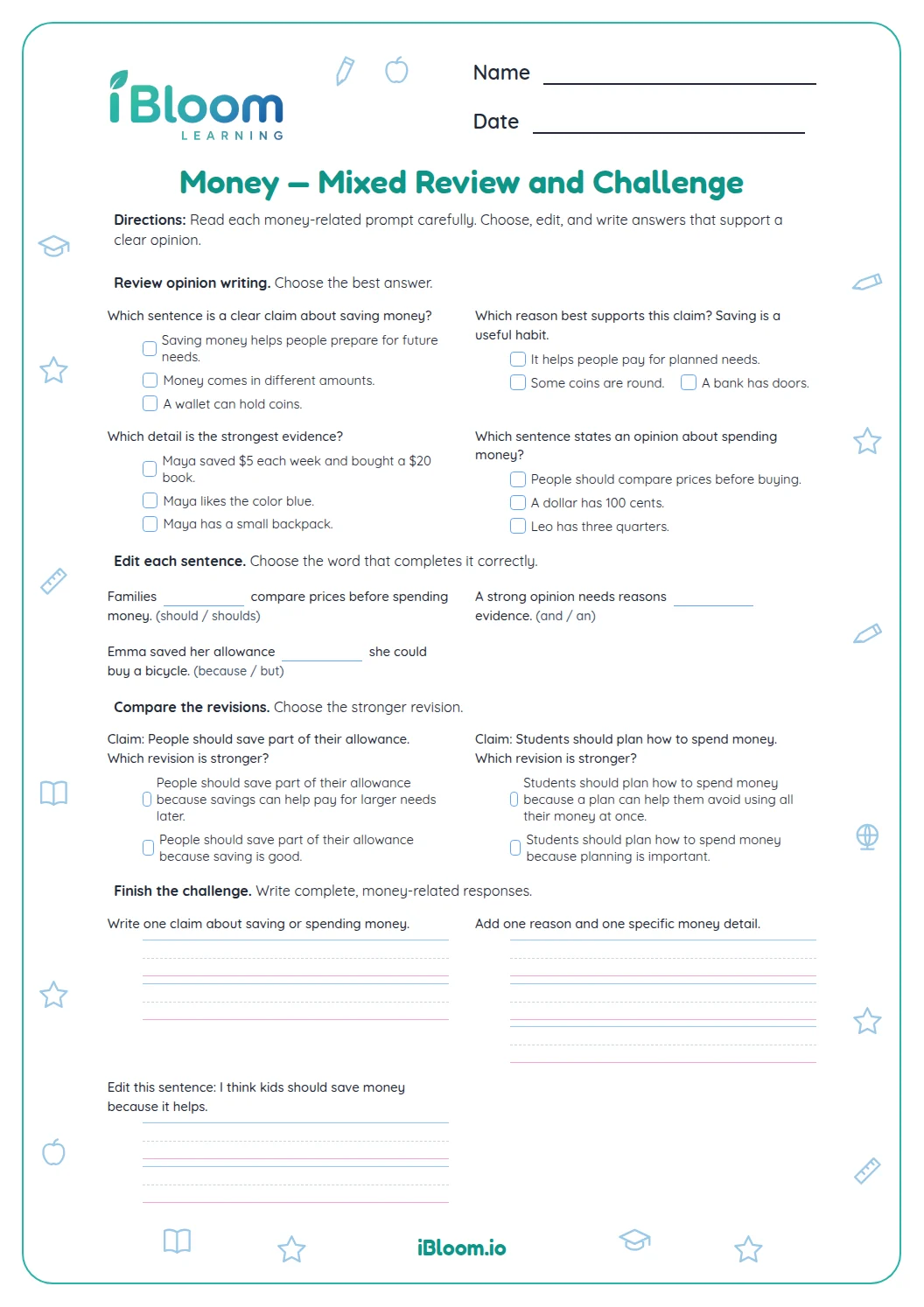
Complete each money-themed sentence with the word that fits. The sheet has 14 questions in two parts, followed by a separate answer key.
The examples progress from focused practice to a second set that applies the same skill in context.
How can one item be worked through?
Work one item at a time. Use the question wording and the shown information to decide what to calculate or write.
- 1Part A: Which sentence states an opinion about saving money?
- 2Check: Saving some allowance is a smart habit.
How can a learner check each answer?
Complete both parts before checking the key. Rework a missed item and compare the revised response with the keyed answer.
What can an adult ask during practice?
Ask the learner to explain which numbers, words, or punctuation clues support the response.
How to use this worksheet
- 1Read the directions for the part.
- 2Complete each item in order.
- 3Check that every blank or choice has a response.
- 4Compare answers with the separate key.
- 5Rework any missed item and check the relevant clue.
Common mistakes and quick fixes
The mistake
Skipping a direction or detail in an item.
The fix
Reread the complete prompt before answering.
The mistake
Stopping before every part of an item is complete.
The fix
Check the prompt for each requested response.
The mistake
Accepting an answer without checking it.
The fix
Compare the finished response with the answer key.
Common Core alignment
This worksheet practices the named skill through focused examples aligned with W.4.1.
State an opinion and support it with relevant reasons and information.
On this sheet: Learners identify opinions and supporting reasons, then write brief money-themed opinion responses.
Show the official wordingHide the official wording
Write opinion pieces on topics or texts, supporting a point of view with reasons and information.
What to practice next
Make more practice
Further reading
Questions parents and teachers ask
What is on this worksheet?
This worksheet offers 14 questions in two parts for focused practice with recognize the skill. Learners can work through each item, then use the separate answer key to check their responses and revisit any missed question. Parents can choose a quiet pace and pause between parts so learners have room to show careful thinking.
How many questions are included?
There are 14 questions arranged in two parts. The first part introduces a focused set of items, and the second continues practice before learners check their work with the separate answer key. Encourage learners to read each prompt fully and check that the chosen response answers the question asked.
When should learners use the answer key?
Learners can use the key after finishing both parts or after completing one part at a time. Compare each answer, then return to a missed item and identify the prompt detail that supports the correct response. A brief discussion of the clue or step can help learners understand how to correct an answer independently.
Can this be used for home practice?
Yes. An adult can read the directions with the learner, then let them work through the questions independently. The separate key makes it easy to review answers together and talk through any item that needs another try. Keep the printed key nearby for review after the learner has completed the selected questions.
What should a learner do after a missed answer?
Reread the full question and identify what it asks. Try the item again using the relevant numbers, words, or punctuation, then compare the revised response with the key and explain what changed. The two-part format also makes it simple to finish one group now and return to the next later.