
About this worksheet
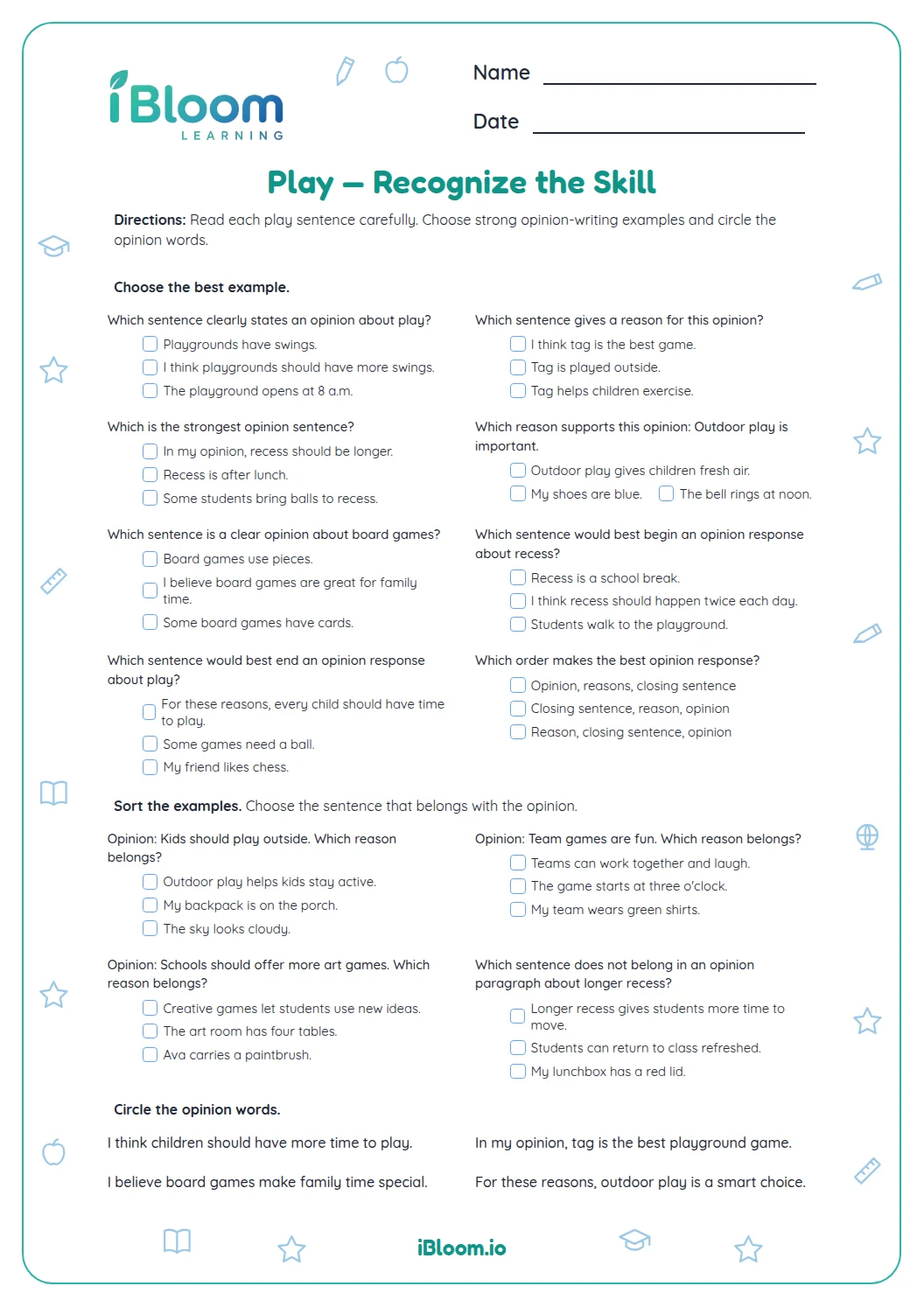
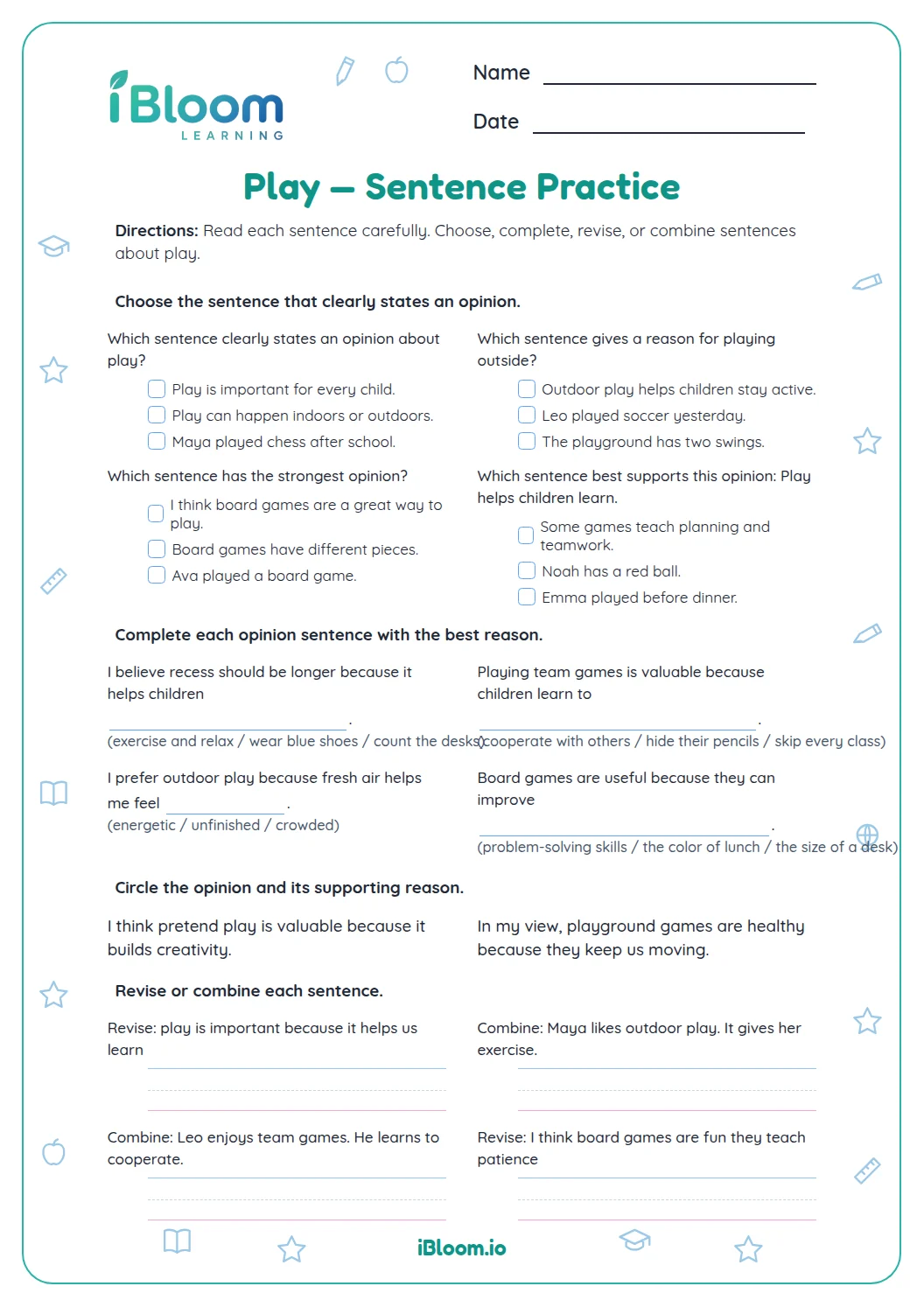
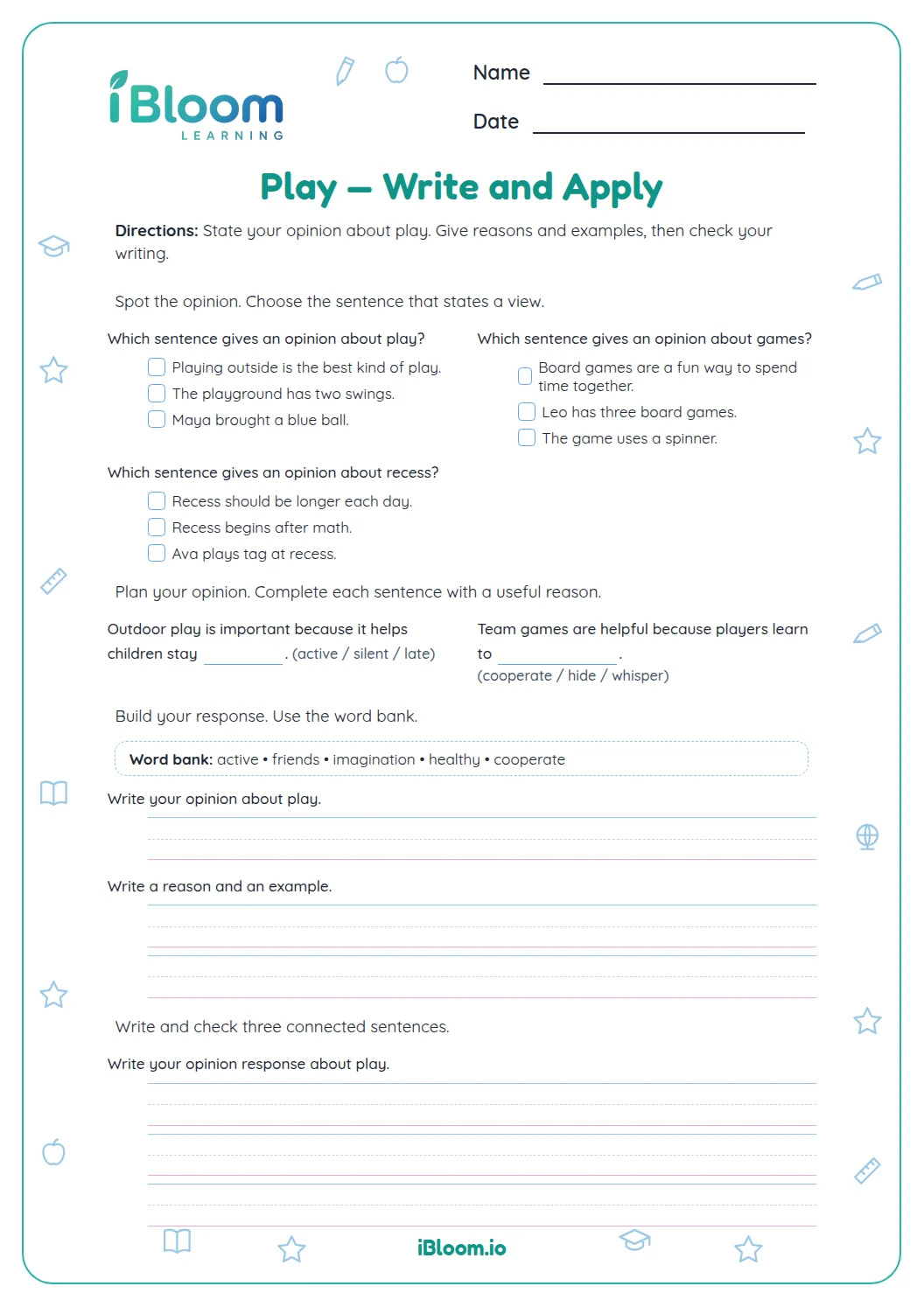
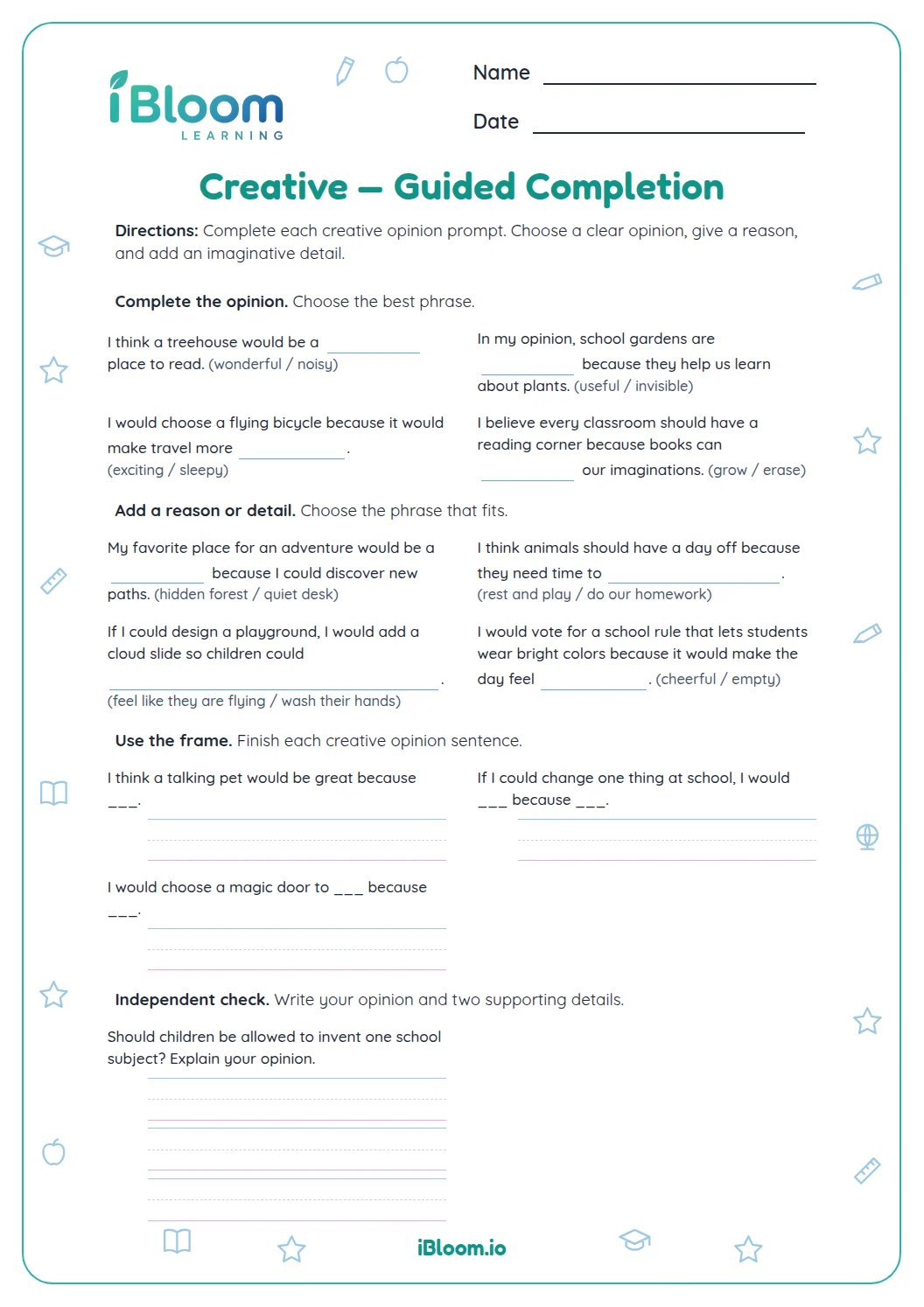
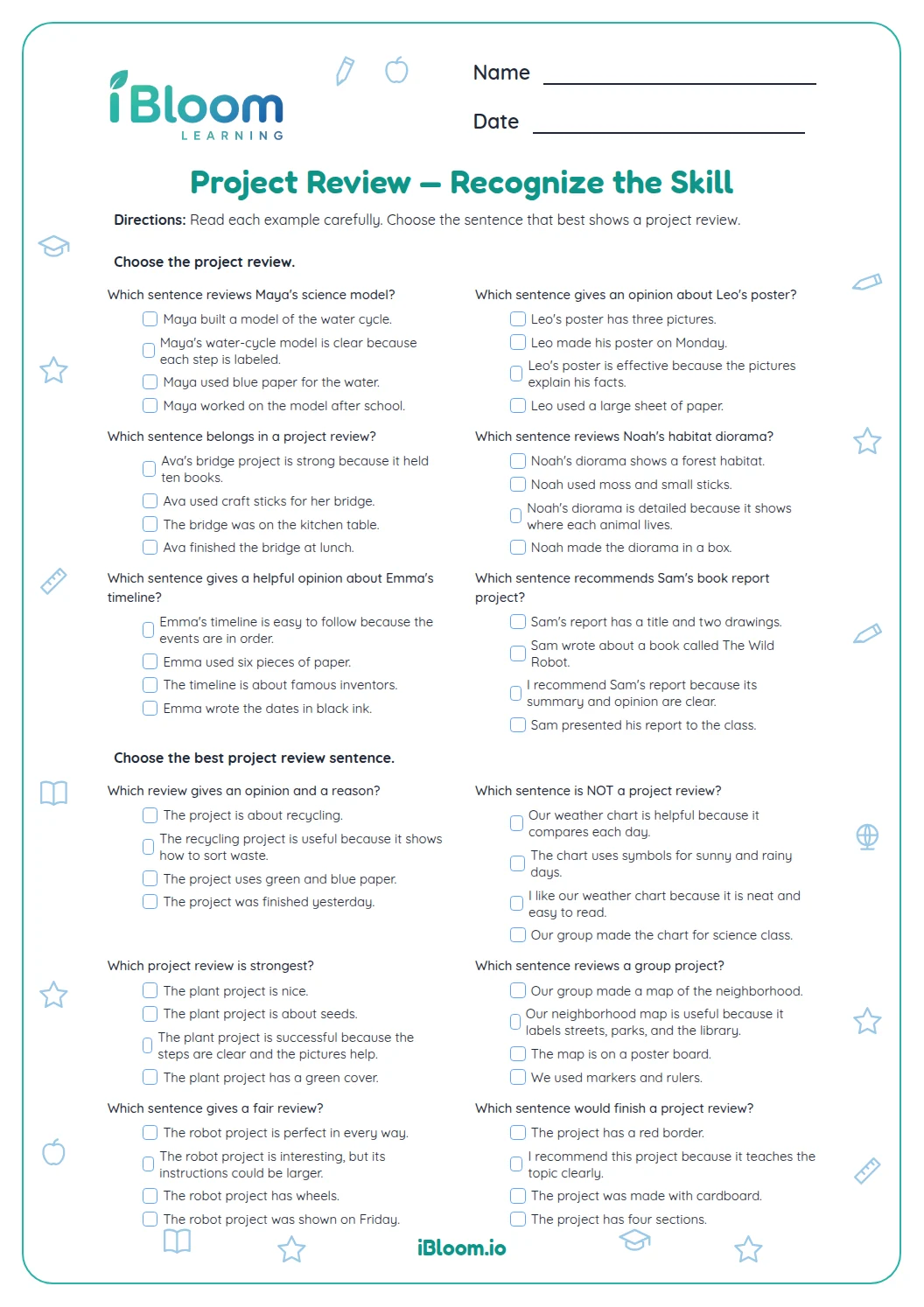
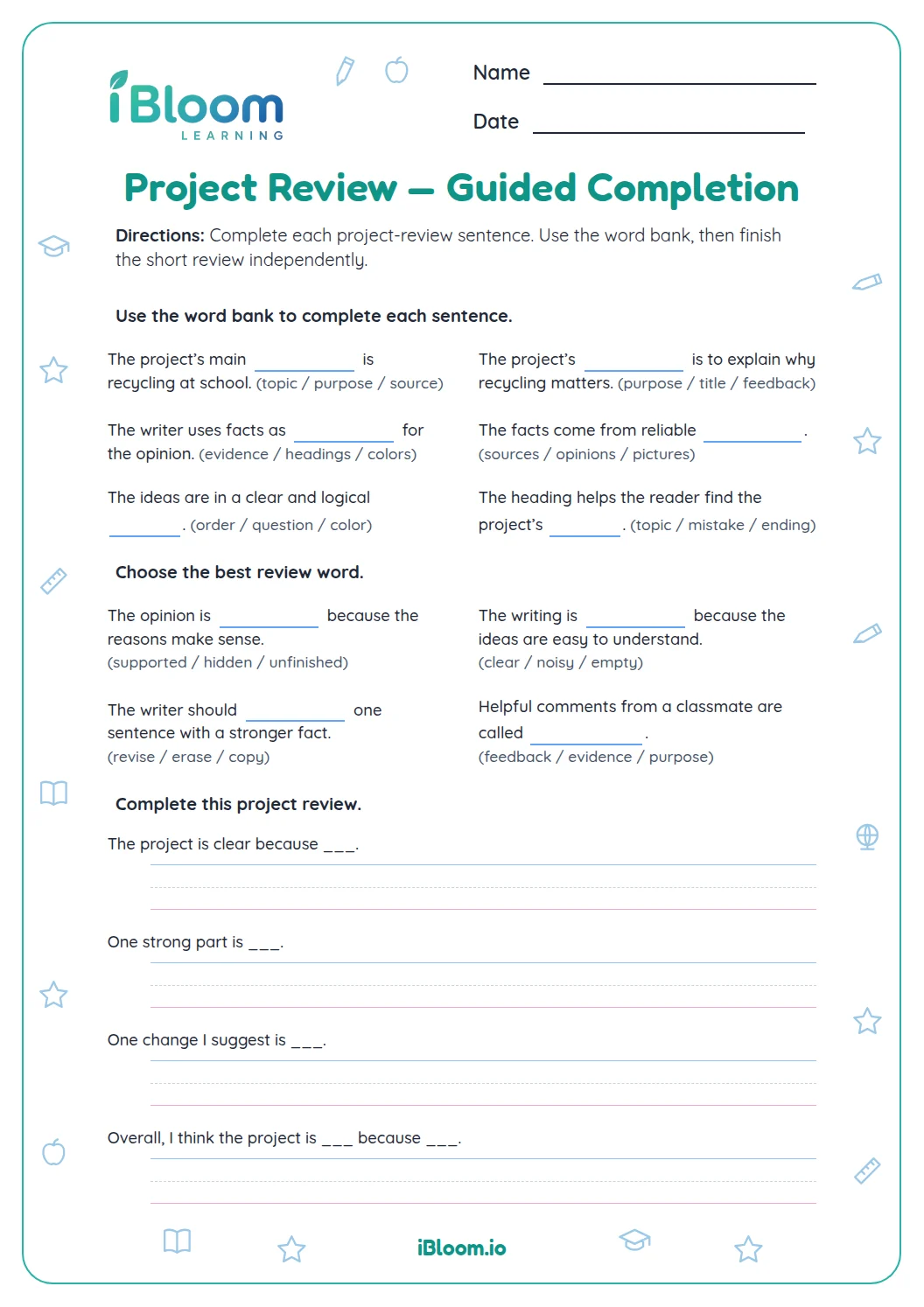
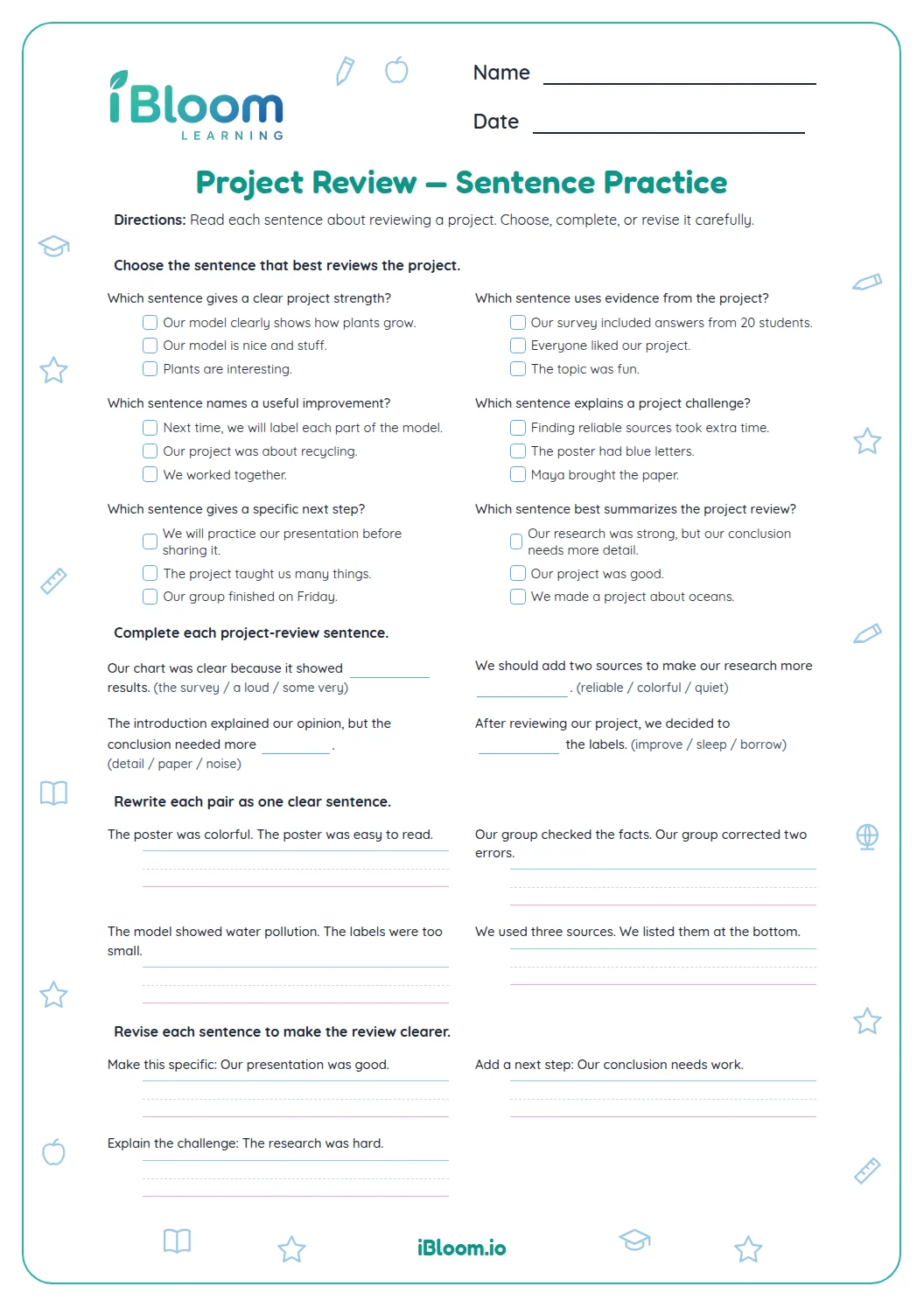
This Grade 4 printable reviews opinion writing through 16 varied questions. Learners distinguish opinions from facts, select reasons that fit a point of view, use linking words, revise unclear support, and write short responses with reasons and examples. The final items ask children to plan a school improvement and add a conclusion. The activities align with CCSS W.4.1 and replace the old single sentence-choice item with a complete mixed review.
Aligned to W.4.1
What makes a sentence an opinion?
An opinion tells what someone thinks or believes. “I think recess should be longer” states a point of view. A fact such as “Our class has 24 students” can be checked, but it does not tell what the writer prefers.
- 1I think recess should be longer.
- 2This tells what the writer believes.
- 3The other choices are checkable facts.
How does a reason support an opinion?
A reason explains why the writer holds the opinion. For a class garden, a useful reason might be that students can grow vegetables and learn to care for plants. Details should connect directly to the point of view.
Linking words can make the relationship clear. “For example” introduces a specific detail; “As a result” connects an action to a consequence.
How can a short argument feel complete?
State the opinion, add one or more reasons, include a specific example when it helps, and end with a sentence that reinforces the point. Questions 13 and 14 ask learners to practice the beginning and ending of a small argument.
How to use this worksheet
- 1Read each claim and decide whether it can be checked or states a point of view.
- 2For multiple-choice items, test whether the reason directly supports the opinion.
- 3Use specific examples in written responses.
- 4Add linking words where they clarify how ideas connect.
- 5Reread the final opinion and conclusion to check that they match.
Common mistakes and quick fixes
The mistake
Giving a fact instead of an opinion
The fix
Use a phrase such as “I think” to state the writer’s point of view.
The mistake
Adding an unrelated reason
The fix
Ask whether the reason explains why the opinion makes sense.
The mistake
Ending without restating the point
The fix
Write a final sentence that reminds the reader of the opinion.
Common Core alignment
This worksheet practices the following Common Core skill.
Write an opinion and support it with reasons and relevant information.
On this sheet: Learners recognize opinions and practice supporting one with relevant reasons and examples.
Show the official wordingHide the official wording
Write opinion pieces on topics or texts, supporting a point of view with reasons and information.
What to practice next
Make more practice
Further reading
Questions parents and teachers ask
How is an opinion different from a fact?
A fact can be checked, while an opinion states what someone thinks or believes. Question 1 contrasts a checkable class size with the claim that recess should be longer. Learners can ask whether evidence could verify the sentence or whether it expresses a viewpoint.
What makes a reason relevant?
A relevant reason explains or supports the stated opinion. If the opinion is that a class should have a garden, a place to grow vegetables is connected. The color of the classroom door does not explain the opinion. Have the learner point to the relevant detail before using the answer key to check.
What can a linking word do?
A linking word shows how one idea relates to another. “For example” introduces a detail, while “As a result” can connect an action to what follows. Questions 3 and 8 ask learners to choose words that fit the sentence. Have the learner point to the relevant detail before using the answer key to check.
How long should the written answers be?
The short response questions ask for one opinion with a reason, an example, or a brief conclusion. A sentence or two is enough when it clearly answers the prompt and includes the requested support. Have the learner point to the relevant detail before using the answer key to check.
Can written answers differ from the key?
Yes. The answer key gives sample responses for questions where children can choose different opinions or reasons. A response is successful when it answers the prompt, states a clear viewpoint, and includes the requested relevant support or conclusion. Have the learner point to the relevant detail before using the answer key to check.
What is included in the challenge section?
The final challenge asks for a school improvement, two reasons, and a concluding sentence. A child might recommend a shaded table and explain how it could help students work or eat outside. The key accepts other ideas when the reasons support the proposal.