






About this worksheet
This Grade 4 worksheet builds control of direct speech punctuation and asks students to distinguish direct from indirect speech. Part A checks punctuation choices and corrections, Part B edits quoted sentences, and Part C includes an indirect-speech conversion and original dialogue. A separate answer key gives corrections and a sample response. This practice addresses L.4.2b: using commas and quotation marks to mark direct speech.
Aligned to L.4.2b
Where do quotation marks go?
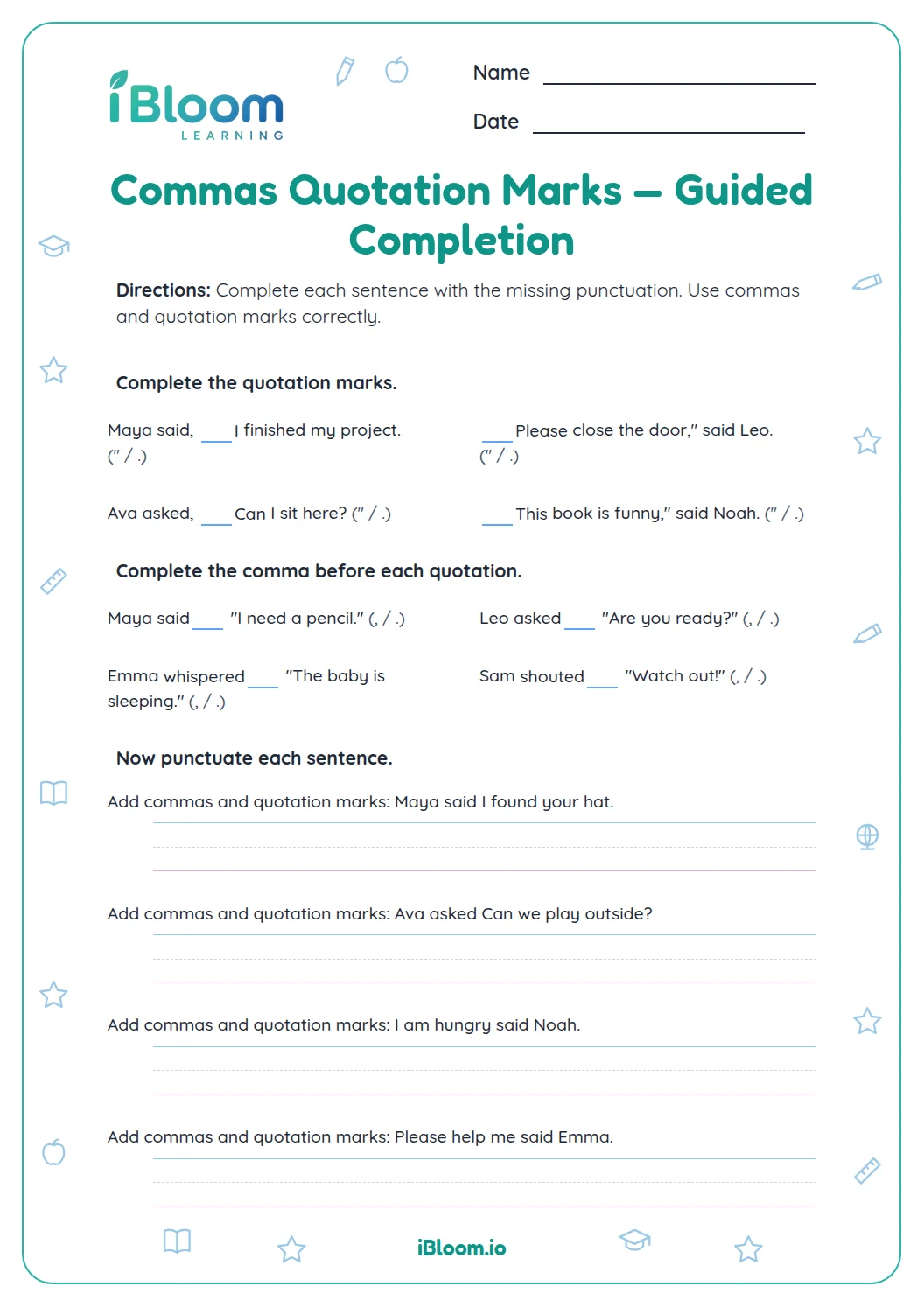
When the speaker tag comes first, use a comma before the opening quotation mark: Dad said, “I will call soon.” Keep the spoken words inside quotation marks and put their end mark inside as well.
- 1“Bring your coat” said Ana.
- 2The speaker tag follows the spoken words.
- 3“Bring your coat,” said Ana.
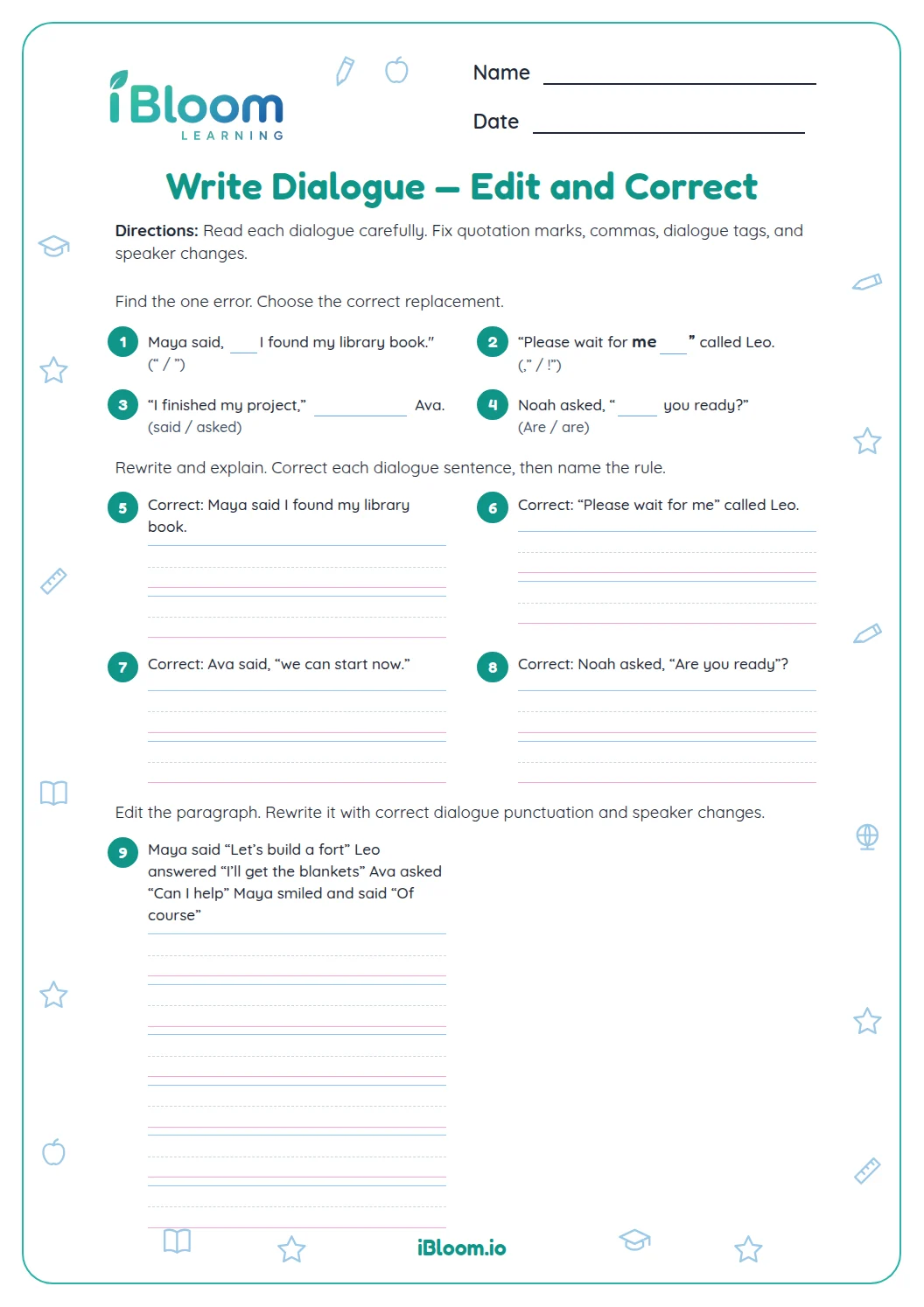
How do students edit a dialogue sentence?
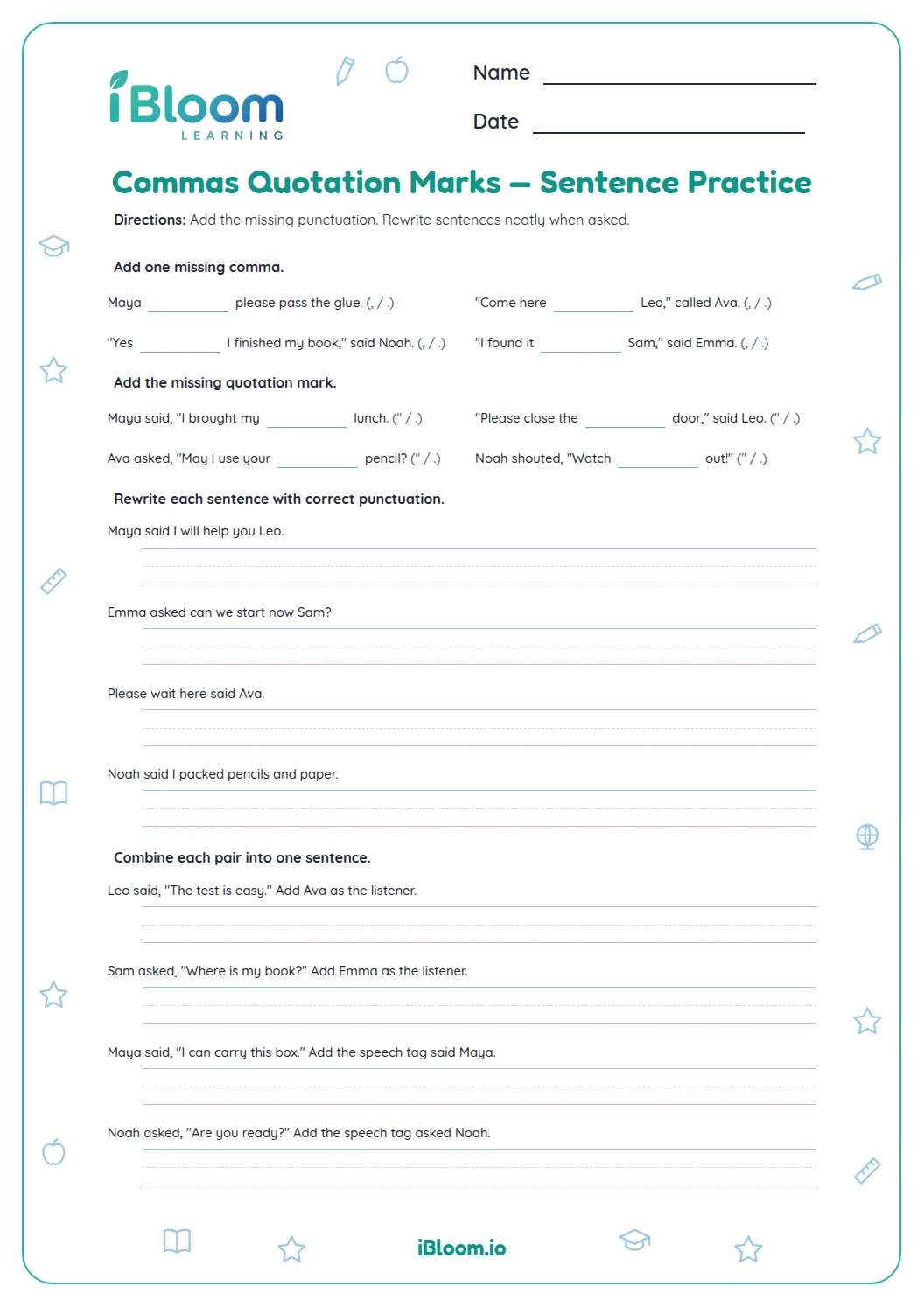
When the speaker tag follows, the comma belongs inside the closing quotation mark: “Bring your coat,” said Ana. A question mark or exclamation point that belongs to the spoken words also stays inside.
How is indirect speech different?
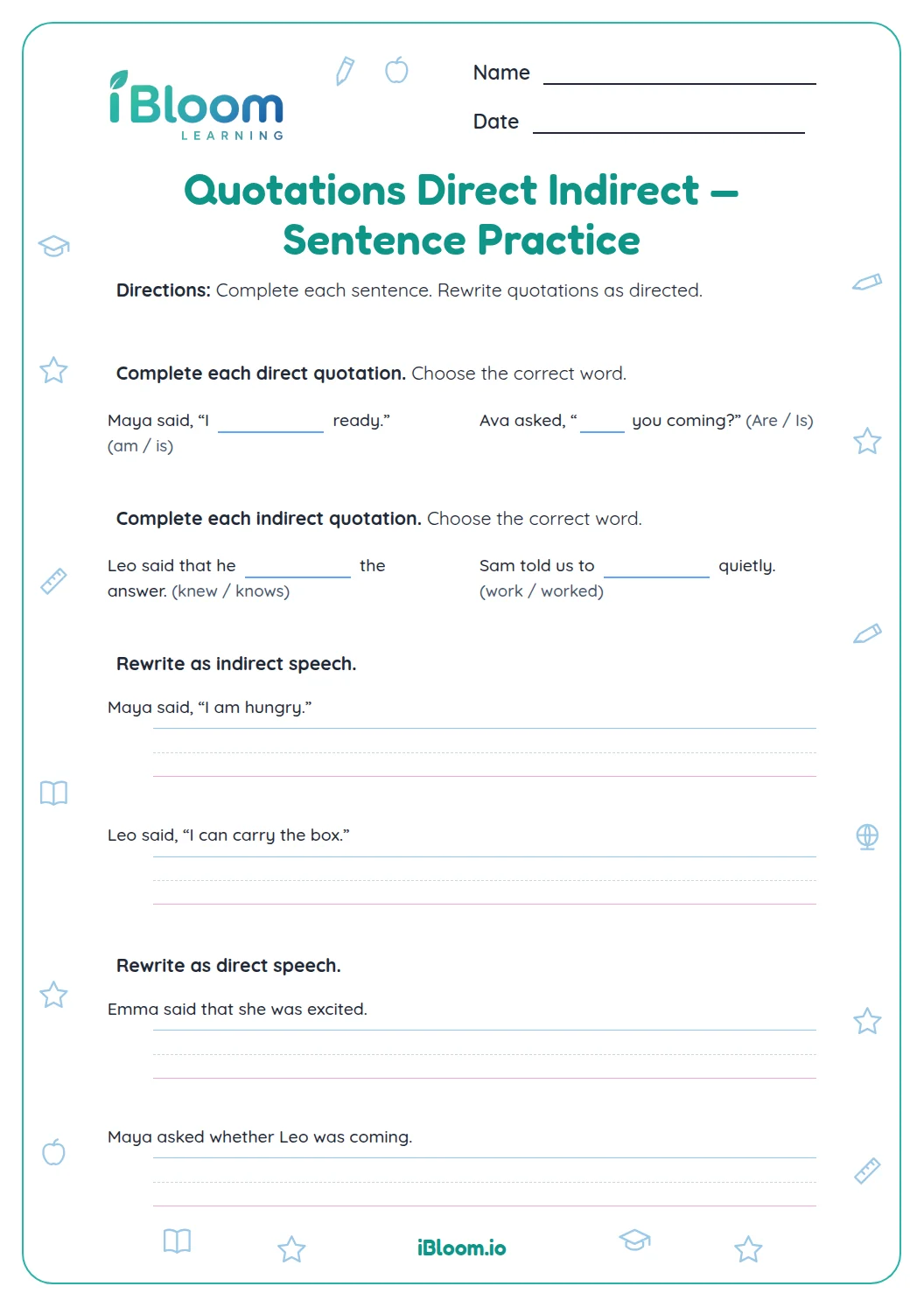
Direct speech gives the exact words and uses quotation marks. Indirect speech reports the idea without quotation marks around it. Question 12 changes “Ava said, ‘I am cold’” to “Ava said that she was cold.”
How to use this worksheet
- 1Read the part heading and direction before you begin.
- 2Solve each item in order, showing work when it helps.
- 3Reread your answer and check that it answers the prompt.
- 4Use the separate key to review each response.
Common mistakes and quick fixes
The mistake
Leaving out the comma before a quotation.
The fix
Use a comma after the speaker tag when it introduces exact words.
The mistake
Putting the comma outside the closing quotation mark.
The fix
Place the comma inside the quotation marks before the speaker tag.
The mistake
Adding quotation marks to indirect speech.
The fix
Use quotation marks only when reporting the exact spoken words.
Common Core alignment
This worksheet provides focused practice with a grade-level Common Core skill.
Use commas and quotation marks to mark direct speech and quotations.
On this sheet: Students punctuate direct quotations and edit dialogue sentences with commas and quotation marks.
Show the official wordingHide the official wording
Use commas and quotation marks to mark direct speech and quotations from a text.
What to practice next
Make more practice
Further reading
Questions parents and teachers ask
Where does the comma go in a direct quotation?
When the speaker tag comes first, place a comma before the opening quotation mark: Mia said, “We are ready.” When the speaker tag follows, put the comma inside the closing quotation mark: “I found it,” said Leo. The comma links the quoted words to the speaker tag.
Where does the end punctuation go?
In direct speech, the period, question mark, or exclamation point goes inside the closing quotation mark when it belongs to the spoken words. Question 5 becomes “We won!” shouted Ben. The position of the speaker tag determines where the comma goes.
Does indirect speech use quotation marks?
Indirect speech reports what someone said without giving the exact words. “Ava said, ‘I am cold’” is direct speech; “Ava said that she was cold” is indirect speech and has no quotation marks around the reported idea. Check whether the sentence repeats the speaker’s exact words.
How many questions are included?
There are 14 questions in three parts: six punctuation choices or corrections, five sentence edits or checks, and three written applications. The answer key provides corrected sentences and a sample dialogue response for the open-ended writing item. Students can compare their own punctuation choices with the key.
Can another dialogue response be correct?
Yes. The dialogue question allows many sensible responses. Check that the student uses a clear speaker tag, quotation marks around exact words, and commas and end punctuation in the right places. Each person’s words should be easy to tell apart.