

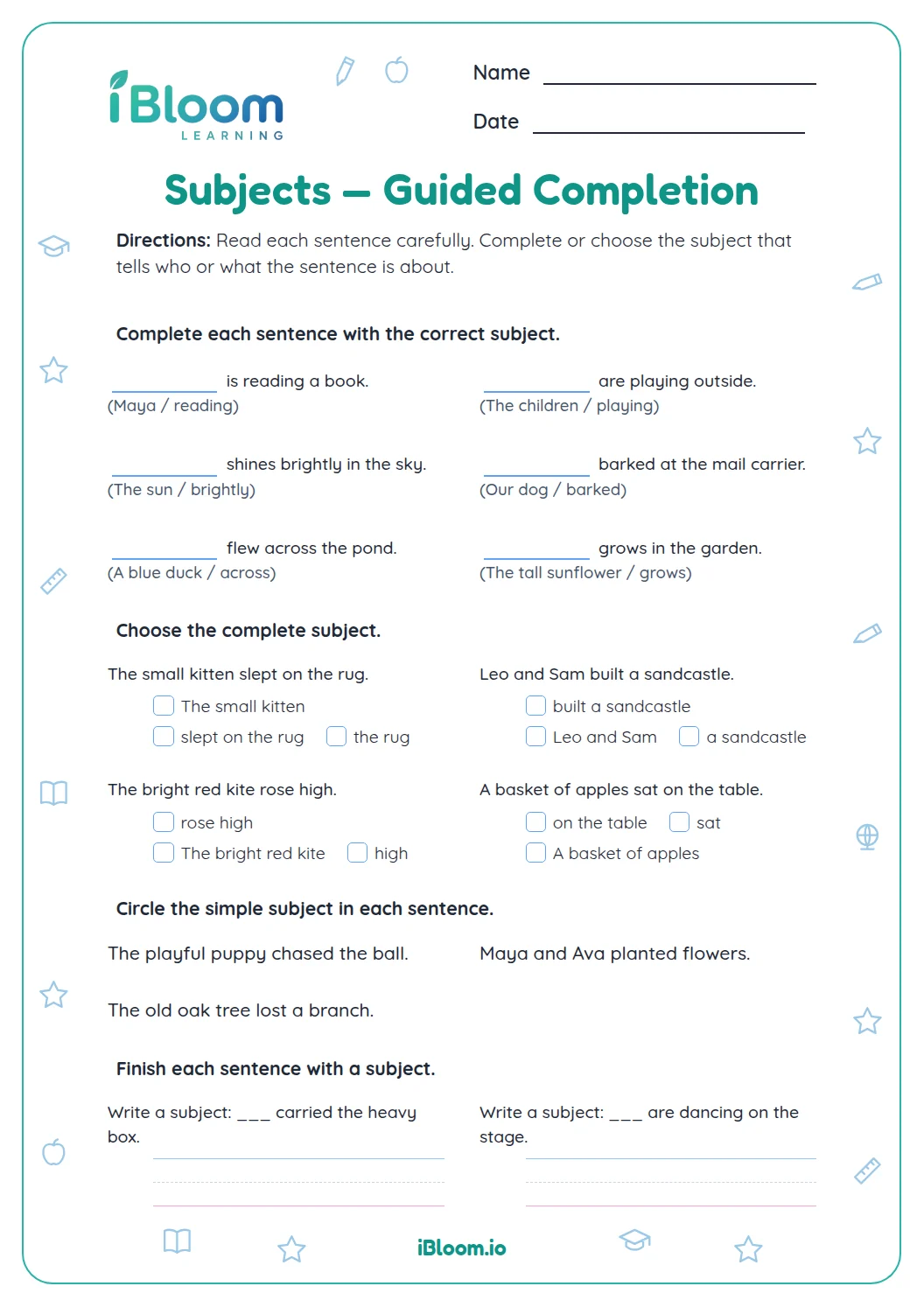
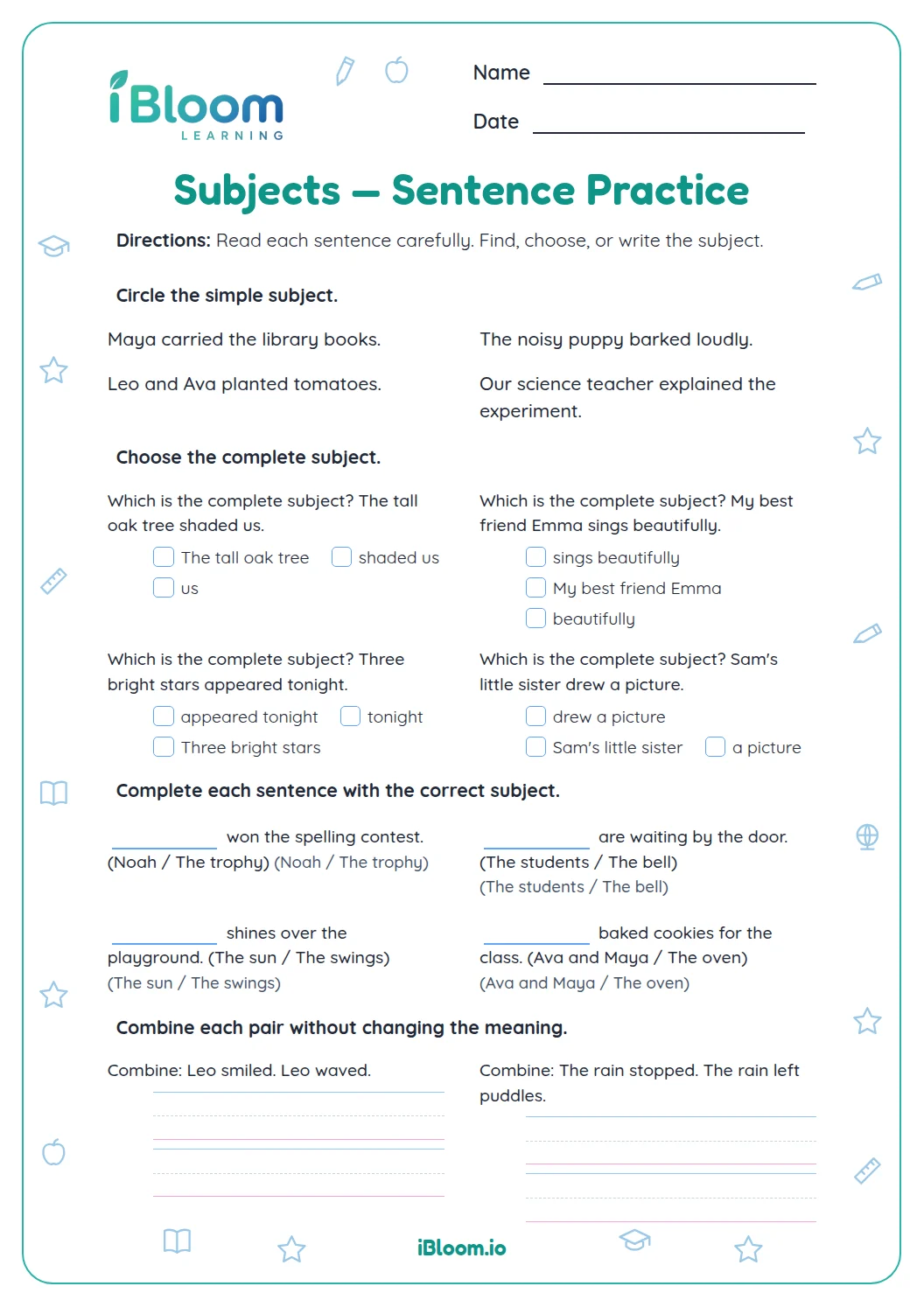
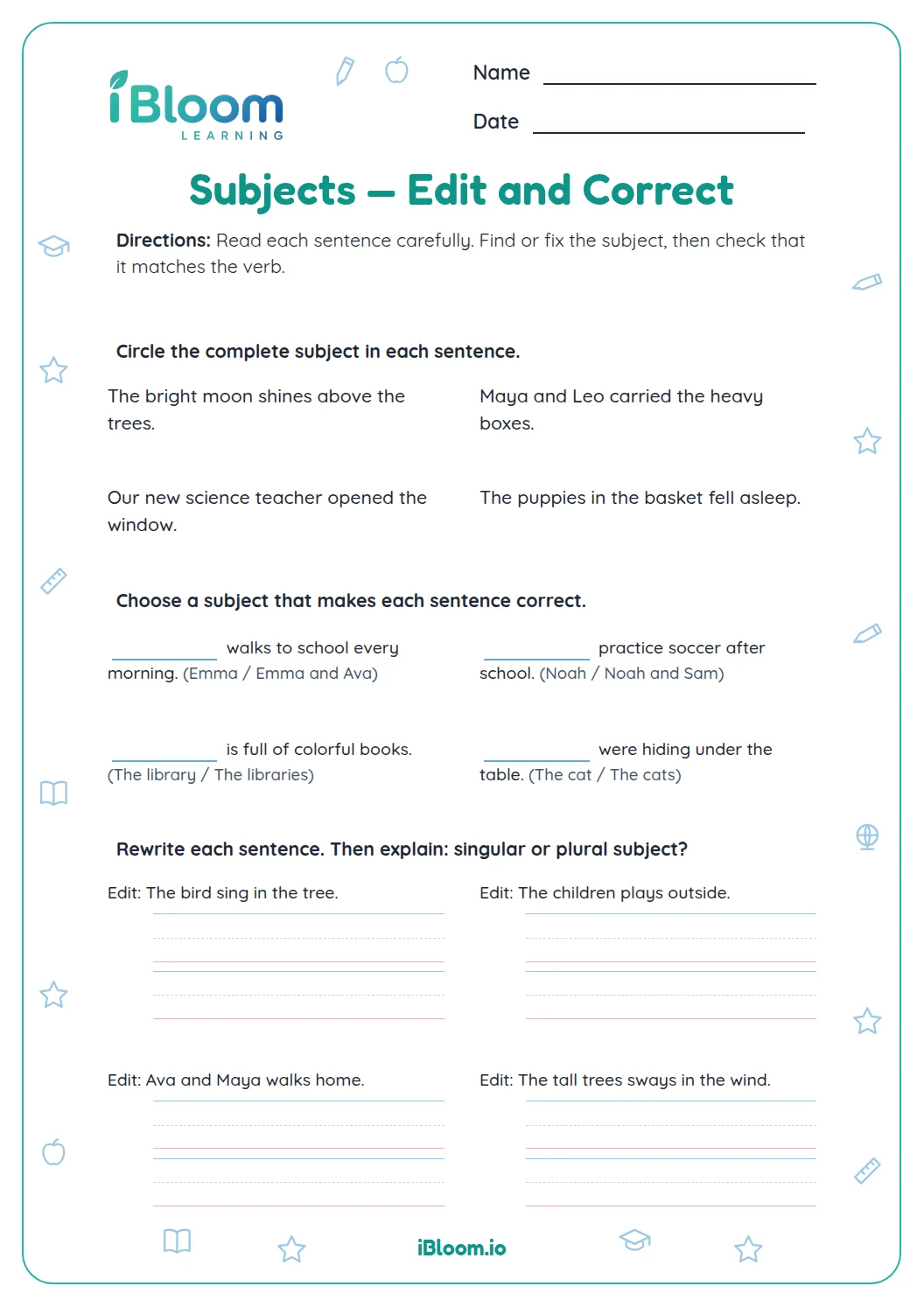
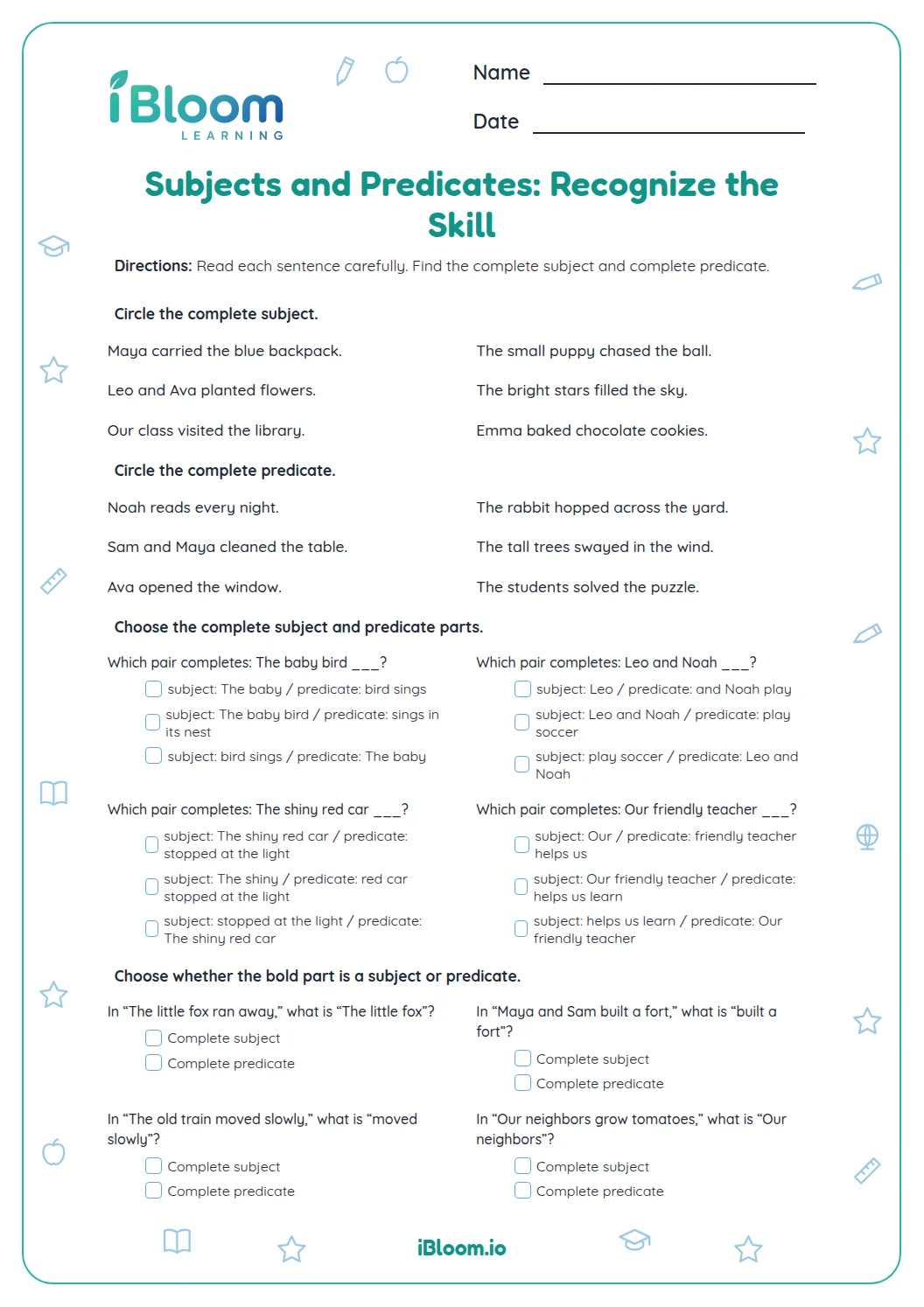





About this worksheet
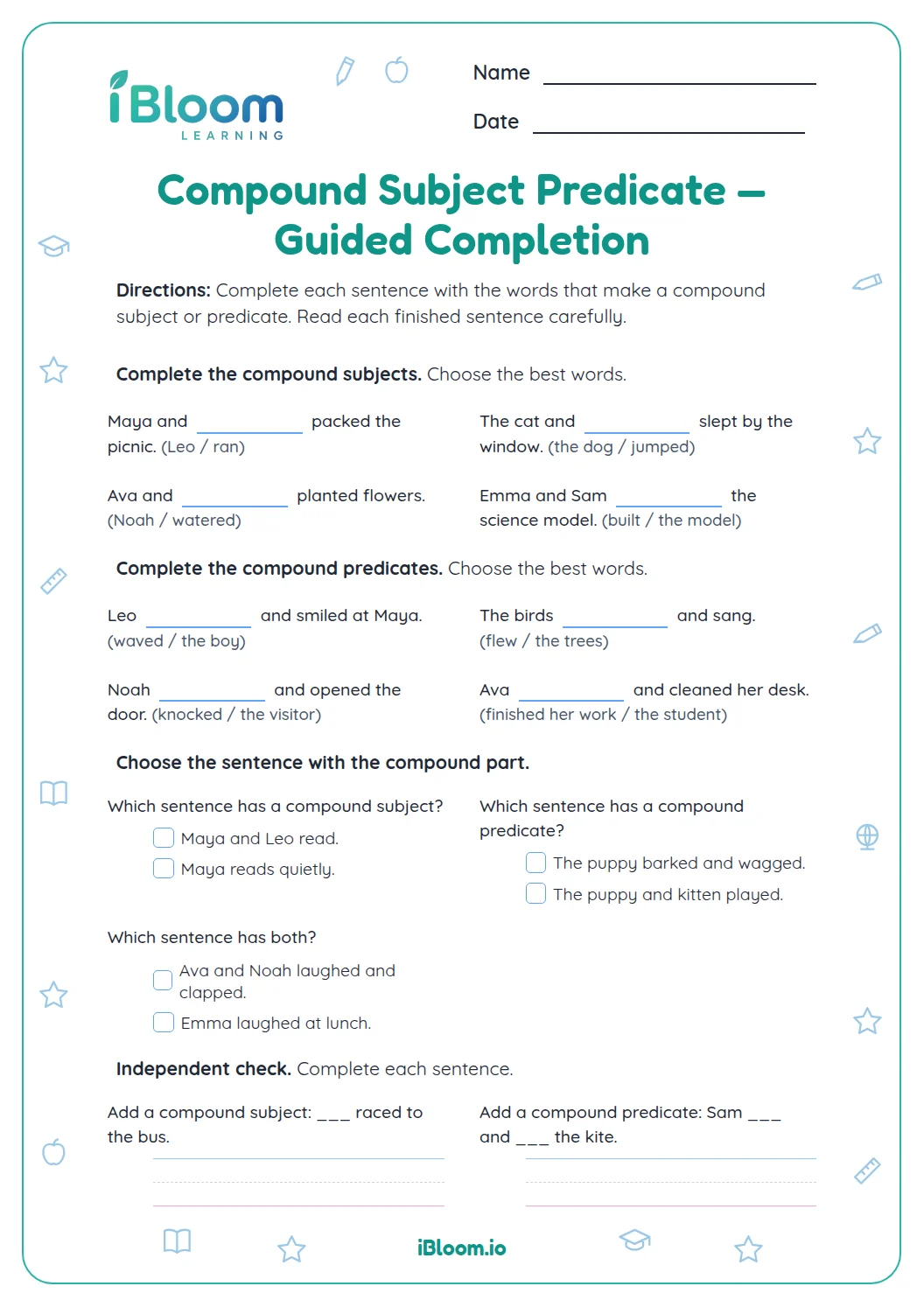
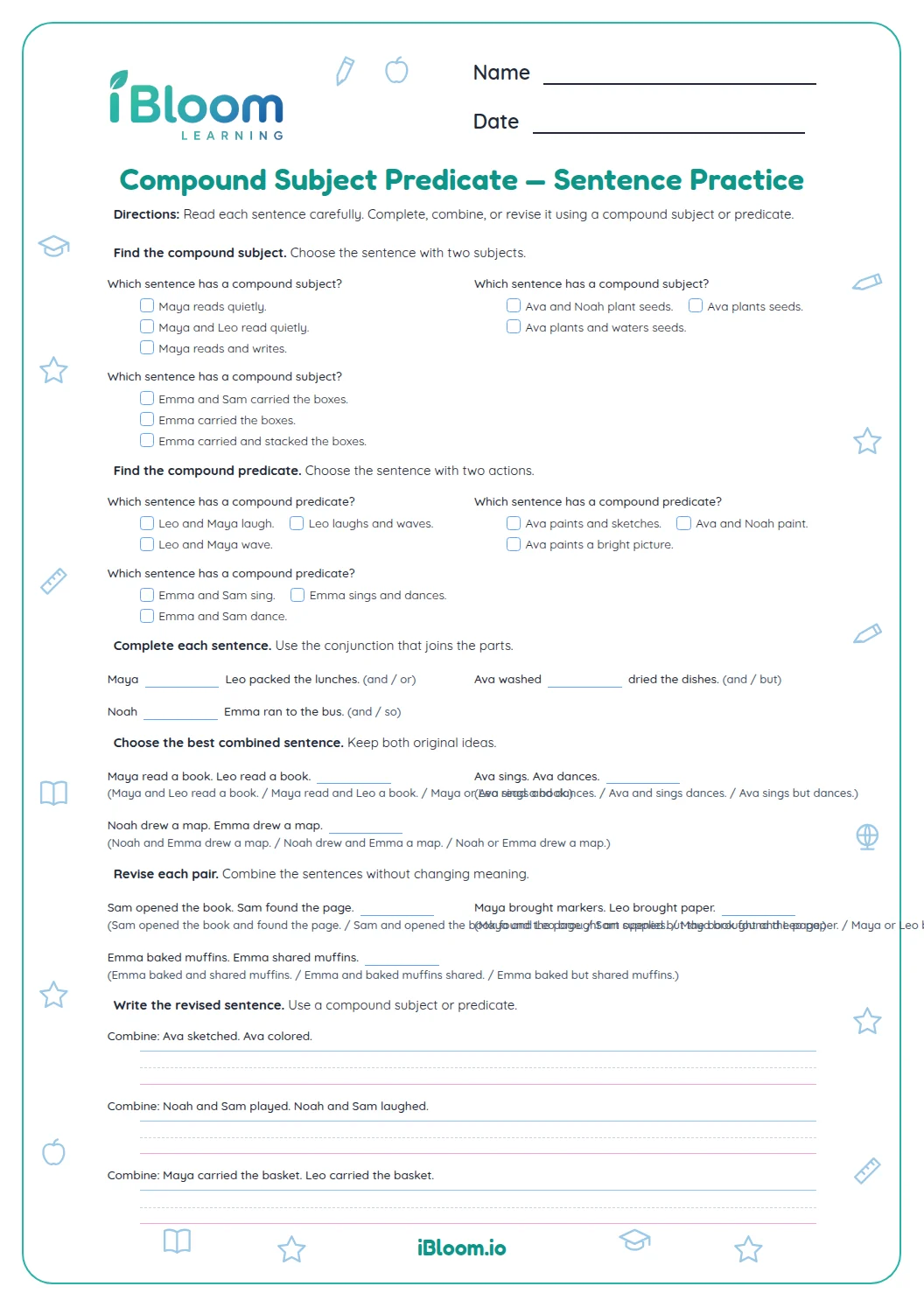
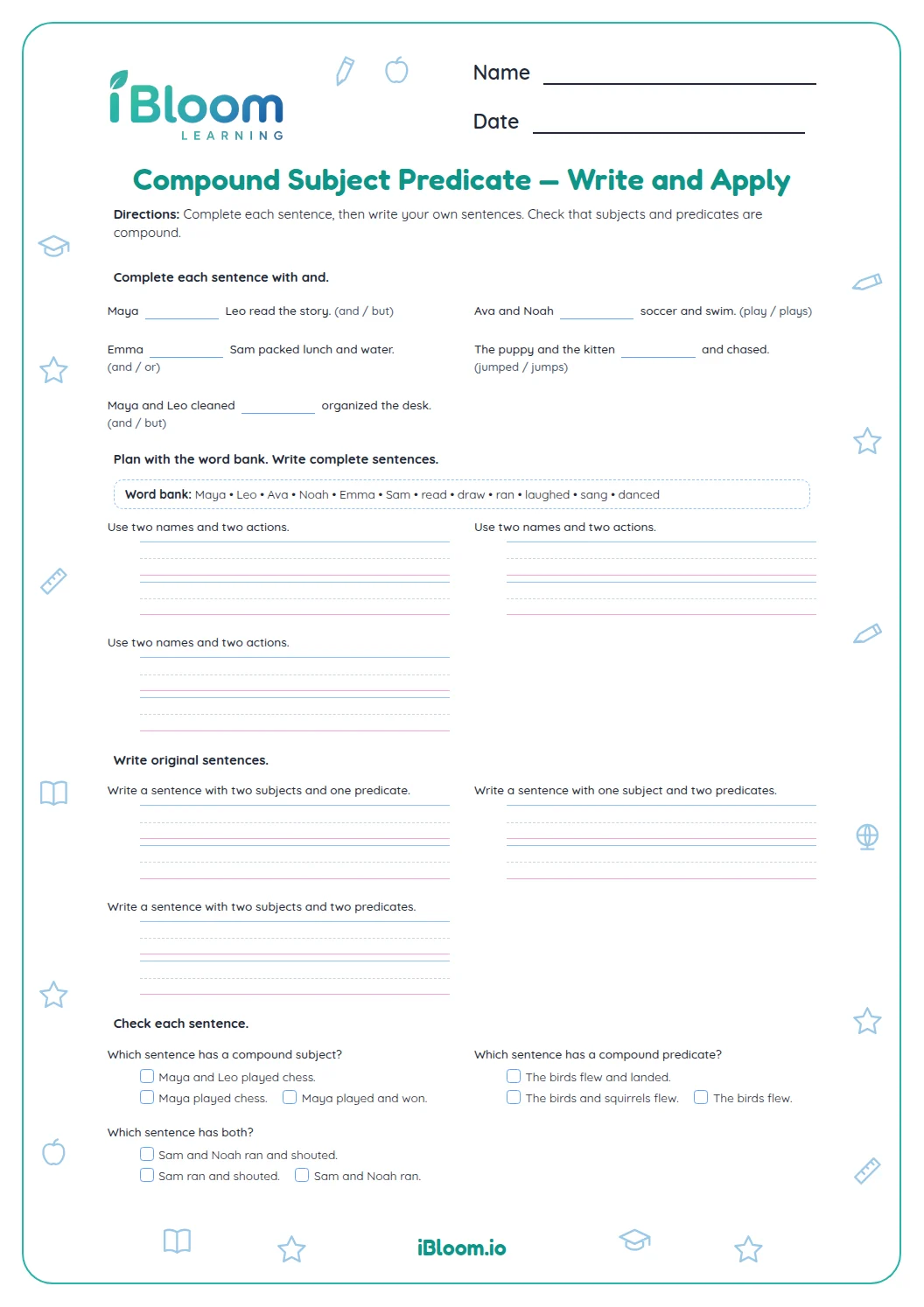
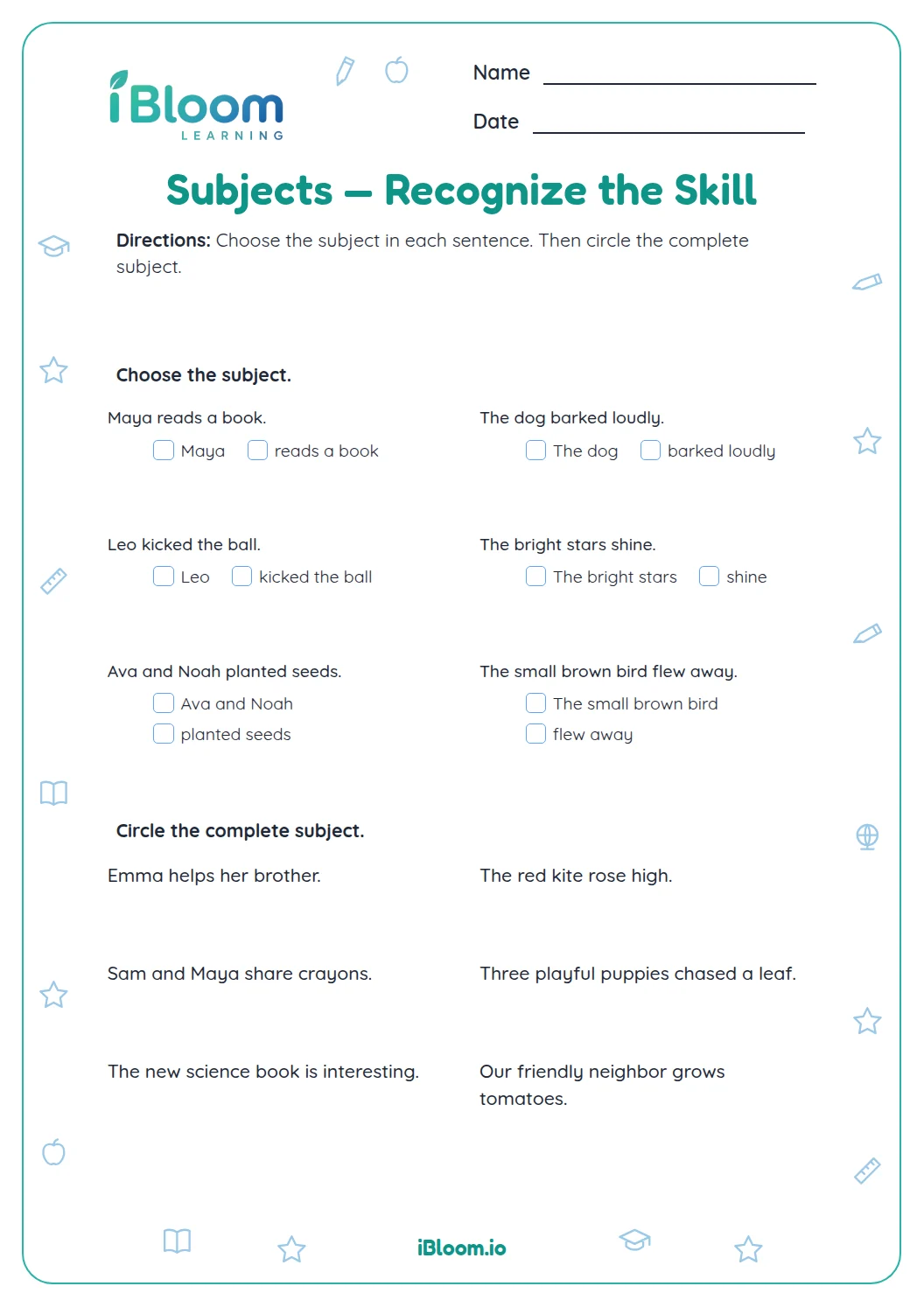
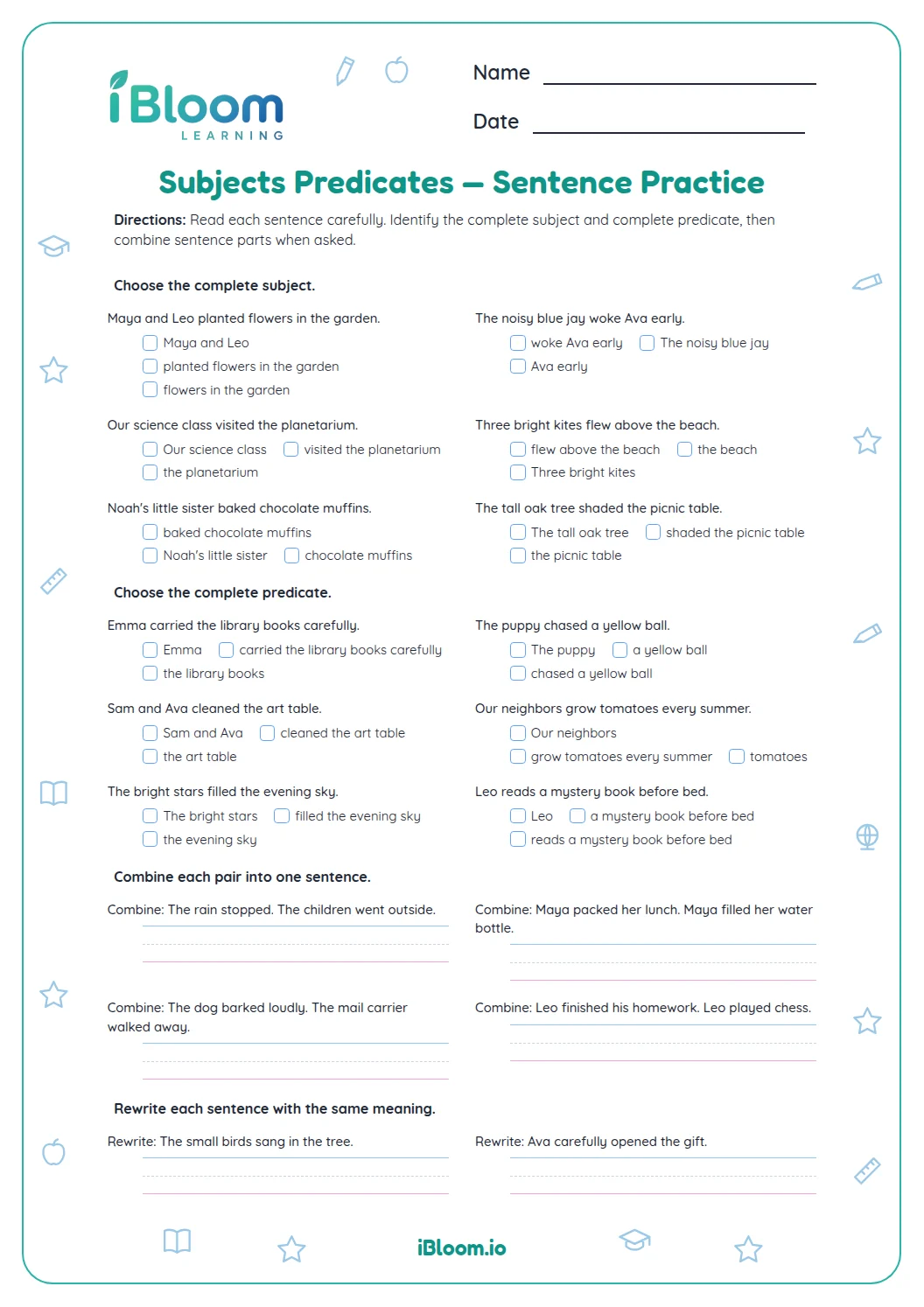
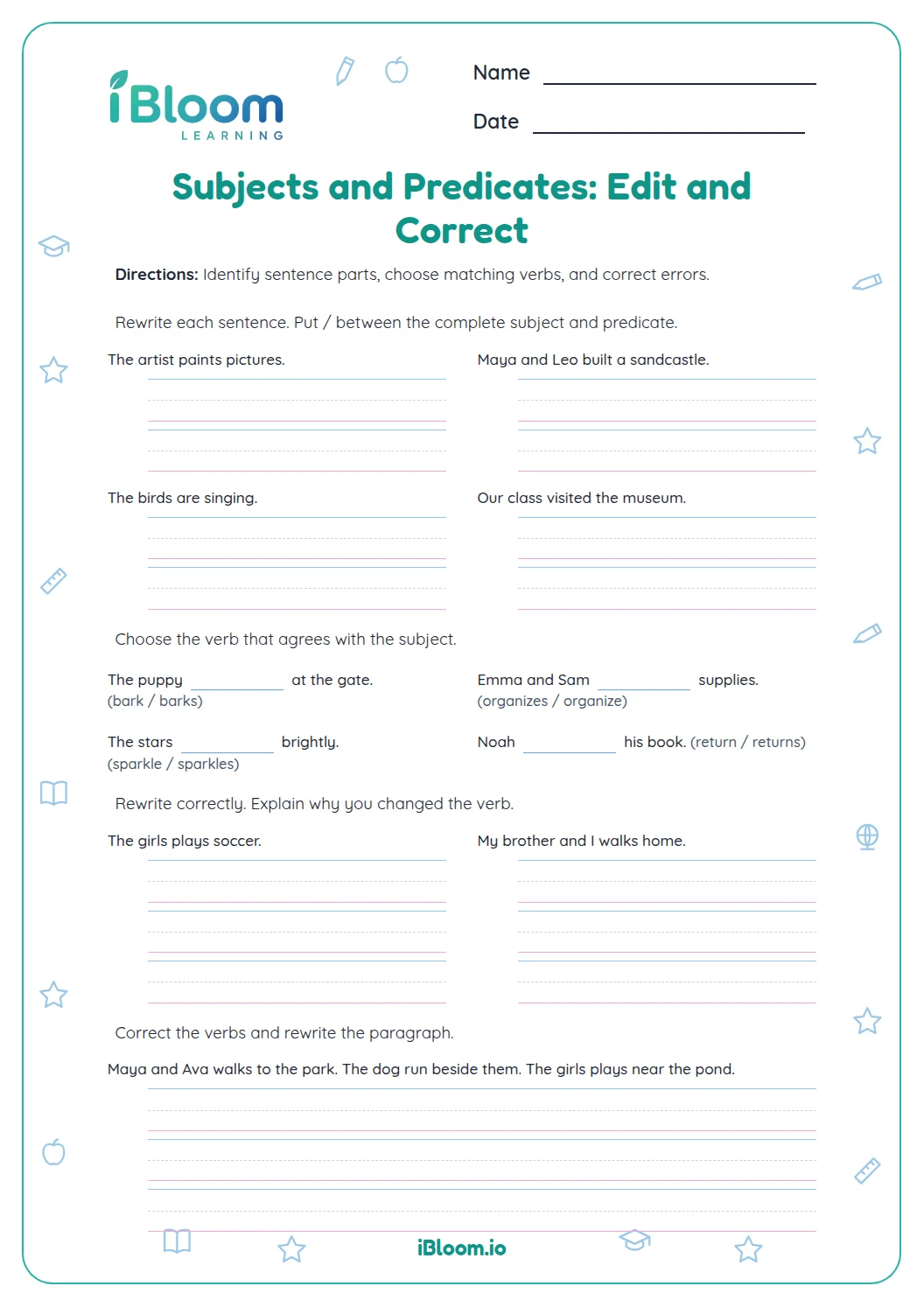
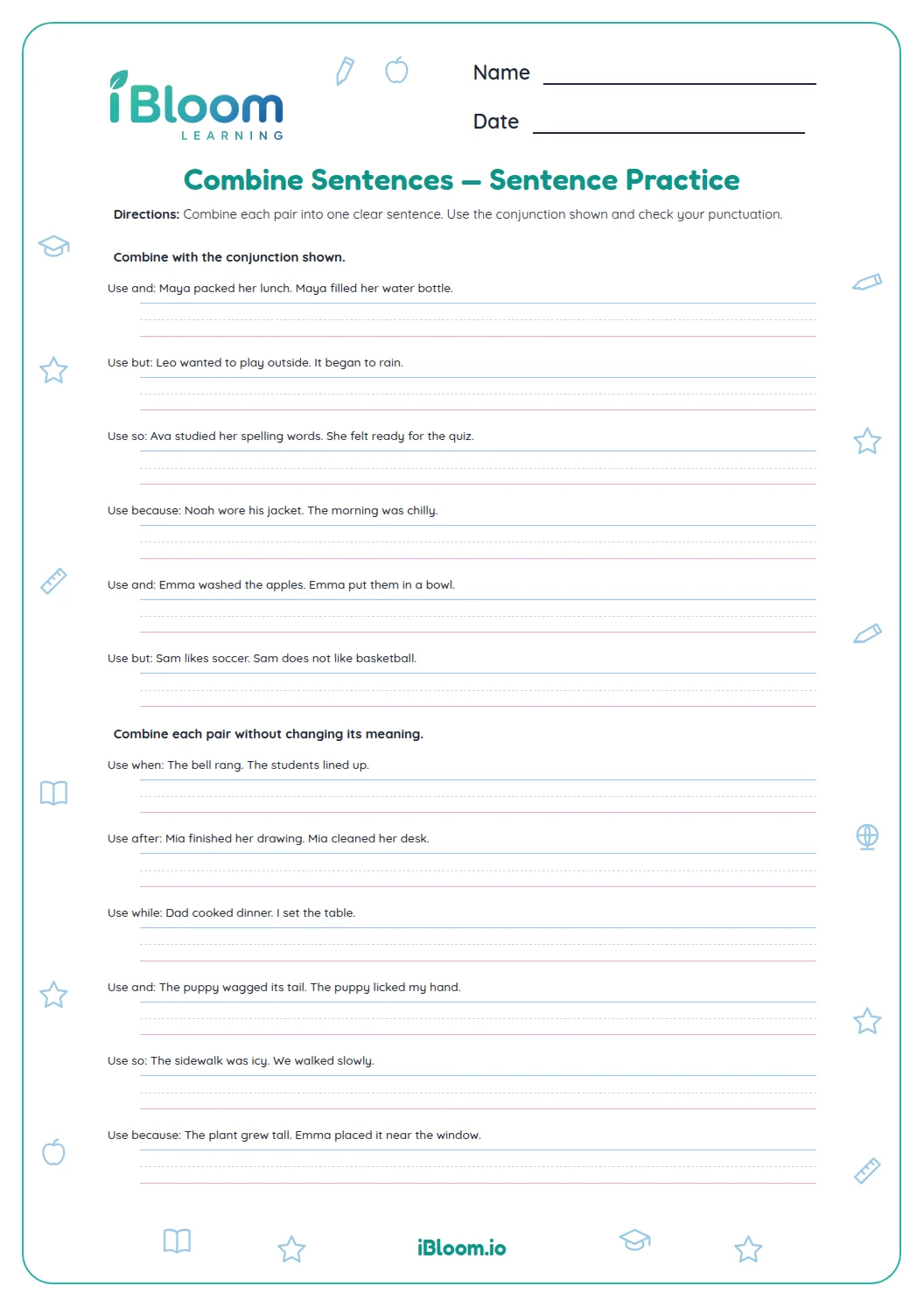
This printable Grade 4 grammar worksheet helps students distinguish a compound subject from a compound predicate. The first part asks students to recognize sentence patterns; the next asks them to name the words doing the joining; the final items invite them to write their own complete sentences. The answer key includes sample responses for the open writing prompts.
Aligned to L.4.1f
What makes a subject compound?
A compound subject has two or more subjects joined in the same sentence: “Mia and Lee carried the books.” Both names tell who carried them. The shared predicate is carried the books.
What makes a predicate compound?
A compound predicate gives two or more actions or states for one subject: “Mia carried the books and opened the door.” Mia is the subject; carried the books and opened the door are the joined actions.
- 1The puppy runs and jumps.
- 2Subject: The puppy
- 3Actions: runs; jumps
- 4The subject is one puppy, so the predicate is compound.
How does the worksheet build the skill?
Part A contrasts the two patterns in full sentences. Part B asks students to identify the joined words directly. Part C moves from recognition to writing complete examples.
A quick way to mark sentence parts
- 1Read the whole sentence once.
- 2Ask who or what the sentence is about; that is the subject.
- 3Look for a joining word such as and.
- 4Check whether the joined words name subjects or actions.
- 5Read the sentence again to make sure it is complete.
Common sentence-part mix-ups
The mistake
Calling any words joined by and a compound subject.
The fix
Ask whether both joined words name who or what; if they name actions, the predicate is compound.
The mistake
Including the subject inside the predicate answer.
The fix
Find the subject first, then name only the joined action words when asked for the predicate.
The mistake
Writing two actions without a clear subject.
The fix
Start with one named subject and make both actions belong to it.
Common Core alignment
The practice connects sentence parts with coordinating conjunctions.
Use coordinating conjunctions to connect words and phrases in sentences.
On this sheet: Students identify compound subjects and predicates joined by and, then write complete sentences using each pattern.
Show the official wordingHide the official wording
Produce complete sentences, recognizing and correcting inappropriate fragments and run-ons.
What to practice next
Make more practice
Further reading
Questions parents and teachers ask
What is a compound subject?
A compound subject has two or more subjects joined in one sentence, often with and. In “Lena and Max planted beans,” Lena and Max share the action planted. Both names answer who planted, so together they make the compound subject.
What is a compound predicate?
A compound predicate gives two or more actions or states for the same subject. In “The puppy runs and jumps,” the puppy is one subject and runs and jumps are the joined actions. Both actions tell what that same puppy does.
Can a sentence have both kinds?
Yes. “Noah and Sam read and discuss” has a compound subject, Noah and Sam, and a compound predicate, read and discuss. The worksheet includes a recognition question with both patterns together so students can check each sentence part separately.
Why do some questions ask students to write?
Writing a sample sentence checks whether students can use the pattern, not just spot it. The answer key gives a model; another complete sentence is also correct if it matches the prompt and has the requested compound subject or predicate.
How should I check the open responses?
Check that the sentence is complete and that the joined parts match the requested pattern. For a compound subject, two subjects share an action. For a compound predicate, one subject has two actions or states. The examples in the key are models.