



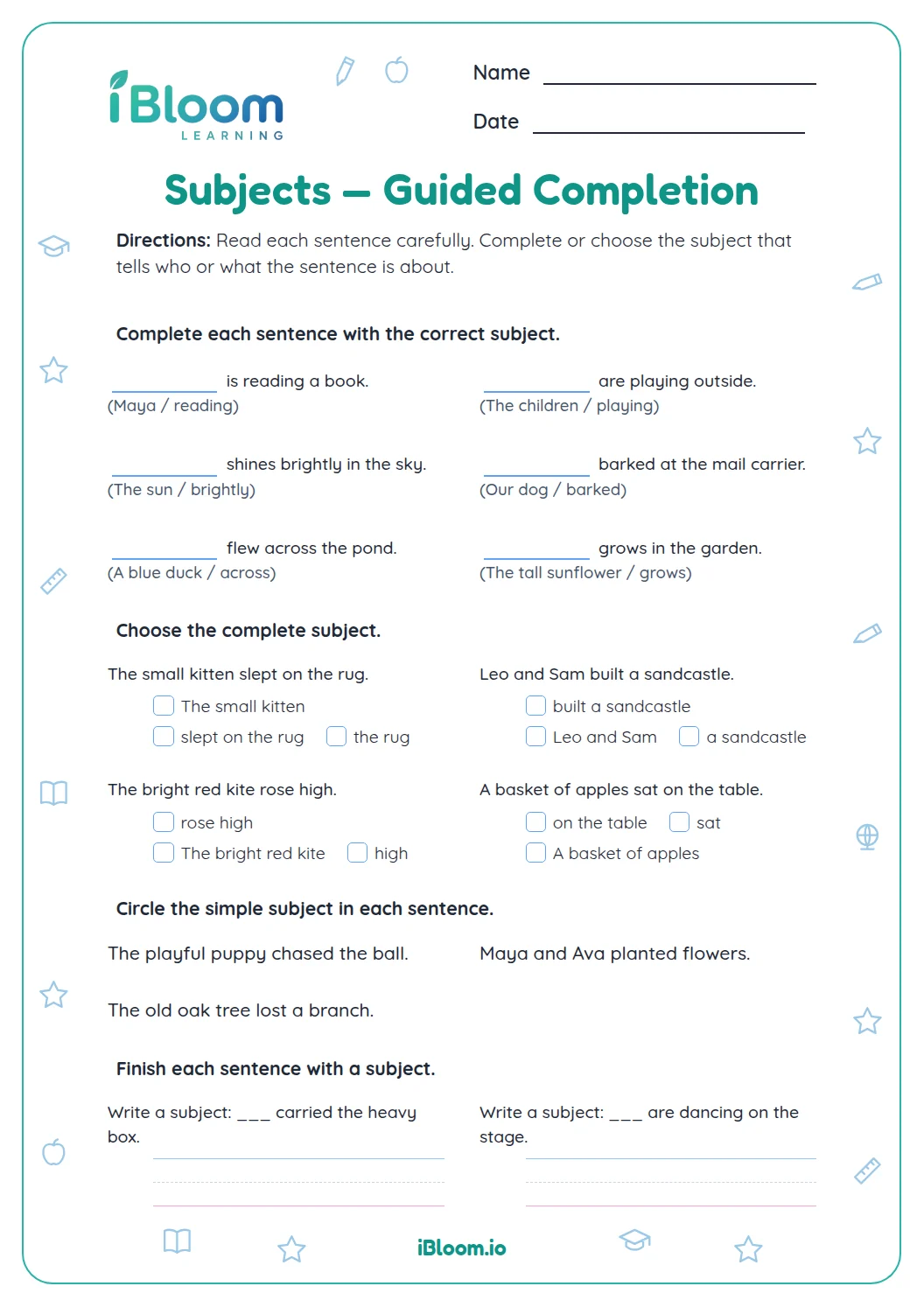
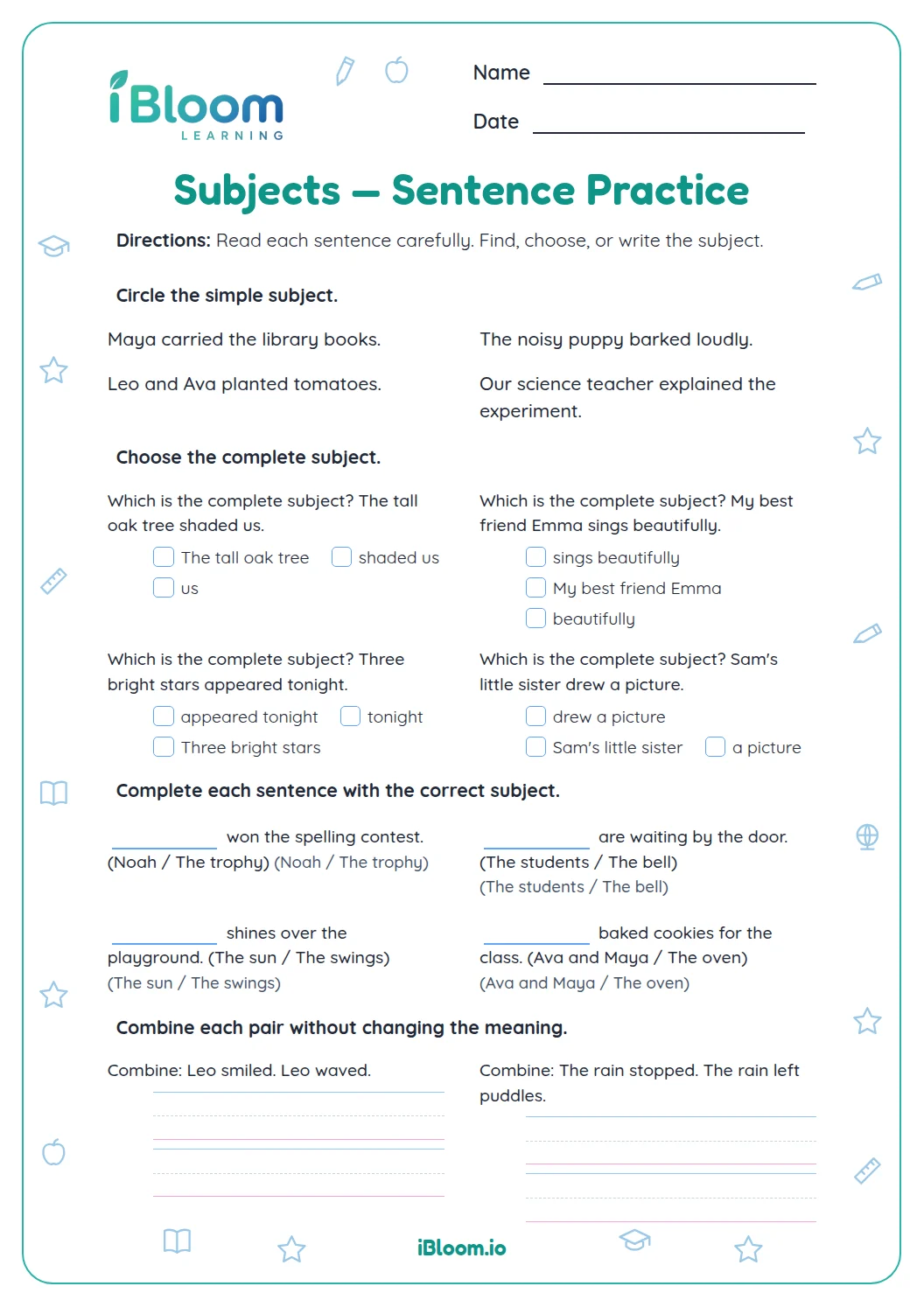
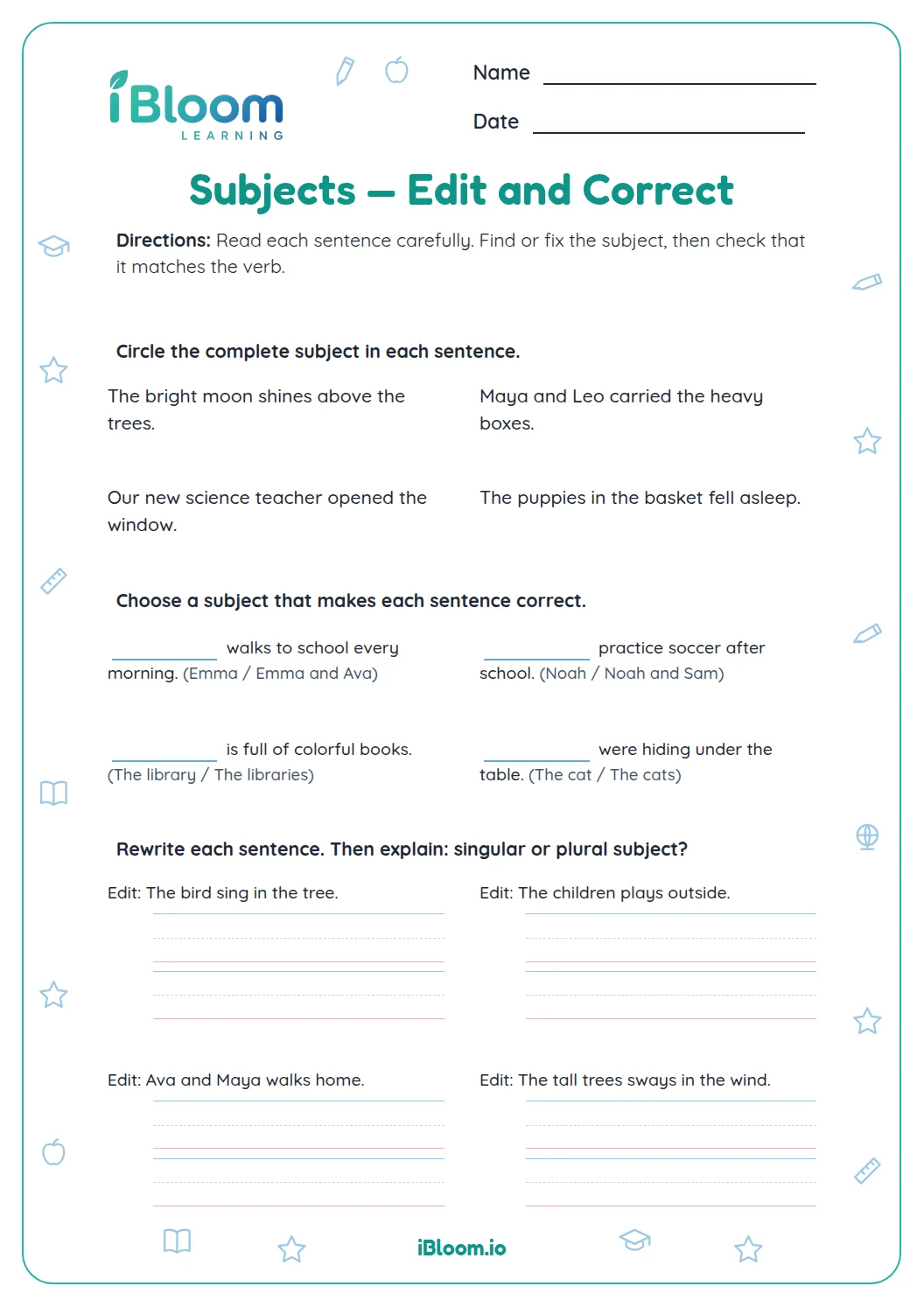

About this worksheet
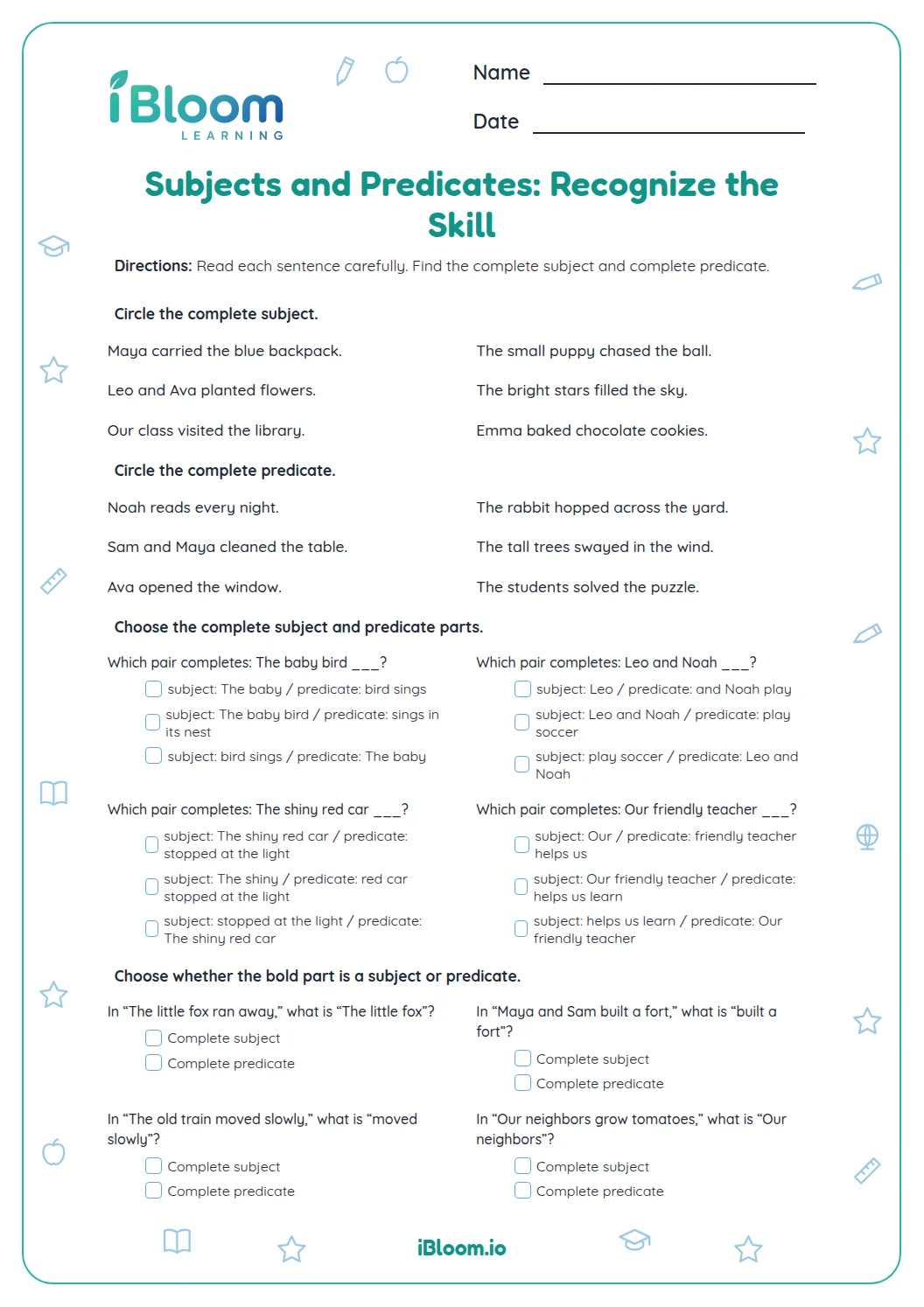
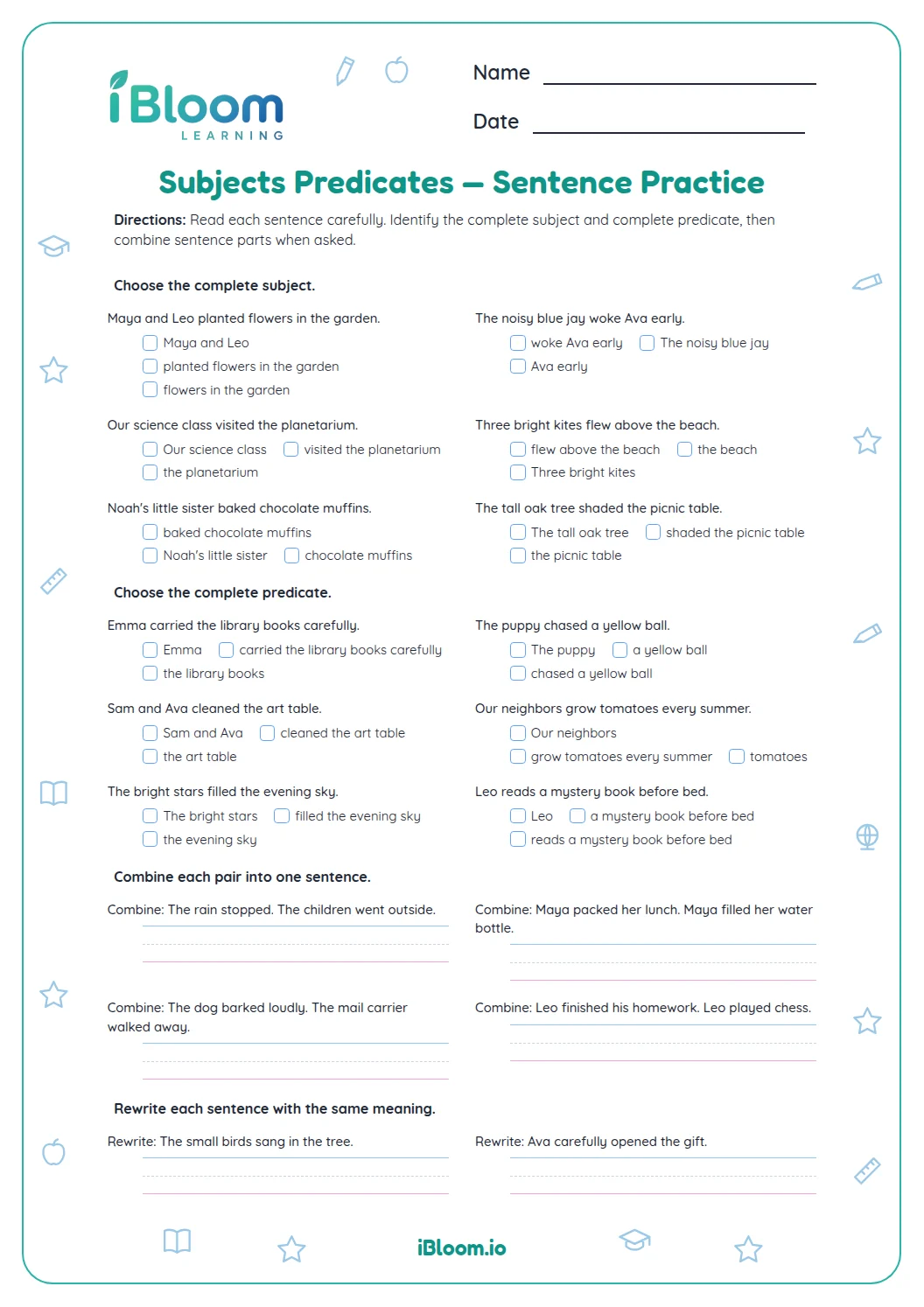
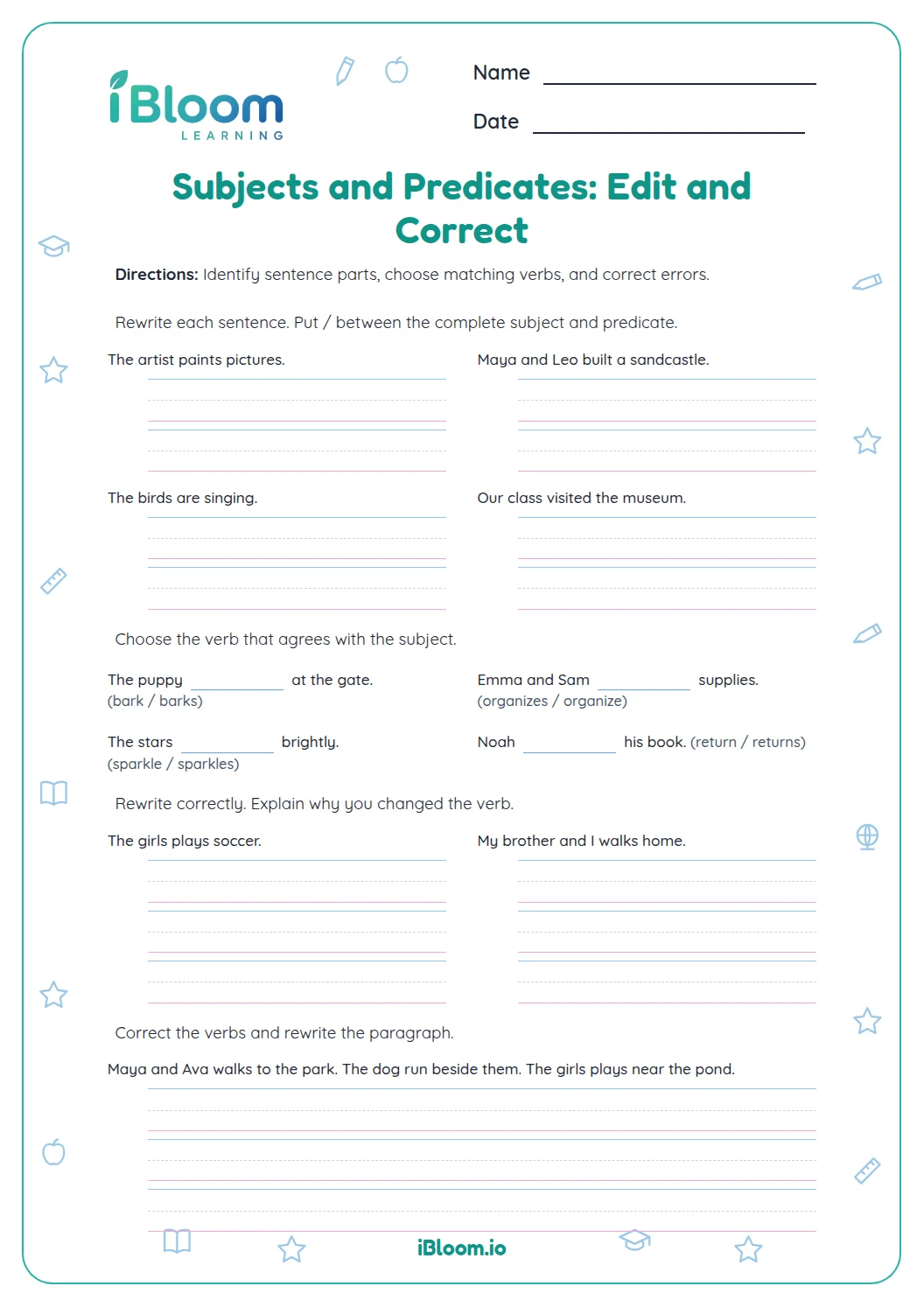
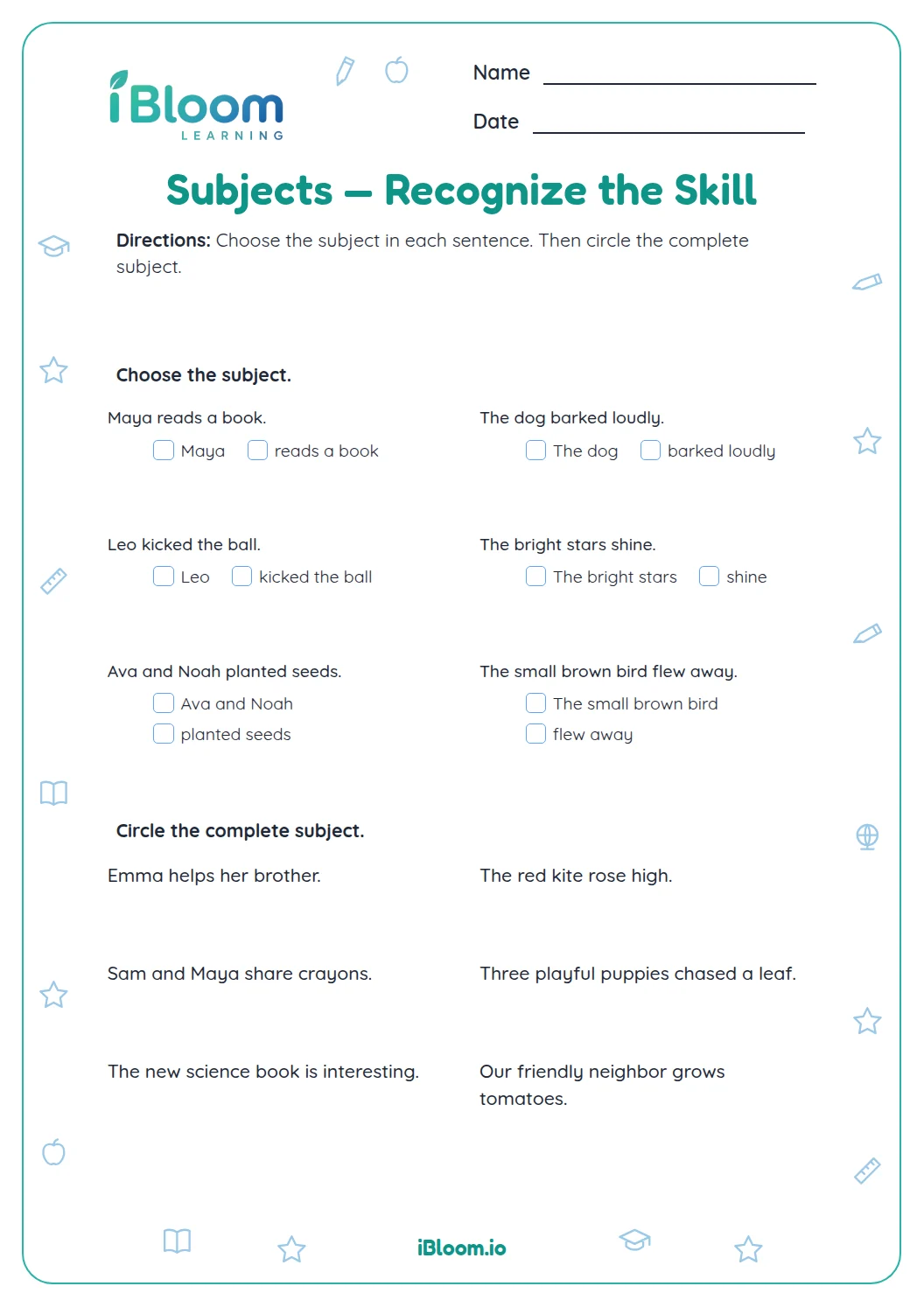
This Grade 4 grammar worksheet moves from recognizing sentence parts to applying them in original sentences. Students mark complete subjects and predicates in six examples, name both parts in six more, then write four complete sentences. It supports CCSS L.4.1 through practice with standard English grammar and usage. A separate answer key gives the identified phrases and sample writing responses.
Aligned to L.4.1
What is a complete subject?
The complete subject names who or what the sentence is about, including describing words. The complete predicate tells what that subject does or is. In “The brown puppy chased a leaf,” the subject is “The brown puppy” and the predicate is “chased a leaf.”
How can students separate subject and predicate?
Find the main person, place or thing first. Then locate what the sentence says about it. In “The young artist painted a snowy cabin,” the full subject includes young artist, and the predicate includes the action and its object.
- 1Subject: The young artist
- 2Predicate: painted a snowy cabin
How do the final questions apply the skill?
The last four prompts ask students to write complete sentences with a required subject or phrase. Their wording can vary, so the key gives sample answers rather than a single required sentence.
How to use this worksheet
- 1Read the part heading and its one-line direction.
- 2Work through the items in order and keep each answer tied to the prompt.
- 3Reread any item where two choices seem possible.
- 4Use the key after completing the page to correct specific answers.
Common slips and helpful fixes
The mistake
Choosing a word by topic alone.
The fix
Read the whole sentence and check how the word is used.
The mistake
Rushing past a key clue.
The fix
Underline or notice the phrase that determines the answer.
The mistake
Copying an answer without checking it.
The fix
Compare each response with the exact question.
Common Core alignment
This worksheet practices the listed Common Core skill through its questions.
Identify complete subjects and predicates, then use grammar conventions in original sentences.
On this sheet: Use and understand the function of the conventions of standard English grammar and usage when writing or speaking.
Show the official wordingHide the official wording
Demonstrate command of the conventions of standard English grammar and usage when writing or speaking.
What to practice next
Make more practice
Further reading
Questions parents and teachers ask
What is the difference between a simple subject and a complete subject?
A simple subject is the main noun or pronoun. A complete subject includes that main word and any describing words that belong with it. In “The bright stars appeared,” stars is the simple subject and “The bright stars” is the complete subject.
What belongs in a complete predicate?
The complete predicate includes the verb and the words that complete or describe the action. In “The train crossed the long bridge,” the predicate is “crossed the long bridge,” because the phrase tells what the train did and what it crossed.
Do the last answers have to match the answer key exactly?
No. The last four questions ask students to write their own complete sentences, so many answers can work. A response should follow the prompt, include a clear subject and predicate, and make sense as a complete sentence. A response can use different wording if it follows the direction and is a full sentence.
How many sentences do students mark?
Students mark the subject and predicate in six sentences, then independently name both parts in six additional sentences. Four final prompts ask them to write sentences using a directed subject or phrase. Read the entire sentence aloud to check that both parts fit together clearly.
How can I help if my child circles too little?
Ask what the whole sentence says about the subject. A predicate can include more than the verb: “crossed the long bridge” is the complete predicate, not only “crossed.” Likewise, keep describing words with the complete subject. The answer key gives sample sentences, since students can make many correct examples.