



About this worksheet
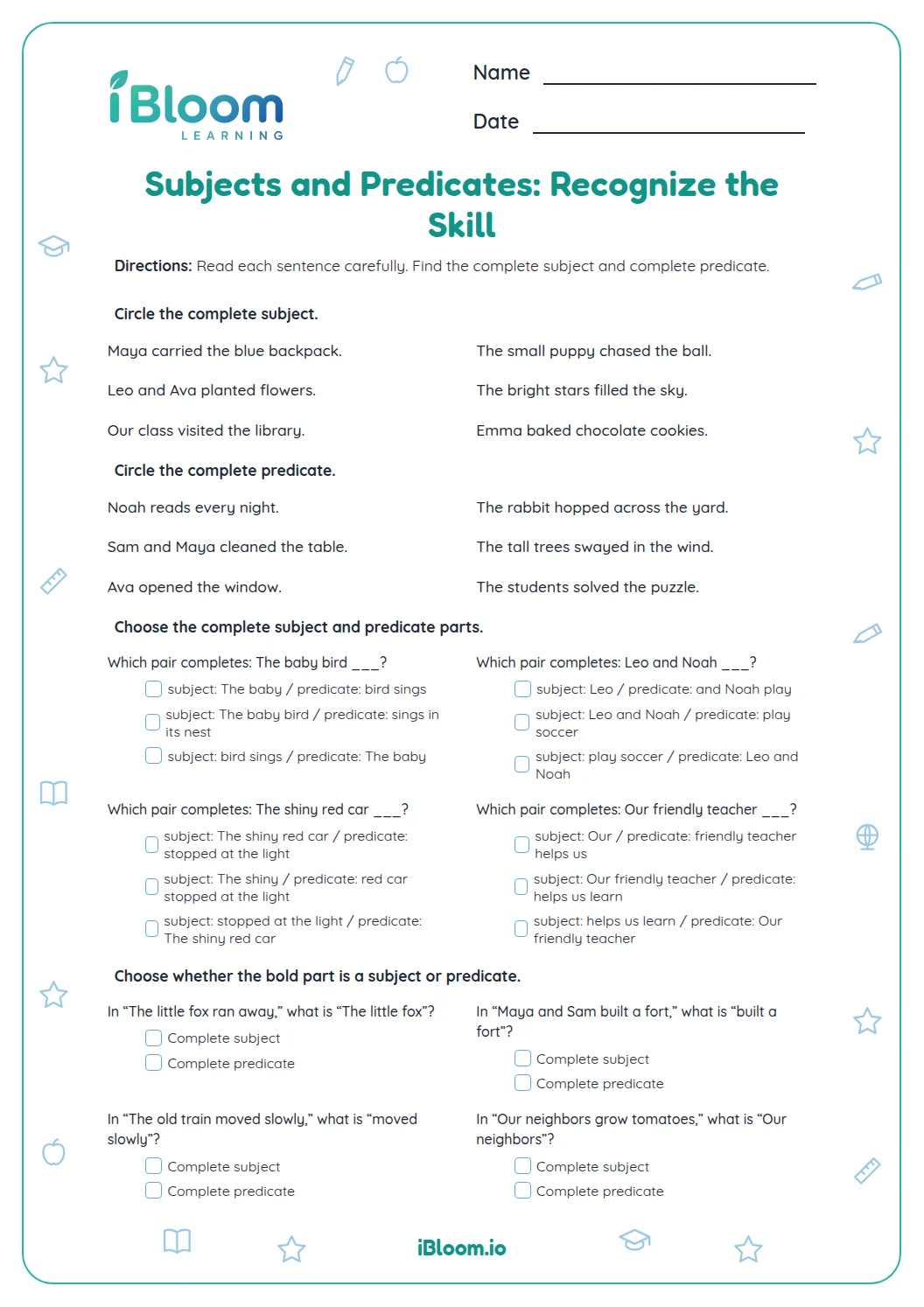
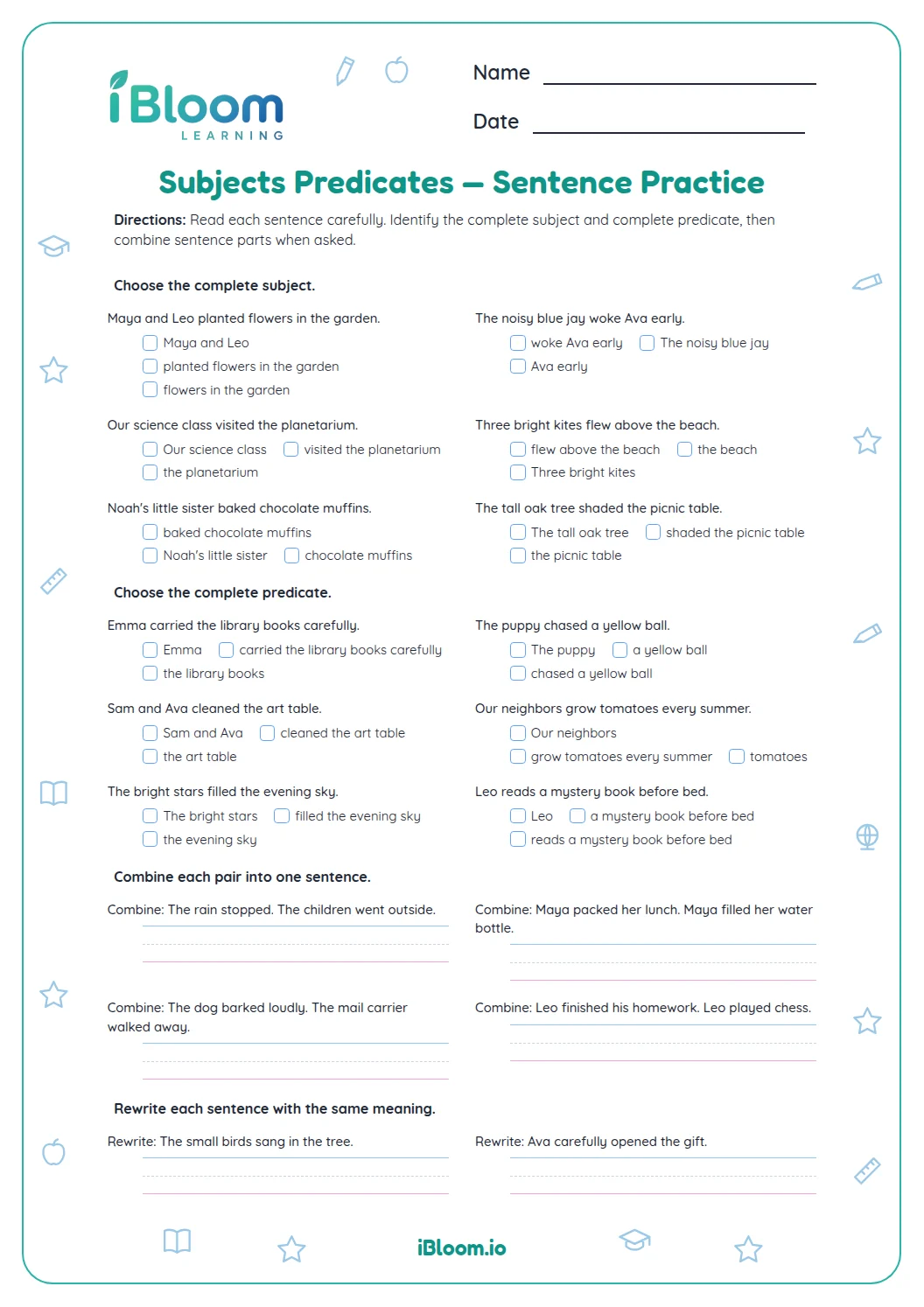
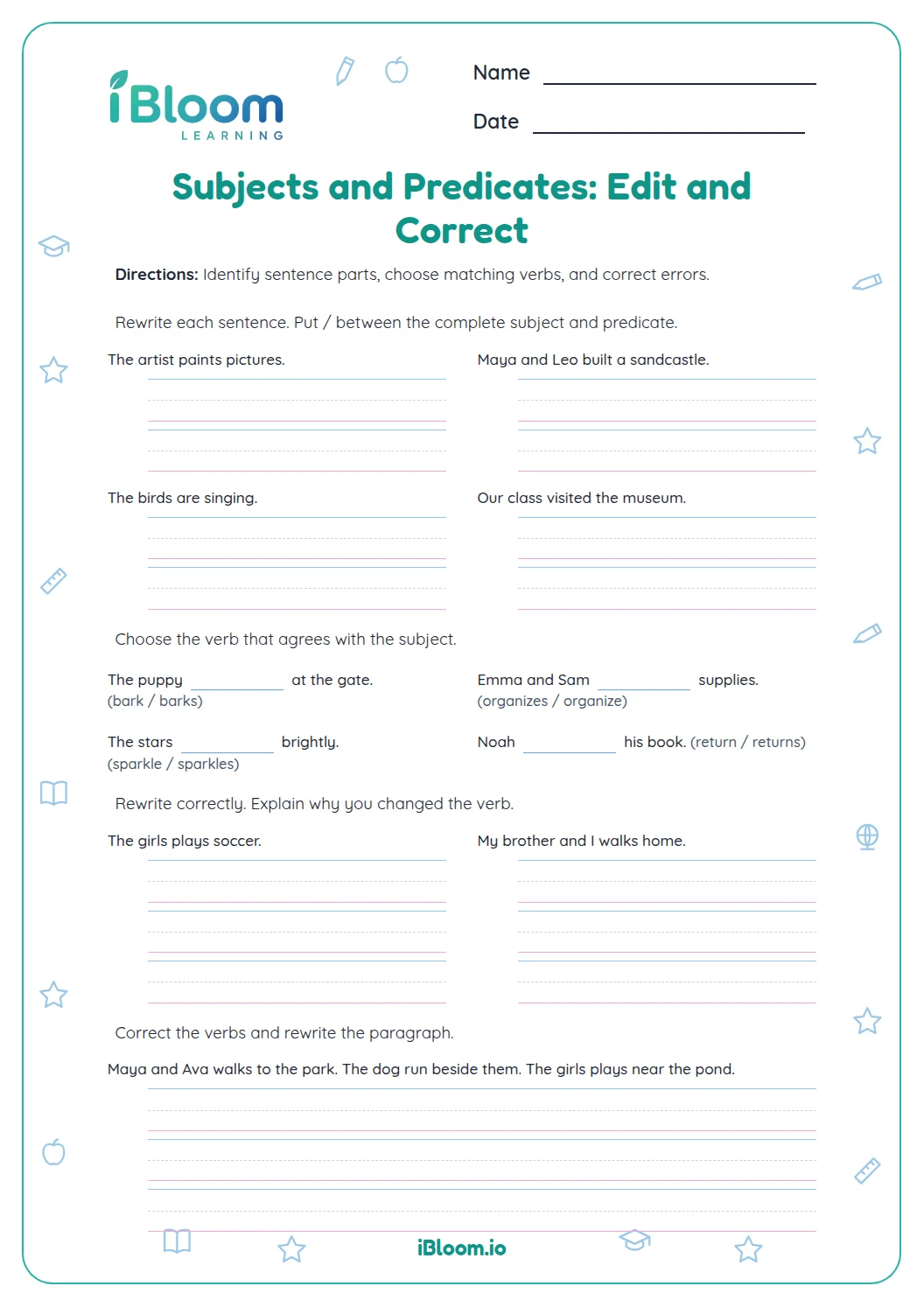
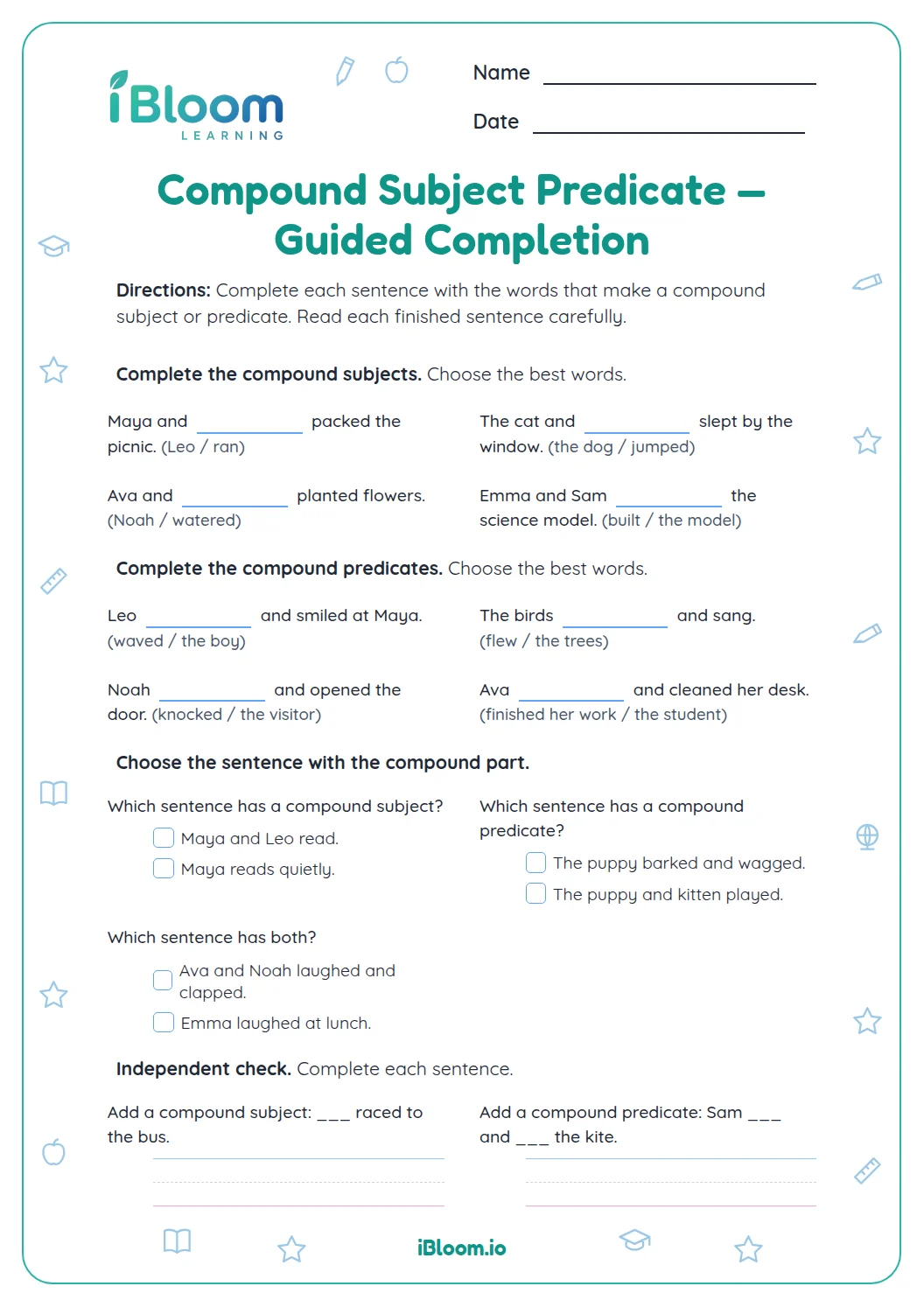
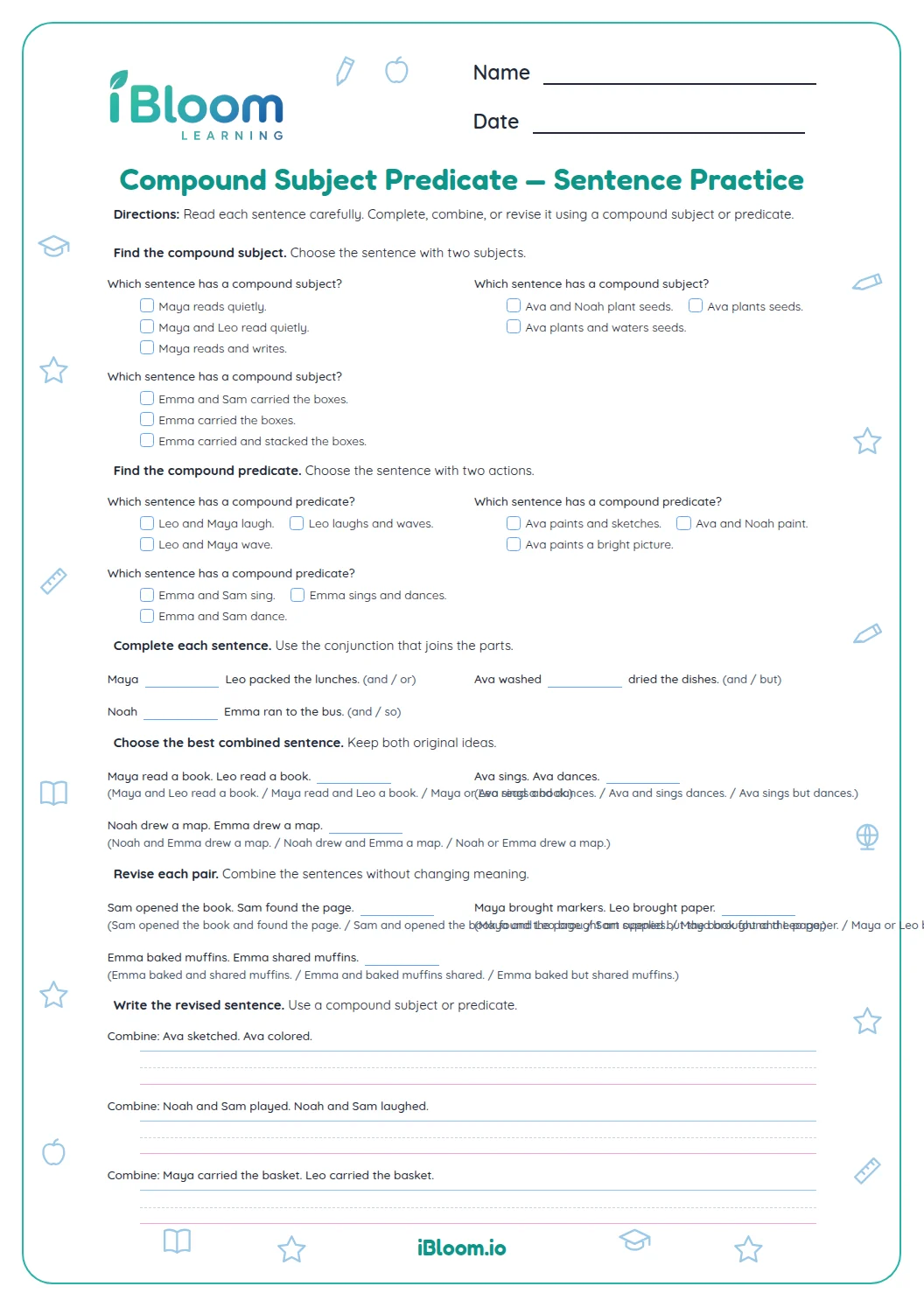
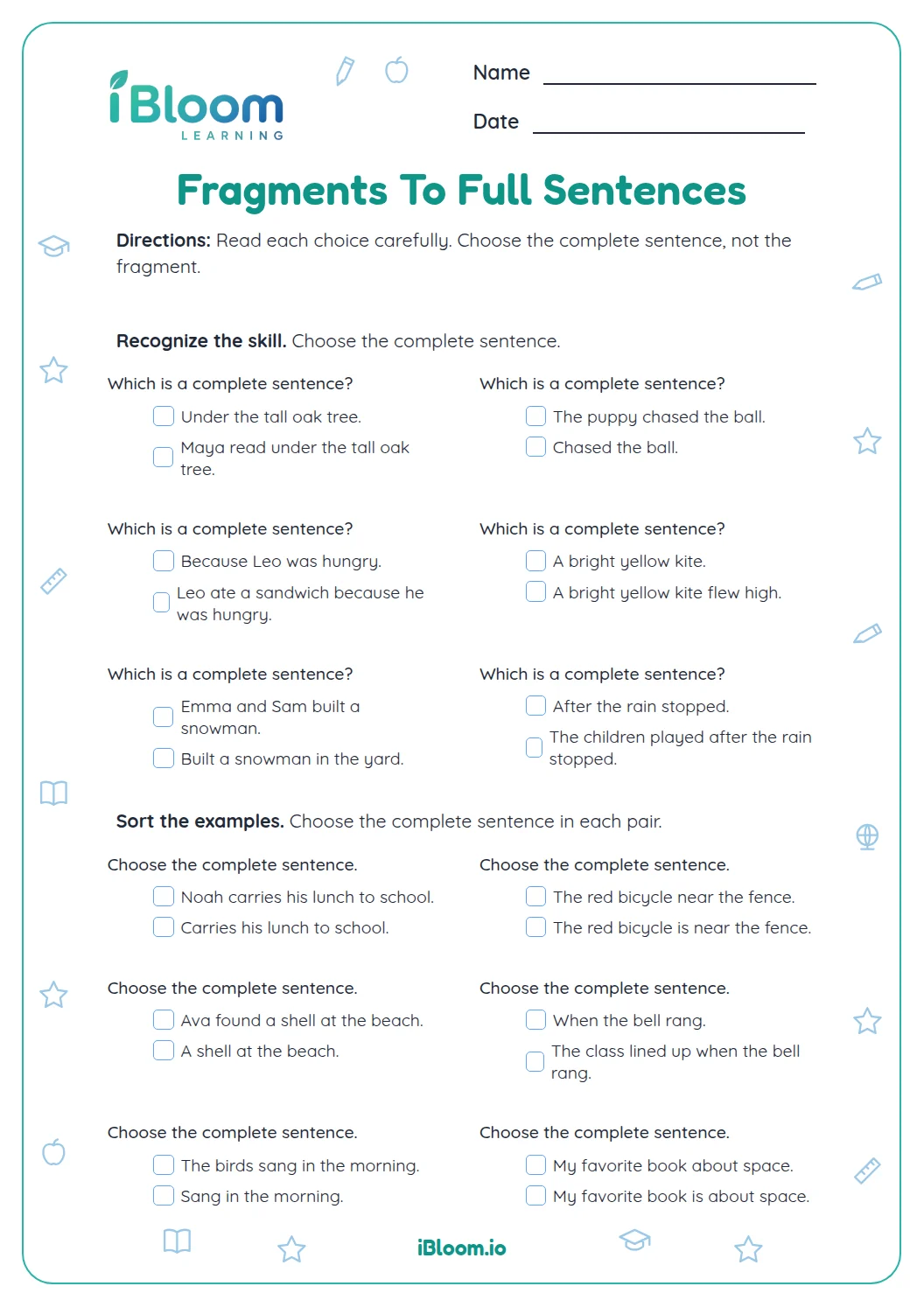
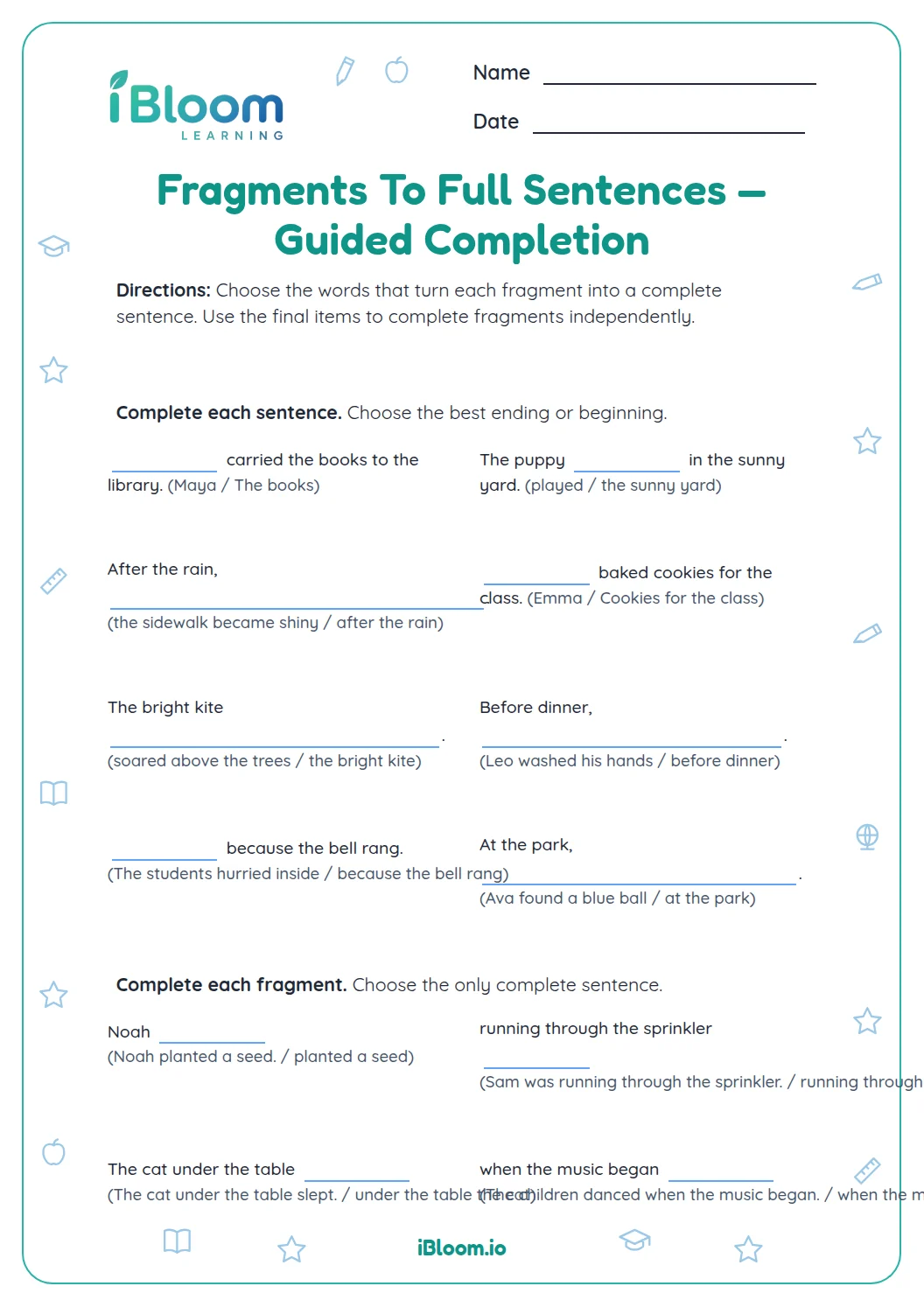
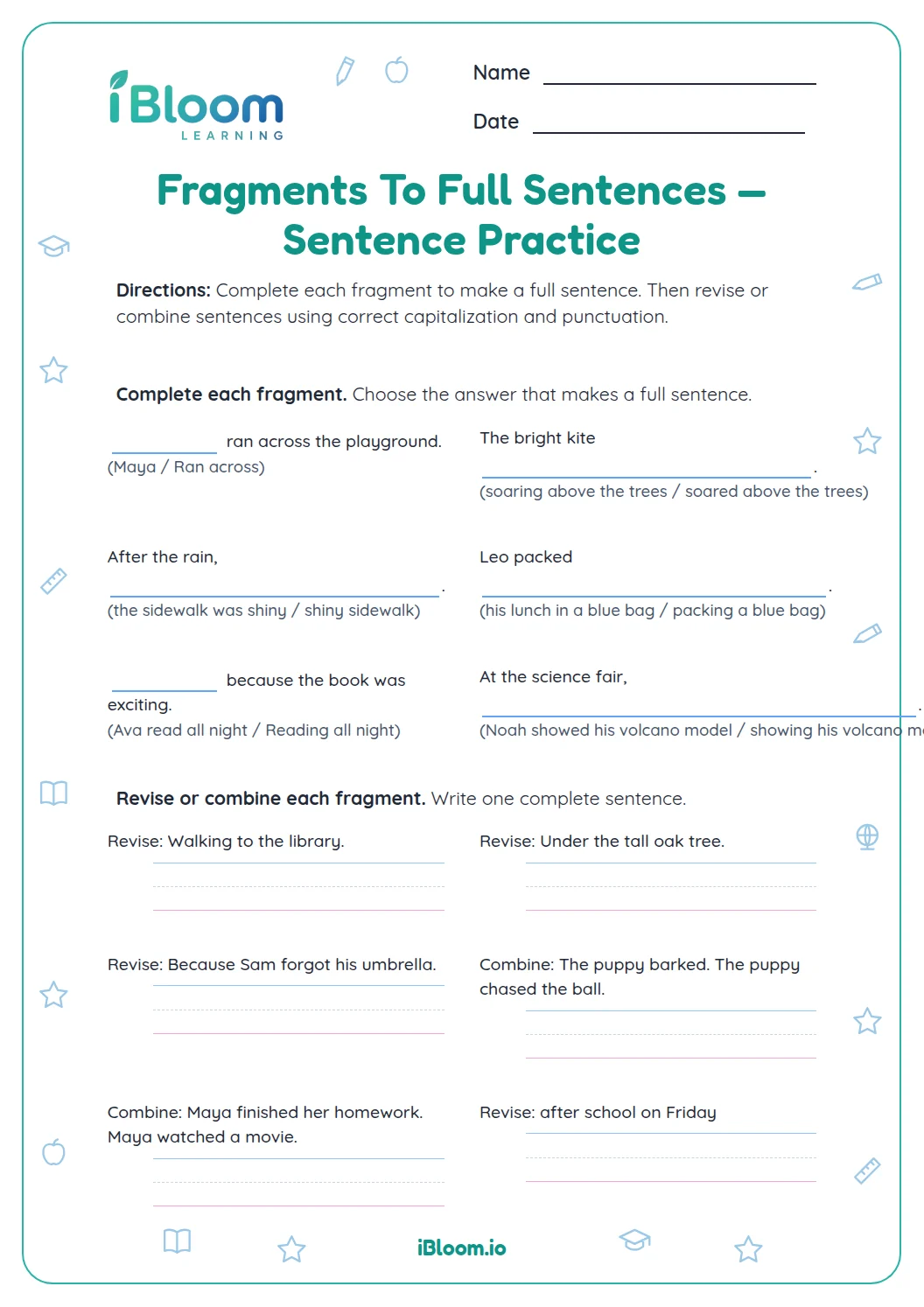
This printable gives students 18 questions to practice sentence parts at Grade 4. The answer key follows the same order and accepts the listed responses.
Aligned to L.4.1.f
What does this worksheet ask students to do?
A complete subject tells who or what a sentence is about. A complete predicate tells what the subject does or is. The practice begins with sentence stems and then asks students to supply predicates.
- Part A: complete sentence subjects
- Part B: complete sentence predicates
What belongs in a complete subject?
The final two prompts ask students to write original sentences and mark each sentence’s subject and predicate. Check that the marked parts account for the whole sentence.
- Part C: write and mark two sentences
How do you find the complete predicate?
Find what the subject does or is, then include the words that finish that thought. The complete predicate can contain more than one word.
- 1The library near our school opens early.
- 2The subject is “The library near our school.”
- 3The complete predicate is “opens early.”
How to use this worksheet
- 1Read the full sentence once.
- 2Find the main person, place, or thing.
- 3Include describing words in the complete subject.
- 4Find the verb and keep the words that complete its thought.
- 5Check that the two parts make a complete sentence.
Common mistakes and quick fixes
The mistake
Writing only the main noun as the subject
The fix
Include describing words that belong with the noun.
The mistake
Stopping the predicate at the verb
The fix
Keep the words that complete what the subject does.
The mistake
Mixing up the two labels
The fix
Ask “Who or what?” for the subject and “Does what?” for the predicate.
Common Core alignment
This sheet practices the listed standard through its questions.
Produce and check complete sentences.
On this sheet: Children identify sentence parts and write two complete sentences.
Show the official wordingHide the official wording
Produce complete sentences, recognizing and correcting inappropriate fragments and run-ons.
What to practice next
Make more practice
Further reading
Questions parents and teachers ask
What is a complete subject?
This printable has 18 questions about complete subjects and predicates. Students finish sentence stems, then write two original sentences and mark each subject and predicate. The answer key provides sample responses for open writing prompts and explains what a complete subject or predicate includes.
What is a complete predicate?
A complete predicate tells what the subject does or is and includes its related words. In “The library near our school opens early,” the complete predicate is “opens early.” Part B asks students to identify the complete predicate in eight sentences, with answers in the key.
How many questions are on the worksheet?
There are 18 questions in three parts: eight complete-subject identifications, eight complete-predicate identifications, and two original sentences. Students mark the subject and predicate in each sentence they write. The answer key gives the identification answers and sample sentences for the open responses.
What is the difference between a simple and complete subject?
The simple subject is the main naming word; the complete subject includes the words that go with it. In “The coach with a red cap waved,” coach is the simple subject and “The coach with a red cap” is the complete subject. Part A asks for the full phrase.
How can students check their answers?
For Parts A and B, compare the phrase with the answer key and check that it includes all words belonging to that sentence part. For the final two items, underline the subject and circle the predicate in a complete sentence. The key gives one possible sentence for each prompt.
Is an answer key included?
Yes. The separate answer key identifies the complete subject or predicate for the first 16 questions. It also gives sample sentences for the last two questions; students may write different sentences as long as each has a complete subject and predicate.