






About this worksheet
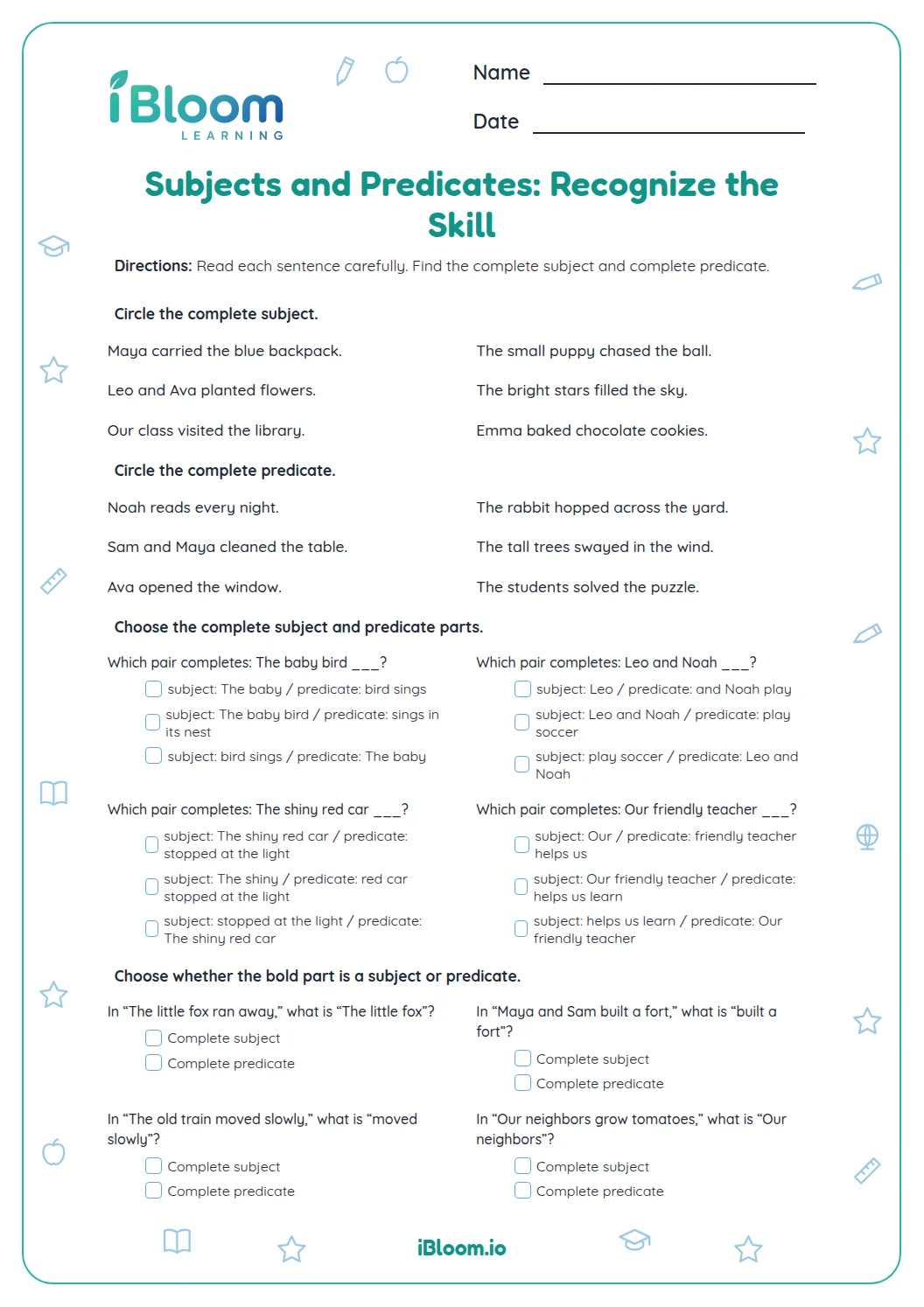
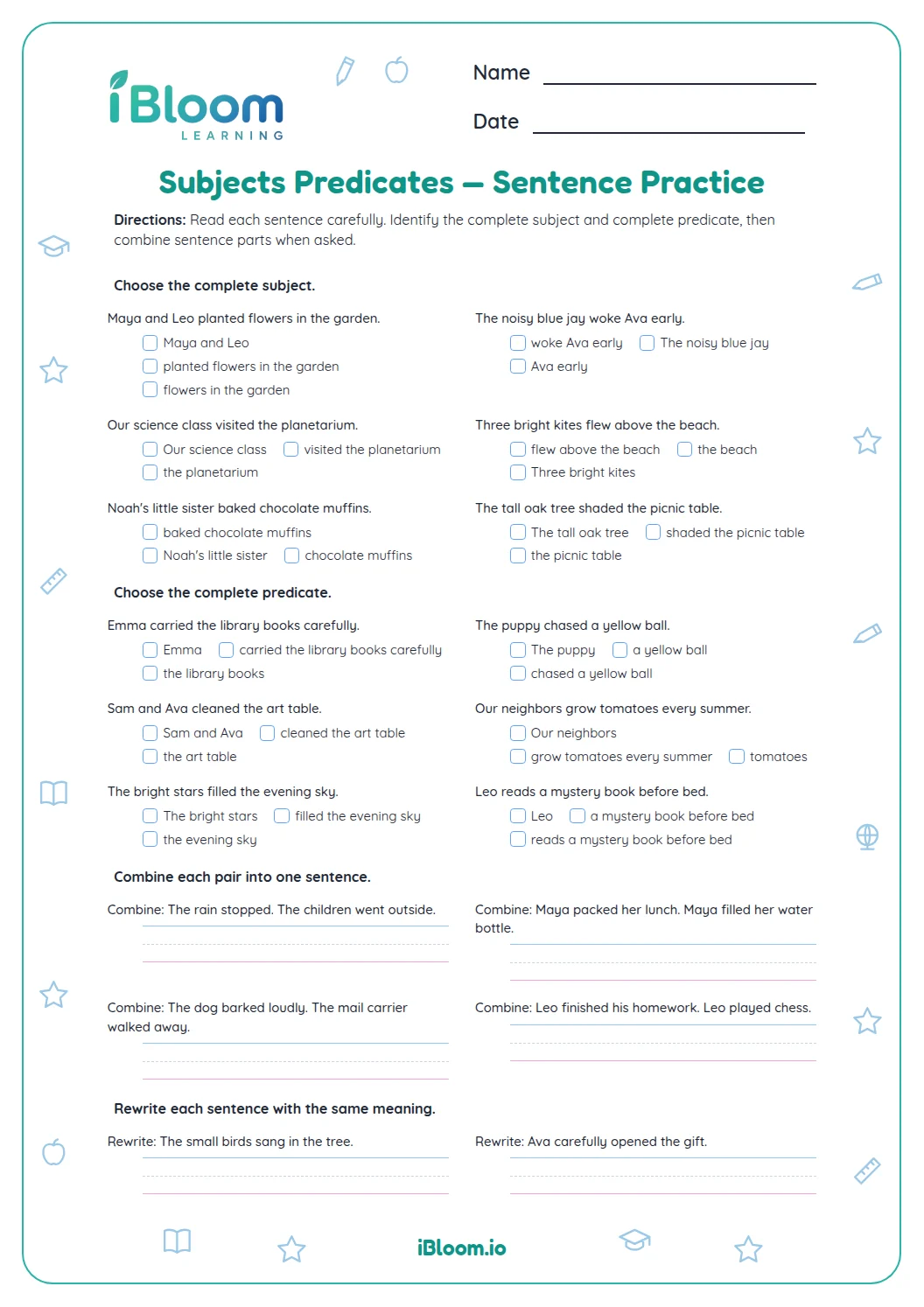
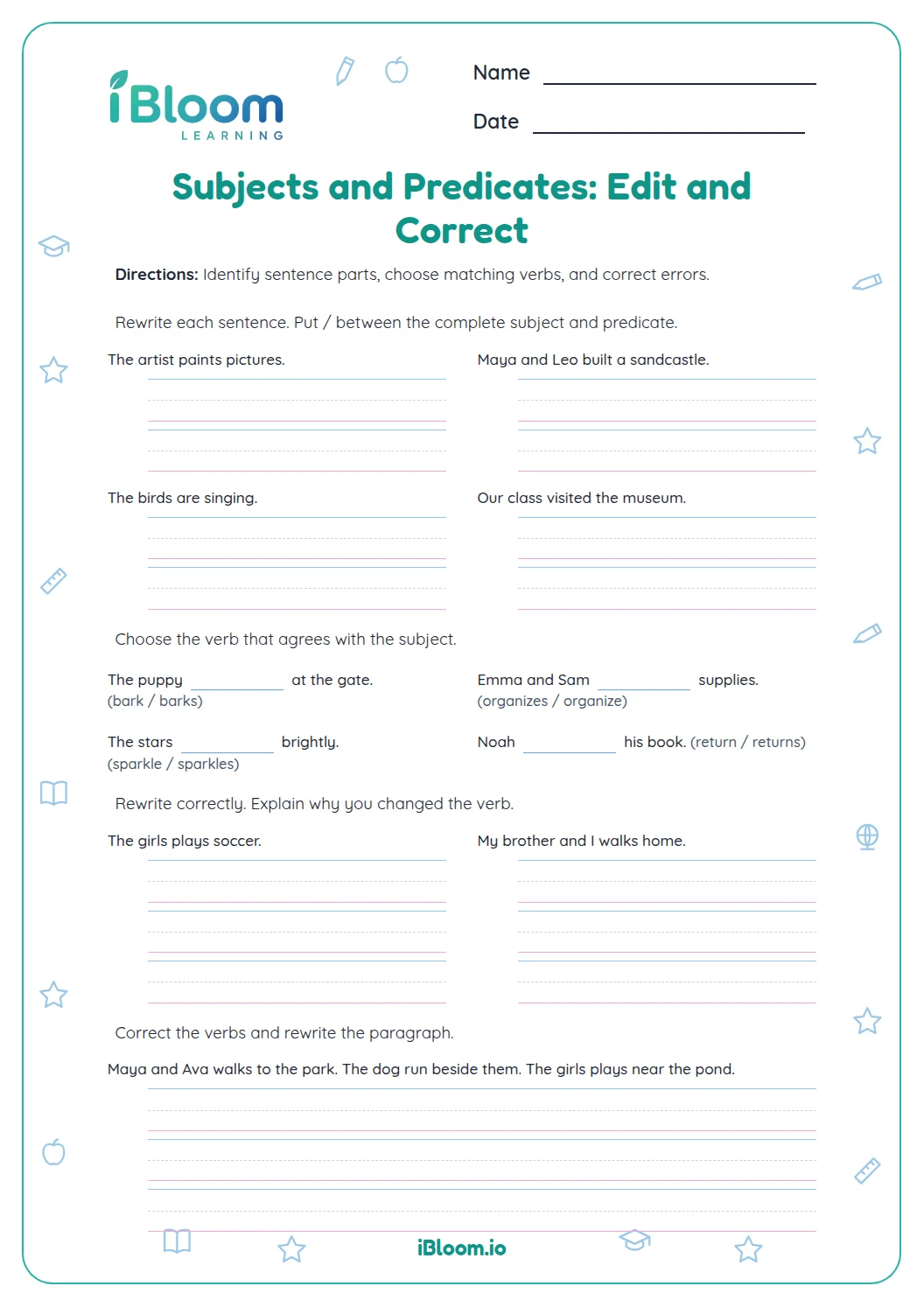
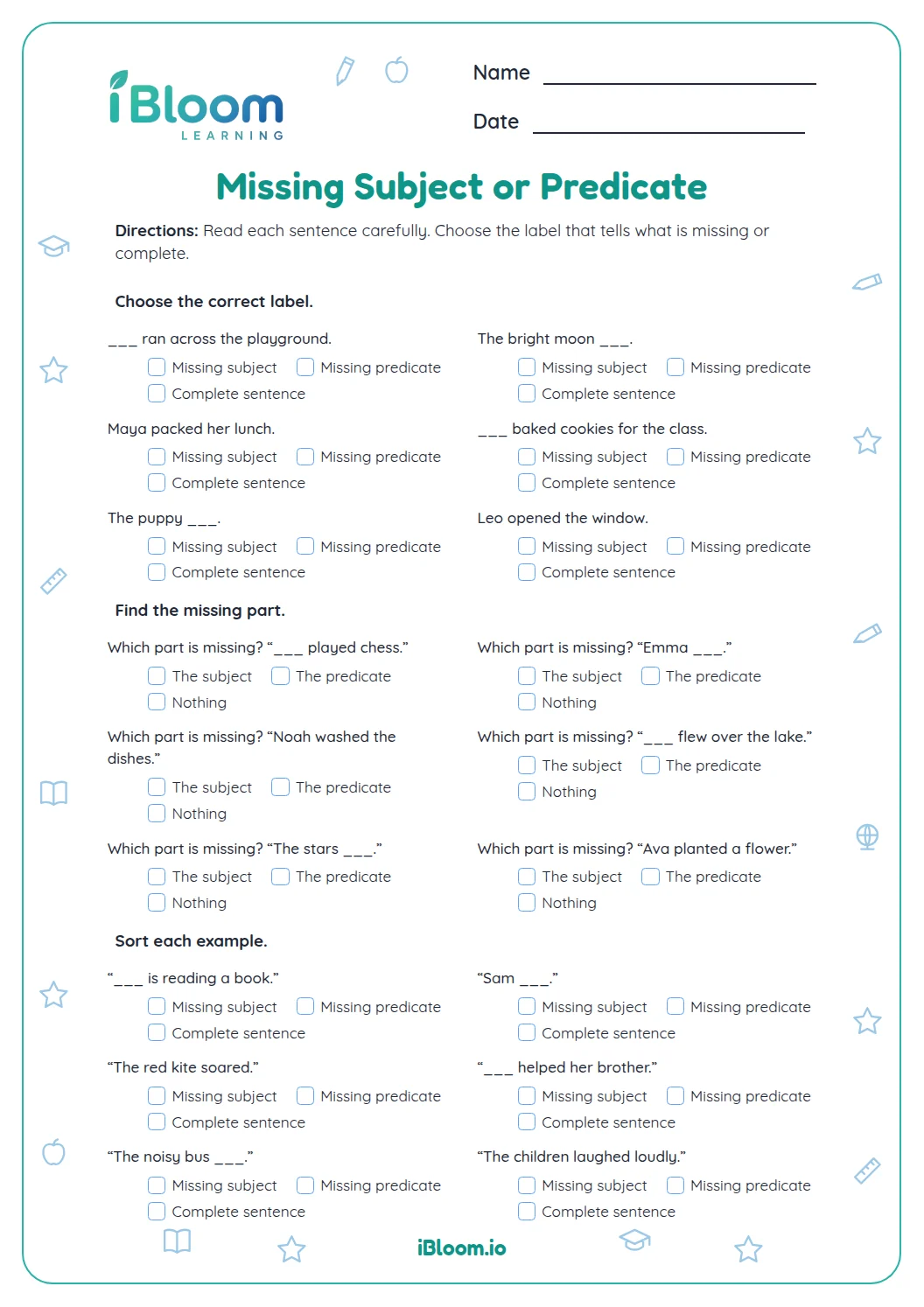
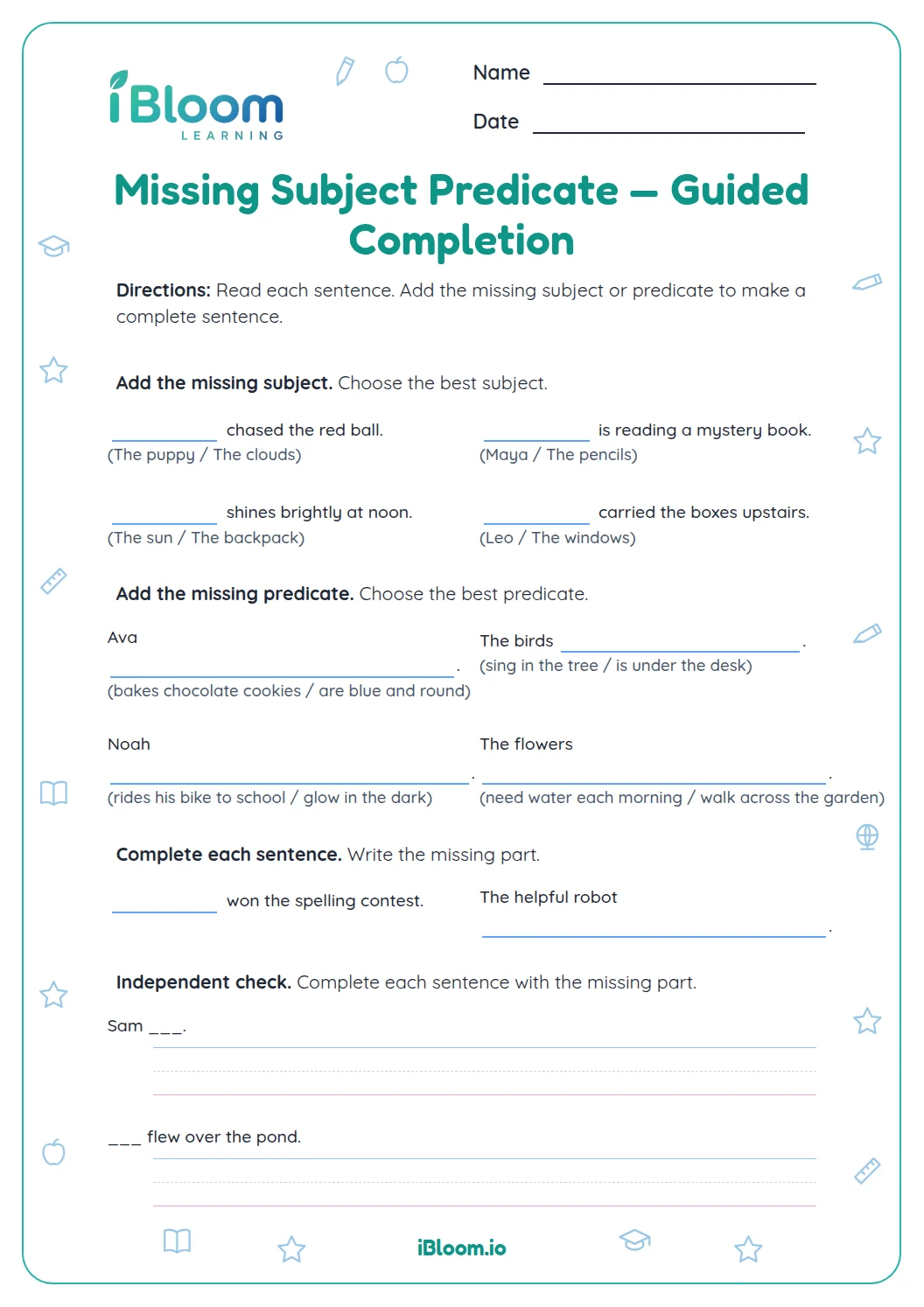
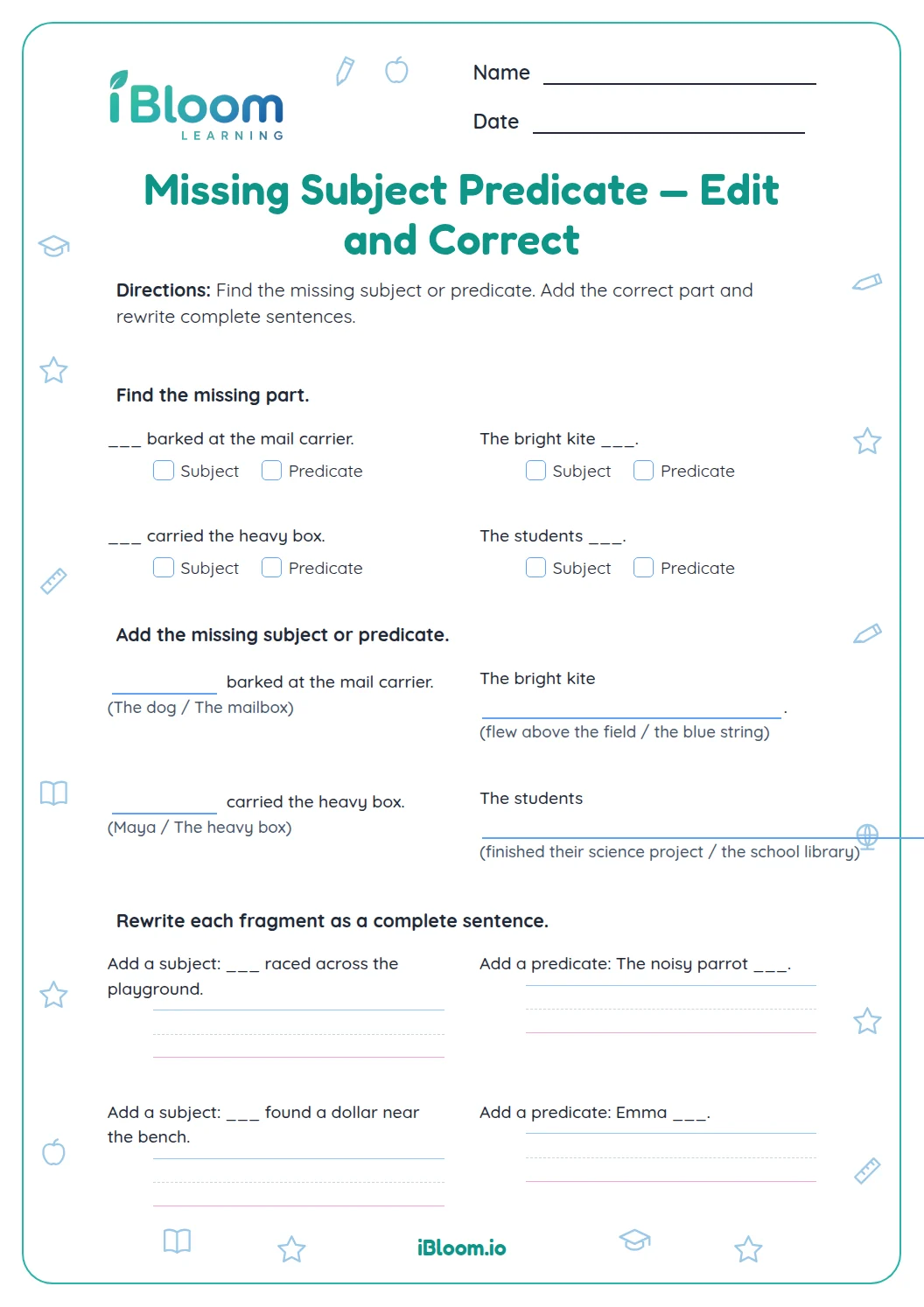
This Grade 4 grammar worksheet combines sentence completion with subject and predicate identification. Students practice both sentence parts in 14 items, then check their work with a key that includes sample completions.
What belongs in a complete subject?
A complete subject names who or what the sentence is about. In question 1, a possible subject is “The young foxes,” which tells who raced across the field.
What belongs in a complete predicate?
A complete predicate tells what the subject does or is. “Planted tomatoes” completes “Our class ___” by telling what the class did.
How can you find each part?
First find the main verb and ask who or what does it. The complete subject includes that noun or pronoun and its describing words; the predicate includes the verb and its details.
How to work through this page
- 1Read the whole sentence or sentence frame.
- 2Find the verb or action.
- 3Ask who or what does the action to locate the subject.
- 4Include the words that complete the requested part.
Check these details
The mistake
Writing only the main noun as the subject.
The fix
Include describing words that belong with it.
The mistake
Leaving out the verb in a predicate.
The fix
Make sure the predicate tells what the subject does or is.
The mistake
Treating an opening phrase as the subject.
The fix
Find who or what performs the main action.
What to practice next
Make more practice
Questions parents and teachers ask
What is a complete subject?
A complete subject names who or what the sentence is about, including words that describe it. In question 11, “The curious fox” is the complete subject. It is more than the noun fox because curious is part of the subject phrase.
What is a complete predicate?
A complete predicate tells what the subject does or is and includes the verb with its related words. In question 12, “planted a garden bench” is the predicate. The subject is Maya and Luis, who did the planting.
How does the worksheet mix its practice?
Questions 1–10 ask students to complete a sentence by supplying a missing subject or predicate. Questions 11–14 use longer sentence frames as a challenge. Sample answers are provided for open-ended completions, and other clear responses that fit the sentence frame can work.
Can a sentence have more than one correct completion?
Yes. The completion questions allow different subjects or predicates as long as the result is a clear, complete sentence. The answer key gives one sample response. Students can check that the subject names who or what and the predicate completes the thought. A response can use different words from the sample when it fits the sentence frame and keeps the meaning clear.
How can I help a child identify the subject?
Have the child find the main verb first, then ask who or what does that action. Include words that describe the noun or pronoun. For a predicate, start with the verb and include the words that finish what the subject does or is.