



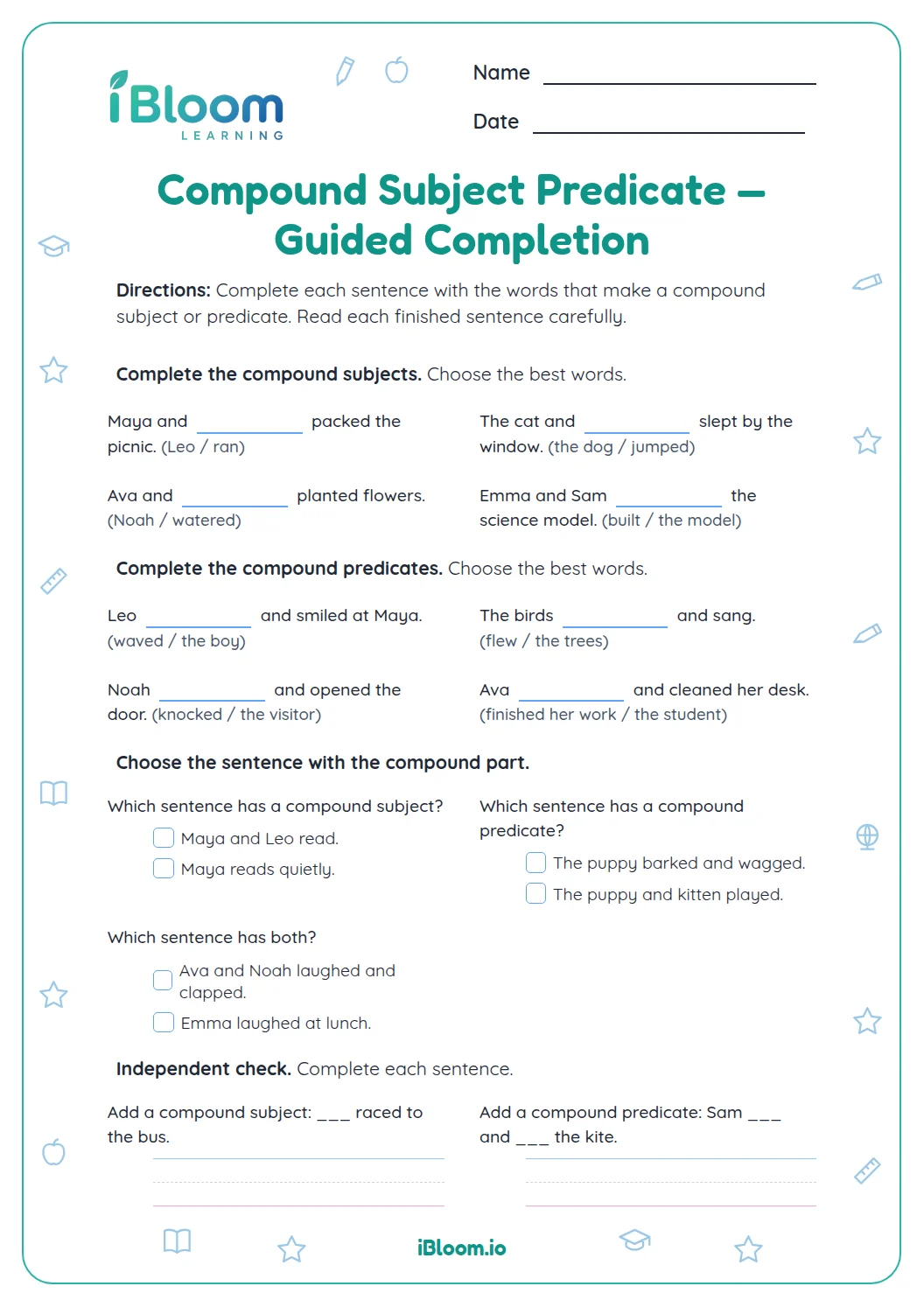
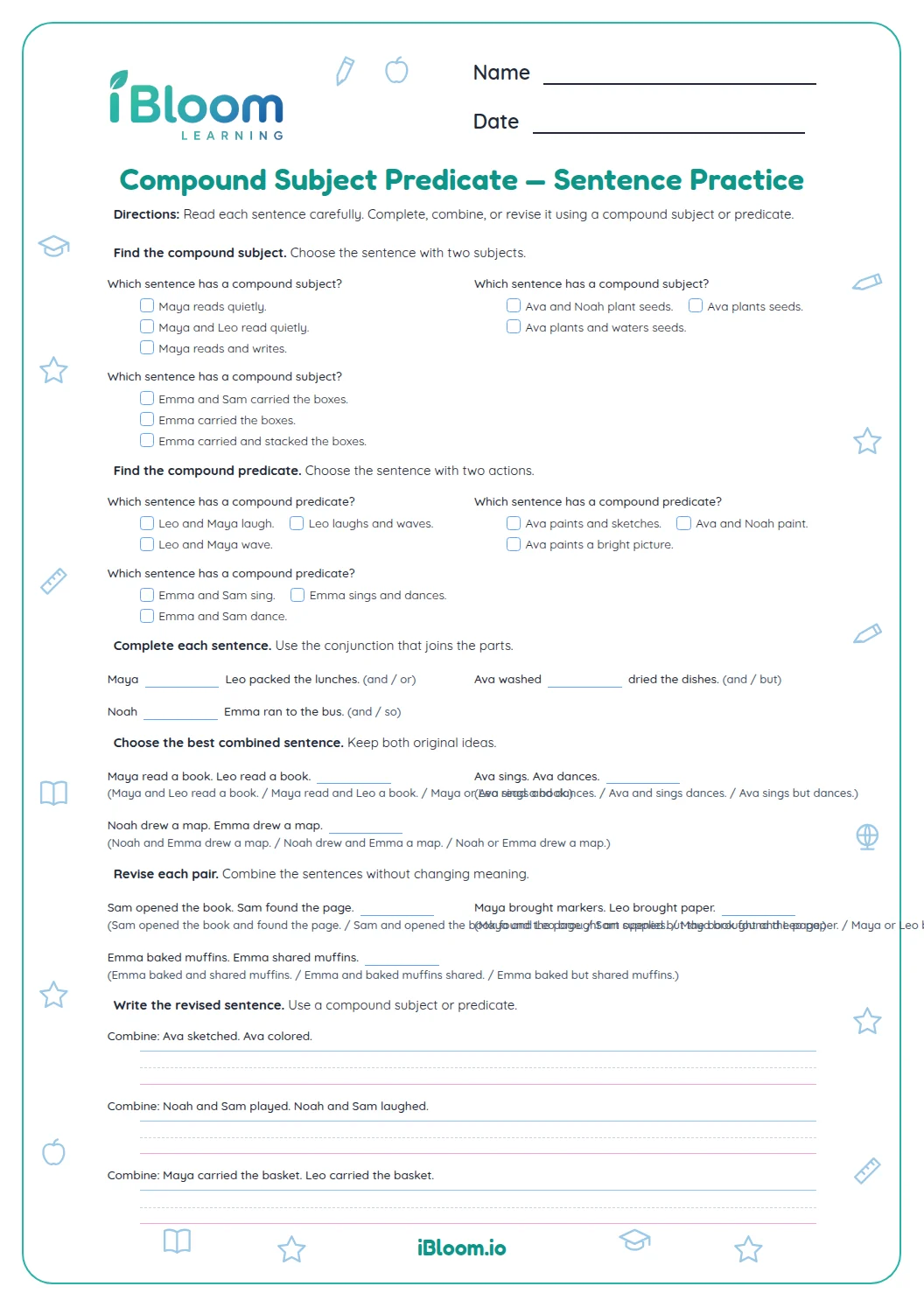

About this worksheet
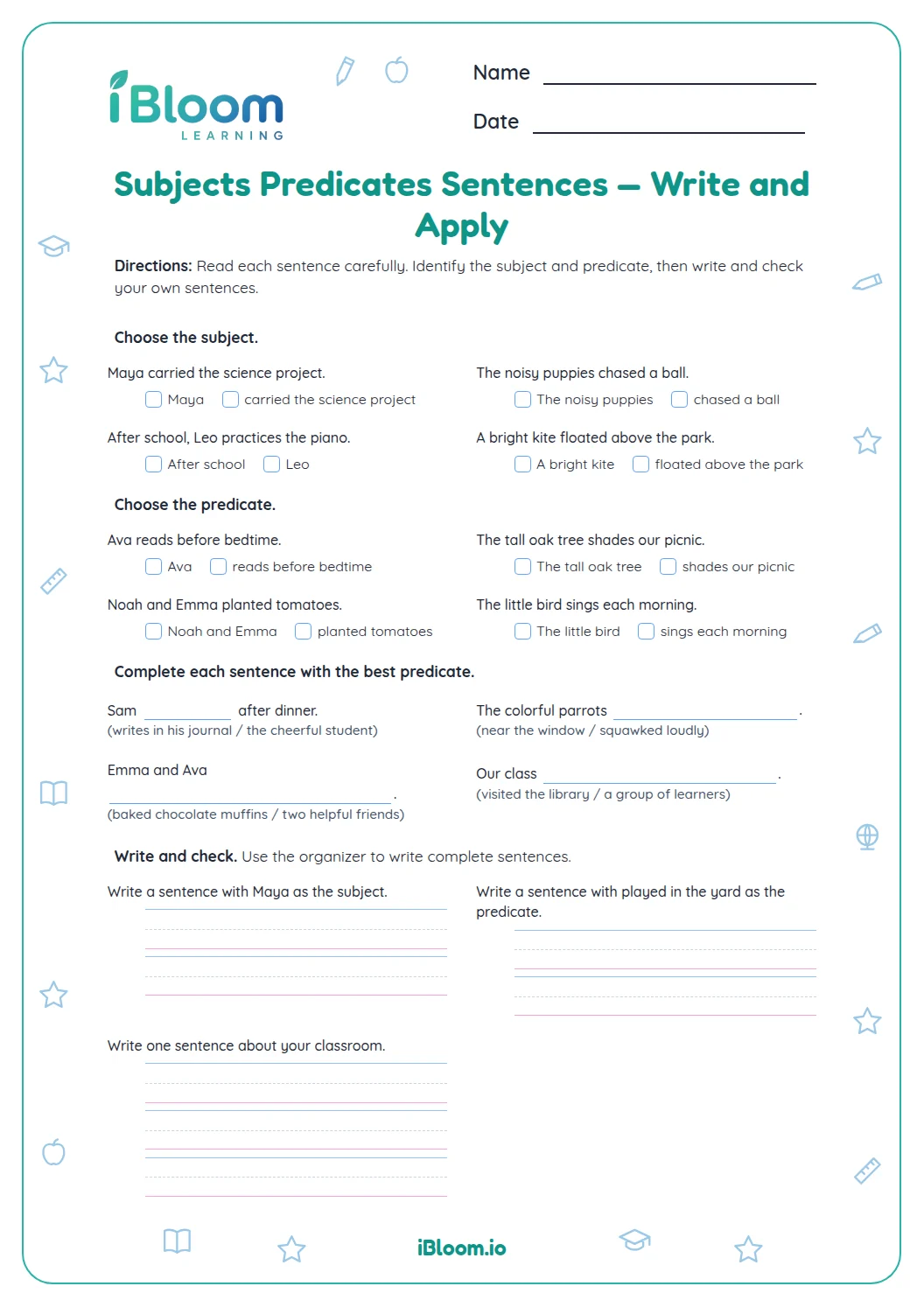
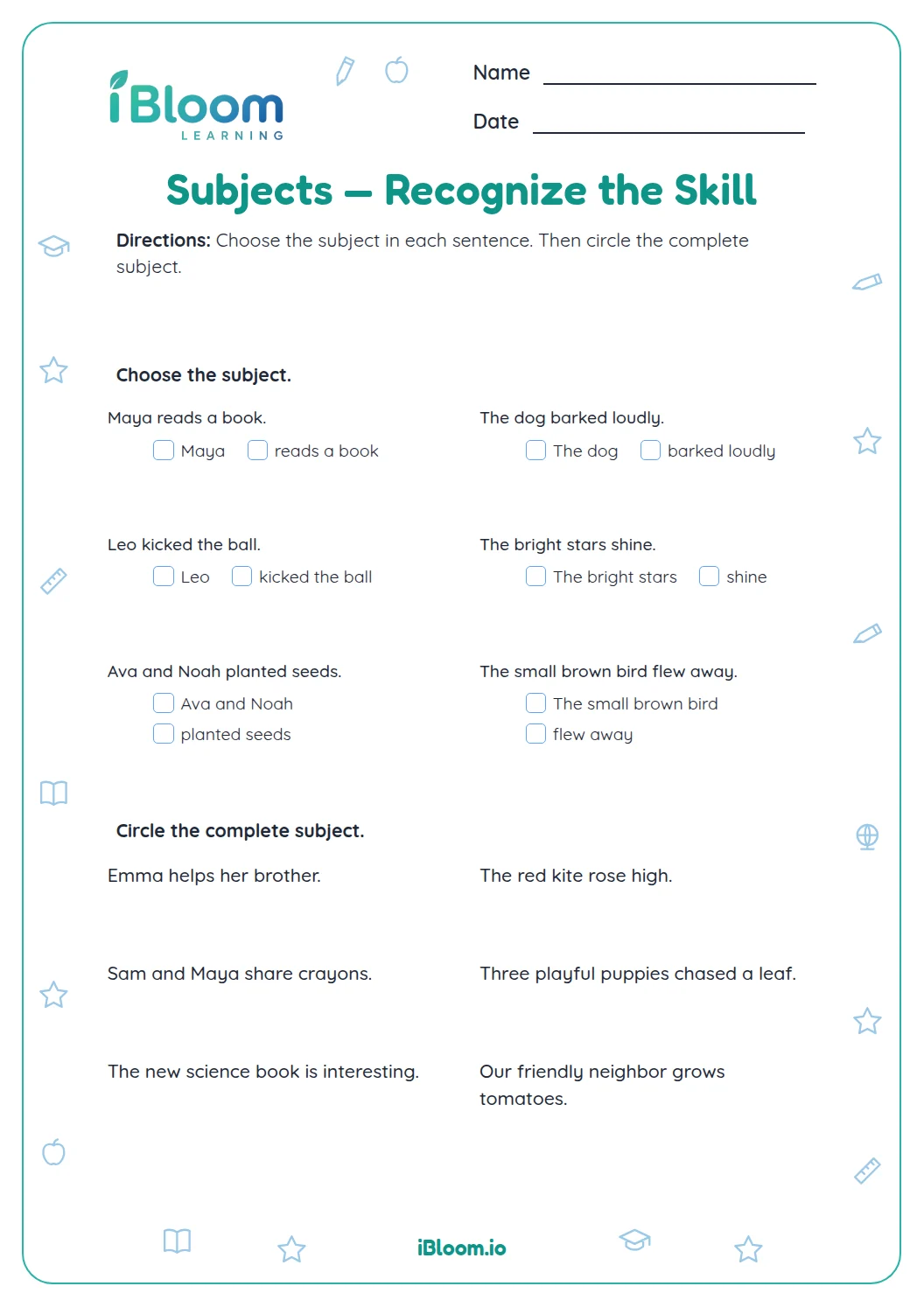
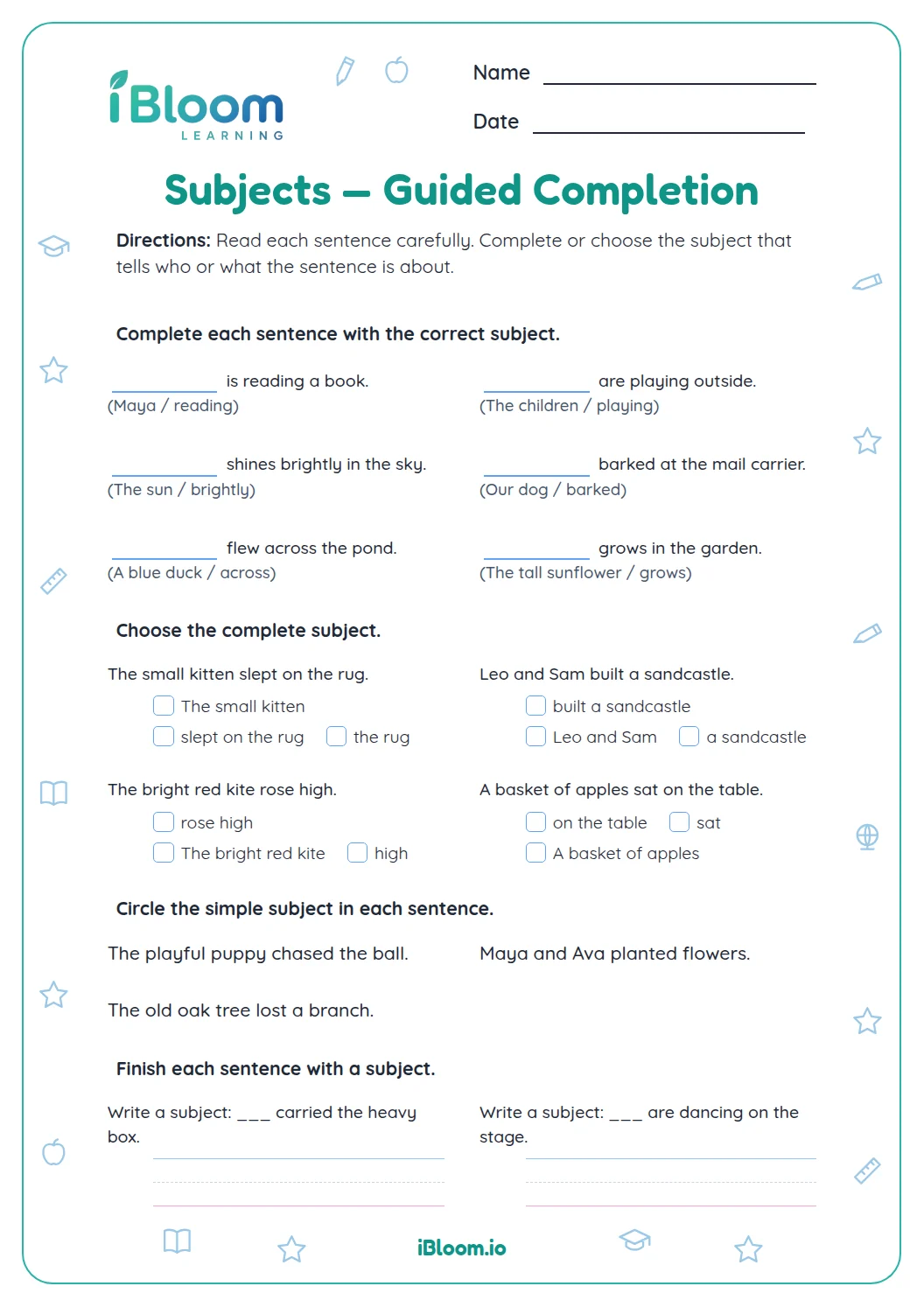
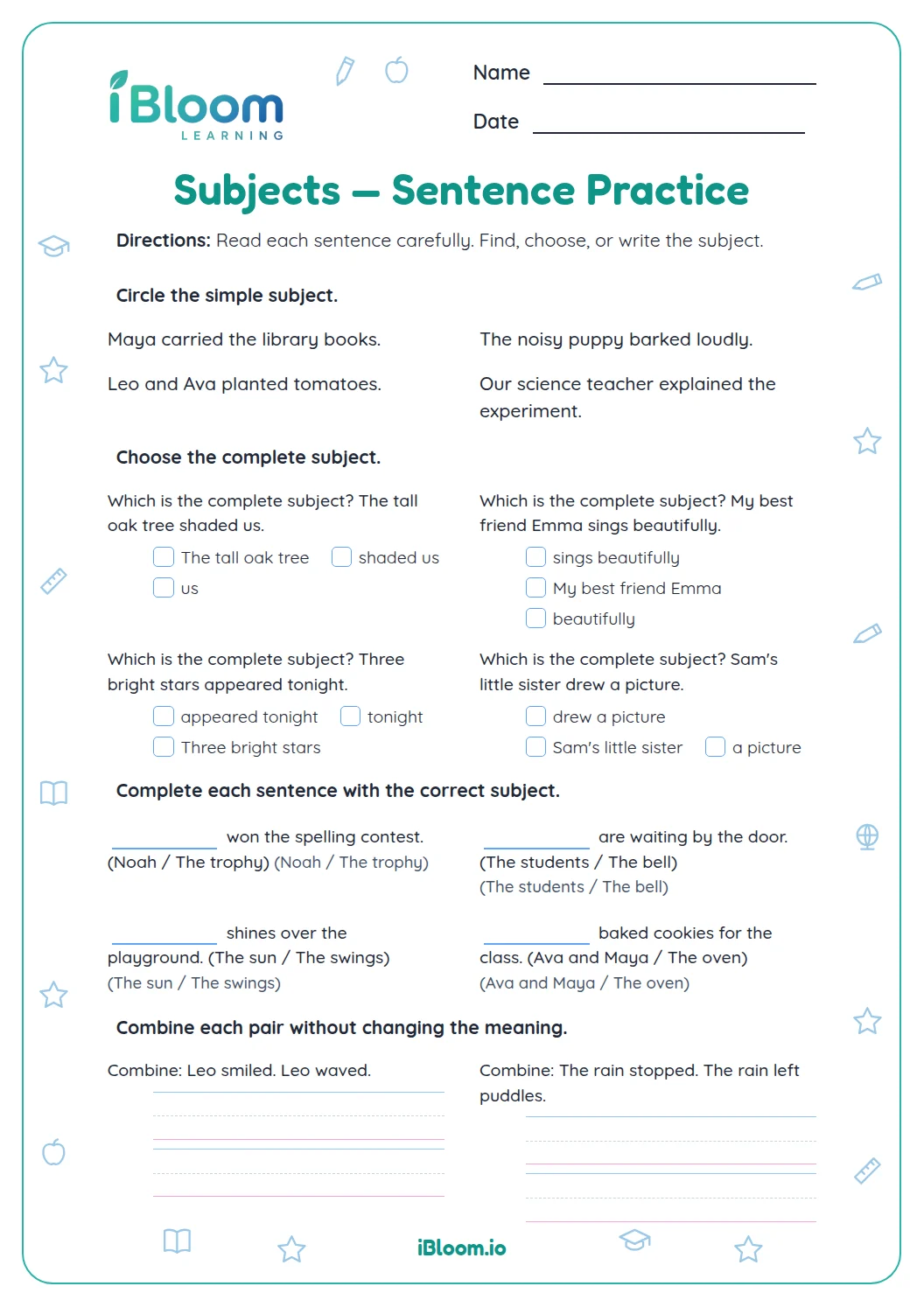
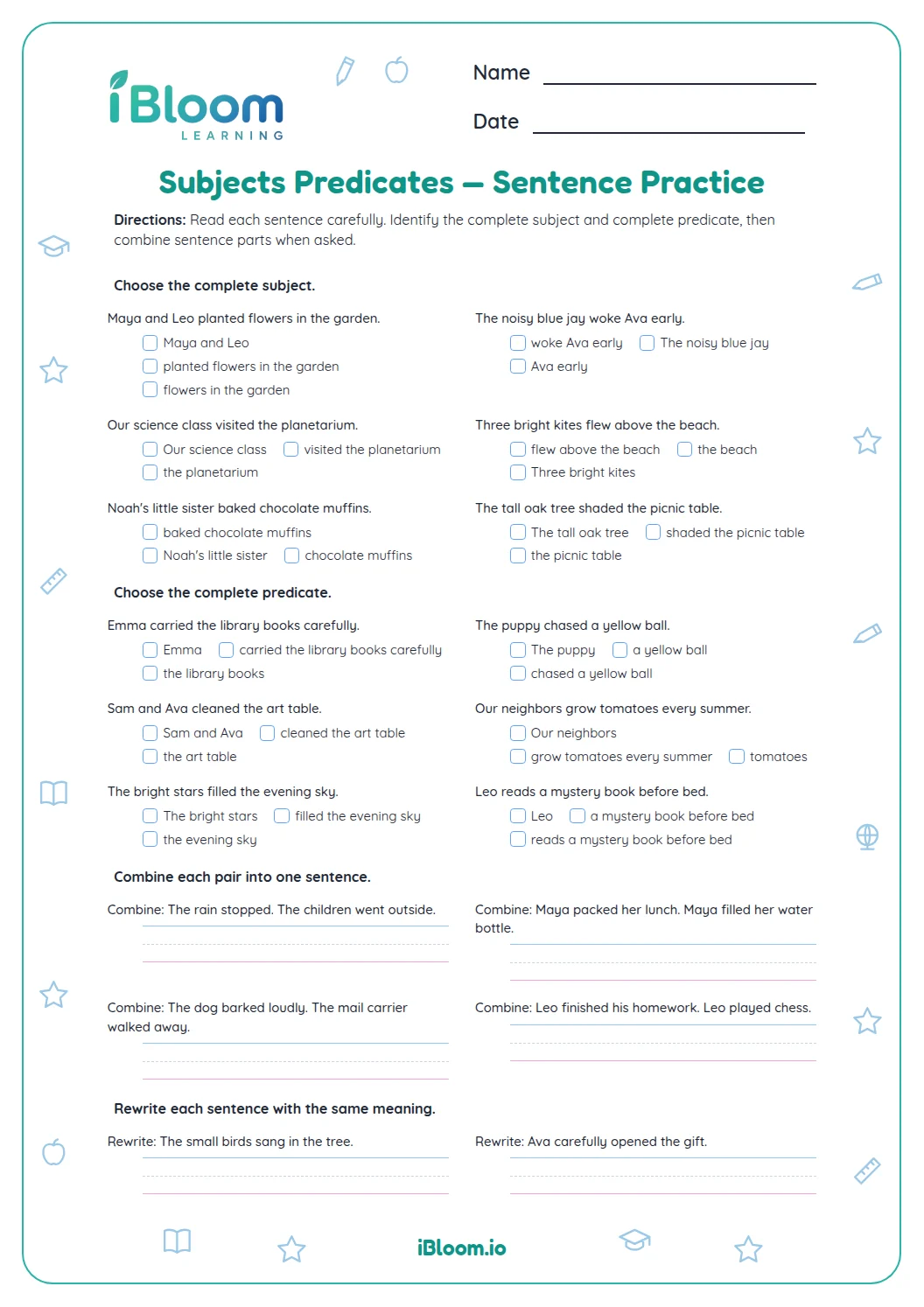
This Grade 4 sentence practice page helps students find the complete subject and complete predicate in full sentences. The 14 questions begin with clear examples, then include longer subjects with describing phrases, predicates, and two sentence-building prompts. An answer key shows the words that belong to each part and sample responses where more than one answer works.
Aligned to CCSS.ELA-Literacy.L.4.1
What belongs in a complete subject?
The complete subject includes the main noun or pronoun and words that describe it. In “The puppy chased a ball,” the complete subject is “The puppy.”
- 1Sentence: The puppy chased a ball.
- 2Who chased? The puppy.
- 3Complete subject: The puppy
How can you find the complete predicate?
Find the subject first. The complete predicate includes the verb and the words that finish the thought about that subject. In question 2, “chased a ball” tells what the puppy did.
How do both parts make a sentence?
Put a subject together with a predicate that makes a complete thought. Read the sentence aloud to check that the predicate tells something about the subject.
How to use this worksheet
- 1Read the whole sentence once.
- 2Ask who or what the sentence is about.
- 3Include describing words in the complete subject.
- 4Find the verb and the words that complete its thought.
- 5Read both parts together to check the sentence.
Common mistakes and quick fixes
The mistake
Writing only “puppy” for “The small puppy.”
The fix
Include the article and describing word in the complete subject.
The mistake
Leaving out an object from “chased a ball.”
The fix
Include all the words that tell what happened.
The mistake
Pairing a subject with an unrelated predicate.
The fix
Check that the predicate tells something about that subject.
This practice builds the language and writing skills named below.
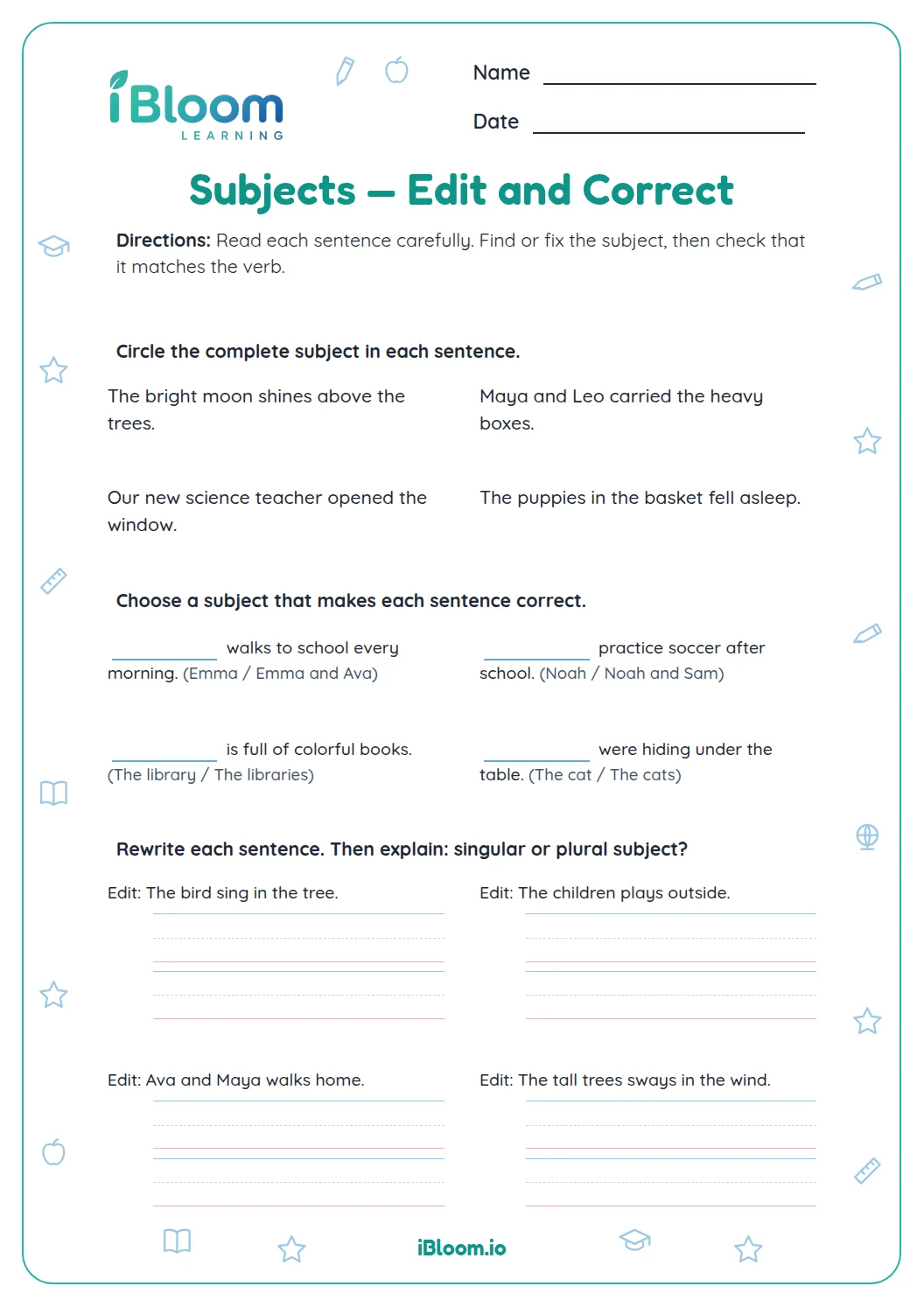
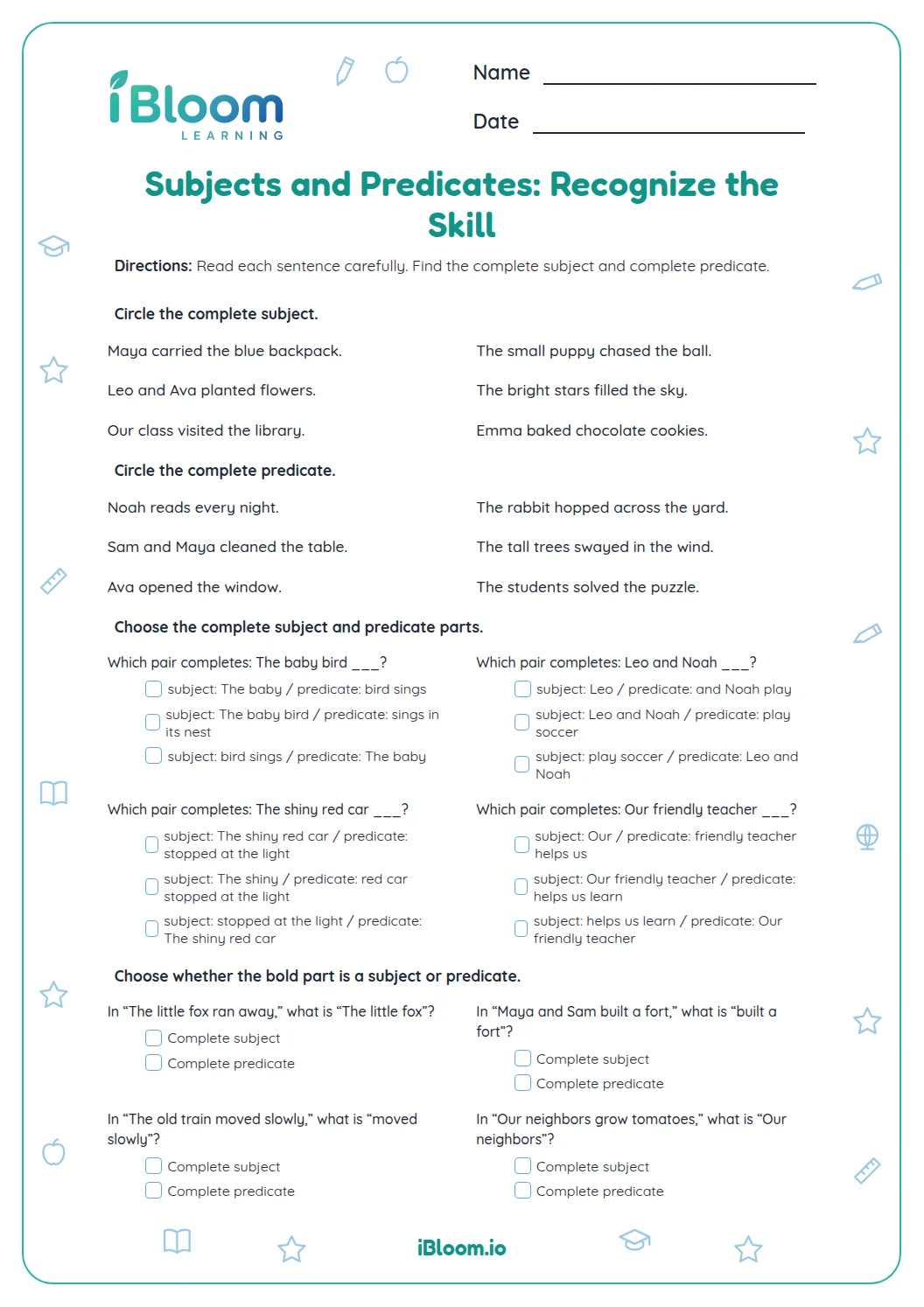
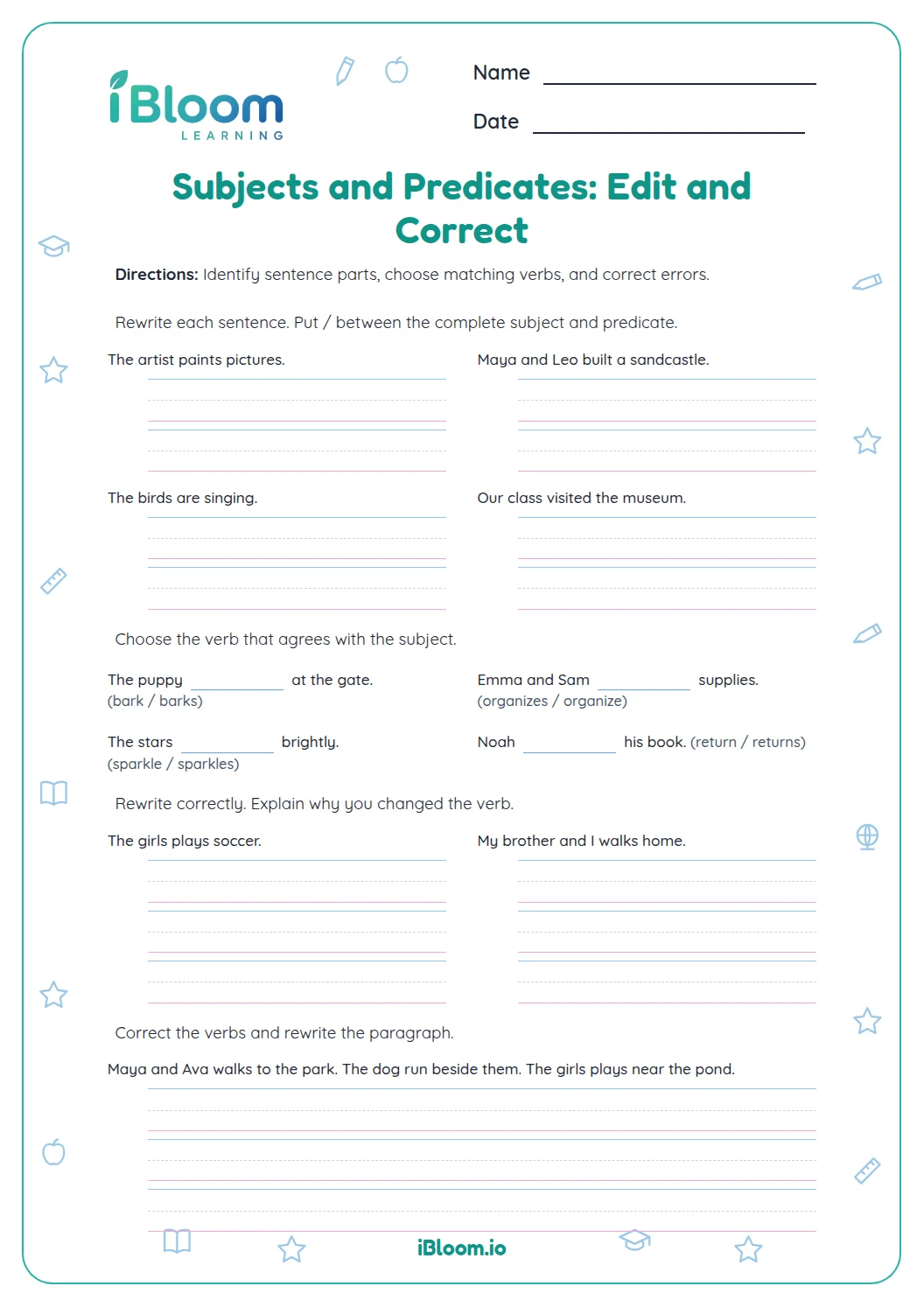
Students identify complete subjects and predicates in sentences.
On this sheet:
Show the official wordingHide the official wording
Demonstrate command of the conventions of standard English grammar and usage when writing or speaking.
What to practice next
Make more practice
Further reading
Questions parents and teachers ask
What is a complete subject?
A complete subject names who or what the sentence is about, including describing words that belong with its main noun. In “Bright stars filled the sky,” the complete subject is “Bright stars.” The worksheet asks students to identify subjects in short, complete sentences.
What is a complete predicate?
A complete predicate tells what the subject does or is and includes the words that finish that thought. In “The team cheered loudly,” the predicate is “cheered loudly.” Students find predicates and complete sentence parts in the 14 practice questions.
How many questions are included?
There are 14 questions in two parts. The first part pairs subjects and predicates in complete sentences; the second uses new sentences and sentence beginnings. The answer key identifies the exact words in each part so families can review the boundaries together.
Can a subject have more than one word?
Yes. A subject can include an article or describing words along with its main noun, as in “The small kitten.” When identifying a complete subject, include the words that belong to that noun phrase. The examples here keep those phrases short and clear.
What is a good way to check an answer?
Read the sentence and ask “Who or what is this about?” for the subject. Then ask “What did that subject do, or what is true about it?” for the predicate. Both parts should fit together as one complete thought.