






About this worksheet
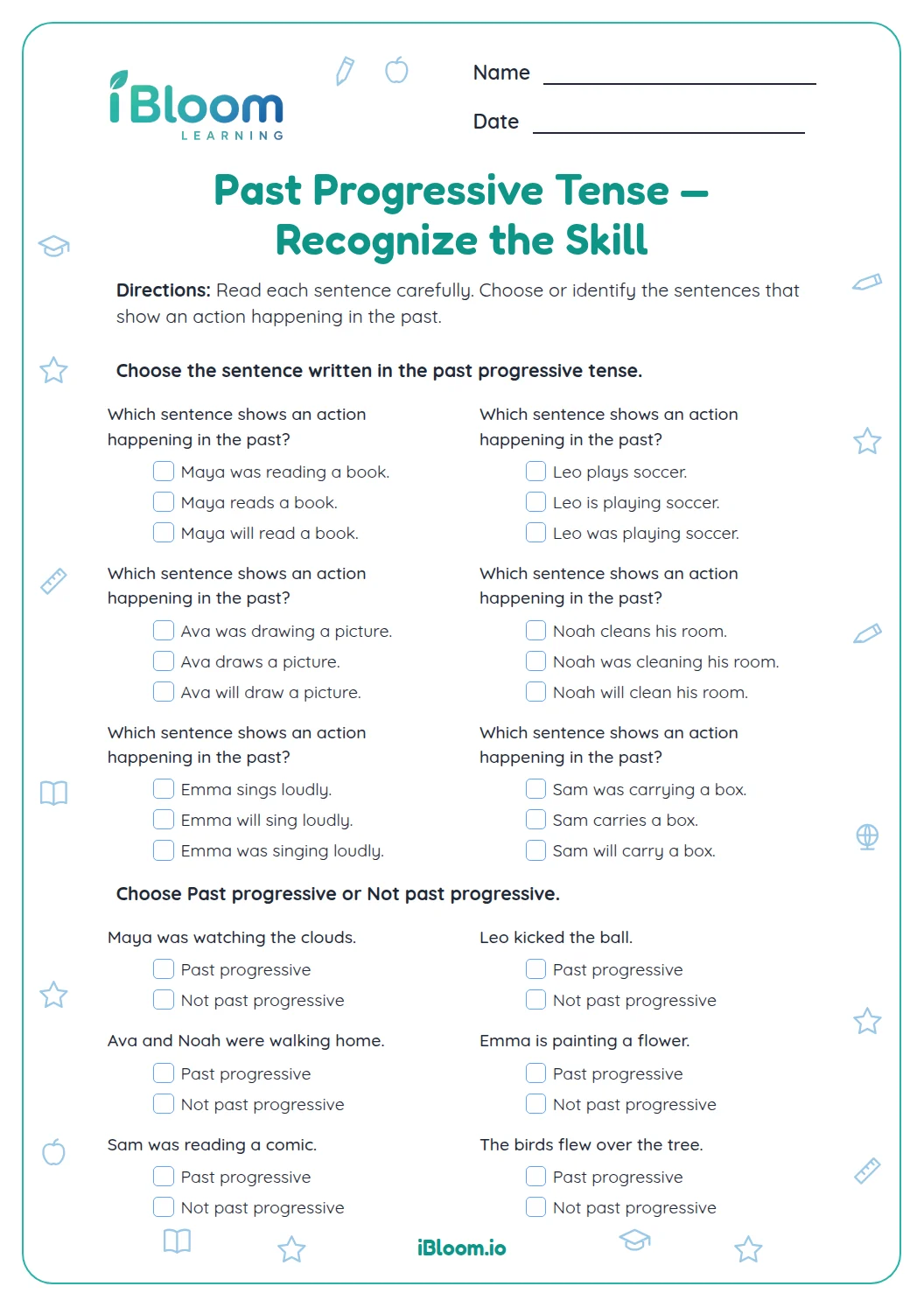
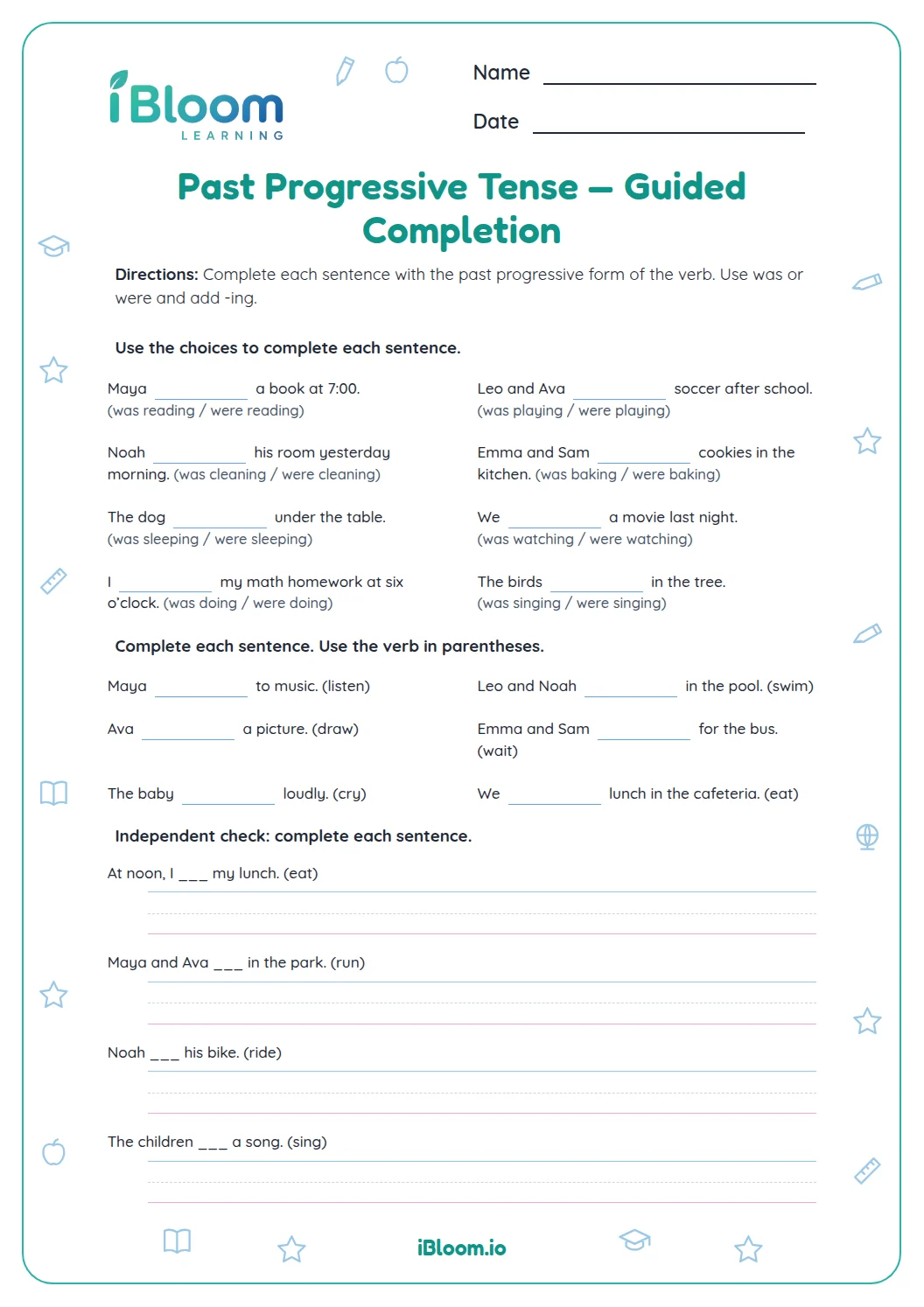
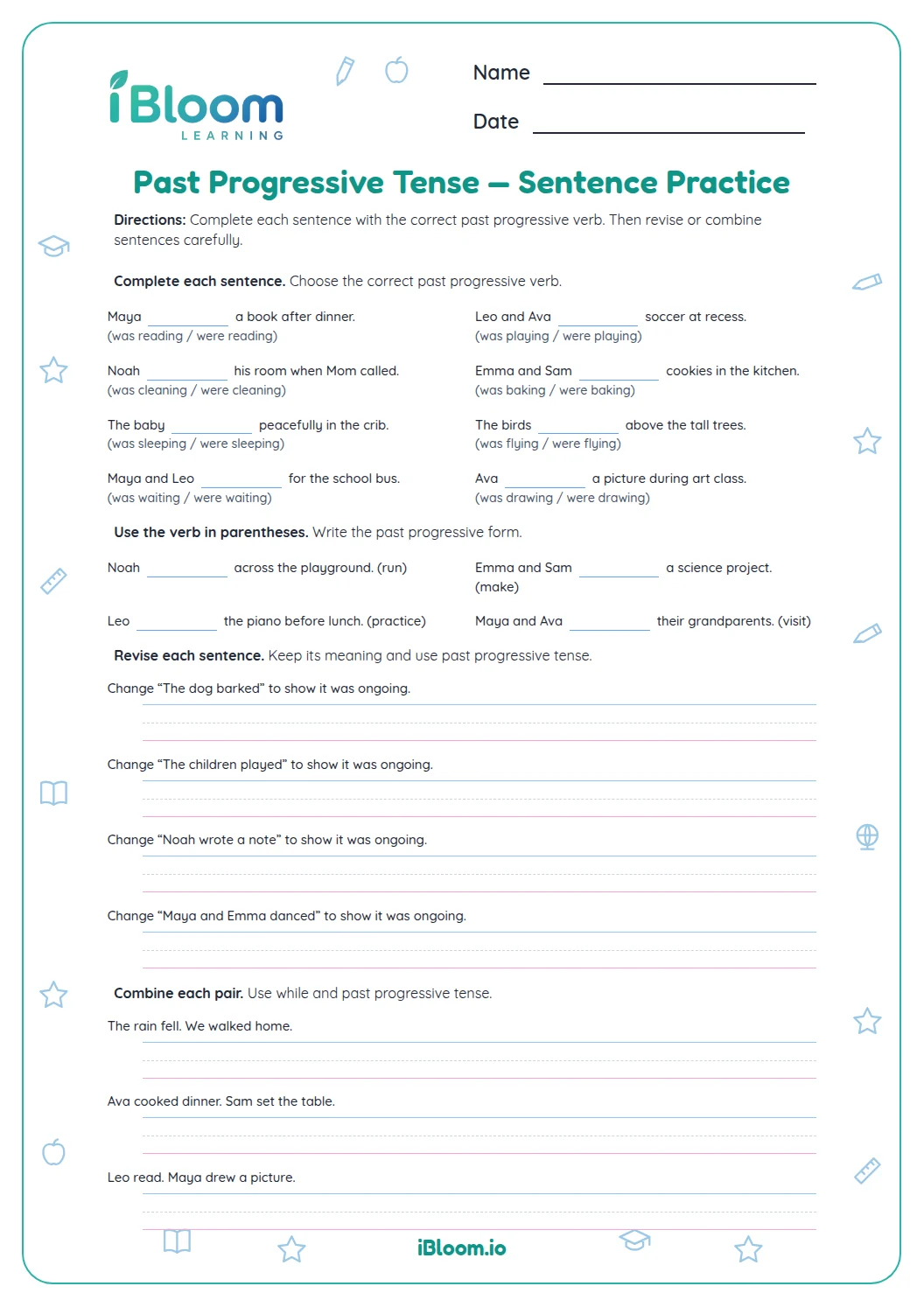
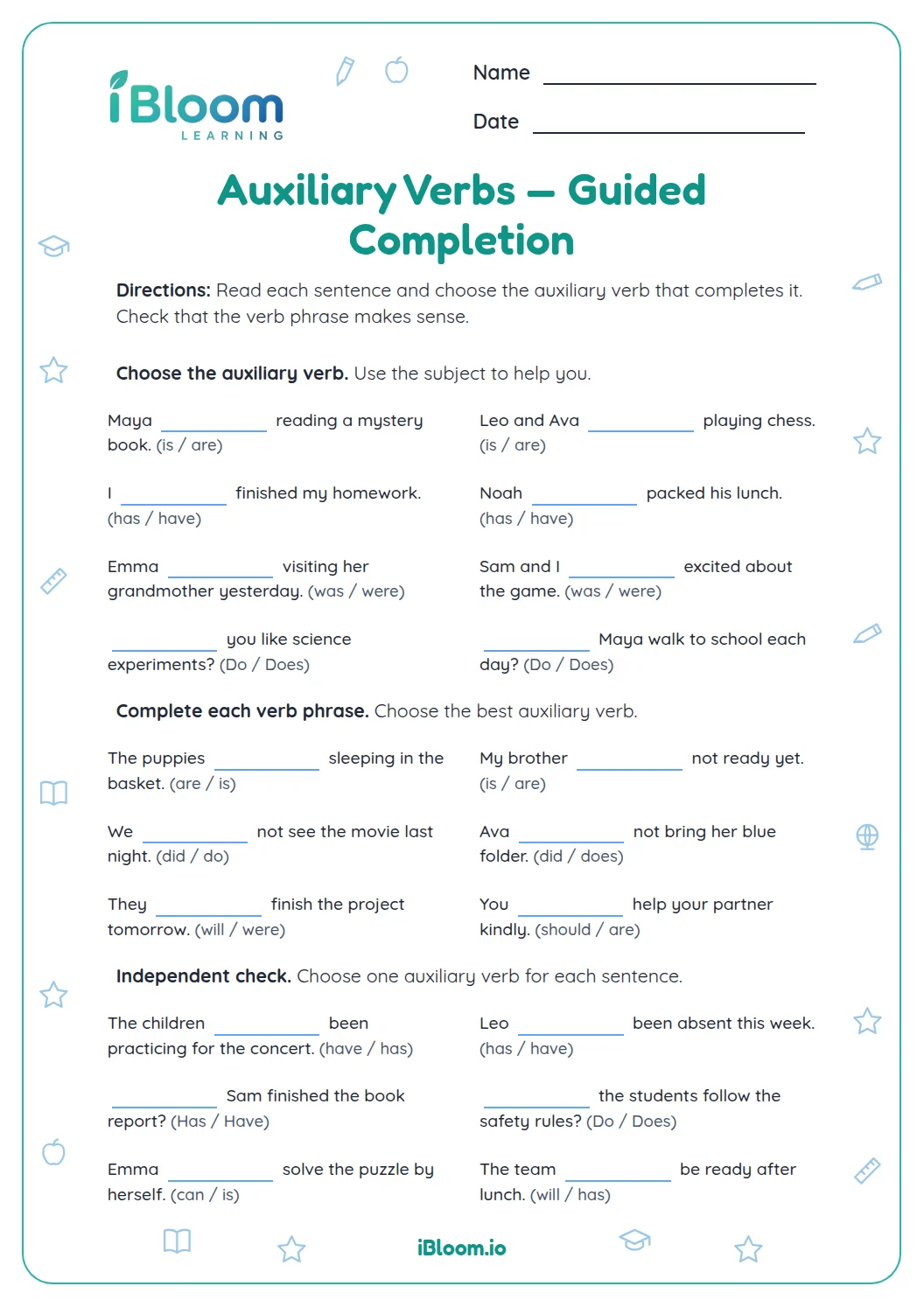
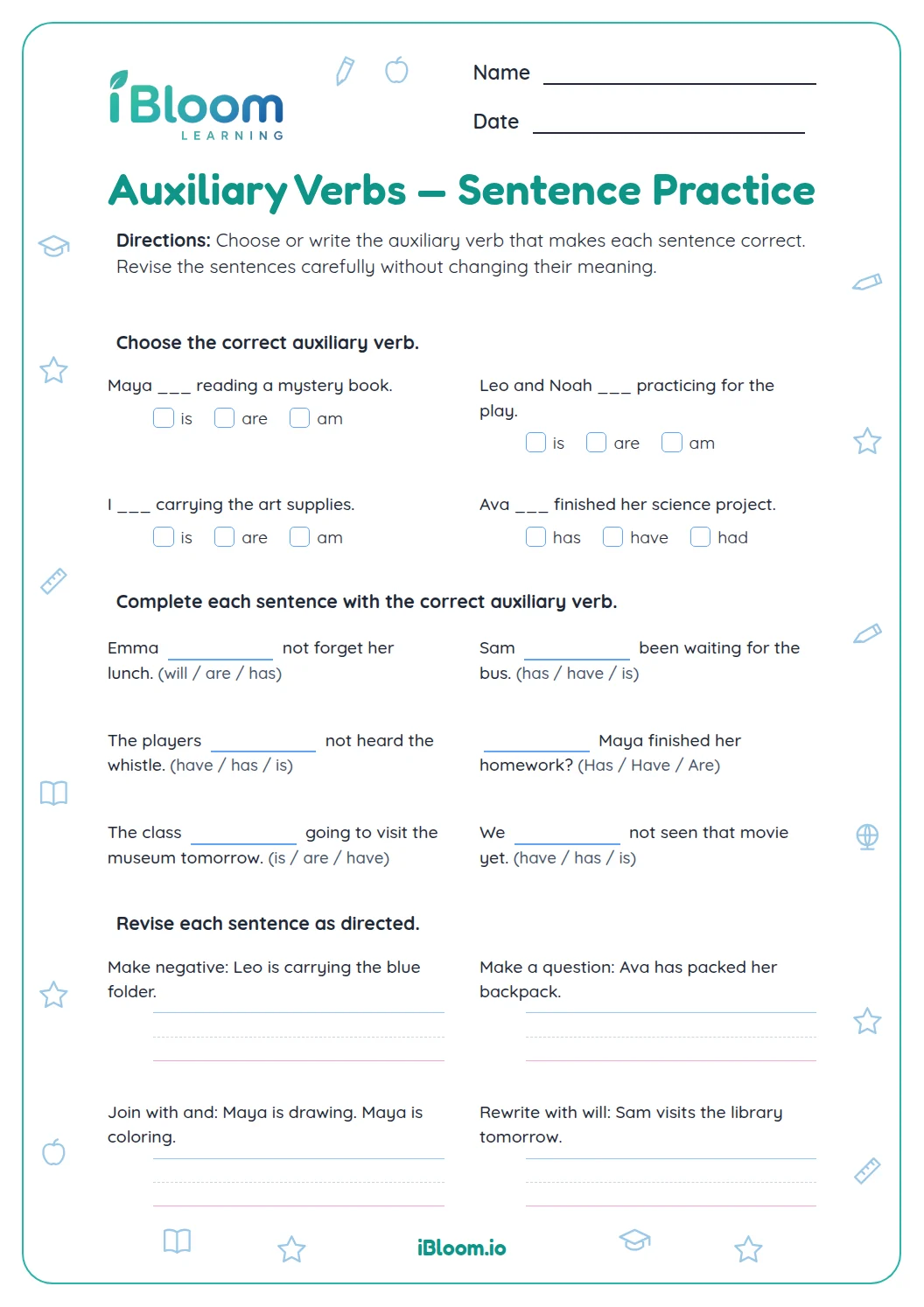
This printable gives students 16 questions to practice progressive verbs at Grade 4. The answer key follows the same order and accepts the listed responses.
Aligned to L.4.1.b
What does this progressive tense worksheet cover?
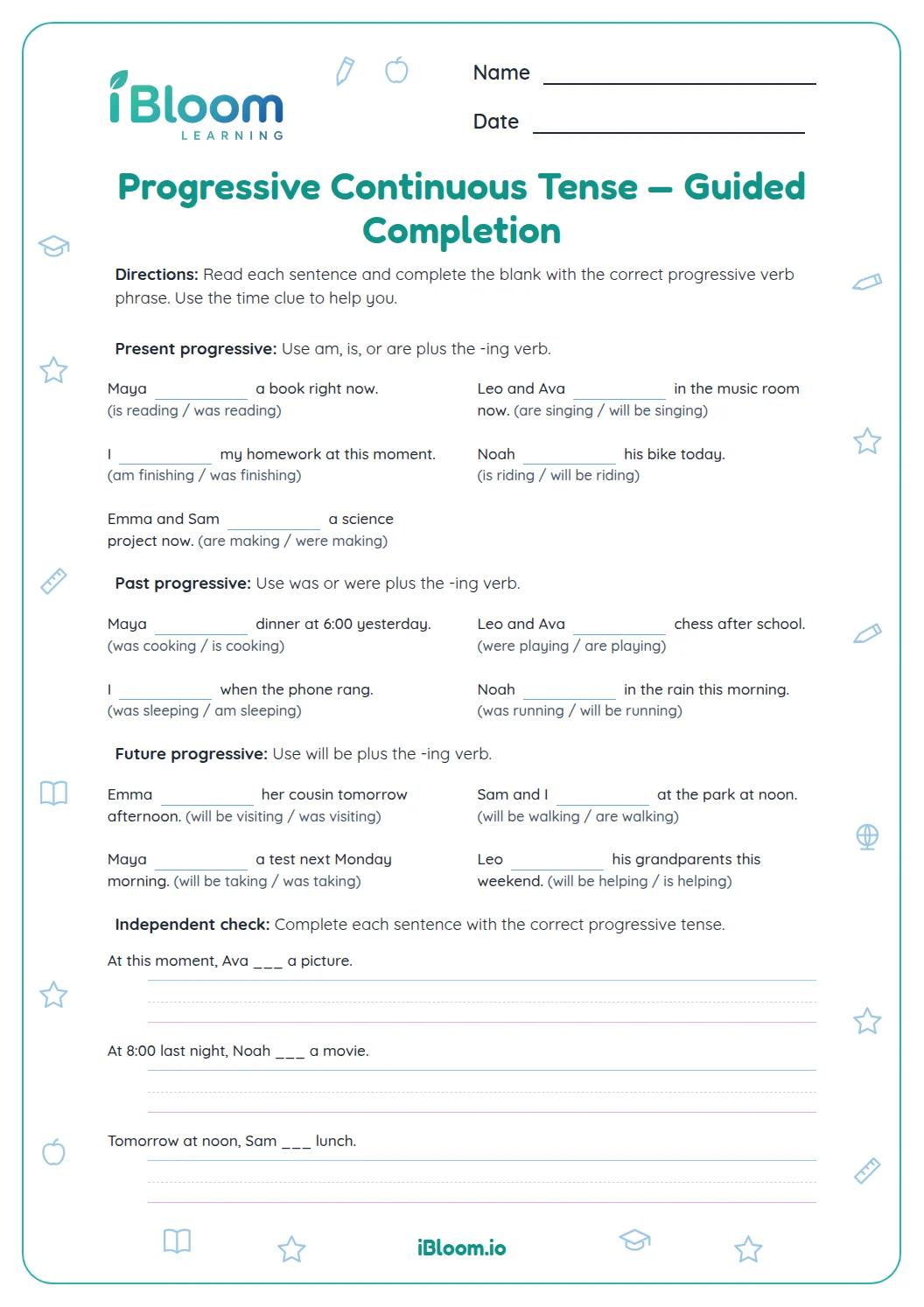
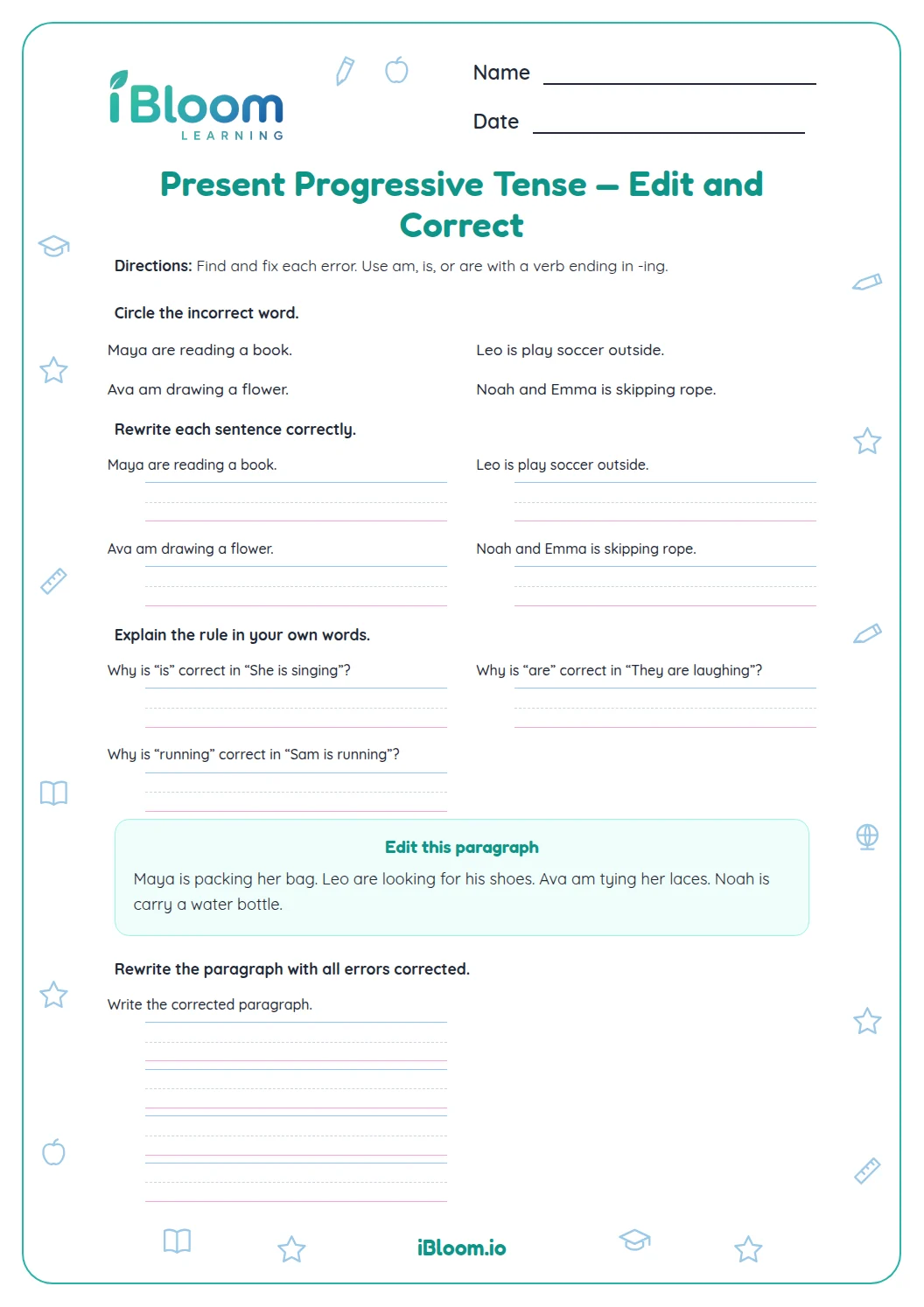
A progressive verb phrase uses a form of be with a verb ending in -ing. The helping verb shows whether the action is in progress now, was in progress, or will be in progress.
- Part A: recognize progressive forms
- Identify helping verbs and -ing verbs
How is a progressive verb formed?
Complete each progressive phrase using the time clue and the correct helping verb.
- 1The crew is rowing.
- 2Helping verb: is
- 3-ing verb: rowing; together: is rowing (present progressive)
- Part B: complete progressive phrases
- Check that the time clue and helping verb agree
How can the helping verb show the time?
Look at the form of be or the words will be. “Was walking” places the ongoing action in the past; “will be sketching” places it in the future. Match the time clue in the sentence to the helping verb.
How to use this worksheet
- 1Find the action word ending in -ing.
- 2Look just before it for a form of be or for will be.
- 3Use time clues such as now, yesterday or tomorrow to identify the time.
- 4For tense changes, keep the action and change the helping verb.
- 5Reread the full sentence to check that it sounds complete.
- 6Use the answer key to review each form.
Common verb mix-ups and quick fixes
The mistake
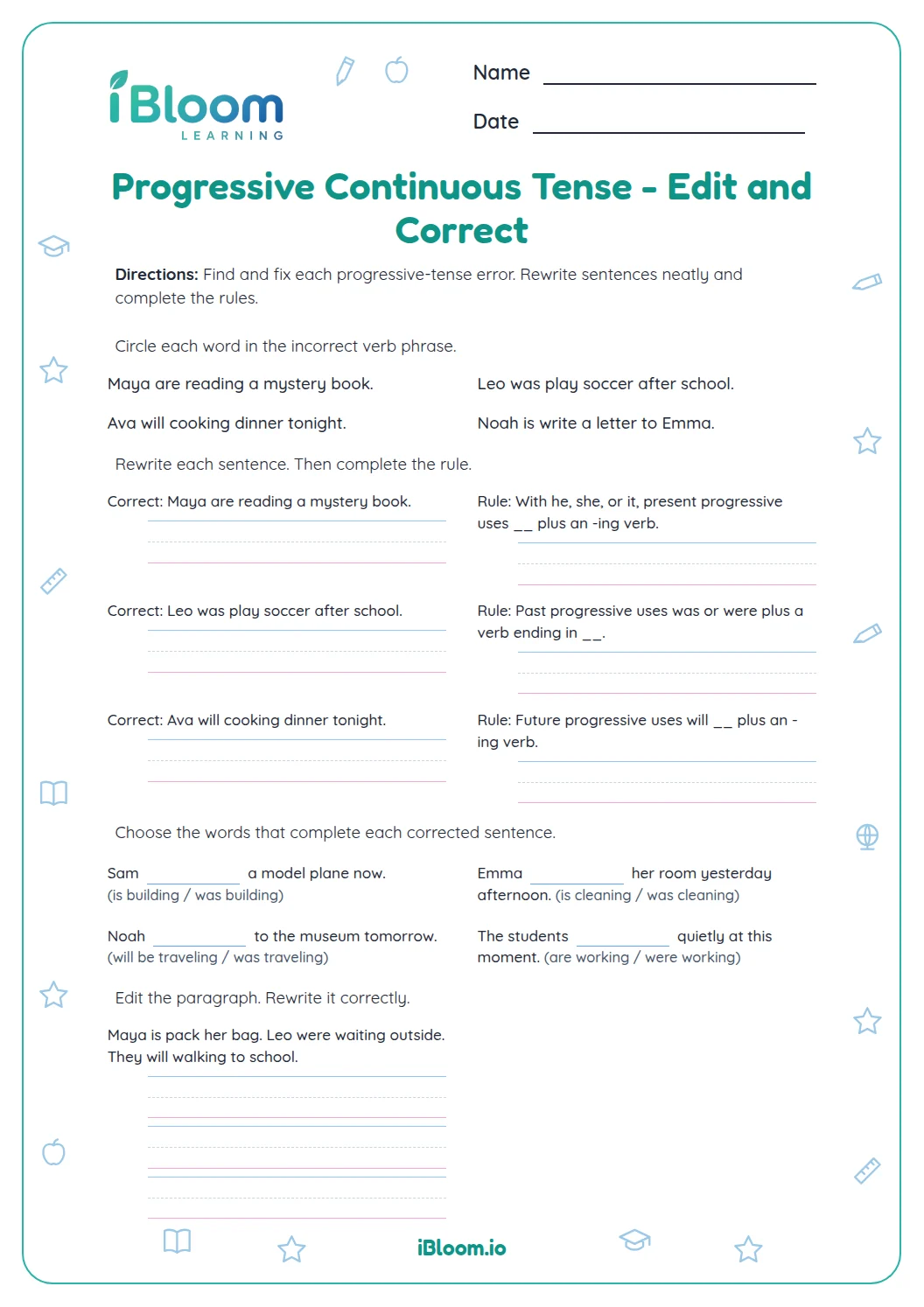
Calling a verb ending in -ed progressive, as in “rowed.”
The fix
Look for a form of be paired with an -ing verb; “was rowing” is progressive.
The mistake
Leaving out be and writing only “The crew rowing.”
The fix
Check for a helping verb before the -ing word: is, am, are, was, were, or will be.
The mistake
Using “is” with a sentence about yesterday.
The fix
Match the helping verb to the time clue; yesterday calls for was or were.
Common Core alignment
Students recognize and use progressive verb phrases in complete sentences.
Form and use present, past and future progressive verb tenses.
On this sheet: Students identify and form progressive verbs in present, past and future contexts.
Show the official wordingHide the official wording
Form and use the progressive (e.g., I was walking; I am walking; I will be walking) verb tenses.
What to practice next
Make more practice
Further reading
Questions parents and teachers ask
What is the progressive tense?
This printable has 16 questions about progressive verb forms. Students recognize present, past, and future actions in progress, identify parts of verb phrases, and complete sentences using time clues. A separate key provides the correct selections and words.
How many questions are on the page?
There are 16 questions across two worksheet pages, followed by a two-page answer key. The first eight ask students to recognize progressive forms or their parts. The next eight ask for a helping verb or a completed progressive phrase.
What is the difference between present and past progressive?
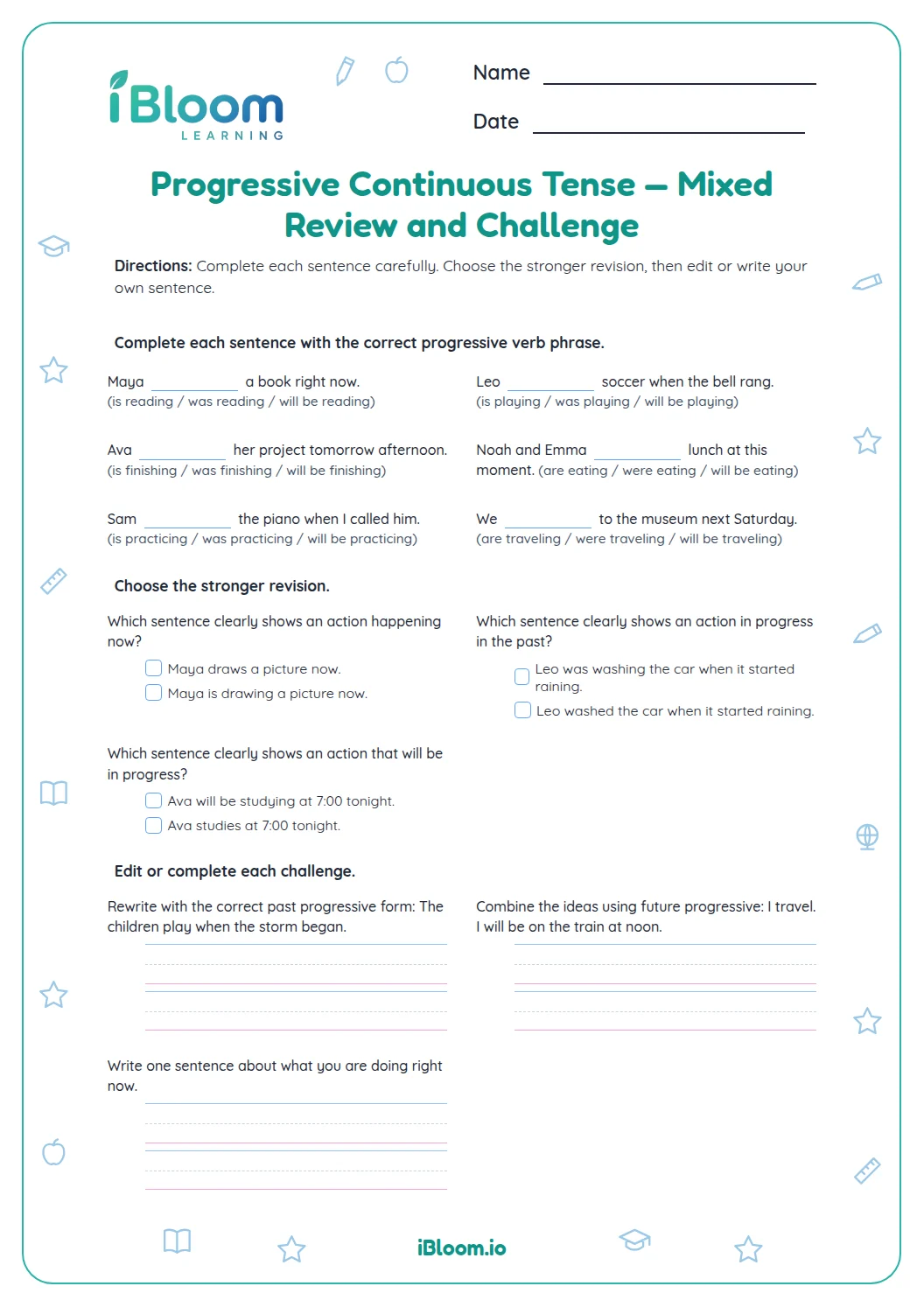
Present progressive uses am, is, or are with an -ing verb, as in “is sleeping.” Past progressive uses was or were, as in “were waiting.” Students use time clues in the sentence to choose the matching form. “Were waiting” is past progressive, while “are waiting” is present progressive and “will wait” is simple future.
Does future progressive use will be?
Yes. Future progressive uses will be followed by a verb ending in -ing, as in “will be traveling.” In question 11, the blank completes “will be traveling,” matching the future time clue “Tomorrow at 8.” The helping words “will be” work together before the -ing verb to show an action that will be in progress.
How can I help my child recognize the whole verb?
Ask your child to find the action ending in -ing, then include its helping verb. In “The crew is rowing,” the whole progressive phrase is “is rowing”; rowing alone does not include the tense marker. The question asks for the complete phrase, so include both the helping verb and the -ing word in the response.