






About this worksheet
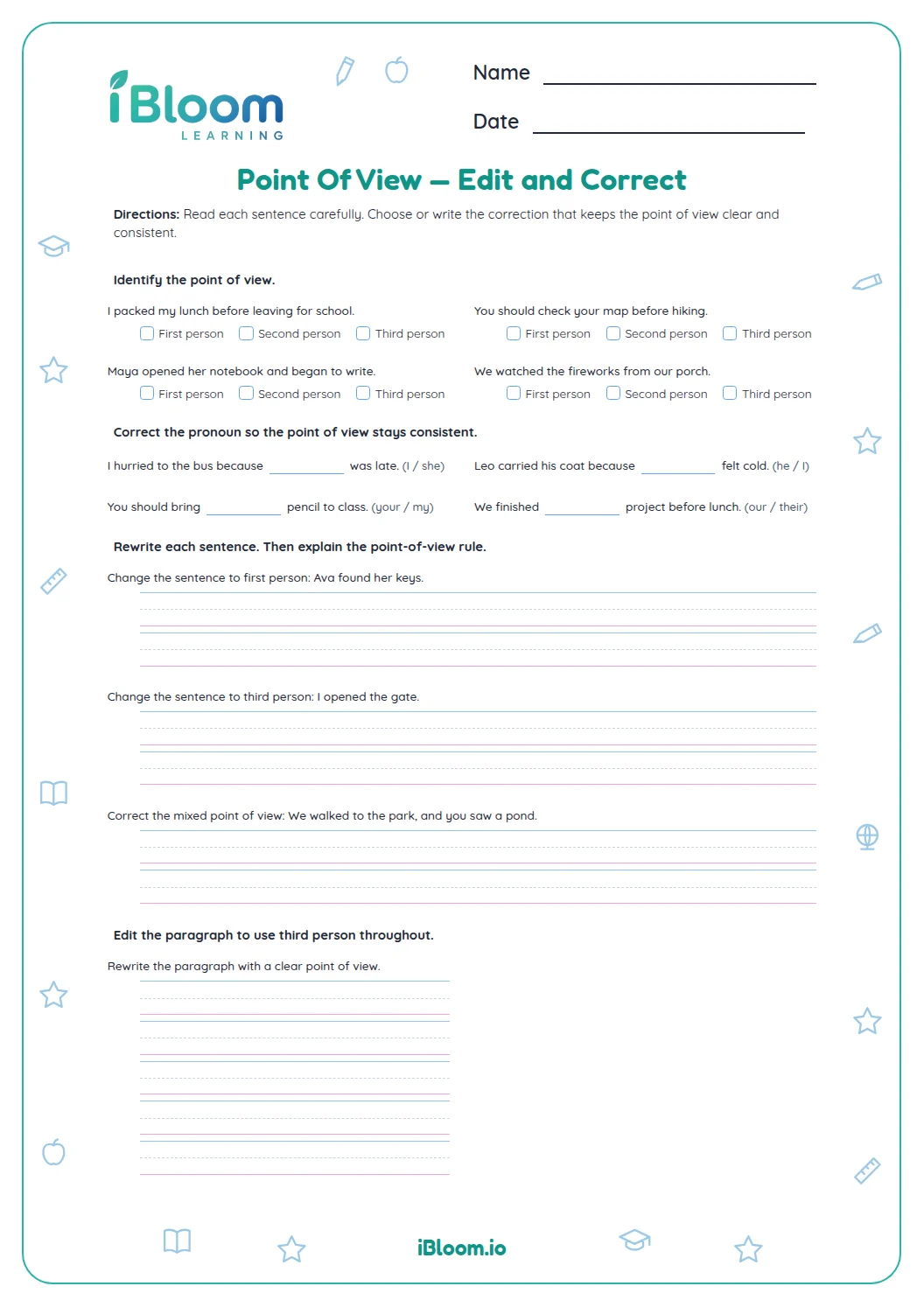
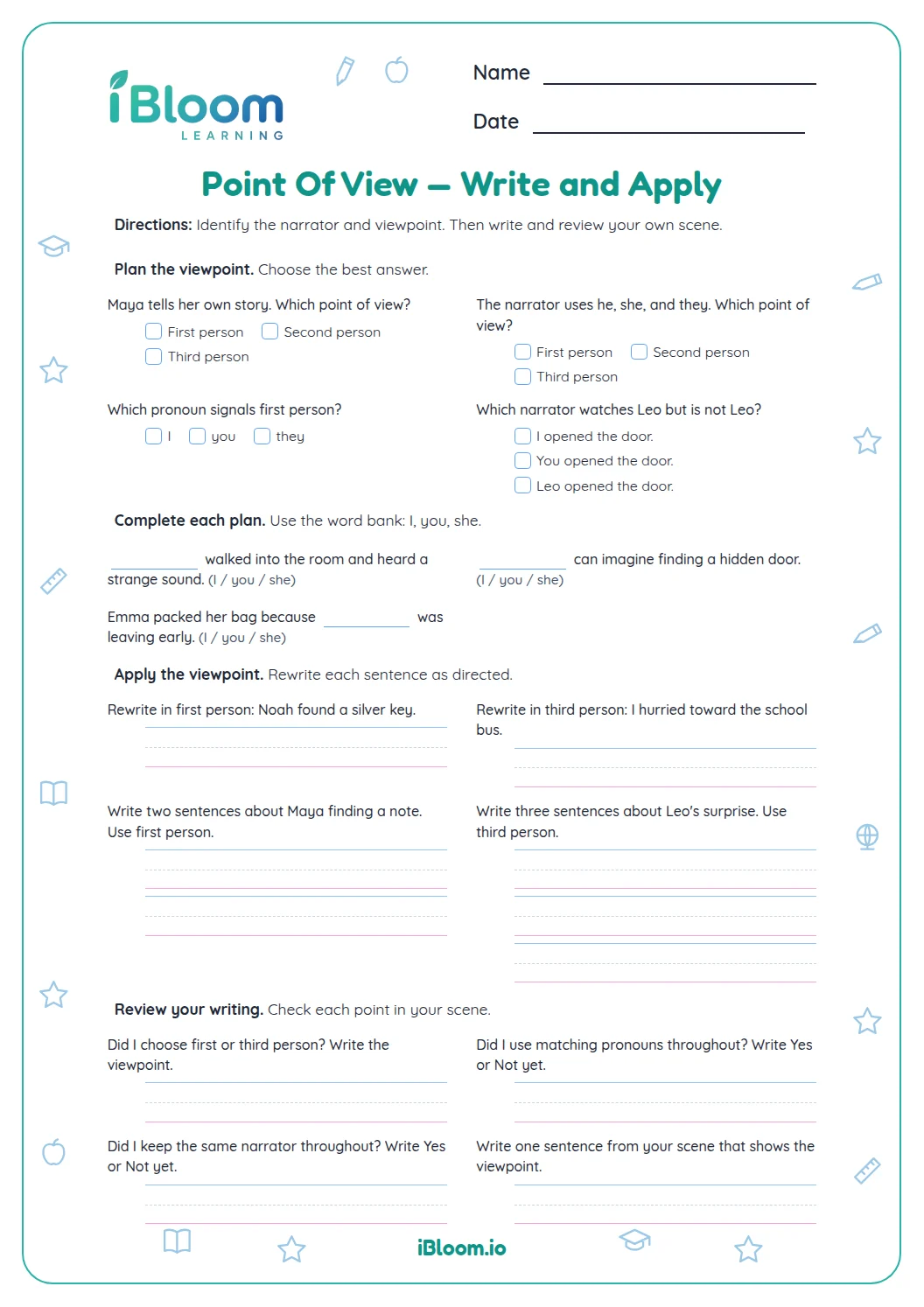
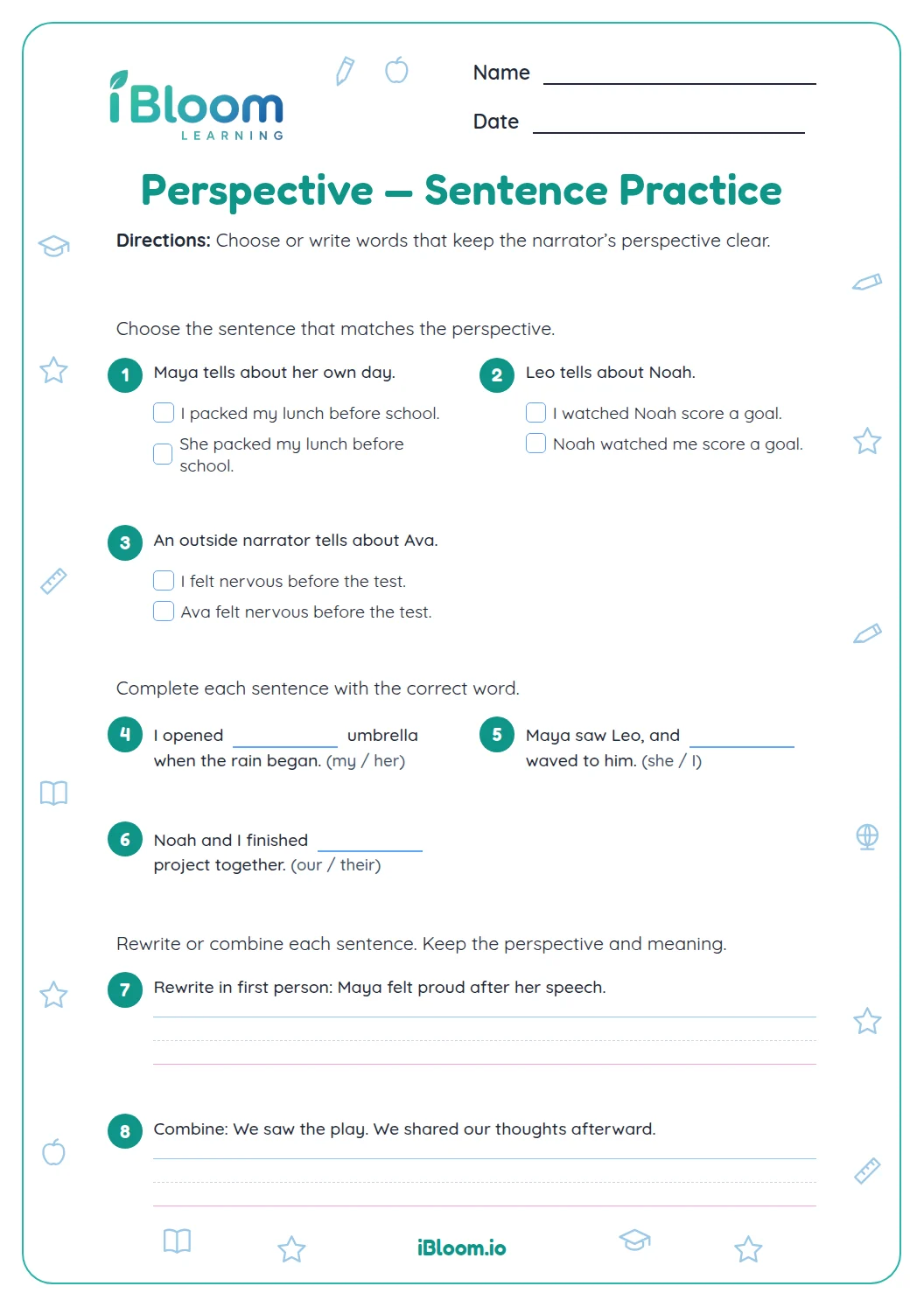
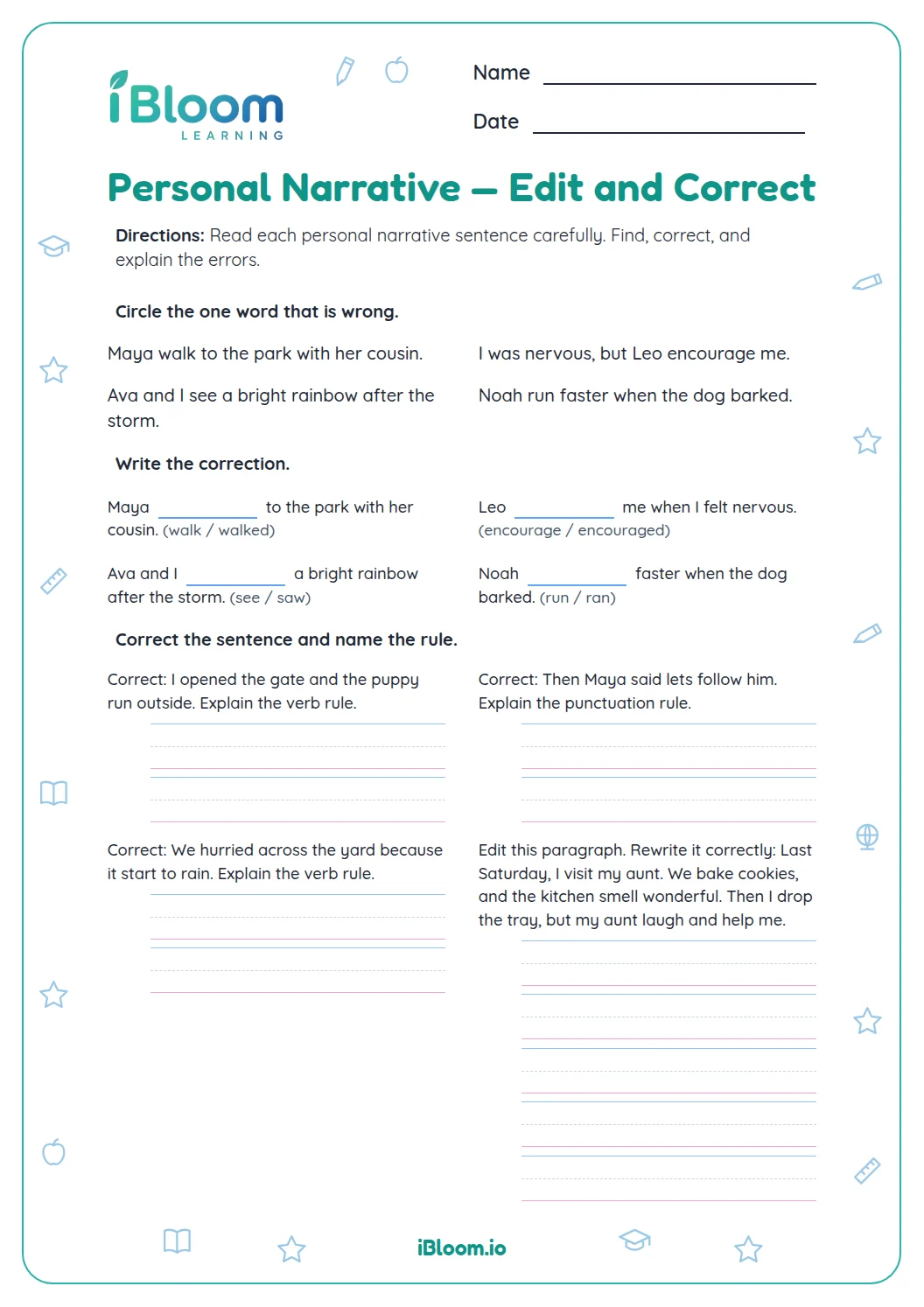
This free Grade 5 worksheet moves from naming a narrator’s point of view to using it in short narrative writing. Students label six narrators, answer two multiple-choice questions, revise three sentences, and write two brief scenes. The review includes first, second, and third person, plus a challenge about how two narrators describe the same event differently. It practices CCSS RL.5.6 and W.5.3a through narrator comparisons and openings that establish a situation and character. The separate answer key gives labels, choices, and sample responses for the writing tasks.
Aligned to RL.5.6 and W.5.3a
How can students identify the narrator?
First-person narrators take part in the action and use I or we to tell about themselves. Second-person narration addresses a character as you. Third-person narration refers to characters by name or with pronouns such as she, he, or they.
Part A includes dialogue to make the distinction useful. In “I found it!” Ben shouted as he lifted the key, I belongs to Ben’s spoken words. The narrator outside the quotation calls him Ben and he, so the narration is third person.
The plural pronouns matter too: we and our include the narrator in a group, while they and their describe a group from outside it. Questions 5 and 6 check that difference.
How do two viewpoints change the same event?
Part B asks students to look beyond pronouns. The runner welcomes a chance to rest tired legs. The spectator worries about missing the race. Both describe rain, but their different concerns shape their accounts.
A strong explanation names the concern and connects it to a detail. Simply saying “They have different opinions” leaves out what those opinions do to the description.
- 1Runner: “At last, rain! My tired legs can rest.”
- 2Spectator: “Oh no, rain! I may miss the race.”
- 3The rain gives the runner a welcome break.
- 4Answer: a welcome break.
How do students keep their own point of view consistent?
Part C changes sentences into first, second, and third person. Students must adjust possessive words as well as subject pronouns: Nora and her become I and my when Nora tells the event.
Part D asks for two-sentence openings, one from a first-person character with a wet painting and one about Kai in third person. Each opening should establish who is there, what is happening, and what happens next. The sample answers show possible approaches; students can invent different details.
How to use this worksheet
- 1Read the three point-of-view names in Part A and ask who tells each sentence.
- 2For question 4, separate Ben’s quotation from the words that narrate his action.
- 3Read the runner and spectator accounts aloud; underline the concern in each one.
- 4Revise both pronouns and possessive words in Part C.
- 5Write each two-sentence opening, then reread it to check narrator, situation, and sequence.
Mistakes to notice and how to help
The mistake
Calling question 4 first person because the dialogue contains I.
The fix
Check the narration outside the quotation: Ben shouted and he lifted.
The mistake
Choosing a feeling that does not match the speaker’s words in Part B.
The fix
Connect the narrator’s concern to the description: tired legs make the delay welcome.
The mistake
Changing Nora to I but leaving her in the revision.
The fix
Track every word that refers to the narrator; use I and my together.
Common Core alignment
Explain how a narrator’s concerns shape the description of an event.
On this sheet: Part B compares how a runner and a spectator describe the same rain delay based on different concerns.
Show the official wordingHide the official wording
Describe how a narrator’s or speaker’s point of view influences how events are described.
Establish a narrator and situation in a brief, ordered scene opening.
On this sheet: Part D asks students to introduce a narrator or character and a situation across two connected sentences.
Show the official wordingHide the official wording
Orient the reader by establishing a situation and introducing a narrator and/or characters; organize an event sequence that unfolds naturally.
What to practice next
Make more practice
Further reading
Questions parents and teachers ask
Which kinds of point of view appear on this sheet?
The sheet uses first, second, and third person. Part A asks students to identify each kind, including a third-person sentence containing first-person dialogue. Later tasks ask them to revise pronouns, compare what speakers care about, and open two short scenes with a clear narrator or character.
Why is the sentence with “I found it!” third person?
The words “I found it!” are spoken by Ben, while the narrator describes Ben from outside the action. Look after the quotation: Ben shouted as he lifted the key. Those words establish the narration as third person even though Ben uses I when he speaks.
What makes Part B a challenge?
Part B asks students to connect a narrator’s viewpoint to the way an event is described. They compare a relieved runner with a worried spectator, considering how a single rain delay affects each person. Each answer must fit a specific concern expressed in the short scene.
How much writing is required?
Students revise three sentences and write two openings of two sentences each. The first opening uses I to describe a wet-painting problem; the second uses Kai and he to describe finding a lost dog. Students should keep the narrator consistent and make the second sentence follow naturally from the first.
Do written answers have to match the answer key?
No, the key’s Sample answers show one acceptable response for each writing task. Accept another response when it follows the requested point of view, preserves the meaning in a revision, or establishes the assigned situation in an opening. Check clarity and connected events before discussing more elaborate word choices.