





About this worksheet
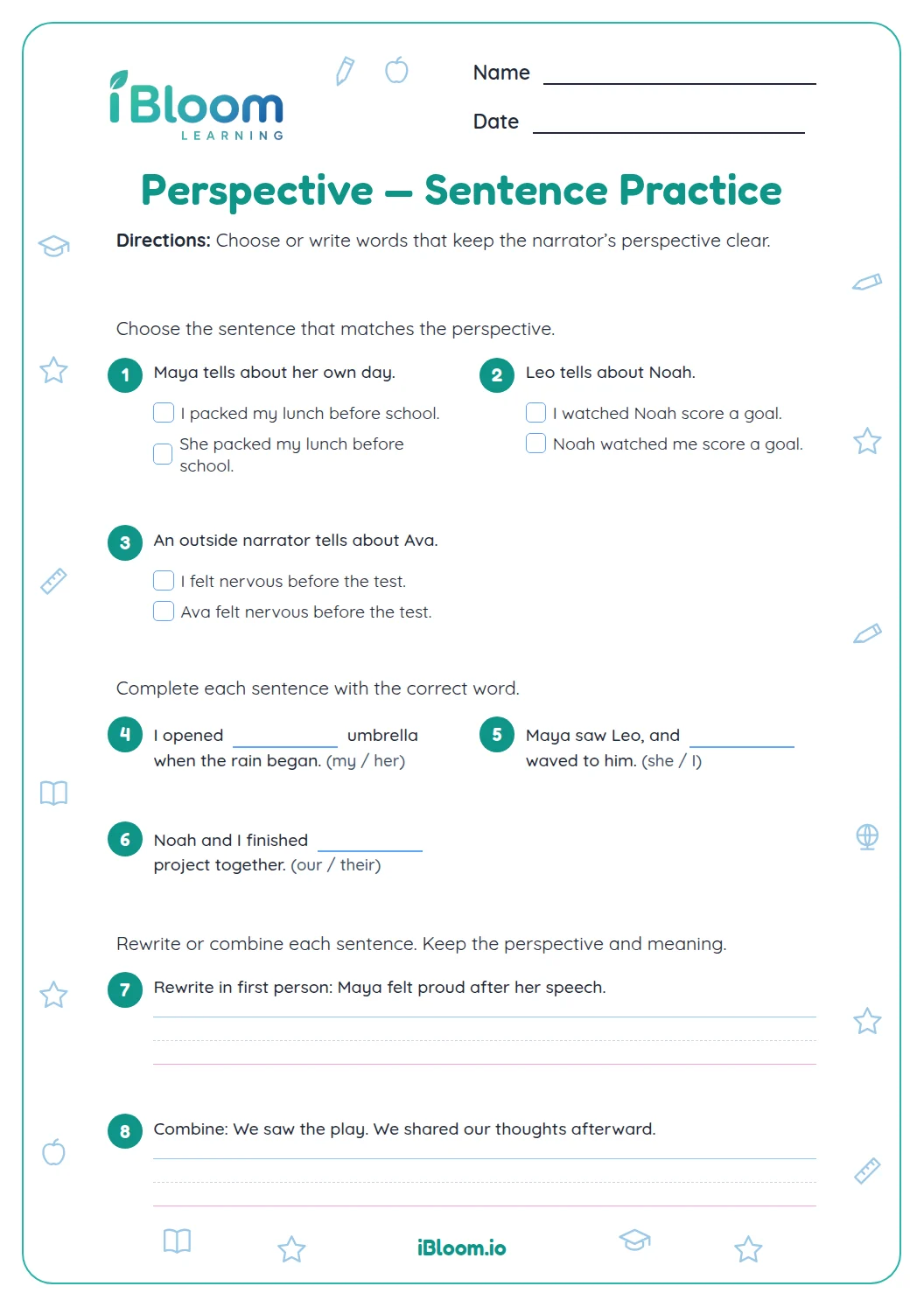
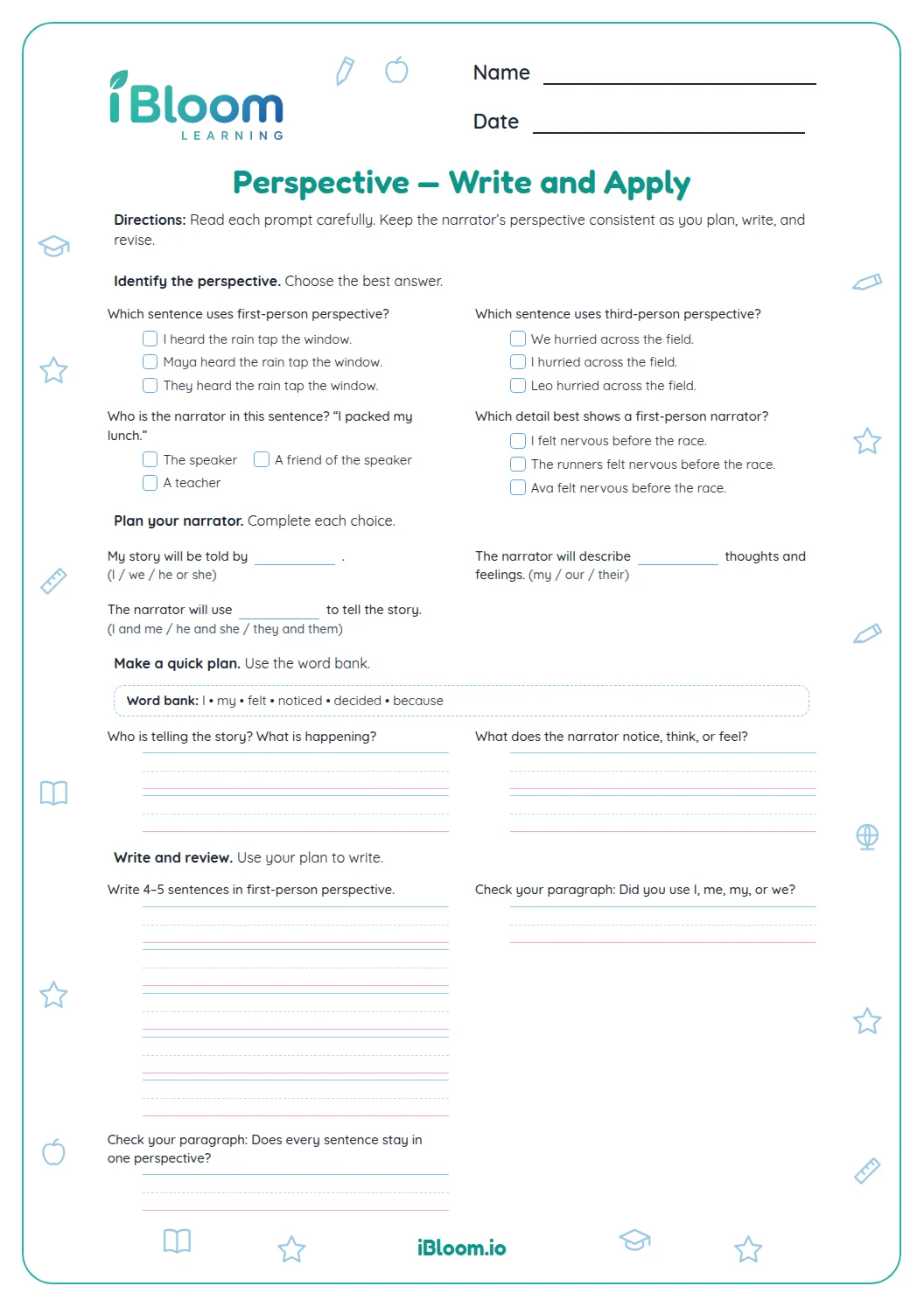
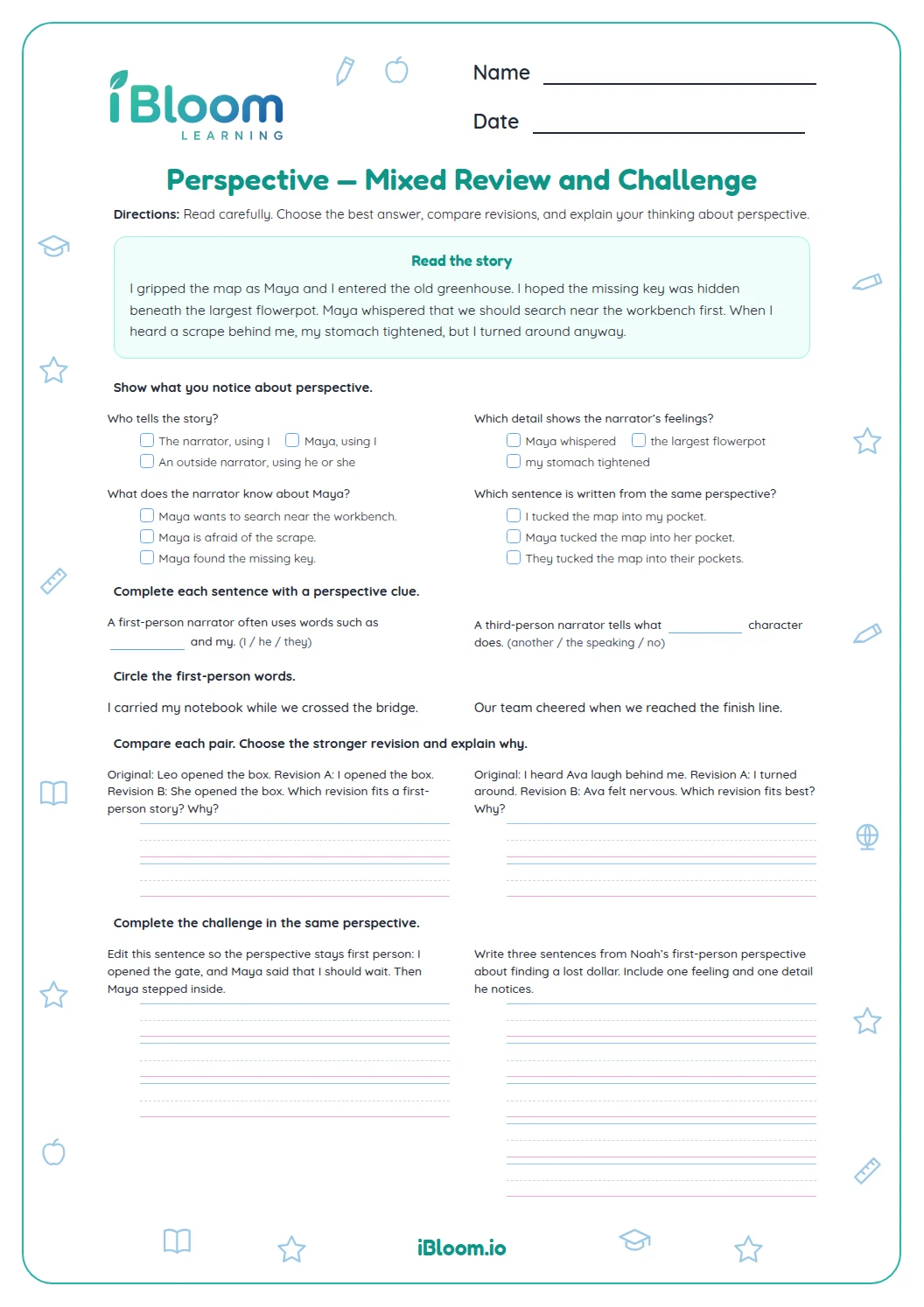
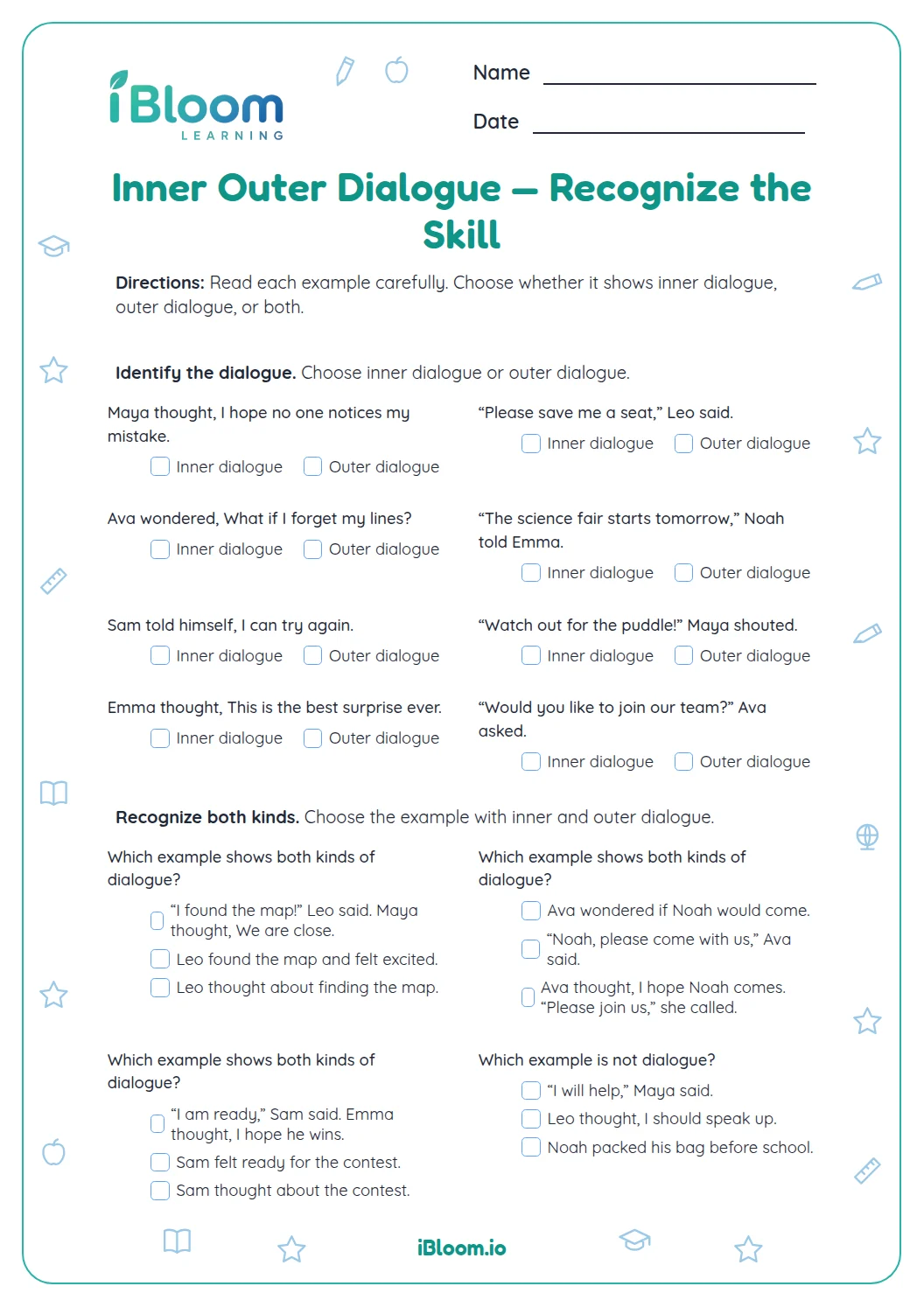
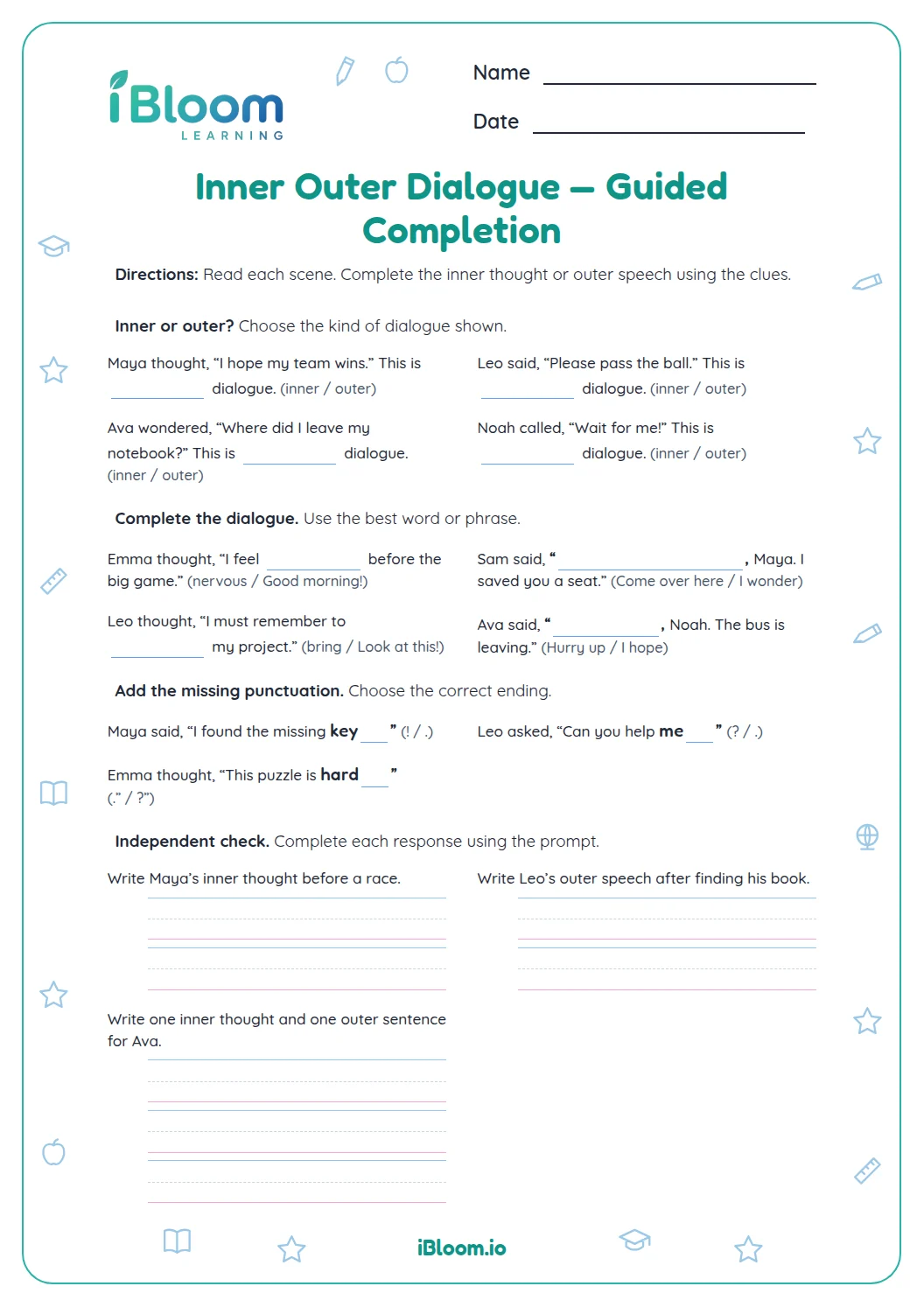
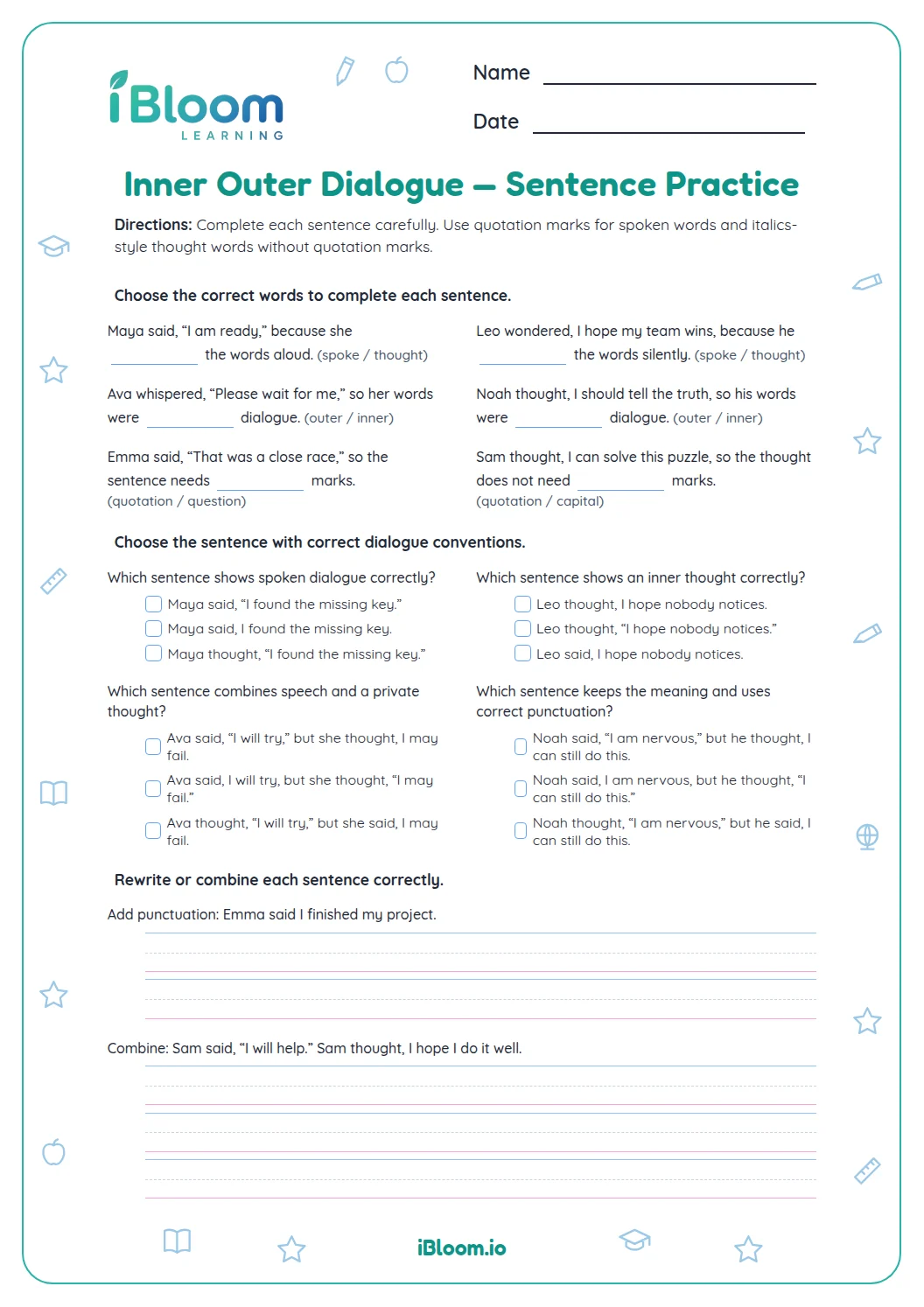
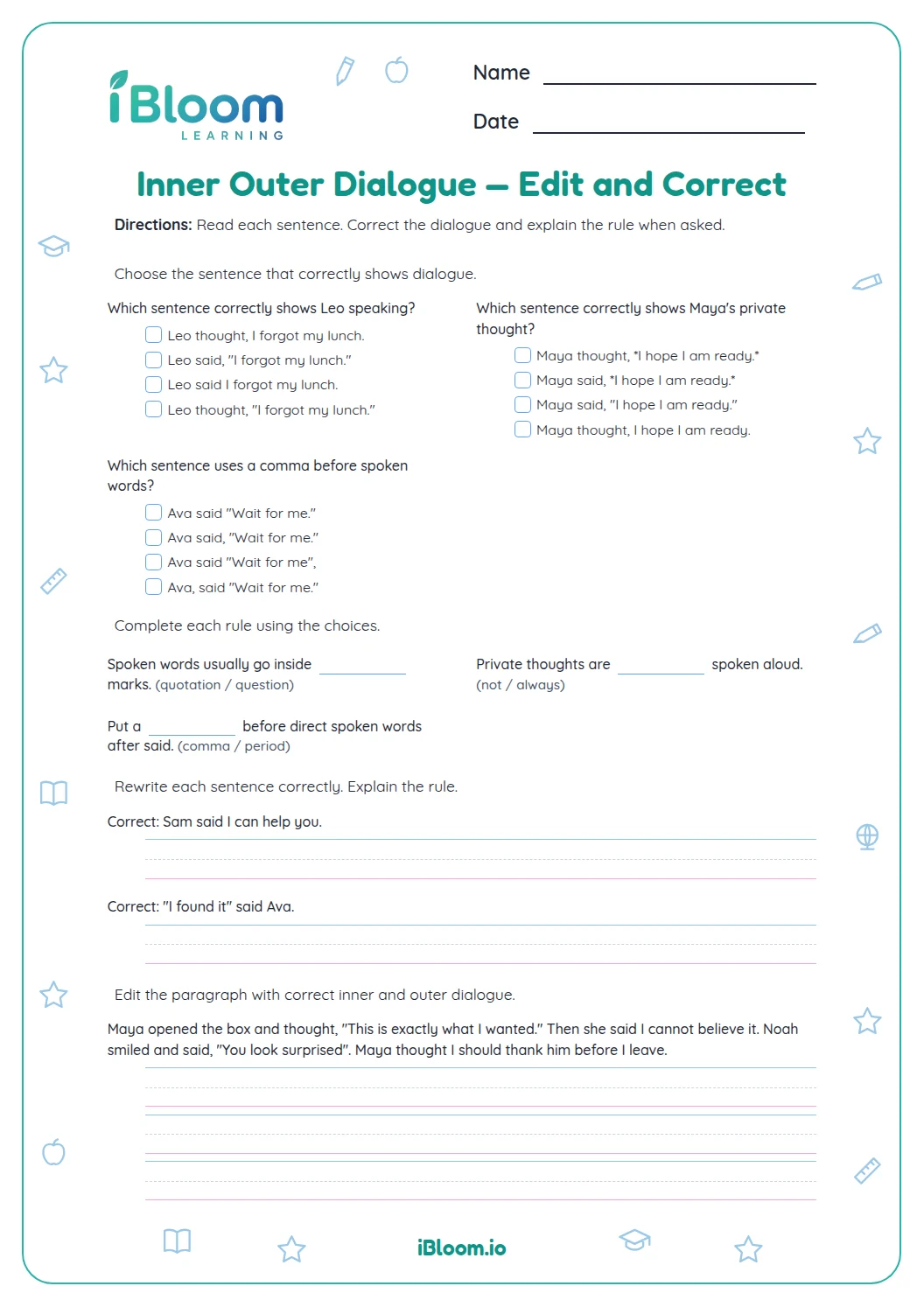
This Grade 5 narrative-writing worksheet contains 16 questions about recognizing first- and third-person perspective. Students use pronouns and names to identify who tells each sentence, then choose revisions that keep the viewpoint clear. The separate answer key makes it easy to review the narrator clues together.
Aligned to W.5.3
How can readers recognize narrative perspective?
First-person narration uses a narrator who speaks as I or we. Third-person narration uses a narrator who refers to characters as he, she, they, or by name. Pronouns offer a clue to who is telling the events.
What should students notice in a sentence?
Look for the subject and pronouns, then ask whether the narrator is included in the event. In “We waited beside the stage,” we includes the narrator. In “Lena wondered,” the narrator refers to Lena from outside the sentence.
Why does a story keep its point of view steady?
Consistent narration helps readers understand who is speaking. When revising a sentence, change the pronouns and any names needed to keep the new viewpoint clear.
How to use this worksheet
- 1Read the sentence once for meaning.
- 2Circle the pronouns and any character names.
- 3Ask whether the narrator is part of the events.
- 4Choose first person for I or we and third person for outside narration.
- 5Reread revisions to check that the viewpoint remains consistent.
Mistakes to watch for
The mistake
Assuming a named character is the narrator.
The fix
Check whether the sentence says I or refers to the character as he, she, or a name.
The mistake
Confusing we with they.
The fix
Ask whether the narrator is included: we includes the speaker, while they refers to others.
The mistake
Changing one pronoun but leaving the viewpoint unclear.
The fix
Reread the entire sentence after revising and make sure every reference matches the narrator.
Common Core alignment
This worksheet gives focused practice with the listed Common Core skill.
Write narratives with clear sequencing, description, and point of view.
On this sheet: Recognizing and revising narrator perspective supports narrative writing decisions.
Show the official wordingHide the official wording
Write narratives to develop real or imagined experiences or events using effective technique, descriptive details, and clear event sequences.
What to practice next
Make more practice
Further reading
Questions parents and teachers ask
What is first-person narration?
First-person narration tells events through a narrator who uses I or we. The narrator is part of the telling, as in “We followed the river until sunset,” where we includes the speaker and at least one other person. Ask students to underline I or we and describe who is included in that narrator voice.
What is third-person narration?
Third-person narration uses he, she, they, or character names to tell about people from outside an I voice. “Lena wondered whether the bridge was safe” refers to Lena as a character rather than as the narrator. Have the student find pronouns or names that make the narrator’s position clear.
How many questions are on the worksheet?
The worksheet has 14 multiple-choice questions over two pages, plus a separate two-page answer key. Students identify viewpoints, notice pronoun clues, and choose revisions that keep the narrator’s perspective clear. A quick reread lets students hear whether the viewpoint stays consistent.
Can a story have more than one character in first person?
Yes. A first-person narrator can say we when speaking for a group that includes the narrator. The word still signals that the speaker is part of the events being described. Students can compare their selected revision with the original sentence.
Why does point of view matter in narrative writing?
Point of view tells readers who is sharing the events. Clear pronouns help readers follow the narrator and distinguish that voice from the characters being described, especially when a sentence includes several people. This explanation helps students apply the same clue when they draft their own narratives.