







About this worksheet
This free printable Grade 5 worksheet helps writers turn a magical idea into a clear, vivid sentence. Part A has four questions about precise words and sensory or magical details. Part B has four sentences to complete from a word bank. Part C has six tasks: add a magical detail, improve a verb, write dialogue, combine sentences with because and while, and fix capitals and punctuation. The practice supports Common Core W.5.3.b and W.5.3.d through description, dialogue, and concrete language. A separate answer key gives exact choices and completions, plus sample written responses.
Aligned to W.5.3.b and W.5.3.d
What makes a fantasy sentence vivid?
A fantasy sentence can describe an impossible event while still giving the reader something concrete to imagine. A castle that floats, a map that whispers, and a gate that opens at a spoken name each offer a specific magical detail.
In Part A, children select verbs and descriptions that fit a stated purpose. Quiet movement calls for crept; a sound detail calls for hummed. The task is to match a word to its job, rather than simply choose the longest word.
How do the completion questions support sentence writing?
Part B supplies a word bank: whispered, glows, because, and icy. Children use each word once, checking the meaning and grammar of the completed sentence. Whispered describes speaking, glows names an action, because gives a reason, and icy describes how something feels.
- 1A map ___ a warning.
- 2Whispered describes speaking a warning softly.
- 3A map whispered a warning. A talking map adds a fantasy detail.
How should I check the six written responses?
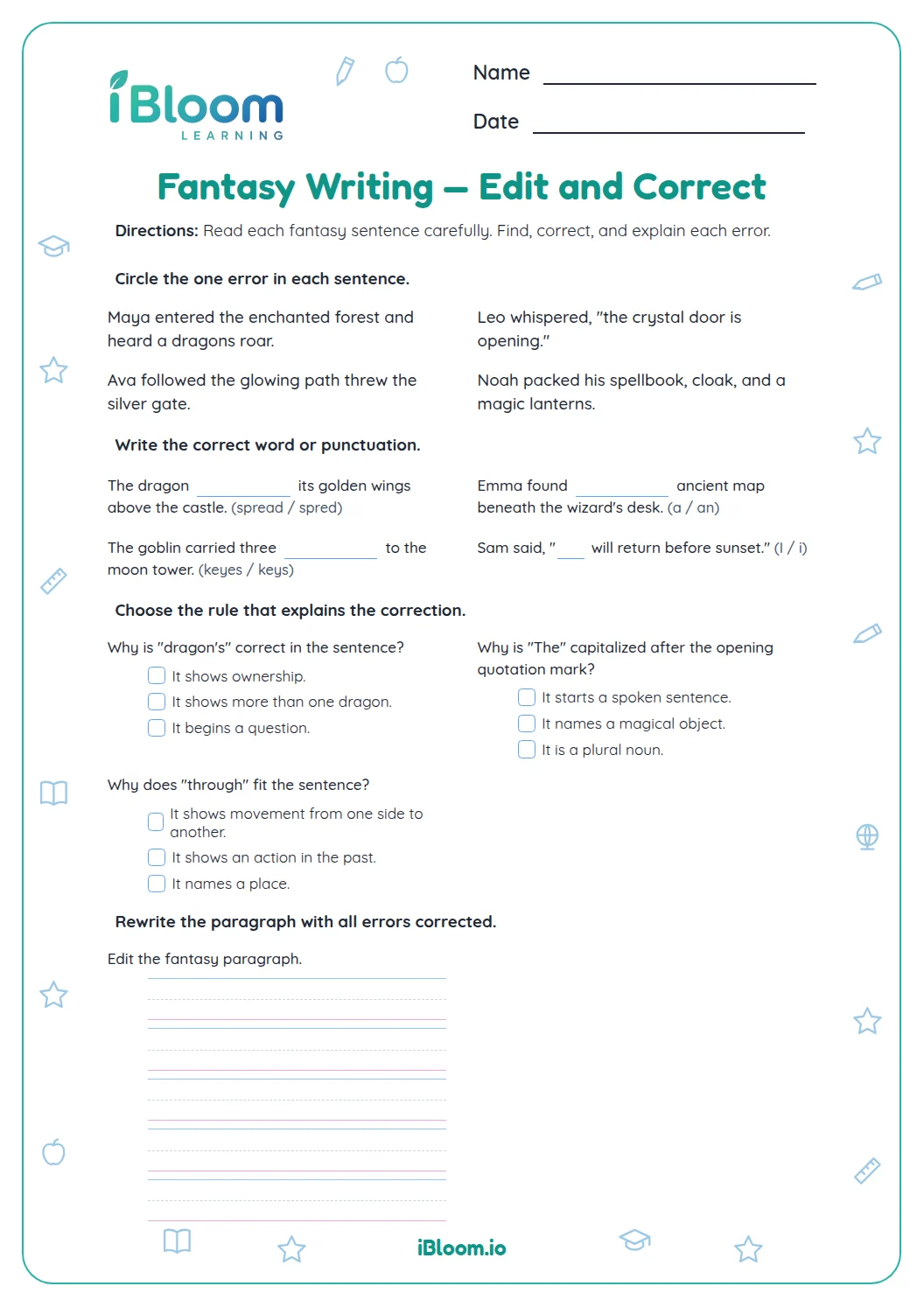
In Part C, children add an impossible detail to a castle, replace went with a precise verb, write frightened dialogue, and join events with because. They also correct capitals and punctuation and combine two actions with while. Check each sentence against its particular direction.
The answers labeled Sample show one successful response. Other magical details, verbs, and dialogue can work. In question 12, saying the name must cause the gate to open. In question 14, while connects Mira’s crossing with the dragon’s watching.
How to use this worksheet
- 1Read the four Part A prompts aloud, emphasizing quiet, sound, magical, and touch.
- 2Read the Part B word bank, use each word once, and reread each completed sentence.
- 3Before Part C, say one possible revision aloud, then write it as a complete sentence.
- 4Check the dialogue for quotation marks and a clear sign of fear.
- 5Use the key to check exact answers and discuss how the sample revisions meet their instructions.
Mistakes to notice and how to help
The mistake
Adding several vague adjectives, such as nice and amazing, to the castle sentence.
The fix
Ask for one impossible action or concrete feature, such as towers floating above a lake.
The mistake
Writing glow instead of glows after Each silver feather.
The fix
Each points to one feather at a time, so write glows: Each silver feather glows.
The mistake
Joining the gate sentences with because but changing the cause.
The fix
Keep the order of events clear: Mira says the name, and that makes the gate open.
Common Core alignment
Use description and dialogue to develop a fantasy event or a character’s response.
On this sheet: Students describe magical events and write dialogue that reveals a character’s fear.
Show the official wordingHide the official wording
Use narrative techniques, such as dialogue, description, and pacing, to develop experiences and events or show the responses of characters to situations.
Choose precise words and sensory details for magical scenes.
On this sheet: Students select sensory words, complete descriptions, and revise a castle detail and a dragon’s movement.
Show the official wordingHide the official wording
Use concrete words and phrases and sensory details to convey experiences and events precisely.
What to practice next
Make more practice
Further reading
Questions parents and teachers ask
Does my child have to write a whole fantasy story?
Your child writes six individual sentences in Part C. The first eight questions build up to that writing through word choices and sentence completions. You can later ask your child to choose a favorite sentence and continue the scene, keeping the same character and magical rule.
What counts as a magical detail in the castle sentence?
A magical detail describes something that could not happen in an ordinary castle. Floating towers, doors that answer questions, or stairs made of moonlight would work. Ask your child to include the castle and a clear action so the result still reads as one complete sentence.
Can the written answers differ from the answer key?
Yes, the six answers labeled Sample are models, and other sentences can meet the same directions. Check the requested detail, the sentence’s meaning, and its punctuation. In the because sentence, the gate must open as a result of Mira saying the secret name.
How does the dialogue question show fear?
The spoken words should give the reader a clue that Mira is frightened. She might ask the dragon to stay back or admit that she is scared. Help your child place quotation marks around the spoken words and keep the dialogue within one complete sentence.
Which skills should we practice next?
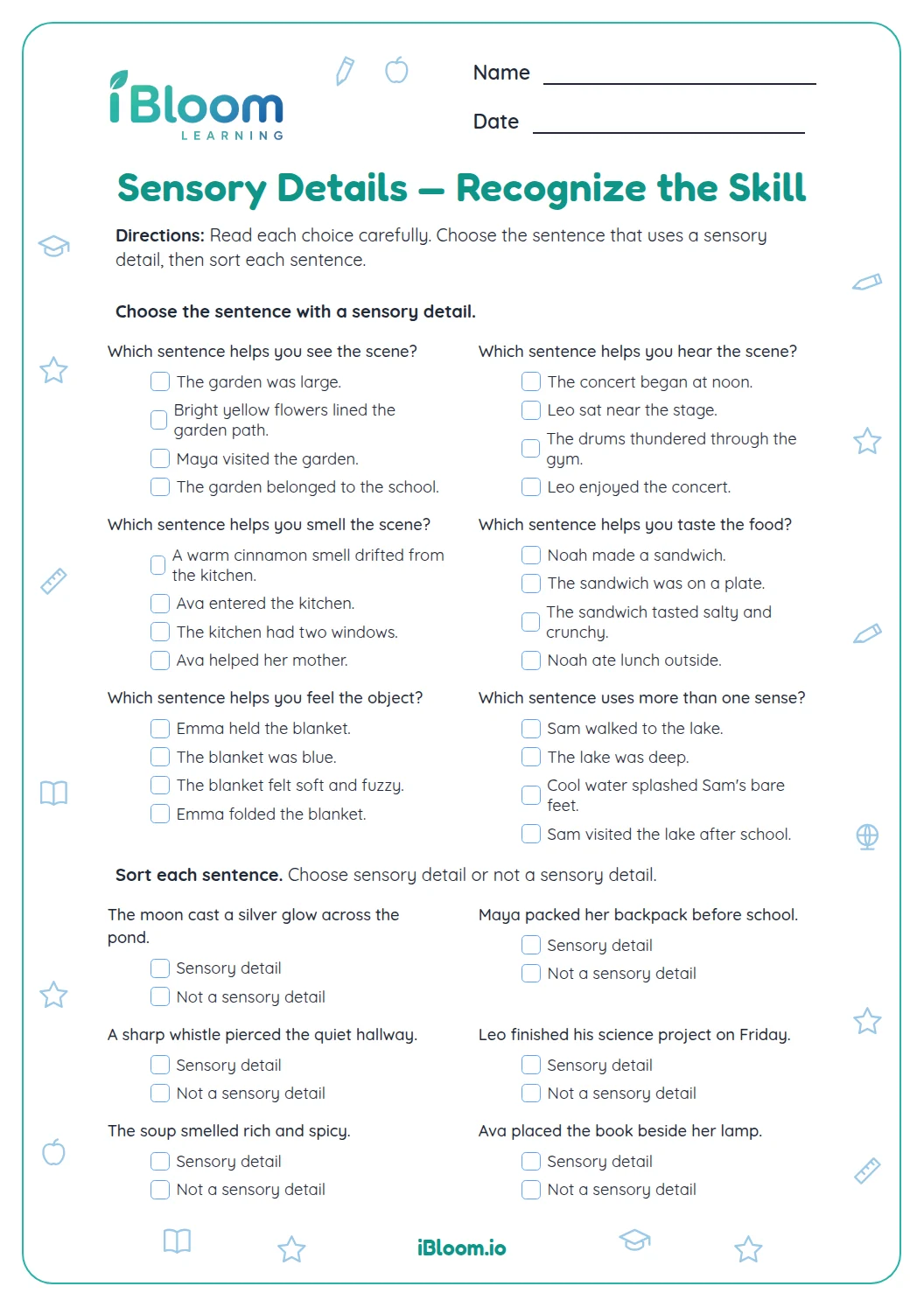
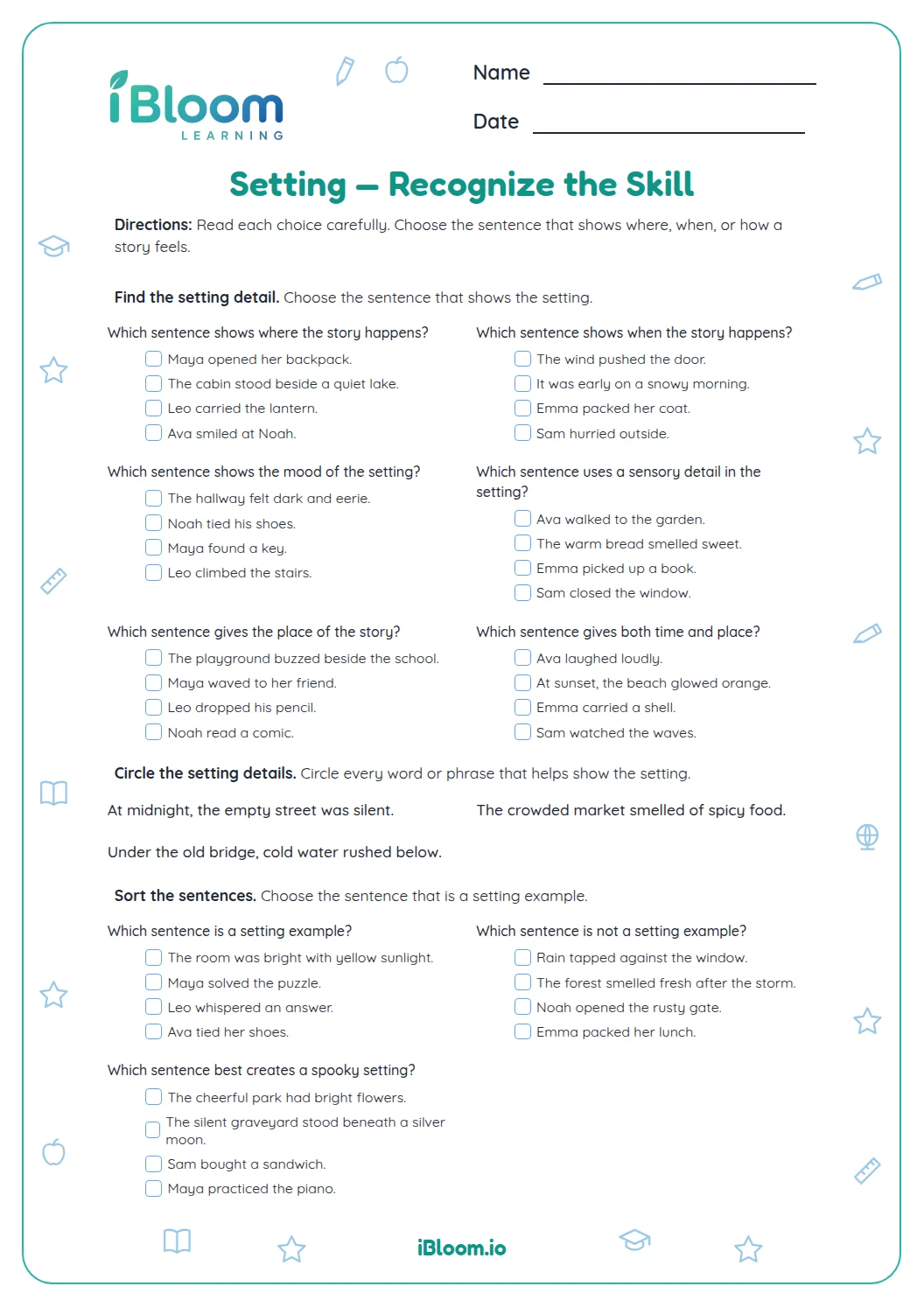
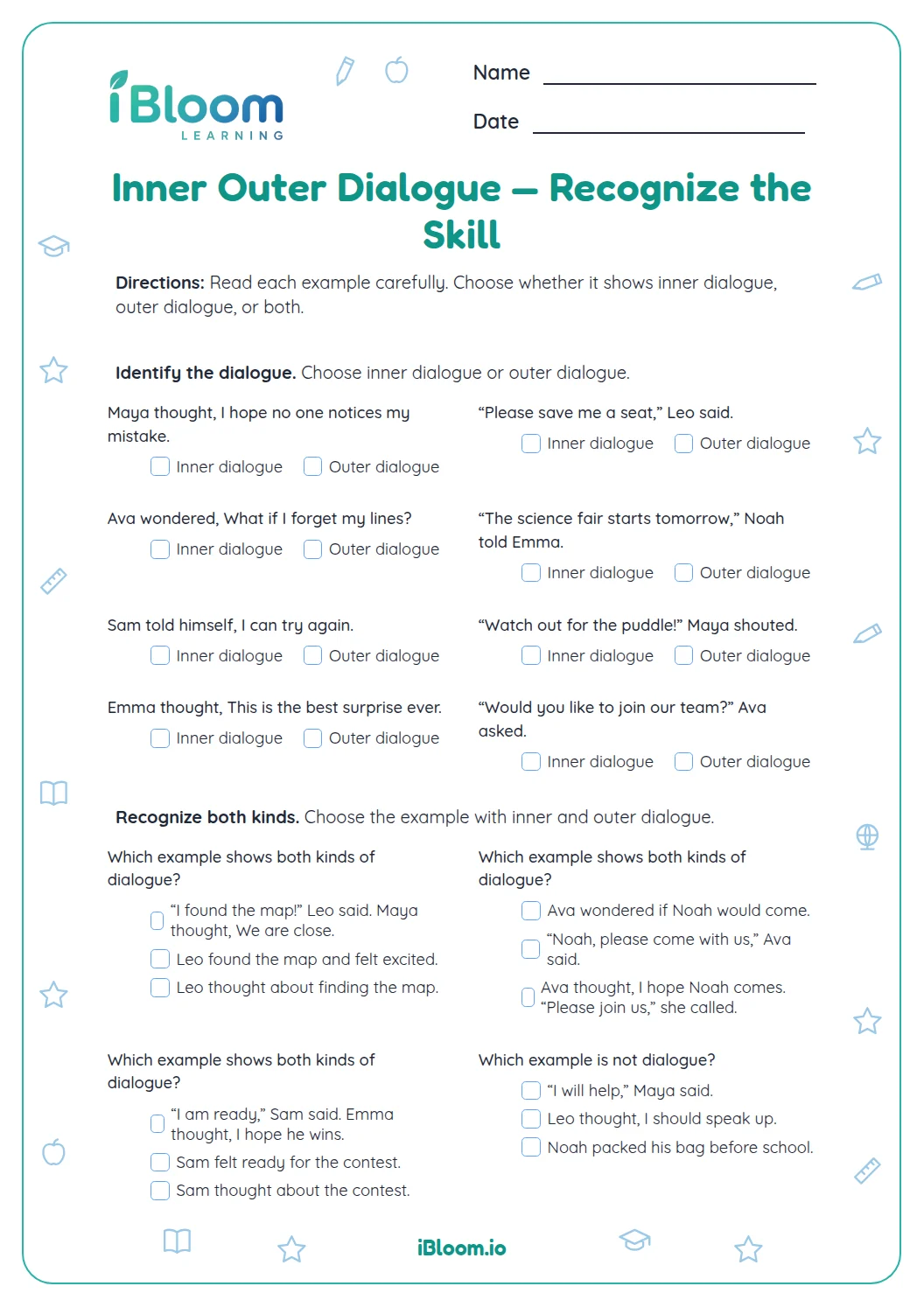
Sensory details and setting are useful next steps after this sheet. Ask your child to describe the floating castle with one sound and one texture, then explain where it stands or floats. Dialogue practice can add a character’s response before the sentences become a longer scene.