



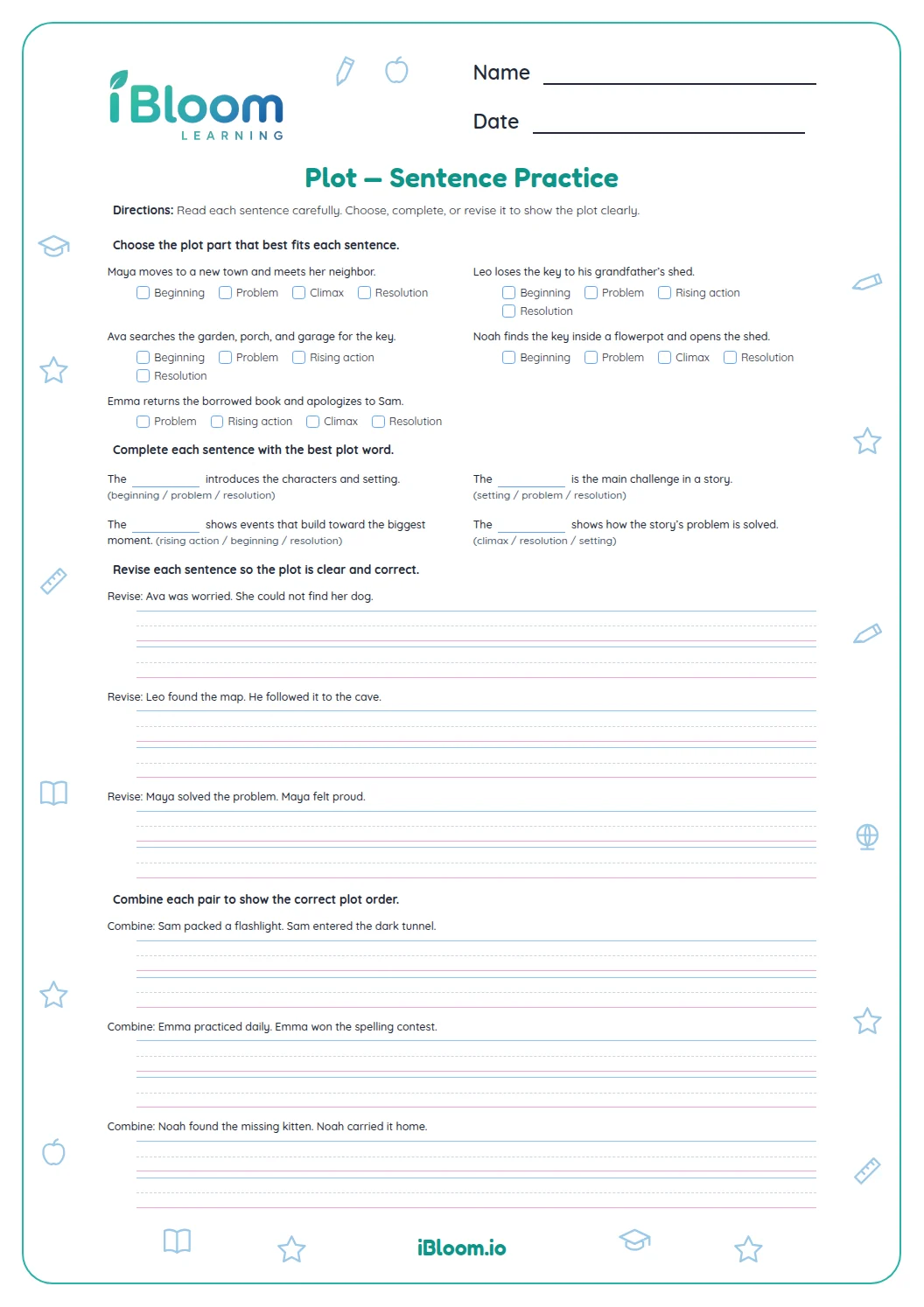

About this worksheet
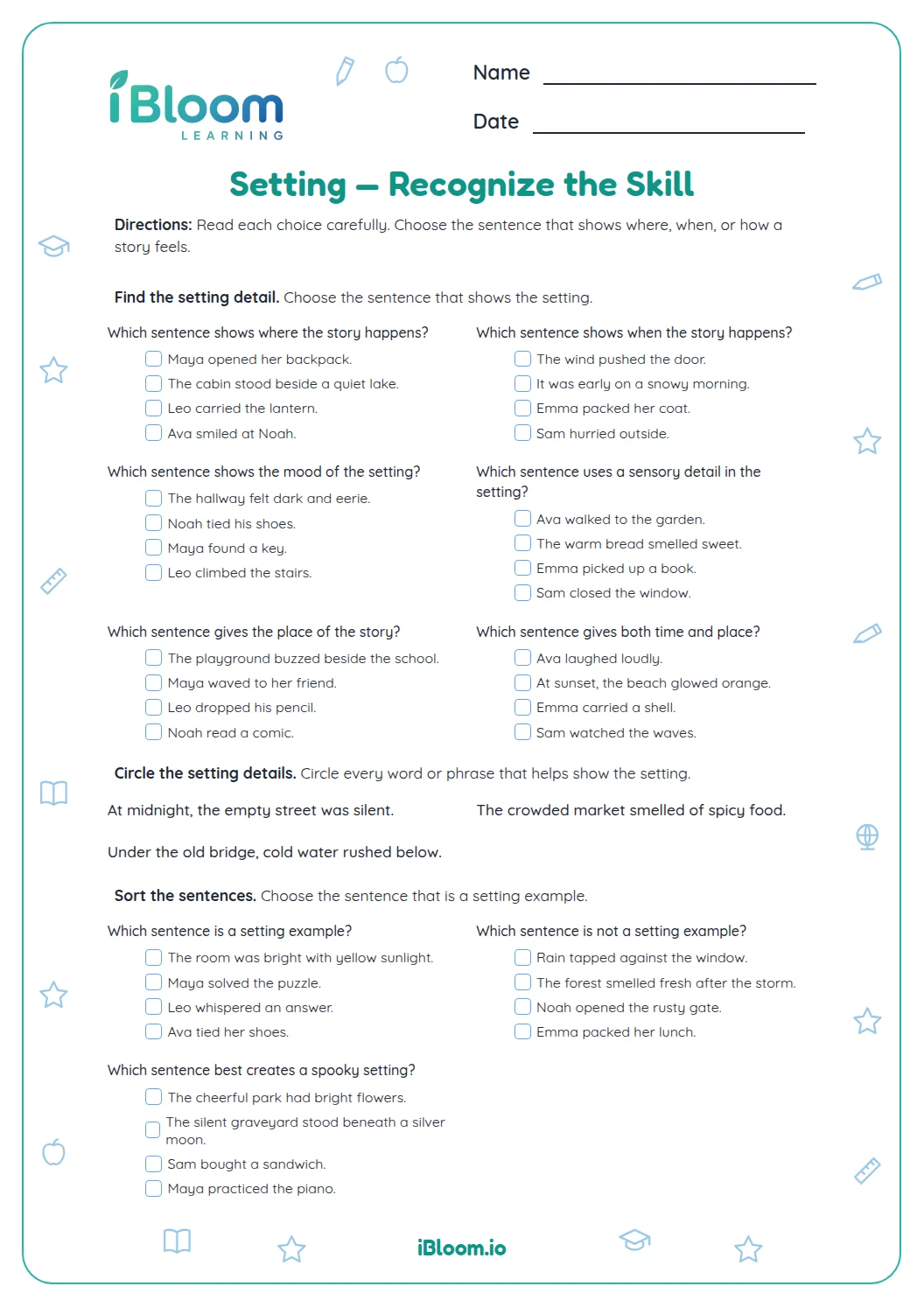
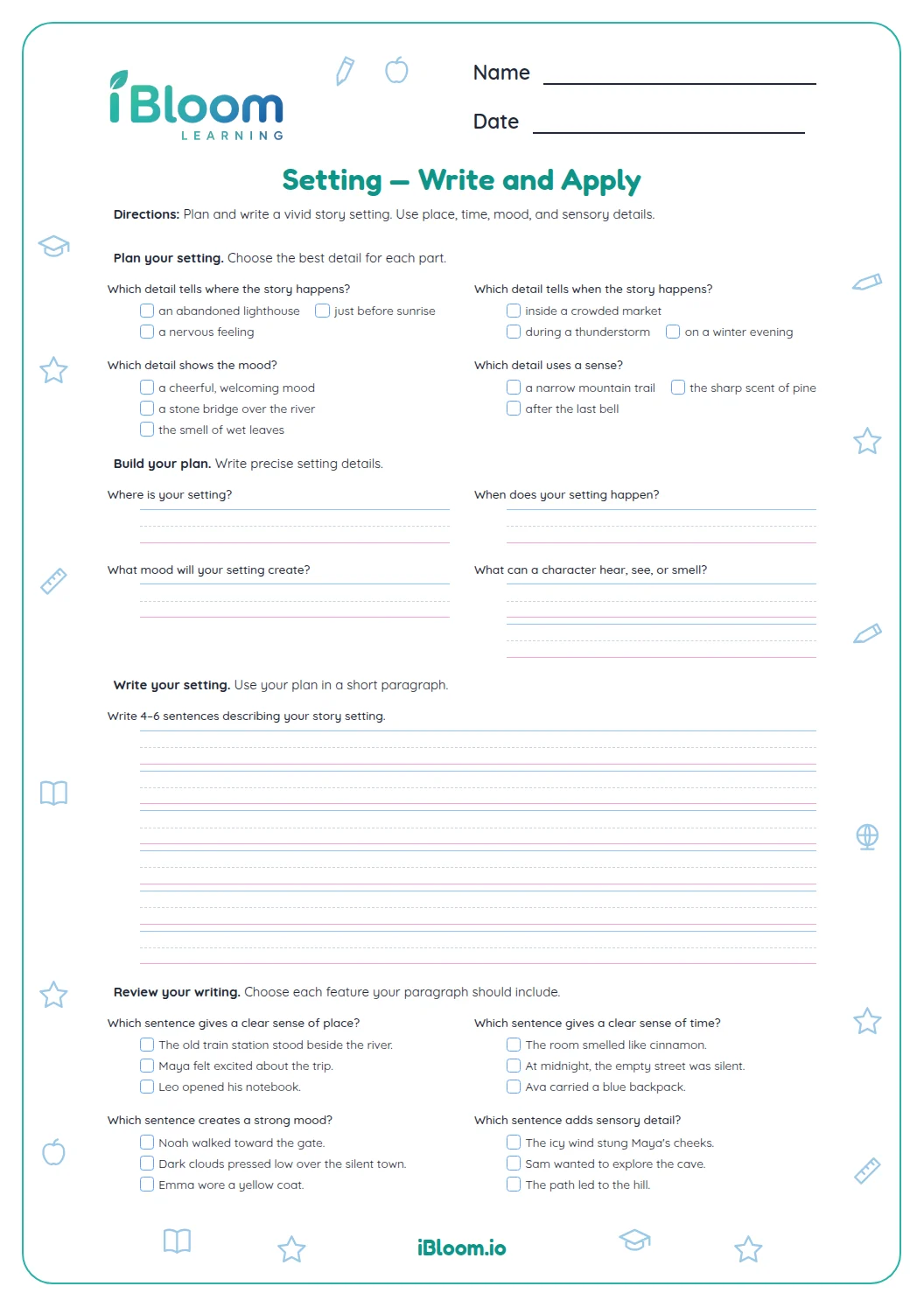
This Grade 5 narrative writing worksheet focuses on setting at the sentence level. Learners choose vivid examples, then write original sentences that establish place, time, weather, and mood with concrete details. The practice supports Common Core W.5.3.b, and the answer key includes sample responses for open-ended writing.
Aligned to W.5.3.b
How can a sentence make a setting vivid?
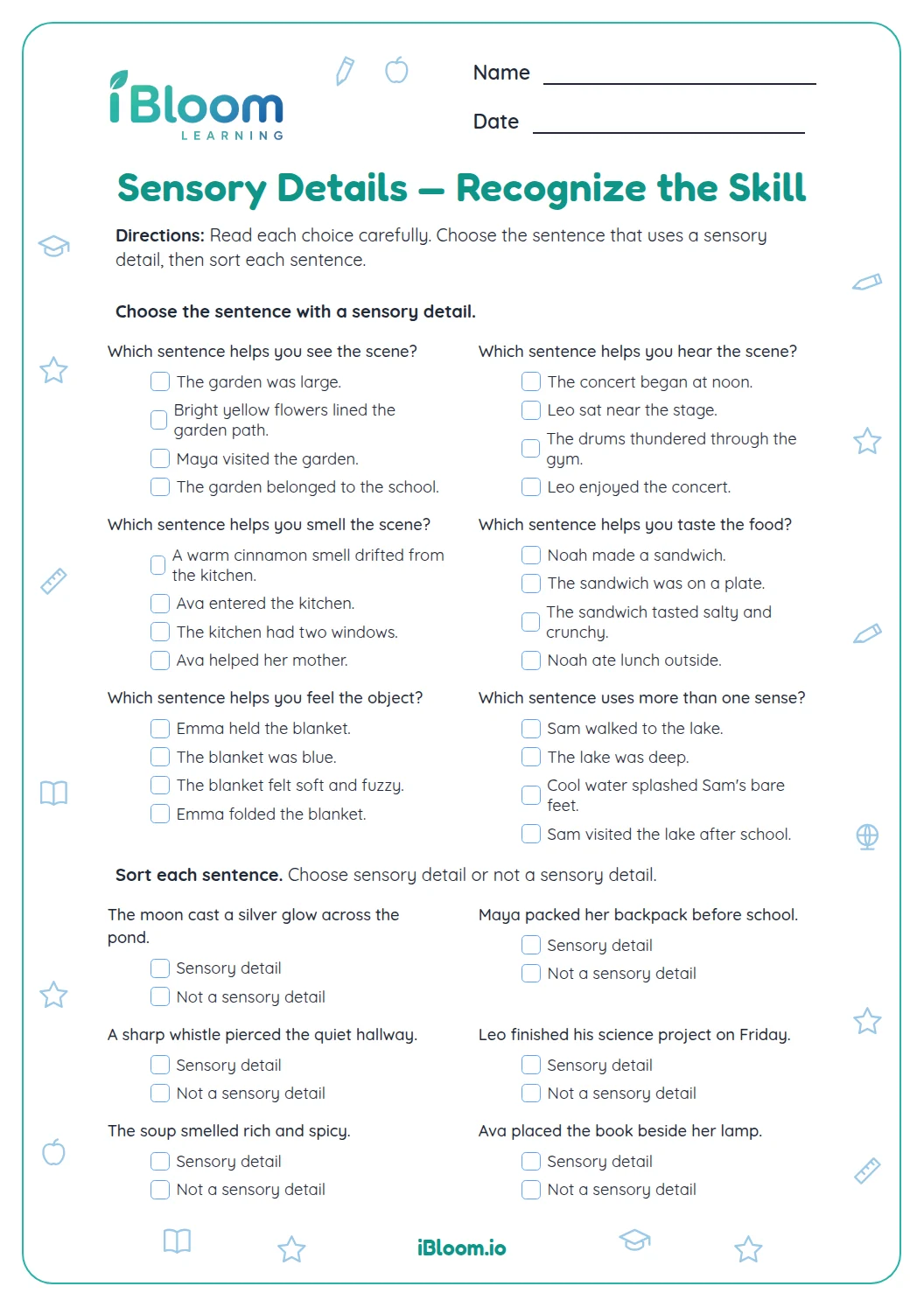
Choose a specific detail that appeals to a sense, such as the smell of rain or the sound of waves. The worksheet asks learners to add such details in their own sentences.
- 1The cave was dark.
- 2Sample: In the cave, water dripped somewhere beyond the reach of my flashlight.
What will learners practice?
Sixteen questions move from selecting precise setting details to writing and combining original sentences.
How can I use the answer key?
Check each response after the learner finishes a part. For open responses, compare the answer with the model and accept other clear, correct wording.
How to use this worksheet
- 1Notice the place, time, weather, and senses named in each setting.
- 2Choose the detail that best fits the setting in the sentence.
- 3When writing, add one precise detail that helps a reader picture the place.
- 4Reread each sentence to check that the detail fits and the sentence is complete.
Common mistakes and quick fixes
The mistake
Does a setting sentence need more than one detail?
The fix
No. One well-chosen detail can establish a place or mood clearly. Add more only when each detail helps the reader picture the scene.
The mistake
What if my setting sentence is different from the key?
The fix
The key gives sample responses. A different sentence is correct when it is clear, grammatically complete, and includes the requested setting detail.
The mistake
How can I keep setting description focused?
The fix
Choose details that fit the scene and support what might happen there. A few precise details usually work better than a long list.
This worksheet practices the listed Common Core skill.
Use descriptive details to develop the setting in a narrative.
On this sheet:
Show the official wordingHide the official wording
Use narrative techniques, such as dialogue, description, and pacing, to develop experiences and events or show the responses of characters to situations.
What to practice next
Make more practice
Further reading
Questions parents and teachers ask
What is a setting in a story?
A setting is where and when a story happens. A writer can establish it with details about weather, sounds, light, nearby objects, or the time of day. The worksheet asks learners to spot and create those details. Ask yourself what a character could see, hear, smell, or feel in that place.
How can a sentence make a setting vivid?
Choose a precise detail that appeals to a sense, such as rain tapping a roof or cinnamon filling a bakery. One fitting image can help a reader picture a place more clearly than a general label. A specific detail should fit both the location and the moment in the story.
Does a setting sentence need more than one detail?
No. One well-chosen detail can establish a place or mood clearly. Add another detail when it helps the reader picture the scene, rather than simply making the sentence longer. Try reading the sentence aloud to check that the image feels clear and believable.
What if my setting sentence differs from the key?
The key gives sample responses because many sentences can work. A different sentence is correct when it is complete, includes the requested setting detail, and helps the reader imagine where or when the scene happens. Look for a detail that supports the scene instead of distracting from the action.
How can I keep setting description focused?
Choose details that fit the scene and support what might happen there. A few precise details usually work better than a long list, and the worksheet gives several settings to practice that choice. Small sensory clues can suggest a setting without naming every object in it.