




About this worksheet
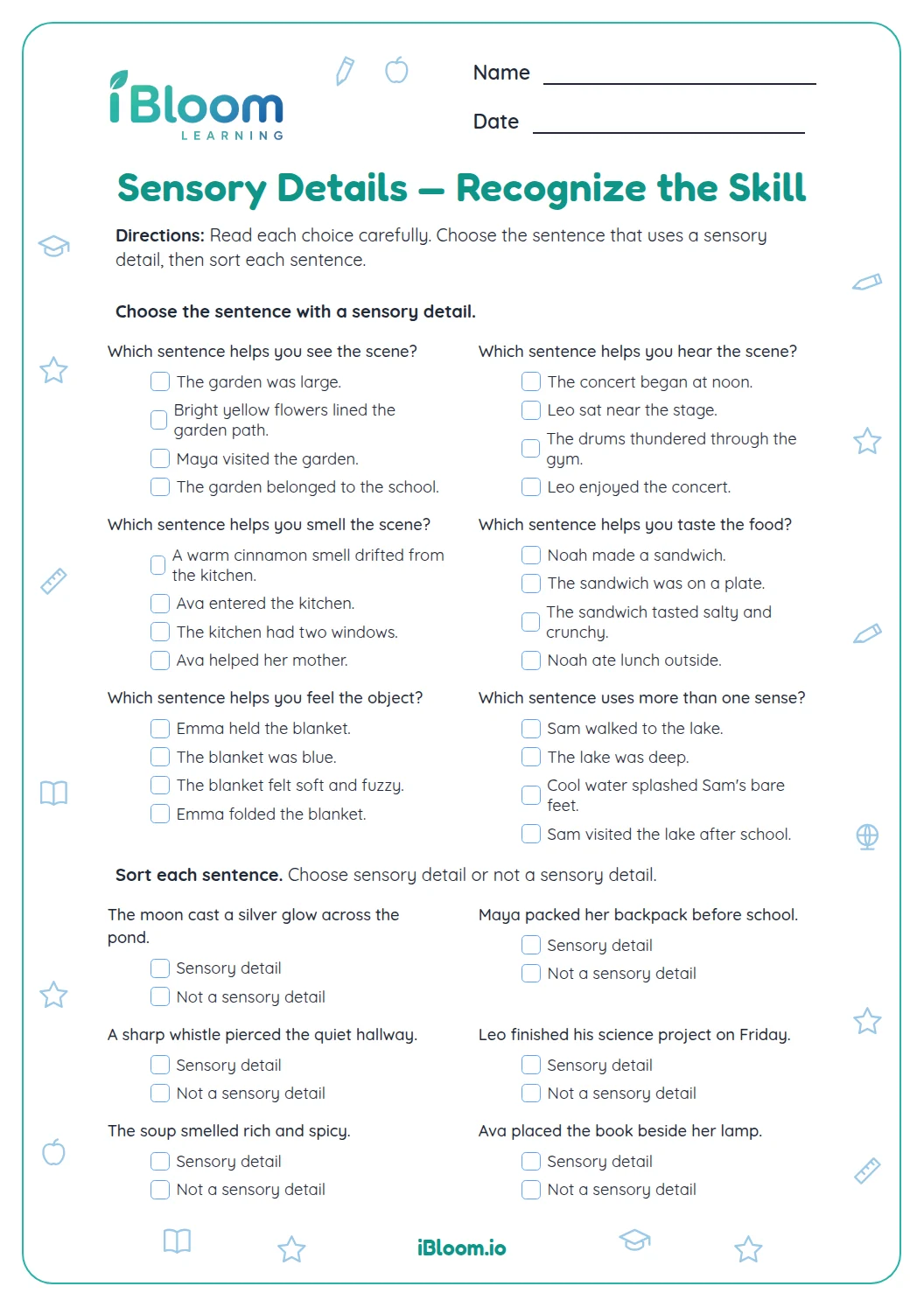
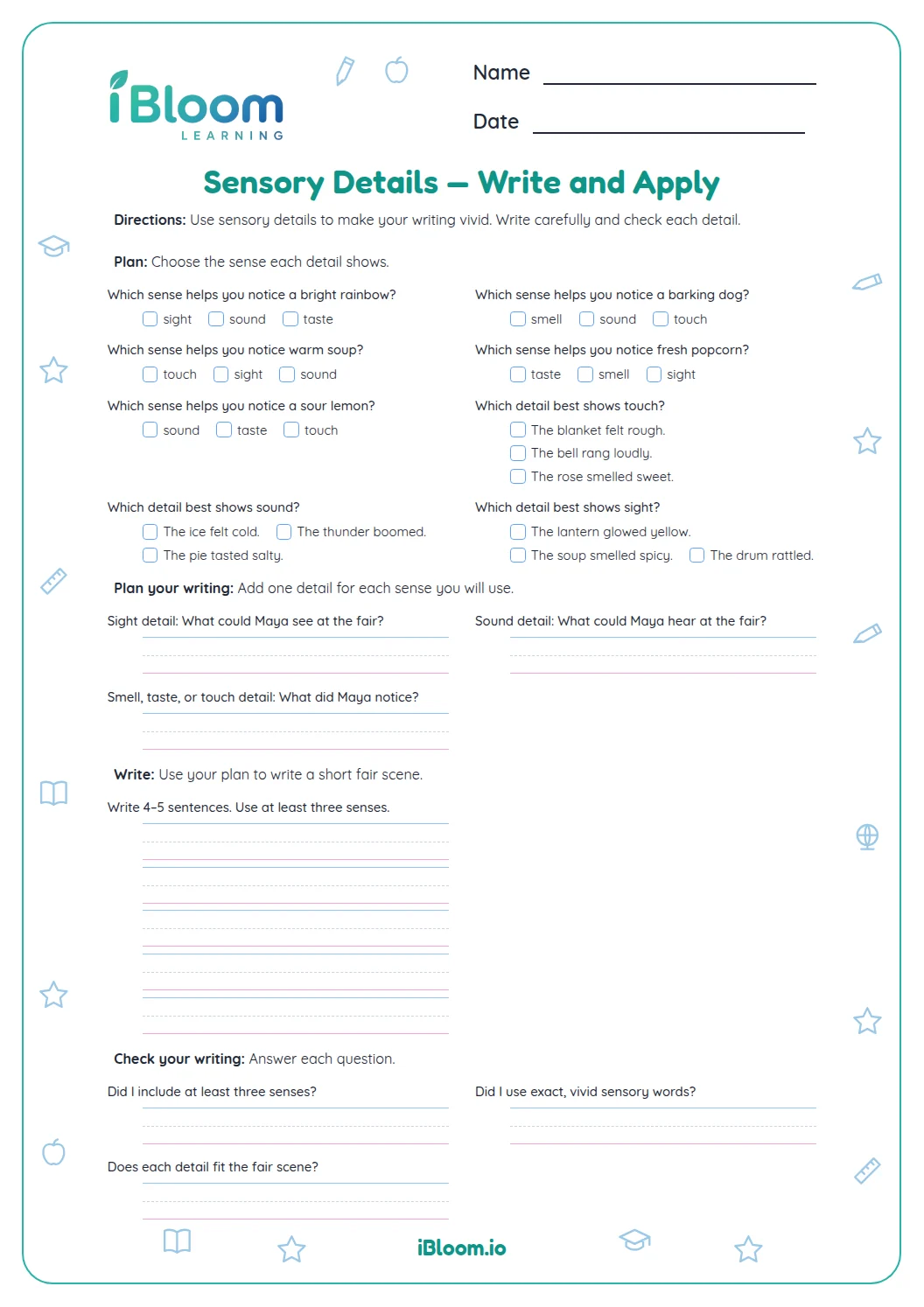
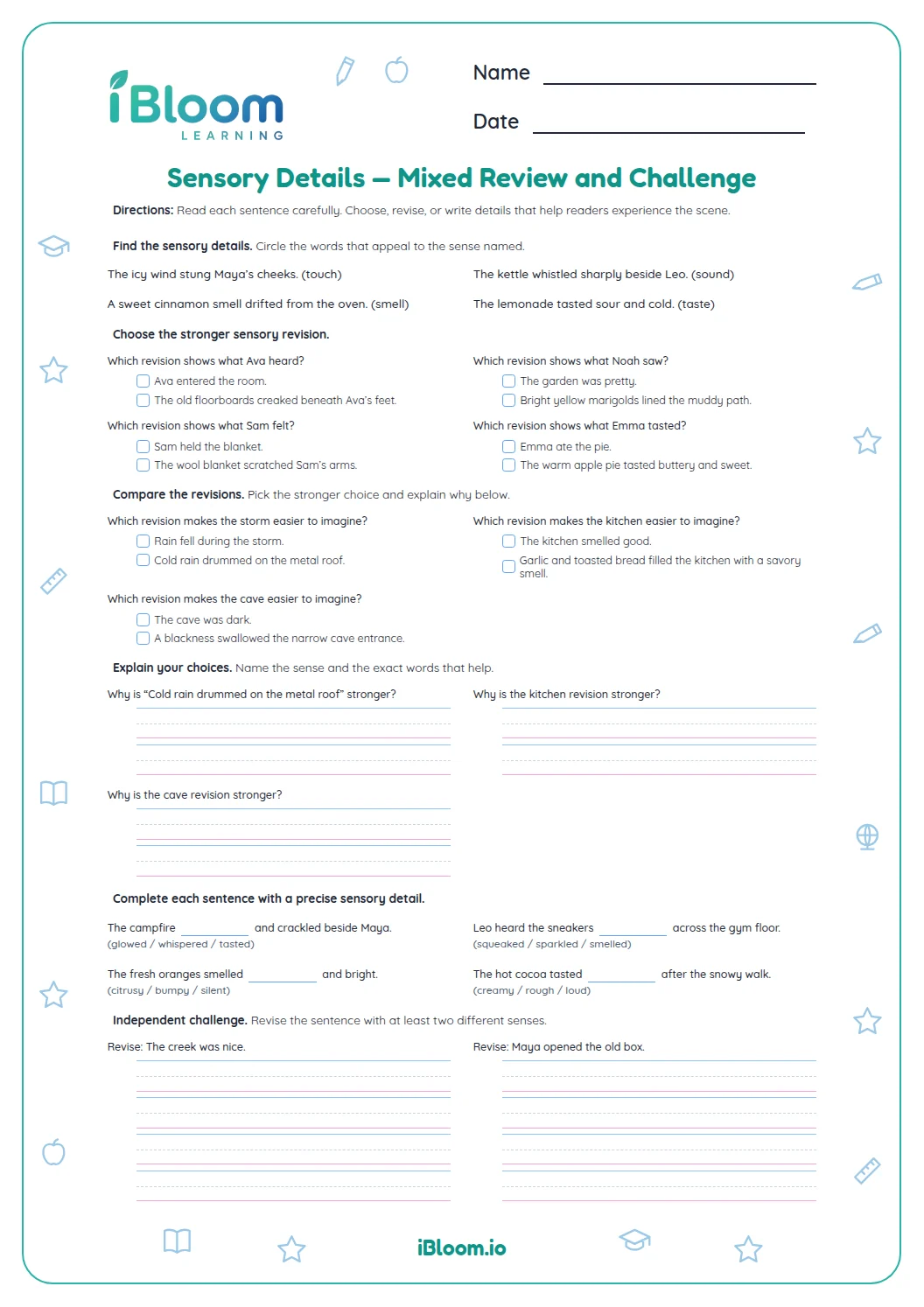
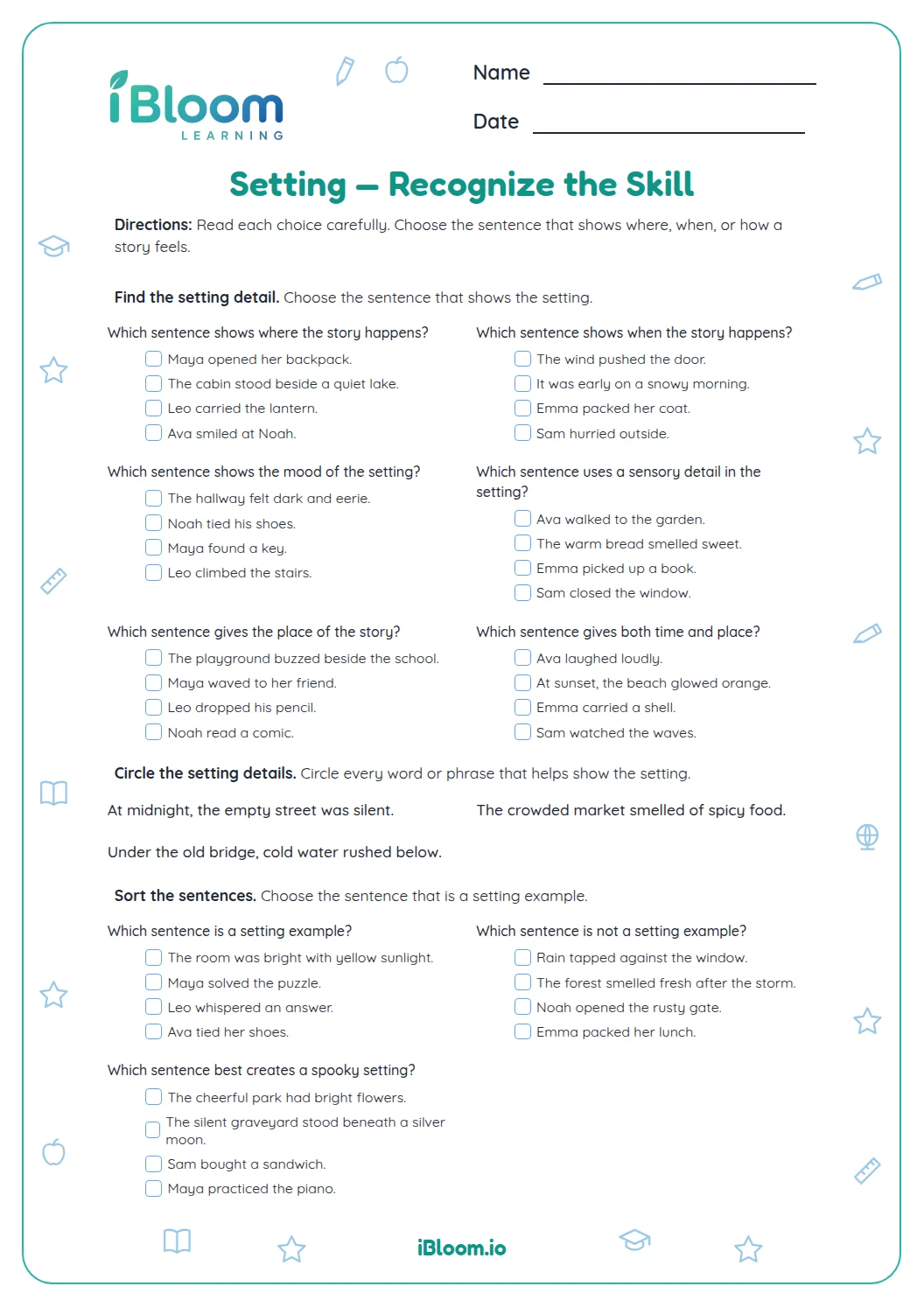
This Grade 5 printable worksheet helps students notice when a sensory detail does not fit, select precise words, and revise sentences. It connects to Common Core W.5.3.d and W.5.5 through practice using sensory language and editing narrative details. The two-page sheet has 14 items in three parts, followed by a separate answer key with sample revisions.
Aligned to W.5.3.d and W.5.5
What will students edit?
Part A asks students to identify a sensory mismatch. Part B focuses on choosing precise details, and Part C asks students to revise two sentences so the sensory language fits.
All three parts focus on making sensory language accurate and specific. The key includes the correct choices and sample revisions.
How can you spot a sensory mismatch?
Notice the sense verb first: heard, smelled, tasted, touched, or watched. Then check whether the nearby detail belongs to that sense. A sunset can look golden, but it cannot be heard as warm. A mismatch can make the reader pause because the words describe different experiences.
- 1Maya heard the warm, golden sunset.
- 2Heard names sound; warm suggests touch and golden suggests sight.
- 3The mismatched word is heard; a fitting revision is “Maya watched the golden sunset.”
What makes a sensory correction precise?
A precise detail gives the reader a concrete experience. “The bread smelled delicious” names a smell, while “the bread was nice” is less specific. For a written revision, keep the detail tied to the sense and the event in the sentence.
How to use this worksheet
- 1Identify the sense word in the sentence.
- 2Ask whether the detail fits that sense.
- 3Choose a concrete replacement when a word does not fit.
- 4For Part B, read the complete sentence with each choice.
- 5For Part C, rewrite the full sentence so the senses match.
- 6Use the key samples as models while accepting other clear revisions.
Common mistakes and quick fixes
The mistake
Treating a sight word such as golden as something a character hears.
The fix
Name the sense first, then match each descriptive word to it.
The mistake
Choosing a vague correction such as “good.”
The fix
Use a concrete word that tells the reader what the sense experienced.
The mistake
Changing a detail but leaving the sentence confusing.
The fix
Reread the whole sentence after editing and check that the event is clear.
Common Core alignment
The practice connects the page activities to these Common Core skills.
Use concrete sensory details to describe narrative experiences precisely.
On this sheet: Students edit and write concrete sensory details in narrative sentences.
Show the official wordingHide the official wording
Use concrete words and phrases and sensory details to convey experiences and events precisely.
Revise and edit narrative sentences for clear, precise details.
On this sheet: The worksheet asks students to revise and rewrite sensory sentences.
Show the official wordingHide the official wording
With guidance and support from peers and adults, develop and strengthen writing as needed by planning, revising, editing, rewriting, or trying a new approach. (Editing for conventions should demonstrate command of Language standards 1-3 up to and including grade 5 here.)
What to practice next
Make more practice
Further reading
Questions parents and teachers ask
What are sensory details?
Sensory details use words about sight, sound, smell, taste, or touch to help a reader imagine an experience. “The lemon tasted sour” connects a taste word to tasting. This worksheet asks students to notice mismatches and revise them with details that fit the named sense.
How many questions are on this worksheet?
There are 14 questions in three parts. Six items ask students to spot a mismatched detail, six ask them to choose a precise sensory word, and four invite a written revision. The answer key gives the choices and sample rewrites.
Why is “heard the warm sunset” a mismatch?
There are 14 items across three parts. Students identify six sensory mismatches, choose six precise details, and revise two sentences. The separate key lists the selected words and gives sample revisions; other vivid revisions can also work when the details fit the sense.
Can a written correction differ from the answer key?
Yes. The final four answers are samples because many revisions can make sense. A response should repair the mismatch, name a detail that fits the intended sense, and keep the sentence clear. The first two written prompts specify which kind of detail to revise.
How can students edit sensory details?
First identify the sense verb or detail, such as tasted, heard, or felt. Then ask what a person could actually experience through that sense. Replace any mismatched word with a concrete detail that accurately describes the event. Then read the whole line to verify the corrected image.