






About this worksheet
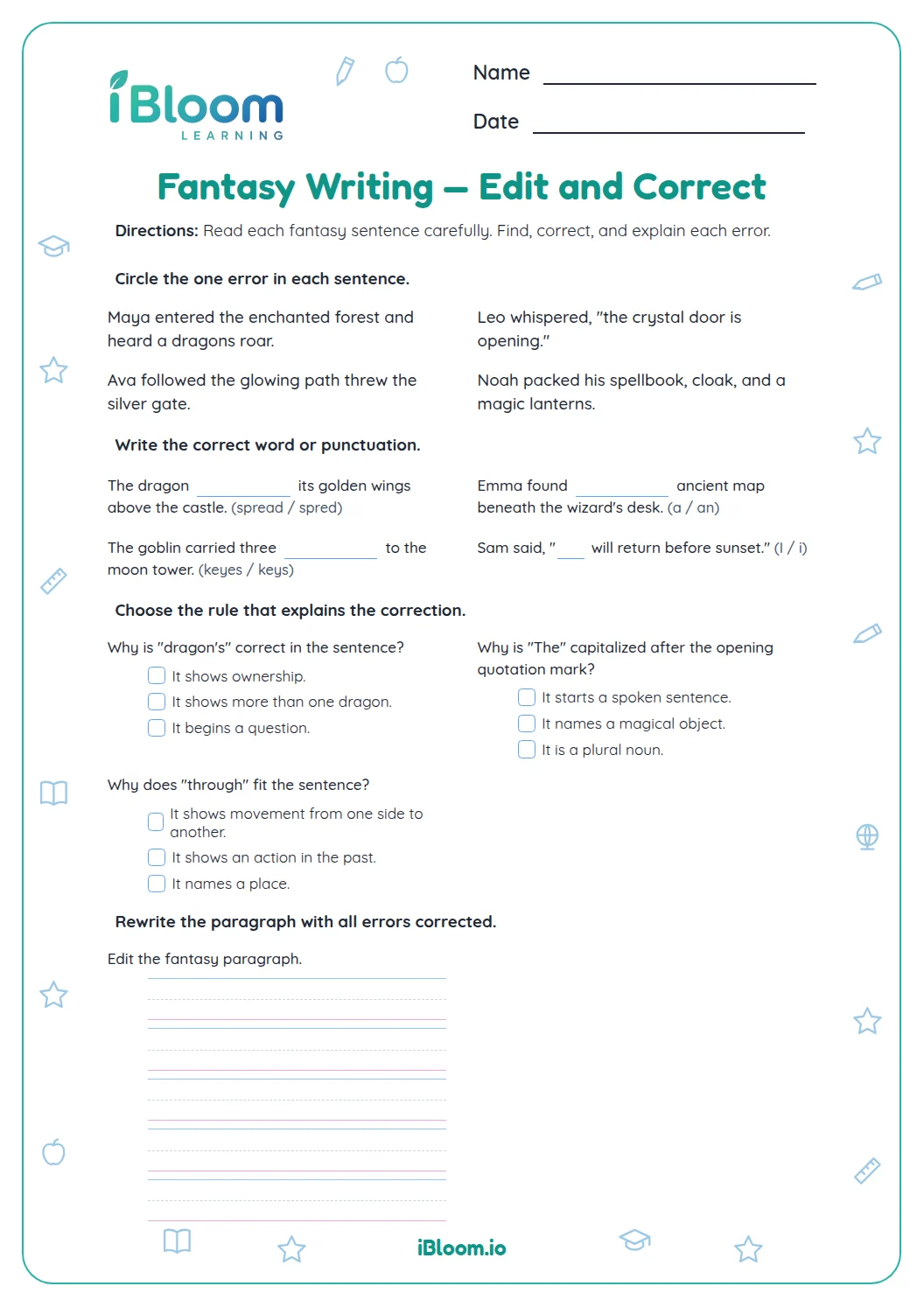
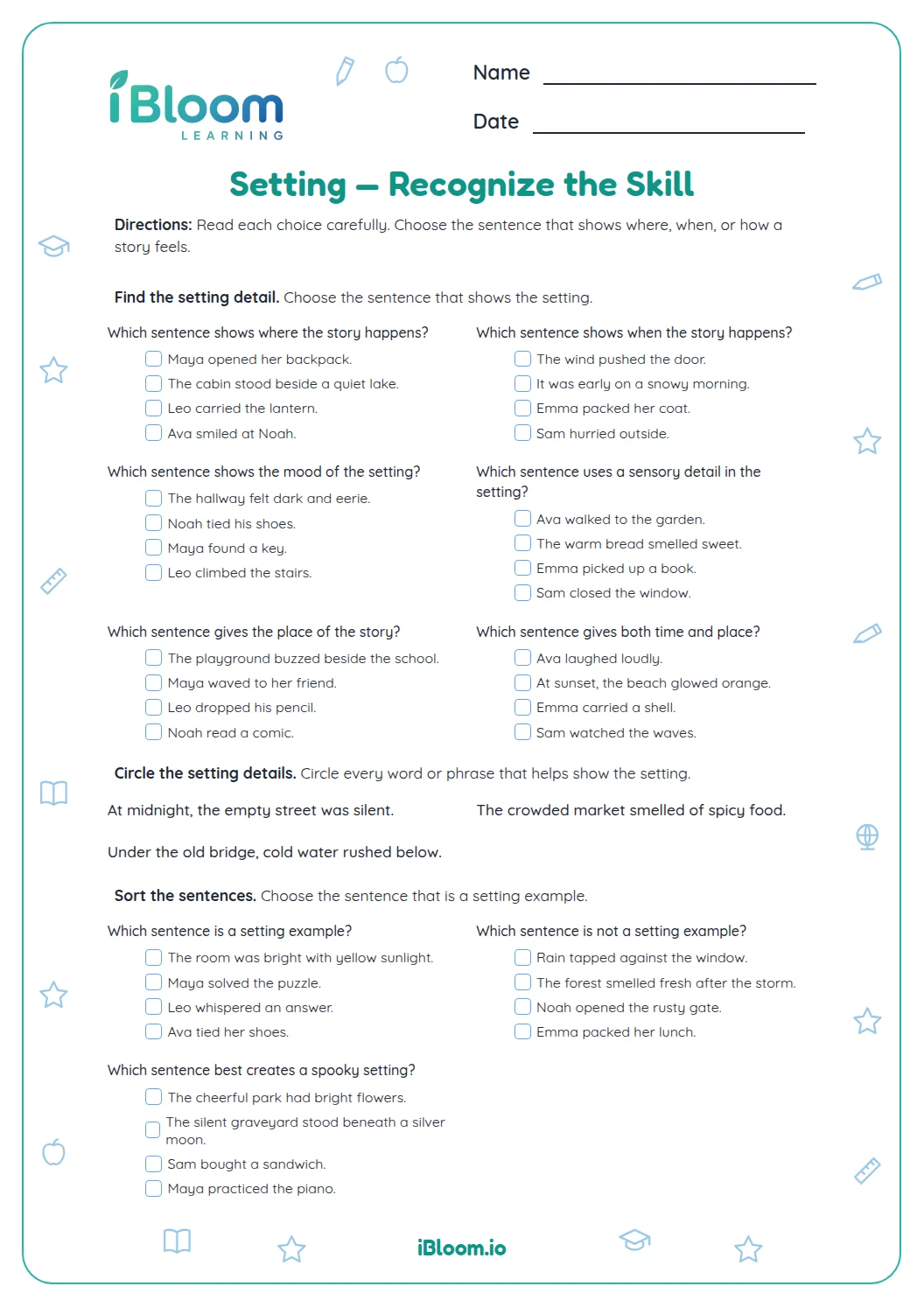
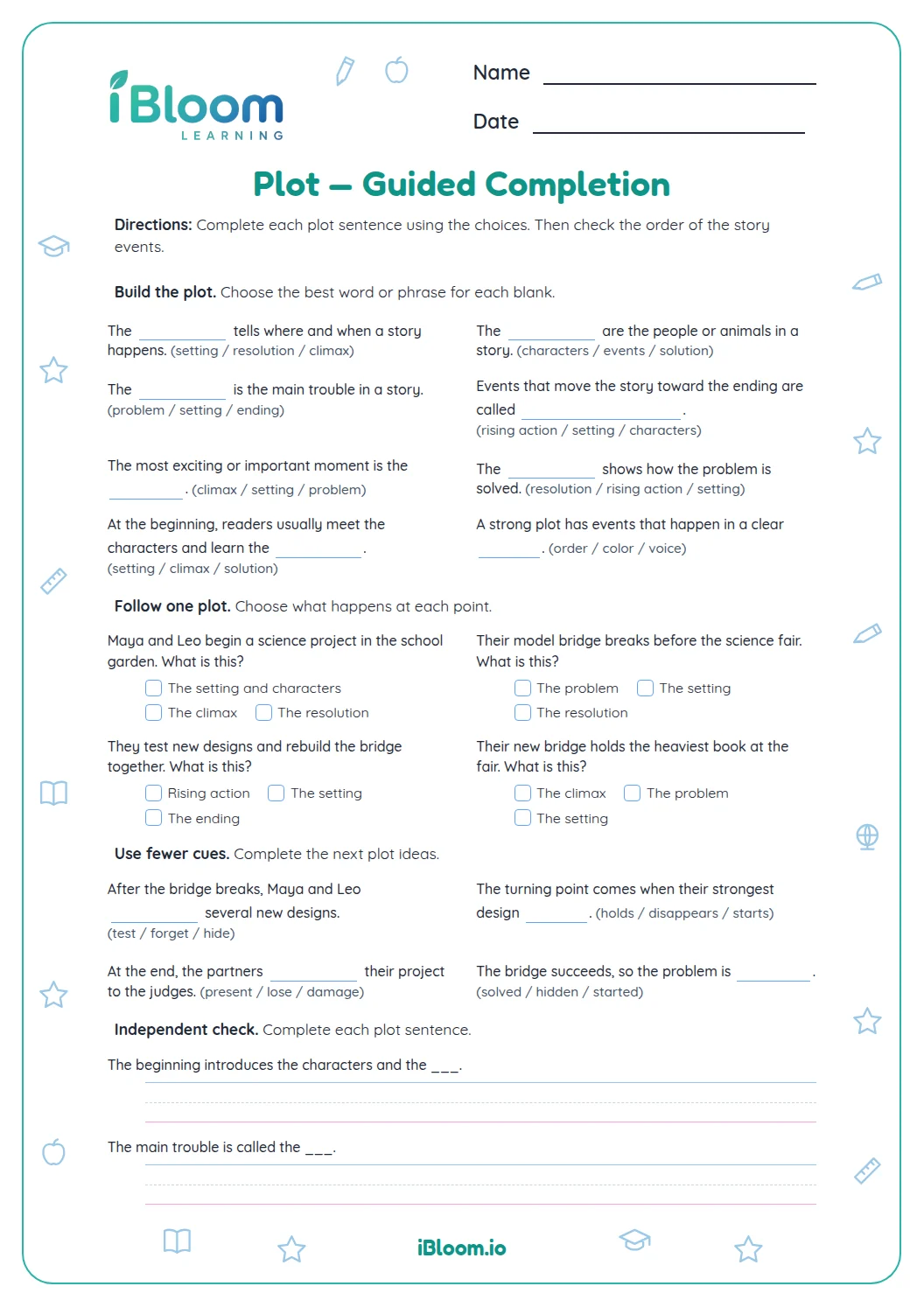
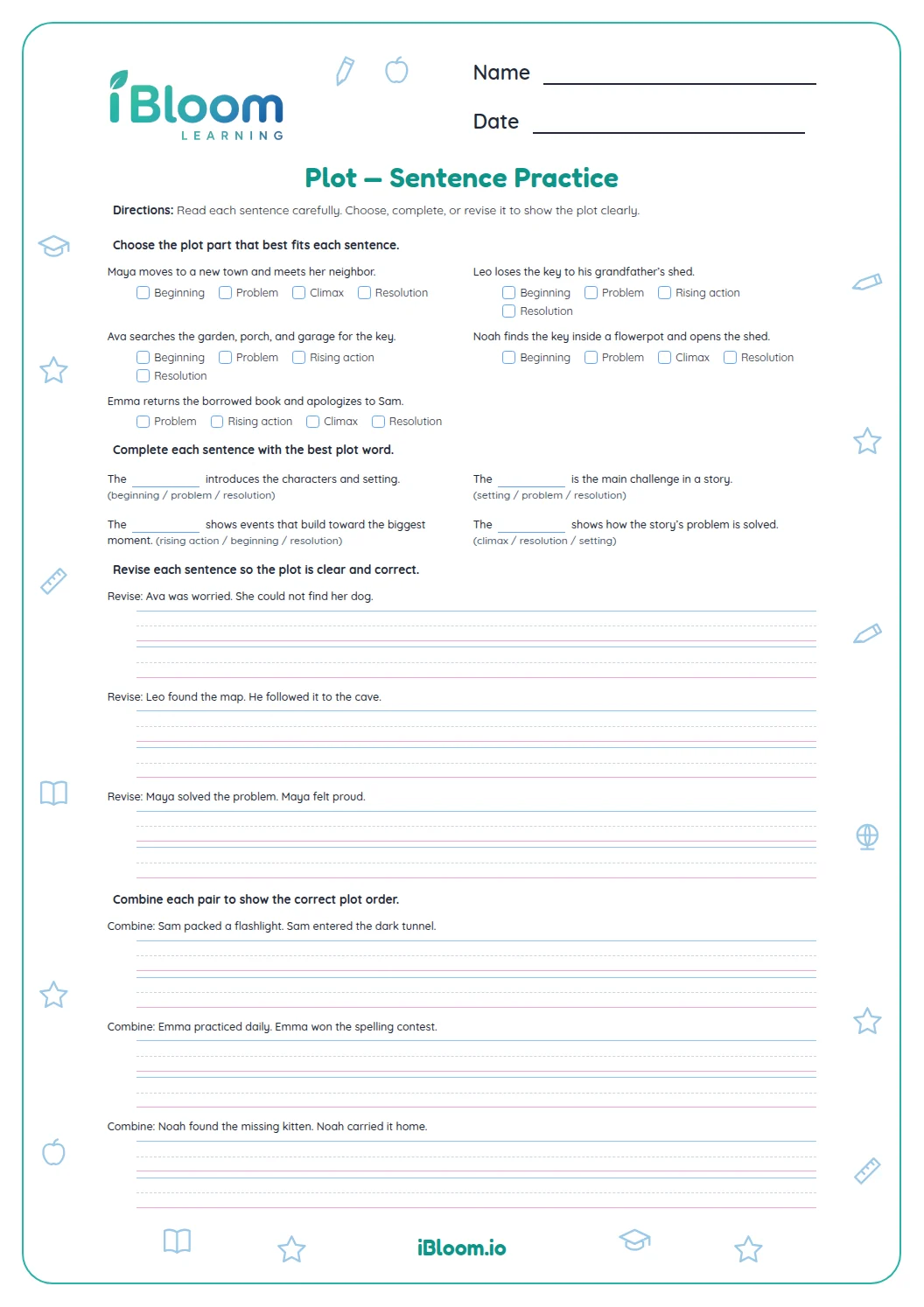
This free Grade 5 fantasy writing worksheet gives students 14 short choices about imagined stories. Part A spots fantasy clues, settings, character goals, and sensory details; Part B focuses on problems, event order, and story endings. A separate answer key makes review straightforward.
What makes a detail fantasy?
Fantasy writing imagines something that cannot happen in ordinary life, such as a speaking door or a river of stars. A story can also include familiar details, such as packing bread or walking a path.
Question 1 has one clear fantasy clue: the door speaks. A color or material alone does not make an object magical.
- 1A door speaks → fantasy clue
- 2A red door → possible in ordinary life
How do setting, problem, and sequence work together?
A setting tells where or when a story happens. A problem gives the character something to face, and events show what happens next. Sensory details help readers imagine the scene.
In question 10, “After the key glowed” signals an event leading to the next action.
- 1After the key glowed, Tavi opened the gate. → one event leads to another.
How can you recognize a fictional event?
A fictional story may use realistic actions alongside invented characters, magic, or events. Look at the detail itself: ordinary bread can appear in a fantasy, while bread that sings is impossible in an ordinary setting.
How to use this worksheet
- 1Read each choice fully before selecting one.
- 2Ask whether the detail is ordinary, imagined, or a piece of story craft.
- 3For setting, look for where or when; for a goal, look for what a character wants.
- 4Check that events follow a sensible order from problem to response.
- 5Use the answer key to explain the clue that supports each answer.
Common mistakes and quick fixes
The mistake
Assuming every detail in a fantasy story must be magical.
The fix
Check the specific clue; ordinary actions can happen in an imagined setting.
The mistake
Calling any descriptive sentence a setting.
The fix
A setting tells where or when; sensory wording can describe a moment without locating it.
The mistake
Putting events in an order that skips the cause of the problem.
The fix
Trace how one event leads to the next and how the character responds.
What to practice next
Make more practice
Questions parents and teachers ask
Does every detail in fantasy have to be magical?
No. A fantasy story can mix impossible events with familiar actions and objects. Question 14, for example, includes ordinary bread in an imagined journey. Ask whether the detail itself breaks the rules of ordinary life; this helps separate a magical clue from a setting detail that could happen anywhere.
What makes an event sequence clear?
Events connect in an order a reader can follow. A clue may lead to a problem, a character may respond, and later events may resolve that problem. In question 10, the glowing key comes before Tavi opens the gate, so the sentence gives a clear action sequence.
What is a sensory detail?
A sensory detail uses words connected to what a character sees, hears, smells, tastes, or touches. In question 6, bitter smoke stinging someone’s nose gives a reader a smell and a physical sensation. Concrete details like these make an imagined moment easier to picture.
How is a fantasy clue different from an ordinary story detail?
A fantasy clue includes something impossible in ordinary life, such as a speaking door. An ordinary detail might name a red door or a wooden door. Both can appear in fantasy, but only the speaking door signals magic by itself. Students should focus on what the sentence says.
What is the difference between fantasy and fiction?
Fiction is any story created by an author, whether its events could happen or are imaginary. Fantasy is a kind of fiction that includes impossible events, magic, or invented worlds. Questions 1 and 14 help distinguish a fantasy clue from the broader idea of an invented story.