



About this worksheet
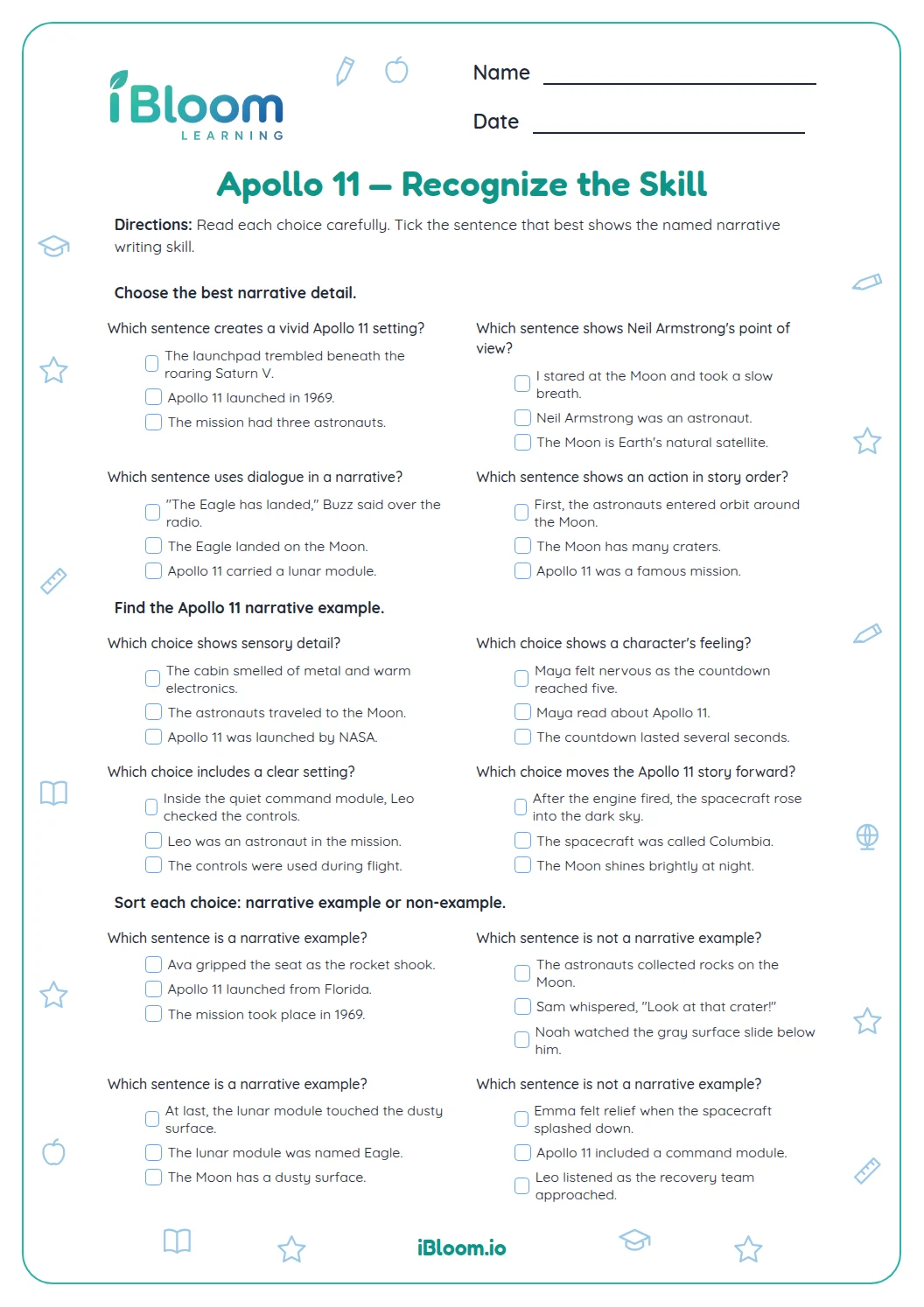
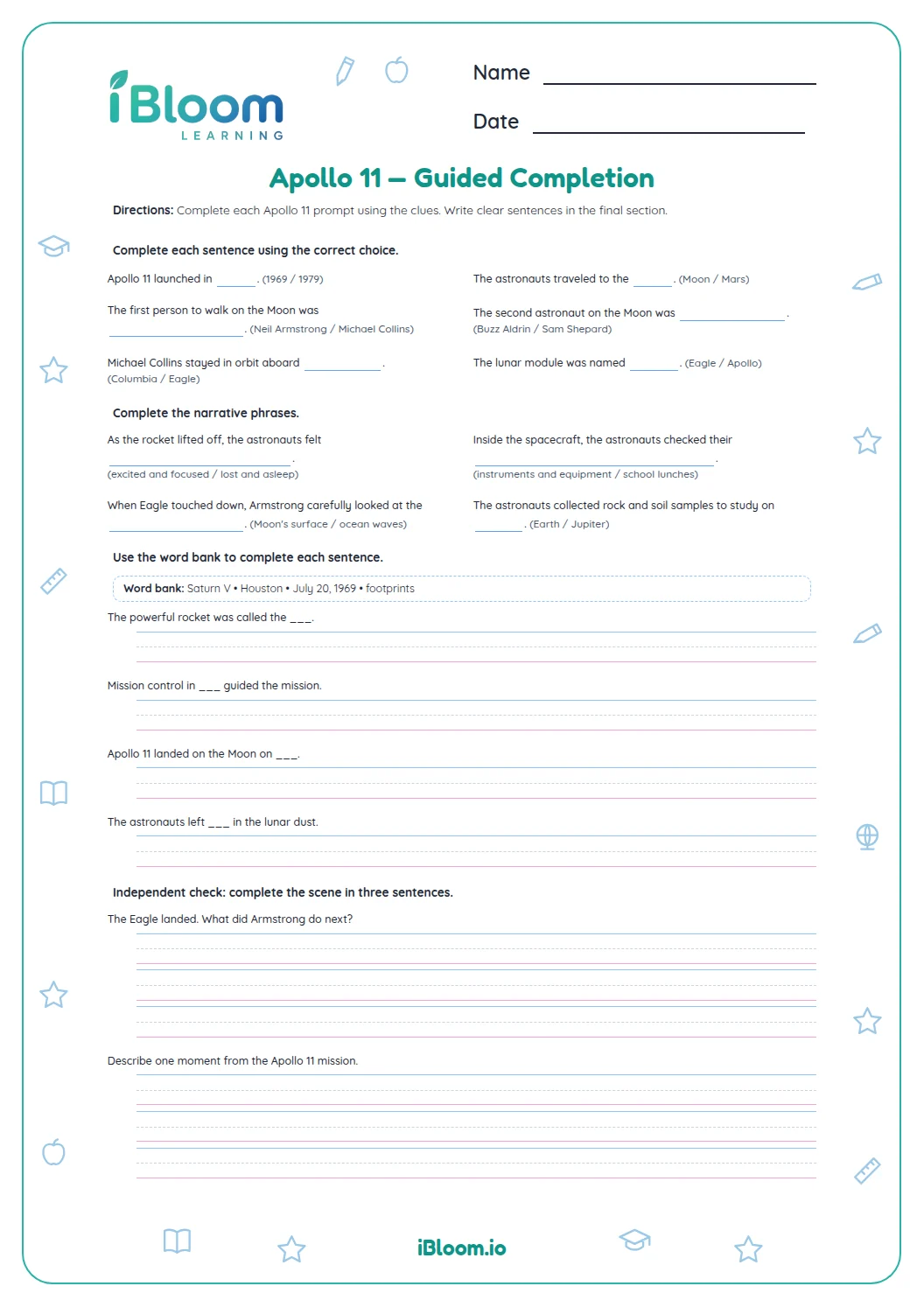
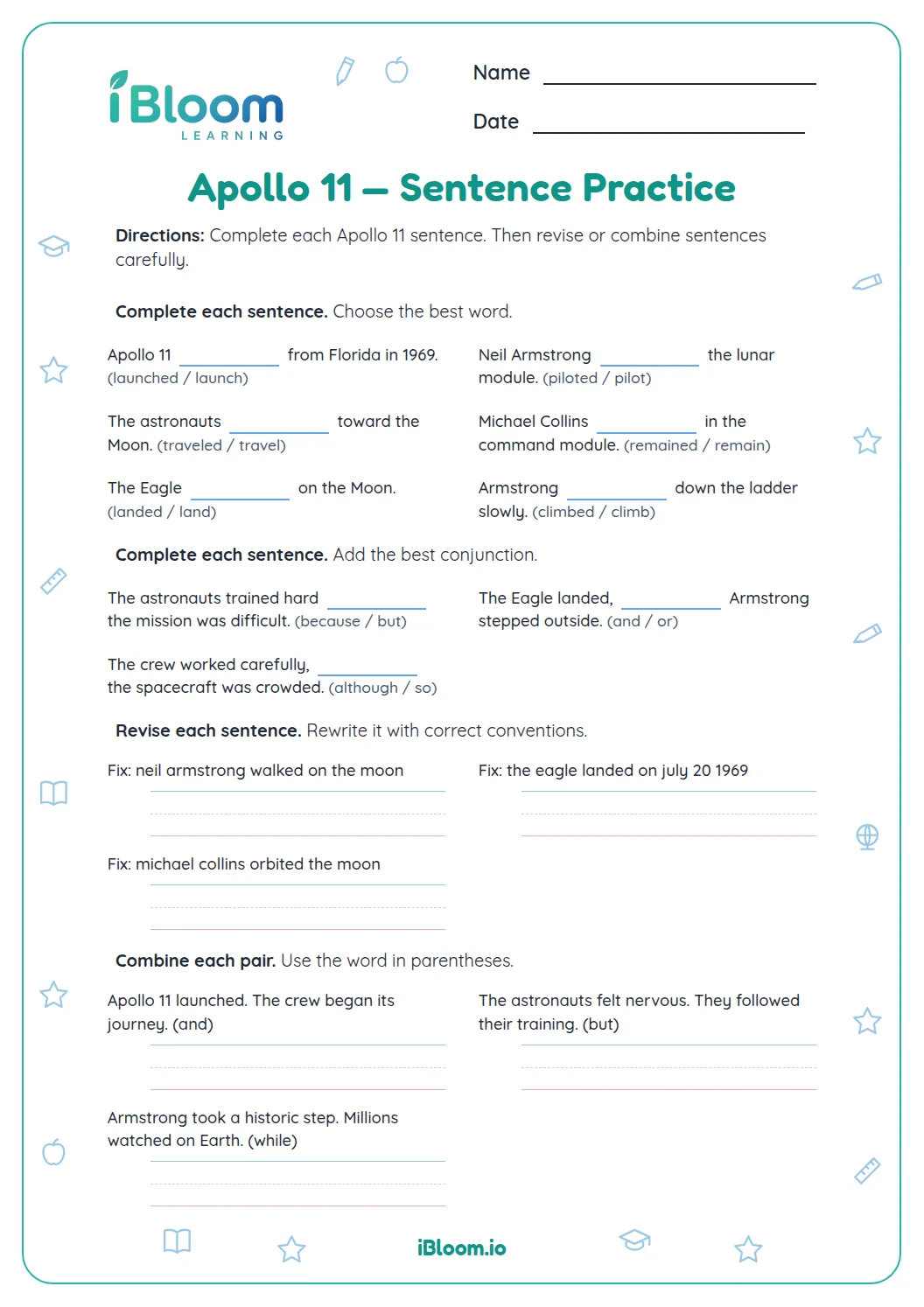
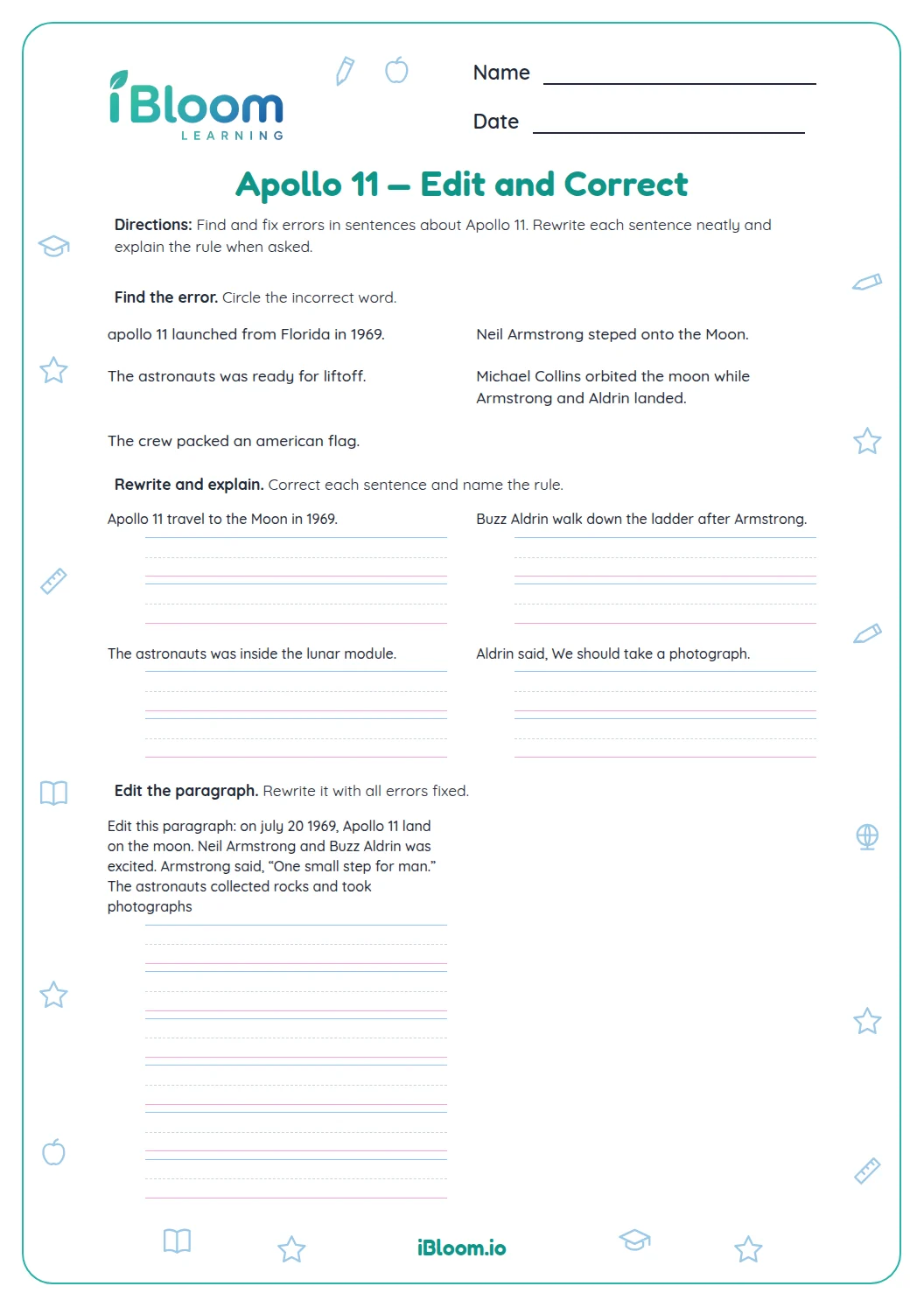
This Grade 5 Apollo 11 worksheet gives students a mixed review of narrative writing choices. Fourteen questions ask them to recognize a strong opening, sensory detail, dialogue, transitions, pacing, and a fitting ending, then write a few short narrative moments around watching a launch. The answer key includes sample responses for open-ended items. It aligns with CCSS W.5.3, which calls for organized narratives with effective techniques, details, and clear event sequences.
Aligned to W.5.3
What makes a strong narrative opening?
An opening can place the narrator in a moment and give readers something to notice. A specific action or sensory detail helps establish the situation more vividly than a broad statement.
- 1“I pressed my palms to the cool glass as the launch countdown began.”
- 2This opening names a narrator, a setting clue, and an immediate moment.
How do details and dialogue develop an event?
A sound, texture, or physical reaction can help readers imagine an experience. Dialogue shows what a character says and can reveal excitement, worry, or surprise without simply naming the feeling.
How do transitions and pacing guide the reader?
Transitions signal when an event happens or how one moment connects to another. Short sentences can slow a key instant; a later sentence can show what the narrator understands after the event.
What makes an ending feel complete?
A conclusion follows from the events and gives the reader a final response, reflection, or image. It does not need to retell every detail.
How to use this worksheet
- 1Complete Parts A and B by choosing or supplying a narrative move.
- 2For each choice, ask what job the sentence does in a story.
- 3Use the short answers to add detail, dialogue, and a narrator reaction.
- 4In the written response, include a narrator and a clear launch-viewing situation.
- 5End with a response that follows from the moment you described.
Common mistakes and quick fixes
The mistake
Using a broad label instead of a concrete detail
The fix
Replace “It was exciting” with a sound, movement, or physical reaction.
The mistake
Adding dialogue without quotation marks
The fix
Put spoken words inside quotation marks and place the speaker tag clearly.
The mistake
Ending with an unrelated idea
The fix
Connect the final thought to what the narrator saw, heard, or felt.
Common Core alignment
The writing prompts practice narrative sequencing and techniques named in Grade 5 writing standards.
Develop a narrative with clear events, details, and a conclusion.
On this sheet: Students choose and write narrative openings, details, dialogue, transitions, pacing, and endings.
Show the official wordingHide the official wording
Write narratives to develop real or imagined experiences or events using effective technique, descriptive details, and clear event sequences.
What to practice next
Make more practice
Further reading
Questions parents and teachers ask
How many prompts are on the Apollo 11 page?
There are 14 questions: six multiple-choice items, four fill-ins, three short answers, and one written response. The first items review narrative craft, and the remaining prompts invite students to apply those moves. The page supplies a launch-viewing situation so students can focus on writing.
Do students need facts about the Apollo 11 mission?
No detailed mission knowledge is needed. The writing situation is watching a launch, and students can focus on narrator, sequence, sensory details, dialogue, and ending. The prompts do not ask students to recall mission facts. The launch setting is enough context for the craft questions and short responses.
What is a sensory detail?
A sensory detail helps a reader imagine what a character sees, hears, smells, tastes, or feels. “A deep rumble rolled under my feet” gives a sound and physical sensation. Strong sensory details use precise words rather than a general label.
Why include dialogue in a narrative?
Dialogue lets readers hear a character’s words and can show a reaction as it happens. Add quotation marks around the spoken words and a speaker tag or action so the reader knows who is talking. A brief line of dialogue can show a reaction in the moment.
How should students use the answer key for writing prompts?
The key gives sample responses for open-ended items, not the only acceptable wording. Check whether a response fits the prompt and supports a narrative moment with a transition, sensory detail, dialogue, or reaction. For the opening, look for a narrator waiting to watch the Apollo 11 launch.
What can students practice next?
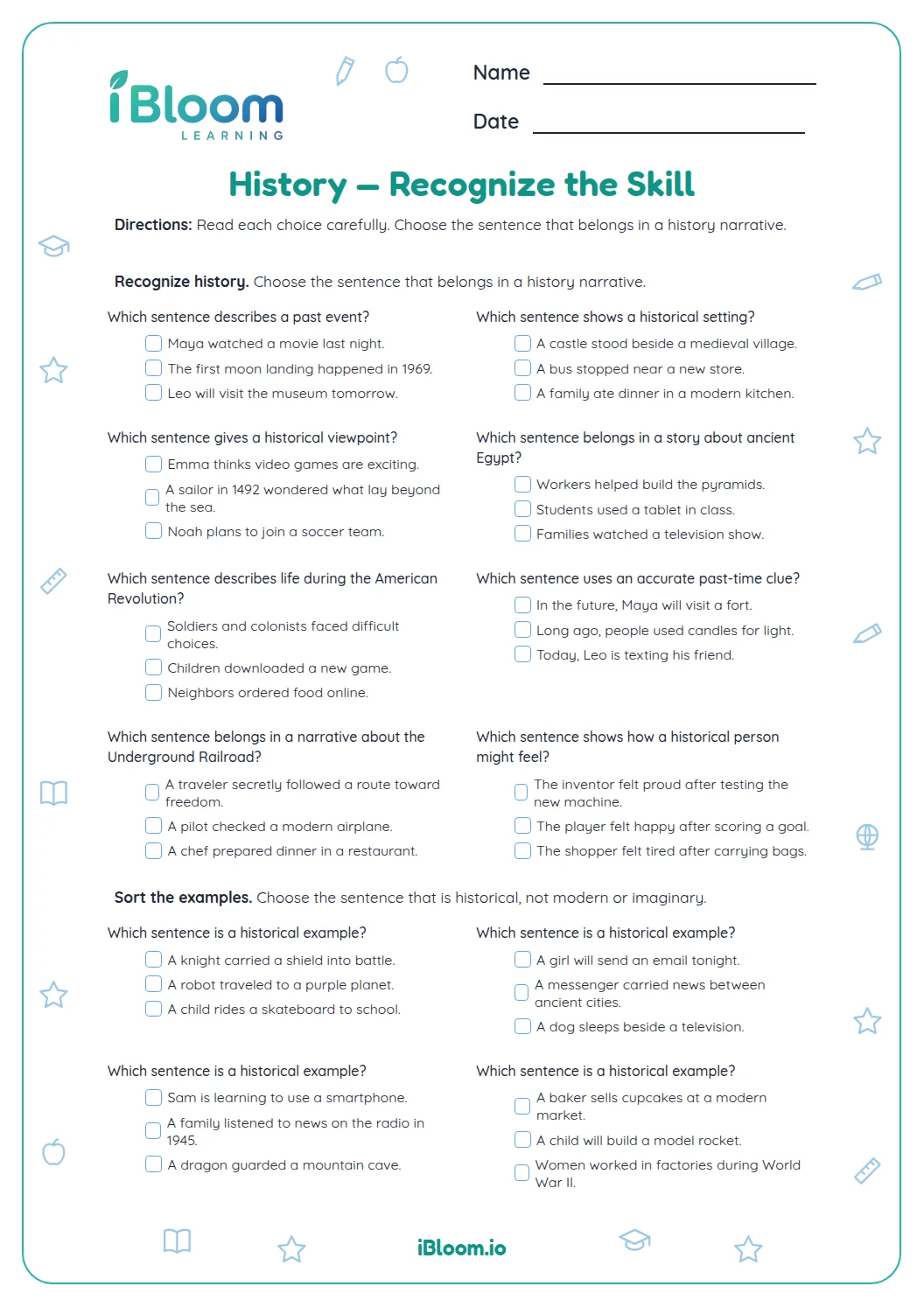
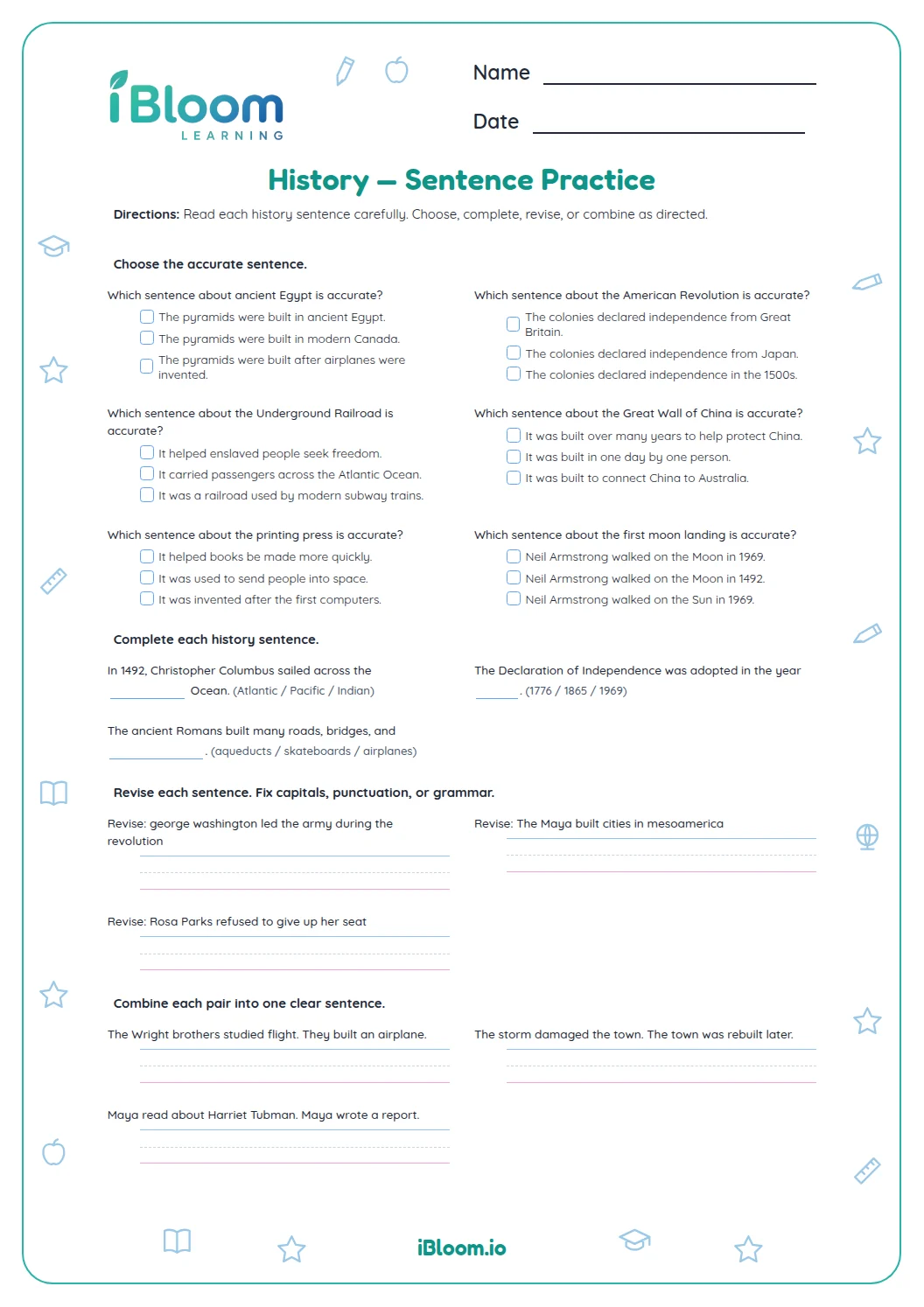
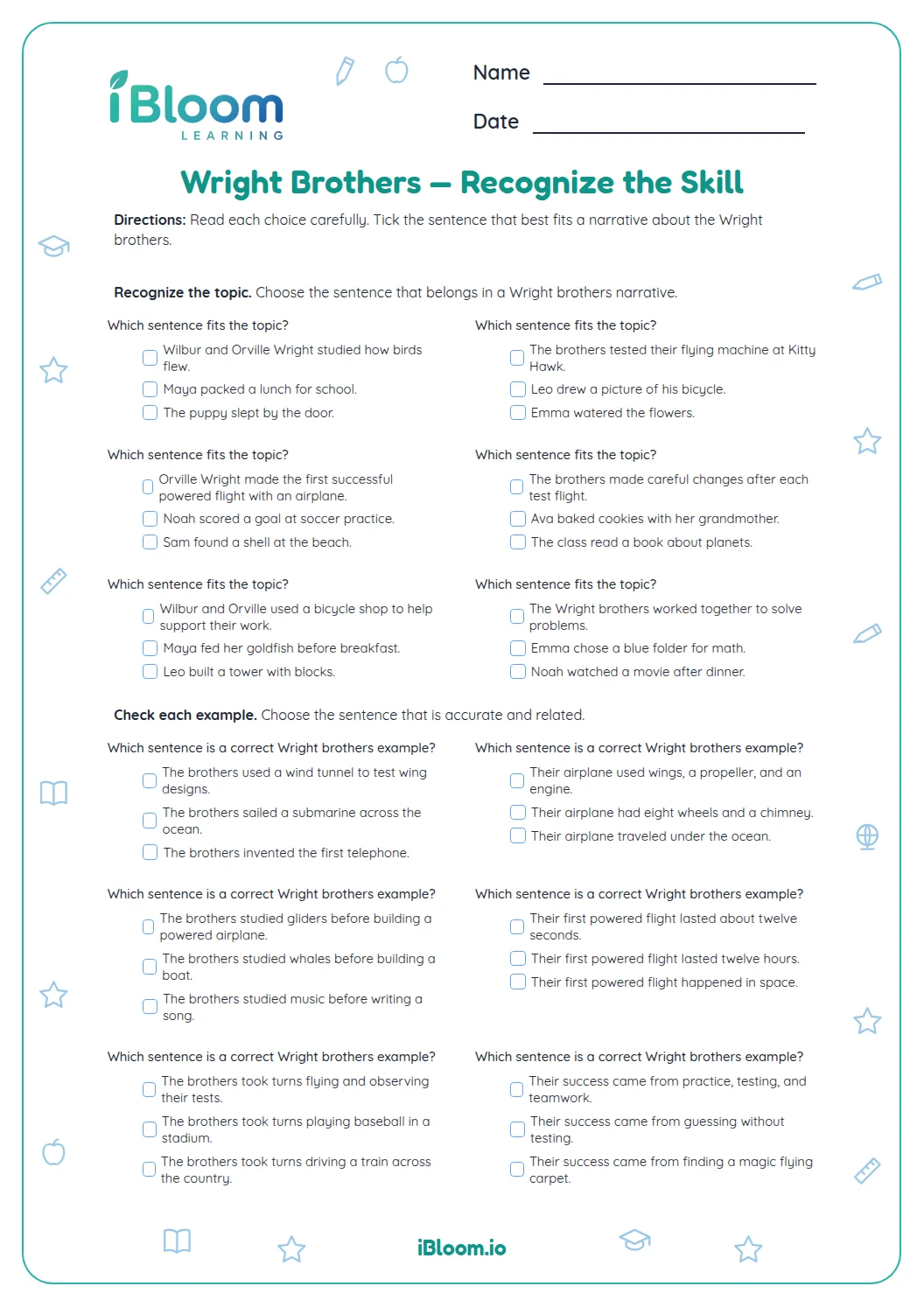
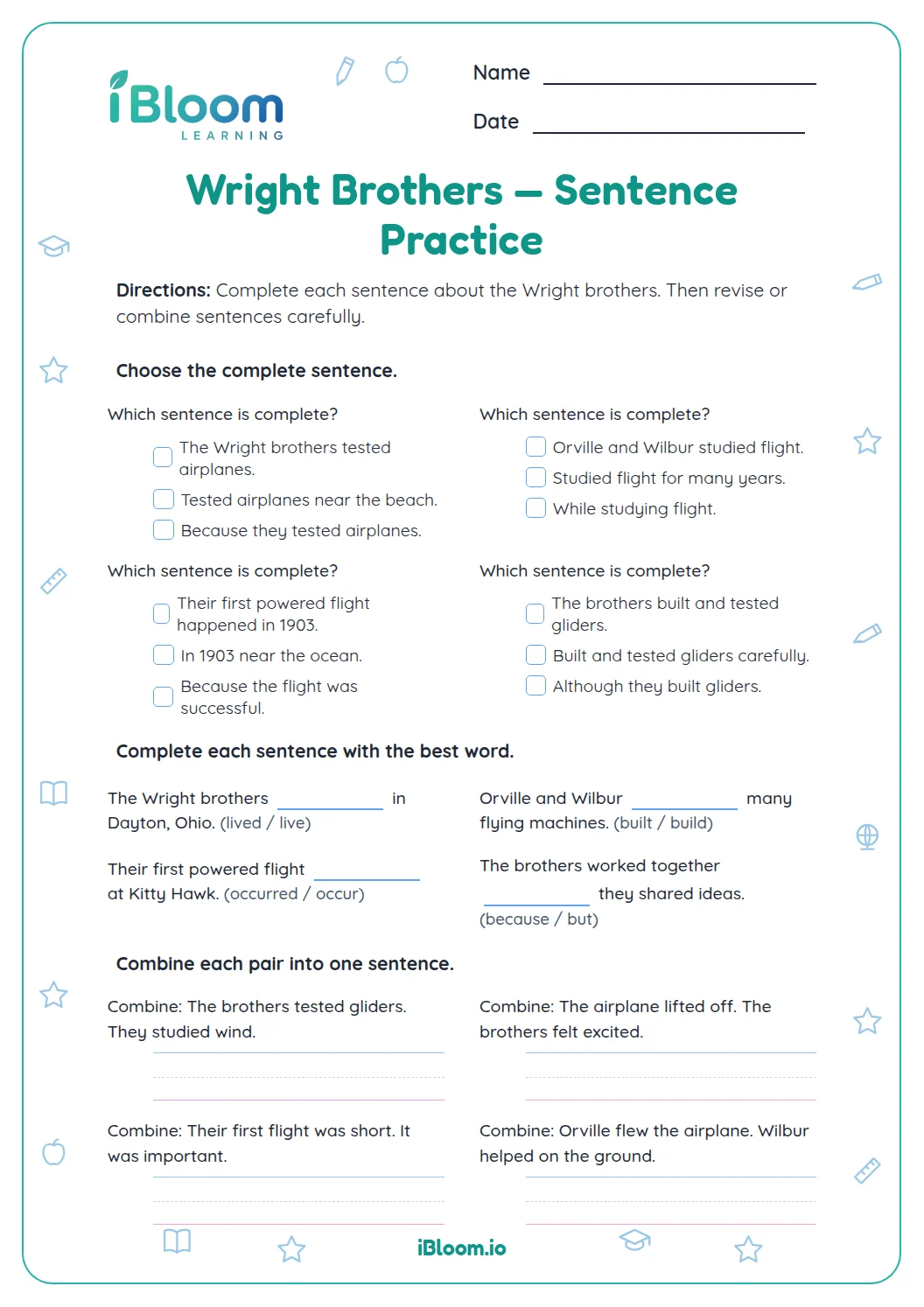
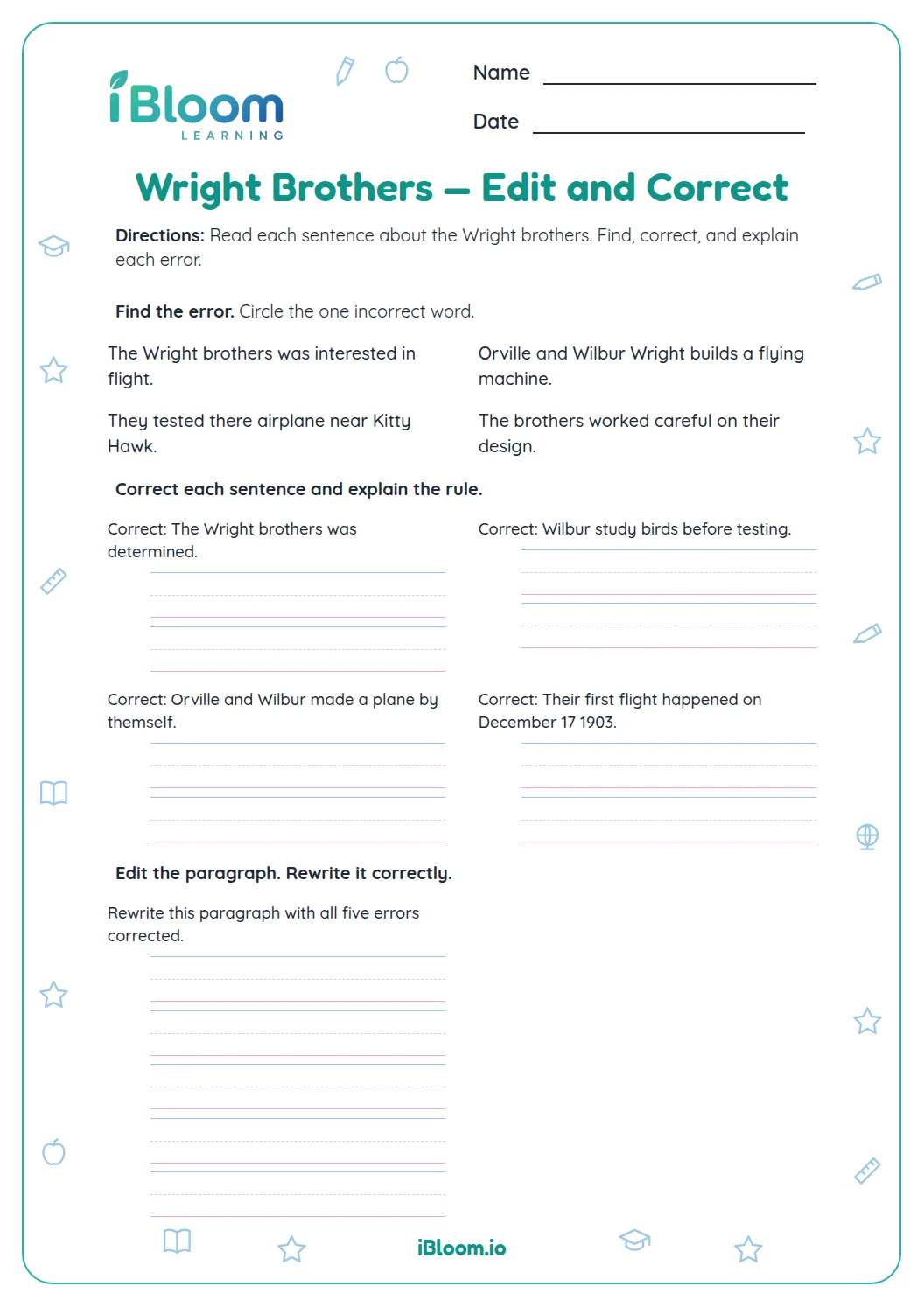
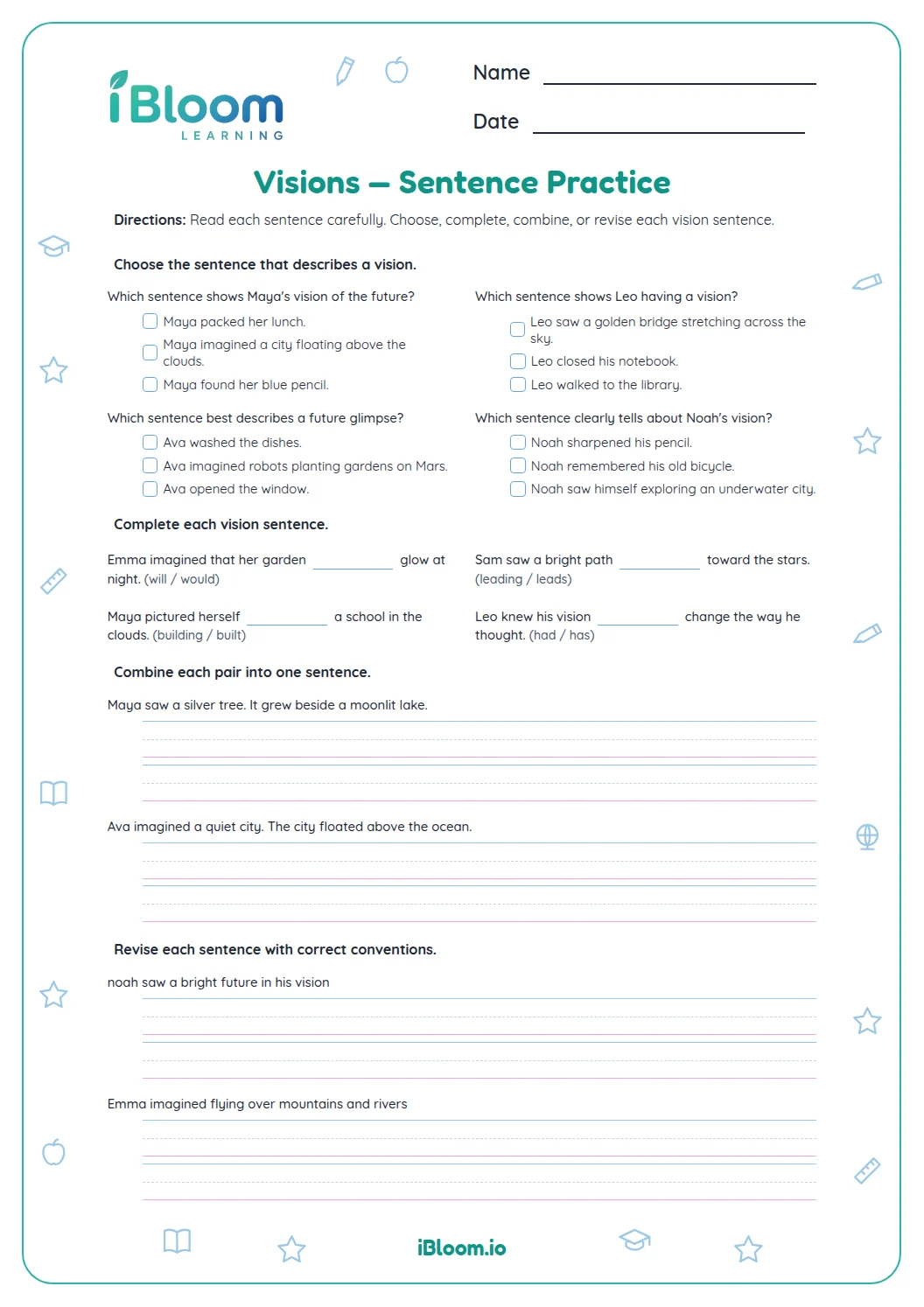
The History and Wright Brothers prompts offer more narrative settings. Animal Courage and Visions shift toward character challenges or imagined events while keeping the same focus on clear sequence and descriptive writing. Each prompt gives students another context for narrative planning and drafting.