





About this worksheet
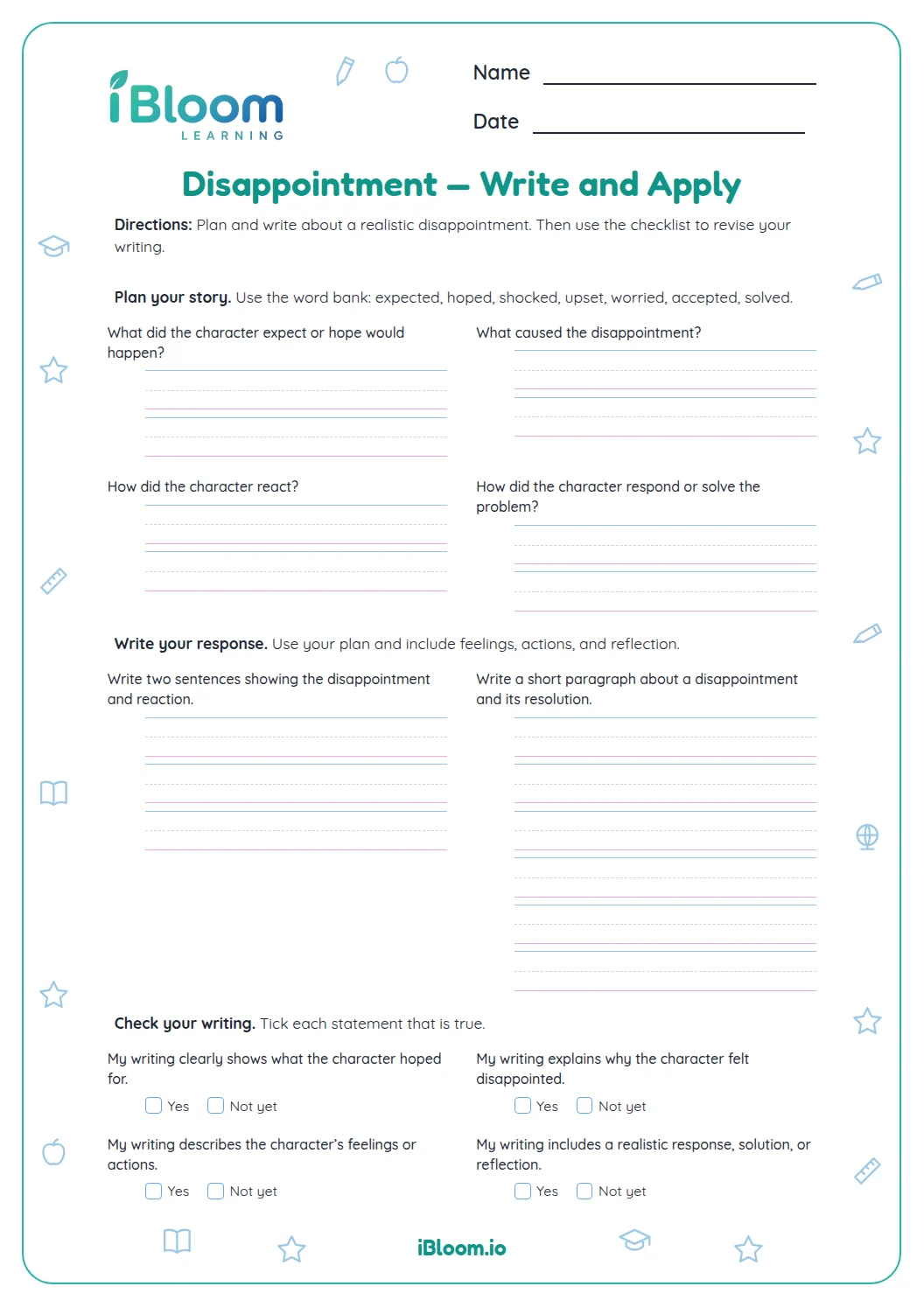
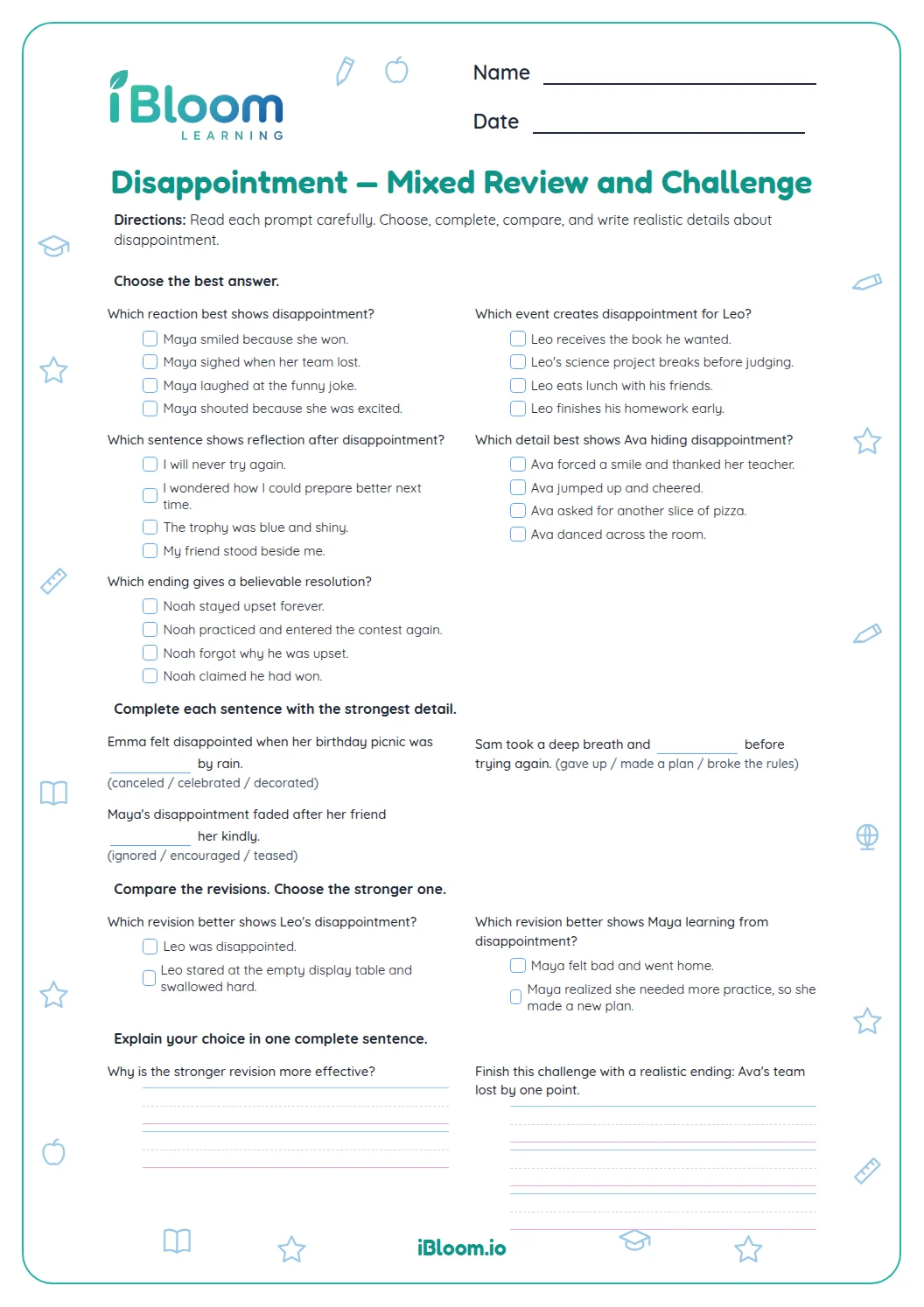
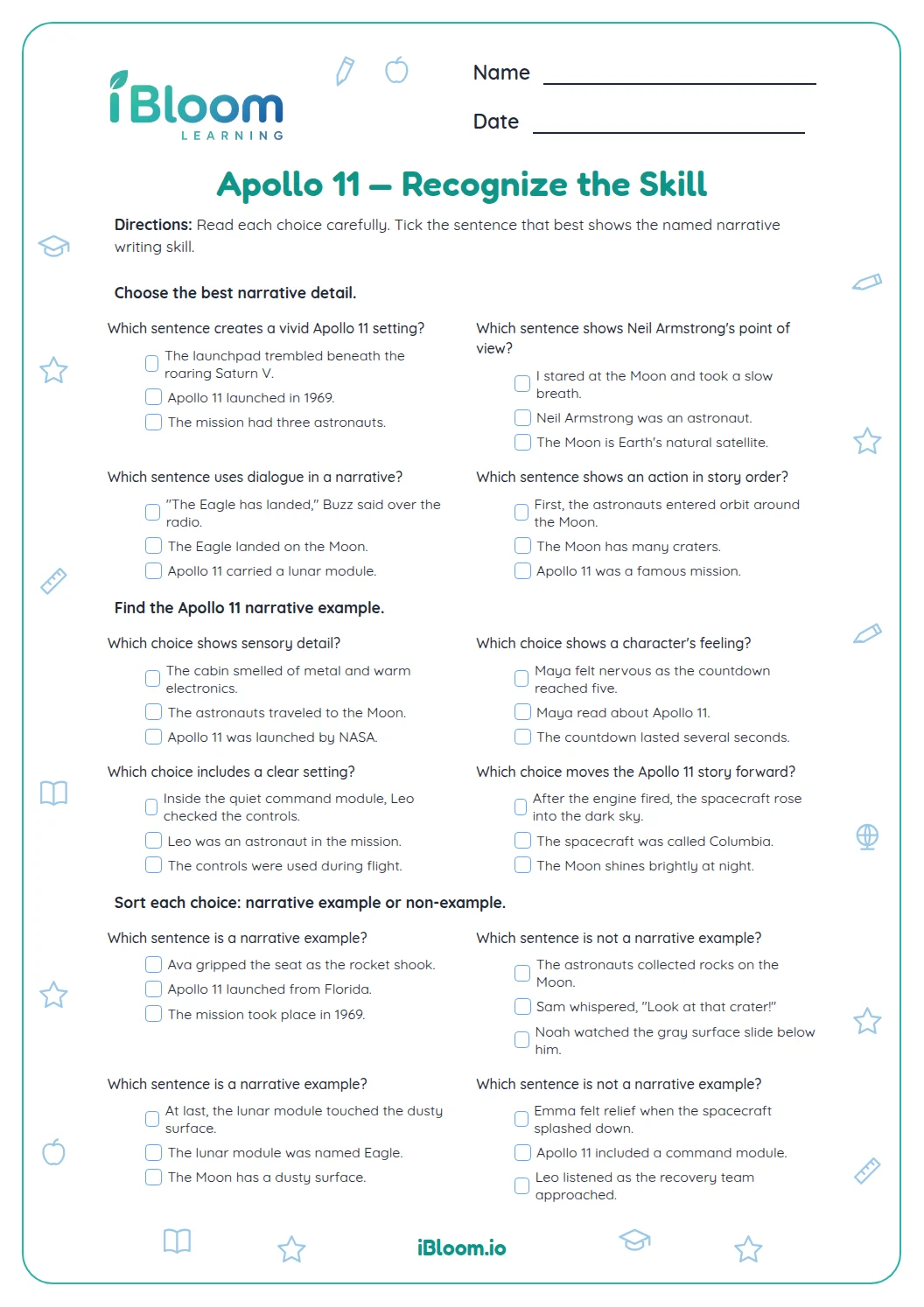
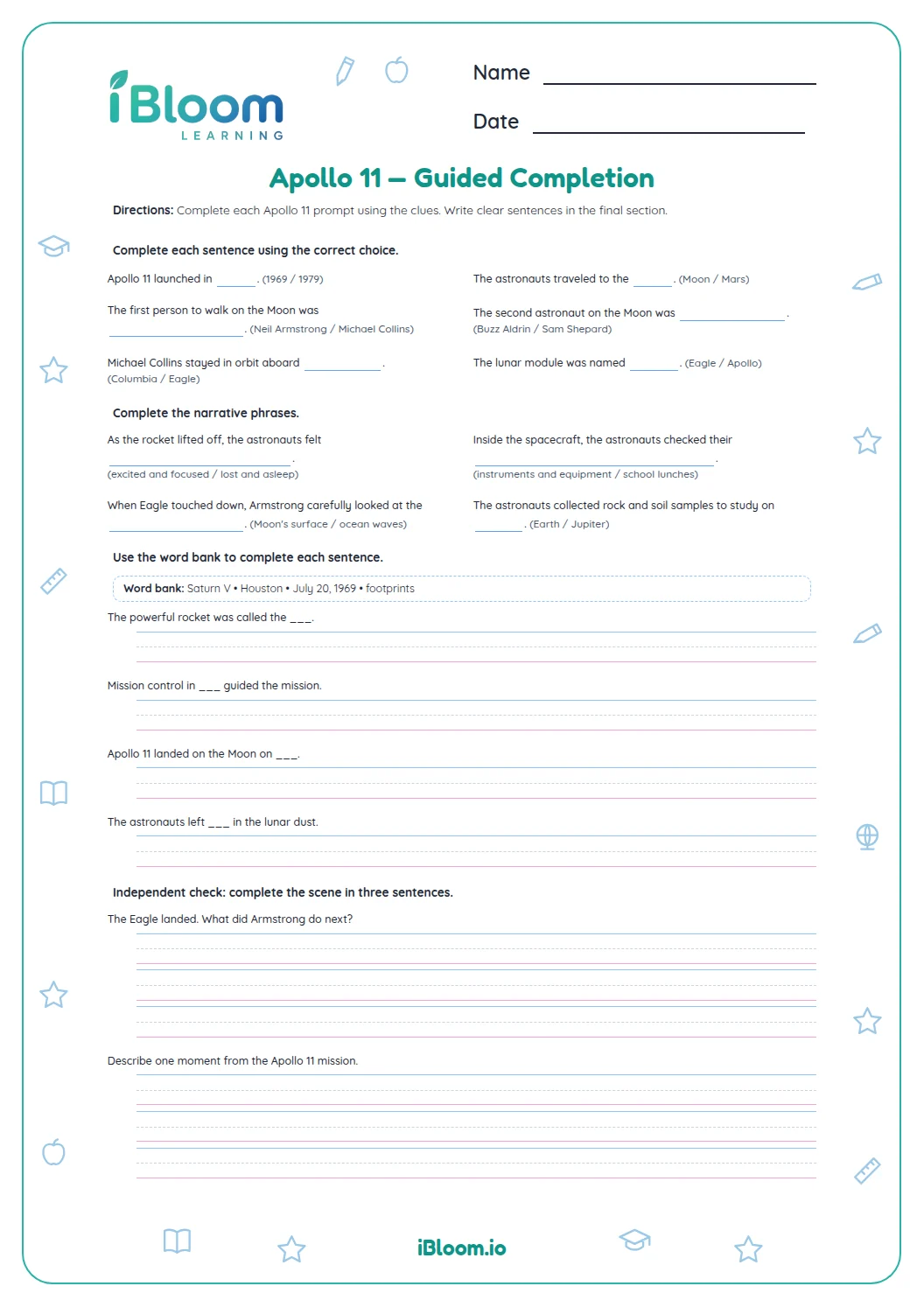
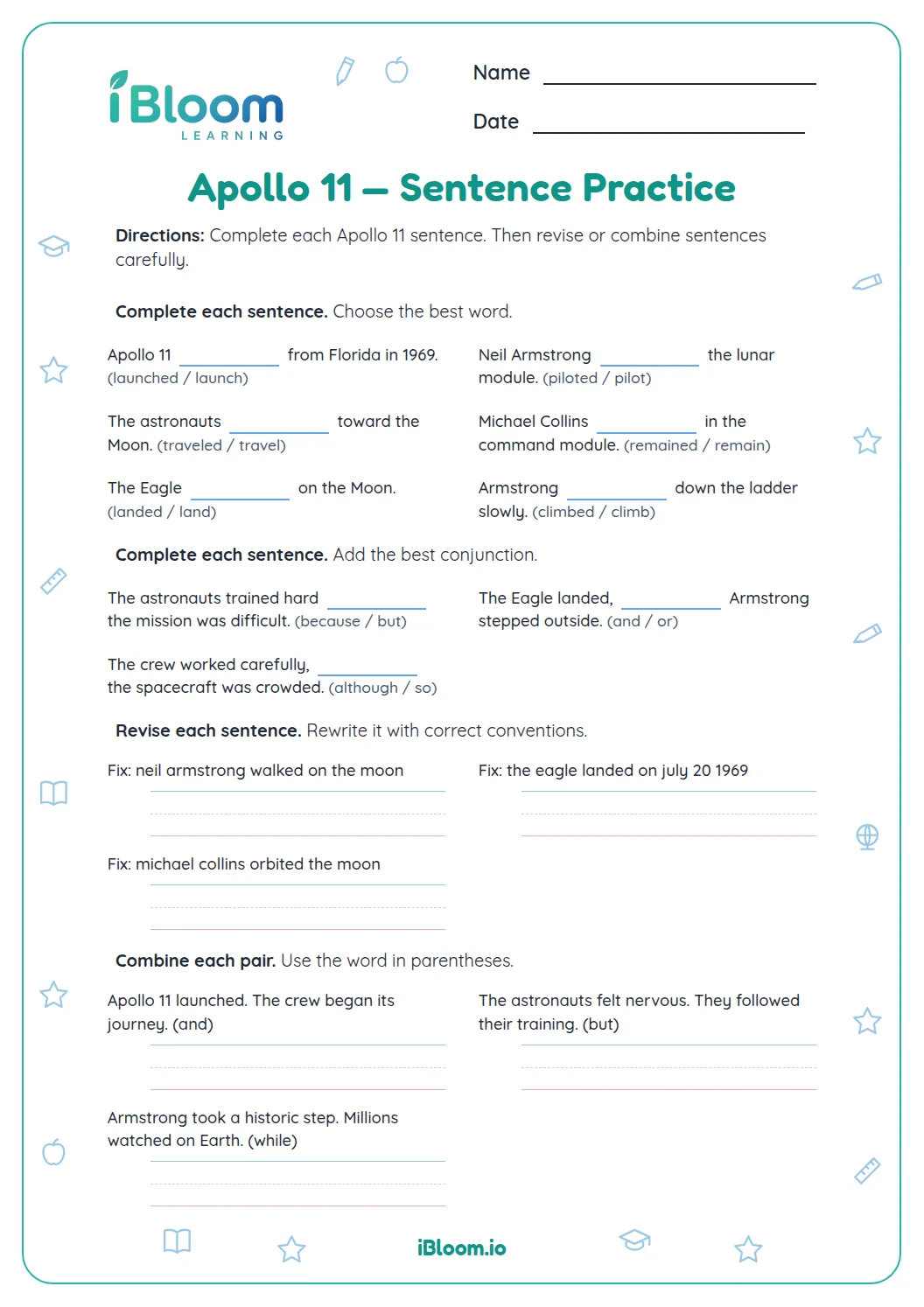
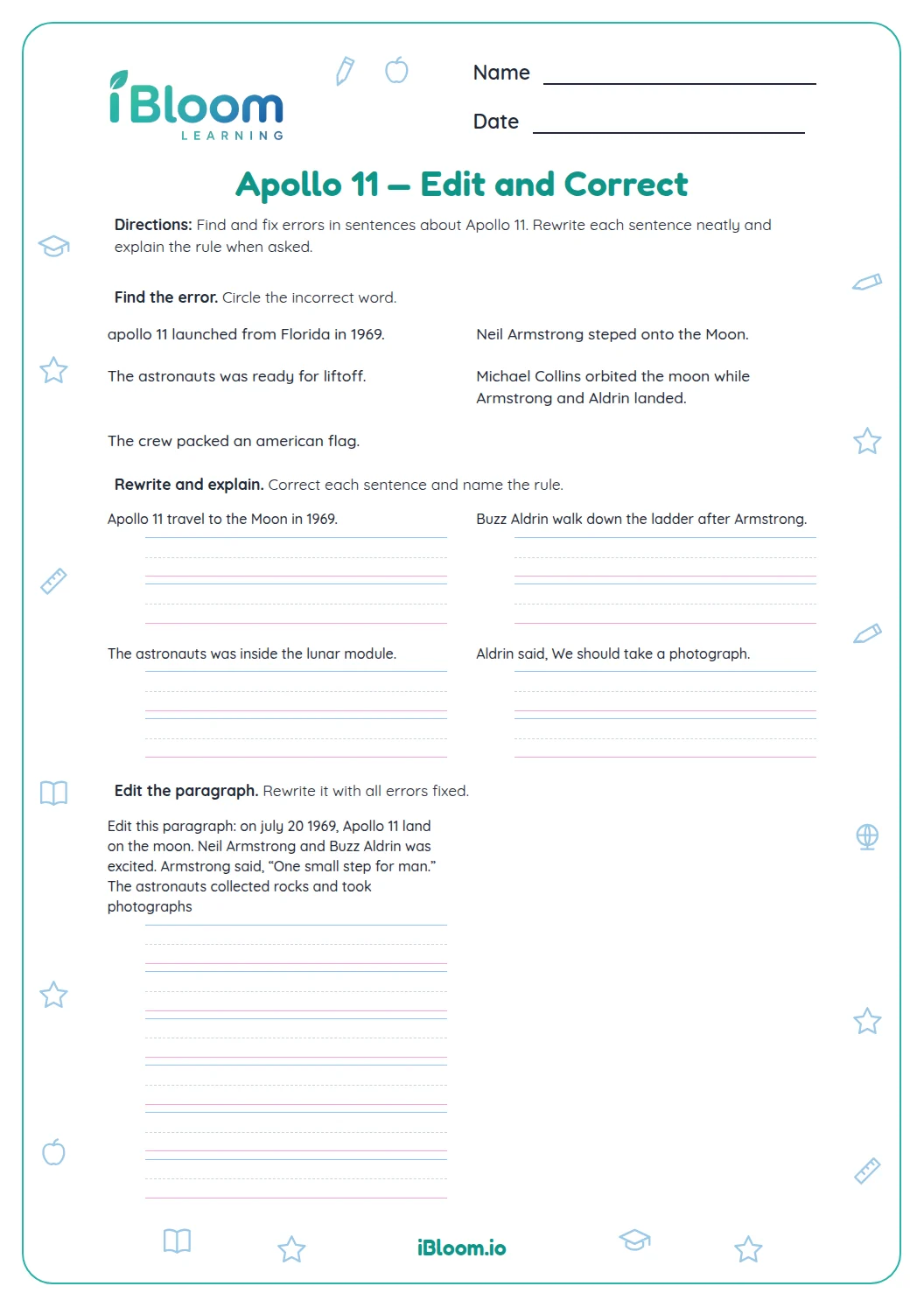
This Grade 5 narrative-writing worksheet helps learners recognize how a story shows disappointment. They choose scenes with a disappointed reaction, distinguish neutral events from feelings, and classify reactions in short situations. The 16 questions focus on clues such as an unmet hope, a setback, and a character’s words or actions. The key lists each best answer.
Which clues show disappointment?
Look for a hope or goal, a setback, and a reaction. In one item, Ava had hoped to race, but rain ended the event; her lowered head shows how she responds to the setback.
How is a feeling different from an event?
A canceled trip or a medal is an event. Disappointment appears when the scene also shows that a character wanted something else or feels let down. Avoid inferring a feeling from an event alone.
How can a writer show the feeling?
A story can show disappointment through a character’s words, thoughts, or actions after an unmet hope. The final part asks learners to classify reactions, including neutral actions that do not reveal this feeling.
How to use this worksheet
- 1Read the whole scene, including its cause and reaction.
- 2Notice what the character hoped for or expected.
- 3Identify the setback, if one is stated.
- 4Use the character’s words or actions as evidence of a feeling.
- 5Choose “not disappointment” when the scene gives no such reaction.
Common mistakes and quick fixes
The mistake
Assuming every setback automatically proves disappointment.
The fix
Check whether the scene shows how the character reacts.
The mistake
Treating a neutral action as a feeling.
The fix
Look for a reaction or thought, not just an activity.
The mistake
Ignoring what the character hoped would happen.
The fix
Connect the expectation, setback, and response.
What to practice next
Make more practice
Questions parents and teachers ask
How many questions are included?
There are 16 multiple-choice questions across three parts. Learners identify disappointment in scenes, separate a neutral event from a feeling, and classify a reaction. The answer key lists the best choice for each question, including the scenes where the evidence points to a neutral event.
What clues show disappointment?
A character may have hoped for one outcome, face a setback, and then feel let down, crushed, sad, or show a reaction such as lowering their head. Look at the whole scene; one clue by itself may not establish the feeling.
Why is an event not always disappointment?
An event such as receiving a medal or choosing paint does not reveal a feeling on its own. The reader needs a character response or a stated expectation that helps explain whether the event was disappointing. This is why some questions ask learners to select a neutral scene.
What is an example of showing disappointment?
Ava had hoped to race, but rain ended the event, and she lowered her head. The hope, setback, and reaction work together to show disappointment. This is the kind of evidence learners look for in the first part.
How can writers use this skill?
Writers can show what a character expected, what went wrong, and how the character responds through thoughts, words, or actions. Those details help a reader recognize disappointment in a narrative scene. Learners can apply the same sequence when they draft their own characters and events.