



About this worksheet
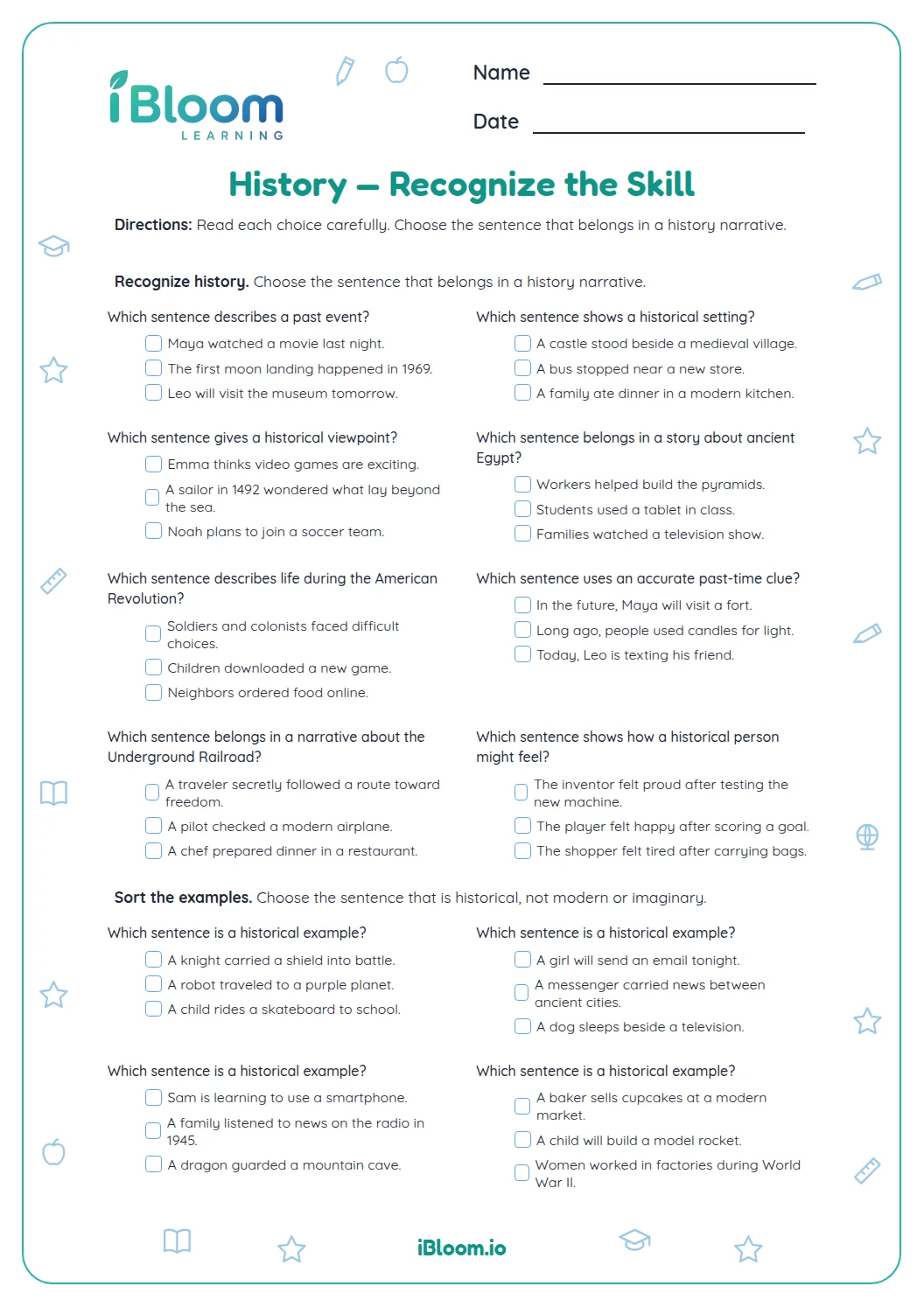
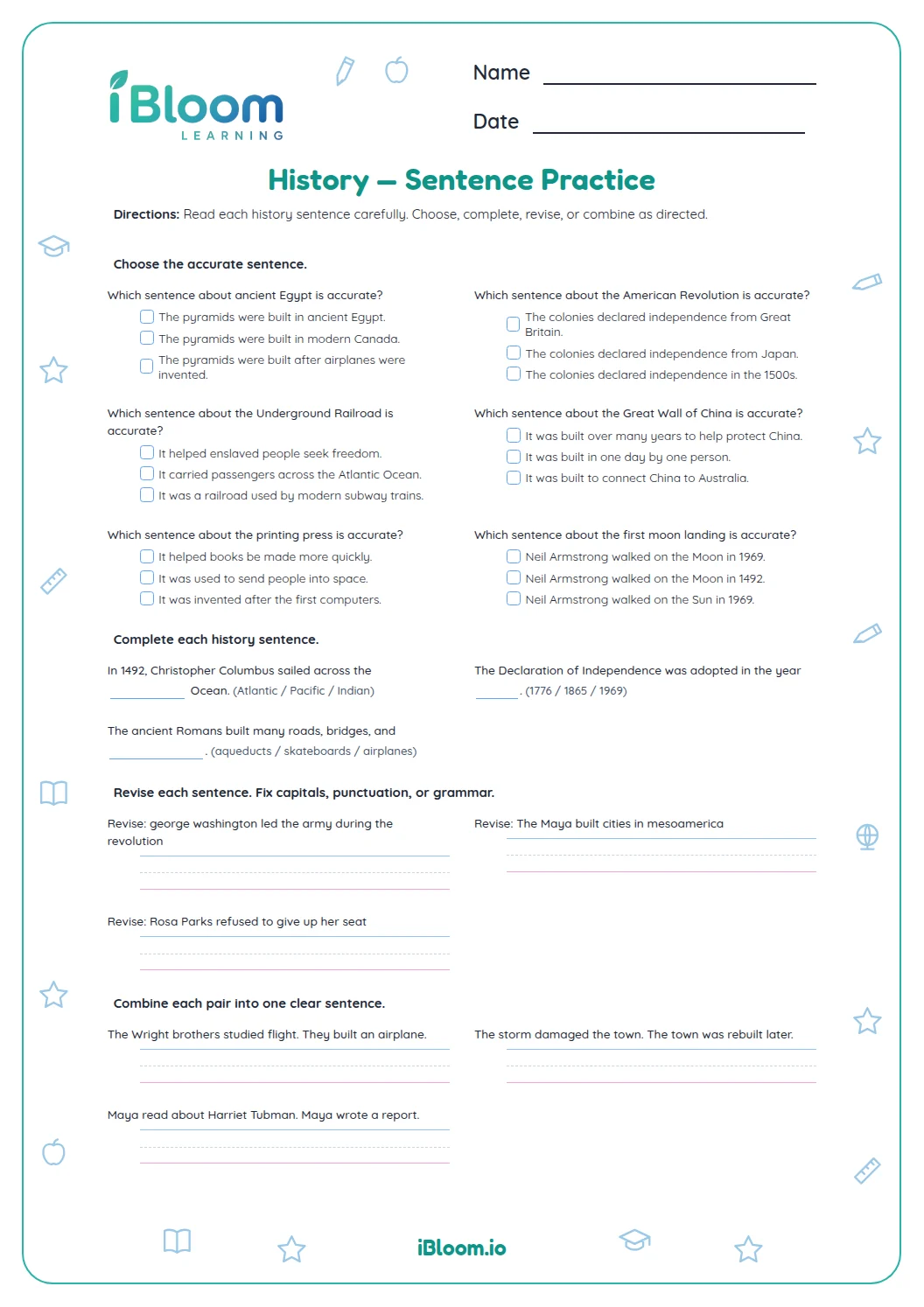
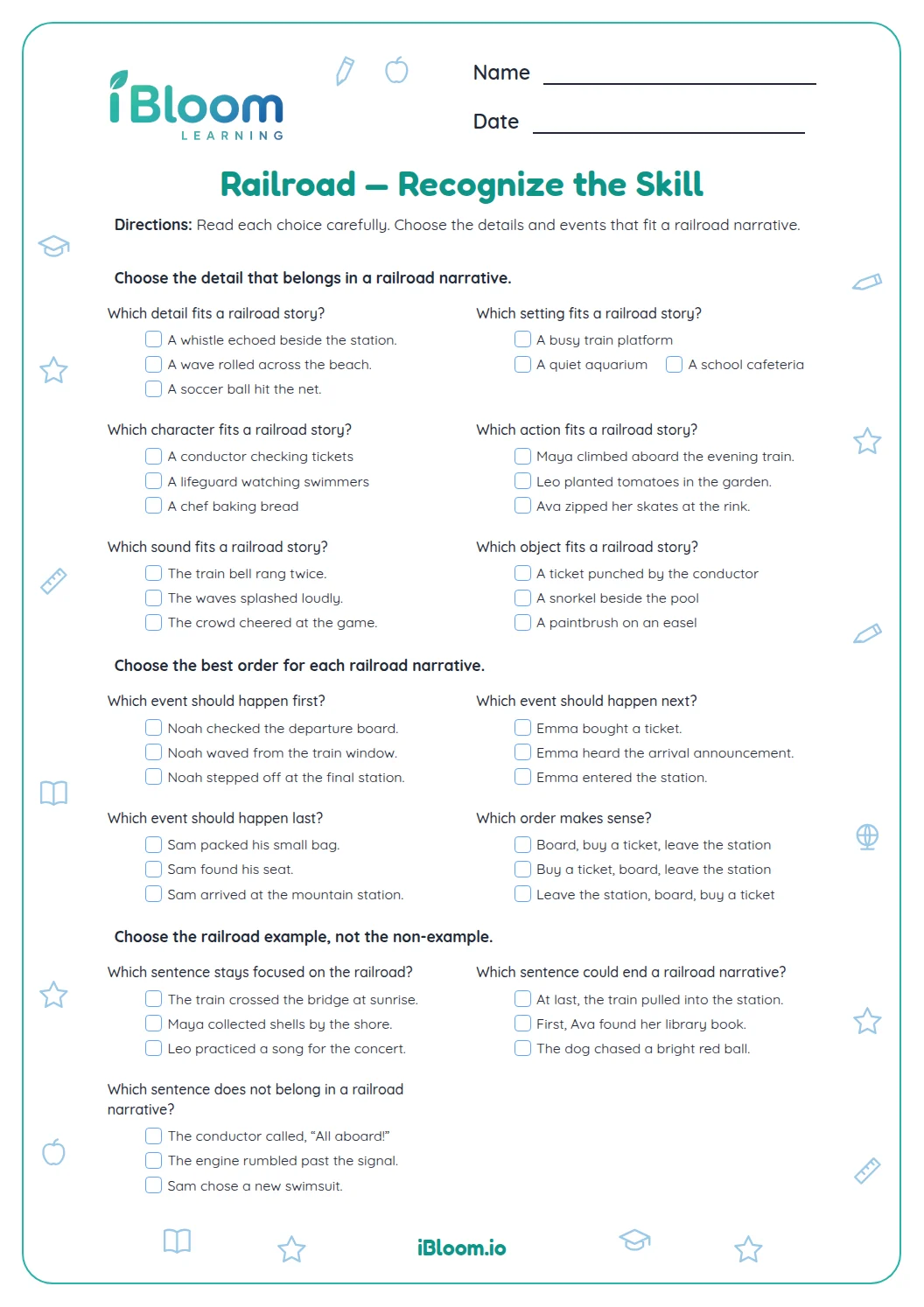
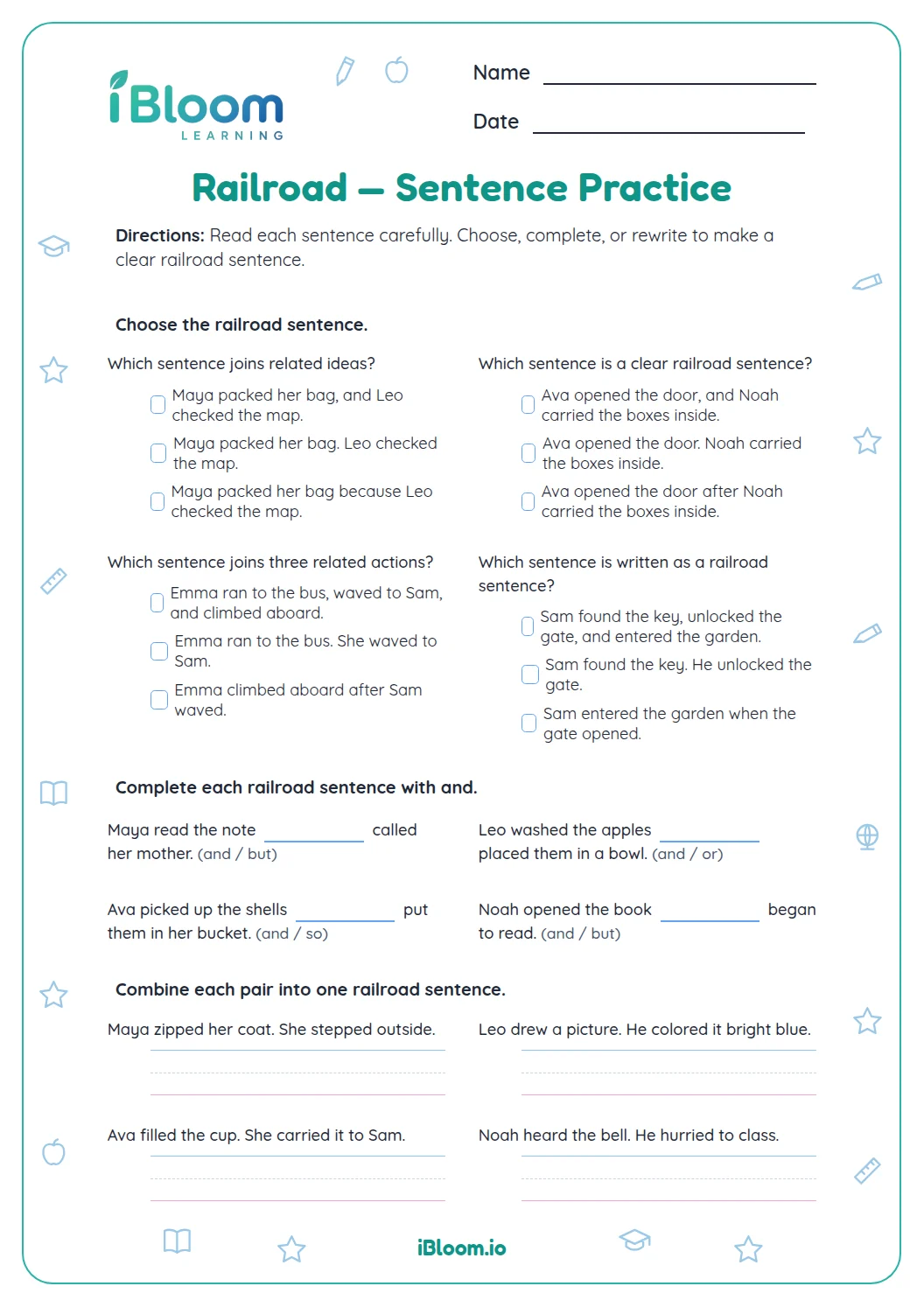
This Grade 5 writing worksheet uses the Underground Railroad as a subject for practicing complete, clear sentences. Students choose strong sentence models, combine ideas, add time phrases, and write linked sentences with details. The prompts avoid treating the Underground Railroad as a literal train or assuming every journey was alike. It aligns with CCSS 5.W.3, with a separate key offering sample responses.
Aligned to 5.W.3
What makes a sentence clear and complete?
A complete sentence expresses a full idea. The first section helps students notice a subject and a verb, meaningful details, and sequence words. “After nightfall, the group traveled quietly” gives a time cue and a complete action.
- 1After nightfall, the group traveled quietly.
- 2Time phrase: After nightfall
- 3Who acted? The group
- 4What happened? Traveled quietly
How do the prompts handle this history carefully?
Students write about a real historical network of people and routes that helped enslaved people seek freedom. The prompts use cautious wording: routes and experiences varied, and support could include food, shelter, or directions. They do not ask students to invent a first-person experience of enslavement.
What writing will students complete?
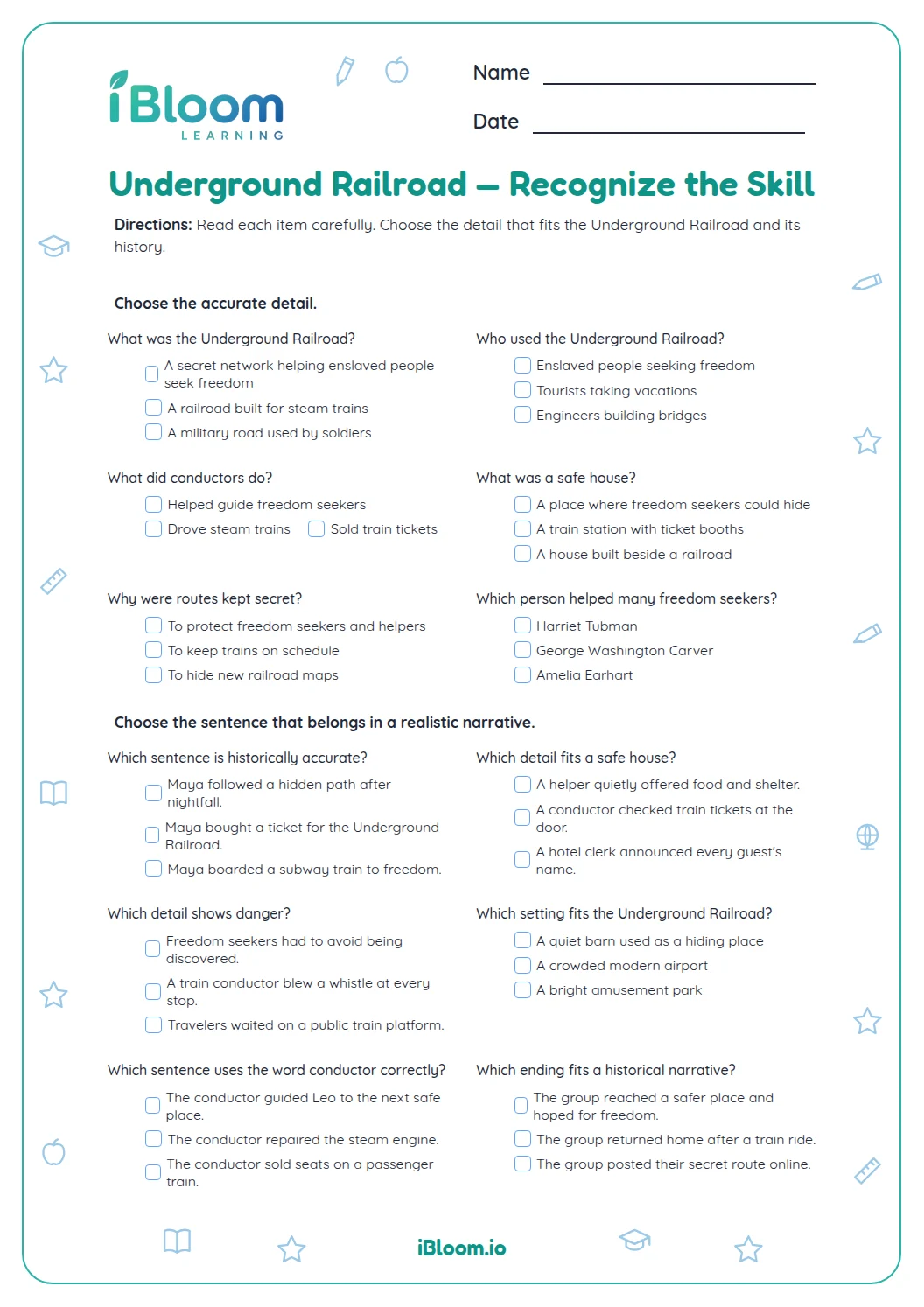
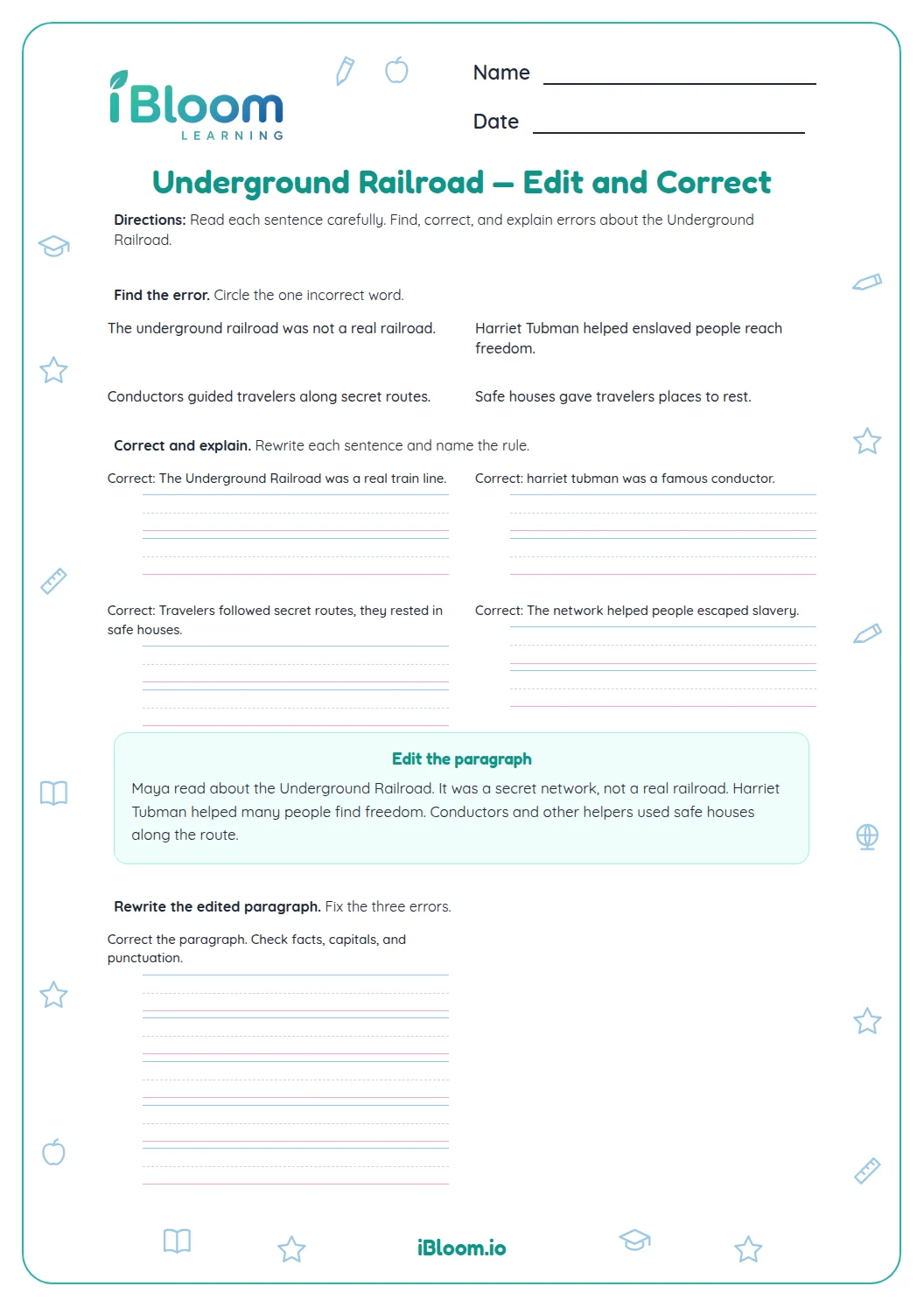
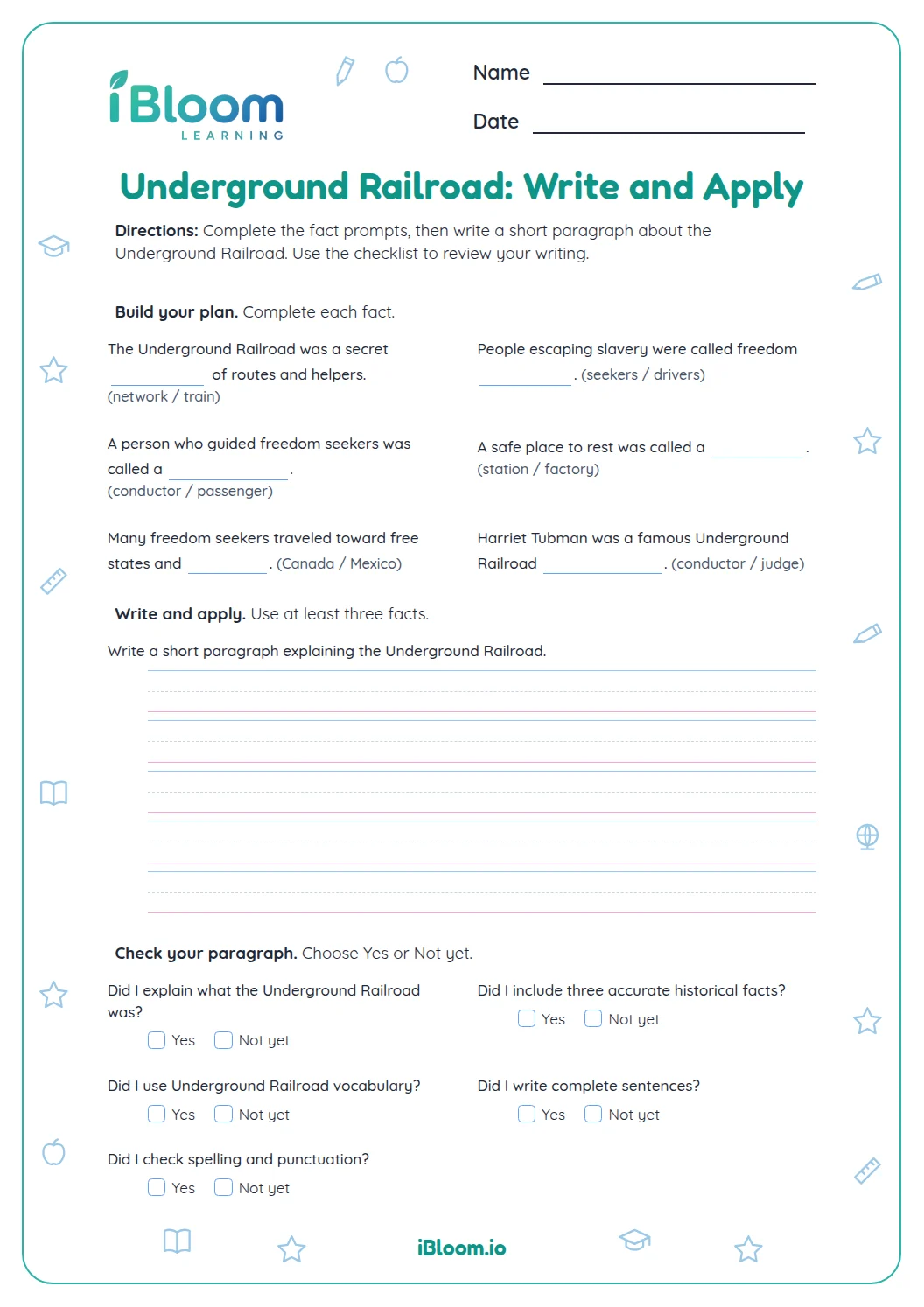
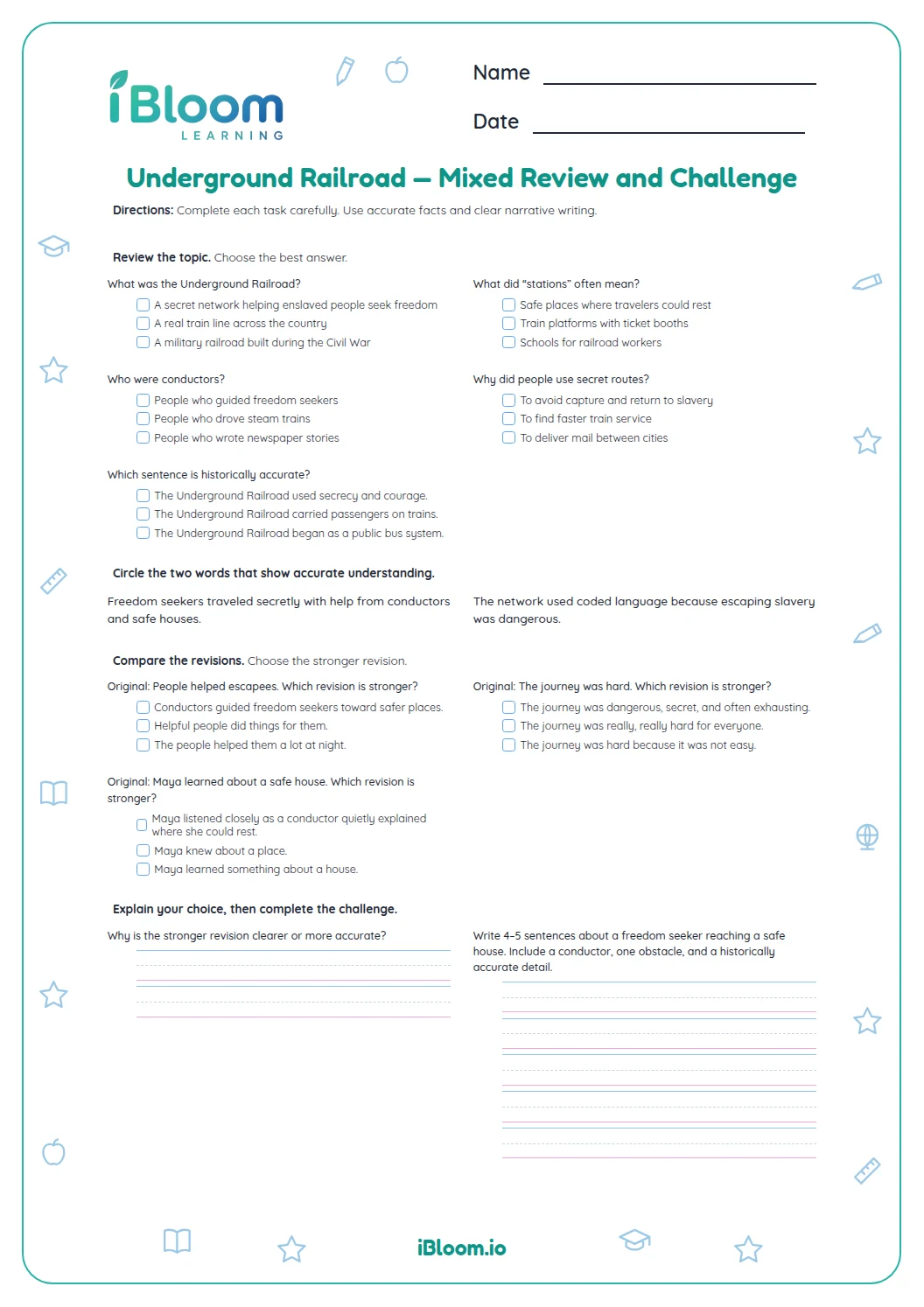
Part A asks students to select complete and clear models. Part B asks for eight original responses, from combining two facts to writing a concluding thought. The answer key supplies models; other accurate sentences may also work.
- Part A: six sentence choices
- Part B: eight written sentence responses
- Answer key: sample language for each prompt
How to use this worksheet
- 1Read the prompt and identify its main idea.
- 2Keep historical details accurate and avoid adding unsupported claims.
- 3Write a subject and a verb to make a complete sentence.
- 4Use a time word when the prompt asks for sequence.
- 5Reread for clarity and compare with the sample answer, allowing other sound responses.
Common mistakes and quick fixes
The mistake
Writing a fragment such as “After nightfall, the travelers.”
The fix
Add the action so the thought is complete: “After nightfall, the travelers continued.”
The mistake
Treating the Underground Railroad as a physical train.
The fix
Describe it as a network of people, routes, and places of support.
The mistake
Making one invented route or experience stand for everyone.
The fix
Use careful words such as “some,” “could,” and “routes varied.”
Common Core alignment
This worksheet gives students focused practice with the standard below.
Develop narrative writing with descriptive details and a clear sequence of events.
On this sheet: Students combine and write connected sentences with details and sequence words around a historical subject.
Show the official wordingHide the official wording
Write narratives to develop real or imagined experiences or events using effective technique, descriptive details, and clear event sequences.
What to practice next
Make more practice
Further reading
Questions parents and teachers ask
Is the Underground Railroad a train in these activities?
No. Question 14 asks students to state that the Underground Railroad was a network of people and routes, not a literal train line. It was a code name for help and routes used by people escaping slavery. Students can write another accurate sentence if it is complete, clear, and historically careful.
Do students have to copy the answer key exactly?
No. The written responses are open-ended. The key gives a sample sentence for each prompt; students can use different wording if it is complete, clear, and historically careful. The wording reflects that people’s routes and experiences varied across time and place.
Why do some prompts say “some” or “could”?
Those words avoid suggesting every person’s journey followed one route or had the same events. The Underground Railroad involved varied routes and helpers, so careful writing should leave room for that variation. These prompts focus on sentence craft while treating the history with care.
What writing skills does the sheet practice?
Students identify complete sentences, combine related ideas, add time phrases, include specific details, and write linked or concluding sentences. Together, the questions build sequence and detail in writing. The choices and written responses practice sentence completeness, detail, and sequence in one set.
How long should students spend on the page?
Plan for about 25 minutes because eight items ask students to compose sentences. A student may write a short response first, then revise it for a complete idea and a useful detail. About 25 minutes allows time to draft and reread the eight open-ended responses.