






About this worksheet
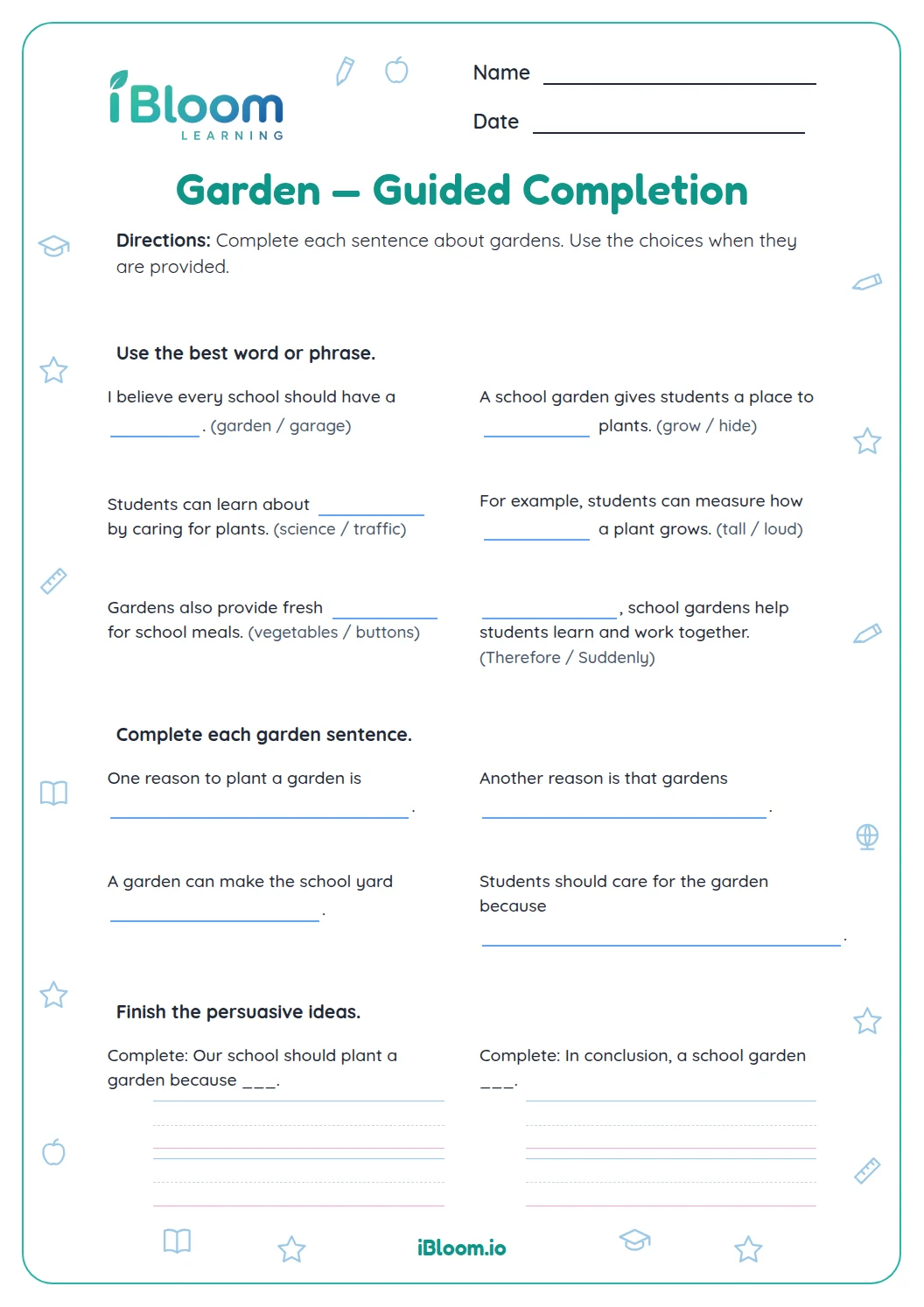
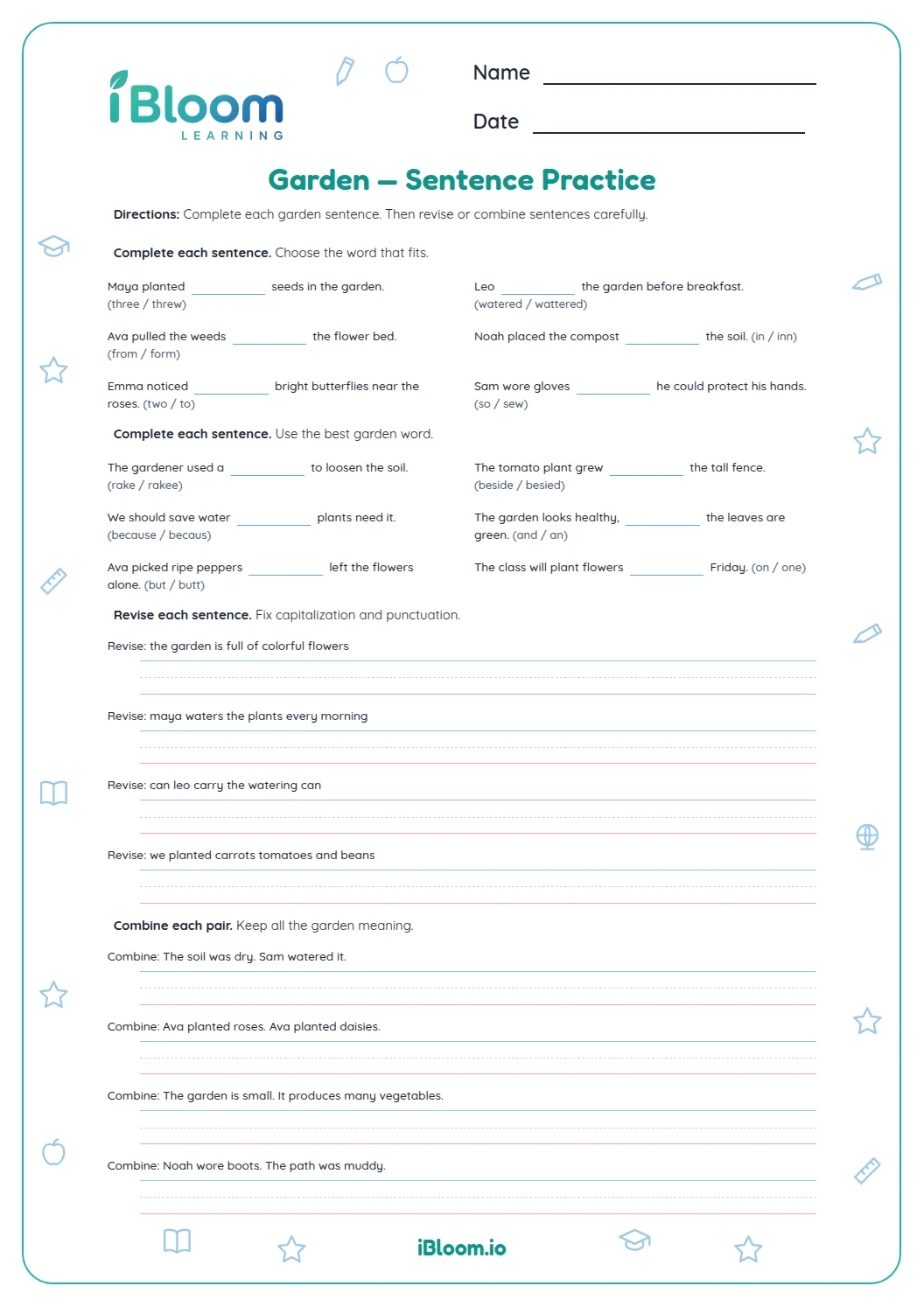
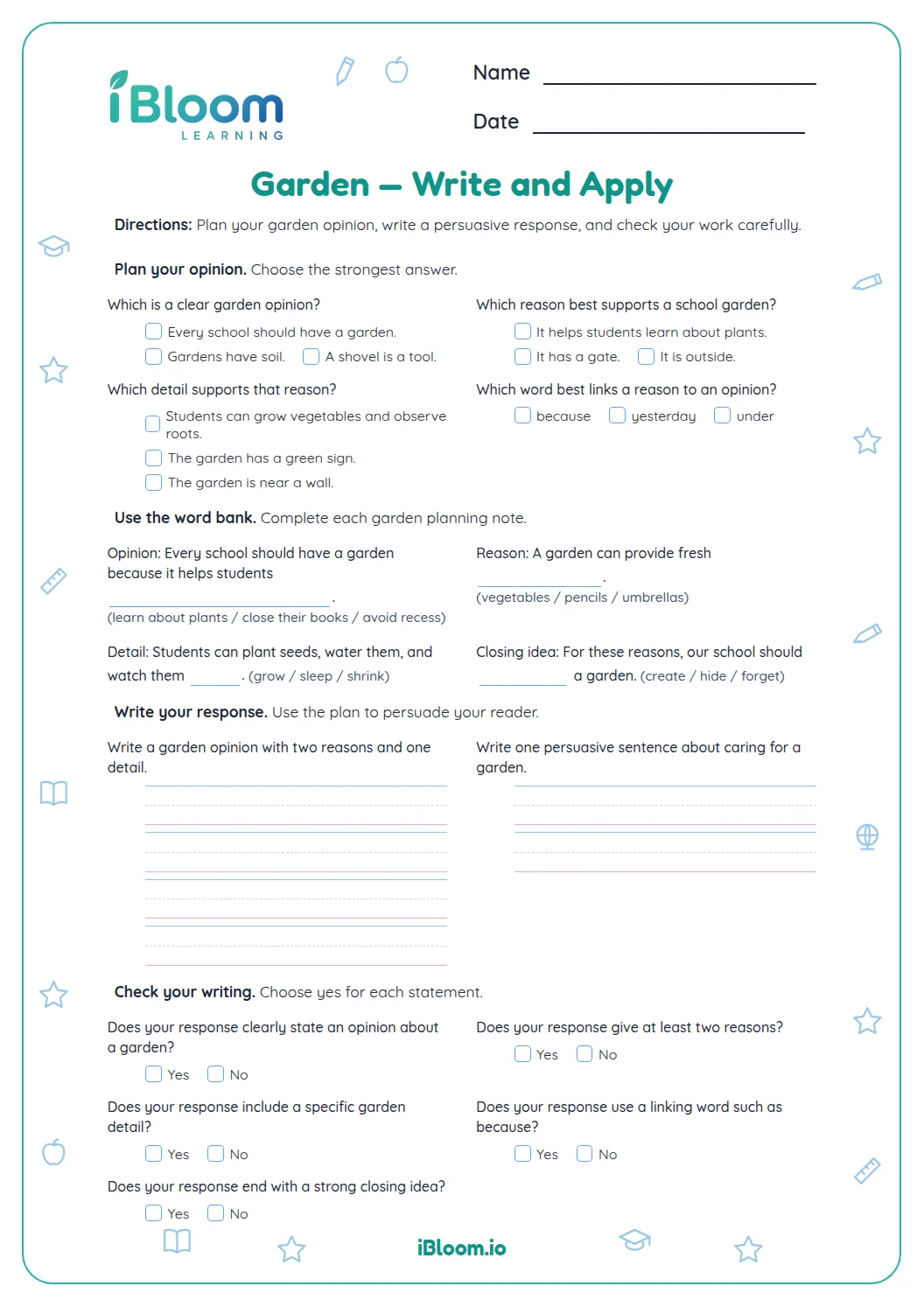
This Grade 5 garden-themed worksheet asks students to build and revise an opinion argument. The first items distinguish a claim from a topic detail, select supporting reasons and use linking language. Later prompts ask students to answer a counterclaim and draft a short argument about a school garden. Open responses have sample answers in the key; students may use different wording while meeting the prompt.
Aligned to W.5.1
How do you make a claim specific?
A topic names what a piece is about; a claim states what the writer thinks should happen. “School gardens” is a topic. “Our school should add one garden bed because students can observe plants during science” is a claim with a reason.
Question 1 gives three sentences to compare. The strongest choice makes a clear recommendation and gives a reason that can be developed in the rest of the paragraph.
- 1Topic: school gardens
- 2Claim: Our school should plant a garden
- 3Reason: it gives students a place to learn outdoors
- 4The reason tells readers why the writer holds the opinion.
What makes a reason persuasive?
A useful reason explains how the proposal helps or solves a concern. A specific observation, schedule or example can make the reason clearer. For instance, counting visiting pollinators at a set time gives students evidence they can record.
Question 6 also asks writers to respond respectfully to a concern about lesson time. A fair counterclaim response acknowledges the concern and offers a relevant answer rather than dismissing the reader.
How does the worksheet build a short argument?
The final prompts move from one connected sentence to a short paragraph with a claim, two reasons and a closing. Students can plan the claim first, add reasons that support it, then check that the ending matches the proposal.
How to use this worksheet
- 1Underline the exact action the writer wants readers to support.
- 2Check that each reason explains why the claim makes sense.
- 3Use a linking word to show how ideas connect.
- 4Acknowledge a counterclaim fairly, then give a relevant response.
- 5End by restating the proposal or suggesting a next step.
Common mistakes and quick fixes
Curriculum alignment
Write an opinion supported by reasons and information, with linking words and a conclusion.
On this sheet: Students state an opinion and support it with reasons, linking ideas and writing a conclusion.
Show the official wordingHide the official wording
Write opinion pieces on topics or texts, supporting a point of view with reasons and information.
What to practice next
Further reading
Questions parents and teachers ask
What is a counterclaim?
A counterclaim is a different view about the same issue. In this worksheet, students consider the concern that a garden may take time from other lessons. A strong response treats the concern fairly and offers a relevant answer, such as a short observation that also supports science learning.
Can students give different answers to the writing prompts?
Yes. The written prompts allow more than one reasonable response as long as it answers the question and supports the garden proposal with a relevant claim, reason or solution. The answer key gives sample responses to show one possible approach, not the only acceptable wording.
How many items are on the worksheet?
There are 14 items. Six ask students to choose or revise claims, reasons, linking language and counterclaim responses. Eight ask for written answers, including a short argument paragraph. The key includes sample answers for prompts where students can write different responses.
What should a garden argument include?
A focused argument should say what the writer wants, explain why, and help readers see how the reasons support the request. The final paragraph prompt asks students to include a claim, two reasons and a closing sentence about adding a garden bed.
How can a student answer an opposing view respectfully?
First describe the concern in a way its speaker would recognize. Then answer it with a relevant reason or workable solution. For example, if maintenance seems difficult, the writer can propose a rotating schedule with one small job for each class.