


About this worksheet
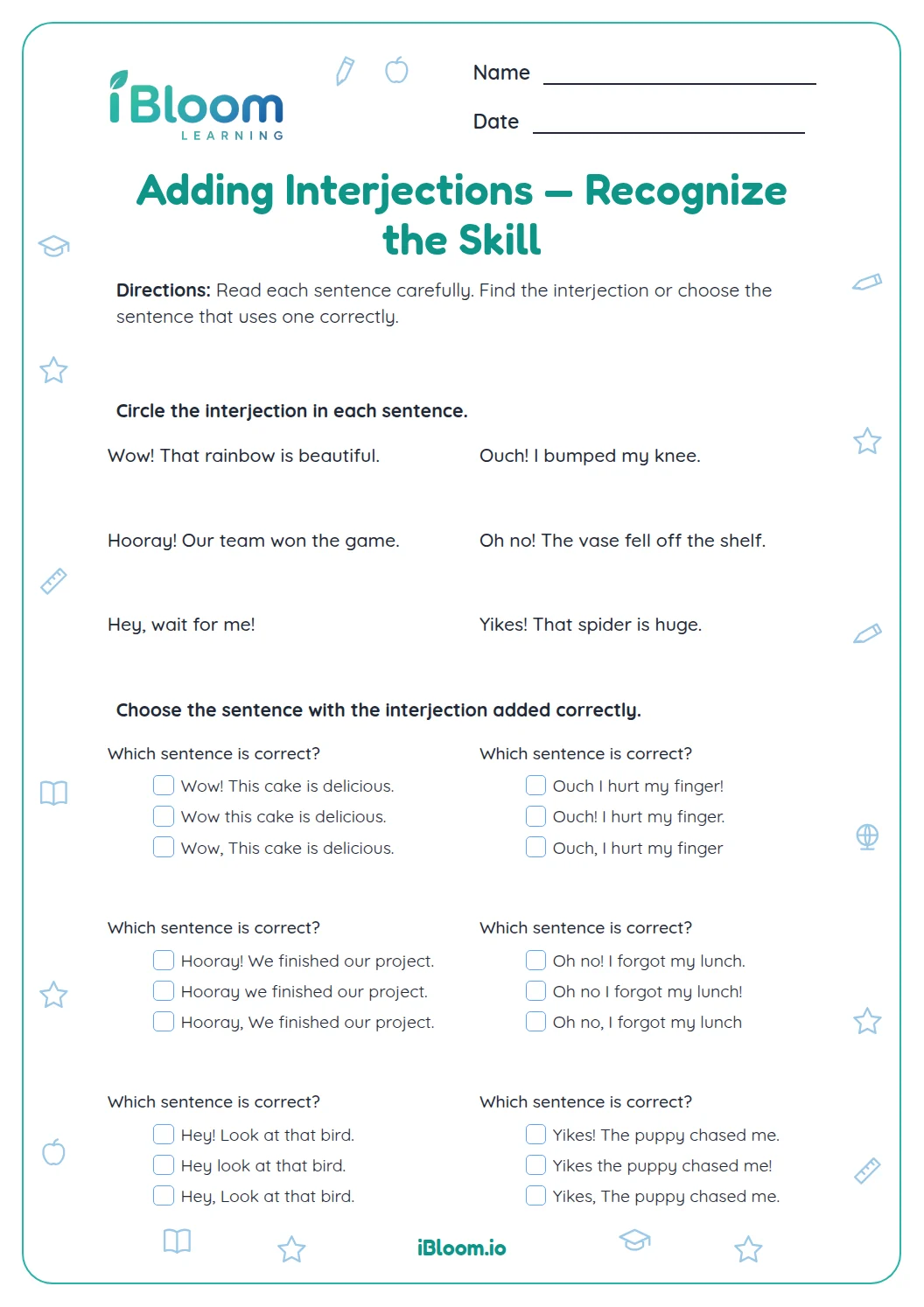
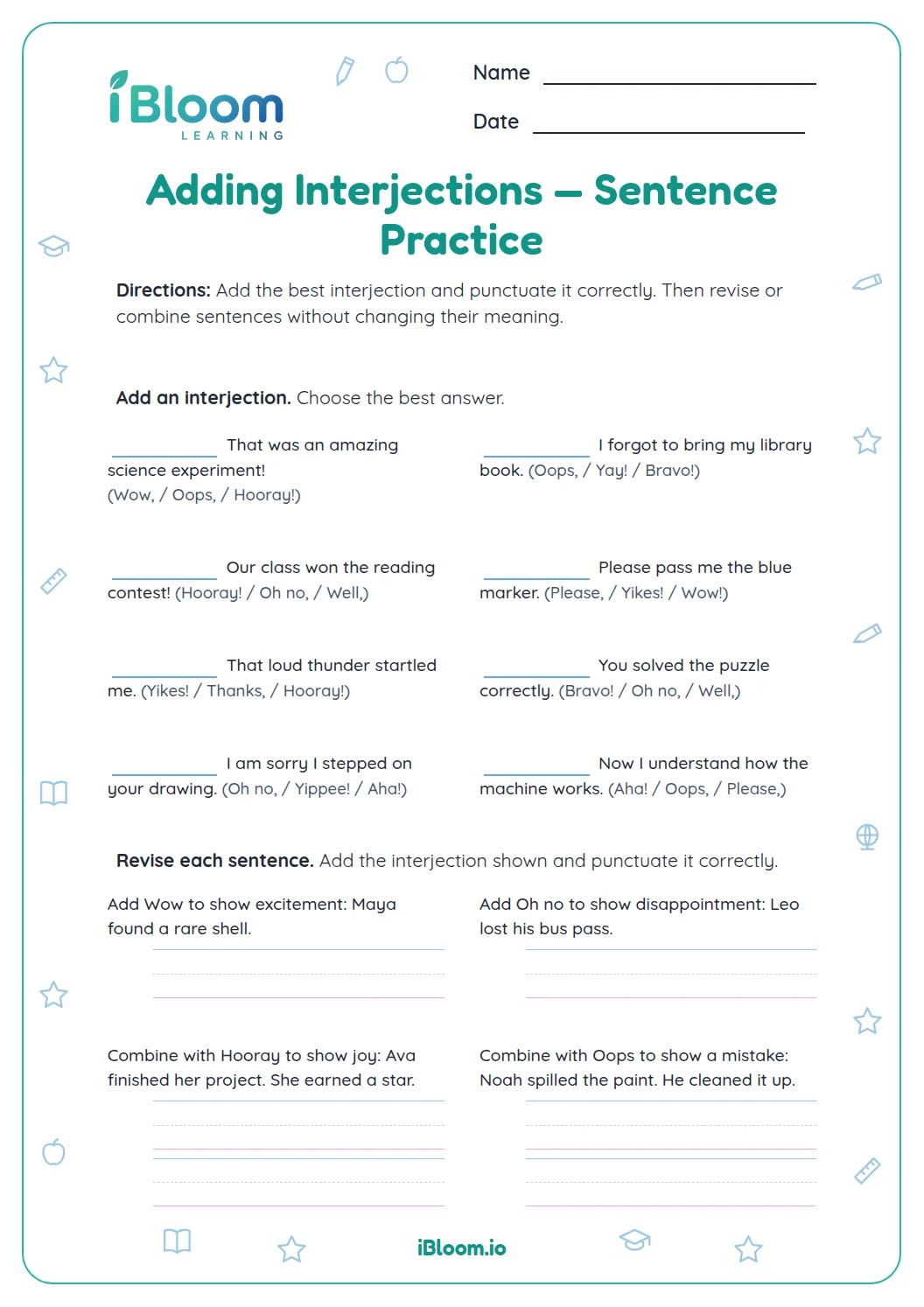
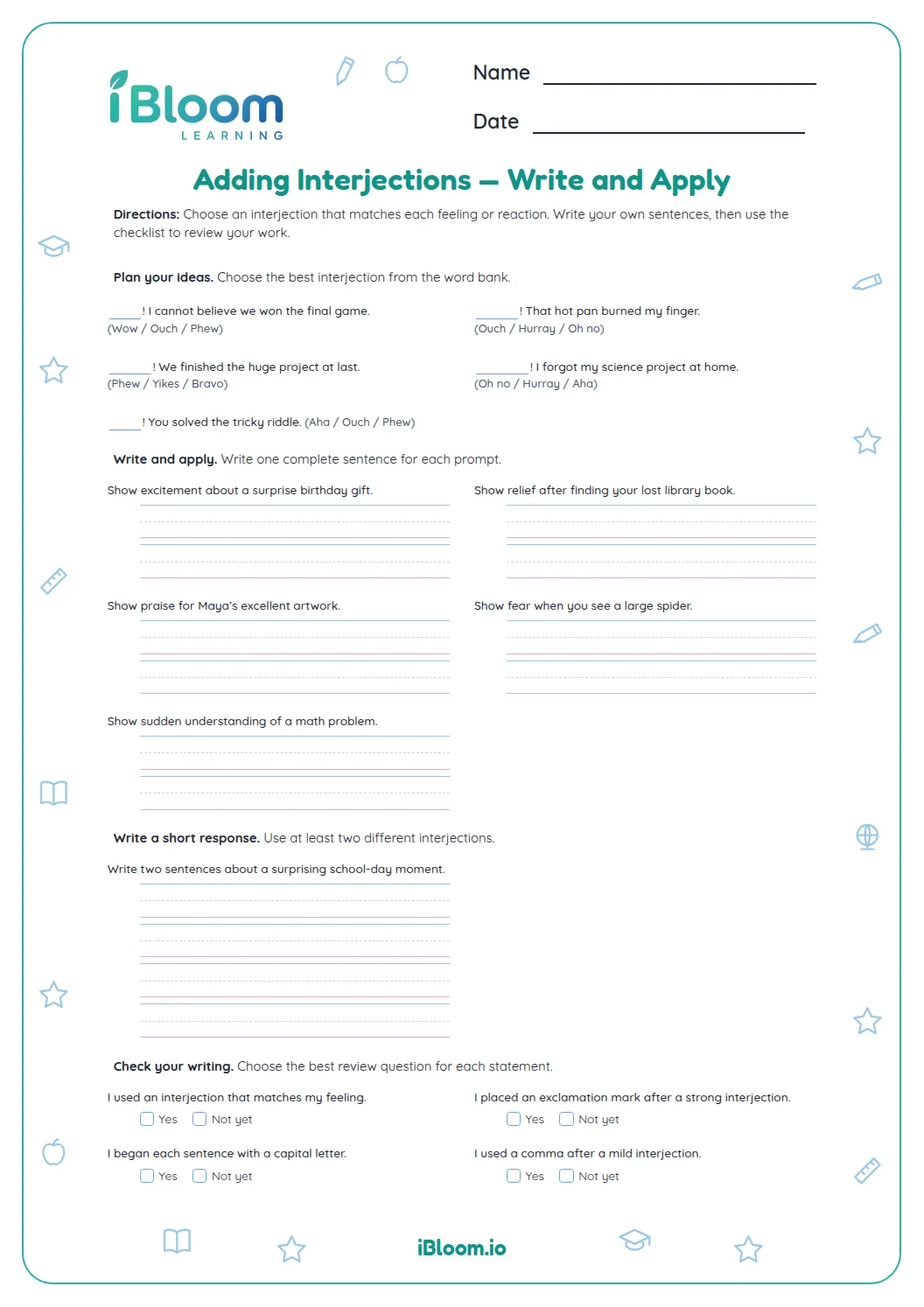
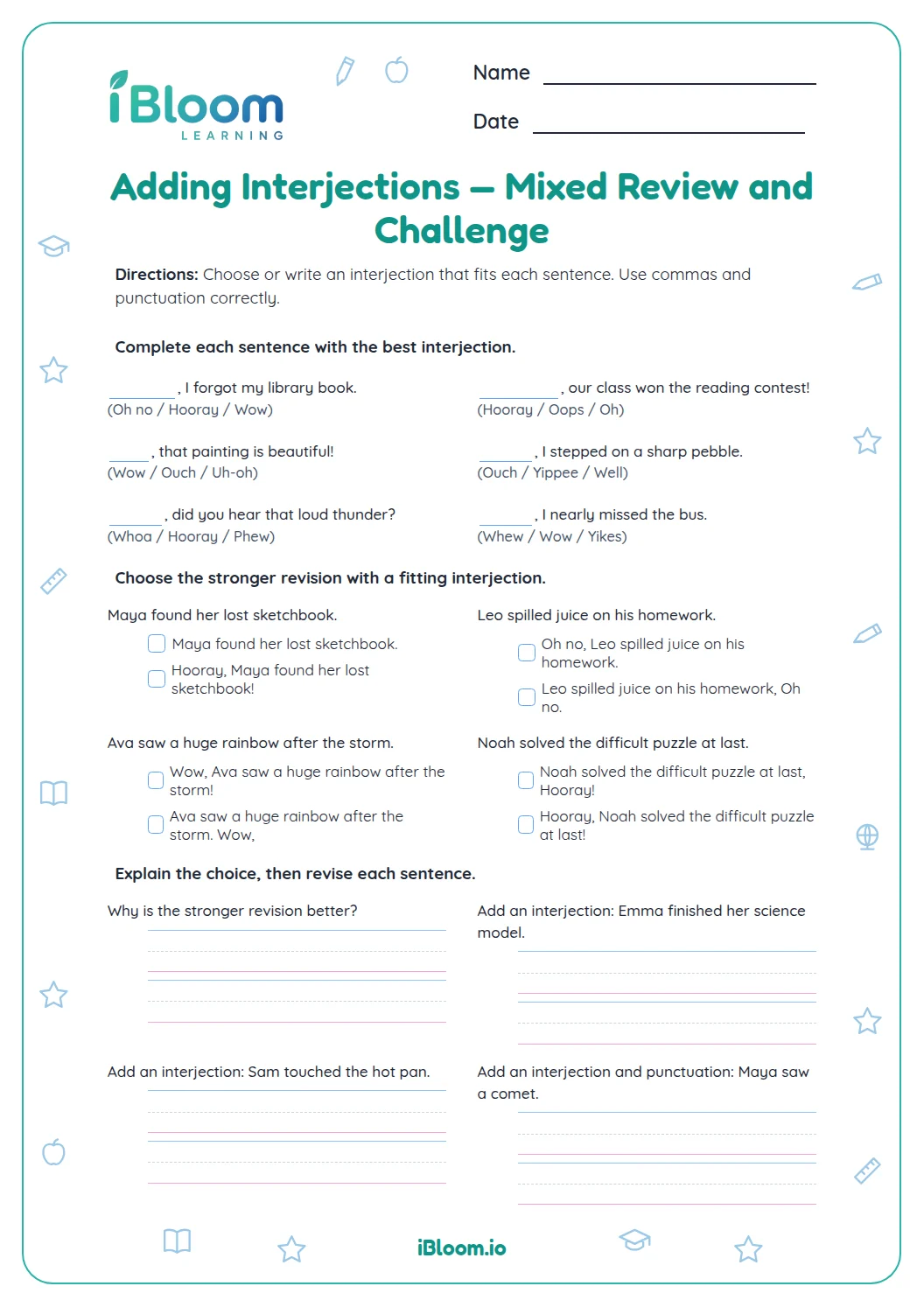
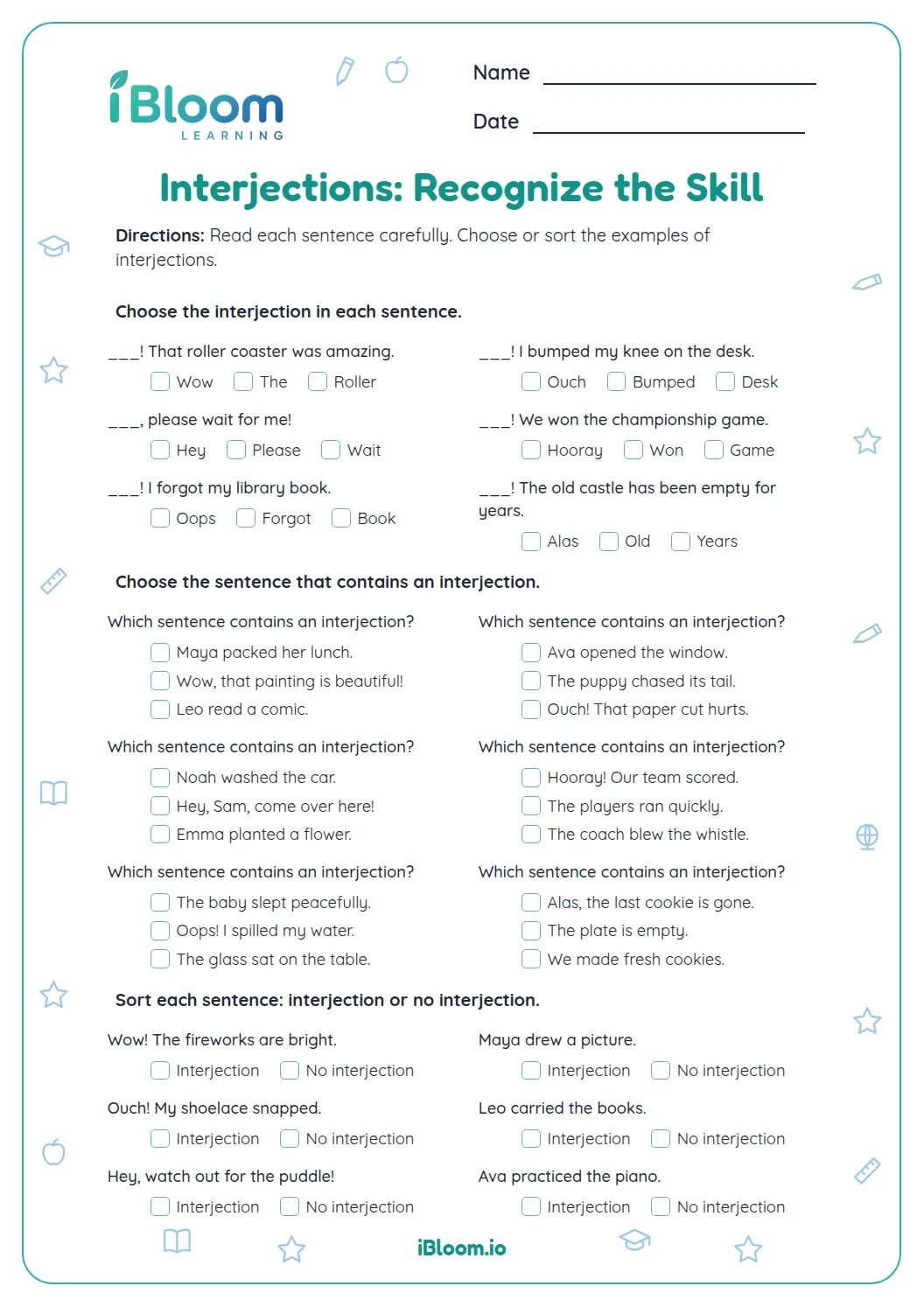
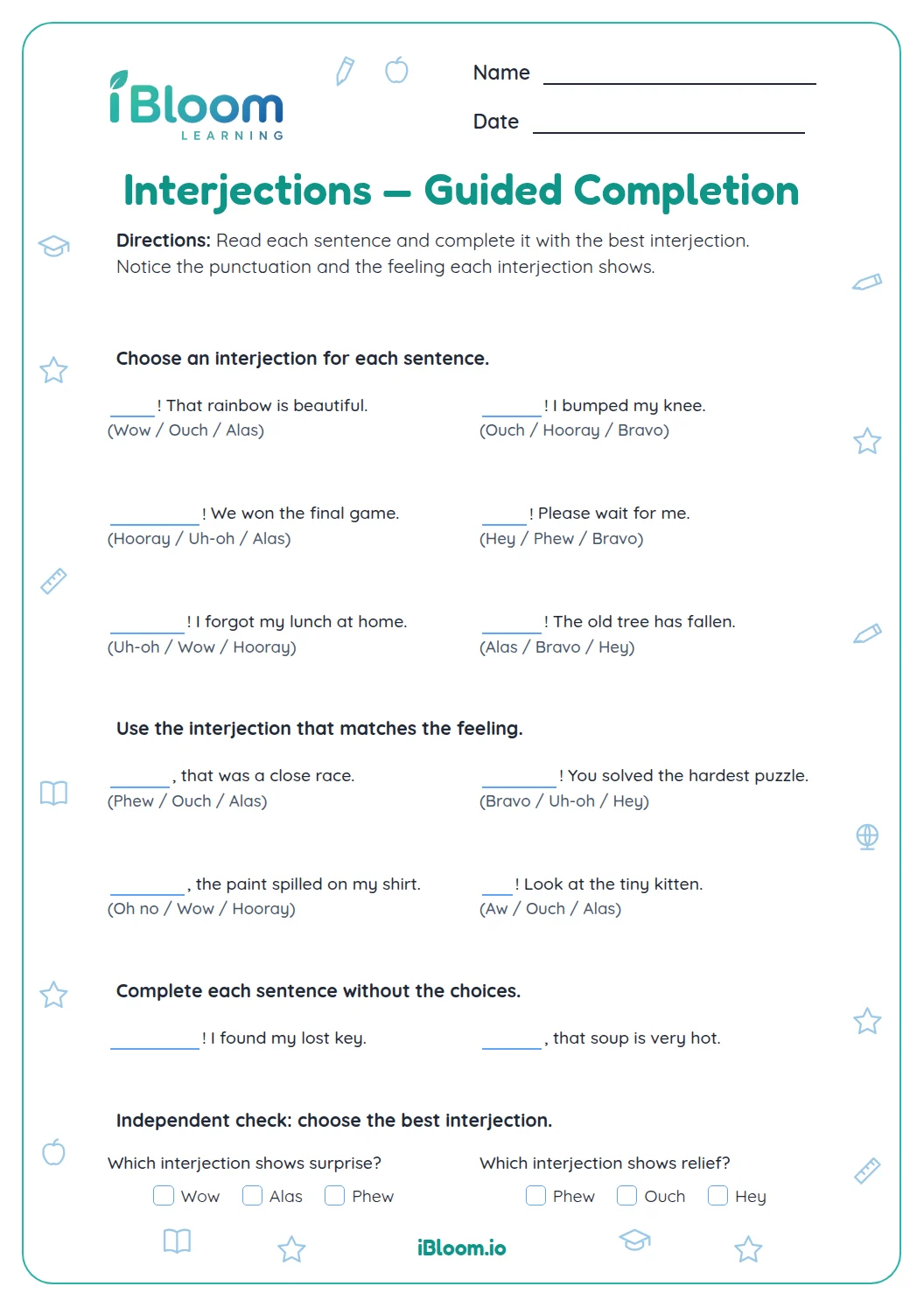
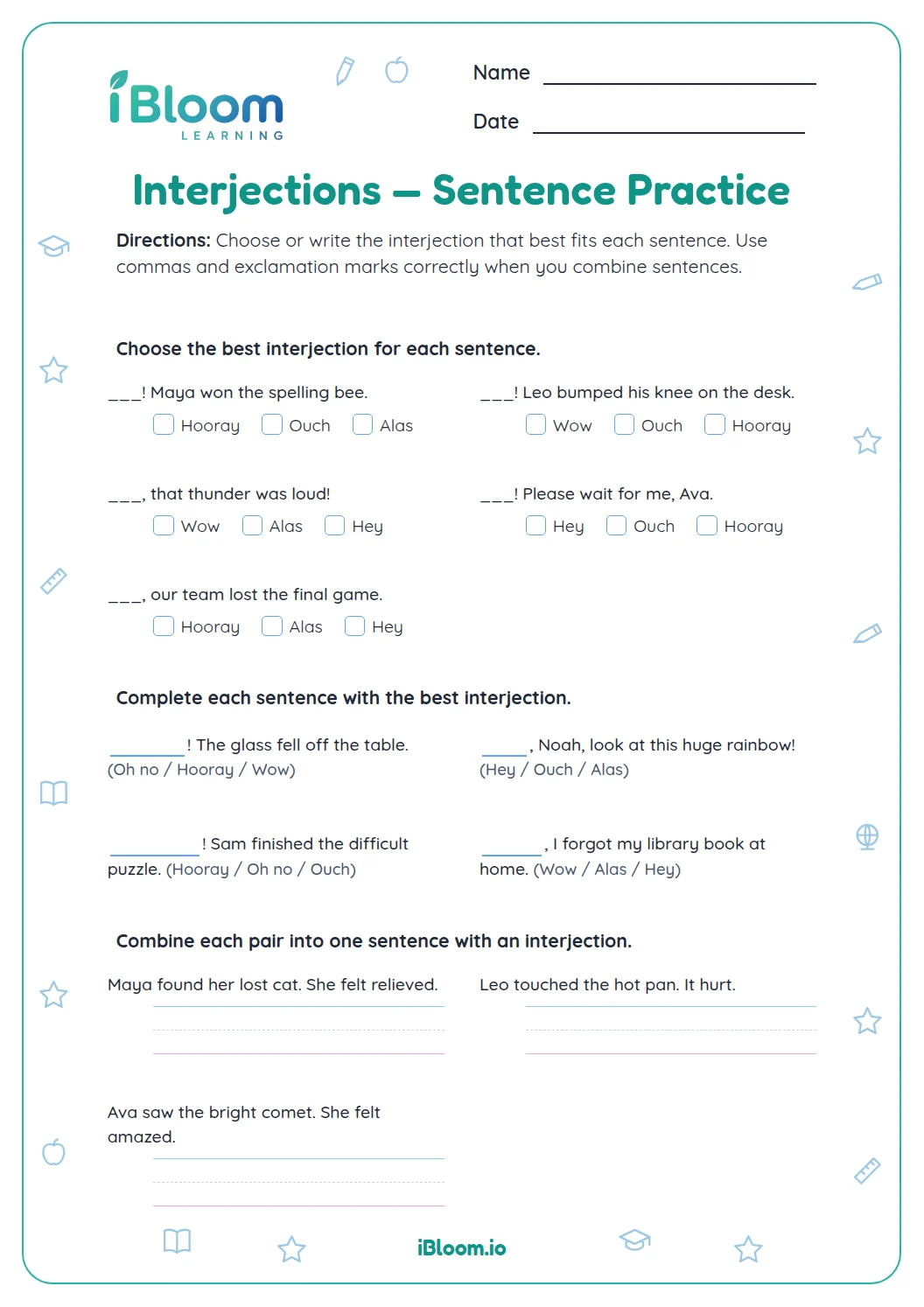
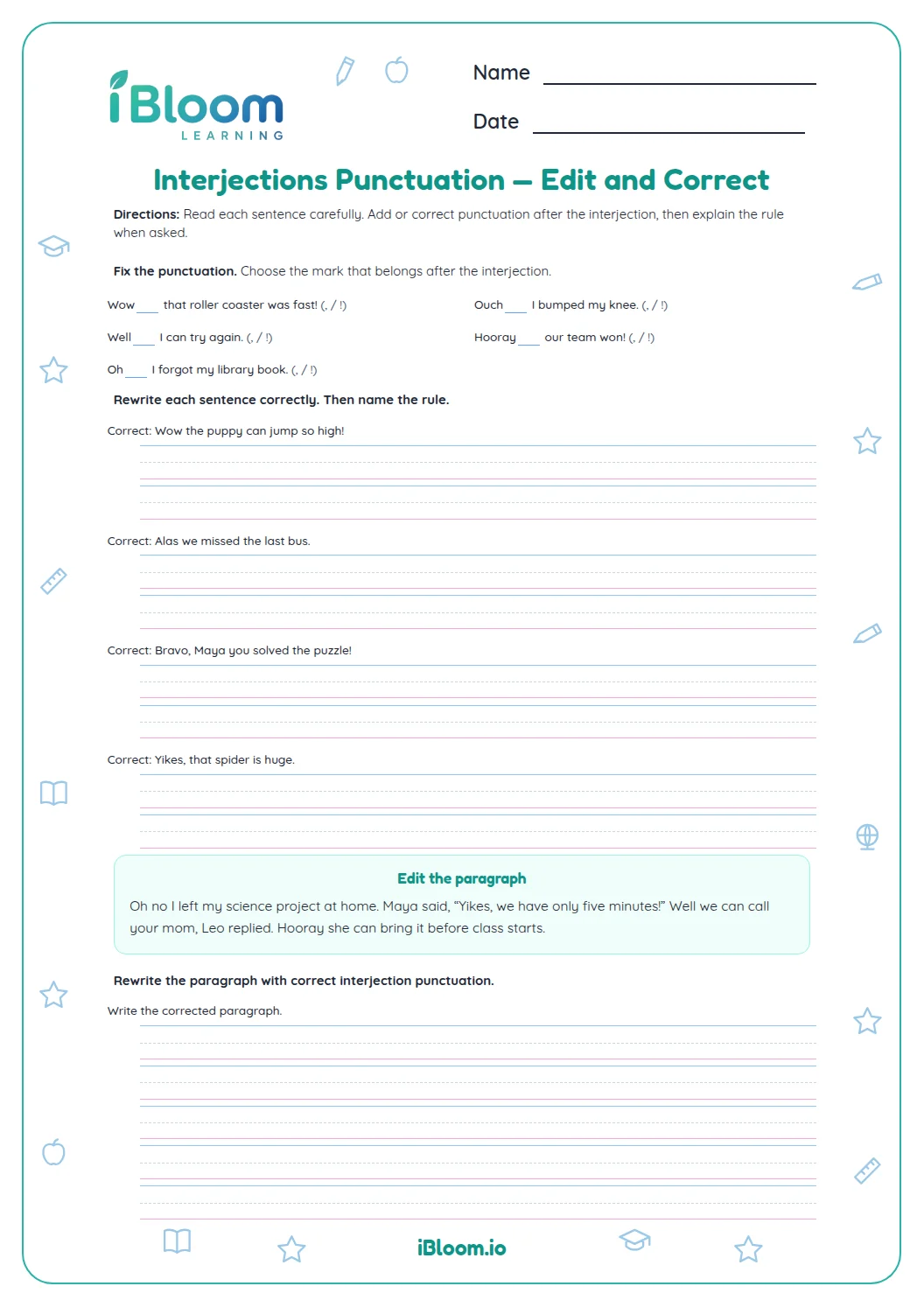
This Grade 5 worksheet guides students through choosing an interjection that fits a sentence, then using interjections in original writing. Contexts include surprise, celebration, pain, relief, and caution. The final prompts ask students to explain a reaction and write a sentence. The answer key lists the selected responses and sample writing.
Aligned to L.5.1.a
What does an interjection add to a sentence?
An interjection is a word or short expression that shows a reaction or feeling. “Ouch!” expresses pain; “Hooray!” expresses excitement. Read the situation first, then choose the reaction that makes sense.
- 1The speaker bumped an elbow.
- 2“Ouch!” fits because it expresses pain.
How do context clues help?
The sentence tells what happened, and that event narrows the choices. A forgotten lunch suggests “Oops,” while a cracked branch above someone suggests “Uh-oh.” Use both the event and the punctuation to read the line naturally.
How can you use an interjection in your own sentence?
Choose an interjection that names or signals a clear reaction. Then make the rest of the sentence match it. For question 13, “Aha” can show discovery when the speaker finds a missing key.
How to use this worksheet
- 1Read the event in the whole sentence.
- 2Name the likely feeling before looking at the options.
- 3Choose the interjection that fits the event and sentence tone.
- 4For question 13, explain the feeling or reaction your word shows.
- 5Reread both original sentences to check that the interjection makes sense.
Common mistakes and quick fixes
The mistake
Choosing a word because it sounds dramatic
The fix
Match the word to the event: pain, surprise, celebration, or another clear reaction.
The mistake
Confusing relief with celebration
The fix
Ask whether the situation ended safely or whether someone achieved something joyful.
The mistake
Writing an interjection that does not fit the sentence
The fix
Read the full sentence aloud with the interjection before keeping it.
Common Core alignment
This worksheet practices the listed standard.
Explain what interjections do and how they function in sentences.
On this sheet: Students select interjections by meaning and explain the reaction expressed in a sentence.
Show the official wordingHide the official wording
Explain the function of conjunctions, prepositions, and interjections in general and their function in particular sentences.
What to practice next
Make more practice
Further reading
Questions parents and teachers ask
What is an interjection?
An interjection is a word or brief expression that shows a reaction or feeling. “Ouch!” can show pain, while “Hooray!” can show excitement. This worksheet places each word in a situation so students can connect its meaning to the sentence.
How can a student choose the right interjection?
First identify what happened and how the speaker might react. A dropped pencil fits “Oops,” while a team winning fits “Hooray.” The multiple-choice options make students compare possible reactions instead of choosing a word without context, then the written items let them try their own.
Do interjections need punctuation?
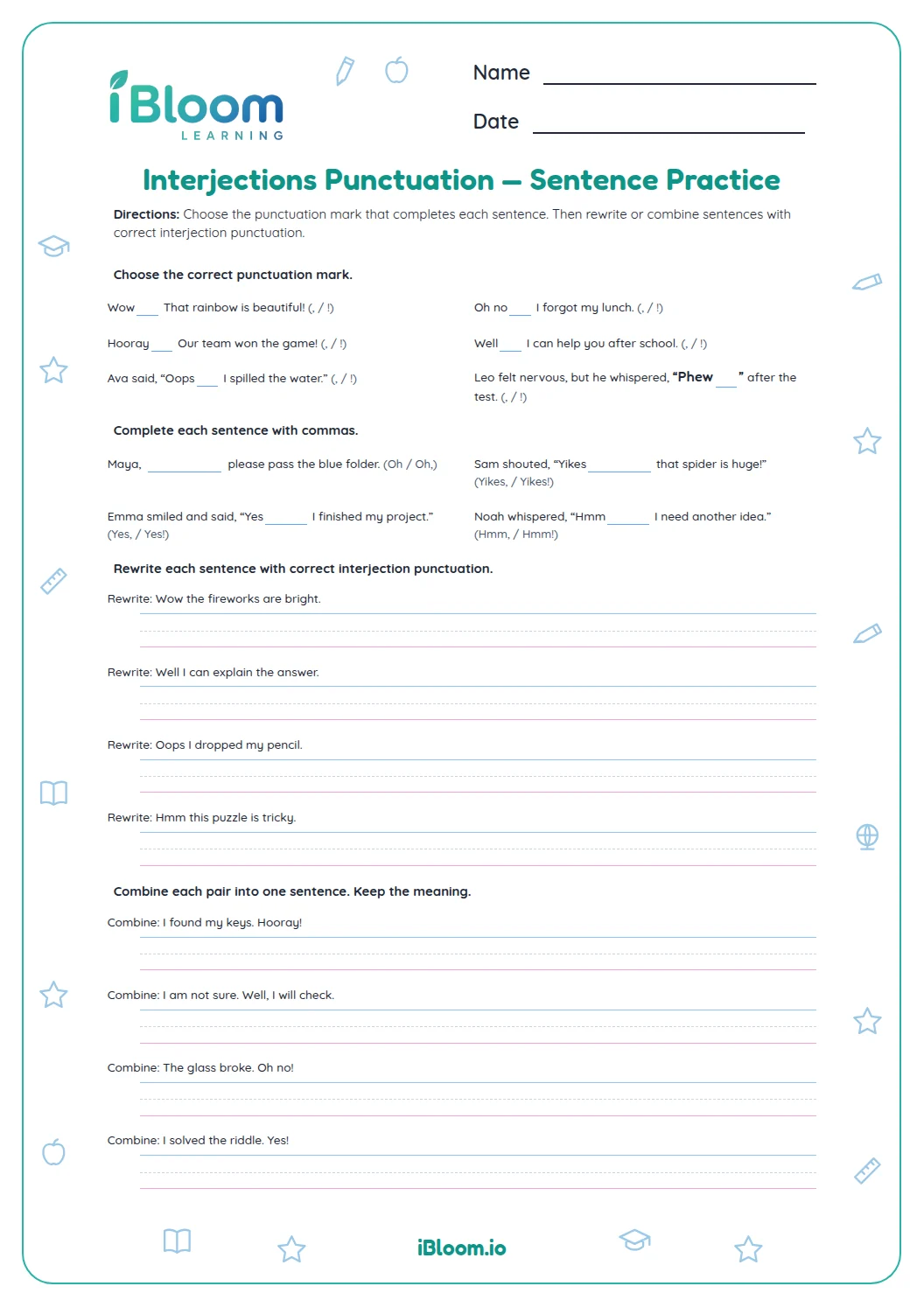
Often an interjection is followed by a comma or an exclamation point, depending on how strongly it is spoken and how the sentence continues. The worksheet prints punctuation with the sentence; its main task is choosing an interjection that fits.
Are there open-ended questions?
Yes. Question 13 asks students to add an interjection and name its feeling, and question 14 asks for a sentence showing surprise. The answer key offers samples, but other responses are correct when the interjection and context agree.
Which feelings appear in the examples?
The situations include excitement, surprise, pain, relief, caution, and discovery. Students use the event in each sentence to select an interjection that fits. The final written prompts invite them to explain a reaction and create a sentence showing surprise.