

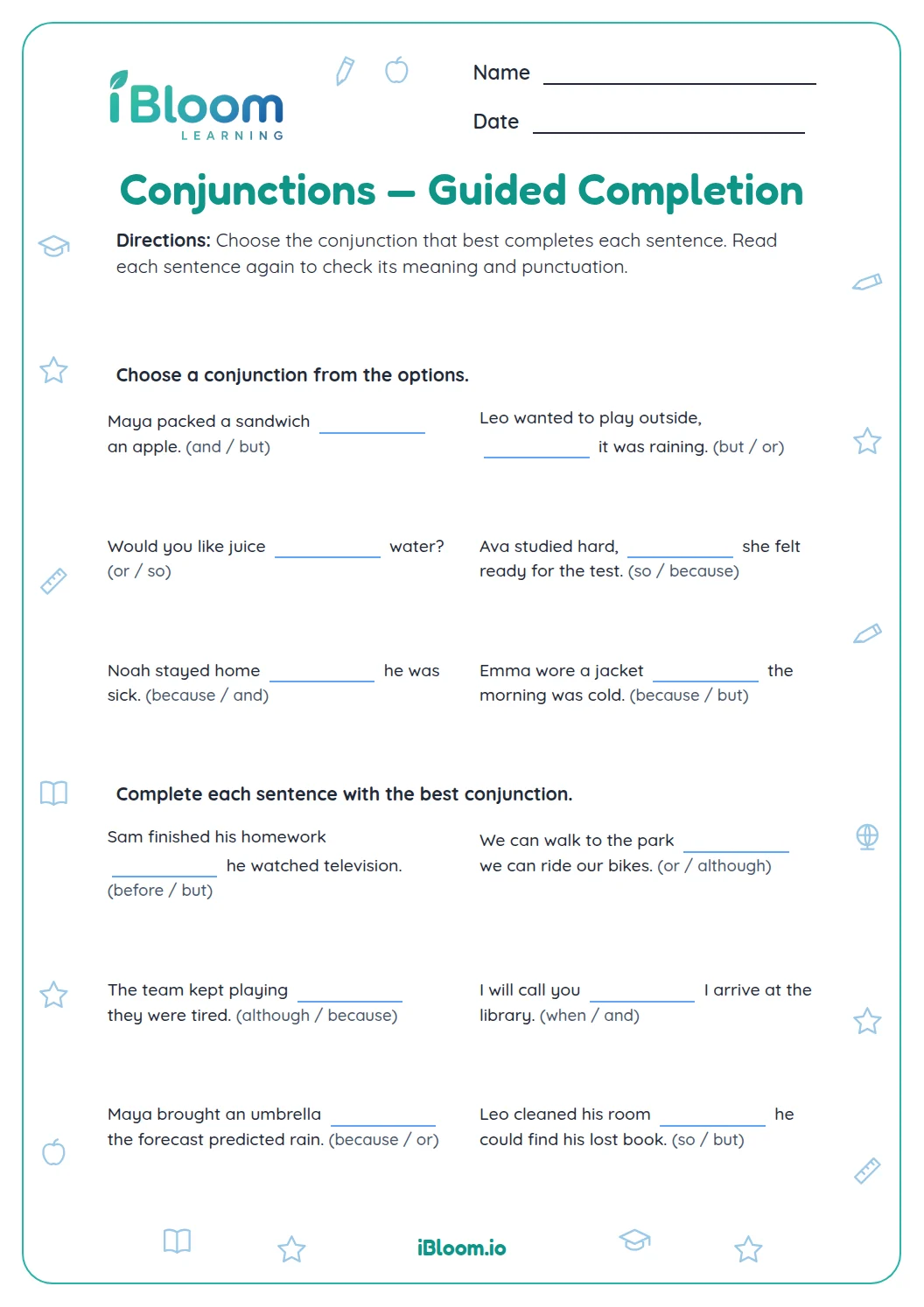
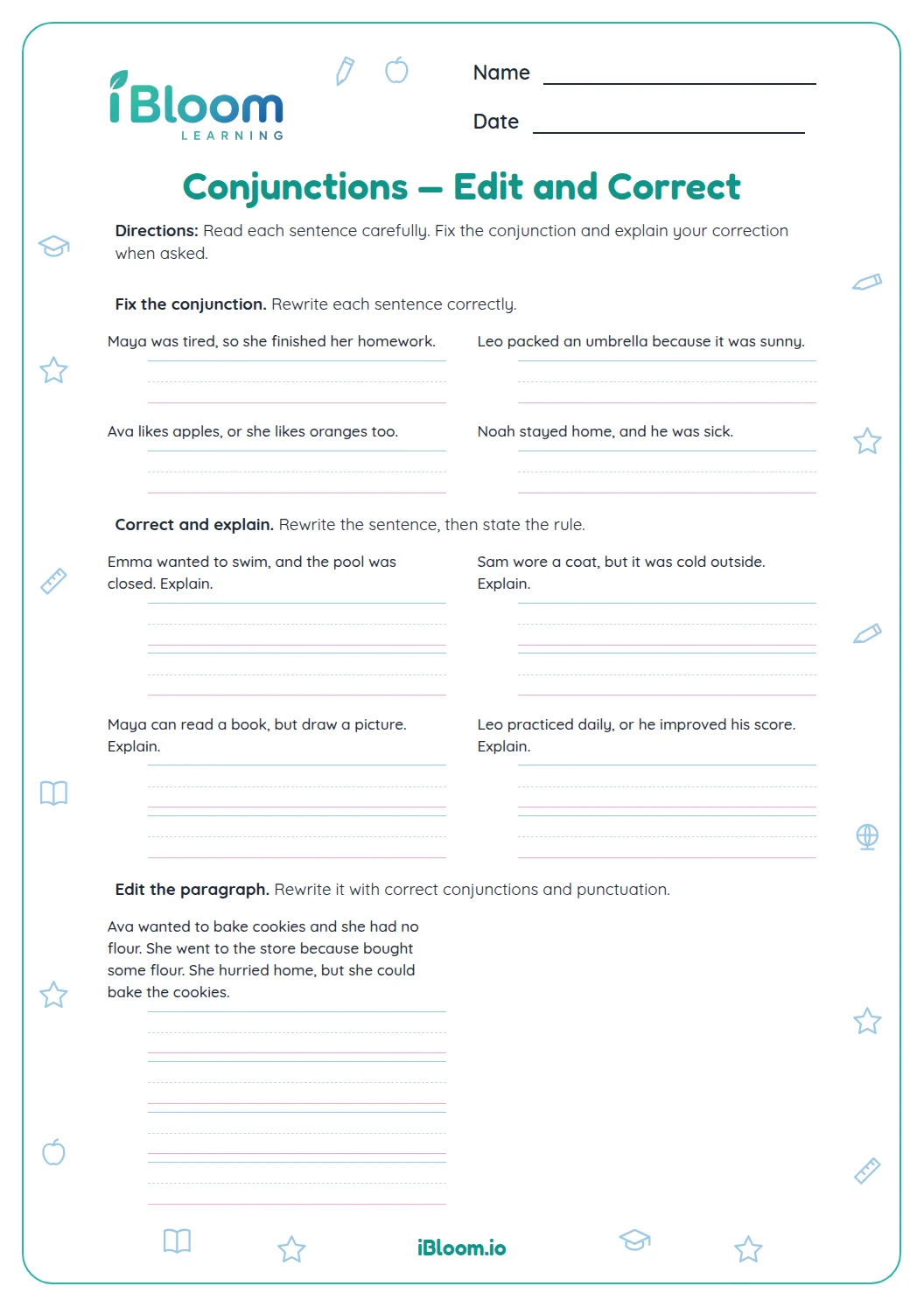
About this worksheet
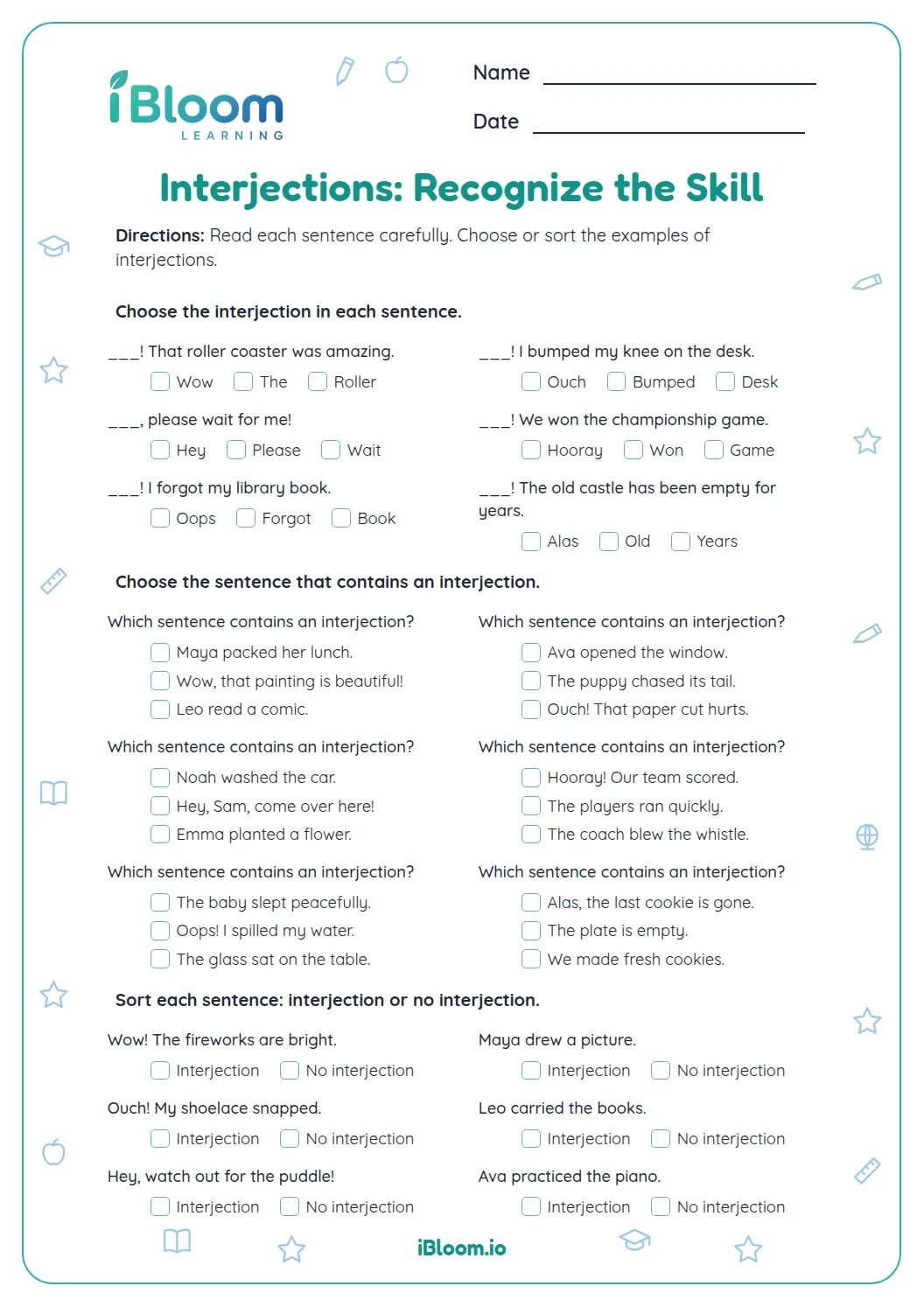
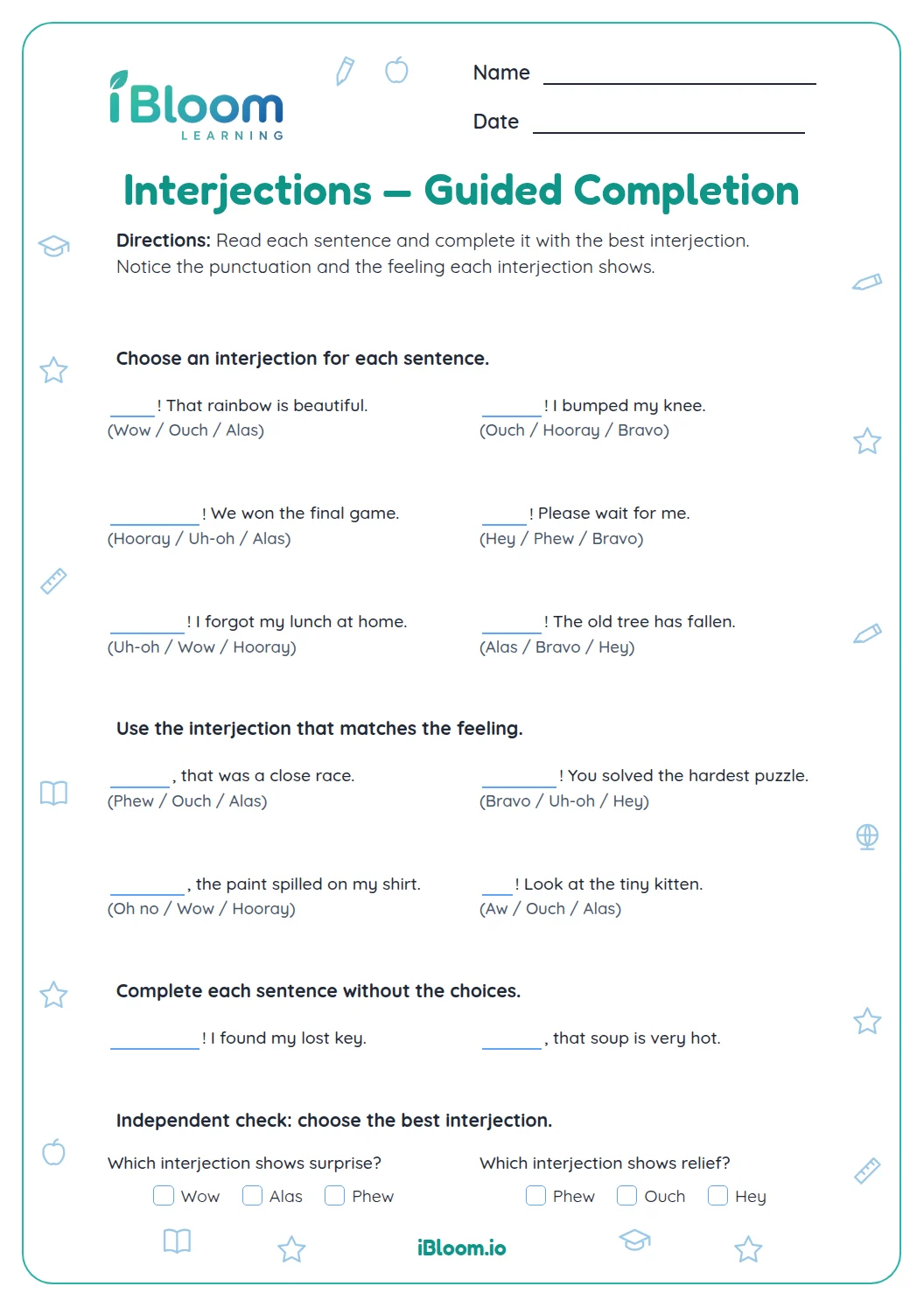
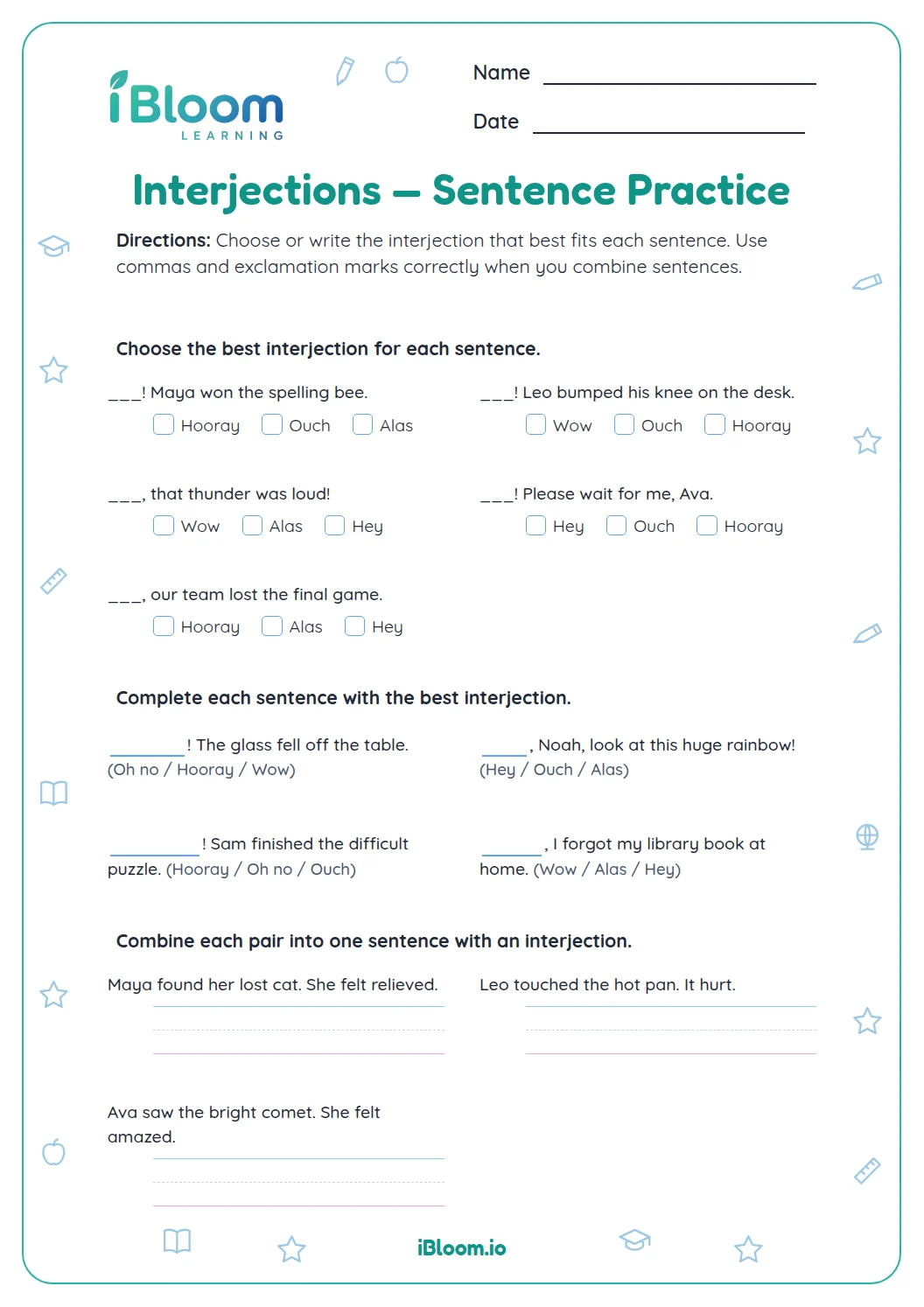
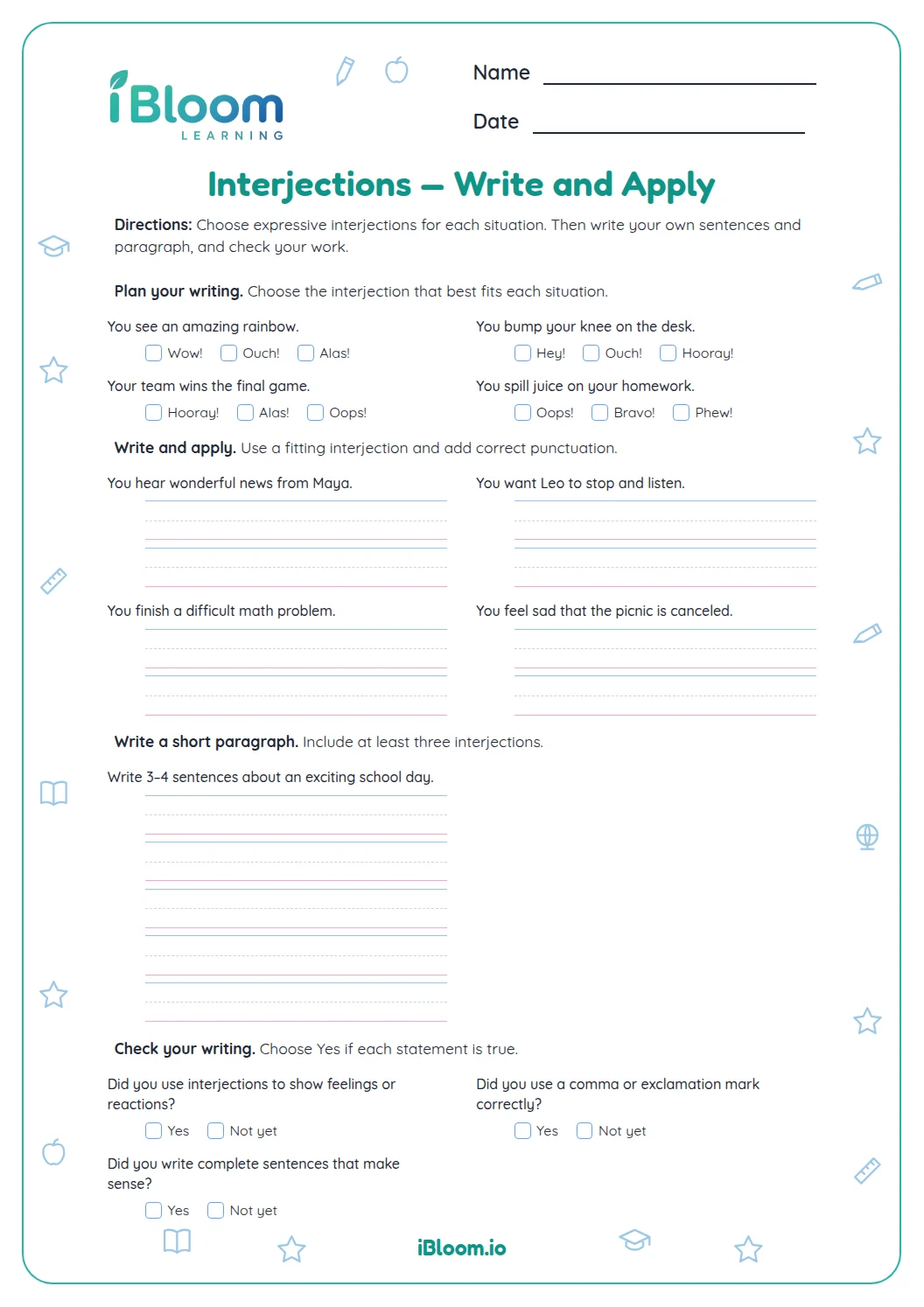
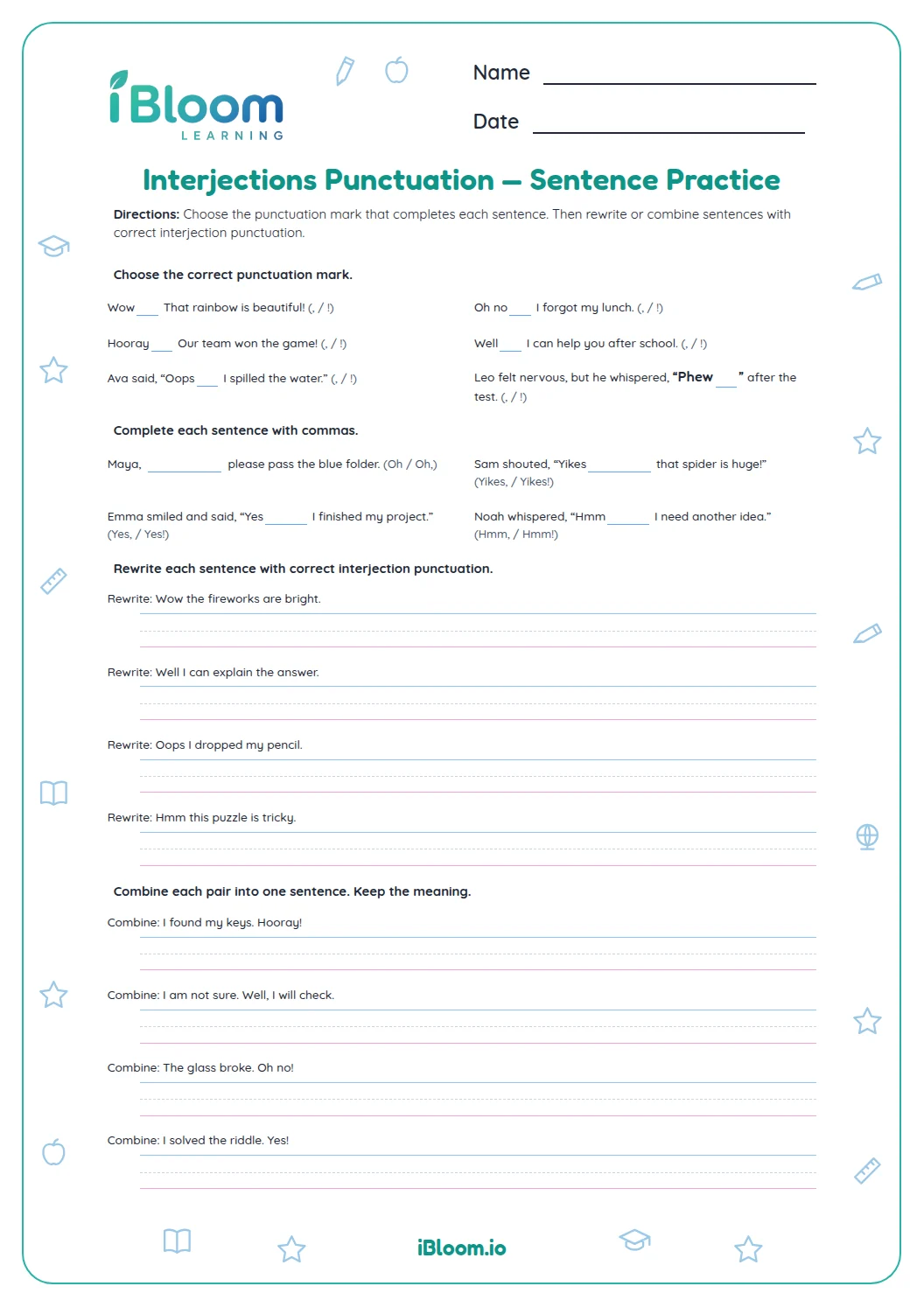
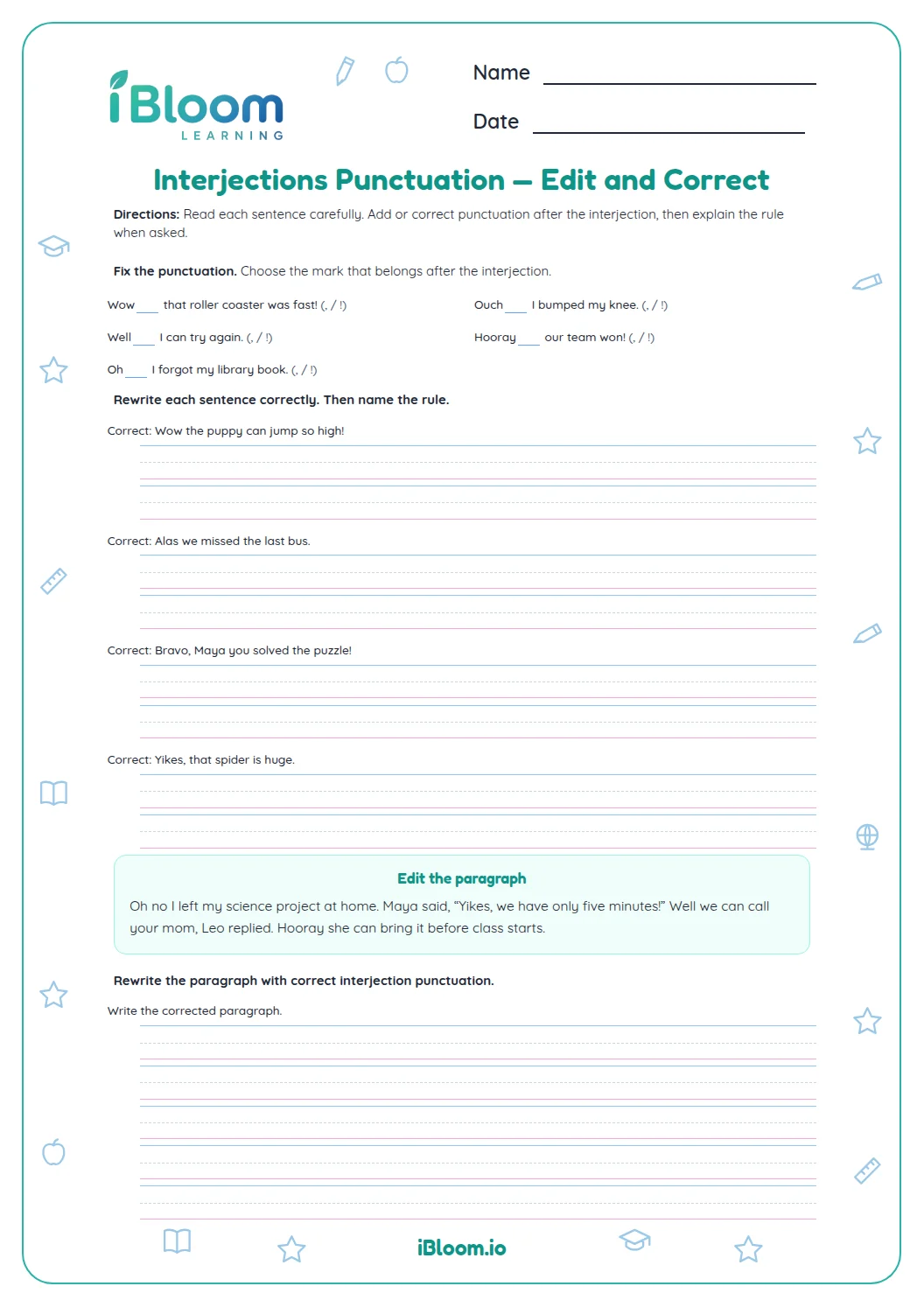
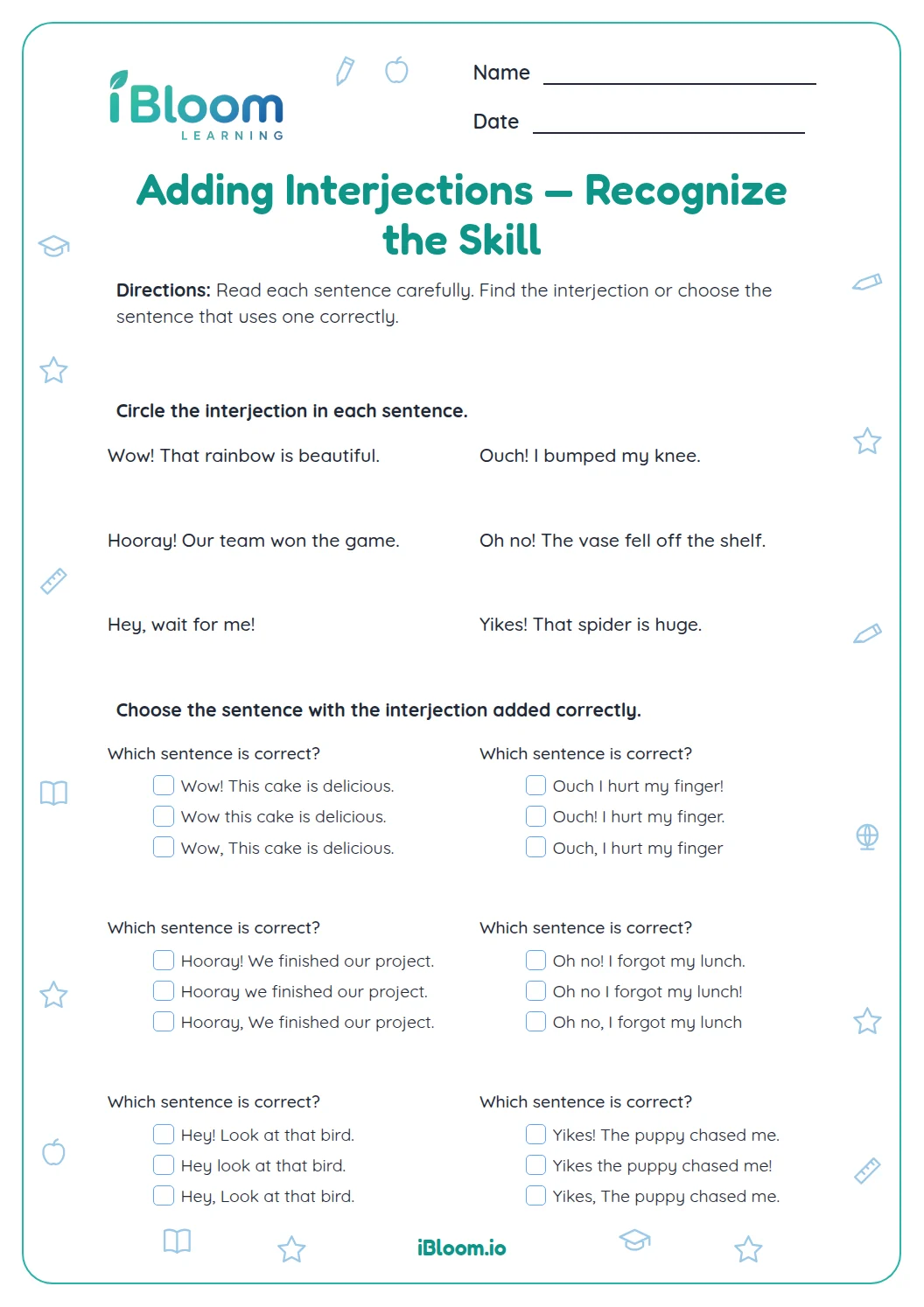
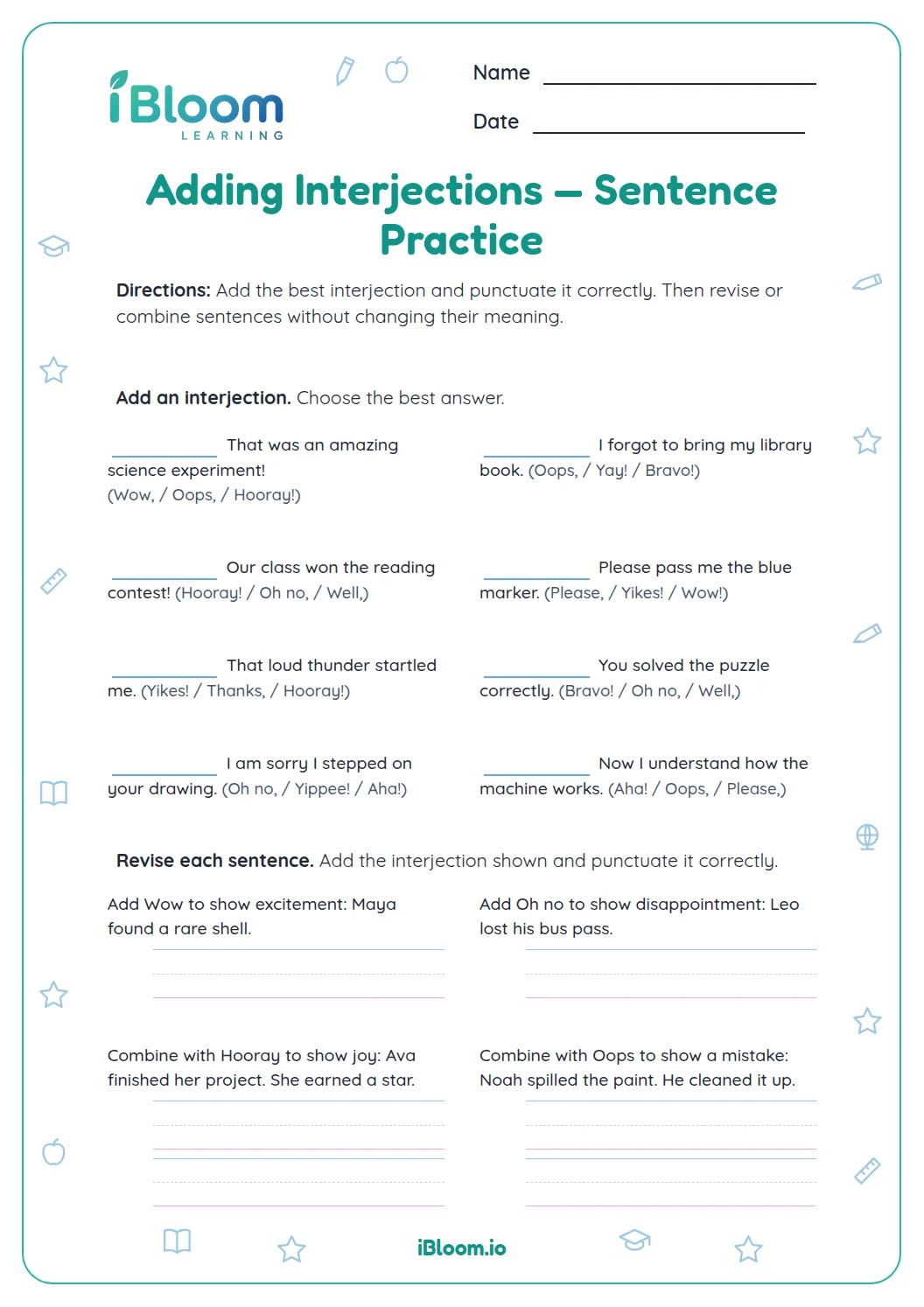
This Grade 5 worksheet helps students recognize interjections and punctuate them in complete sentences. Part A identifies the word that expresses a reaction; Part B edits commas and end marks; Part C adds a fitting interjection to a sentence. It gives focused practice using commas to set off introductory words and choosing punctuation that matches a sentence.
Aligned to L.5.2.b
How can you spot an interjection?
An interjection expresses a reaction or feeling. In “Wow, the science fair is open!” the reaction word is Wow.
- 1Wow, the science fair is open! → Wow expresses a reaction.
Where does the comma go?
When an interjection begins a sentence, place a comma after it. Then choose a period or exclamation point that fits the whole thought.
- 1Oh I forgot my lunch → Oh, I forgot my lunch.
How can you add an interjection?
Choose a reaction that fits the situation, then check the comma and end punctuation.
How to use this worksheet
- 1Read each full sentence before choosing the reaction word.
- 2In Part B, add a comma after an opening interjection.
- 3Use a period for a calm statement and an exclamation point for a strong reaction.
- 4In Part C, choose a fitting reaction and write the full corrected sentence.
Common mistakes and fixes
The mistake
Using a comma instead of an end mark
The fix
Add the comma after the interjection, then punctuate the sentence ending.
The mistake
Adding a comma after an interjection in the middle
The fix
Place commas around a middle interjection only when it interrupts the sentence.
The mistake
Choosing an interjection that does not fit
The fix
Reread the situation and pick a reaction that makes sense.
Common Core alignment
The editing practice connects interjections with grade-level conventions for punctuation.
Use a comma to separate an introductory element from the rest of the sentence.
On this sheet: The worksheet gives direct practice with this skill.
Show the official wordingHide the official wording
Use a comma to separate an introductory element from the rest of the sentence.
What to practice next
Make more practice
Further reading
Questions parents and teachers ask
What counts as an interjection?
An interjection is a word or brief expression that shows a reaction, feeling or call. Wow, alas, hey and hooray are examples on this worksheet. Look at the word’s job in the sentence. Reread the whole sentence after editing to make sure the reaction and punctuation sound right.
Why does an interjection need a comma?
A comma separates an introductory interjection from the main thought. In “Oh, I forgot my lunch,” the comma marks where the opening reaction ends and the rest of the sentence begins. An introductory interjection is followed by a comma, while the sentence ending still needs its own mark.
When should a sentence end with an exclamation point?
Use an exclamation point when the sentence conveys a strong reaction, as in “Yikes, I spilled the paint!” A calm statement can end with a period. Read the sentence aloud to check its tone. The exclamation point follows the complete sentence, not the interjection alone, when the whole thought is emphatic.
Can more than one answer work in Part C?
Several reactions can fit a completion. The key provides sample wording; check that the interjection makes sense in context and that the sentence has a comma and correct end punctuation. Reread the situation and check each punctuation choice before comparing with the sample answer.
How many items are on this worksheet?
There are 14 items: four identification choices, eight sentence edits and two completions. The answer key lists the target word for each choice and corrected sentences or sample completions. The items move from identifying reaction words to editing sentences and then supplying an appropriate interjection.