

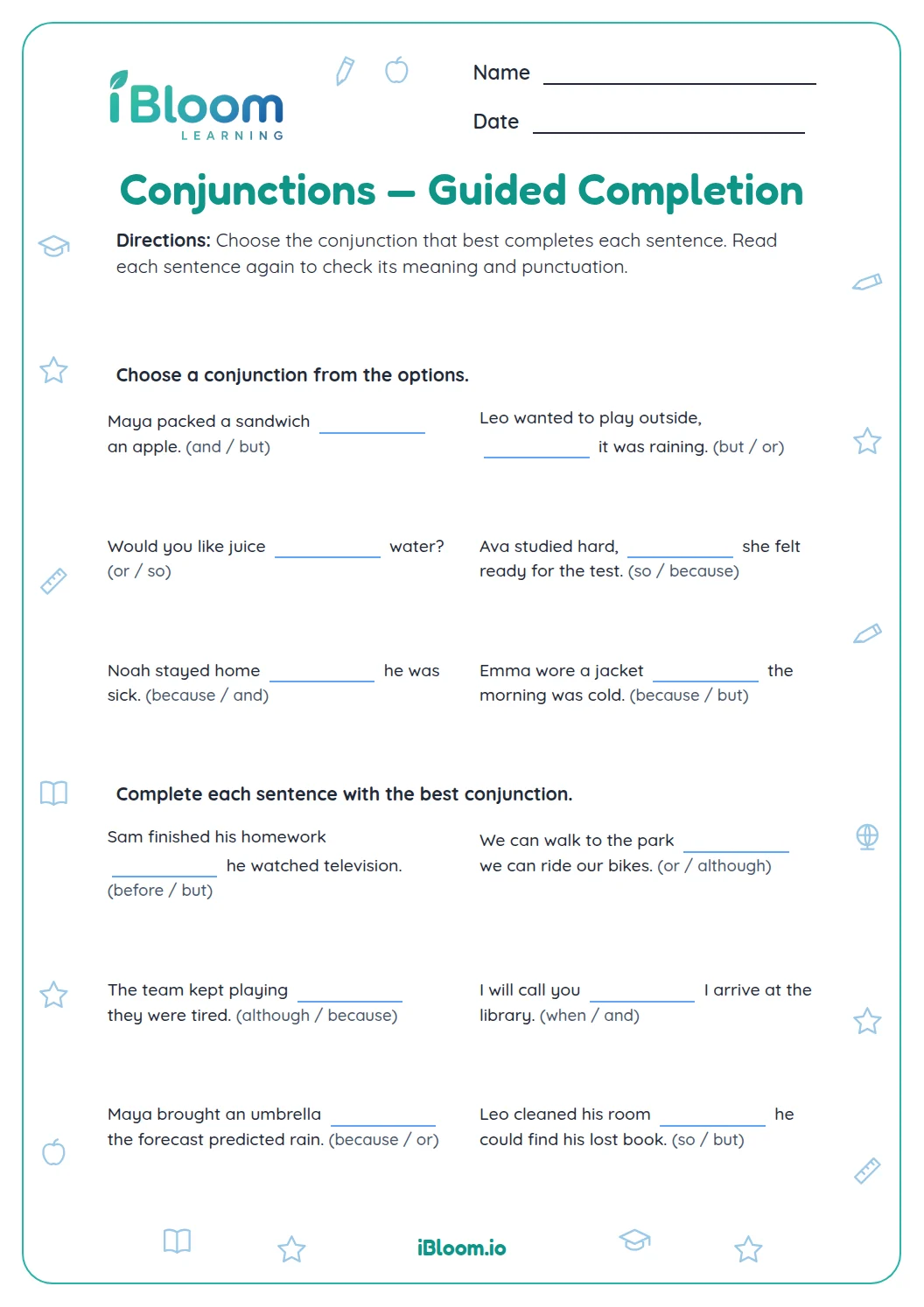
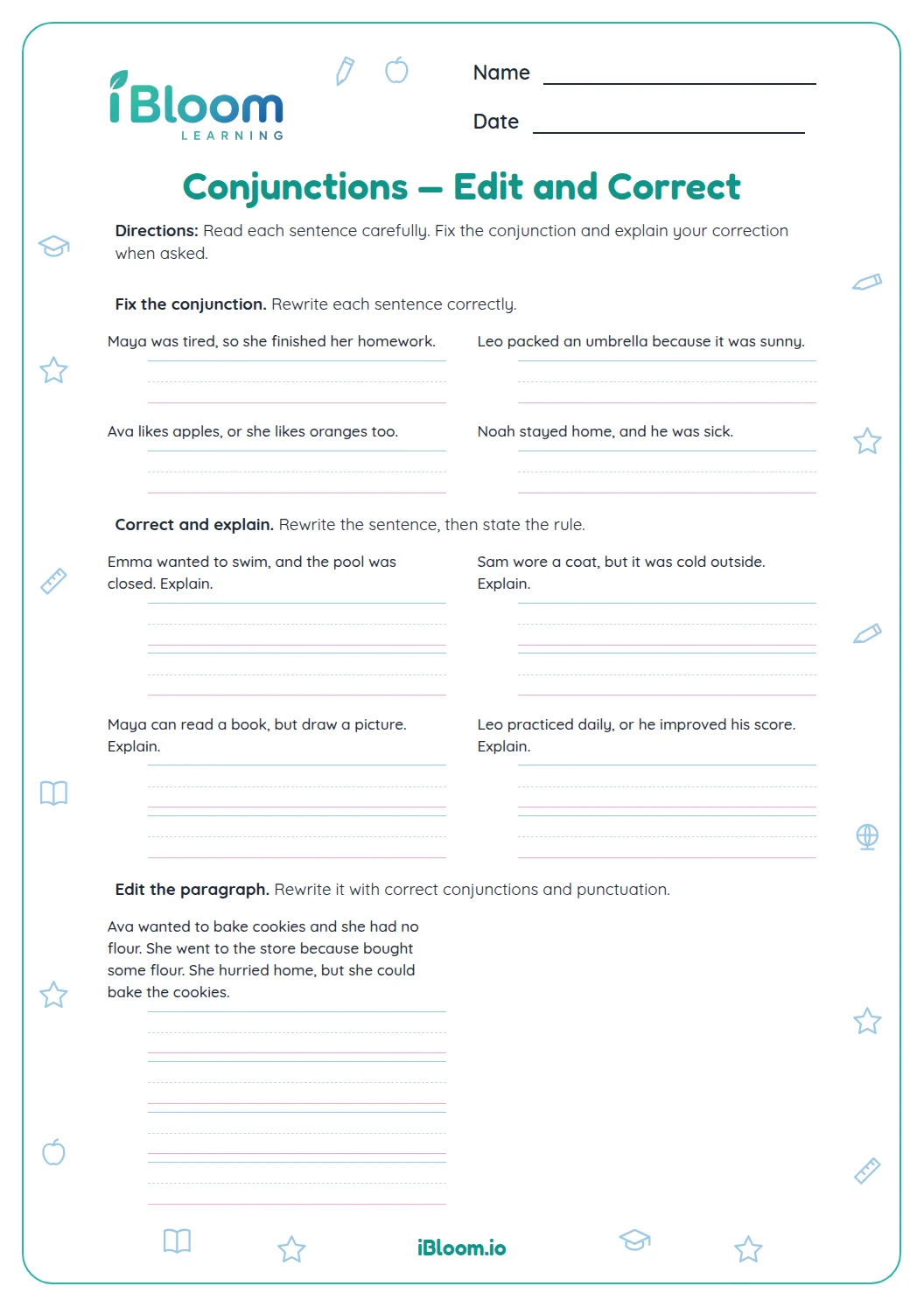
About this worksheet
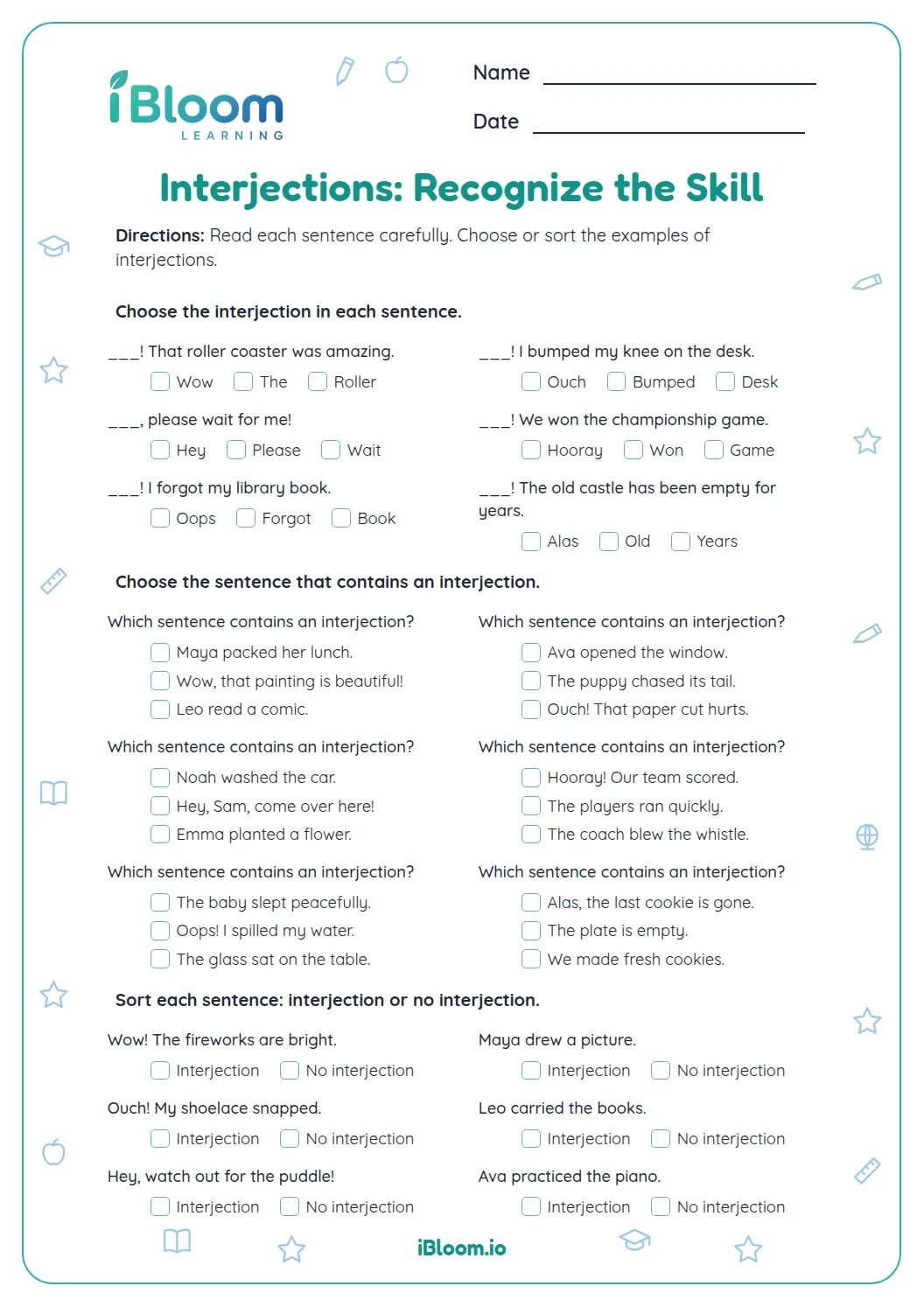
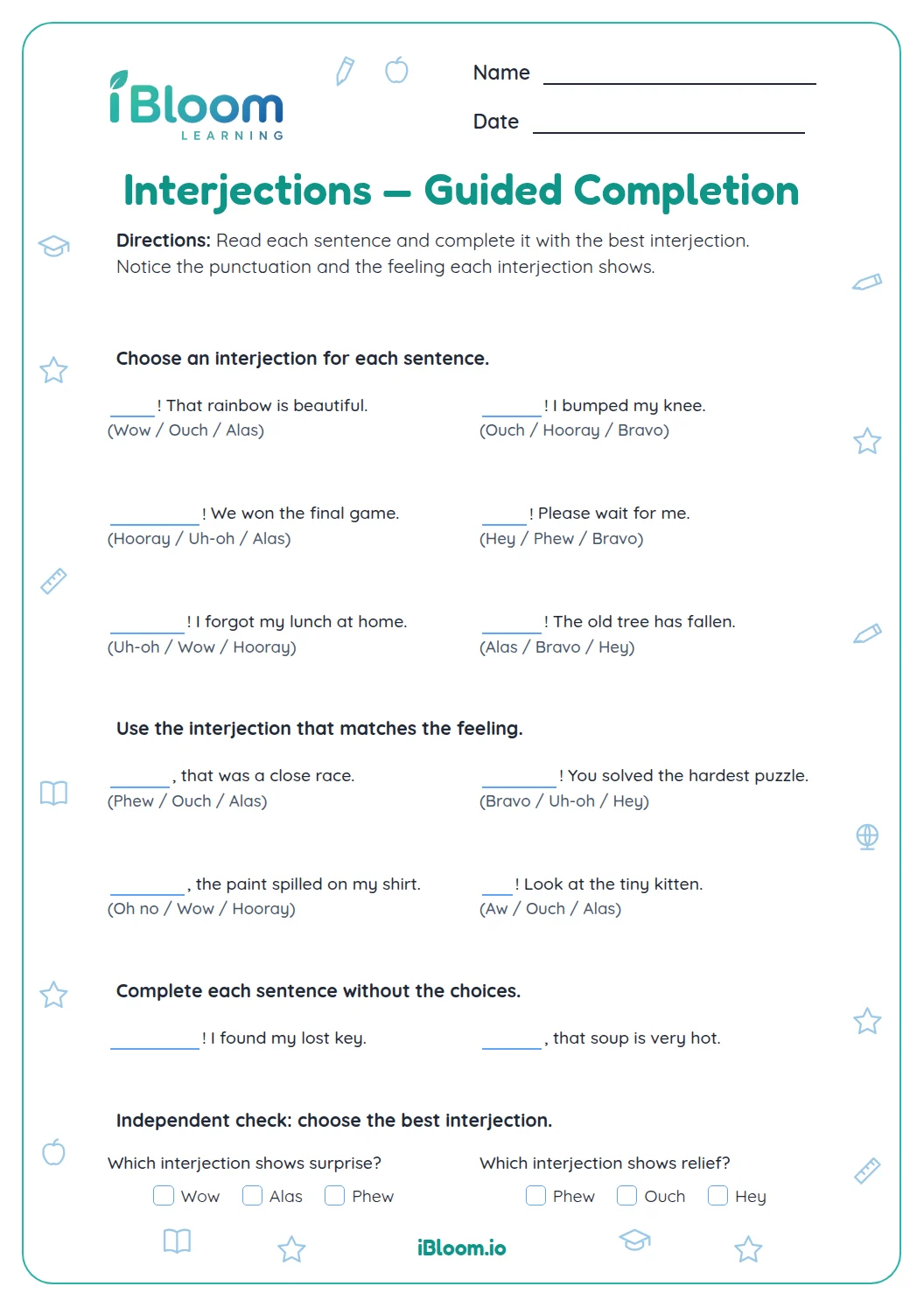
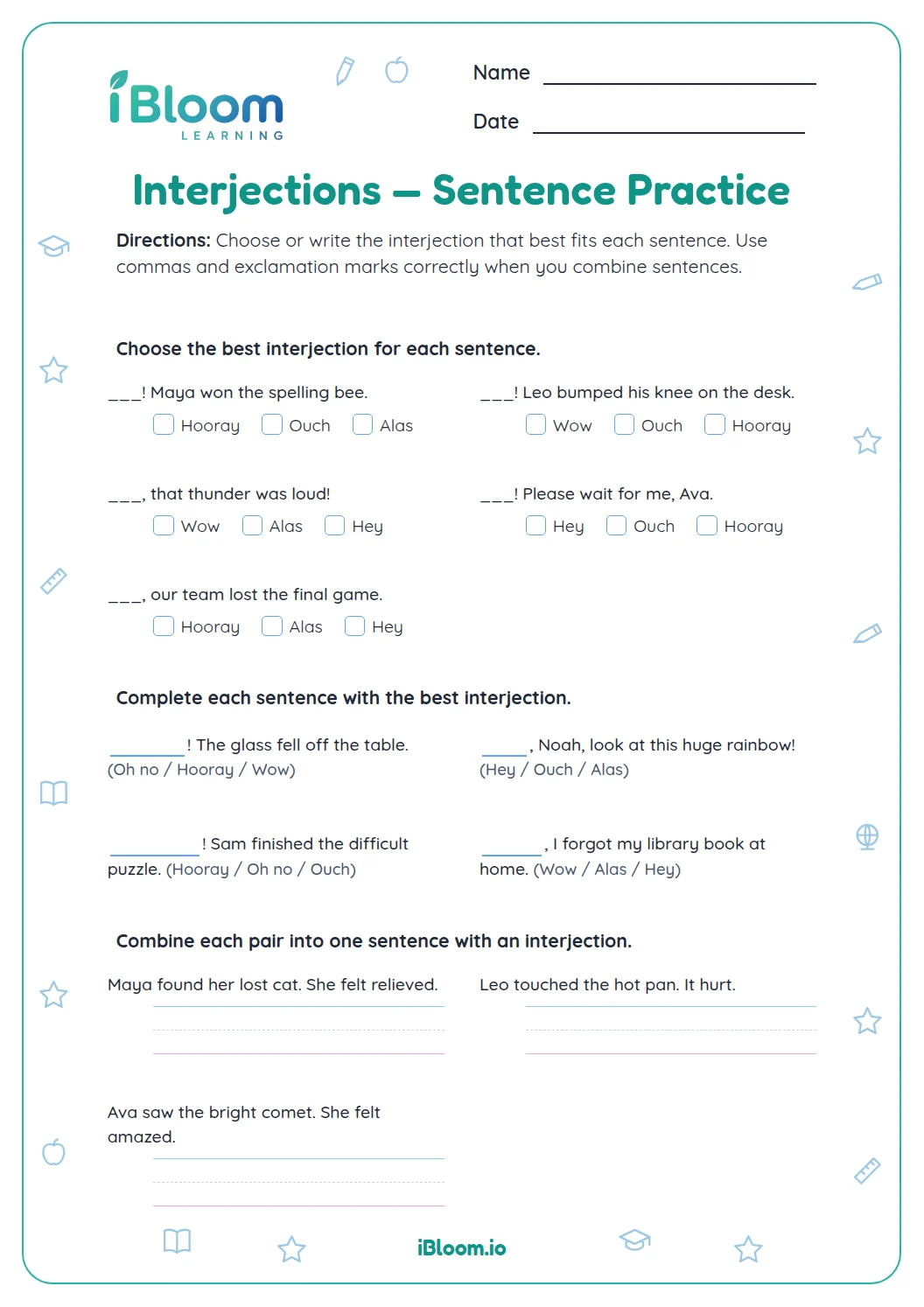
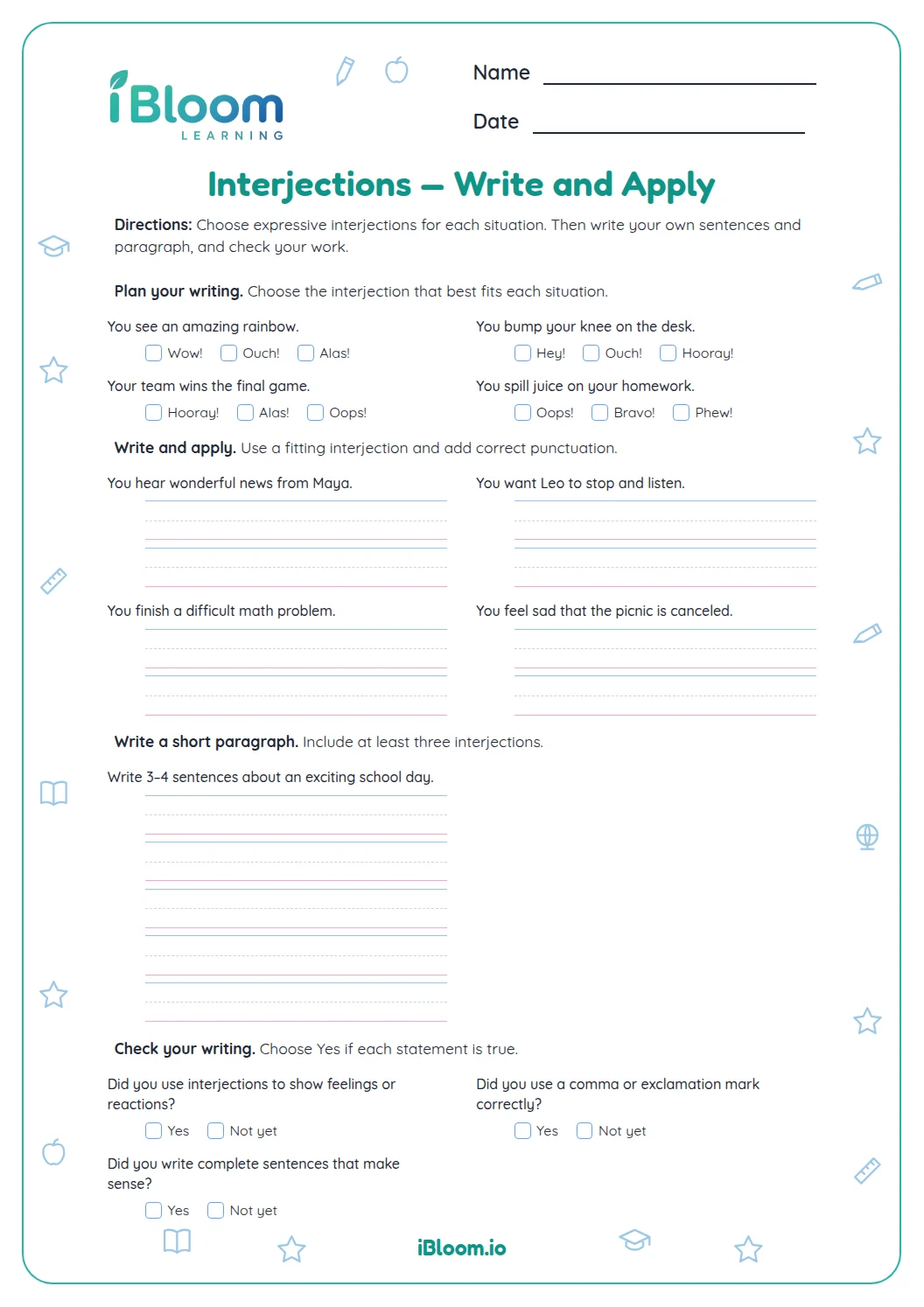
This Grade 5 worksheet offers 16 interjection questions. Children choose reactions that fit a situation, identify what an interjection expresses, check punctuation, and explain how words work in context. The answer key includes the expected choices and sample written responses.
Aligned to L.5.1.a
What is an interjection?
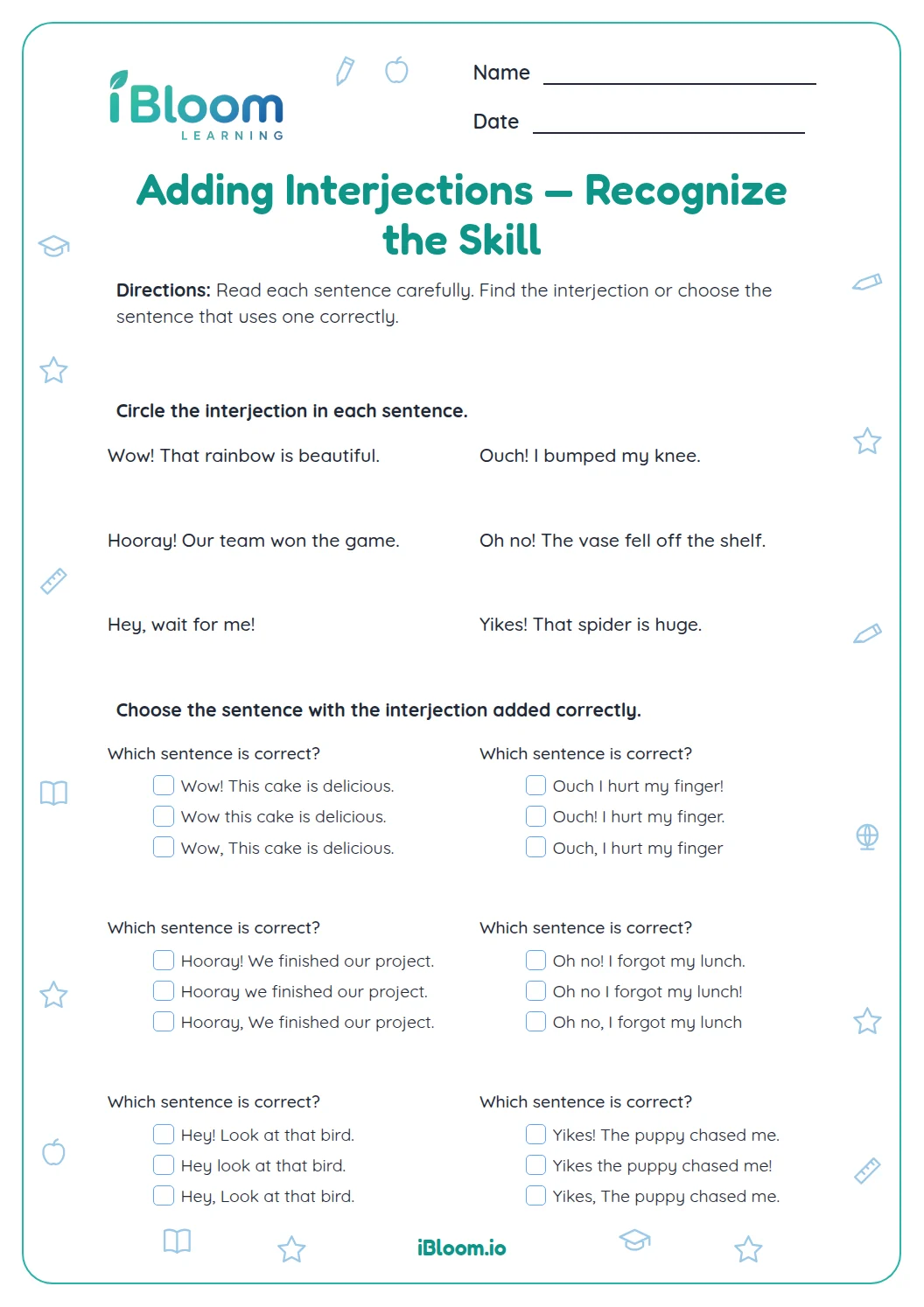
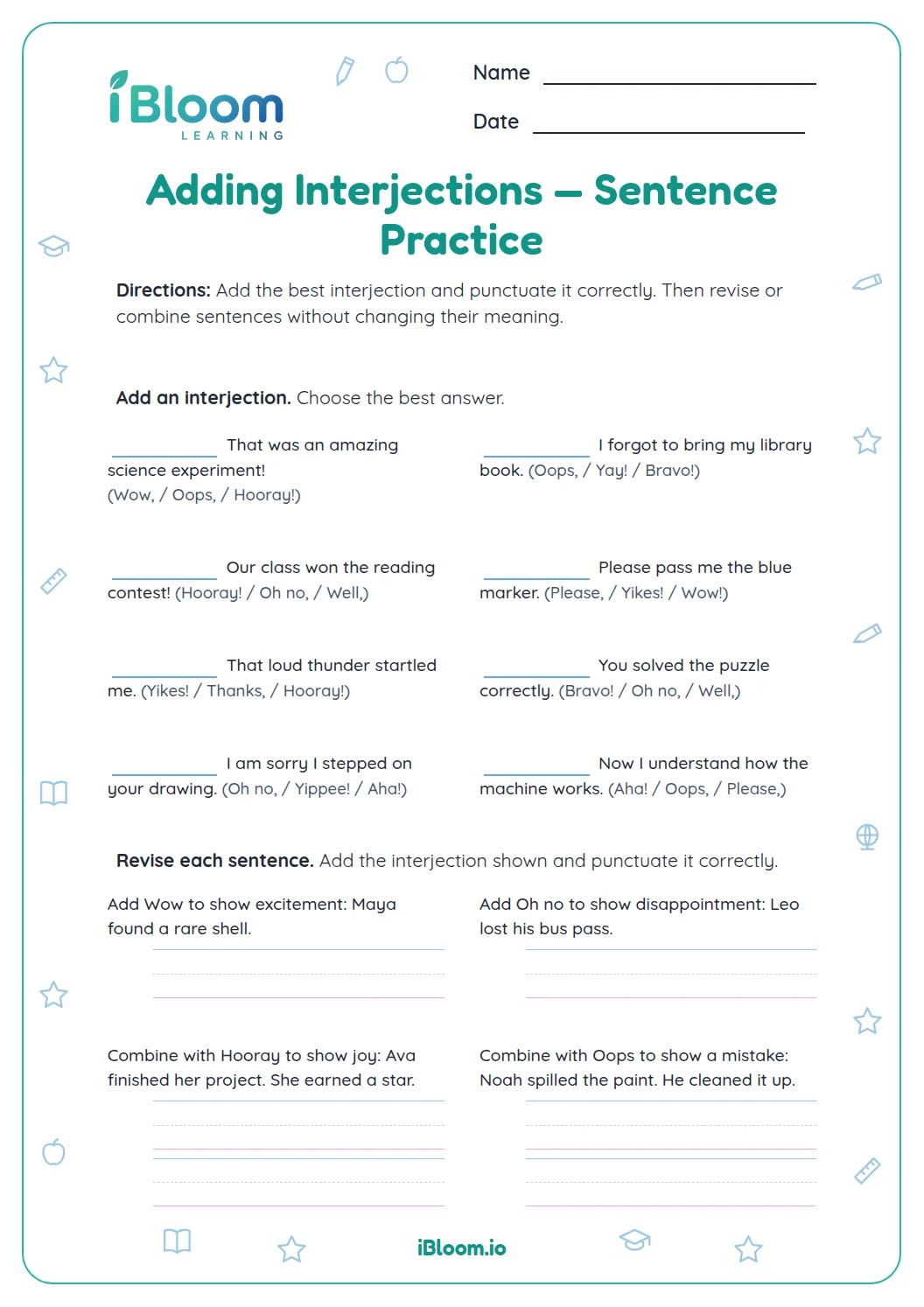
An interjection is a word or short phrase that expresses a reaction or feeling. “Oops,” “Wow” and “Hooray” signal different responses. In a sentence, the surrounding words and punctuation help show how the interjection is being used.
- 1Question 1: ___, I left my folder at home!
- 2“Oops” fits because it signals a small mistake: “Oops, I left my folder at home!”
How is an interjection punctuated?
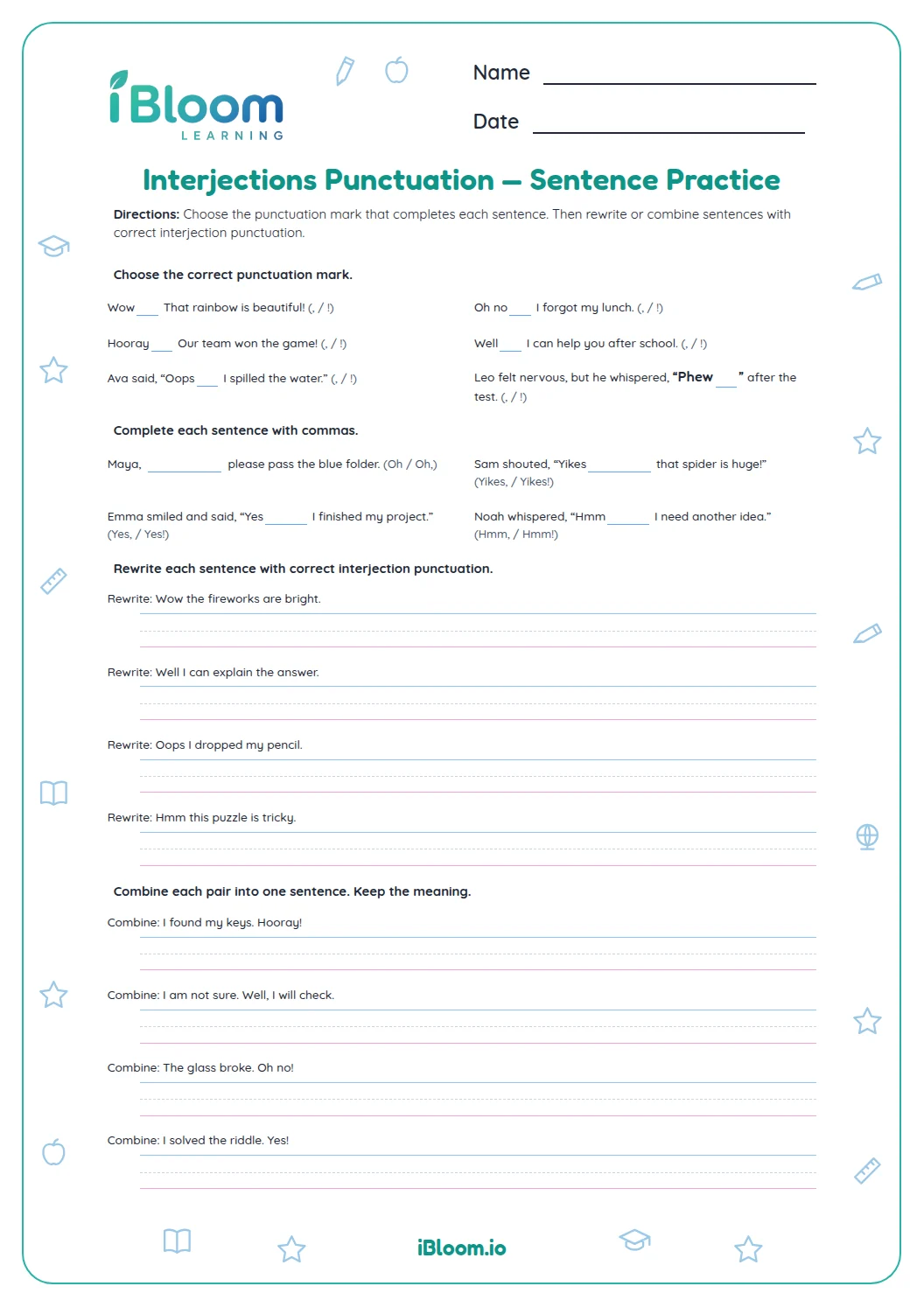
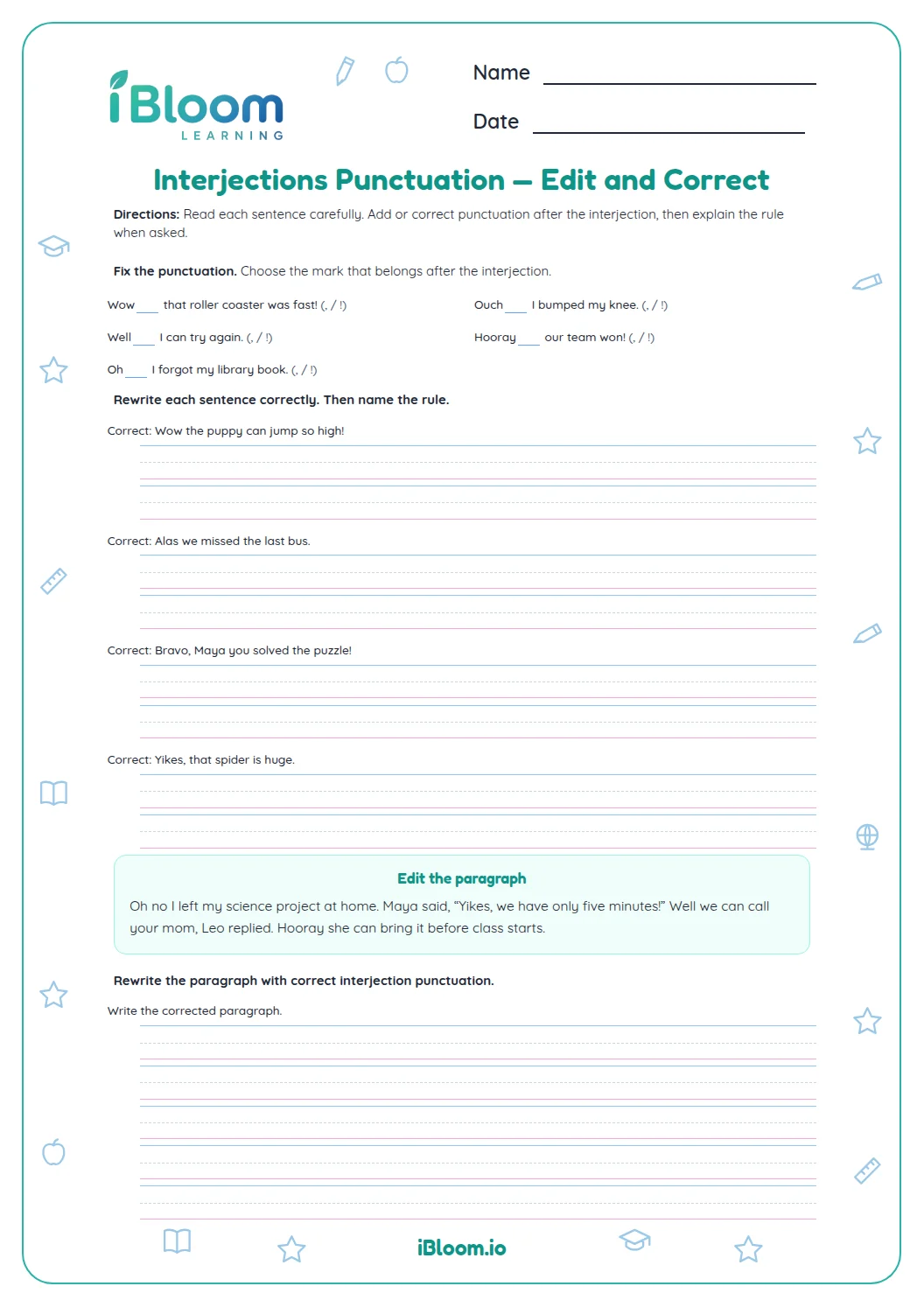
A short interjection may take an exclamation point when the feeling is strong, as in “Wow!” It can also be followed by a comma when the sentence continues: “Well, I can explain my answer.” Read the whole sentence to choose punctuation that matches the tone.
Can the same word have different jobs?
Yes. A word such as “well” or “like” depends on its sentence. “Well, let us check” introduces a response; “I like the library” uses like as a verb. Check what the word does instead of labeling it from spelling alone.
How to use this worksheet
- 1Read the whole sentence and identify the situation or feeling.
- 2Choose an interjection that matches the context.
- 3Check whether the reaction needs a comma or stronger punctuation.
- 4For function questions, ask what job the word does in the sentence.
- 5Use the key to compare written responses with the sample.
Common mistakes and quick fixes
The mistake
Choosing an interjection that does not match the event.
The fix
Name the feeling first, then select the word that expresses it.
The mistake
Adding an exclamation point to every interjection.
The fix
Let the sentence’s tone guide punctuation; a continuing sentence can use a comma.
The mistake
Calling every use of “well” or “like” an interjection.
The fix
Read the full sentence and identify whether the word expresses a reaction or does another job.
Common Core alignment
The questions identify interjections and their function in sentences.
Explain how interjections function in particular sentences.
On this sheet: Children recognize interjections, explain their meaning and distinguish their function in context.
Show the official wordingHide the official wording
Explain the function of conjunctions, prepositions, and interjections in general and their function in particular sentences.
What to practice next
Make more practice
Further reading
Questions parents and teachers ask
What does an interjection do?
An interjection expresses a reaction or feeling. “Oops” fits a mistake, while “Hooray” fits a celebration; the sentence context helps identify the intended meaning. Context helps distinguish a cheerful reaction from surprise, pain, regret, or a request for attention. The surrounding sentence clarifies the speaker’s reaction.
How many questions are in the review?
There are 16 questions. They include context choices, punctuation and function questions, and short written responses. The examples use common interjections in complete sentences so meaning and punctuation can be reviewed together. The surrounding sentence clarifies the speaker’s reaction. The surrounding sentence clarifies the speaker’s reaction.
Does punctuation matter for interjections?
Yes. An interjection may stand with an exclamation point or continue into a sentence with a comma. The sentence’s tone and structure guide the choice. For the writing items, another answer can work if it matches the requested feeling and uses suitable punctuation.
Can a word be an interjection in one sentence and another part of speech in another?
Yes. Words such as “well” and “like” can serve different functions. For example, “Well, let us check” introduces a response, while “I like the library” uses like as a verb. The word-function question asks readers to use the entire sentence rather than classify a word by itself.
How should I check the written answers?
Compare the sentence with the key’s sample. For an open response, accept another interjection if it expresses the requested feeling and the sentence punctuation is correct. The answer key gives the target choice or a sample response for each short written item.