





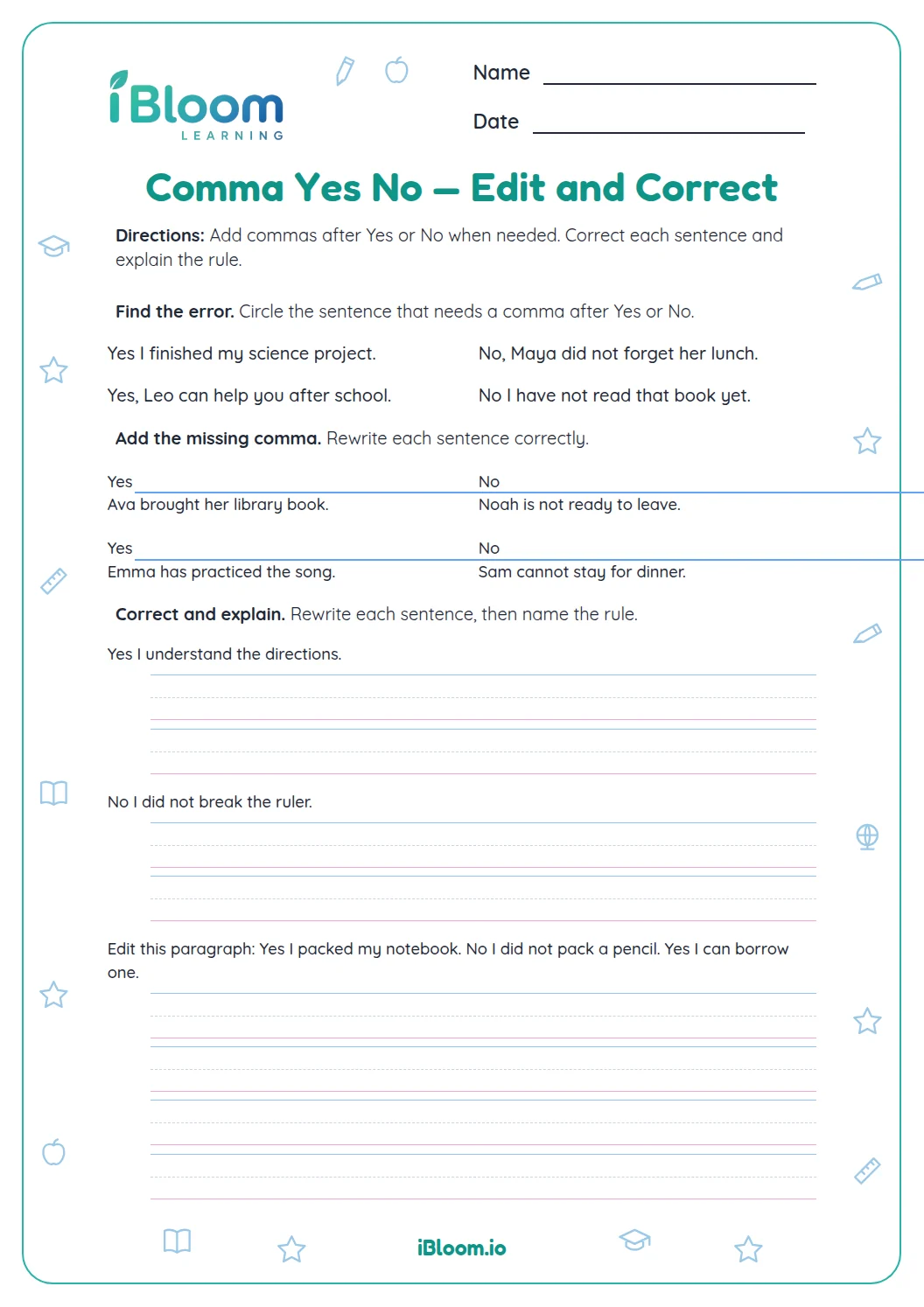
About this worksheet
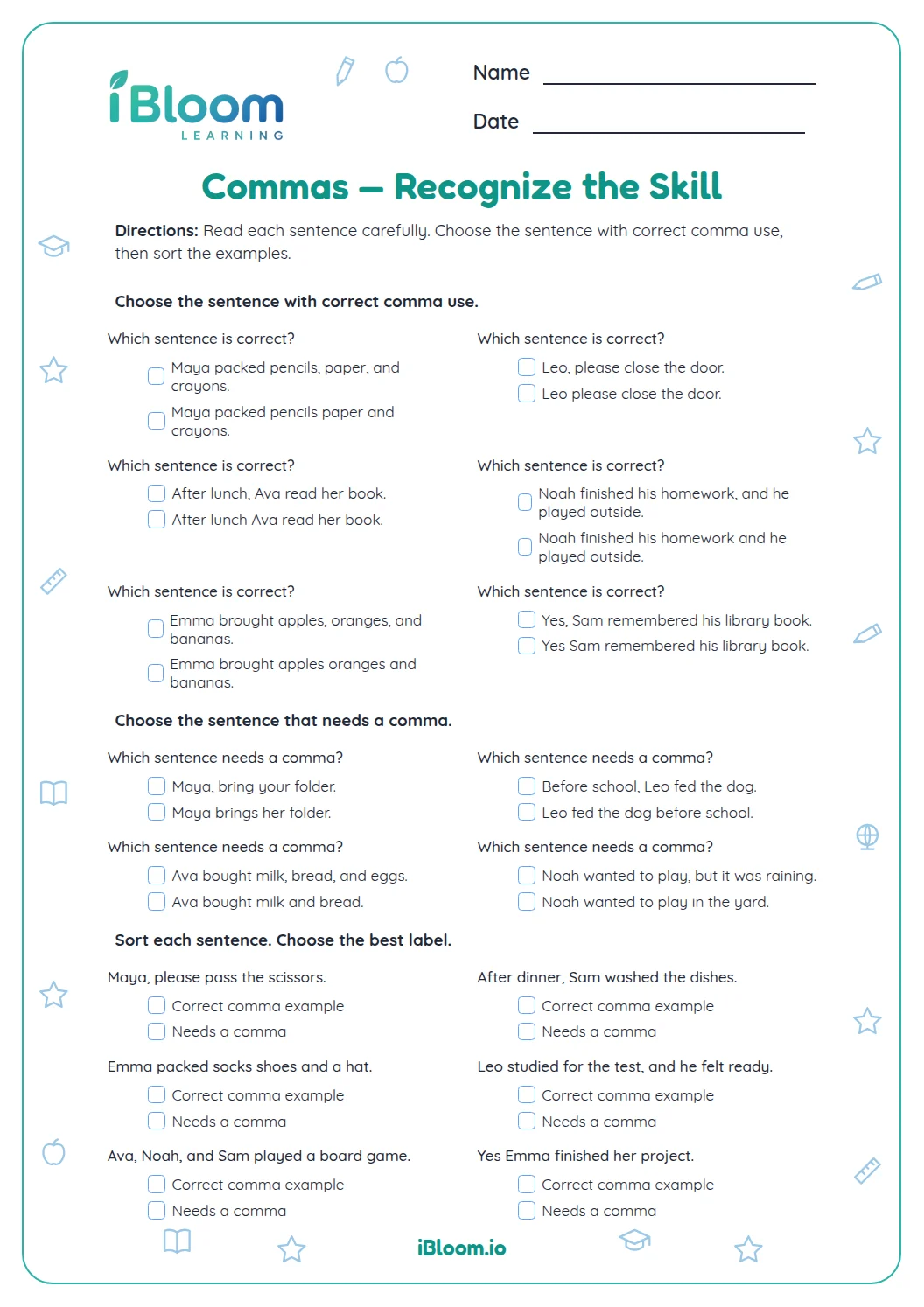
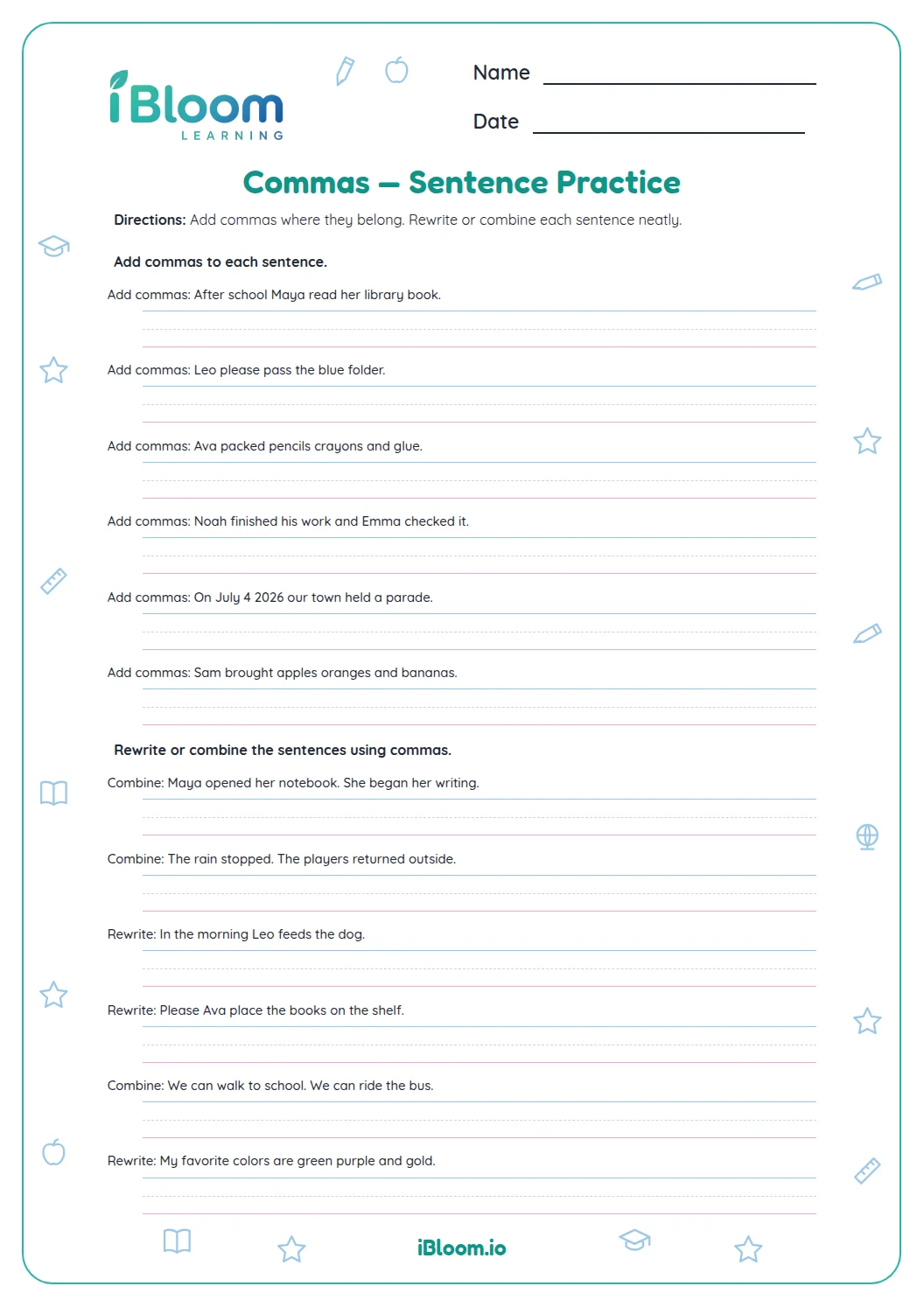
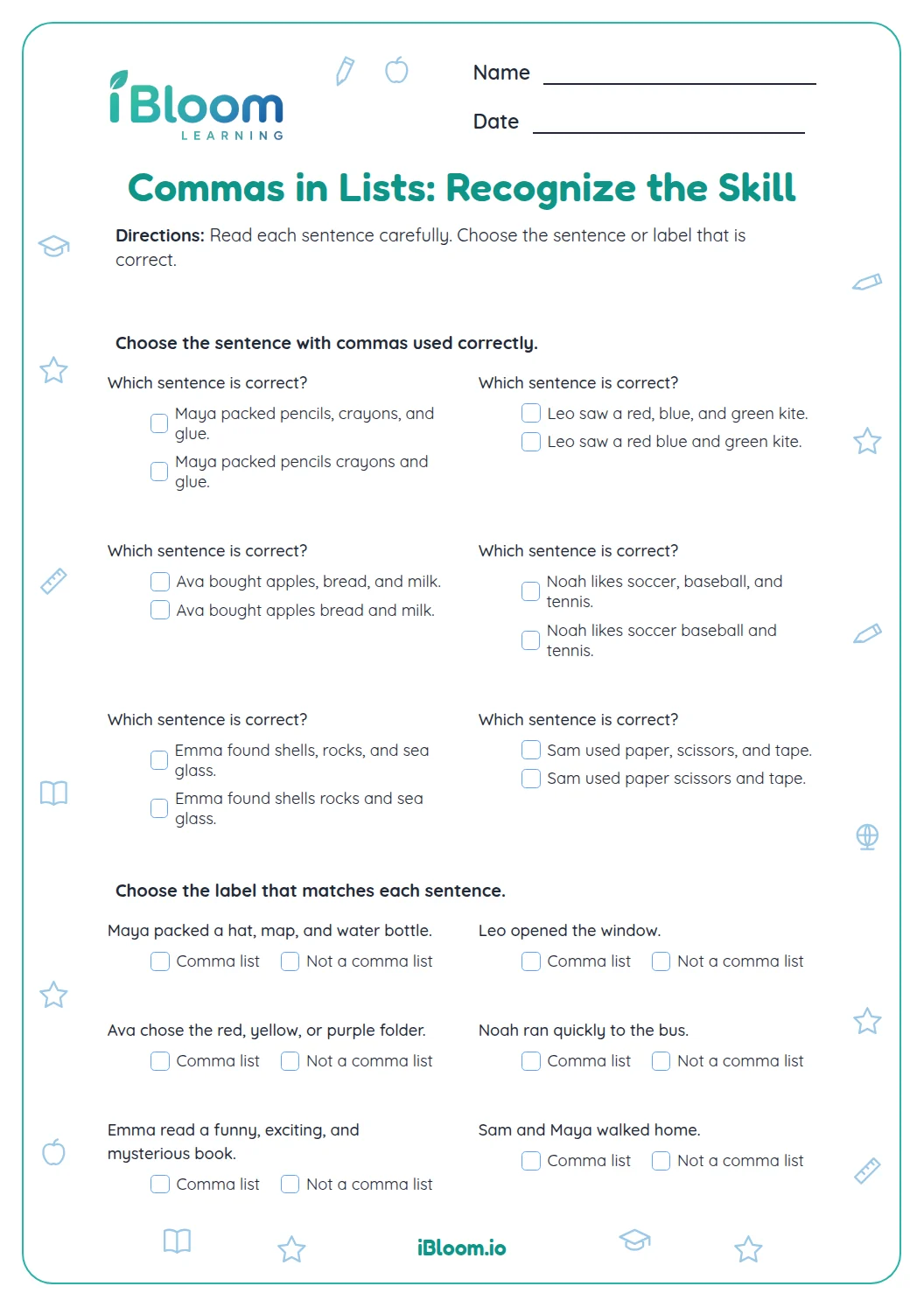
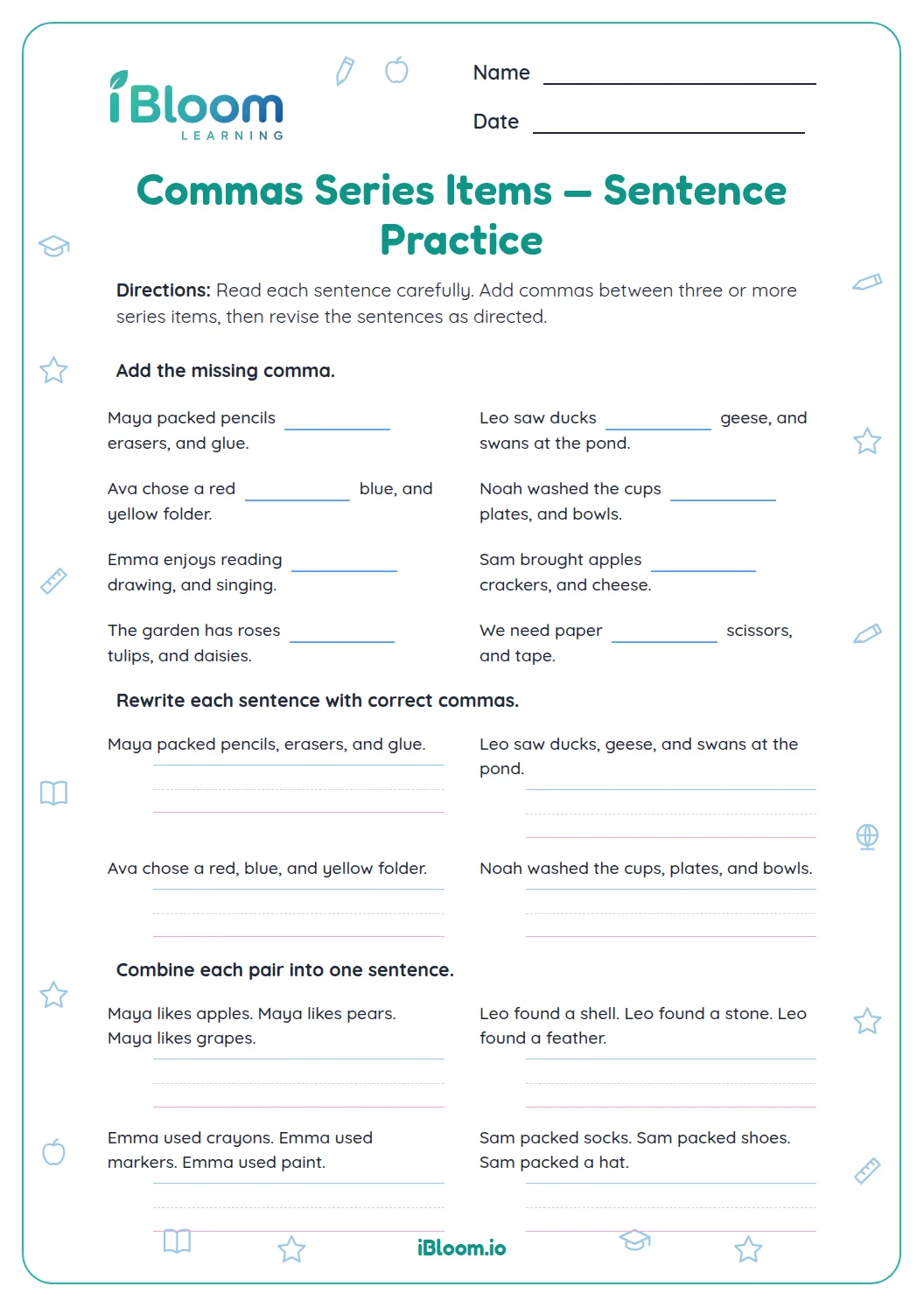
Students identify the person being addressed, choose correctly punctuated sentences, and complete direct-address punctuation in varied positions. The 15 questions place names and groups at the beginning, middle, and end.
What is direct address?
Direct address happens when a speaker names the person or group being spoken to. Set that name off with a comma: “Maya, please pass the map.” If the name comes at the end, place the comma before it: “I saved you a seat, Priya.”
- 1Maya is the person being spoken to.
- 2Correct punctuation: Maya, please pass the map.
Where do commas go around a name?
Use a comma at each edge of the name when it interrupts the sentence: “Yes, Dad, I finished.” Use one comma when the name begins or ends the sentence. Read the words aloud and find the name that addresses the listener.
How can a student check an edited sentence?
Ask whether the sentence would still make sense if the name were removed. If it names the listener, set it off with a comma or commas. A name that merely tells who did something is part of the sentence and does not need a direct-address comma.
How to use this worksheet
- 1Read the sentence and locate the person being spoken to.
- 2Check whether the name starts, ends, or interrupts the sentence.
- 3Put a comma before a name at the end.
- 4Use commas on both sides of a name in the middle.
- 5Read the sentence aloud to check that the commas separate the address.
Common mistakes and quick fixes
The mistake
Adding a comma after the name at the end
The fix
Place the comma before the name: “Could you help me, Rosa?”
The mistake
Treating every person’s name as direct address
The fix
Ask if the speaker is talking to that person. “Rosa found the key” names the subject; it does not address Rosa.
The mistake
Forgetting the second comma for a middle name
The fix
Use a comma on each side: “Yes, Dad, I finished.”
What to practice next
Make more practice
Questions parents and teachers ask
What is direct address?
Direct address names the person or group a speaker is talking to. The name is set off with a comma, as in “Maya, please pass the map.” When the name interrupts the sentence, use a comma before and after it.
Does a name always need a comma?
No. A name used as the subject does not signal direct address: “Rosa found the key.” A name used to speak to Rosa does: “Rosa, please find the key.” Ask whether the sentence addresses the person or tells something about them.
Why are there two commas in “Yes, Dad, I finished”?
“Dad” is the person being spoken to, and it appears inside the sentence. The comma before and after the name show where that direct address begins and ends. “Yes” also takes its own comma under the punctuation convention practiced here.
What kinds of practice are on the page?
The 15 questions ask students to add commas in names at the beginning, middle, or end of a sentence and identify who is being addressed. The answer key lists the missing comma or name for every prompt, so the page is quick to check.
How can I help without giving the answer?
Read the sentence aloud with the child and ask who is being spoken to. Have the child point to that person’s name, then decide whether it comes at the beginning, end, or middle. The comma placement follows the name’s position.