





About this worksheet
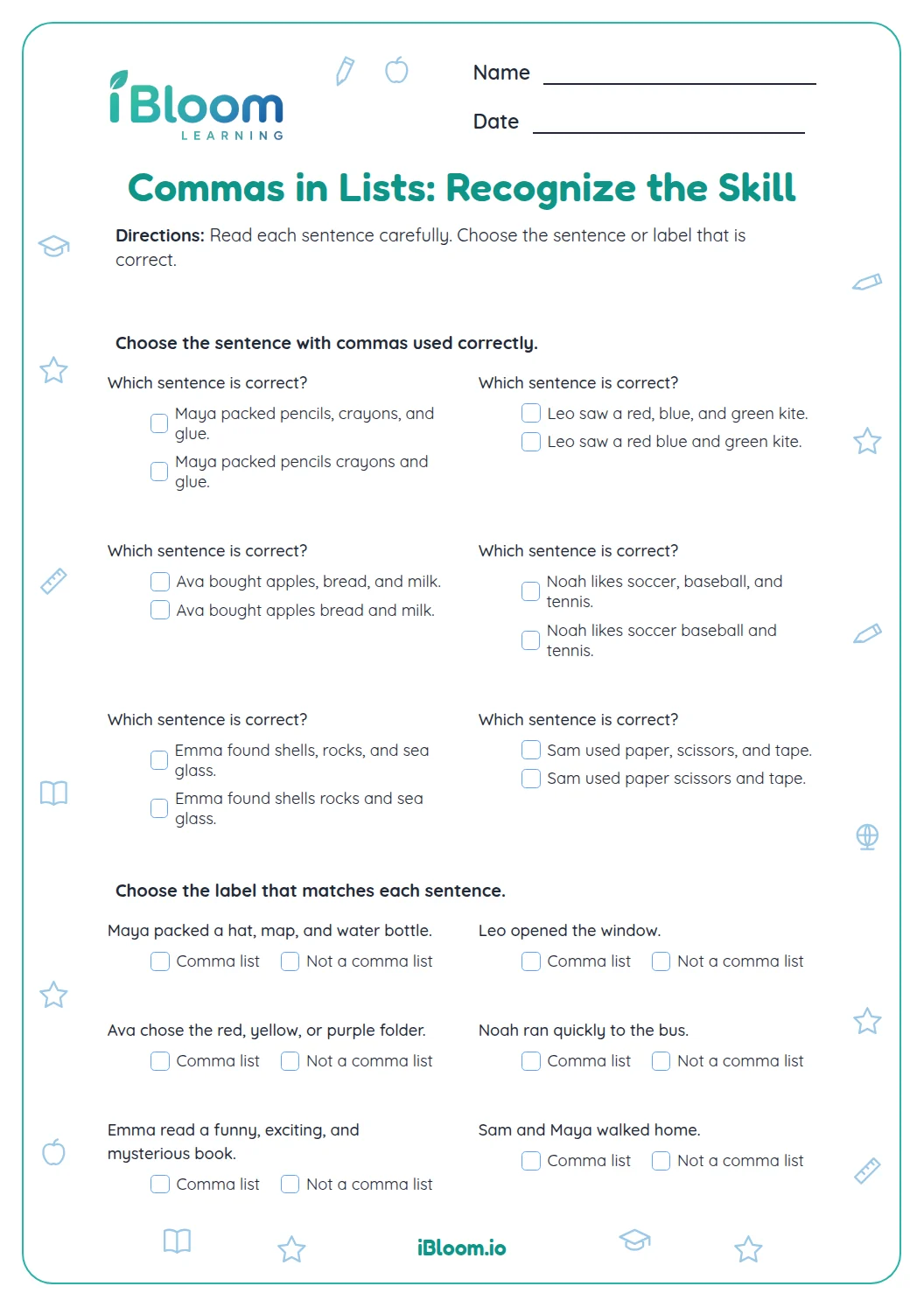
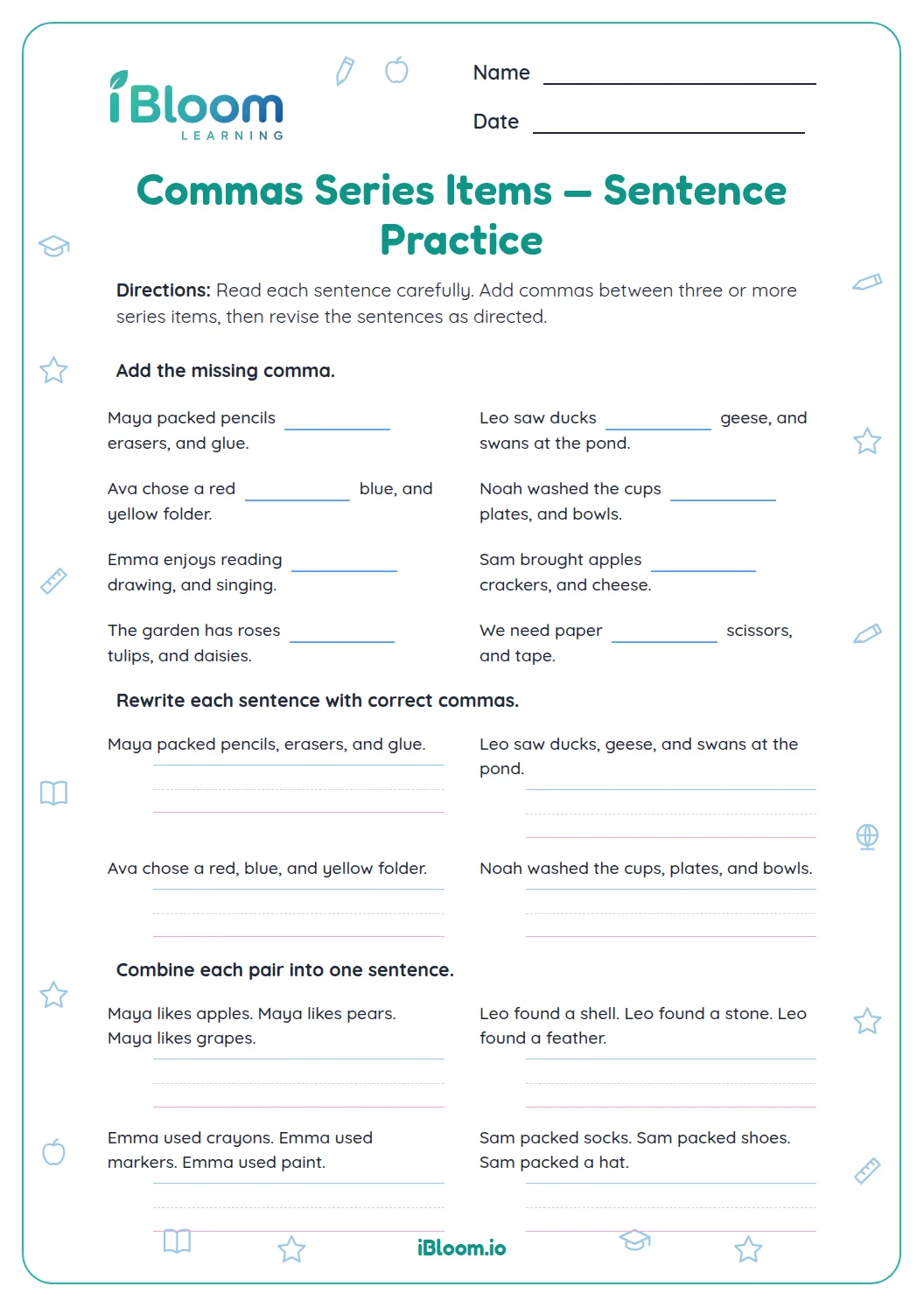
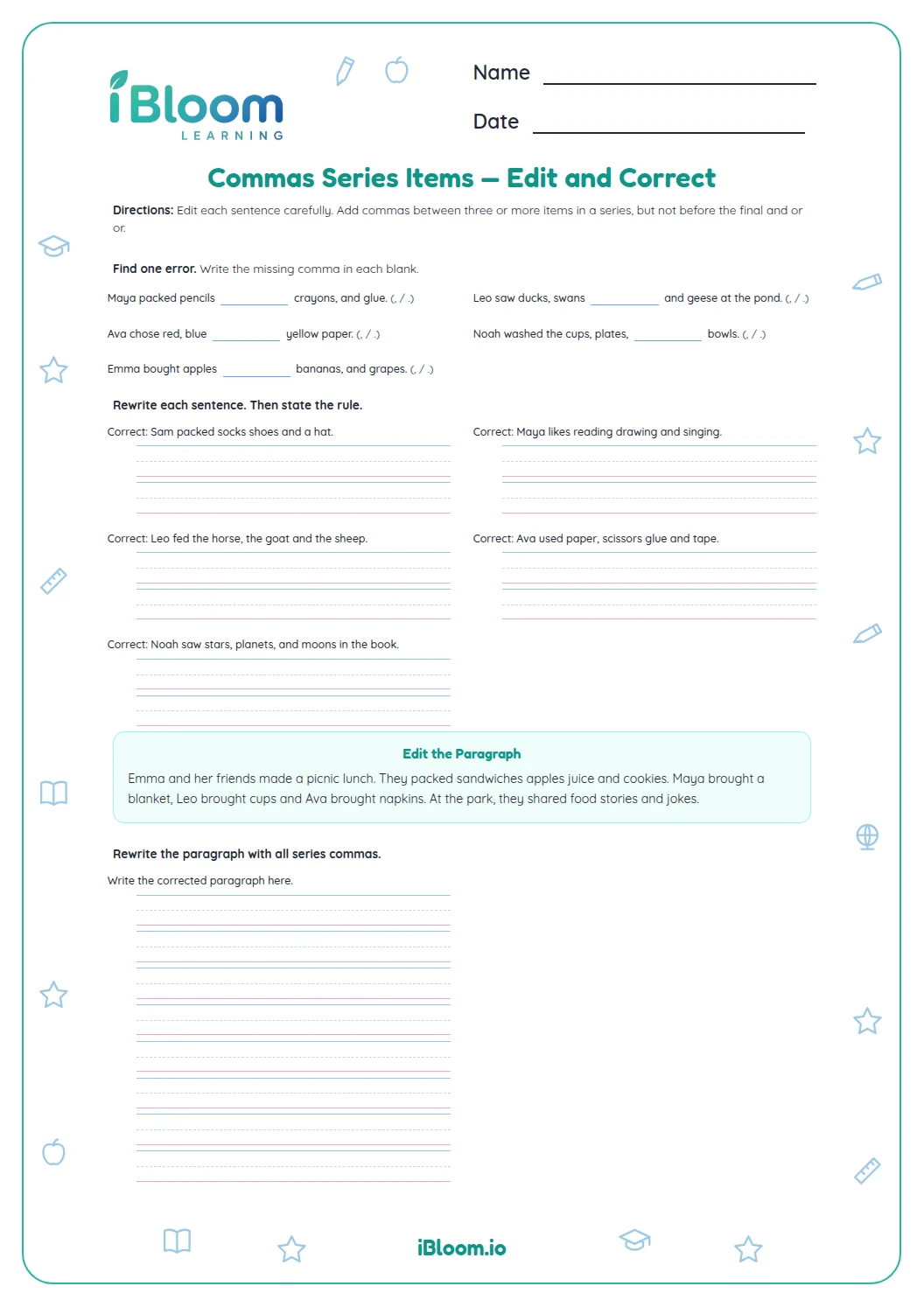
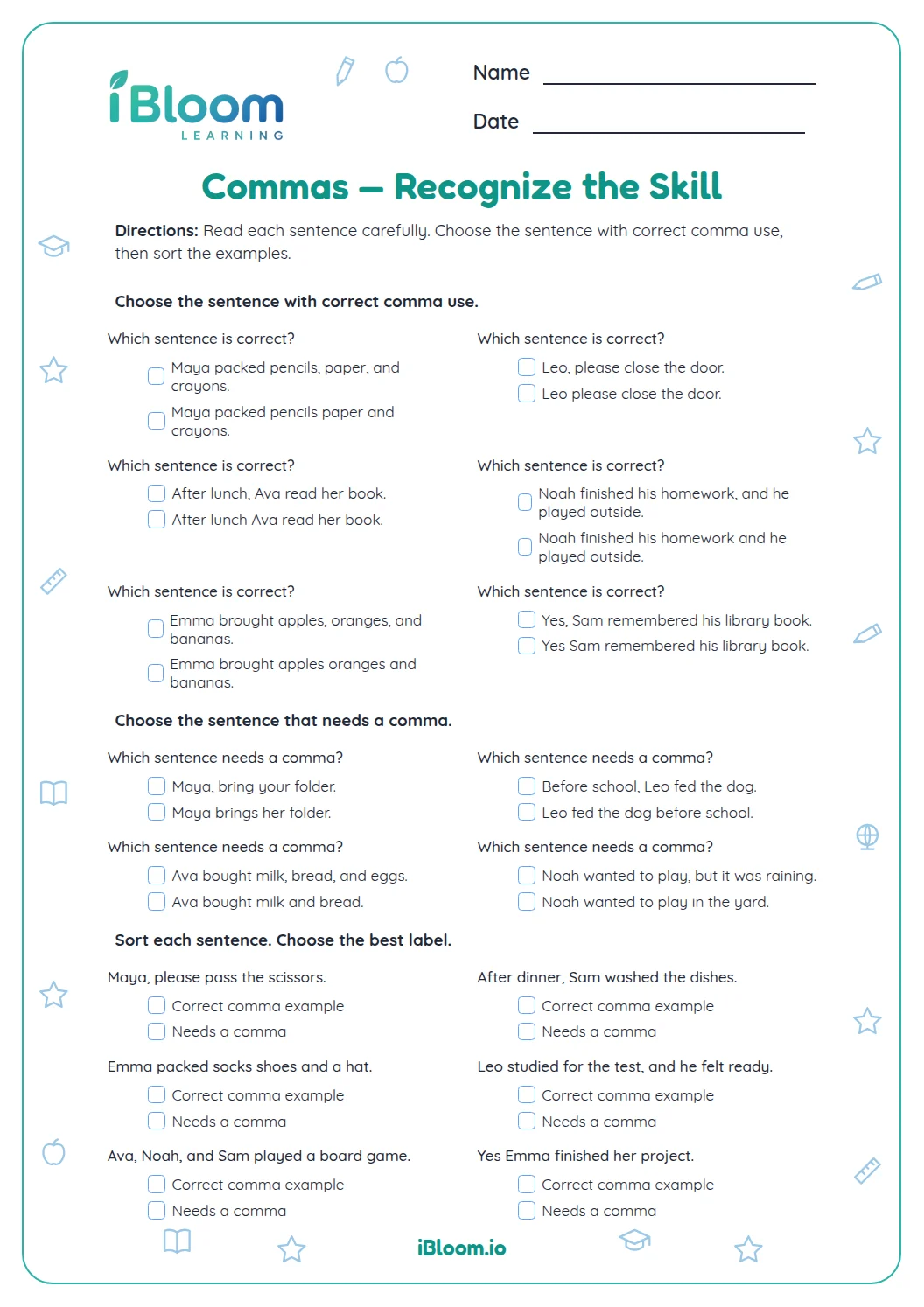
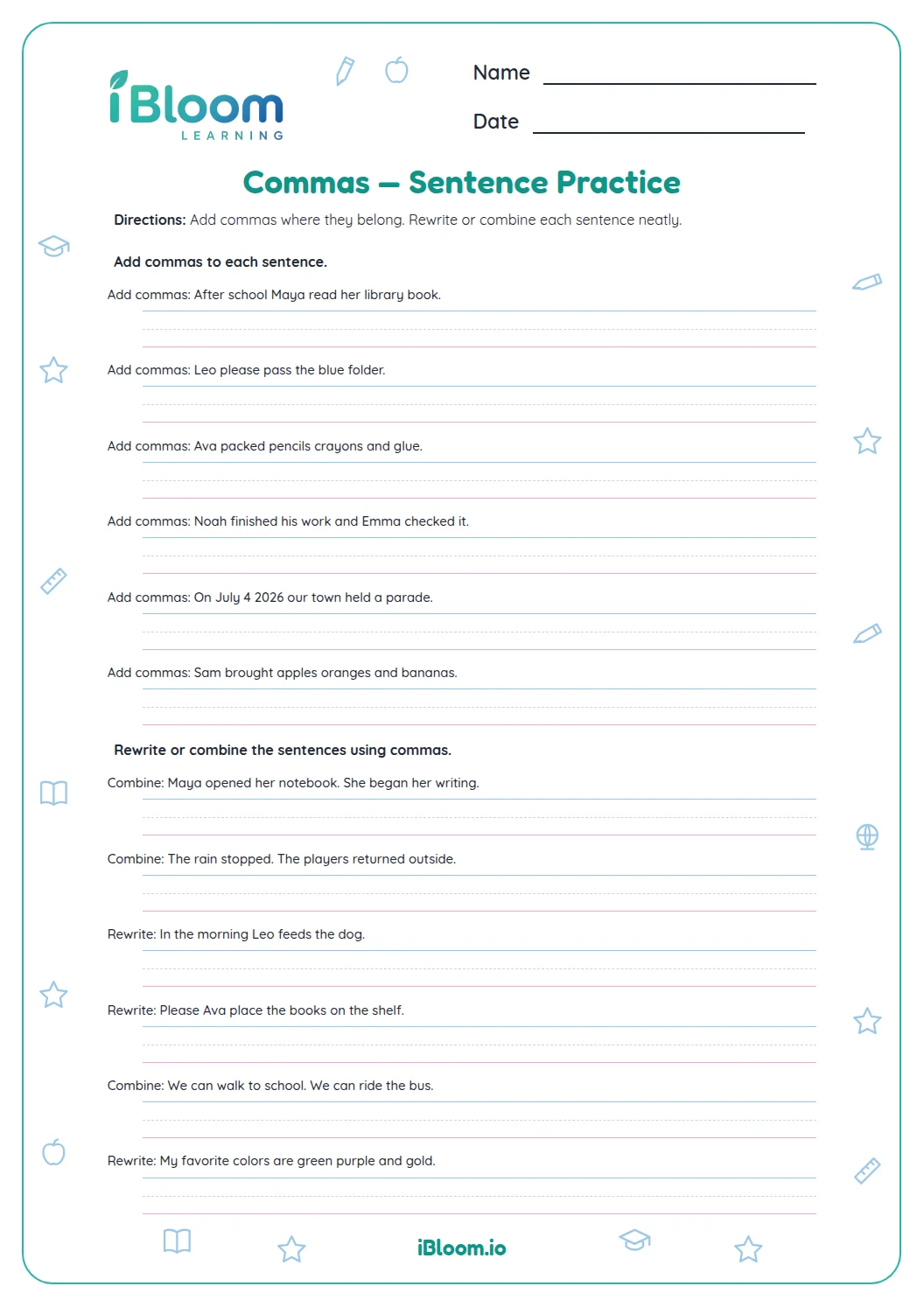
This Grade 5 printable contains 15 questions about commas in a series. Students first recognize correct punctuation, then add commas and rewrite full sentences. Every list has three items, including the comma before and or or. The worksheet practices CCSS L.5.2.a and includes a separate answer key.
Aligned to CCSS L.5.2.a
What is the key idea for this skill?
A comma separates each item in a list of three or more. In “socks, shirts, and shoes,” commas come between each item, including before and.
- 1We packed socks, shirts, and shoes.
How can you check your answer?
Check that the comma separates list items, not a subject and verb.
- 16) Mia packed a map, snacks, and a jacket.
What should you look for as you work?
Find the items before adding punctuation. Put commas between the items and before the final conjunction.
- 111) Ava drew a house, a tree, and a sun.
How to use this worksheet
- 1Identify the three items.
- 2Choose the sentence with commas between all items.
- 3Add commas where the list items meet.
- 4Rewrite each sentence with its commas.
- 5Check each answer against the key.
Common mistakes and quick fixes
The mistake
Leaving out the comma before and.
The fix
Check each space between the three list items.
The mistake
Putting a comma between a subject and verb.
The fix
Keep the subject and verb together; punctuate only the series.
The mistake
Using commas between words that are not list items.
The fix
Name the separate items before adding punctuation.
Common Core alignment
This worksheet practices CCSS L.5.2.a through its questions and examples.
Use commas to separate three or more items in a series.
On this sheet: This sheet asks students to identify and add commas in series.
Show the official wordingHide the official wording
Use punctuation to separate items in a series.*
What to practice next
Further reading
Questions parents and teachers ask
How many questions are on the worksheet?
There are 15 questions in three parts. Students choose correctly punctuated lists, add missing commas, and rewrite complete sentences. Each practice item uses a three-item series, so the student can focus on where commas separate the items. The examples use the same skill throughout.
Does the comma go before and?
Yes, the examples use a comma before the final and or or in a three-item list. For example, “socks, shirts, and shoes” has a comma after socks and another after shirts. The worksheet asks students to recognize and supply that pattern.
What does the answer key include?
The separate answer key shows the correct sentence choices, the missing commas, and model rewrites. For rewritten sentences, a student’s capitalization and wording should match the prompt while the comma placement separates the three list items. The examples use the same skill throughout.
How can a student find where commas belong?
First name each item in the series. Then place a comma after each item except the last one, including the item before and or or. Reread the sentence to make sure commas have not split the subject from its verb.
Can this be used for independent practice?
Yes. The directions are printed on the page, and the questions progress from choosing examples to adding punctuation and rewriting. A student can complete the worksheet and then check each answer with the included key. The examples use the same skill throughout.