




About this worksheet
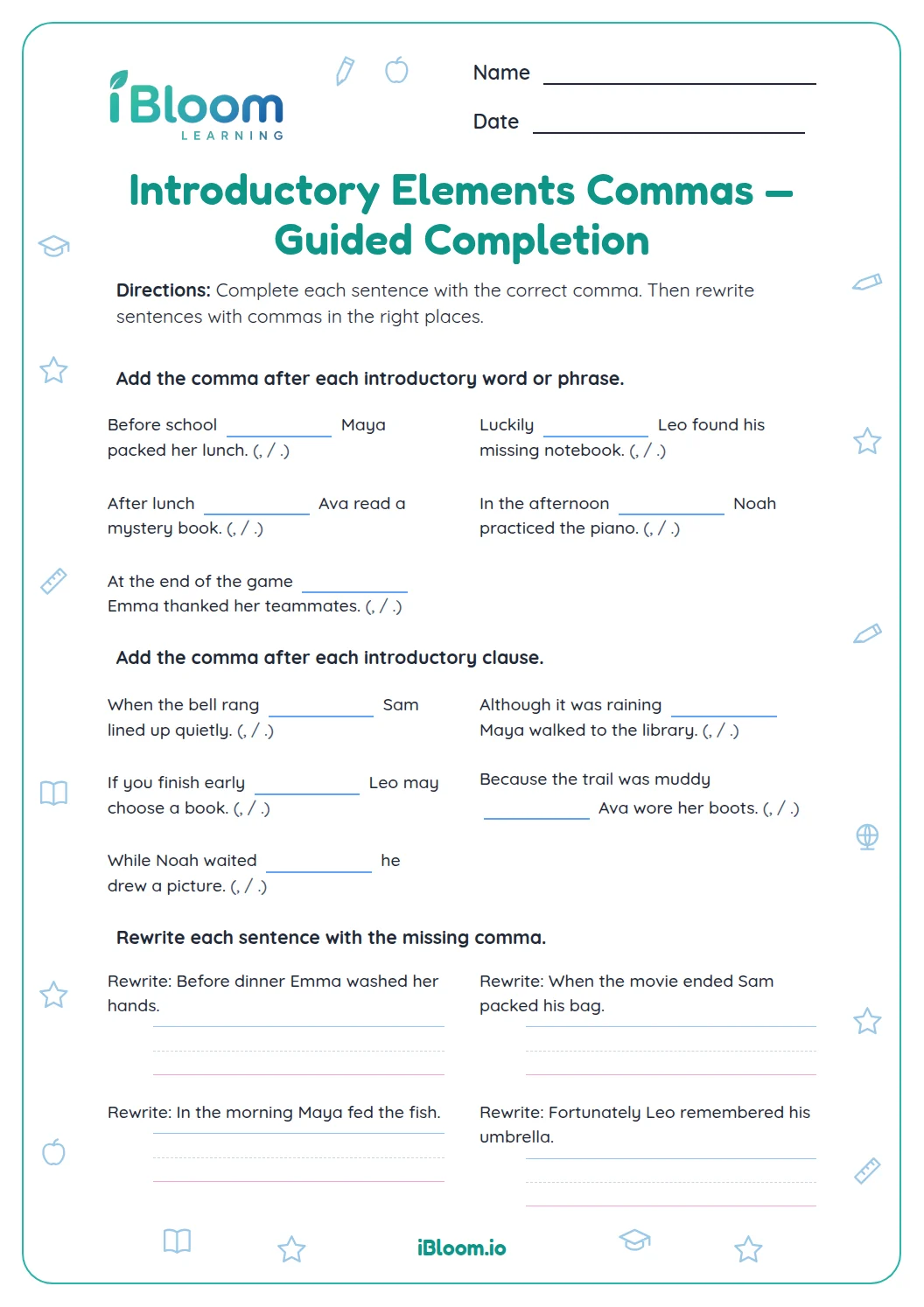
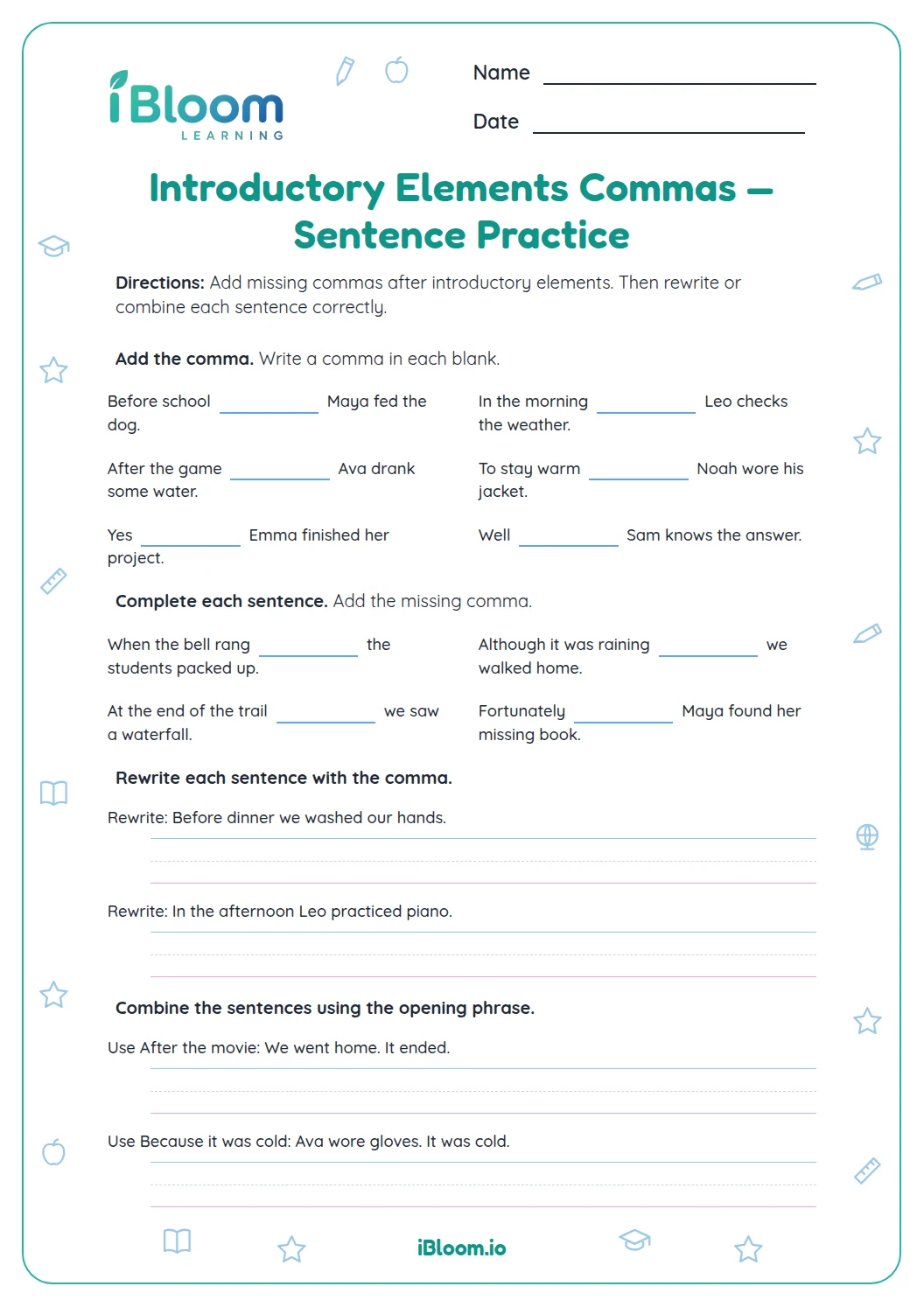
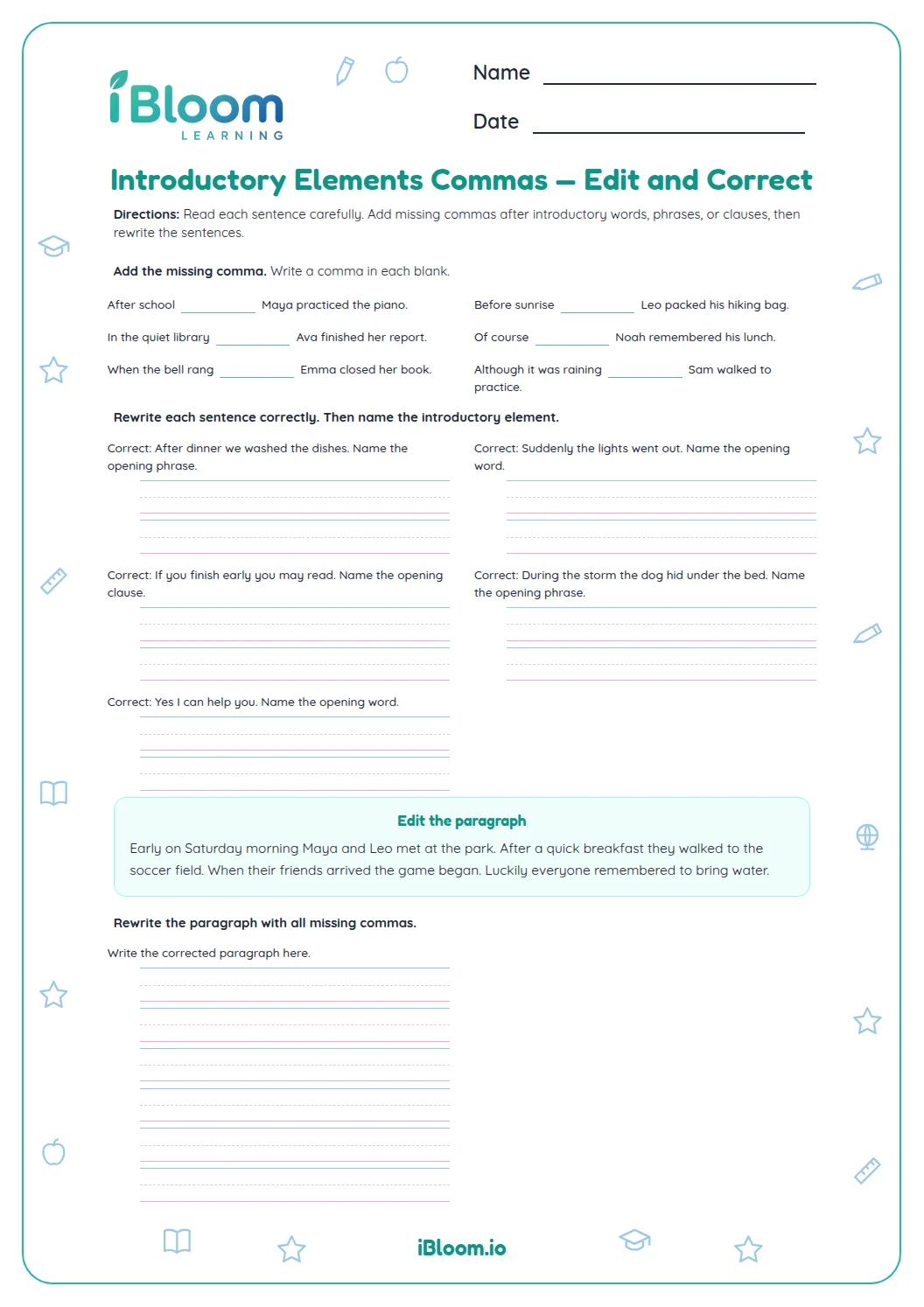
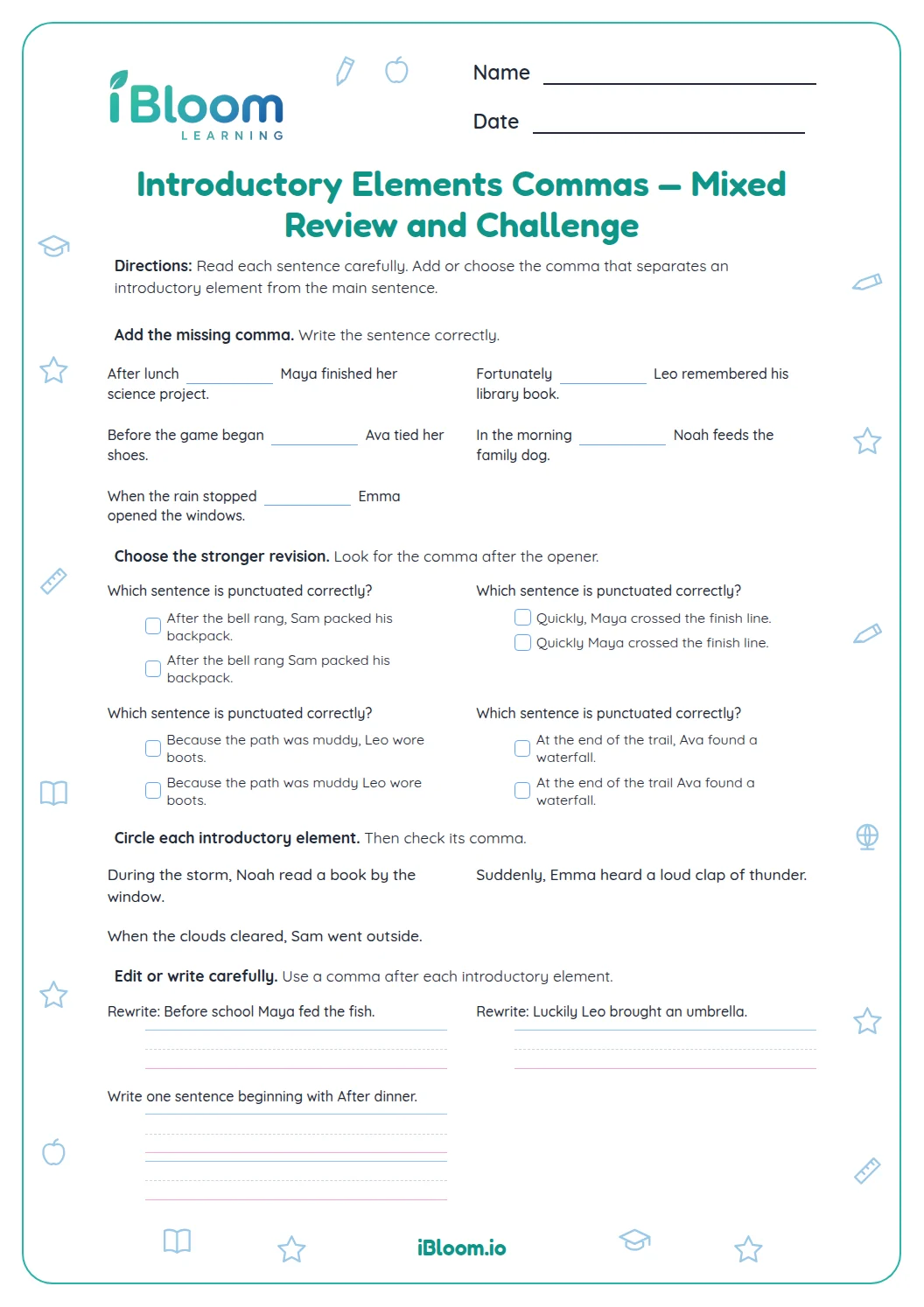
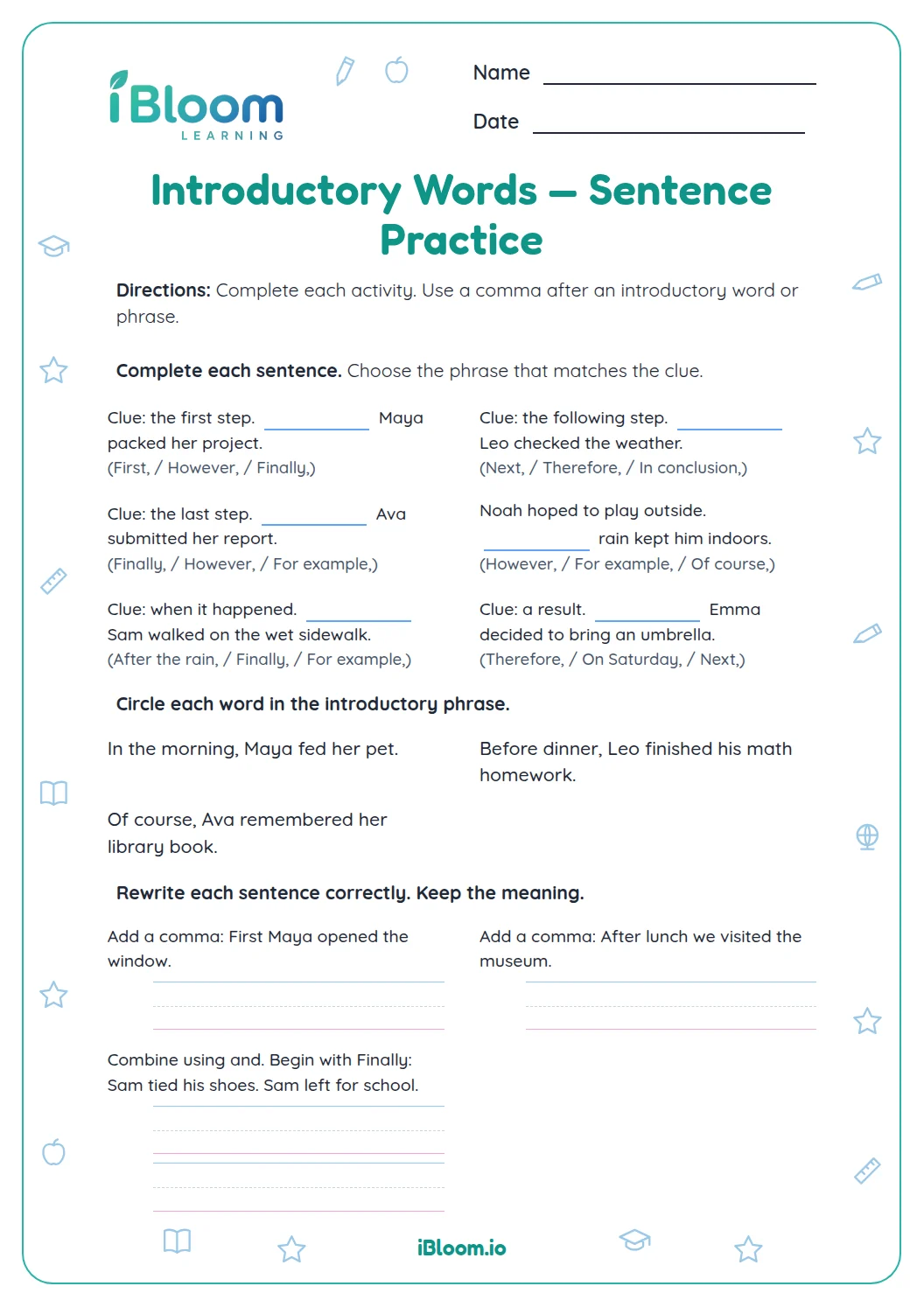
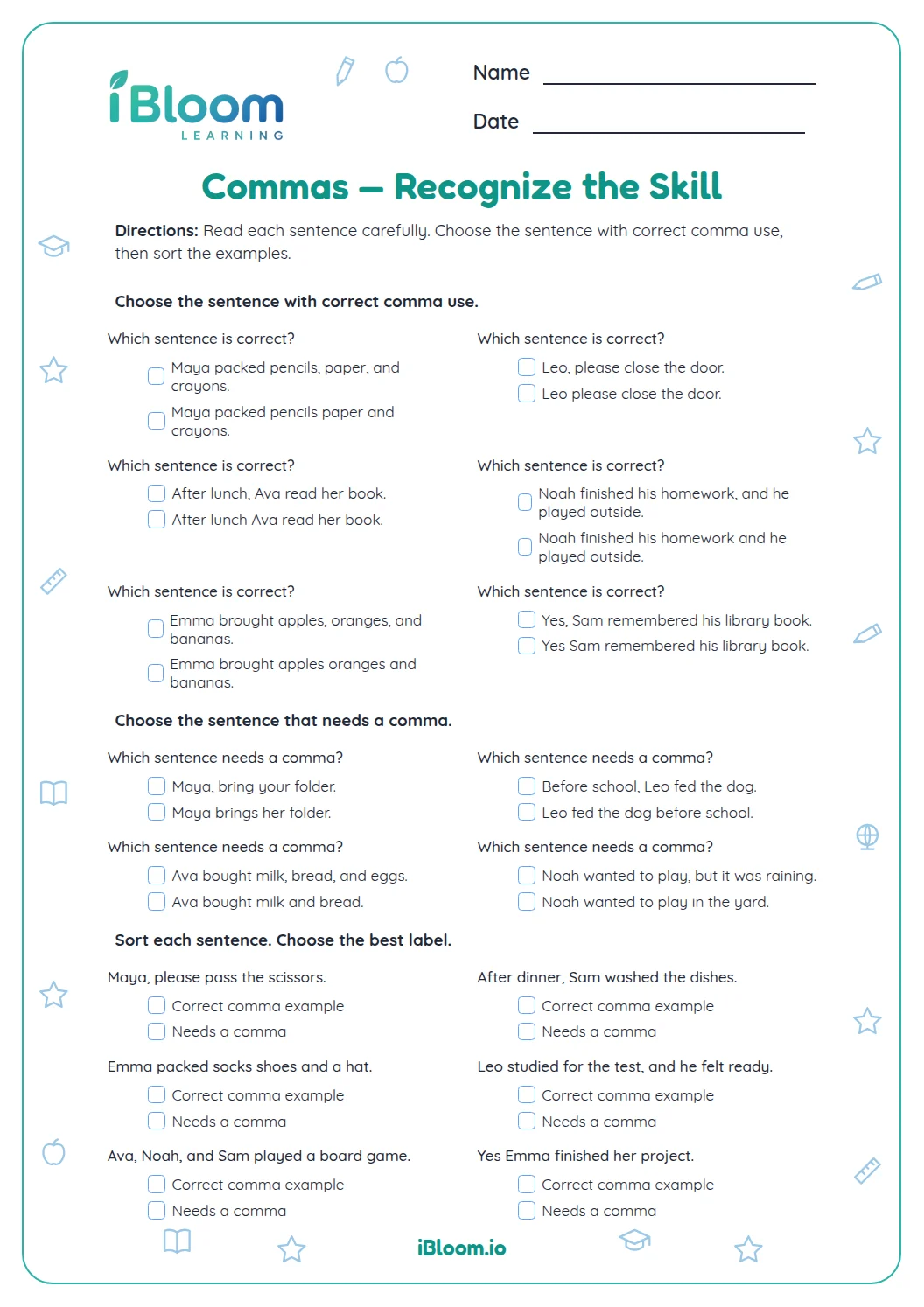
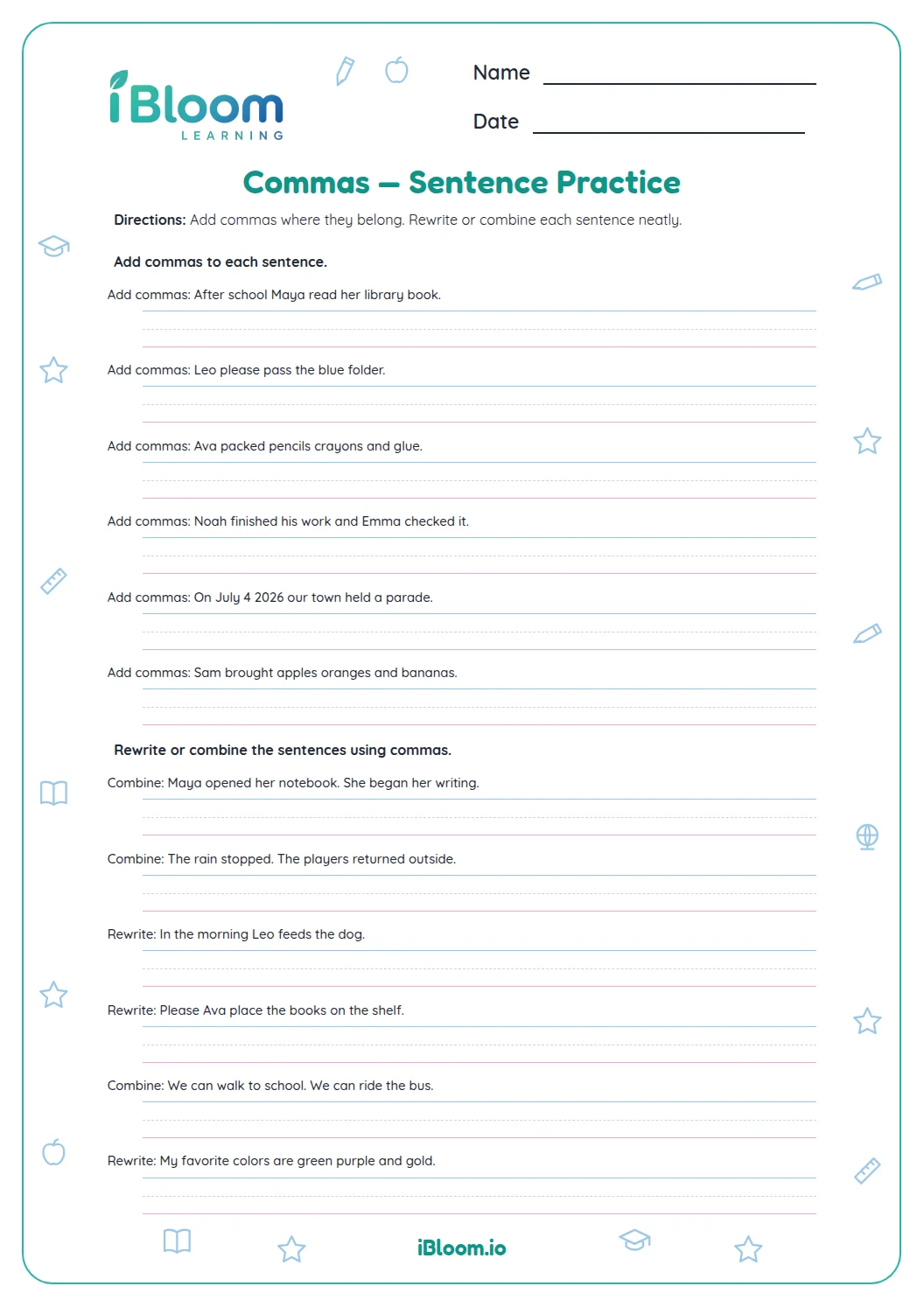
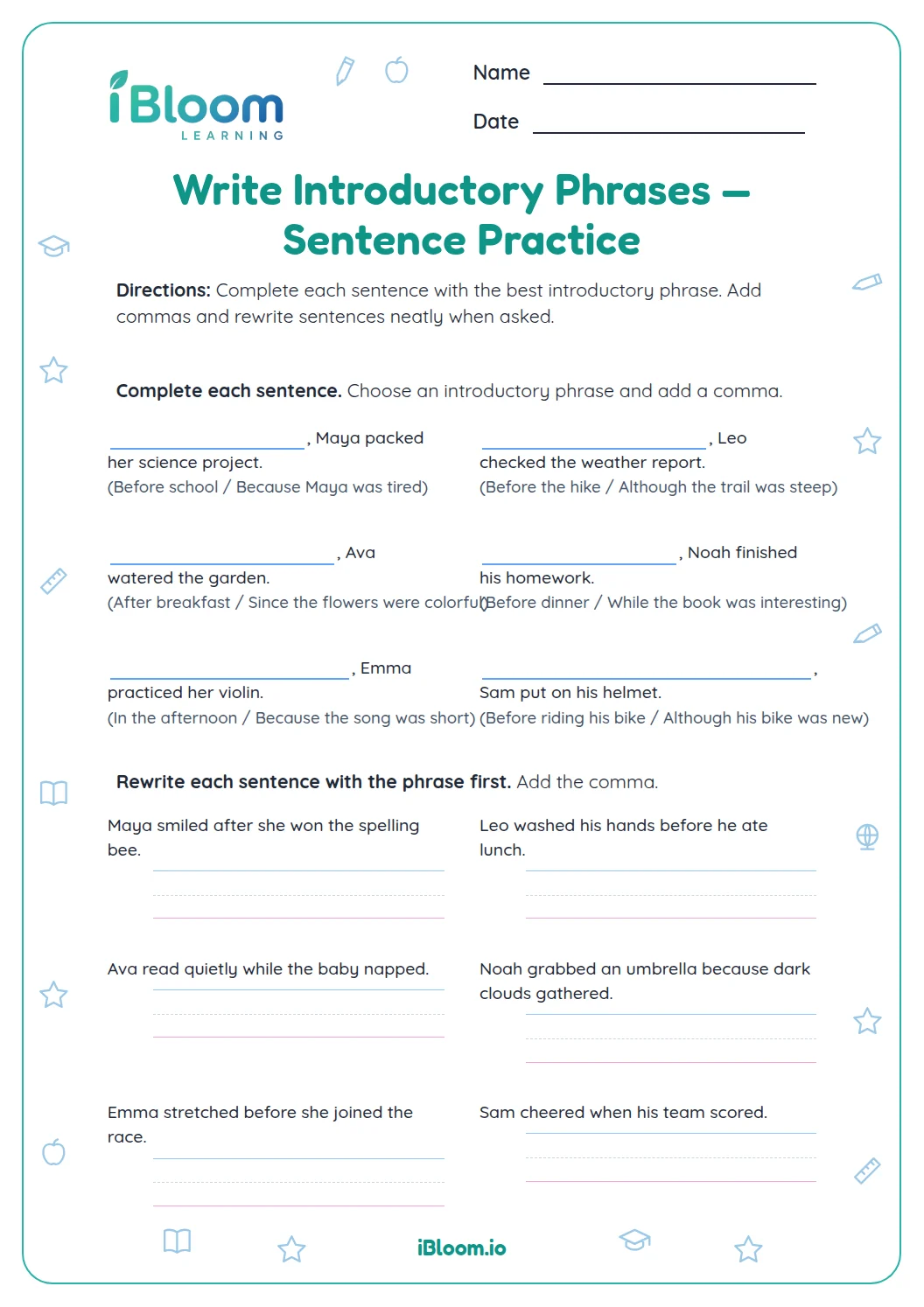
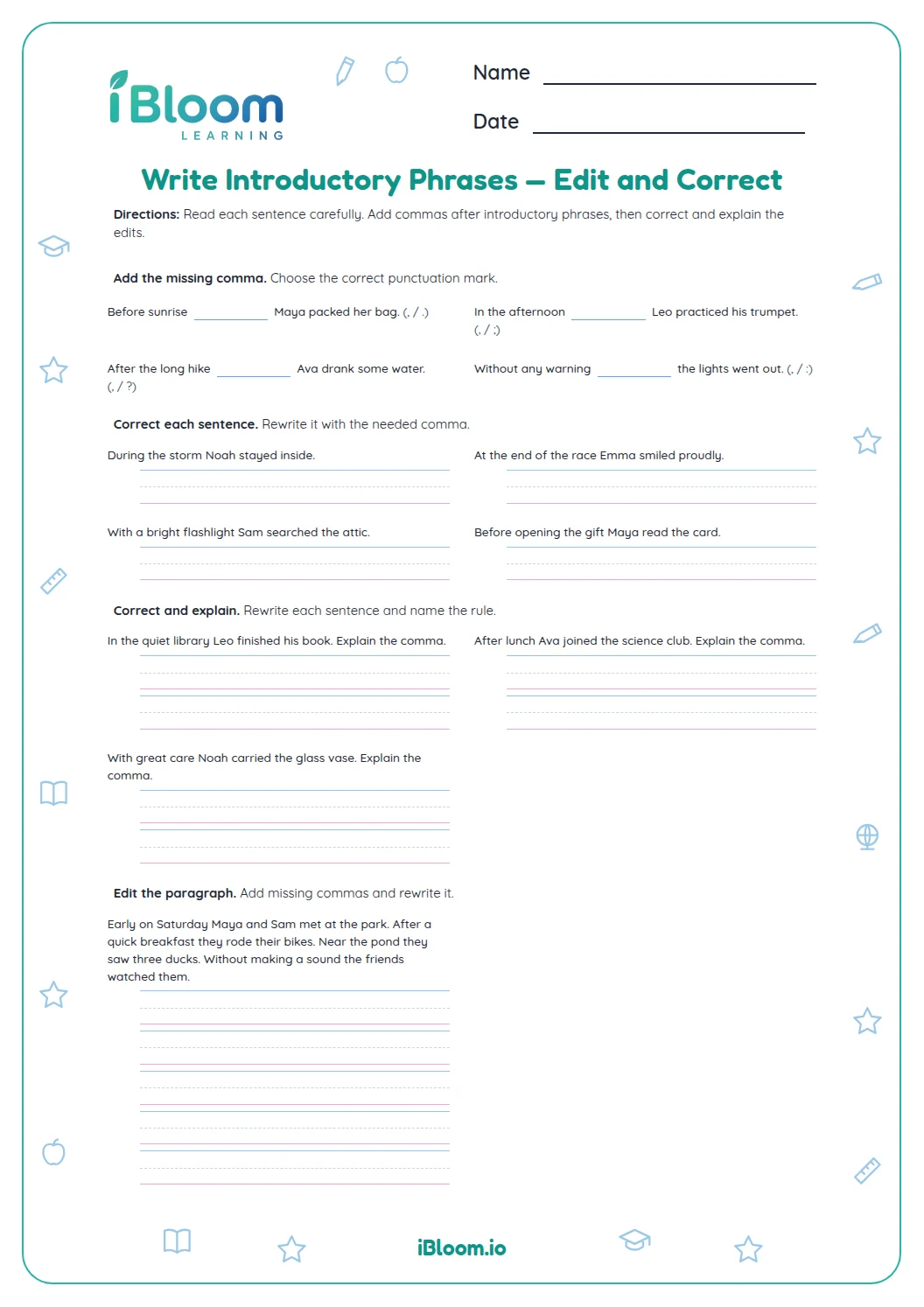
This Grade 5 printable gives 14 punctuation questions about commas after introductory elements. Children correct sentences, identify opening phrases, and distinguish examples from sentences that do not begin with an introductory element. It practices CCSS L.5.2.b and includes a separate answer key with sample responses.
Aligned to L.5.2.b
What is an introductory element?
An introductory element comes before the main clause and sets up the sentence. It may be a single word, a phrase, or a dependent clause. A comma marks the end of that opening element.
Question 1 begins with the phrase “After lunch.” Its comma comes before the main clause.
- 1After lunch we visited the museum.
- 2Introductory phrase: After lunch
- 3After lunch, we visited the museum.
Where does the comma go?
Place the comma between the introductory element and the rest of the sentence. With an introductory clause, the comma follows the clause: “When the bell rang, the class lined up.”
How can children check a sentence?
Read the opening words and locate the main clause. Ask where the introductory part ends, then place the comma at that boundary. Reread to make sure the comma does not split the subject from its verb.
How to punctuate introductory elements
- 1Read the sentence from the beginning.
- 2Find the opening word, phrase, or clause.
- 3Locate where that introductory element ends.
- 4Place the comma at that boundary.
- 5Reread to check the sentence flows clearly.
Common mistakes and quick fixes
The mistake
Put the comma after the first word automatically.
The fix
Decide whether the word is an introductory element in the sentence.
The mistake
Place the comma between the subject and verb.
The fix
Find the end of the opening group before the main clause.
The mistake
Forget the comma after an introductory clause.
The fix
Read from the start and mark where the dependent clause ends.
Common Core alignment
This worksheet gives children practice with the following Common Core skill.
Place a comma after an introductory word, phrase, or clause.
On this sheet: Children recognize and punctuate introductory words, phrases, and clauses.
Show the official wordingHide the official wording
Use a comma to separate an introductory element from the rest of the sentence.
What to practice next
Further reading
Questions parents and teachers ask
What counts as an introductory element?
An introductory element is a word, phrase, or dependent clause placed before the main part of a sentence. Examples include “Fortunately,” “After lunch,” and “When the bell rang.” This worksheet asks learners to recognize where that opening element ends. An introductory phrase may tell when, where, or how the main clause begins.
Where does the comma go after an introductory clause?
Put the comma at the end of the introductory clause, just before the main clause begins. In “When the bell rang, the class lined up,” the opening clause ends at rang. The comma separates it from the complete main clause.
Does every sentence need a comma after its first word?
No. The worksheet focuses on sentences with an introductory element that is separated from the rest with a comma. A word that simply begins the subject is not automatically an introductory element. Read the sentence structure before adding punctuation. Read the sentence aloud and check whether the marked words form an opening.
How can I help a child find the comma position?
Ask the child to underline the opening word group and identify the main clause. The comma belongs where the opening element ends. Then reread the sentence aloud and check that the main clause still reads as a complete thought. For example, in “After lunch, we left,” the phrase ends before the subject.
Why does the answer key show full sentences?
The key gives the complete corrected sentence so the comma’s location is clear in context. For open-ended items, it provides a sample sentence. Accept another complete sentence if its introductory element is followed by the comma. A correct sample uses the comma at the boundary after the opening element.
What types of introductory elements appear here?
The questions include introductory words such as “Fortunately,” phrases such as “After lunch,” and clauses such as “When the bell rang.” This mix helps children identify the element’s boundary before placing the comma. The final sentence should still have a clear subject and verb.