






About this worksheet
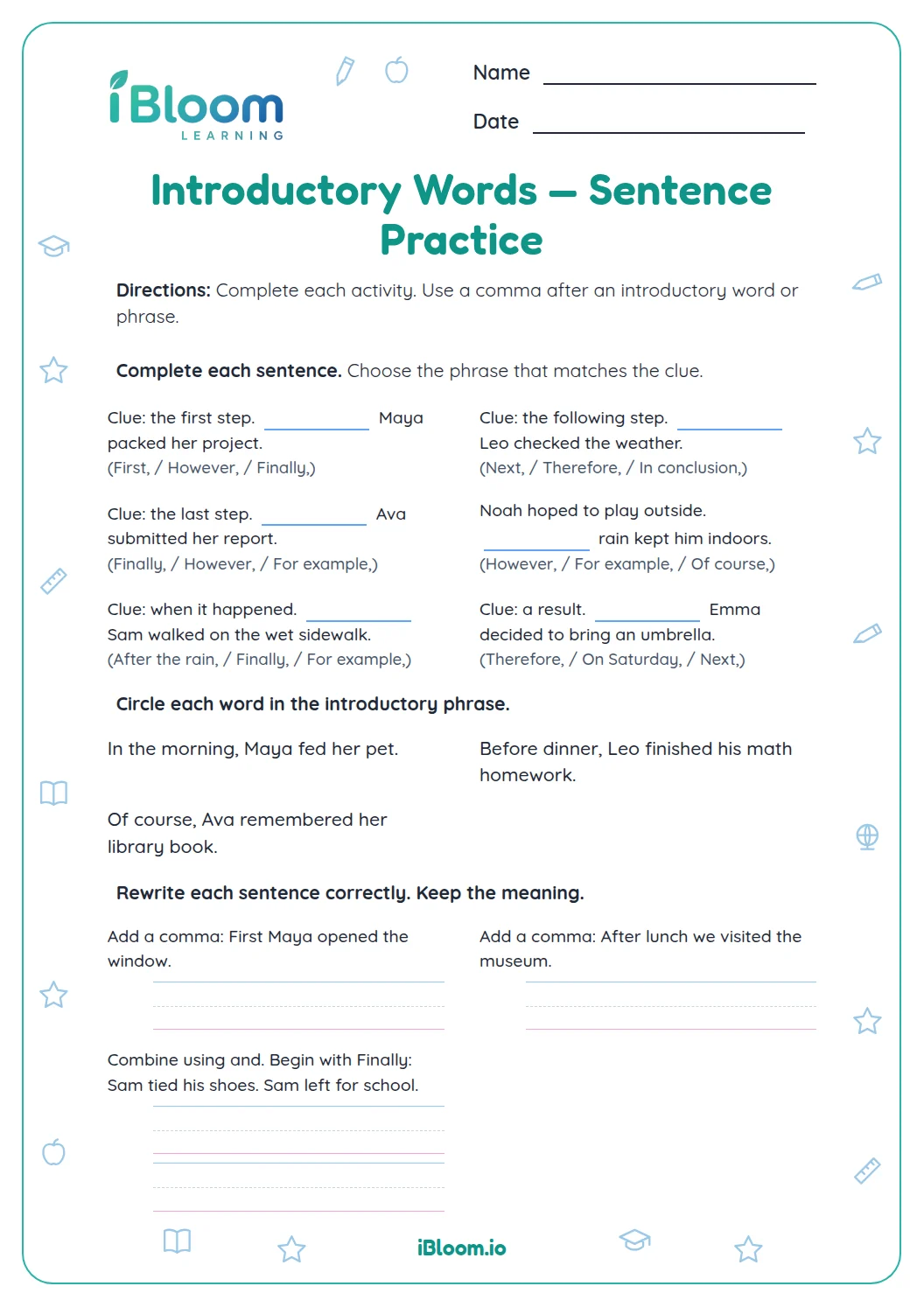
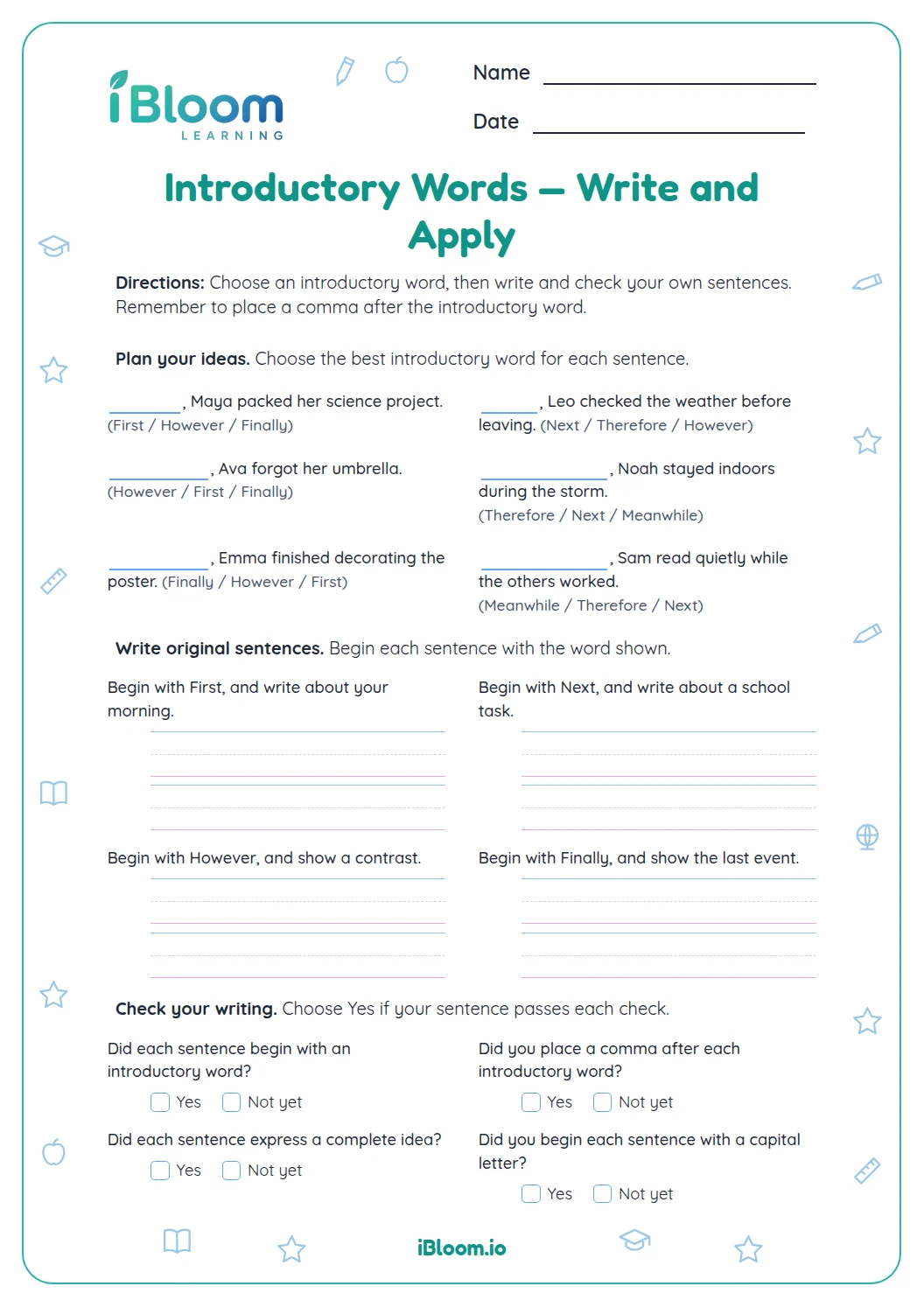
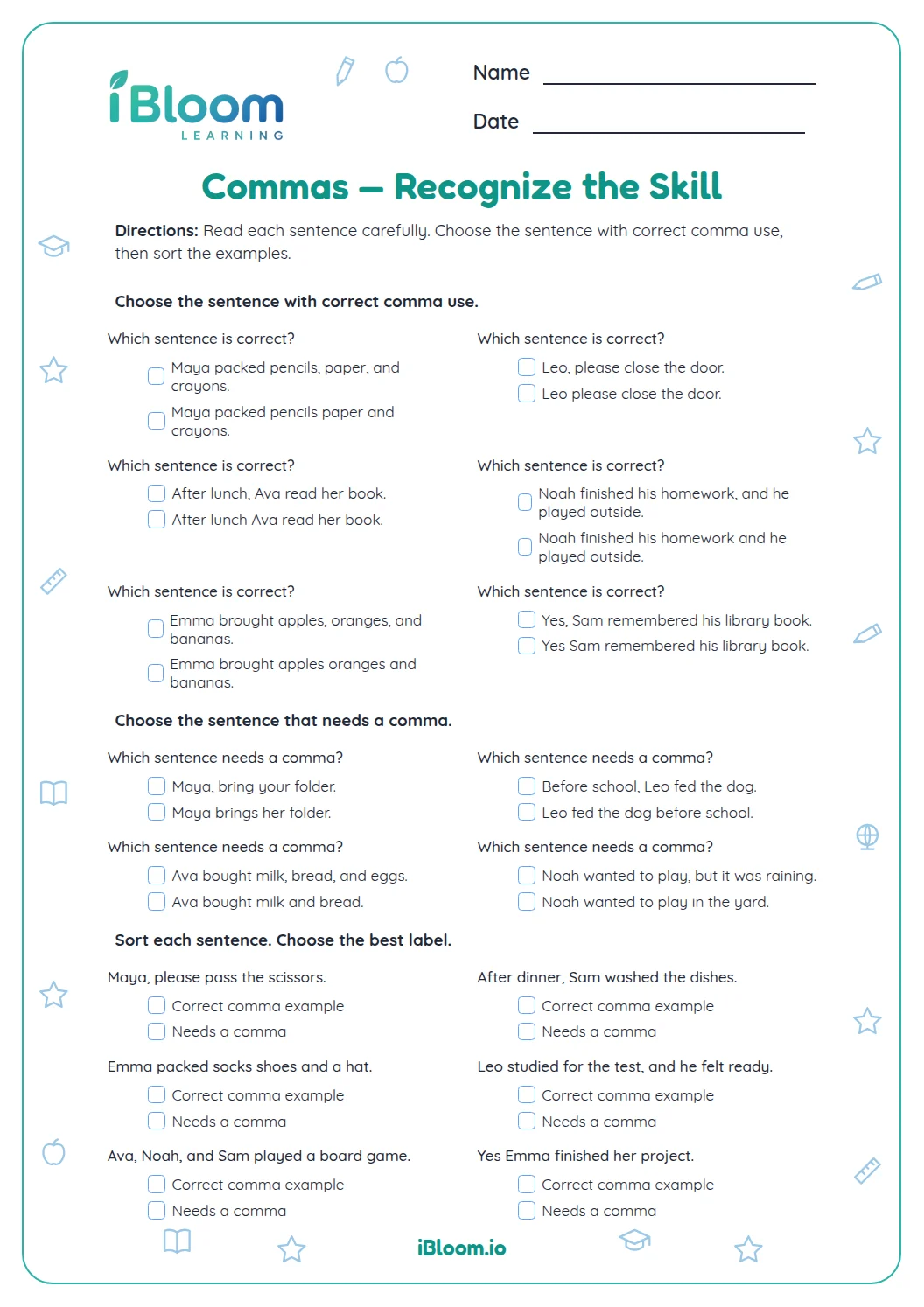
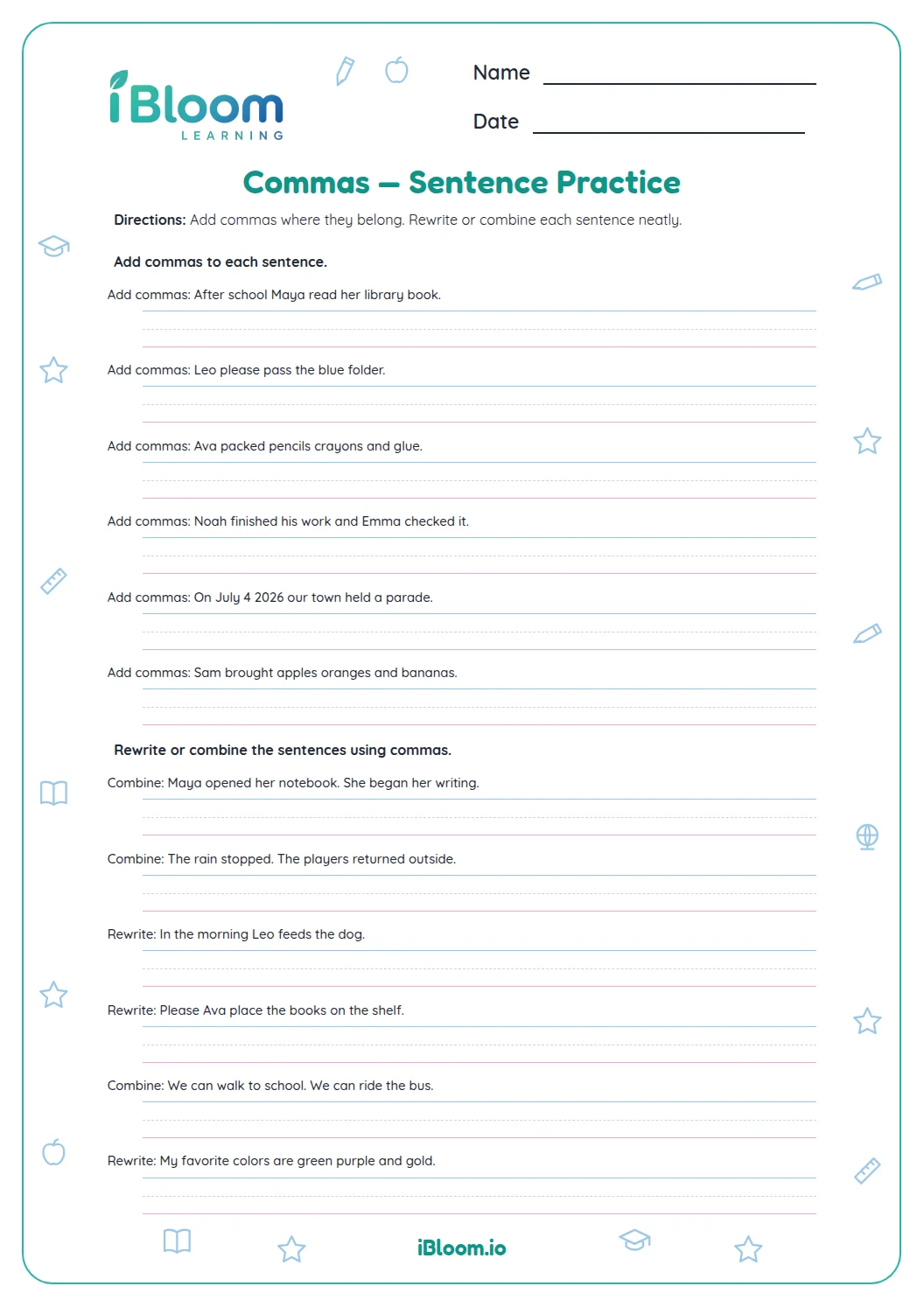
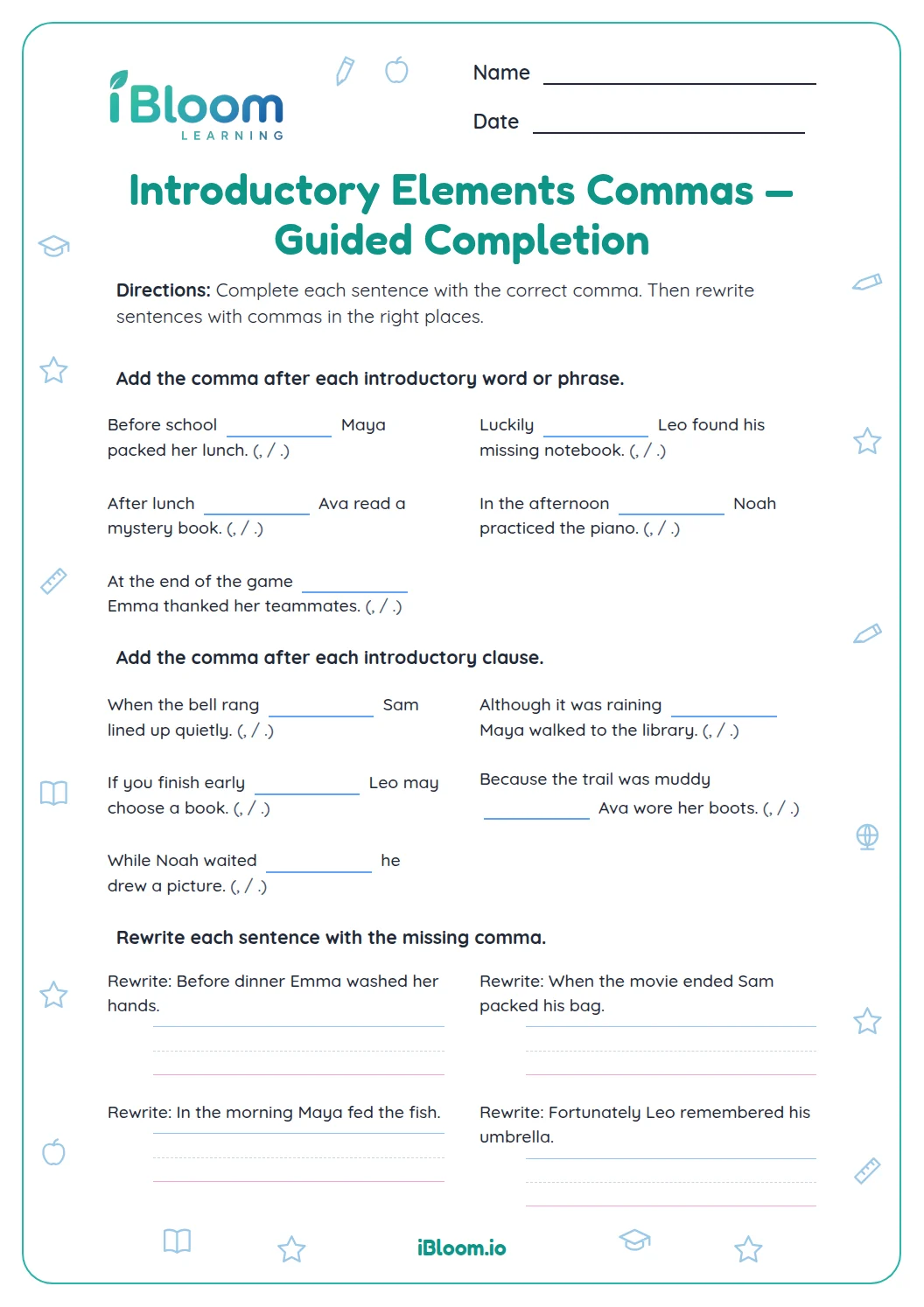
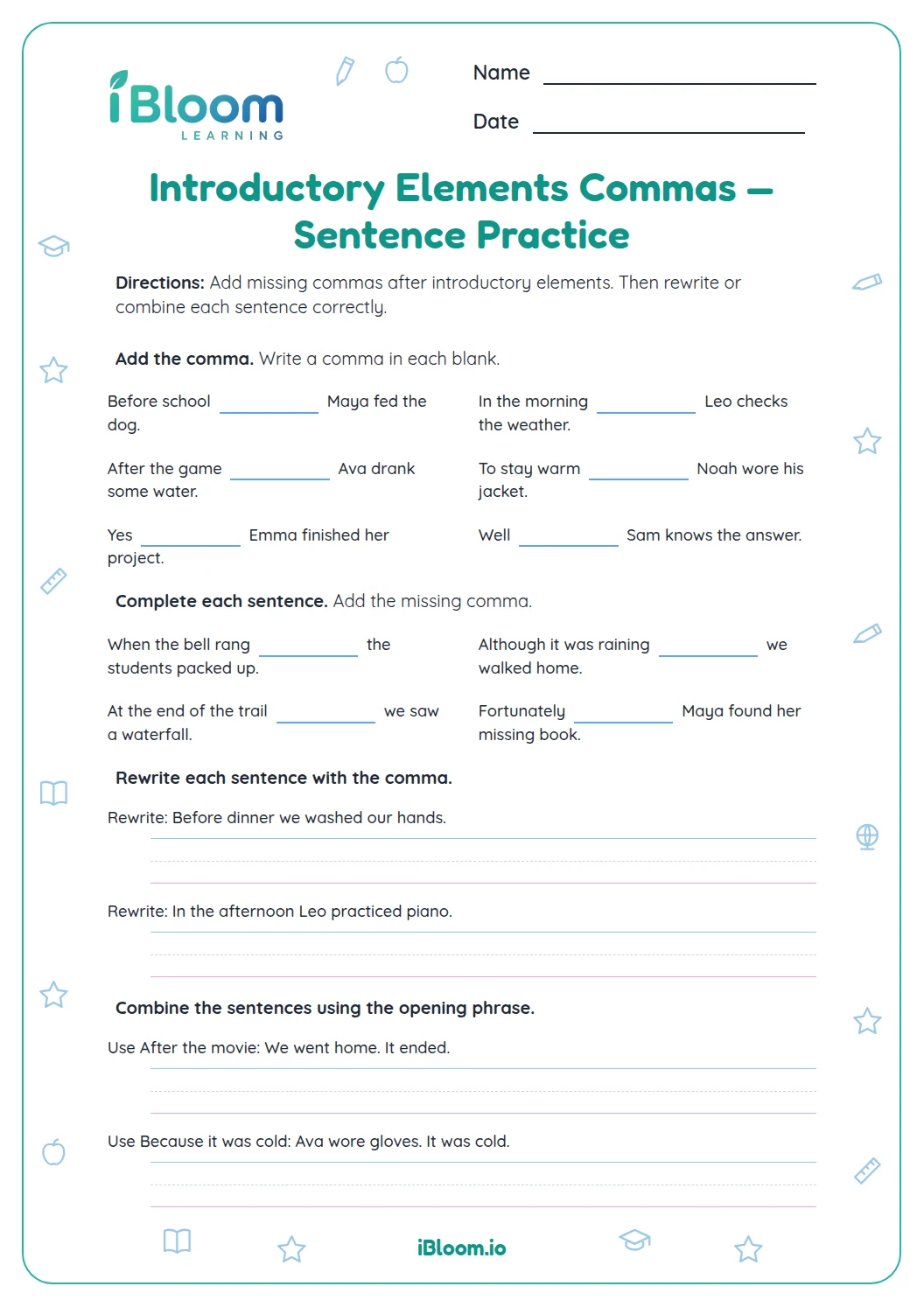
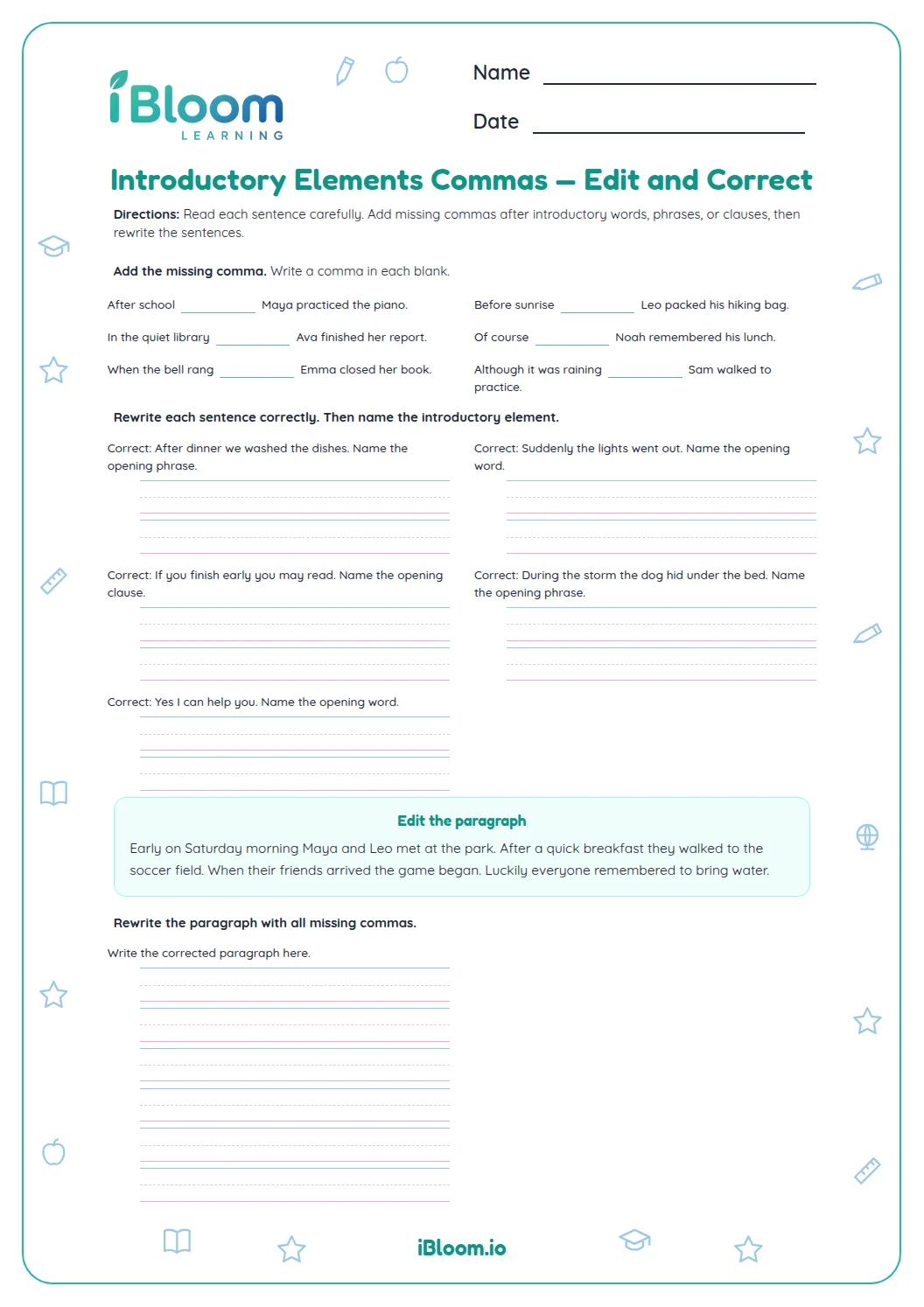
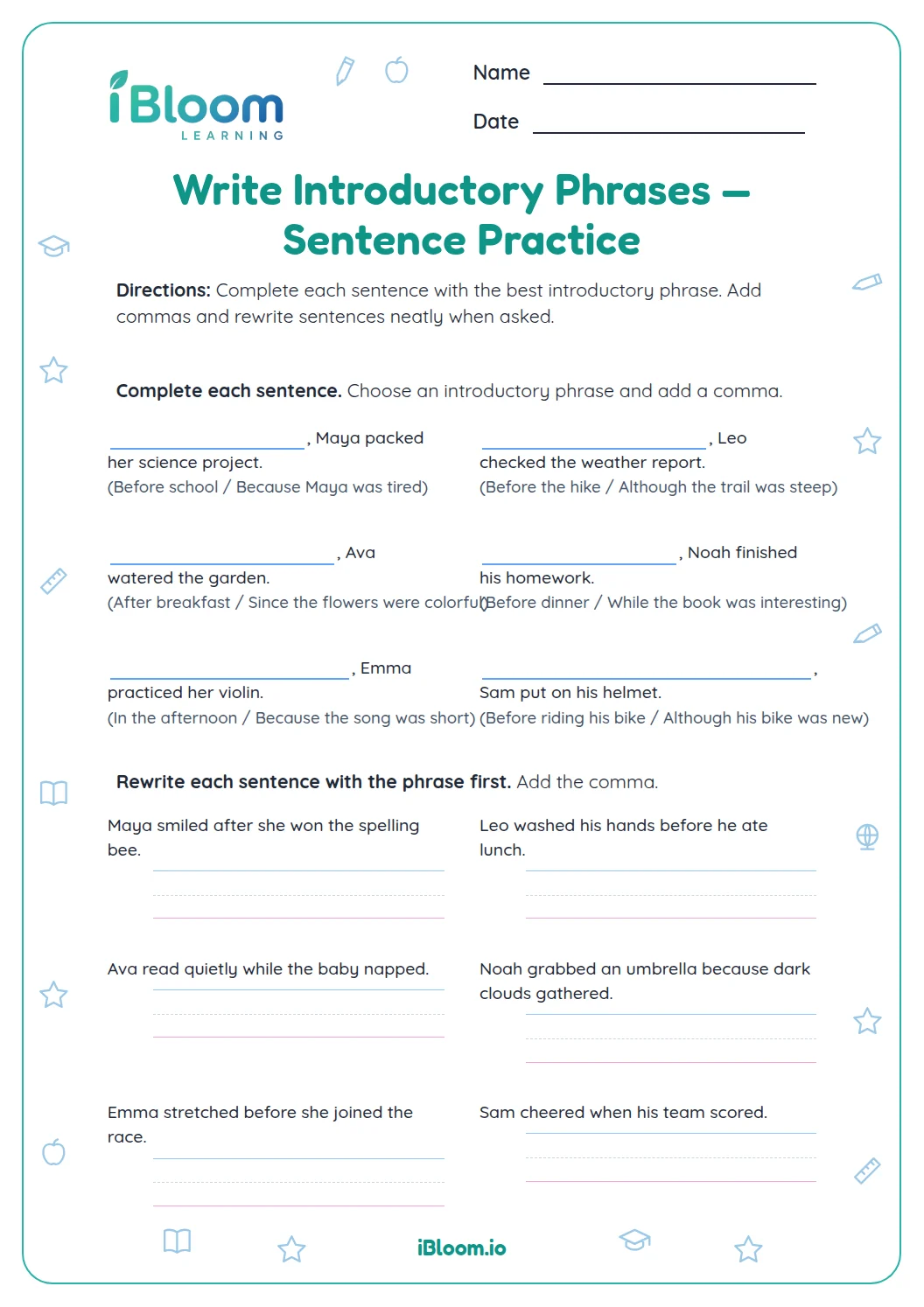
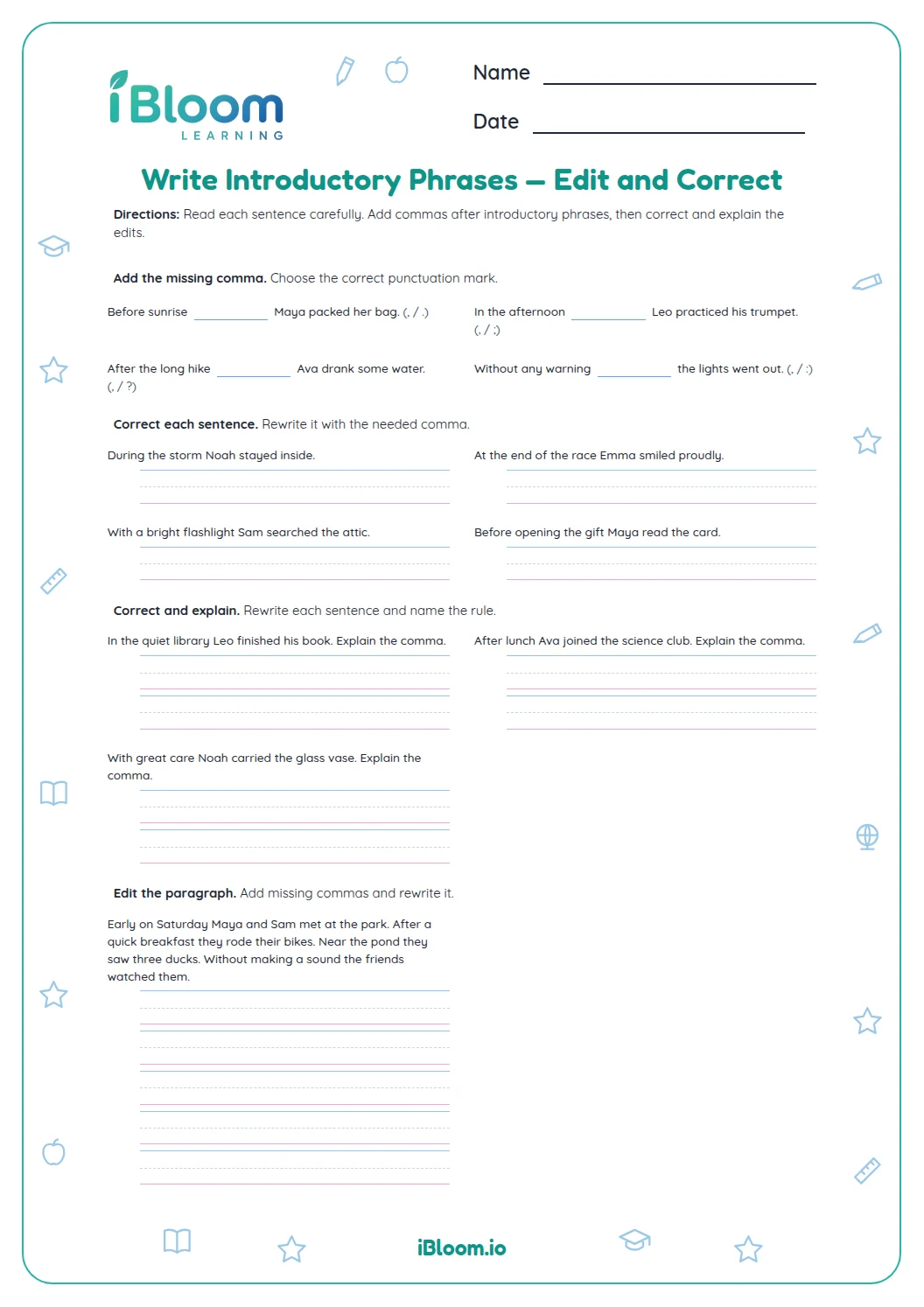
This Grade 5 printable worksheet helps students recognize introductory words, phrases, and clauses and punctuate them with commas. All 16 questions ask students to place a comma at the boundary between the opening element and the rest of a sentence. The skill aligns with CCSS 5.L.2.b. A separate answer key supports checking.
Aligned to 5.L.2.b
How do you spot an introductory element?
Look at the beginning of the sentence for a word, phrase, or clause that sets up the main statement. In “After the concert we thanked the musicians,” the opening phrase tells when. A comma separates it from “we thanked the musicians.”
- 1First ___ packed lunch.
- 2Write “, Maya” to complete “First, Maya packed lunch.”
Where should the comma go?
Place the comma at the boundary between the introductory element and the main statement. For a one-word response such as “Yes,” or “No,” the comma follows that word. For a longer opening clause, read to the end of the setup before placing the comma.
What will students practice on this sheet?
Questions 1–8 practice comma placement after introductory words and phrases. Questions 9–16 use new phrases and clauses.
- Part A: identify the comma boundary after each opening word, phrase, or clause.
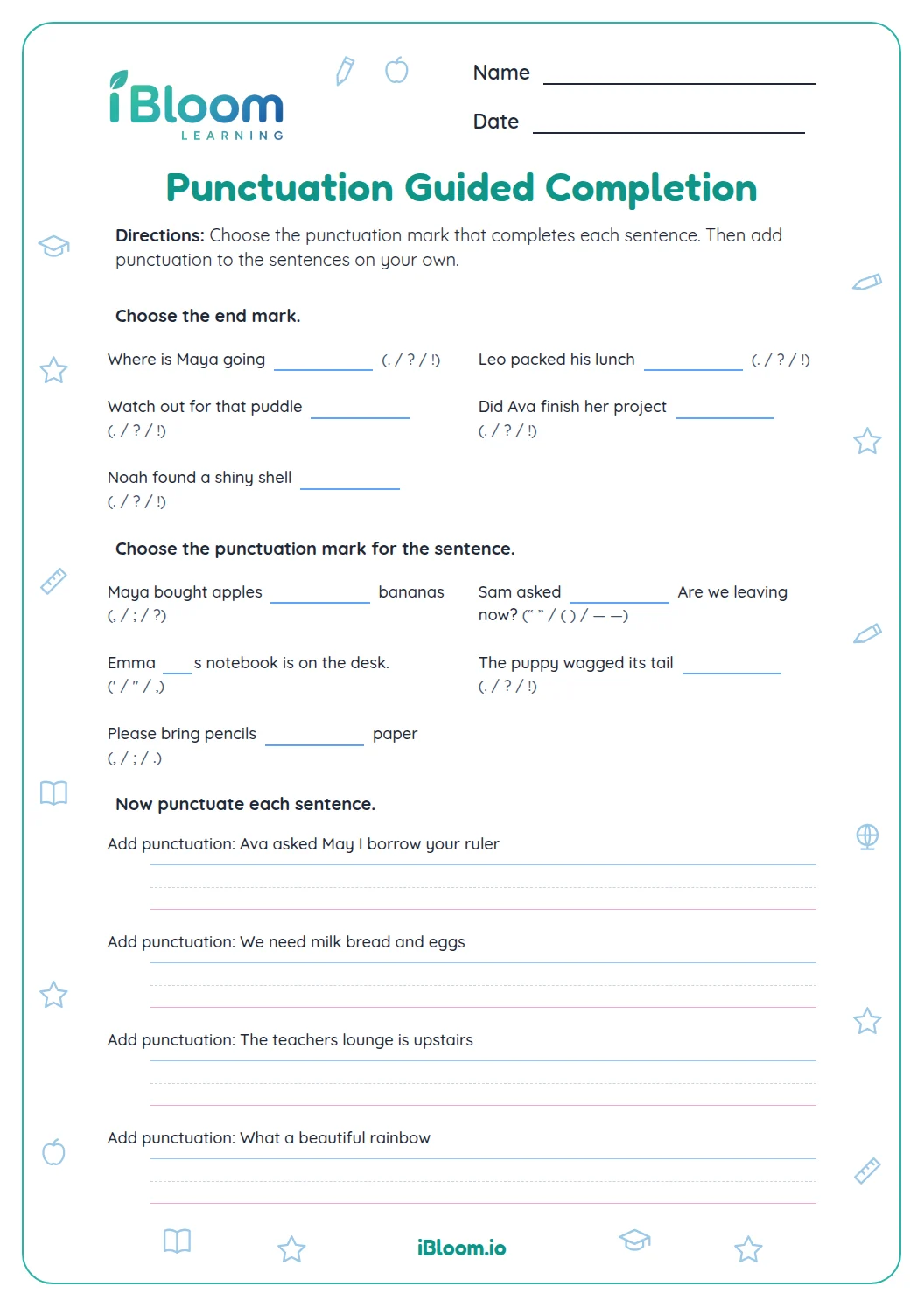
- The second page continues with more varied introductory elements.
How to use this worksheet
- 1Read the whole sentence once for meaning.
- 2Underline or mentally group the opening word, phrase, or clause.
- 3Find where the main statement begins.
- 4Place the comma between the opening element and the main statement.
- 5Read the sentence aloud and check that the comma does not split a phrase awkwardly.
Common mistakes and quick fixes
The mistake
Placing a comma after the first word even when a phrase continues.
The fix
Keep the whole opening phrase together, as in “Before the game,”.
The mistake
Putting a comma between a subject and its verb.
The fix
Identify the main statement first; do not separate “the class” from “planted.”
The mistake
Leaving out a comma after Yes or No.
The fix
Use a comma after a yes-or-no response before the rest of the sentence.
Common Core alignment
This worksheet gives students focused practice with the standard below.
Separate an introductory element from the rest of a sentence with a comma.
On this sheet: Students recognize and add commas after introductory words, phrases, and clauses.
Show the official wordingHide the official wording
Use a comma to separate an introductory element from the rest of the sentence.
What to practice next
Make more practice
Further reading
Questions parents and teachers ask
What counts as an introductory element?
An introductory element can be a single word, a phrase, or a dependent clause at the start of a sentence. Examples in this worksheet include “Happily,” “After the concert,” and “When the bell rings.” Have students group the entire opening phrase before deciding where its comma belongs.
Does every sentence need a comma after its first word?
No. The comma follows an introductory element as a unit, not automatically the first word. In “Before the game,” the phrase stays together, so the comma comes after “game.” The comma follows the full introductory element, so a multiword phrase stays together.
What is the worksheet’s worked example?
The worksheet has short fill-in items. For each one, supply a comma and the word or words that begin the main statement. For example, “First ___ packed lunch” becomes “First, Maya packed lunch.” This format asks students to locate the boundary after the opener and continue the sentence correctly.
Are yes and no included?
Yes. Several items use “Yes” or “No” as an introductory response, followed by a comma before the rest of the sentence. Students also practice longer phrases and clauses. Yes and no are short introductory responses here; other items use longer phrases or clauses.
Is an answer key included?
Yes. The separate key shows the comma location for all 16 items. Students can read each completed sentence aloud and check that the opening element stays together. The key supports review in class or at home and makes it easy to confirm each comma choice after the practice.