




About this worksheet
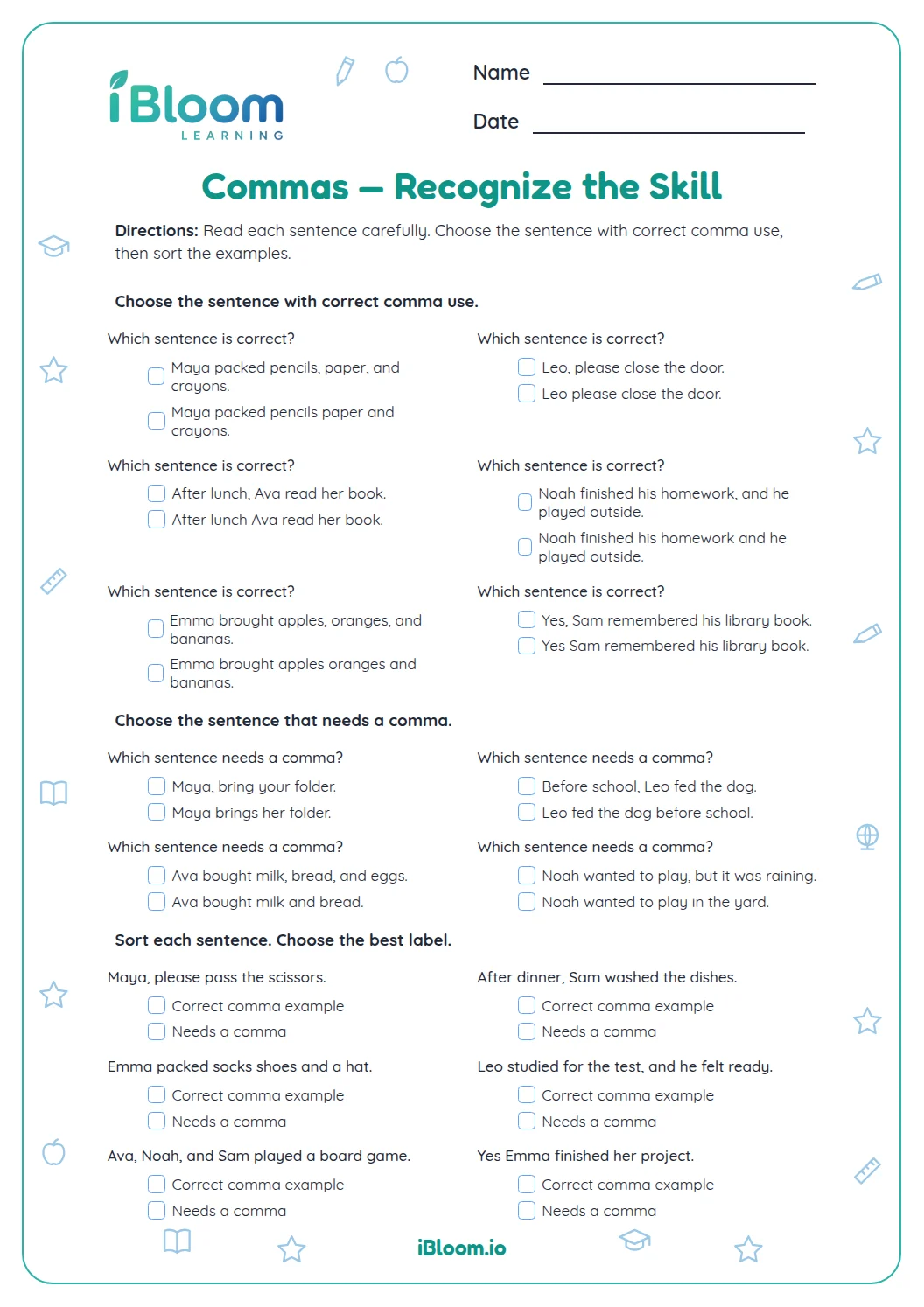
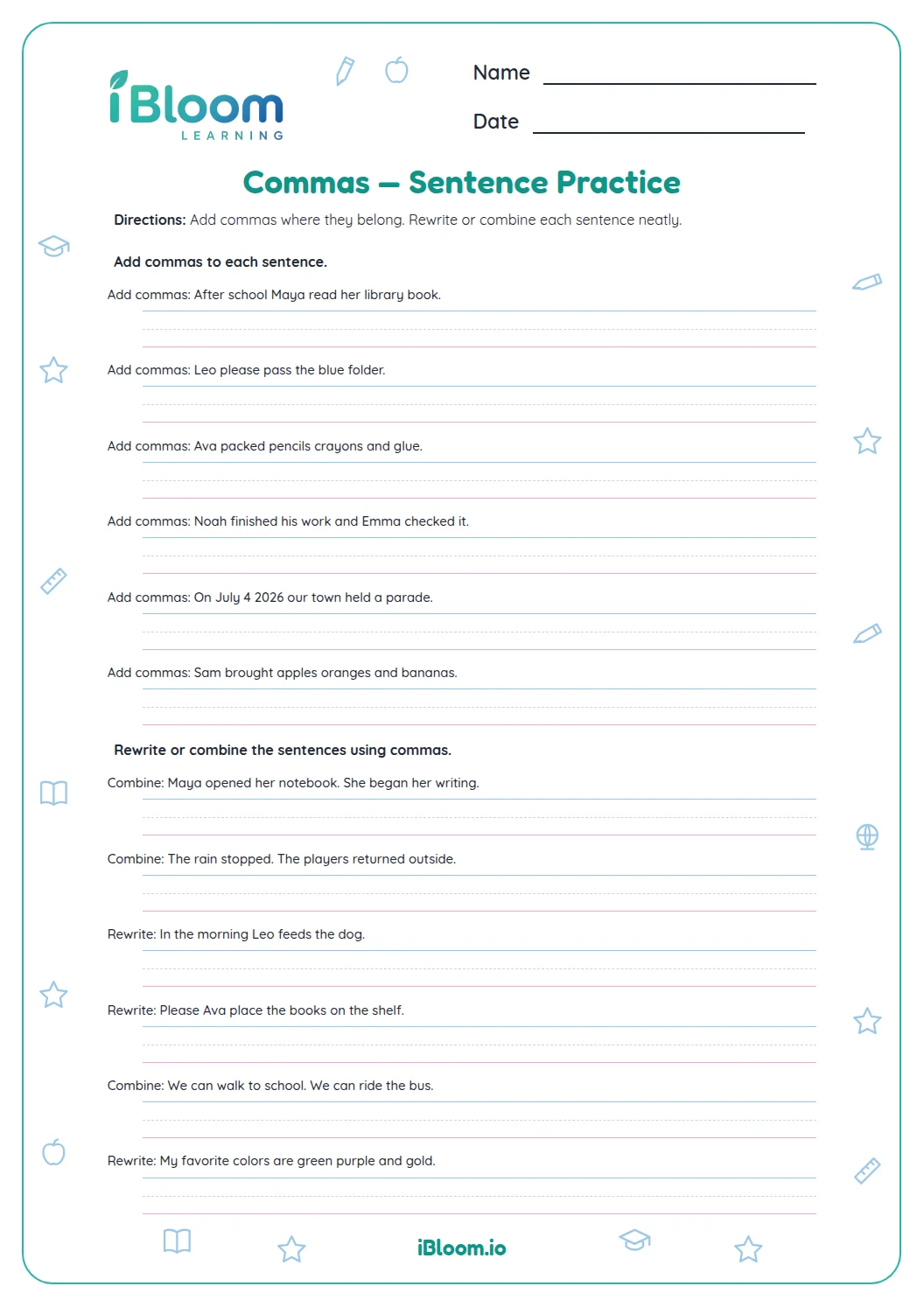
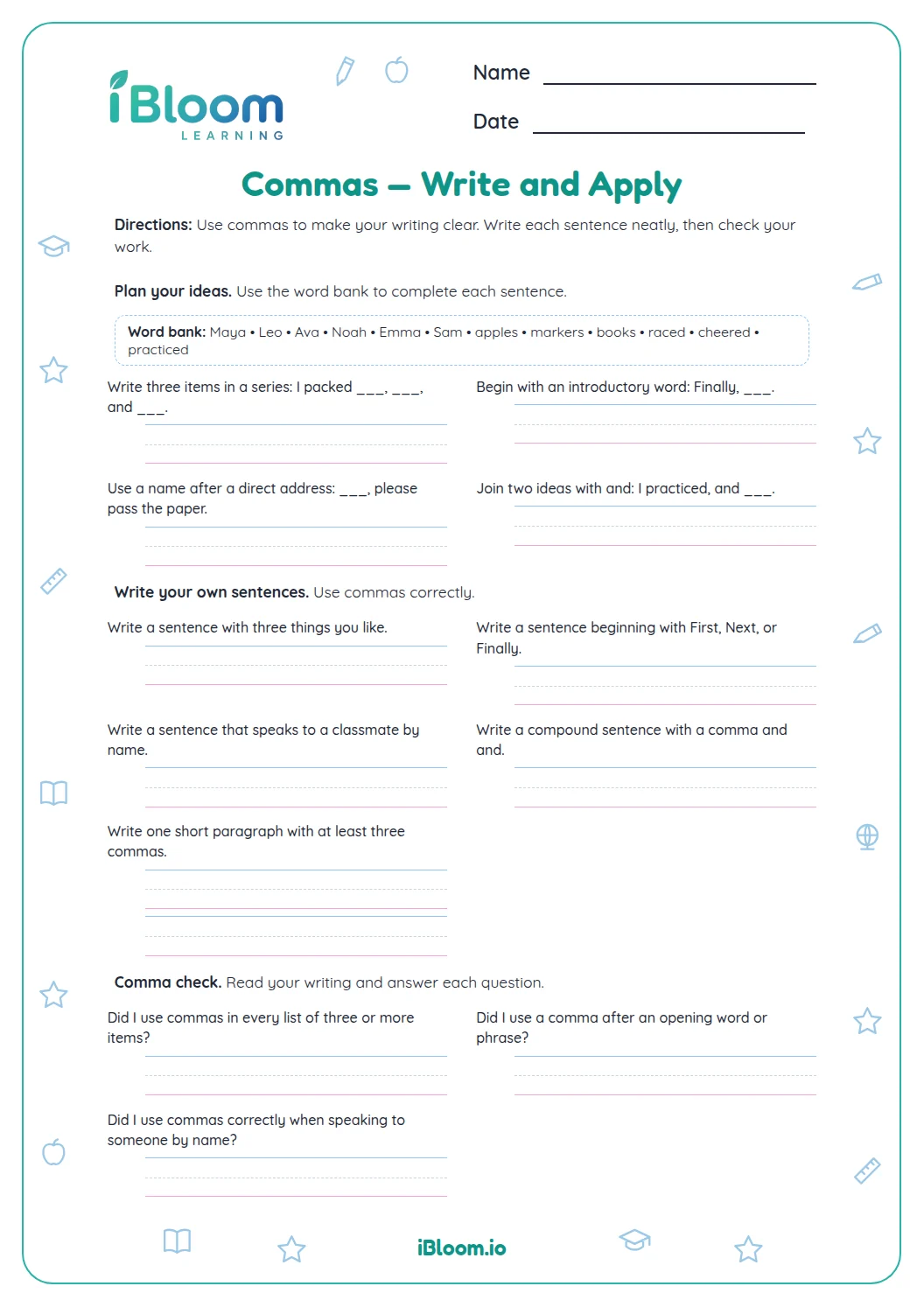
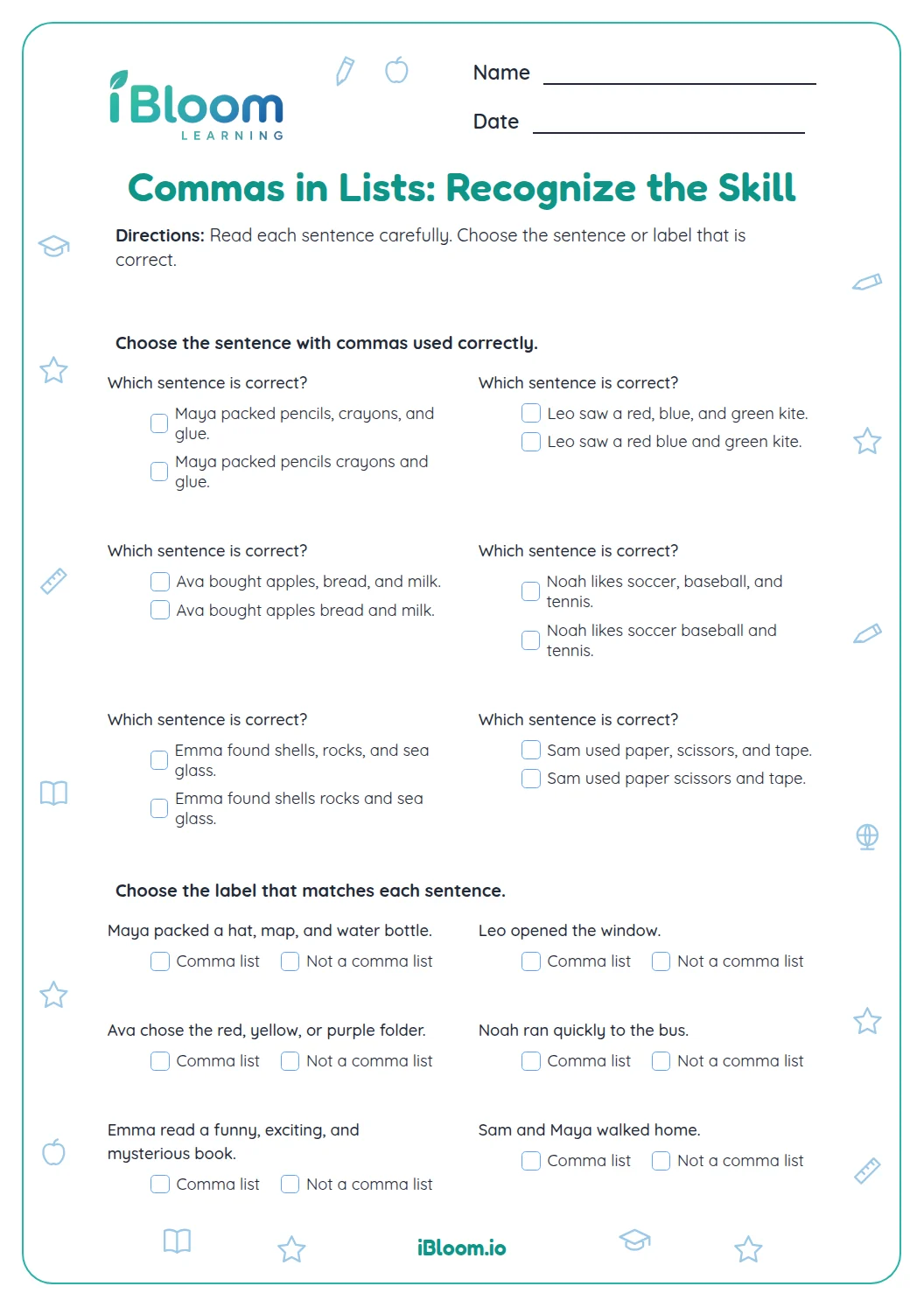
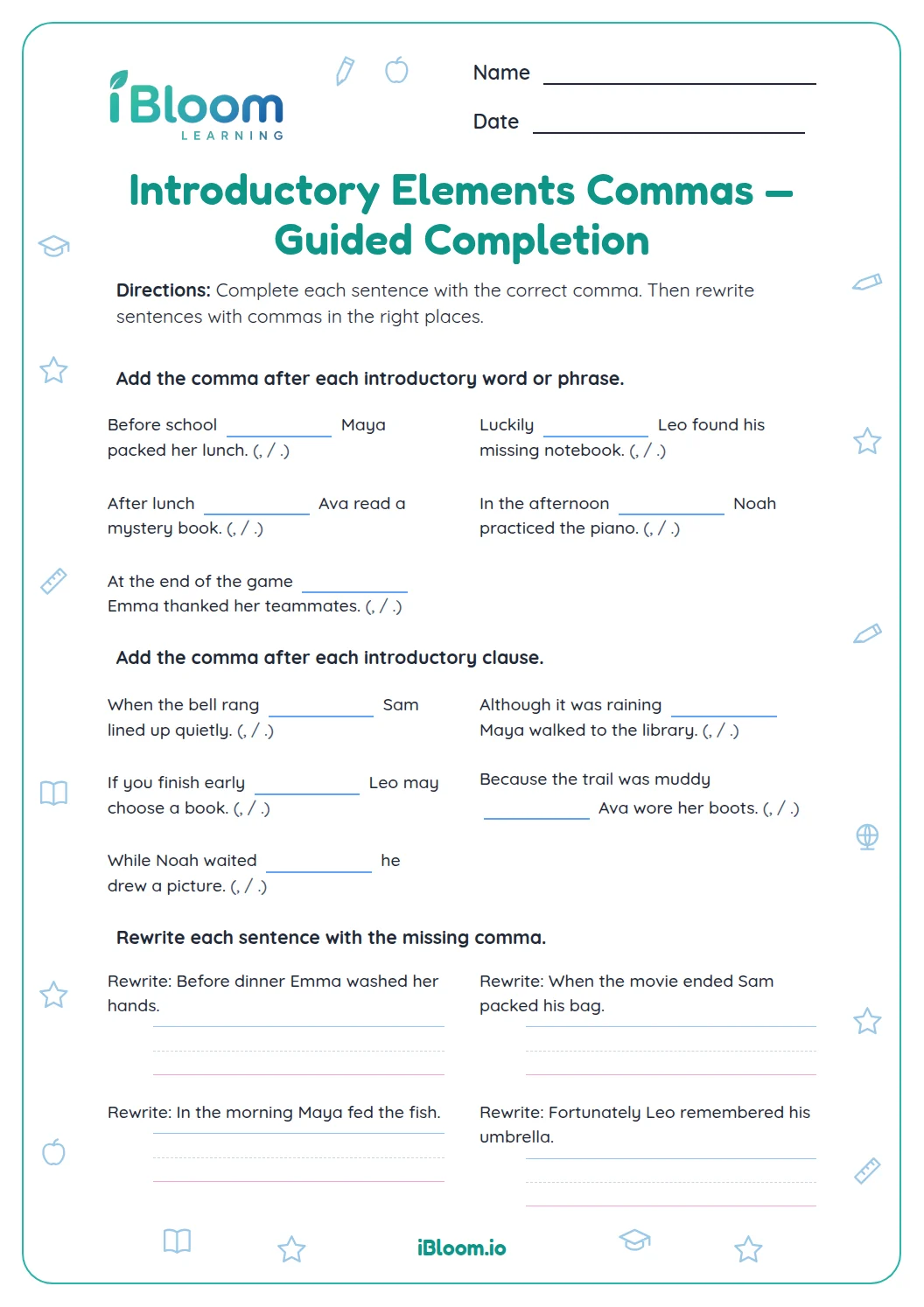
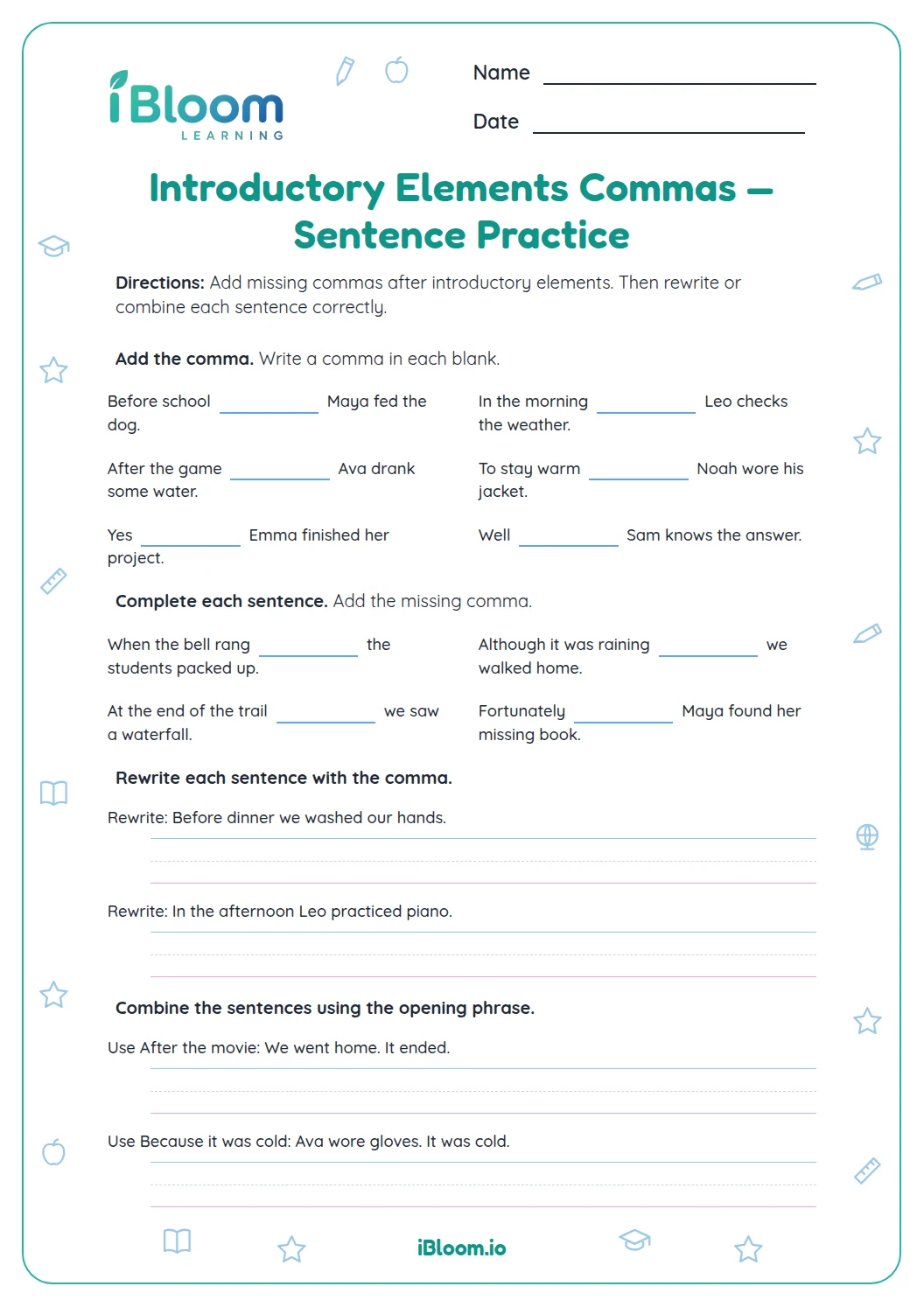
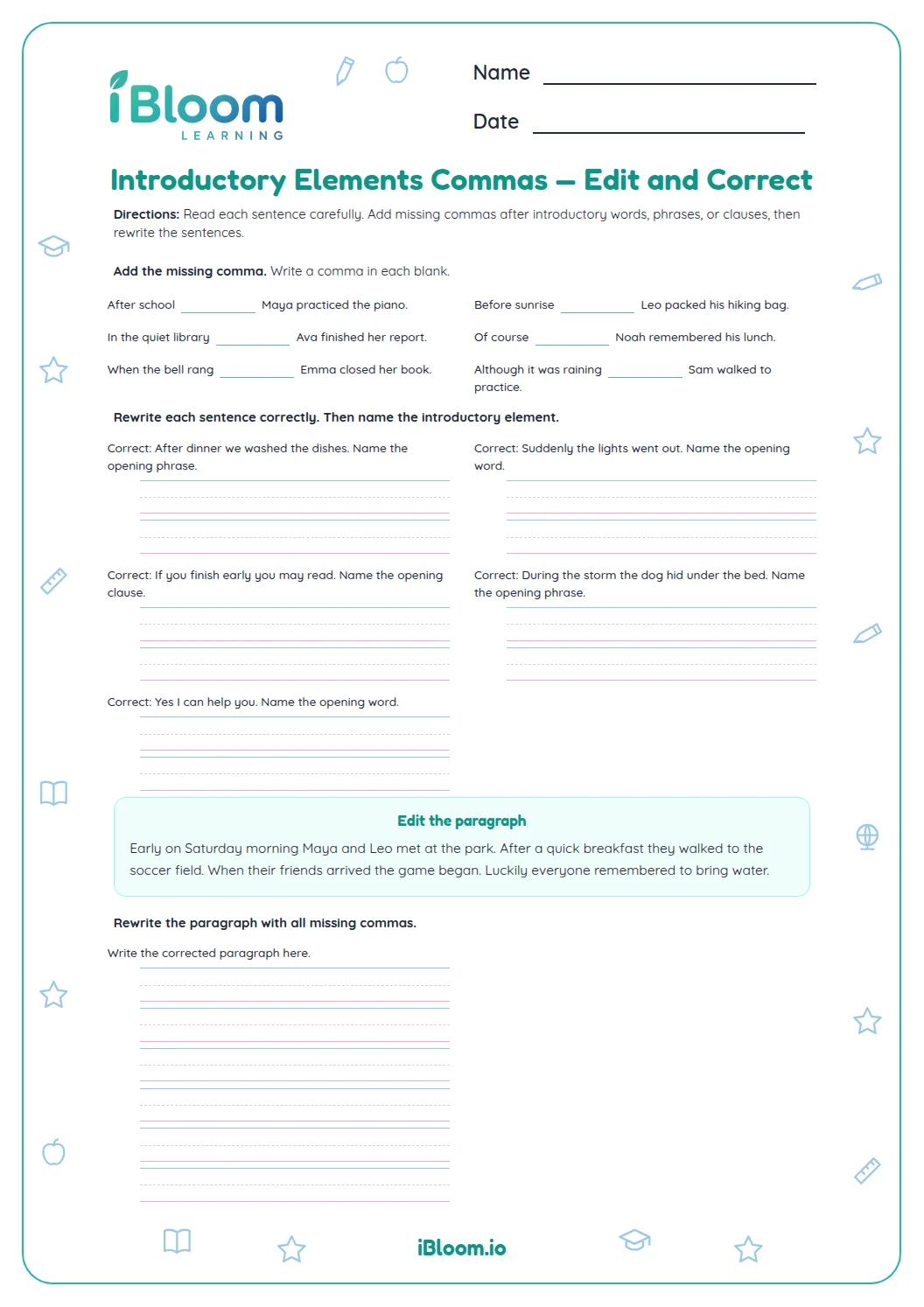
This Grade 5 printable reviews commas in lists, introductory elements, direct address, dates, and dialogue. Students edit sentences, add missing commas, and write examples. A separate answer key shows corrected versions and sample responses. The page aligns with CCSS L.5.2.
Aligned to L.5.2
Which comma rule separates items?
In a series, add commas between each item: maps, snacks, and water.
Where does an introductory comma go?
Place it after the introductory words: “Before sunrise, we started the hike.”
How does dialogue punctuation work?
When a speech tag follows, the comma stays inside the quotation marks.
How to use this worksheet at home or in class
- 1Read the sentence aloud and pause at natural breaks, then check the punctuation rule that fits.
- 2Complete the four list edits first, checking that commas separate each item.
- 3In Part B, compare both choices carefully; only one has all needed commas.
- 4Use a comma after an introductory phrase when it comes before the main clause.
- 5In dialogue, keep the comma inside the closing quotation mark when a speech tag follows.
Common mistakes and quick fixes
The mistake
The date is set off by commas in the sentence “On Tuesday, June 9, we will visit the museum.” Students add both commas to distinguish the date from the rest of the sentence.
The fix
Reread the prompt and apply the skill rule that fits before checking the key.
The mistake
How can I extend this practice?
The fix
Reread the prompt and apply the skill rule that fits before checking the key.
The mistake
Ask students to revise a paragraph from their own writing and explain each comma they add. Related Commas Lists practice can reinforce series punctuation.
The fix
Reread the prompt and apply the skill rule that fits before checking the key.
Common Core alignment
Use commas to separate series items, introductory elements, direct address, and dialogue.
Use commas and other punctuation correctly in written sentences.
On this sheet: Items practice commas in a series, introductory elements, and dialogue.
Show the official wordingHide the official wording
Demonstrate command of the conventions of standard English capitalization, punctuation, and spelling when writing.
What to practice next
Make more practice
Further reading
Questions parents and teachers ask
Which comma rules appear here?
The worksheet practices commas in a series, introductory elements, direct address, dates, and dialogue. Students choose correct sentences, revise examples, and write their own sentences using commas. Have the student reread the sentence aloud after editing and check that the comma separates the intended words or clauses.
How many questions are included?
There are 14 questions in three parts: four list edits, four comma additions, and six editing or writing prompts. A separate answer key includes corrected versions and sample responses. Have the student reread each edited sentence and check how the comma separates the intended words or clauses.
What is the comma rule for a list?
Use commas to separate three or more items in a series. For example, “maps, snacks, and water” separates each item clearly. Have the student reread the sentence aloud after editing and check that the comma separates the intended words or clauses.
Where does the comma go after an introductory phrase?
Place the comma after the introductory word or phrase and before the main clause. In “Before sunrise, we started the hike,” the comma follows “sunrise.” Have the student reread the sentence aloud after editing and check that the comma separates the intended words or clauses.
Can students use different sentences for the writing questions?
Yes. The key gives sample responses, but students may write different sentences if the comma is used correctly and the sentence follows the requested pattern. Have the student reread the sentence aloud after editing and check that the comma separates the intended words or clauses.