




About this worksheet
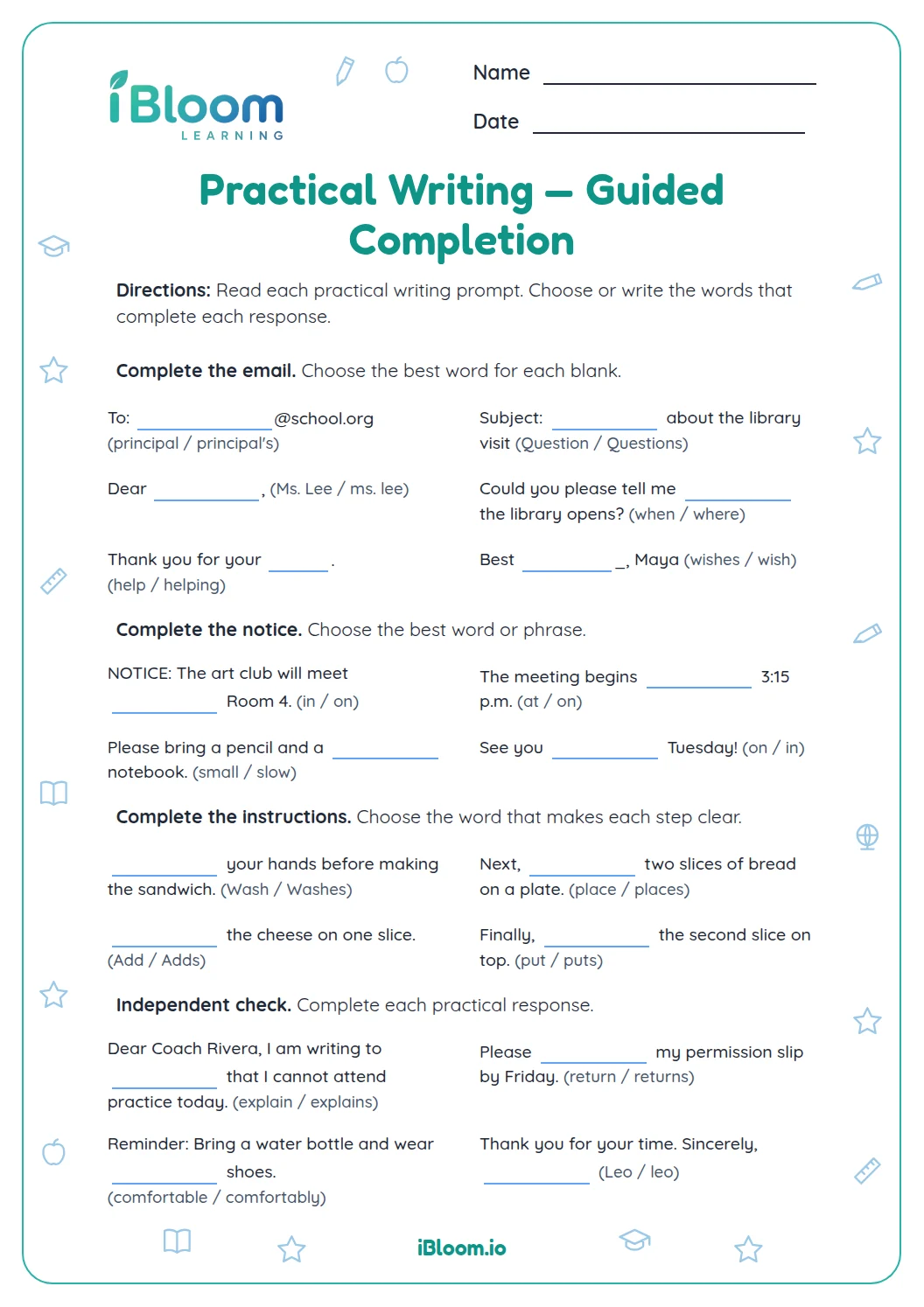
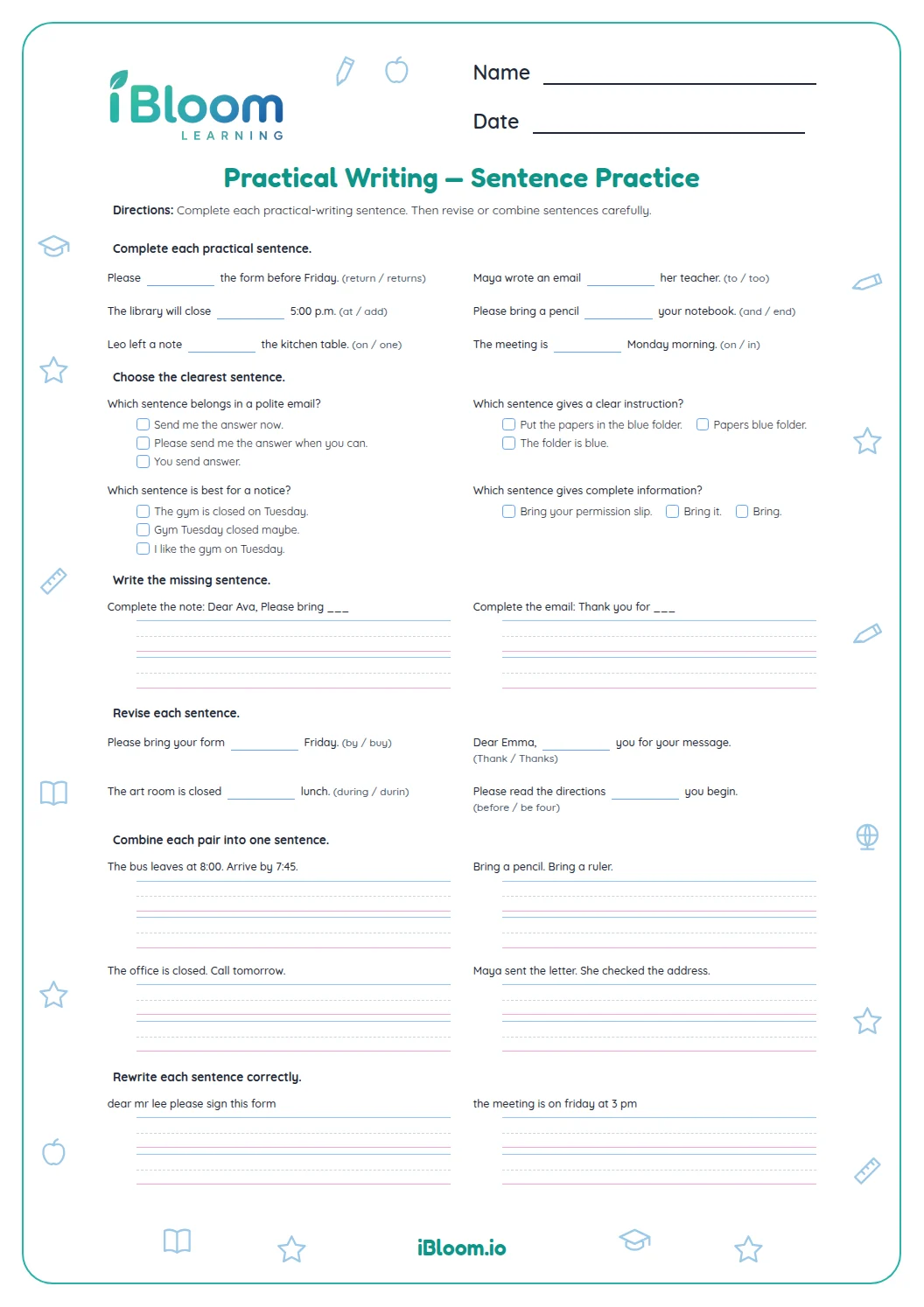
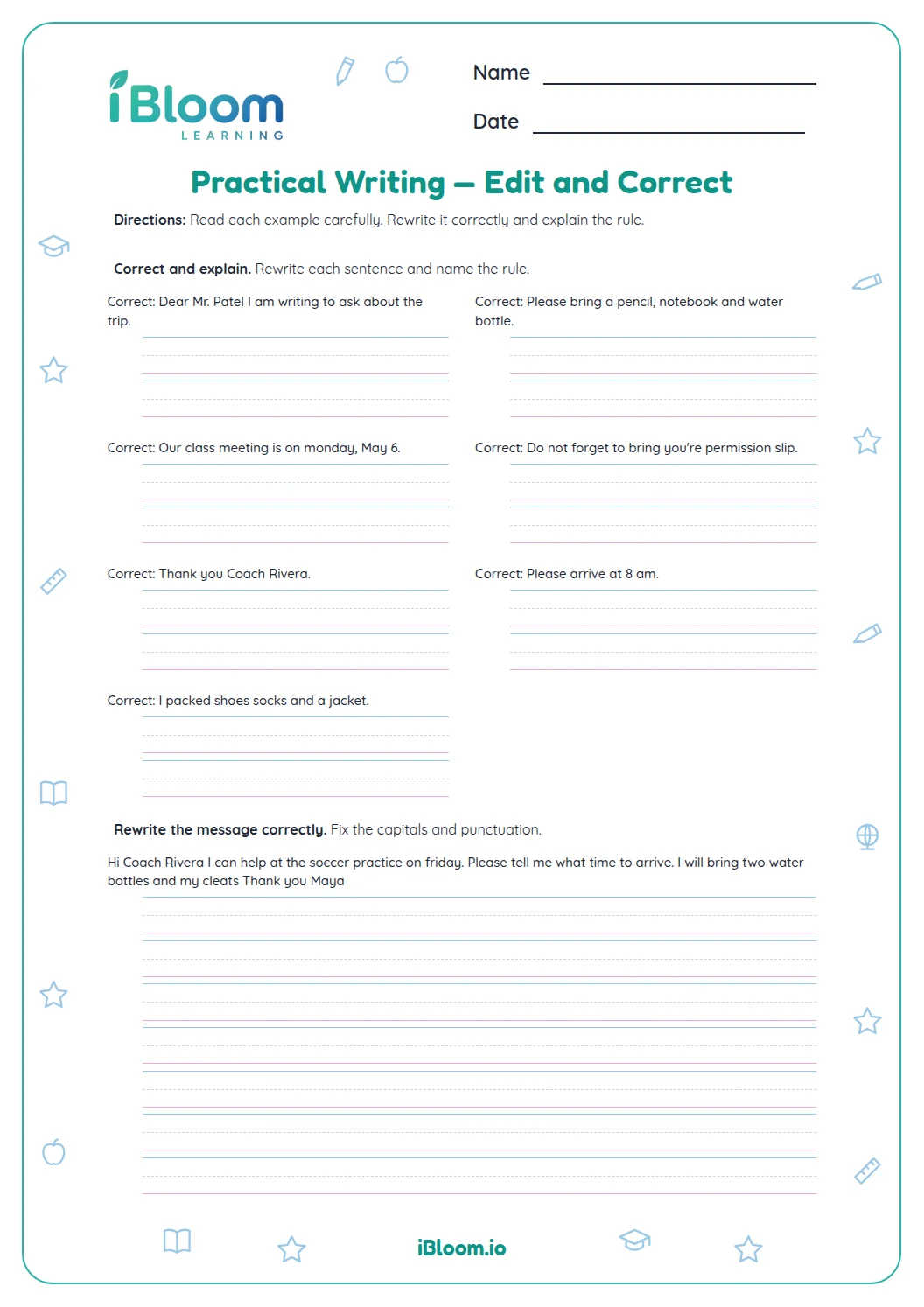
This free Grade 5 printable introduces practical writing through everyday purposes and readers. Students choose forms such as invitations, directions, thank-you notes, and request emails; spot missing details; and select clear, polite messages. The final questions distinguish practical writing from imaginative sentences. All 14 items use compact answer choices, including the original focus on useful messages for real tasks. A separate answer key makes the choices quick to review. The page supports Common Core W.5.4 by asking students to notice how writing fits a task, purpose, and audience.
Aligned to W.5.4
How do students choose a practical writing form?
Start with what the writer needs the reader to do or know. A birthday invitation asks someone to attend, directions explain steps, a thank-you note expresses appreciation, and a request email asks for help or permission. The form should make that purpose easy to recognize.
Which details make a message useful?
A helpful message gives specific information the reader needs. A date and room number help someone attend an event; an amount makes a recipe step measurable.
- 1Vague: “Add flour.”
- 2Clear: “Add 2 cups of flour.”
- 3The amount tells the reader exactly how much to use.
How can a writer make a message clear for its reader?
Use direct language, include action details, and choose a tone that fits the reader. A polite request states what help is needed, while a direction uses an action word and a clear route. Practical writing helps someone act instead of only describing an idea.
How to use this worksheet
- 1Name the task before choosing a writing form.
- 2Ask what the reader needs to know or do.
- 3Look for details such as a time, place, amount, or next step.
- 4Check that the tone fits the reader and purpose.
- 5Use the key to explain why a practical example is useful.
Common practical-writing mistakes and quick fixes
The mistake
Choosing a form before identifying the purpose.
The fix
Ask whether the writer is inviting, explaining steps, thanking, or requesting.
The mistake
Leaving out details a reader needs to act.
The fix
Check for specifics such as a date, time, location, amount, or deadline.
The mistake
Using vague or demanding wording in a message.
The fix
State the request directly and politely, with a clear next step.
Common Core alignment
This Grade 5 writing practice focuses on fitting the message to its task and audience.
Make writing clear and organized for its task, purpose, and audience.
On this sheet: Students evaluate whether forms, details, and tone fit the writer’s practical purpose and reader.
Show the official wordingHide the official wording
Produce clear and coherent writing in which the development and organization are appropriate to task, purpose, and audience. (Grade-specific expectations for writing types are defined in standards 1-3 above.)
What to practice next
Make more practice
Further reading
Questions parents and teachers ask
What is practical writing?
Practical writing helps a reader complete a real task, get information, or respond to a request. Examples include a recipe, directions, an invitation, and a polite email. The worksheet asks students to identify these purposes and select details that make the message useful.
What details belong in an invitation?
An invitation should tell the reader what the event is and when and where it will happen. Question 5 already gives a room and date, so the missing detail is the start time. A reader needs those specifics to plan to attend.
Why does a recipe need exact amounts?
An amount tells the reader how much of an ingredient to use. “Add 2 cups of flour” is more useful than “Add some flour” because the instruction can be followed consistently. Question 6 asks students to choose the more specific direction.
Does every clear sentence count as practical writing?
No. A sentence can be clear but still describe an imagined event instead of helping a reader complete a task. Question 12, about a golden dragon, is imaginative. Directions, reminders, and requests in the other items have practical purposes.
How can a request sound polite and clear?
State what help is needed in a direct, respectful way. “Could you please help me get a new library card?” names the request and uses a polite question. Vague wording such as “I need something” does not tell the reader what action to take.