

About this worksheet
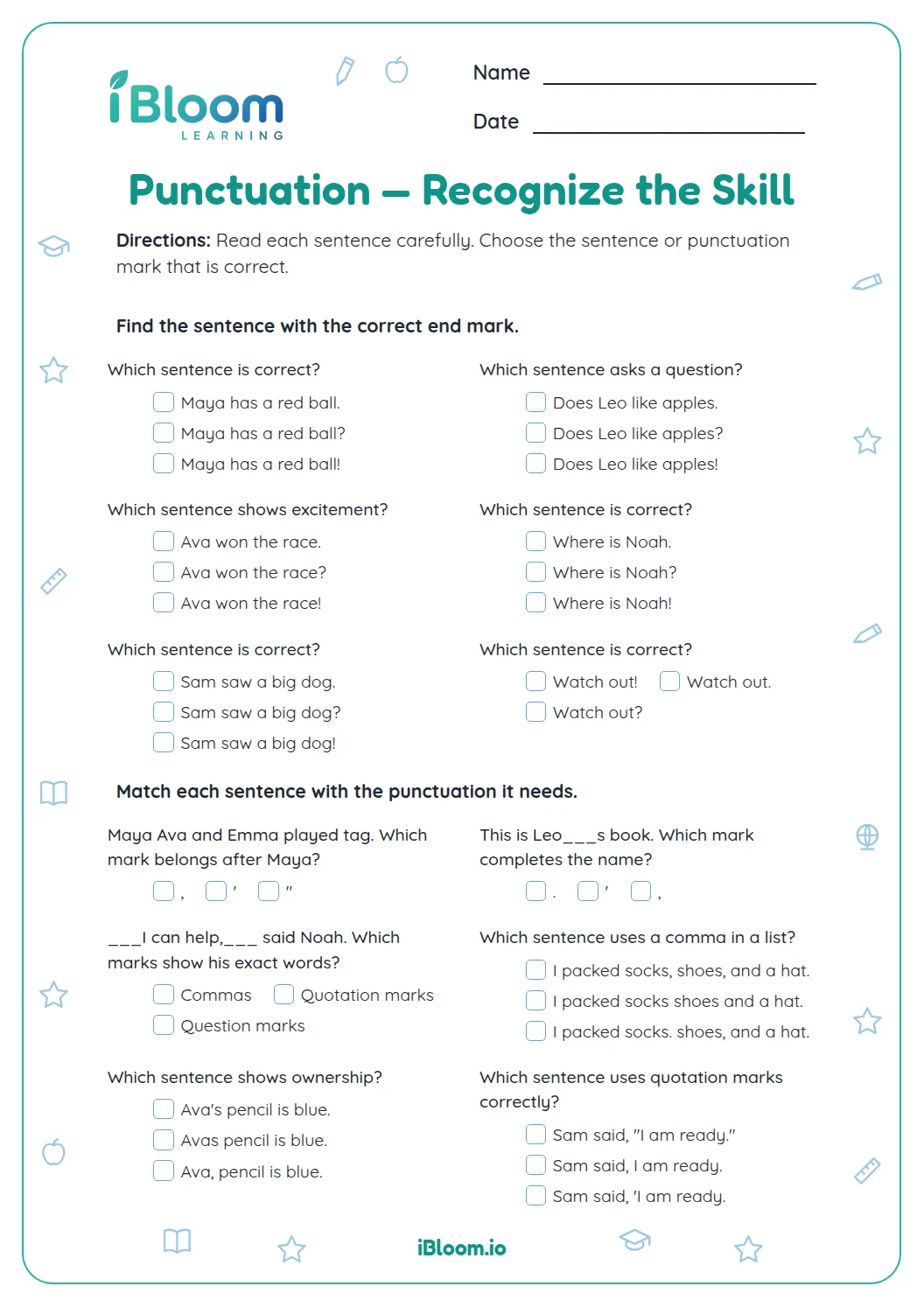
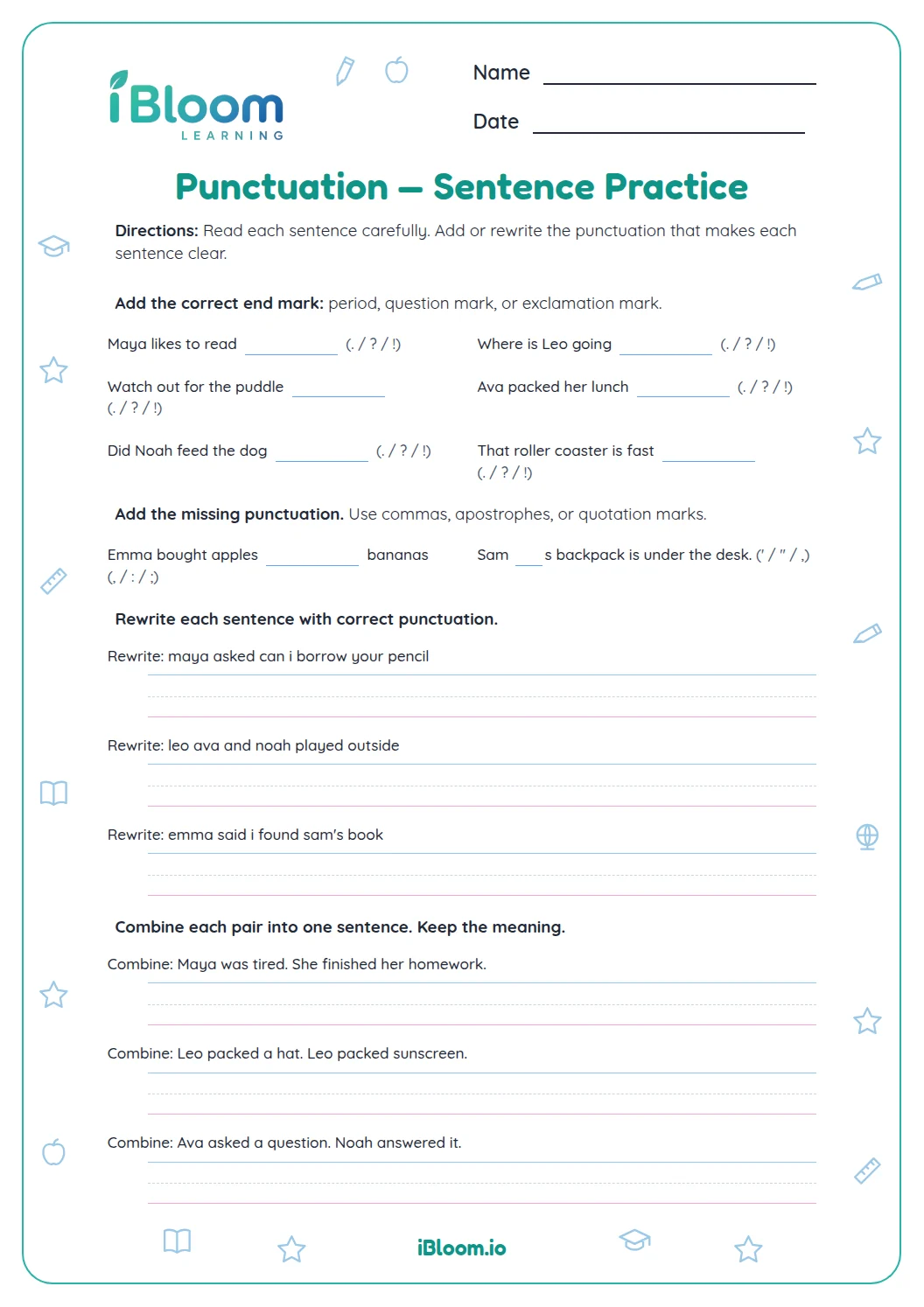
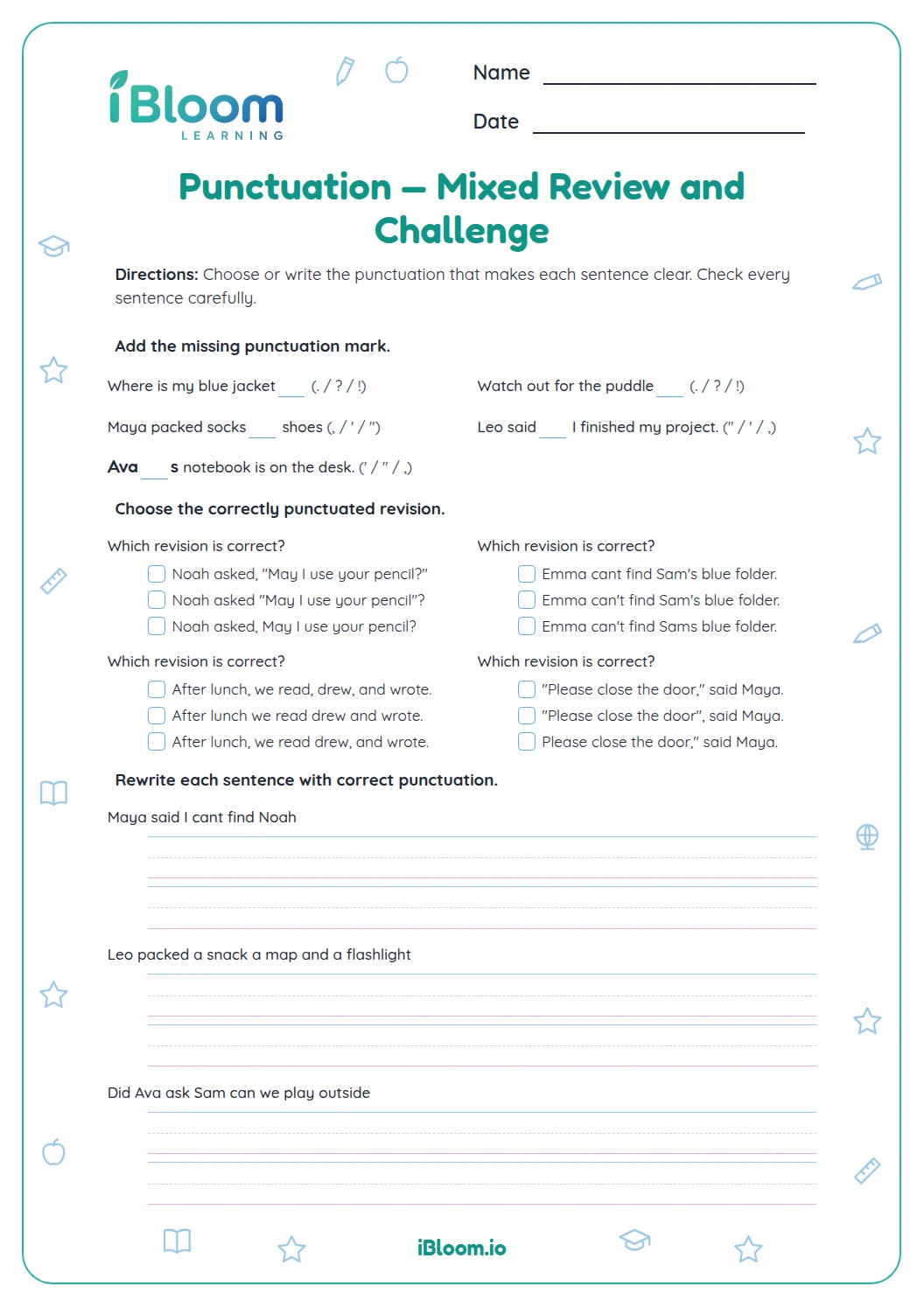
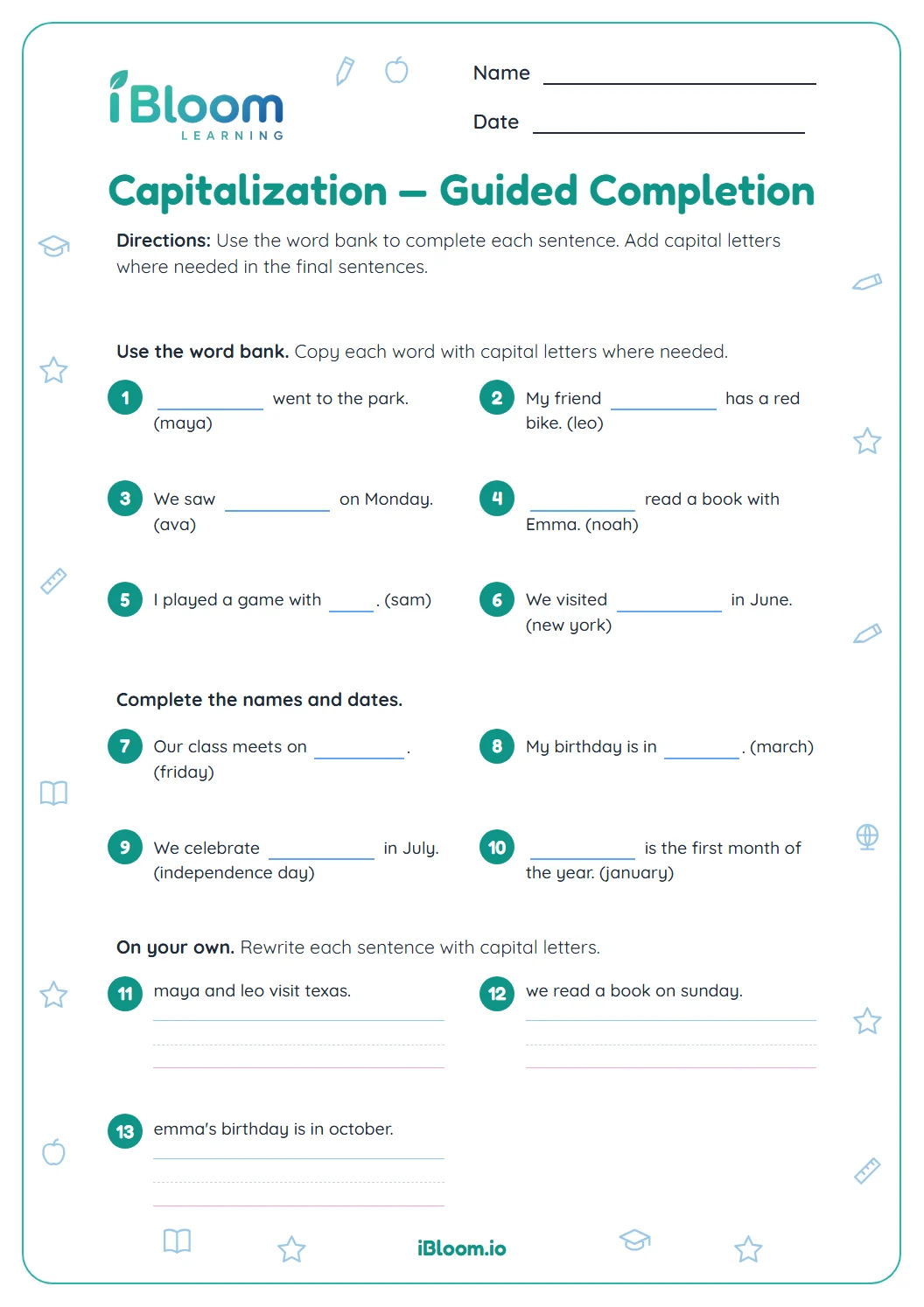
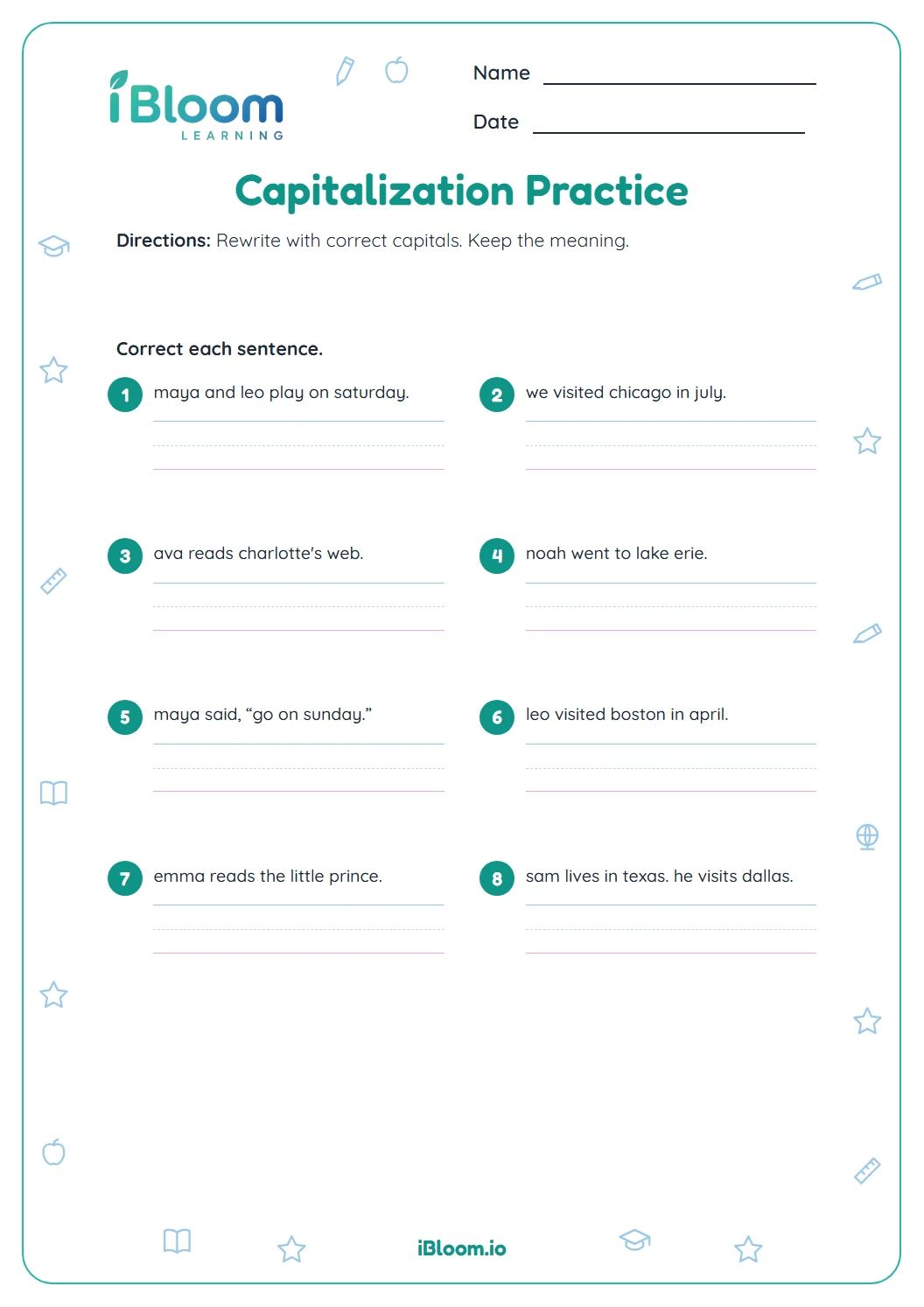
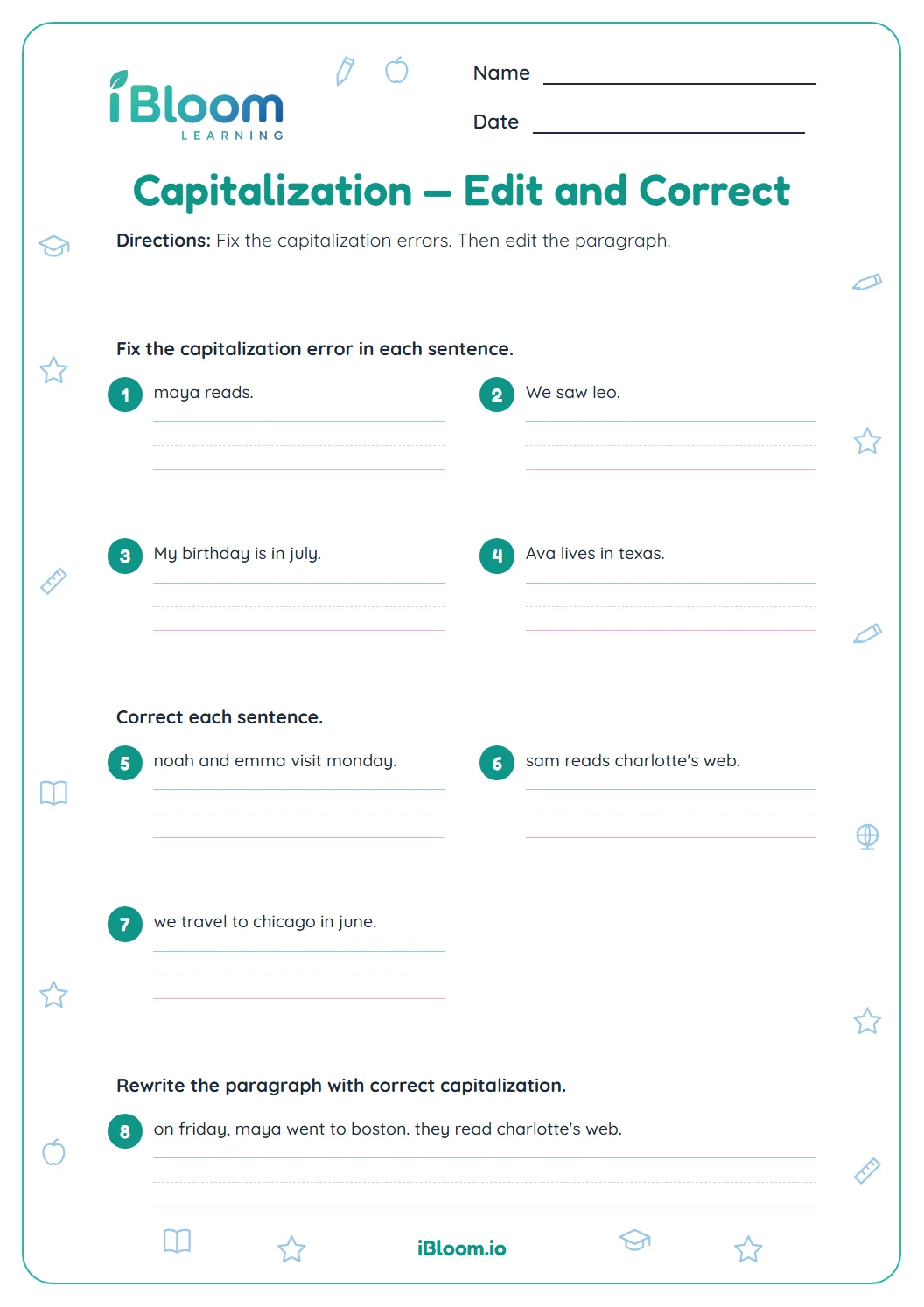
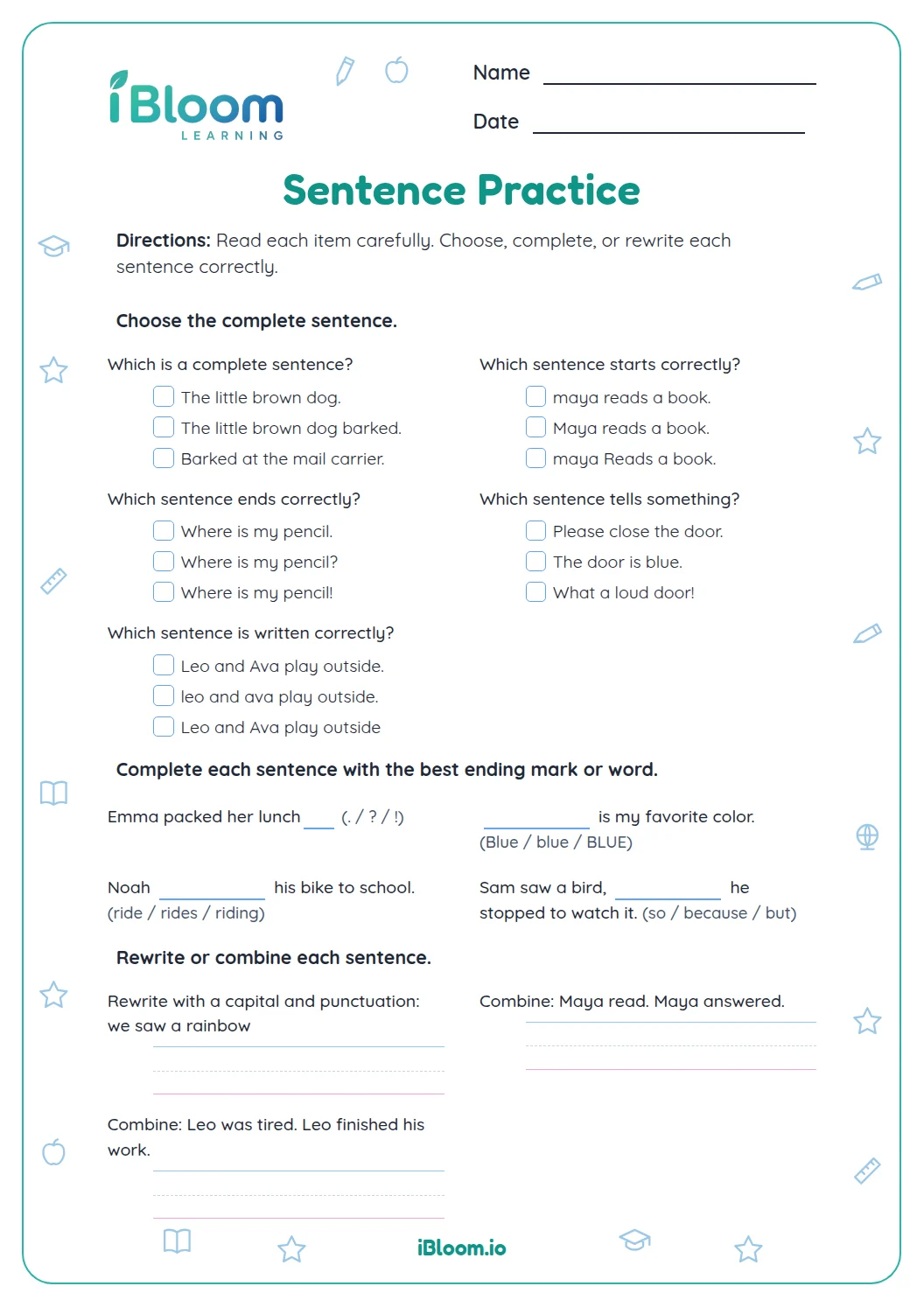
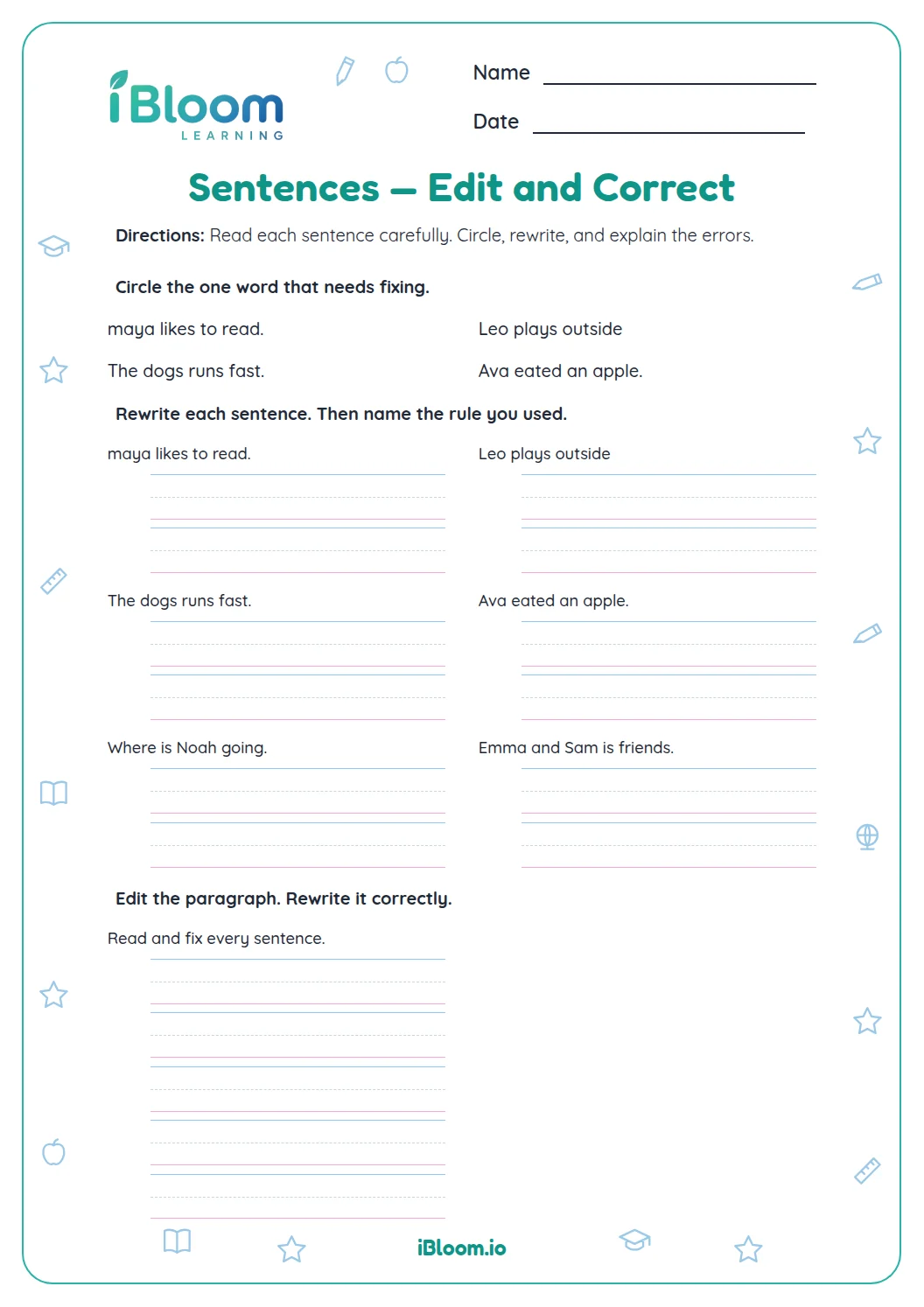
This Grade 2 punctuation worksheet pairs seven end-mark blanks with seven sentence edits. Students choose periods or question marks, then correct capitals, commas in lists and greetings, and apostrophes in a contraction or possessive. It includes 14 questions and a separate answer key. Each short item gives children a chance to read for meaning and check the marks that guide the reader.
Aligned to L.2.2
What punctuation skills appear on this page?
Fourteen short questions practice punctuation in two formats. Seven sentences ask students to supply an end mark; seven more ask them to choose a corrected sentence.
The choices focus on capitals, commas or apostrophes so students can compare how each mark changes the sentence.
- Capital letters and sentence beginnings
- Periods and question marks
- Commas in lists, greetings and direct address
- Apostrophes in contractions and possessives
How can students choose an end mark?
A statement usually ends with a period. A direct question ends with a question mark. Read the sentence as a whole to hear whether it asks something.
- 1q2) Where is my red hat?
- 2The sentence asks where the hat is, so it needs a question mark.
When does a sentence need a comma?
Commas separate items in a list and can follow a greeting or set off the person being addressed. Look at the words around the comma to decide its job.
- 1q12) Please bring paper, pencils, and glue.
- 2Commas separate the three items in the list.
What does an apostrophe show?
An apostrophe can stand for missing letters in a contraction, as in can’t. It can also show ownership, as in the bird’s nest.
How to use this worksheet
- 1Read the sentence and notice its meaning.
- 2Check the capital at the beginning.
- 3Decide whether the end mark matches a statement or a question.
- 4Look for a list, greeting, contraction or possessive.
- 5Compare the choices and select the version with correct marks.
Common mistakes and quick fixes
The mistake
Choosing a period for a sentence that asks a question.
The fix
Read it aloud; if it asks for information, finish with a question mark.
The mistake
Leaving out a comma between items in a list.
The fix
Name each item in the list and check for a comma between items.
The mistake
Using an apostrophe to make a plural.
The fix
Use an apostrophe for missing letters or ownership, not simply to make a word plural.
Common Core alignment
This worksheet asks students to apply standard English punctuation while editing short sentences.
Use standard capitalization and punctuation when correcting sentences.
On this sheet: The choices practice sentence capitals, end marks, commas, and apostrophes.
Show the official wordingHide the official wording
Demonstrate command of the conventions of standard English capitalization, punctuation, and spelling when writing.
What to practice next
Make more practice
Further reading
Questions parents and teachers ask
Which punctuation marks are practiced?
The questions include periods, question marks, commas and apostrophes. Students also check capital letters. Examples include commas in a list or greeting, an apostrophe in can’t, and the question mark after a direct question. The worksheet also places the mark in context, so students read the sentence before selecting. This makes meaning part of the editing decision.
How should students decide between a period and a question mark?
Read the sentence for its purpose. A statement that tells something ends with a period; a direct question that asks something ends with a question mark. The sentence wording, not just its first word, gives the clue. For practice, have the child say the sentence and then compare the punctuation choices. The question wording and marks should agree.
Why are there several answers that look almost the same?
The choices show different ways to punctuate and capitalize the same sentence. Students compare the complete options, then choose the one that follows standard conventions. For instance, the list sentence needs commas between each item, while a direct question ends with a question mark. Each item has one corrected choice.
Does the worksheet practice commas in lists?
Yes. Students correct sentences with three items, such as “paper, pencils, and glue.” The commas separate list items so the reader can tell where one item ends and the next begins. A greeting names the person being addressed, and the comma marks the greeting’s pause. Students can read it aloud to hear the break.
How many questions and pages are included?
There are 14 questions: seven end-mark blanks and seven sentence edits. The worksheet takes two pages, and its separate answer key takes two pages. The key shows each end mark or corrected sentence so an adult or student can check the edits after completing the practice.