Free printable practice
Adding Two Single Digit Numbers Sum 10 Or Less Practice Activities
Grade 1 worksheets for adding two single-digit numbers with sums of 10 or less using pictures, counters, equations, and early fact practice.
Free printable worksheet PDFs
Preview every available page, then download the free worksheet PDF for home, homeschool, tutoring, or classroom practice.
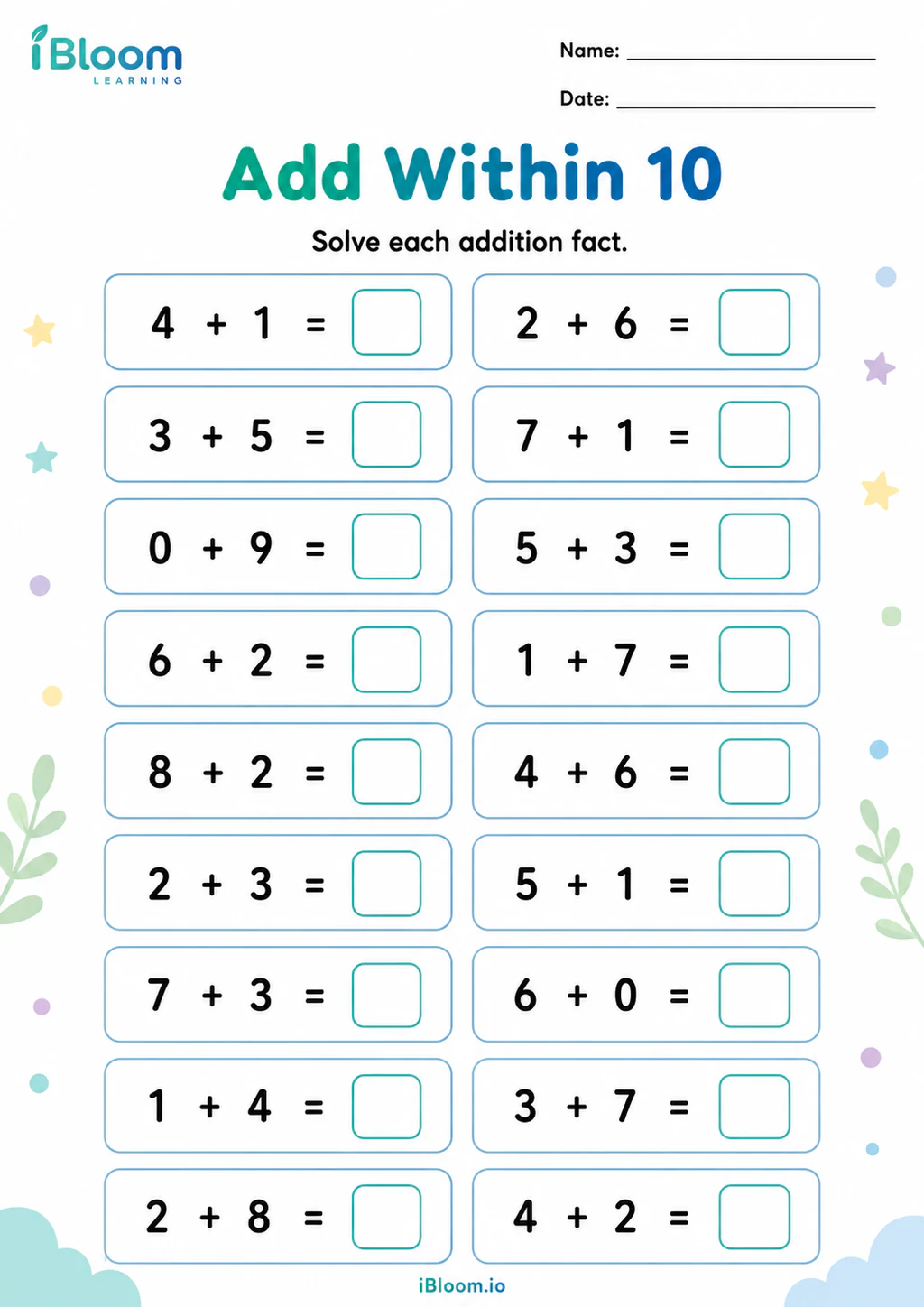
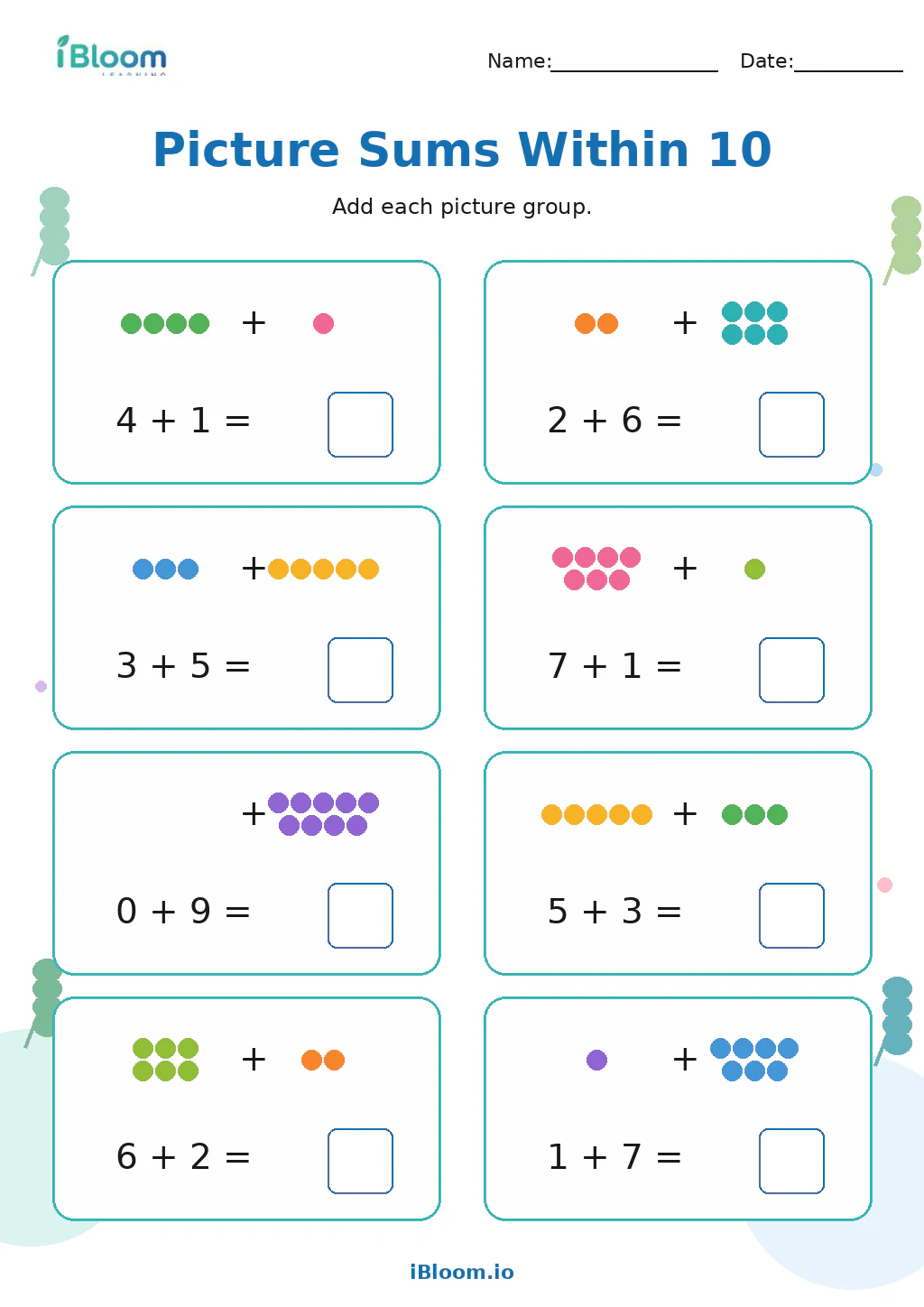
Preview the exact activity before downloading it.
Practice that builds confidence
Building the Meaning of Addition
These Grade 1 addition worksheets help children practise adding two single-digit numbers where the total is 10 or less. Learners build comfort with basic facts such as 2 + 3, 4 + 4, and 7 + 2 while connecting counting to the symbols + and =.
The printable activities include clear equations, visual supports, and mixed practice that encourage children to count on, use fingers or counters wisely, and begin remembering small sums. They are useful for home practice, math centers, review work, or early addition intervention.
Adding two single-digit numbers with sums up to 10 is one of the first major steps in Grade 1 math. Children learn that addition joins groups and that the two numbers being joined are addends. A worksheet might show 3 + 2, a picture of two groups, or a blank equation for the child to complete. Keeping totals at 10 or less helps learners focus on the action of adding without being overwhelmed by larger numbers.

From Counting All to Counting On
Early learners may count every object in both groups: 1, 2, 3, then 4, 5. As they gain confidence, they can start with the larger addend and count on: for 6 + 2, say “6, 7, 8.” These worksheets support that progression through repeated, manageable practice. Ten-frames, dots, fingers, number lines, and simple pictures can all help children see why the sum makes sense.
A Simple Parent Routine
At home, choose a small set of problems and ask your child to explain one or two answers aloud. For example: “How did you know 5 + 3 is 8?” Encourage a strategy instead of only checking speed. Use pennies, cereal pieces, or toy blocks for tricky problems. After the worksheet, play a quick oral game: say one addend under 10 and ask, “What happens if we add 1?” or “What makes 10 with 4?”

Classroom Uses for Teachers
Teachers can use these pages for morning work, small-group reteaching, math centers, or quick checks after an addition lesson. They also work well for pairing students: one child solves, while the other checks with counters or a number line. Because all sums are 10 or less, the sheets fit lessons on composing numbers, fluency within 10, and connecting pictures to equations.

Common Errors to Watch For
Some children mix up the plus and equals signs, write one addend as the answer, or miscount when moving from objects to numerals. Others double-count the starting number when counting on, saying “6, 6, 7” for 6 + 2. Encourage children to touch each object once, circle groups carefully, and read the full equation as a number sentence: “Six plus two equals eight.”
Free printable PDF download
Use this adding two single digit numbers sum 10 or less worksheet page to preview the activity, print it, or download it as a PDF for quick practice. It works well for homework, homeschool lessons, tutoring, morning work, revision, and classroom centers.
Answers and answer key support
After the child completes the worksheet independently, parents and teachers can use the answer support or answer key information to check the work, review mistakes, and choose the next practice step.
Why iBloom Worksheets Help
The practice is focused on one clear skill: two single-digit addends with totals no greater than 10. That narrow range lets children build accuracy, confidence, and early fact memory before moving to larger sums. A child-friendly strategy is: start with the bigger number, count on the smaller number, then check that the answer is not more than 10.
Helpful answers
Frequently asked questions
What does “sum 10 or less” mean on these worksheets?
It means each addition problem uses two single-digit numbers, and the answer is never greater than 10, such as 4 + 3 = 7 or 6 + 4 = 10.
Are these worksheets suitable for first graders who still count on fingers?
Yes. Finger counting, counters, and drawings are appropriate supports at this stage. The goal is to move gradually from counting all to counting on and then to remembering common facts.
Which addition strategies fit this page best?
Helpful strategies include counting on from the larger number, using a ten-frame, drawing dots, using a number line, and recognizing small doubles such as 2 + 2 or 4 + 4.
How can I help my child if they keep getting one more or one less than the correct answer?
Ask your child to slow down and touch or mark each object once while counting. For counting on, remind them not to count the starting number again; for 5 + 2, they should say “5, 6, 7.”
Can teachers use these for addition fluency practice?
Yes. They are useful for fluency within 10, small-group review, independent centers, and checking whether students understand the meaning of addition as well as the answer.
Is this adding two single digit numbers sum 10 or less worksheet free?
Yes. You can preview it for free and use the printable worksheet for home or classroom practice.
Can I download this adding two single digit numbers sum 10 or less worksheet as a PDF?
Yes. Use the worksheet download option to save a printable PDF, or print the worksheet directly from the page.
Does this adding two single digit numbers sum 10 or less worksheet include answers or an answer key?
When the activity has fixed answers, iBloom includes answer support so parents and teachers can check the completed worksheet.