Free printable practice
Adding Whole Tens 2 Digits Practice Activities
Grade 1 worksheets for adding whole tens to 2-digit numbers using place value, number patterns, and clear written addition practice.
Free printable worksheet PDFs
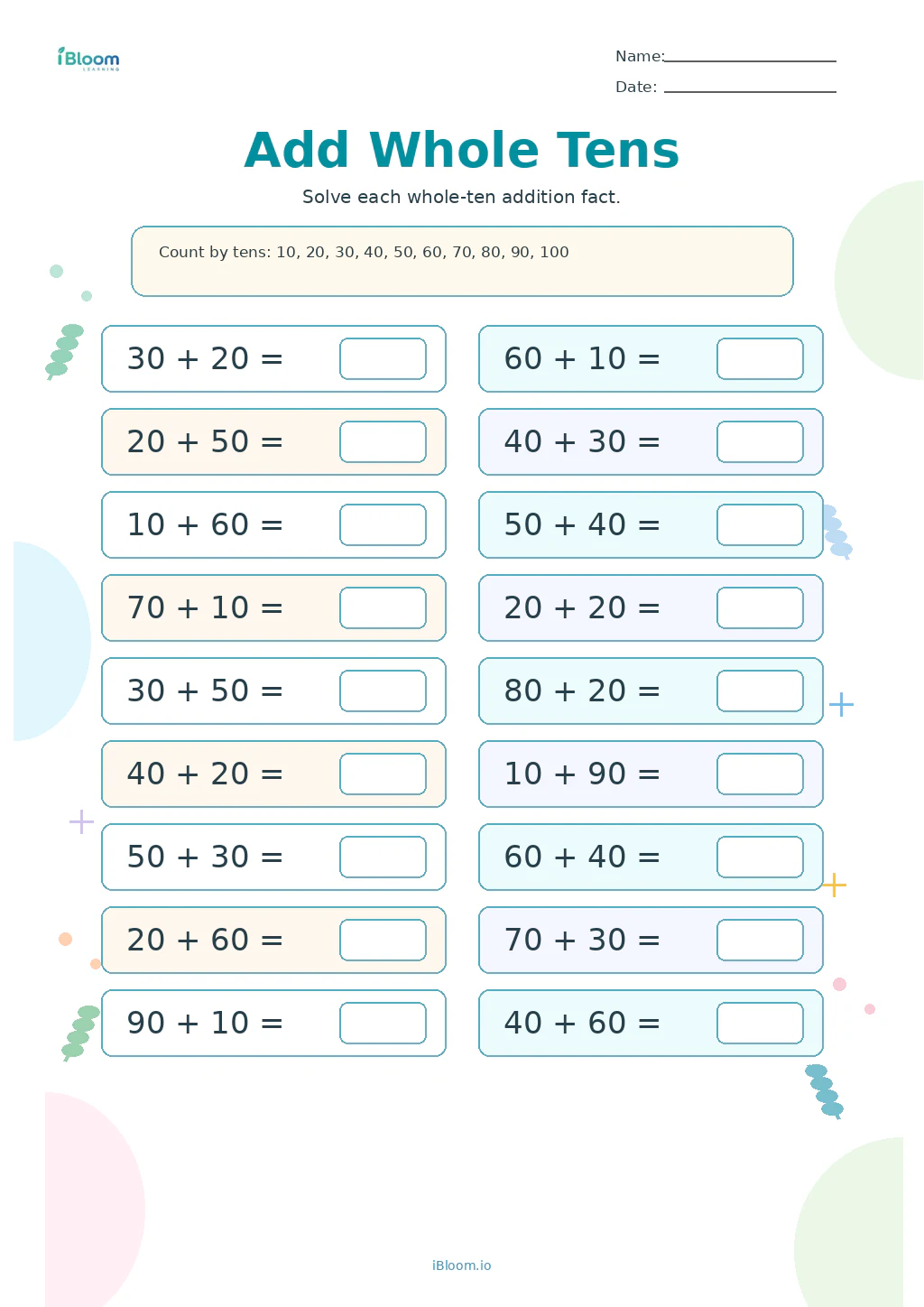
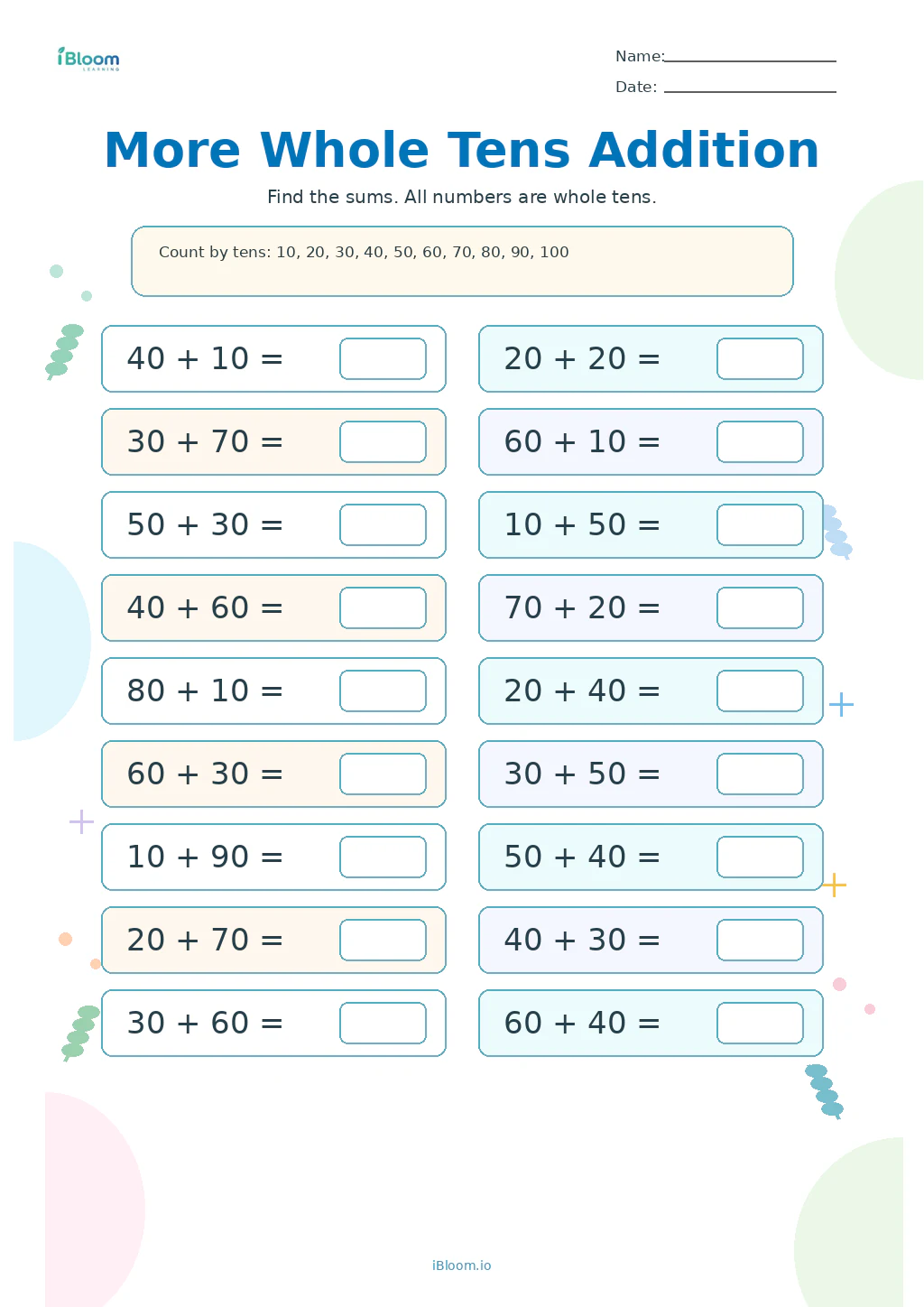
Preview every available page, then download the free worksheet PDF for home, homeschool, tutoring, or classroom practice.
Preview the exact activity before downloading it.
Practice that builds confidence
What this skill builds
These Grade 1 addition worksheets help children practise adding whole tens to 2-digit numbers, such as 34 + 20 or 61 + 30. The focus is on place value: the tens change, while the ones usually stay the same.
The printable activities include straightforward sums, visual place-value thinking, number pattern practice, and mixed problems that help children build speed without guessing. They are useful for home review, extra class practice, or math centers.
Adding whole tens to 2-digit numbers is an important step between counting by tens and adding larger numbers mentally. Children learn that 10, 20, 30, and other whole tens add to the tens place. In 46 + 20, the 4 tens become 6 tens, and the 6 ones remain 6, so the answer is 66.

How the worksheets progress
The activities begin with clear 2-digit plus whole-ten equations, then move toward mixed practice where children must look carefully at both addends. Some problems encourage children to notice patterns, such as 23 + 10, 23 + 20, and 23 + 30. This supports flexible thinking instead of one-by-one counting.
A simple parent routine
At home, choose a few problems and ask your child to say the tens and ones before writing the answer. For example: “52 has 5 tens and 2 ones. Add 30, or 3 tens. Now there are 8 tens and 2 ones: 82.” Use dimes and pennies, base-ten blocks, or quick sketches if your child needs to see the tens being added.

Classroom uses
Teachers can use these pages for morning work, small-group reteaching, independent practice, or math centers. They also work well after lessons on place value, counting by tens from any number, or using open number lines. Students can solve independently, then compare strategies with a partner.

Common errors to watch for
Some children add the whole ten to the ones digit, turning 34 + 20 into 36. Others count by ones instead of tens, which slows them down and increases mistakes. Watch for reversed digits, skipped tens, and answers that change both the tens and ones when only the tens should change.
Free printable PDF download
Use this adding whole tens to 2 digit numbers worksheet page to preview the activity, print it, or download it as a PDF for quick practice. It works well for homework, homeschool lessons, tutoring, morning work, revision, and classroom centers.
Answers and answer key support
After the child completes the worksheet independently, parents and teachers can use the answer support or answer key information to check the work, review mistakes, and choose the next practice step.
Why iBloom worksheets help
The iBloom practice is focused on one Grade 1 addition idea at a time, so children can notice the pattern and build confidence. A child-friendly strategy is: “Circle the tens number, add it to the tens place, keep the ones the same, then read the new number.” This gives young learners a repeatable method they can use before moving on to more complex addition.
Helpful answers
Frequently asked questions
What does adding whole tens to 2-digit numbers mean?
It means adding numbers like 10, 20, 30, or 40 to a 2-digit number. Children use place value to increase the tens while keeping the ones the same in many problems, such as 45 + 30 = 75.
Is this worksheet set suitable for Grade 1?
Yes. It is designed for Grade 1 addition practice, especially after children understand tens and ones and can count by tens from numbers other than 10.
Should my child use blocks or draw pictures?
Yes, if needed. Base-ten blocks, dimes and pennies, or quick tens-and-ones drawings can help children see why 36 + 20 becomes 56 rather than 38.
What mistake is most common with this skill?
A common mistake is adding the tens to the ones digit. For example, a child may think 27 + 40 is 31. Remind them that 40 means 4 tens, so the tens place changes.
How can teachers use these worksheets in class?
Teachers can use them for math centers, small-group review, independent practice, morning work, or quick checks after teaching place value addition with whole tens.
Is this adding whole tens to 2 digit numbers worksheet free?
Yes. You can preview it for free and use the printable worksheet for home or classroom practice.
Can I download this adding whole tens to 2 digit numbers worksheet as a PDF?
Yes. Use the worksheet download option to save a printable PDF, or print the worksheet directly from the page.
Does this adding whole tens to 2 digit numbers worksheet include answers or an answer key?
When the activity has fixed answers, iBloom includes answer support so parents and teachers can check the completed worksheet.