


About this worksheet
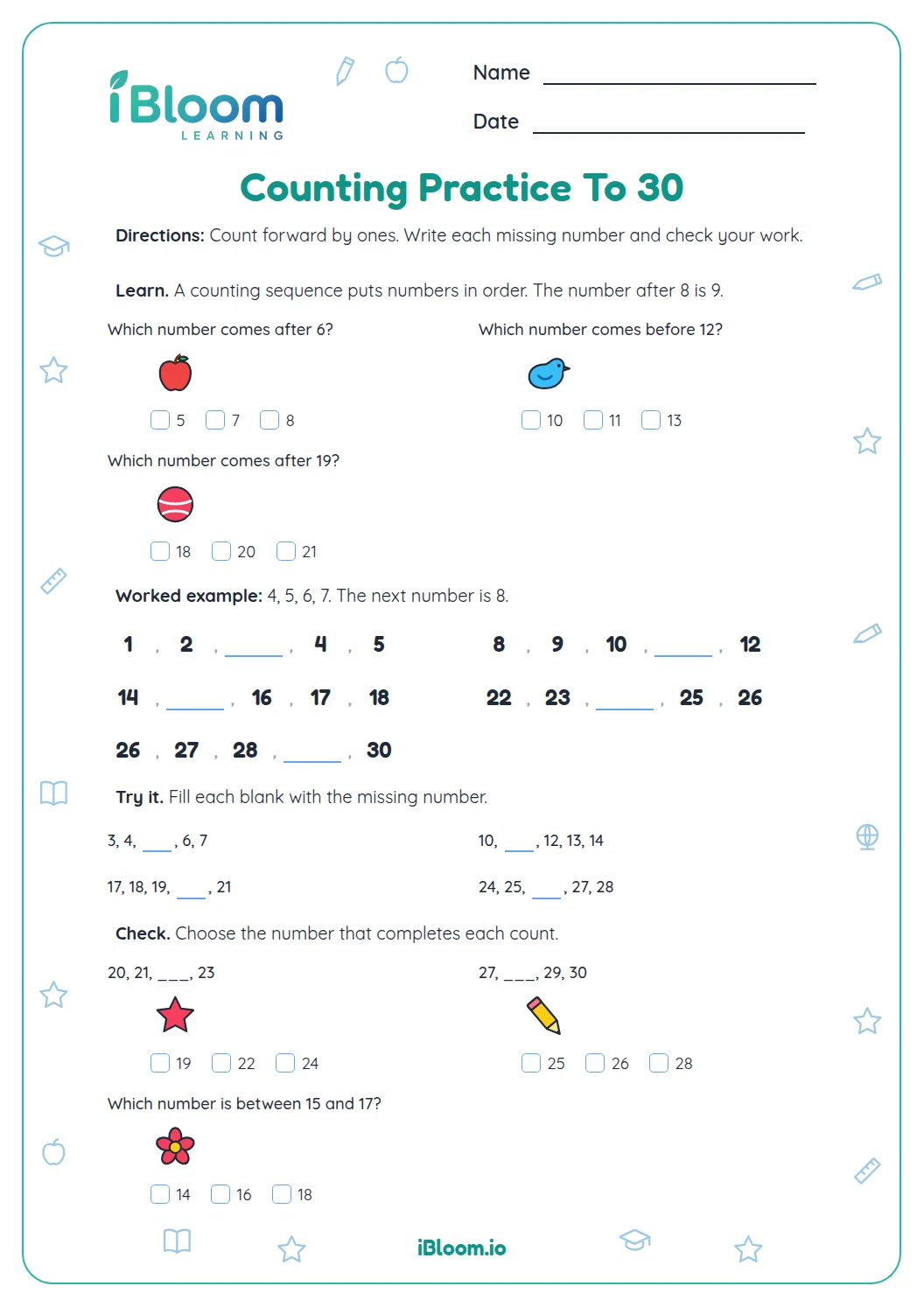
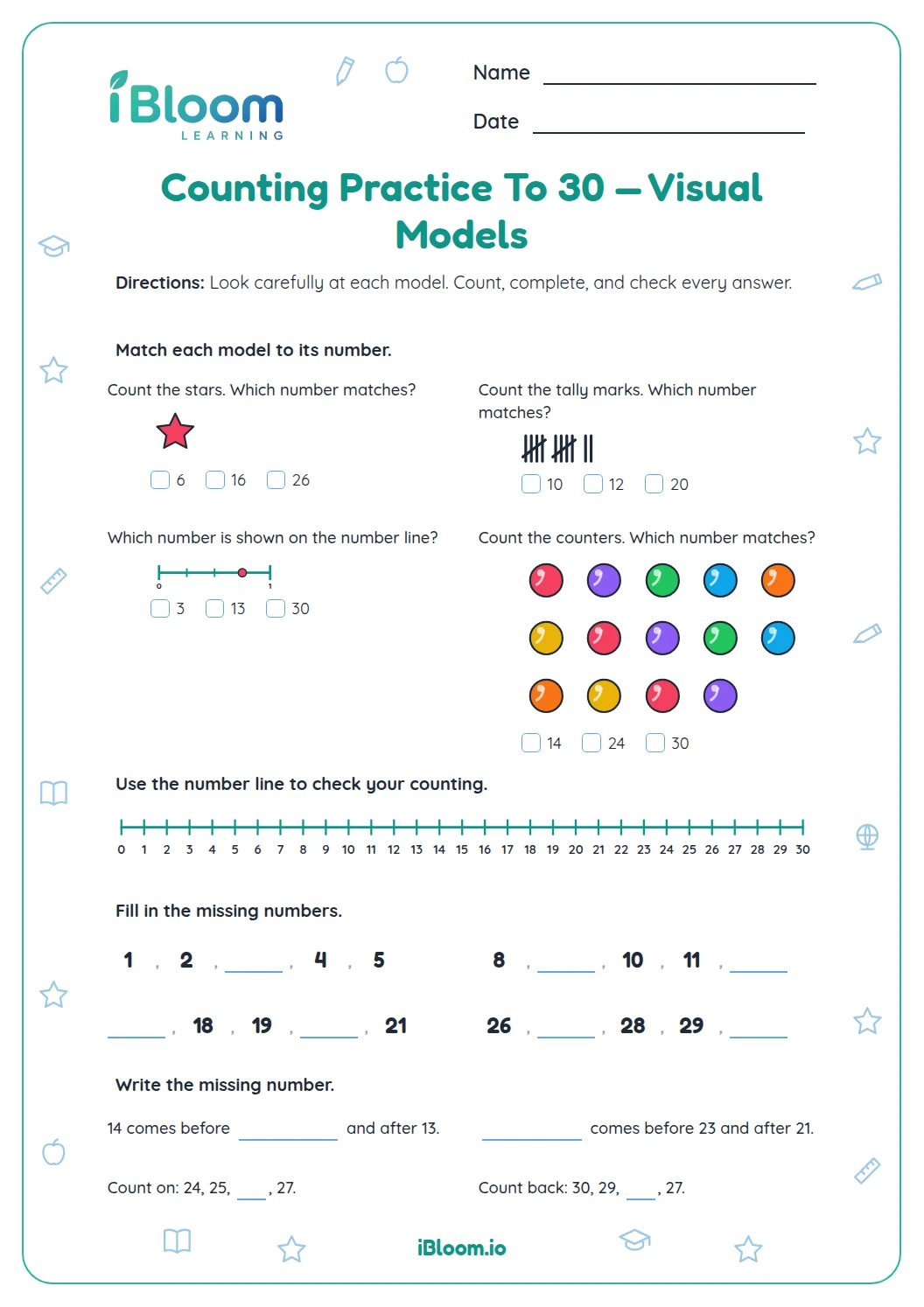
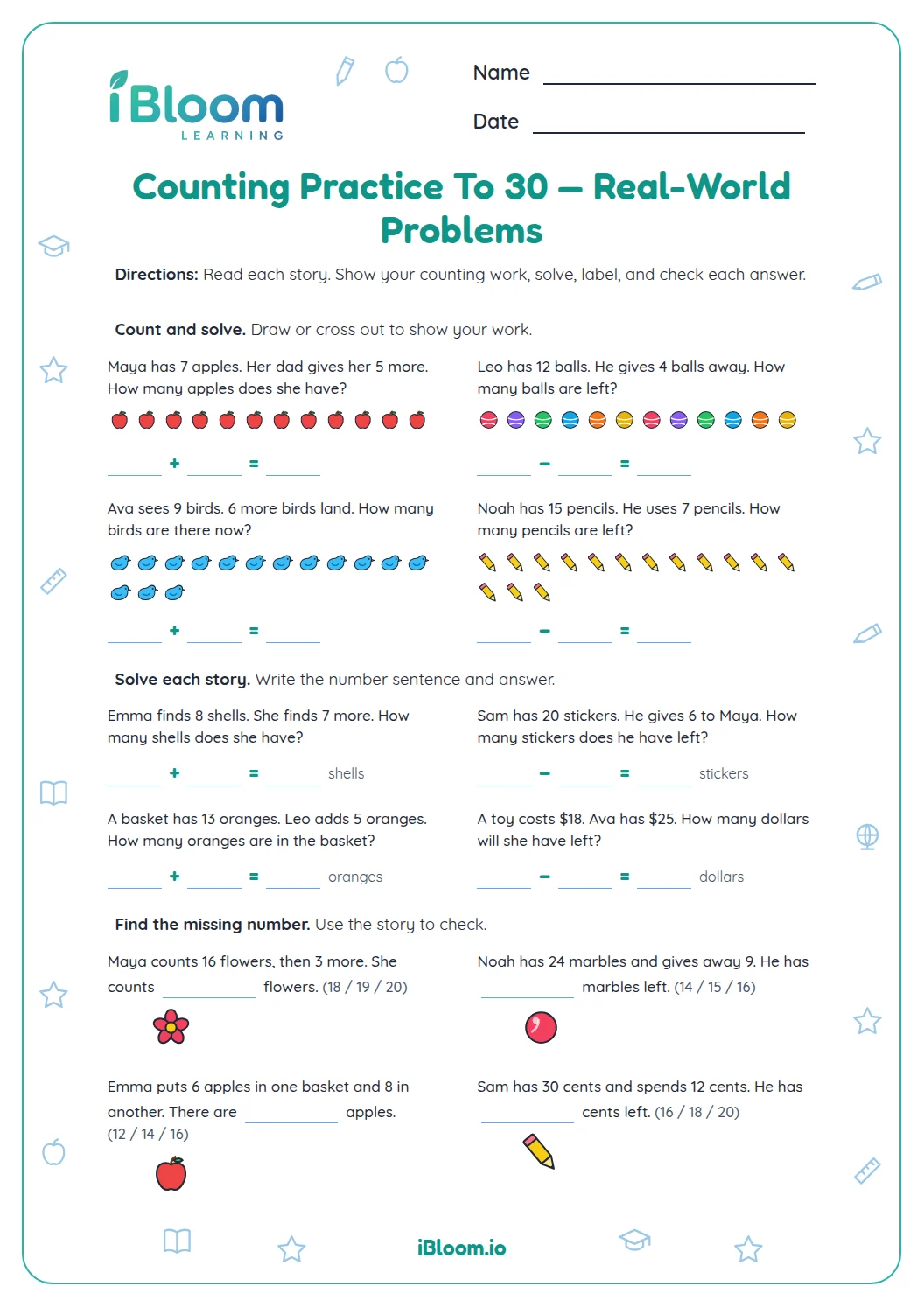
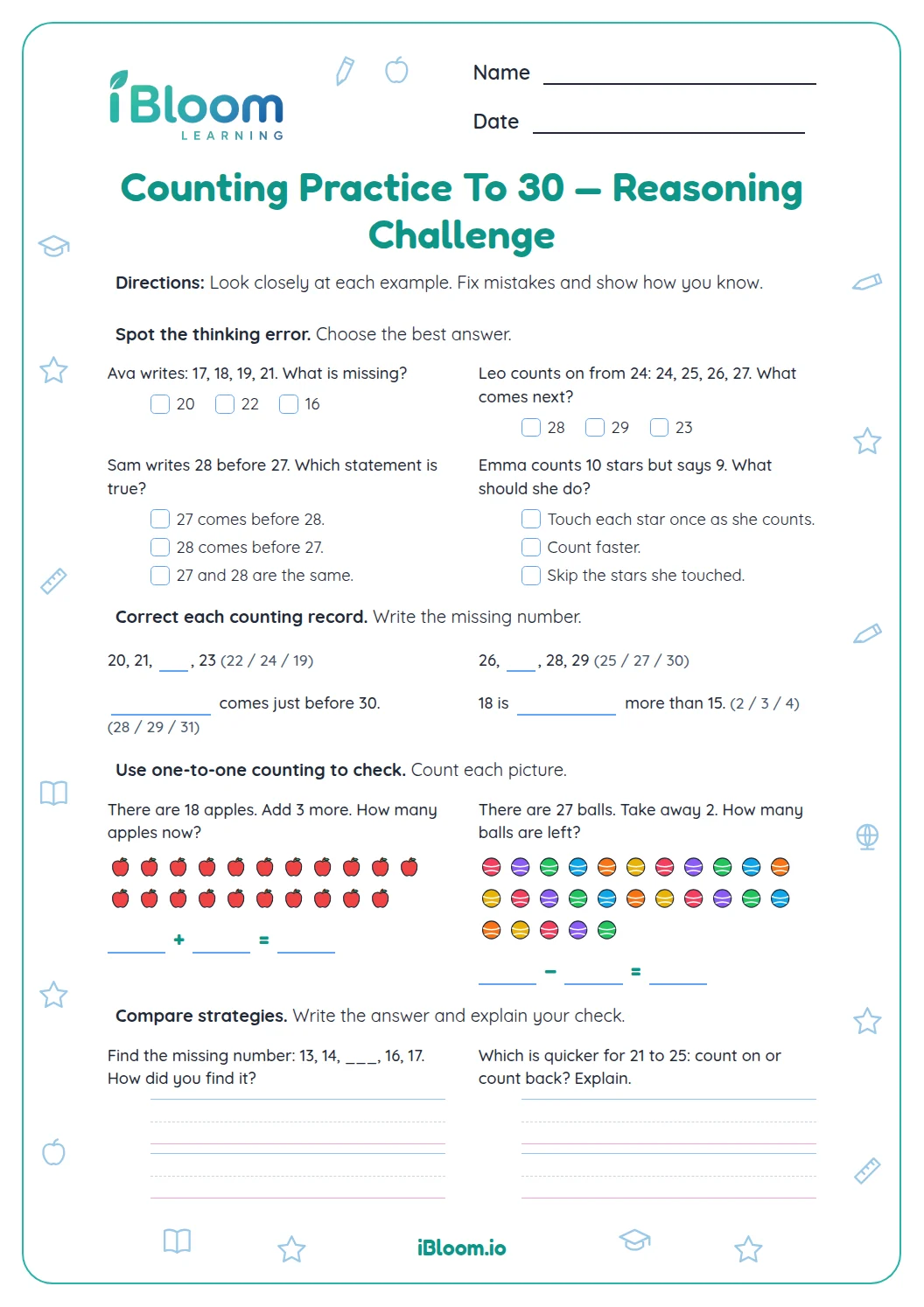
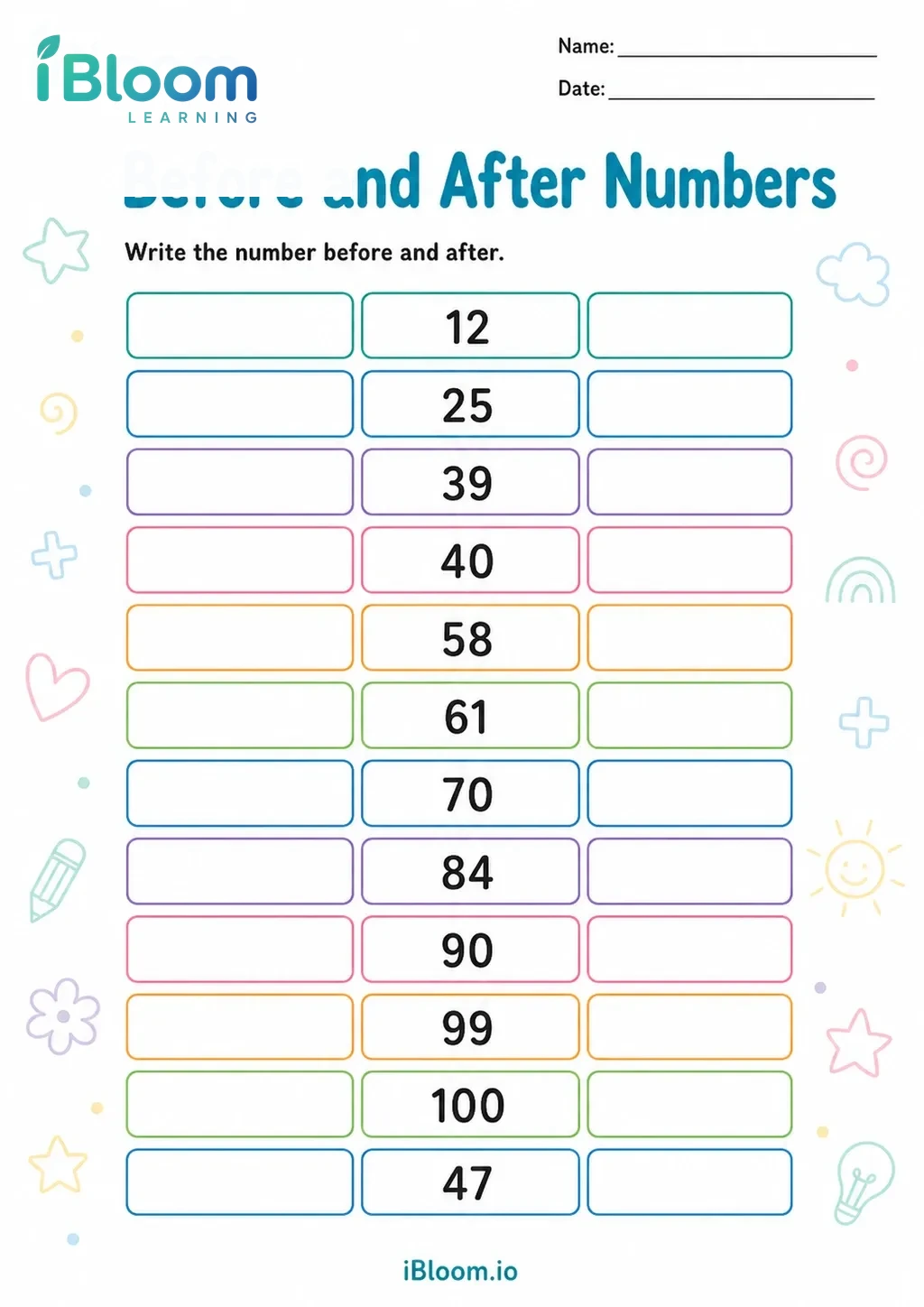
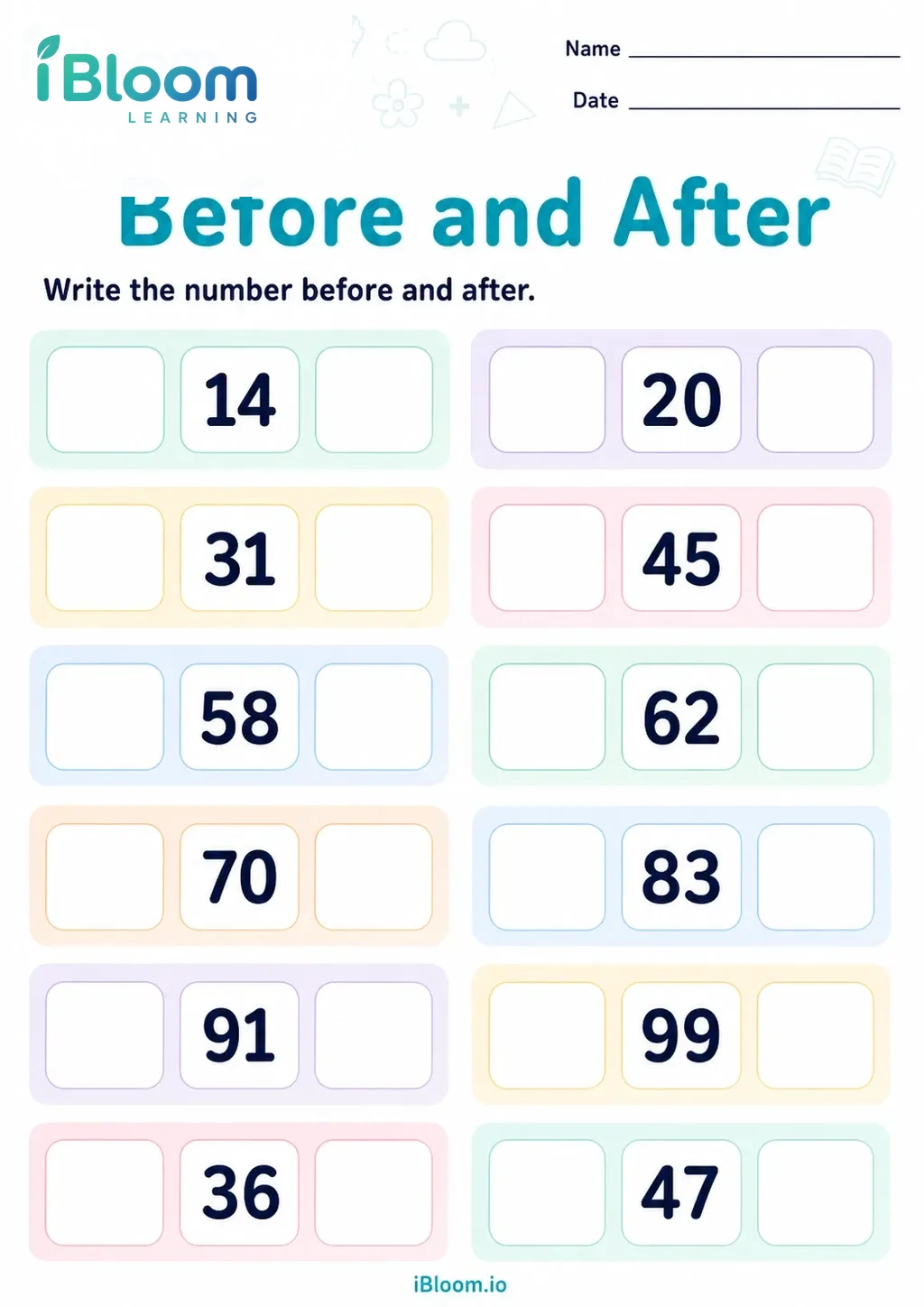
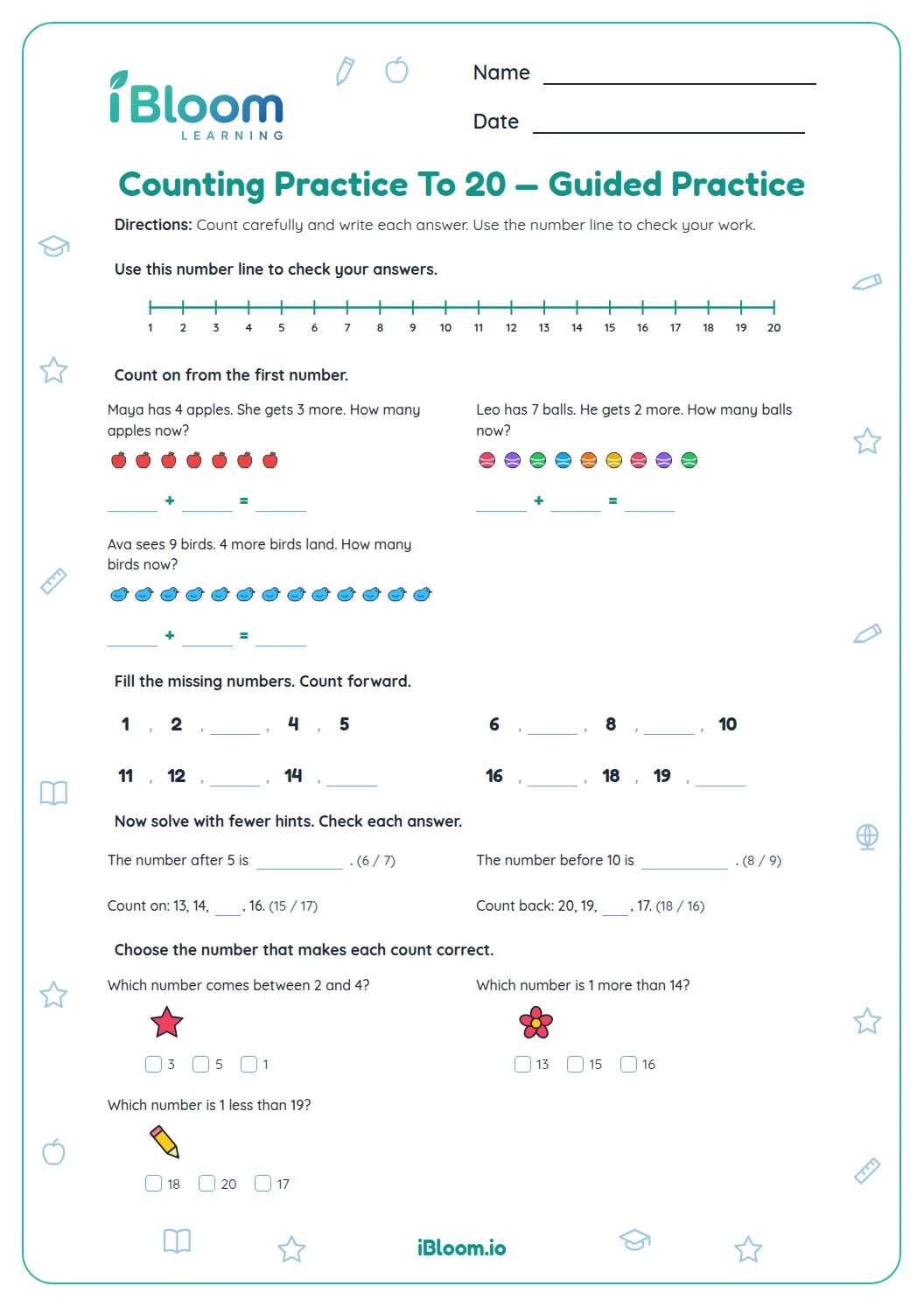
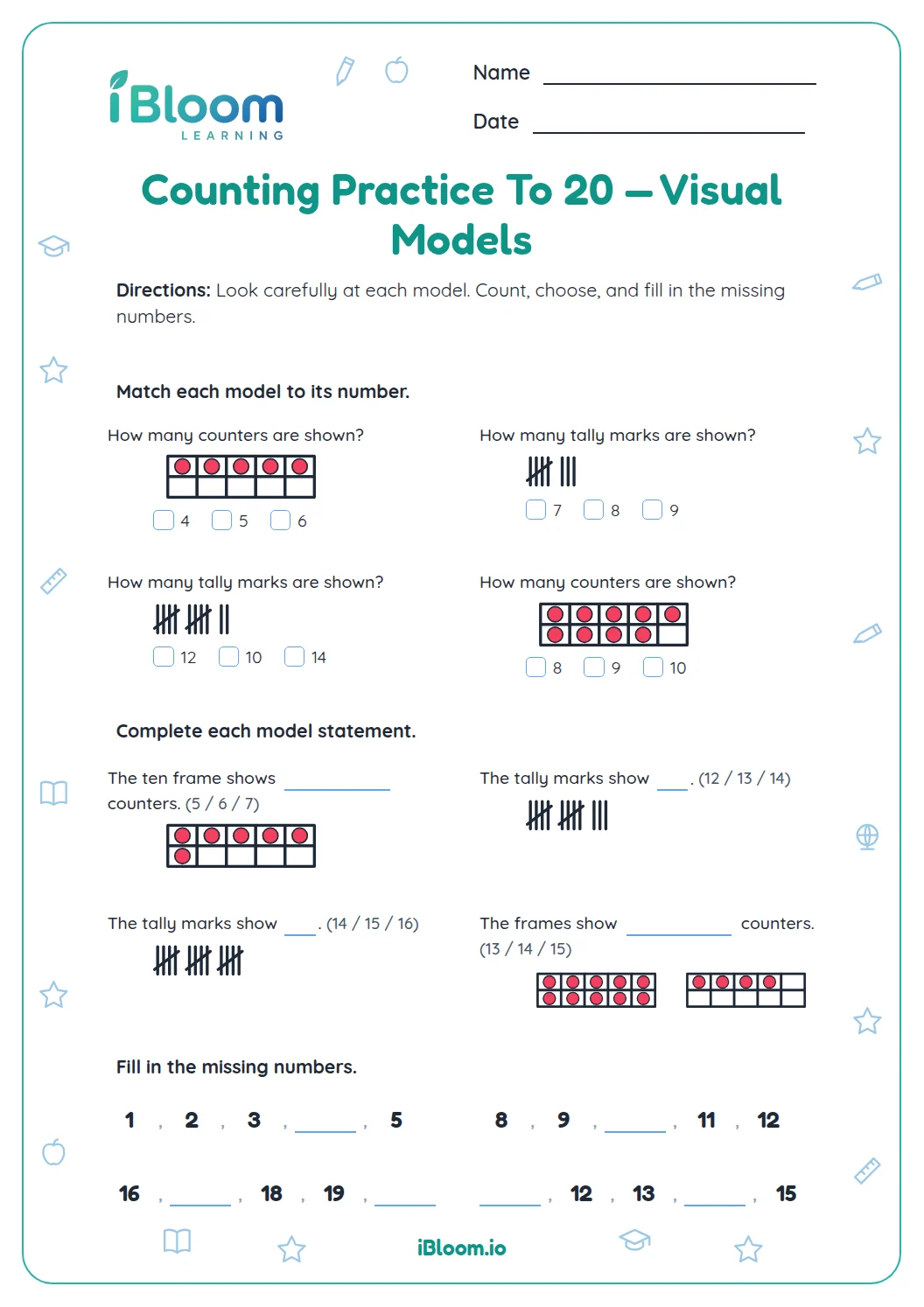
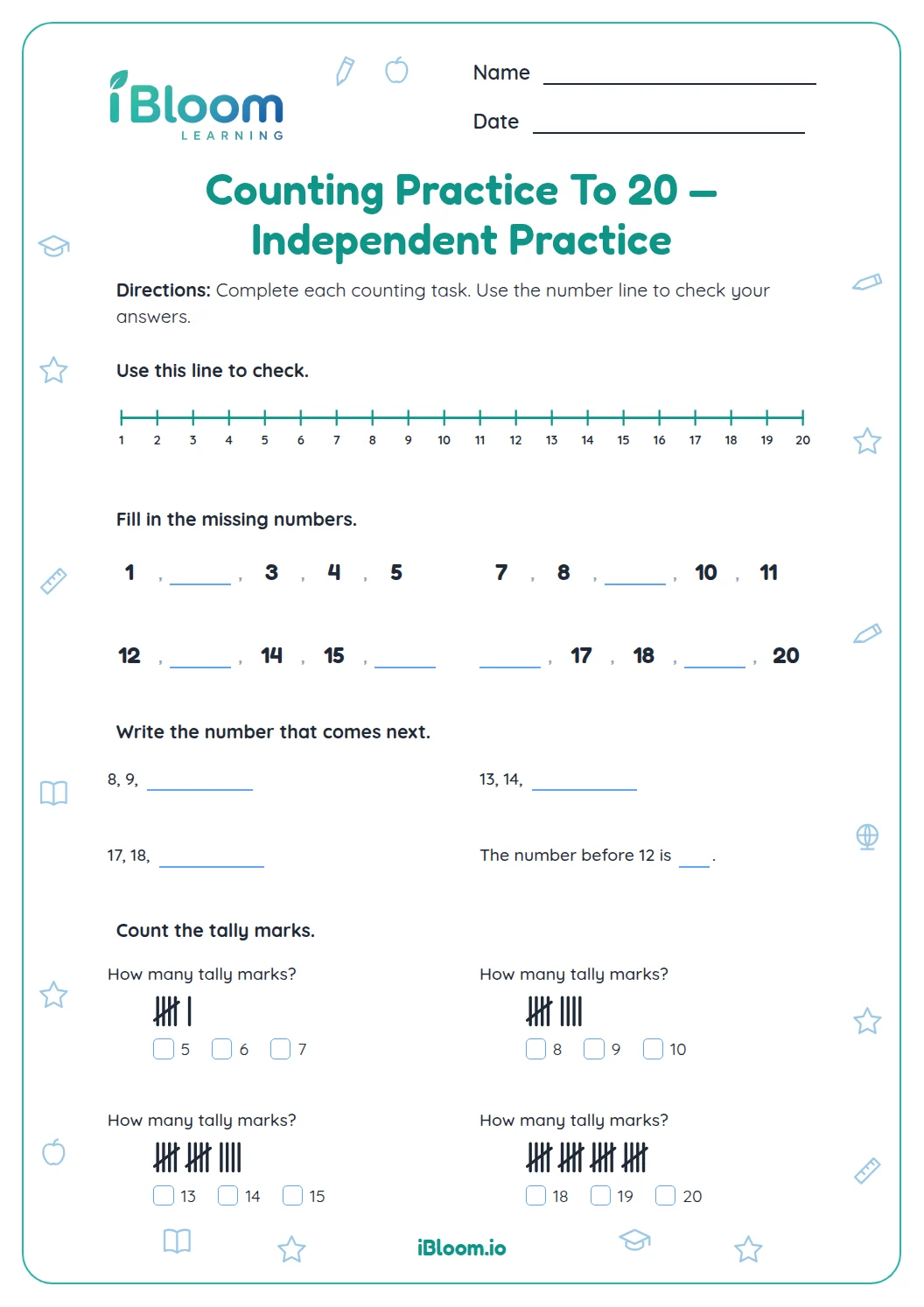
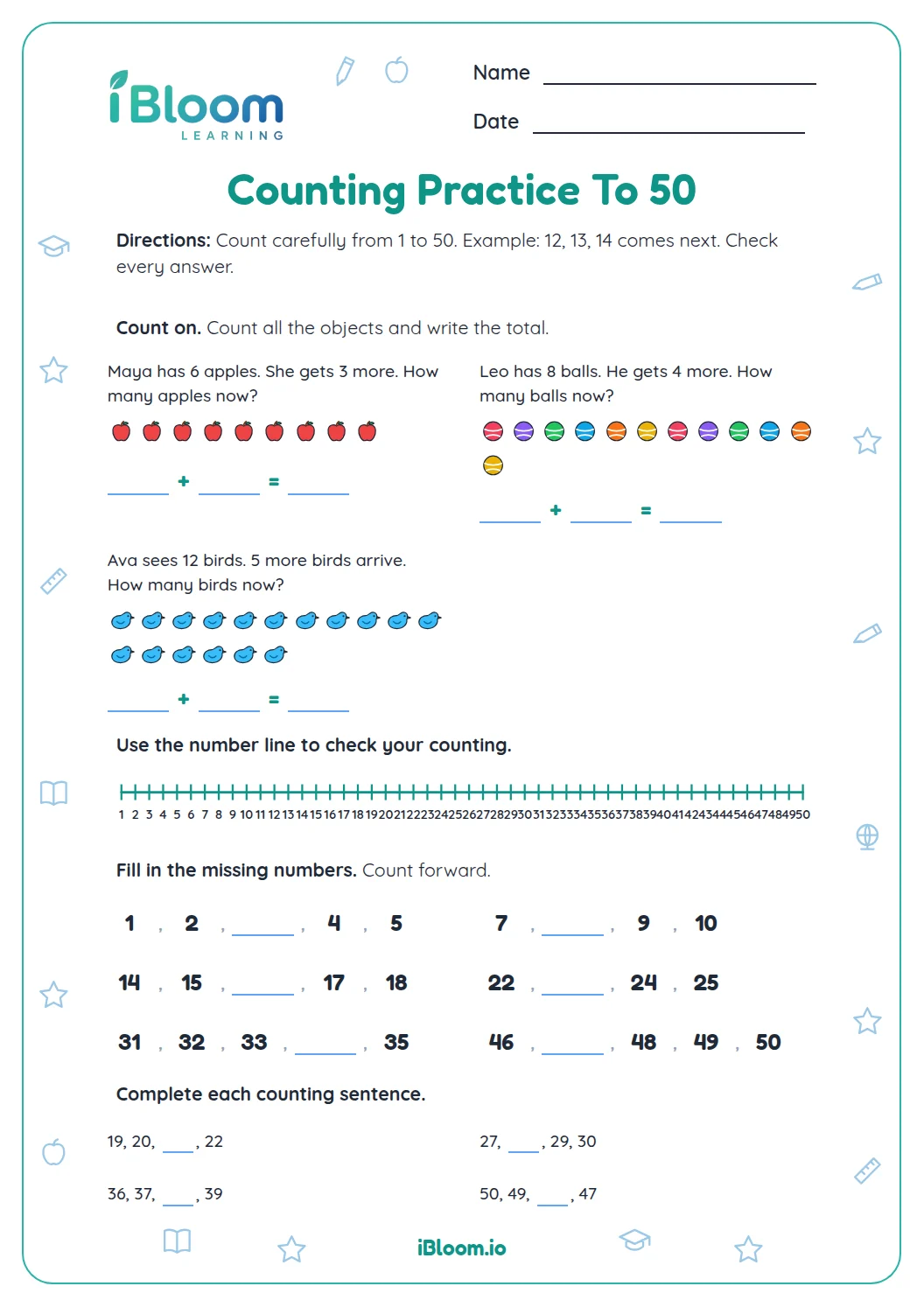
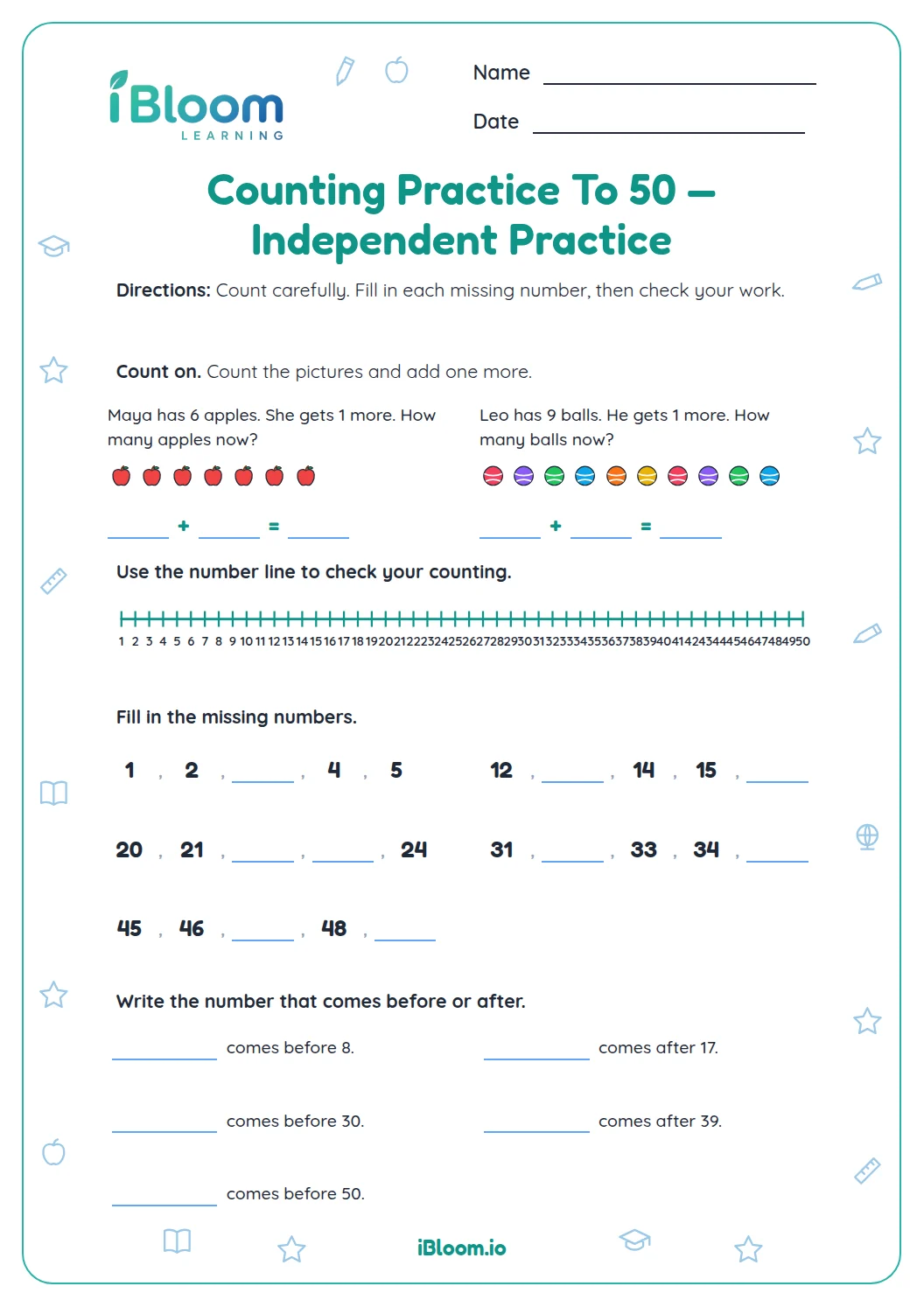
This free Grade 1 number worksheet gives children guided counting practice through 30. Learners complete number sequences, name numbers before and after a given number, count on and back, and compare nearby numbers. It has 16 questions and a separate answer key, aligned to CCSS 1.NBT.A.1.
Aligned to 1.NBT.A.1
How can children find a missing number?
Say the numbers before and after the blank. The missing number must fit between them in the counting order.
In question 8, 23 is between 22 and 24. Counting aloud helps confirm the sequence.
How to use this worksheet
- 1Read each sequence from left to right.
- 2Say the numbers aloud and pause at each blank.
- 3Use the numbers on both sides to find what is missing.
- 4For count-back questions, say each step backward clearly.
- 5Check that every answer stays within 1 to 30.
Common mistakes and quick fixes
The mistake
Skipping a number when counting on.
The fix
Touch or point once for each number said.
The mistake
Saying the next number instead of the previous one.
The fix
Start with the given number and move one step backward.
The mistake
Reversing which number is greater.
The fix
Count forward from the smaller number to compare.
Common Core alignment
This worksheet gives focused practice with the standard below.
Count to 120, starting at any number less than 120.
On this sheet: This page practices ordered counting and locating numbers within 1–30.
Show the official wordingHide the official wording
Count to 120, starting at any number less than 120. In this range, read and write numerals and represent a number of objects with a written numeral.
What to practice next
Make more practice
Further reading
Questions parents and teachers ask
What numbers does this worksheet use?
Every item stays within 1 to 30. Children fill missing numbers, identify nearby numbers, and count forward or backward through the sequence. The sequence questions include blanks in the teens and twenties, plus a final count to 30. No answer requires counting beyond 30.
How can a child find the number before another number?
Count back one step from the given number. For example, the number before 10 is 9; saying the sequence aloud helps confirm it. The number immediately before 10 is 9 because the sequence goes 8, 9, 10. Counting one step back gives the previous number.
Does this page practice counting backward?
Yes. One item starts at 28 and asks the learner to count back three numbers, staying within the target range. The learner says 28, 27, 26, 25 when counting back three numbers from 28; the last number said is 25.
Is an answer key included?
Yes. A separate answer key lists the missing numbers and short responses so an adult can check the completed page. Adults can ask the learner to say a completed sequence aloud. Hearing the full order can reveal a skipped number or a repeated number.
Does the practice reach 30?
Yes. The number sequences include 30, and the final question asks what comes one more than 29. Students can count forward from 29 to see that the next number is 30. The questions stay within the stated counting range.