




About this worksheet
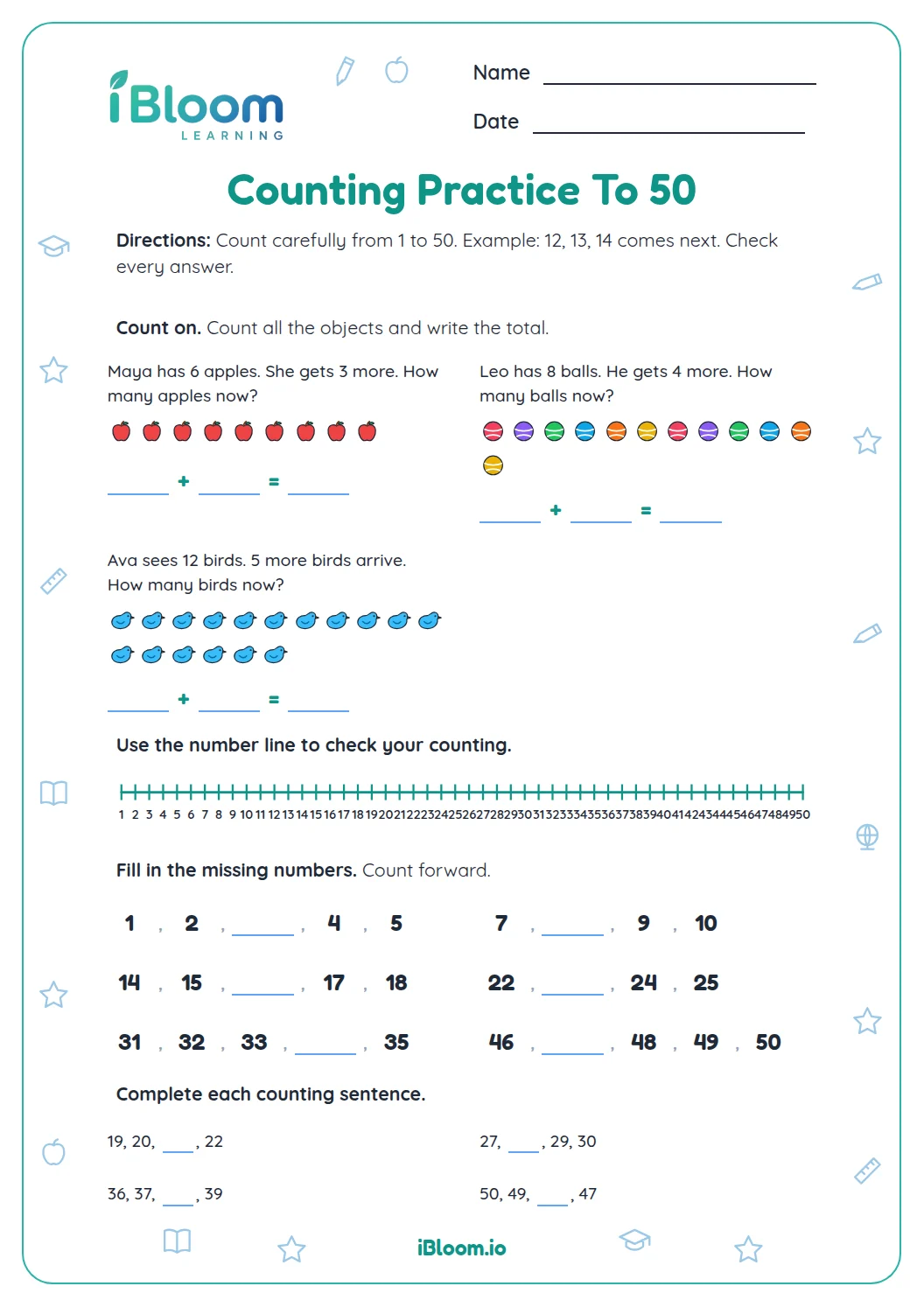
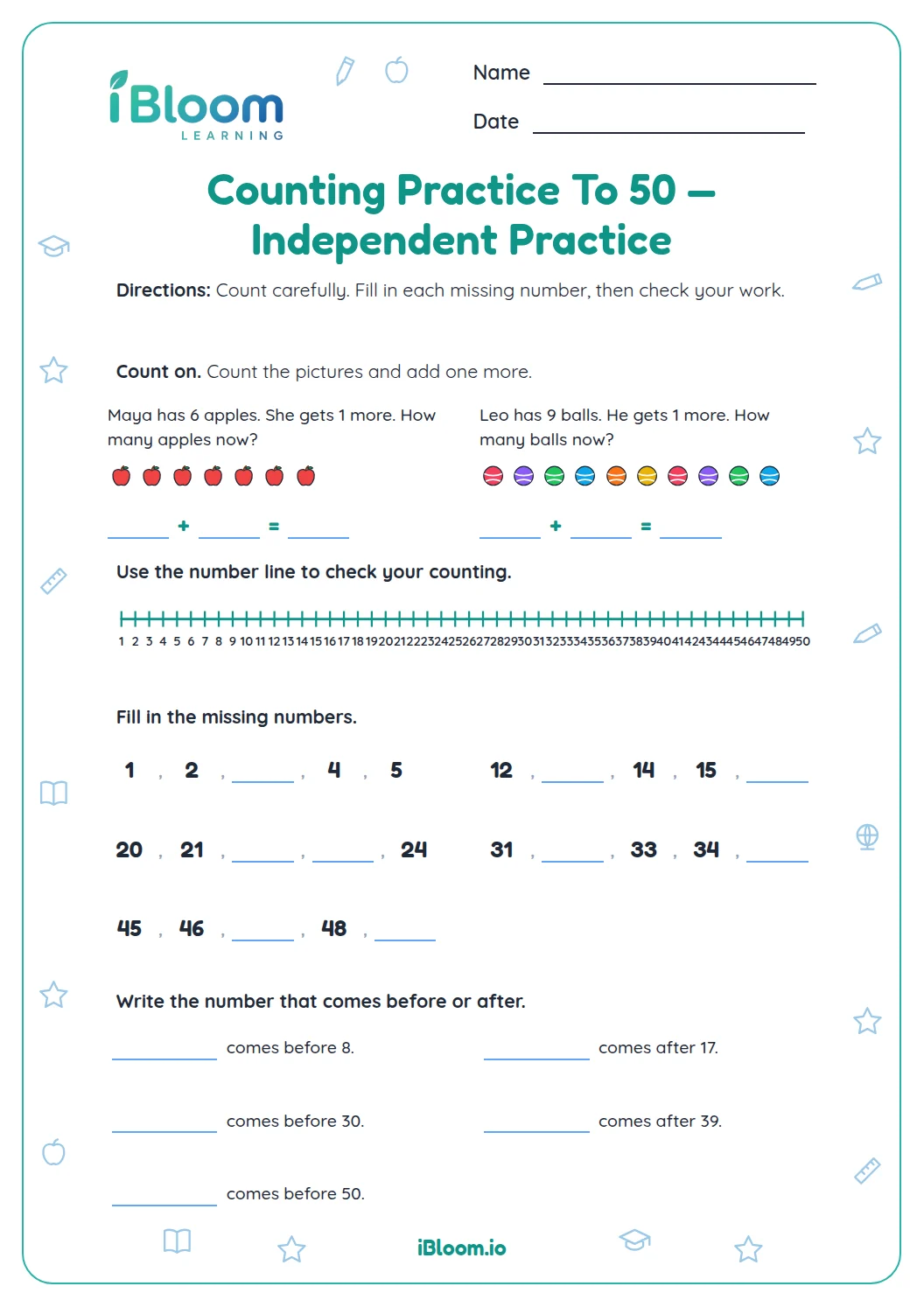
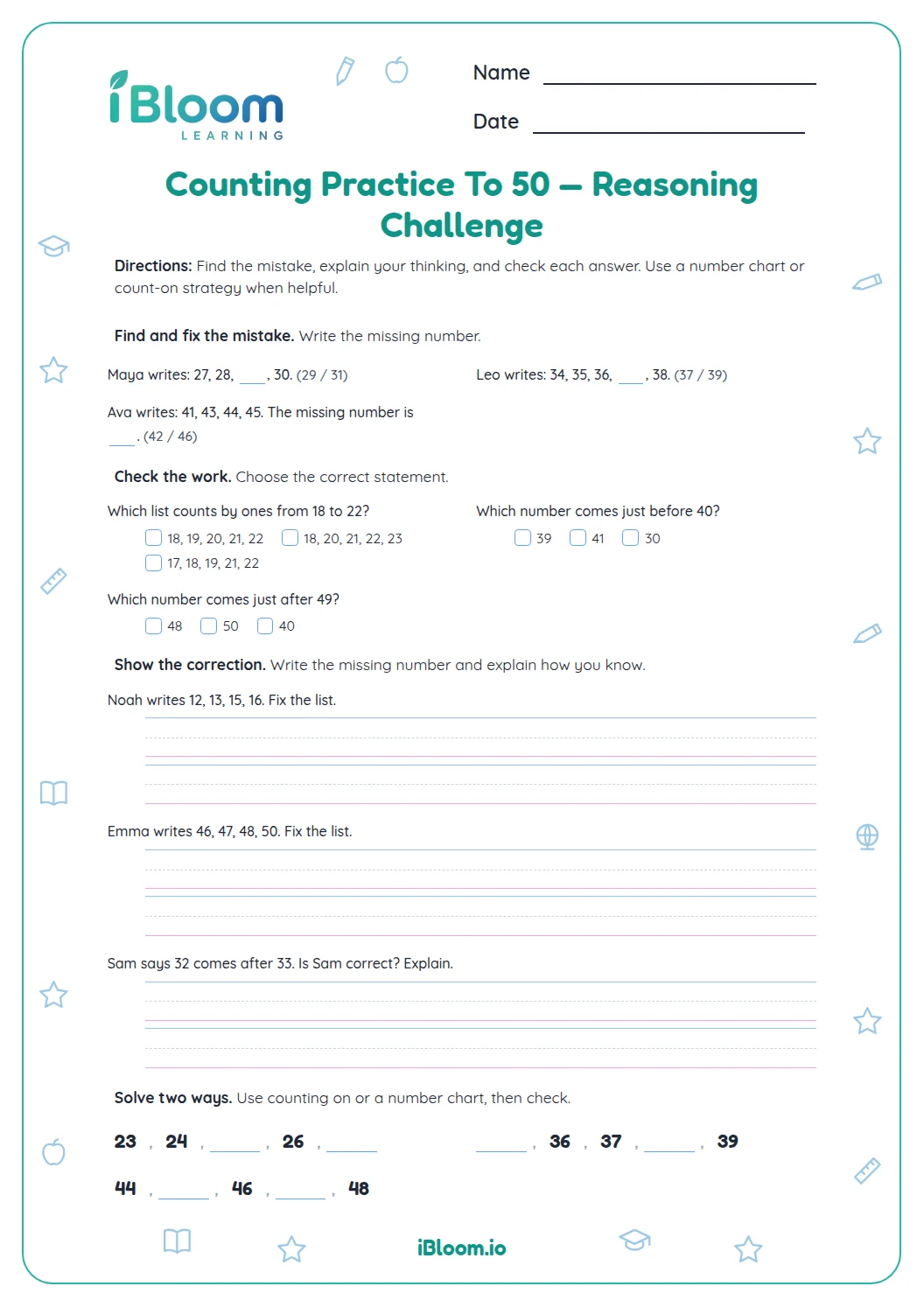
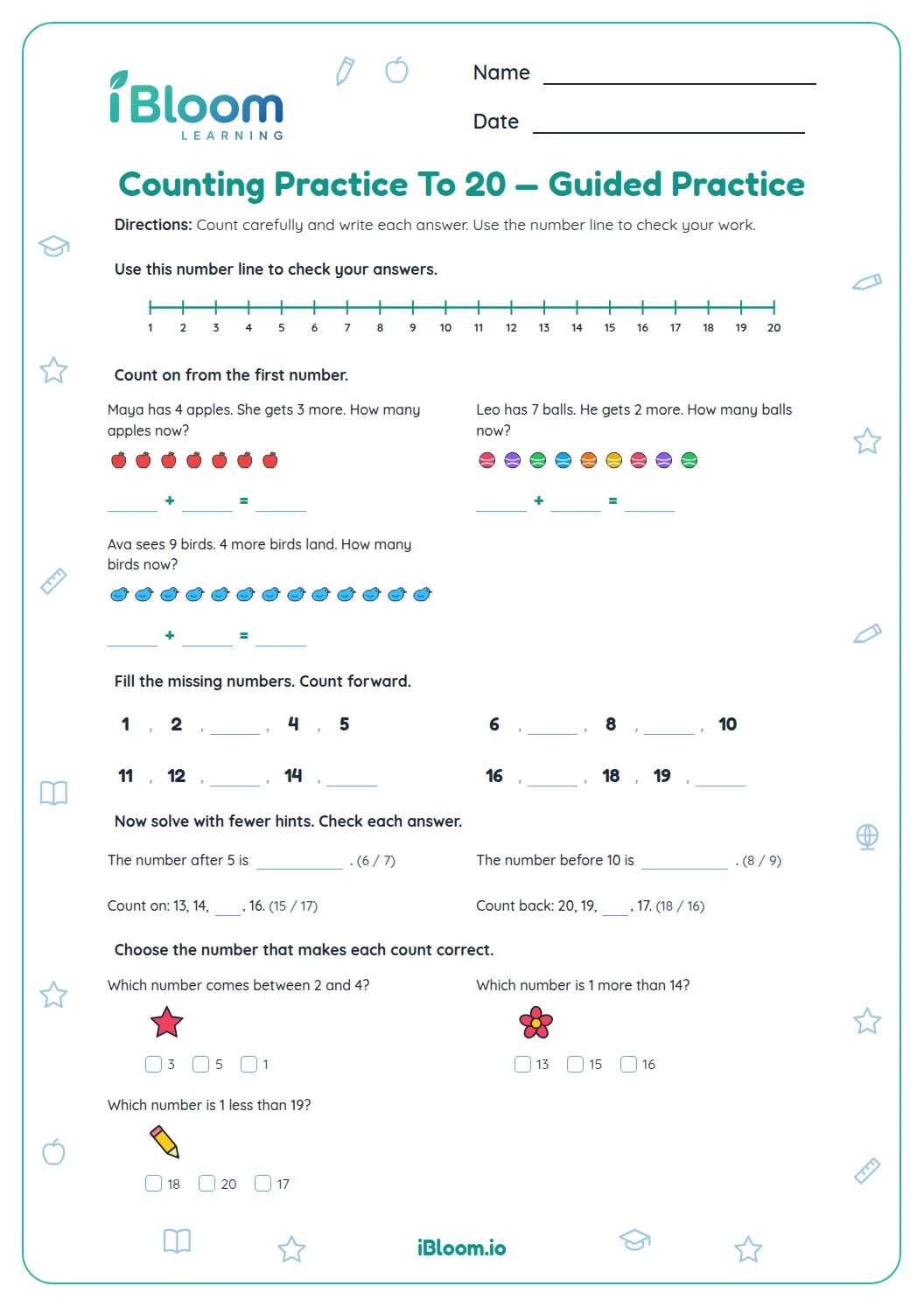
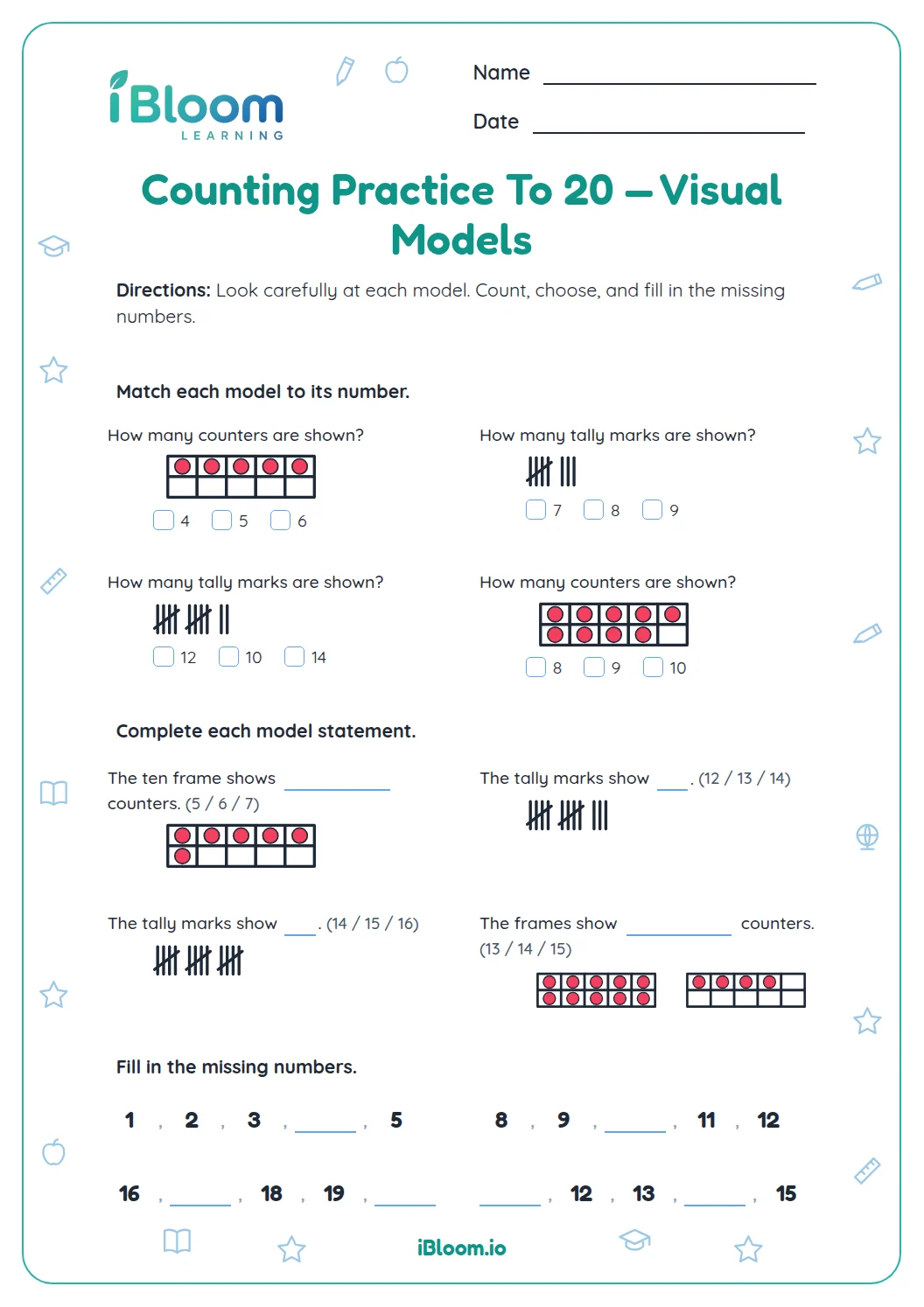
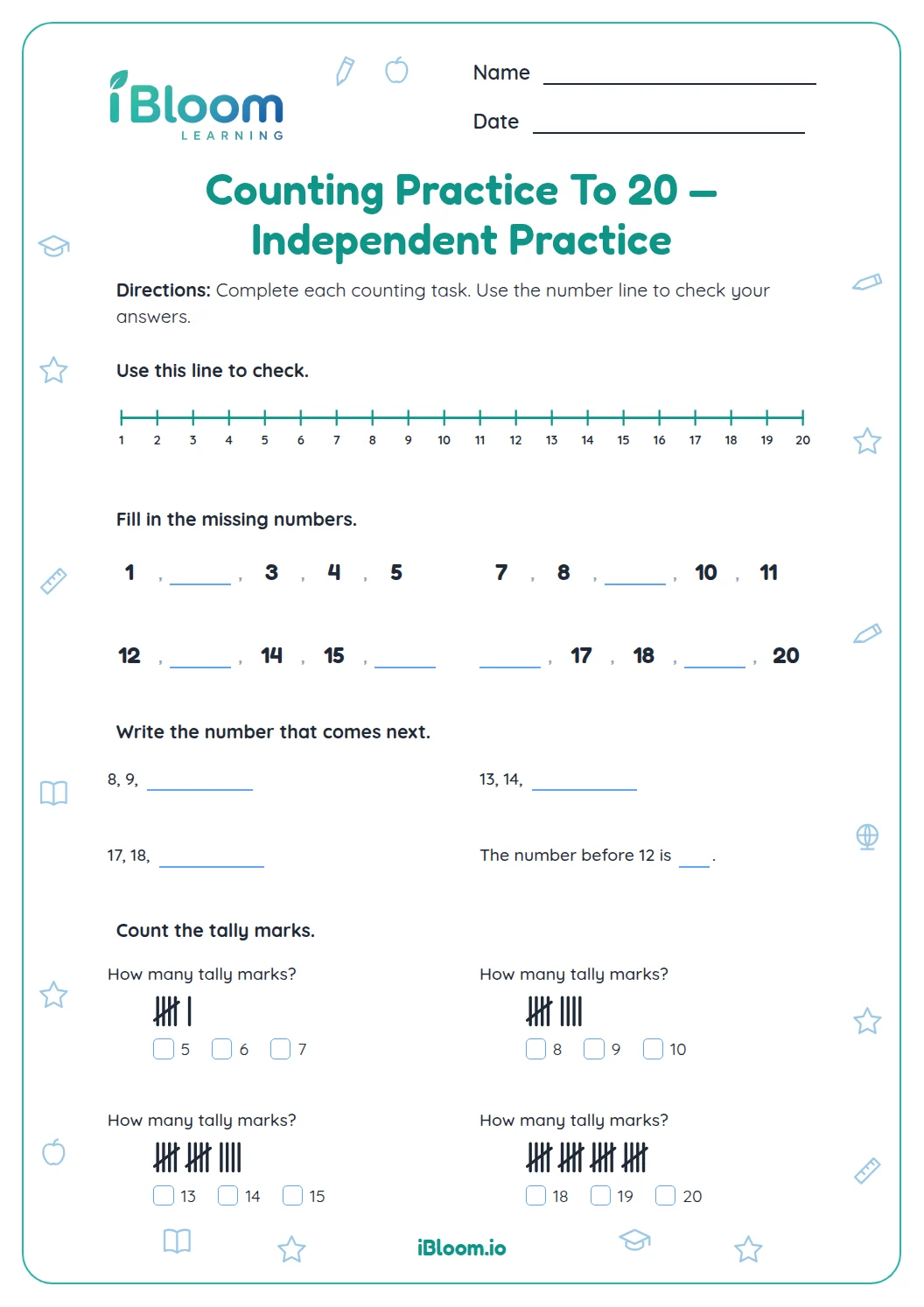
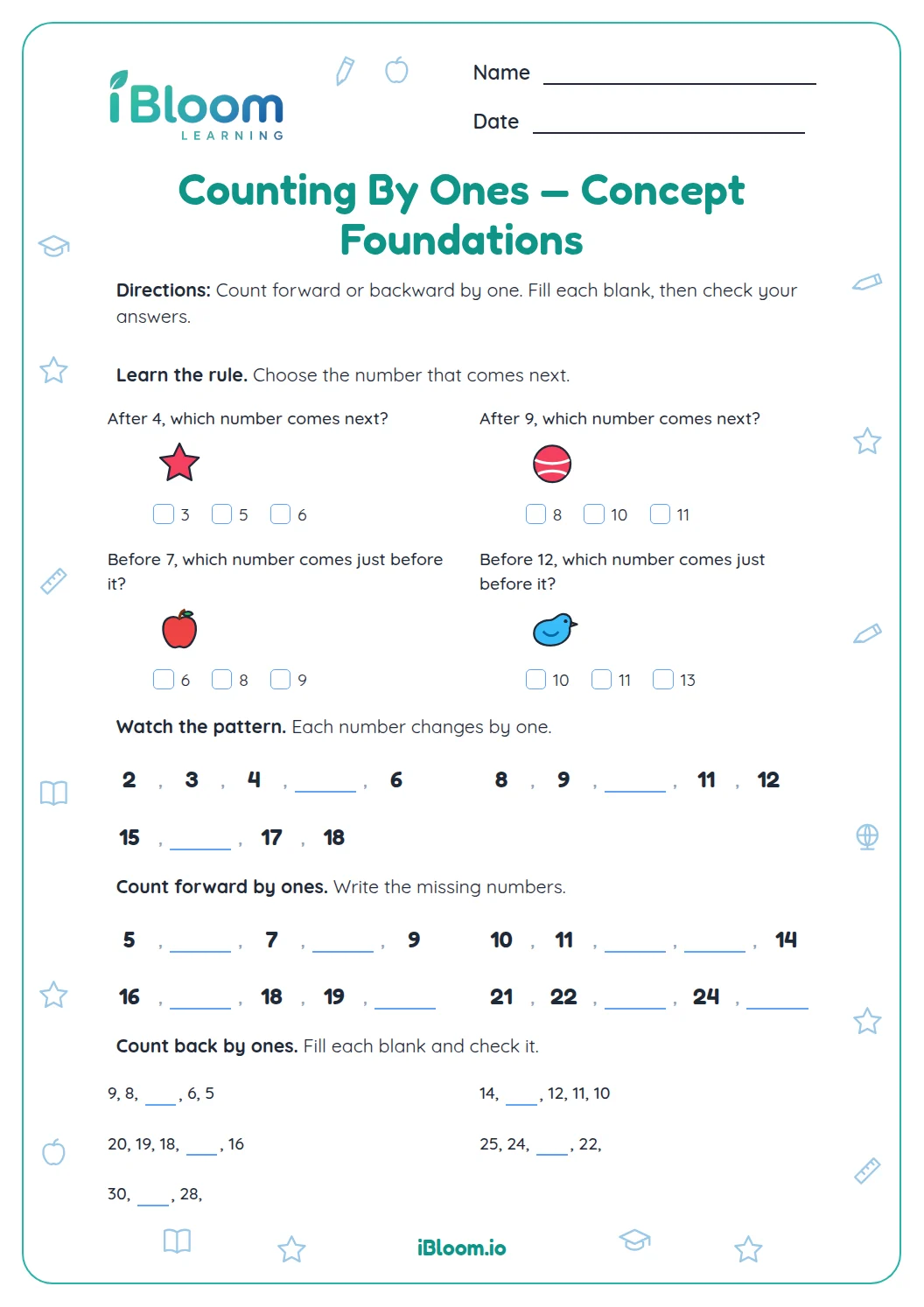
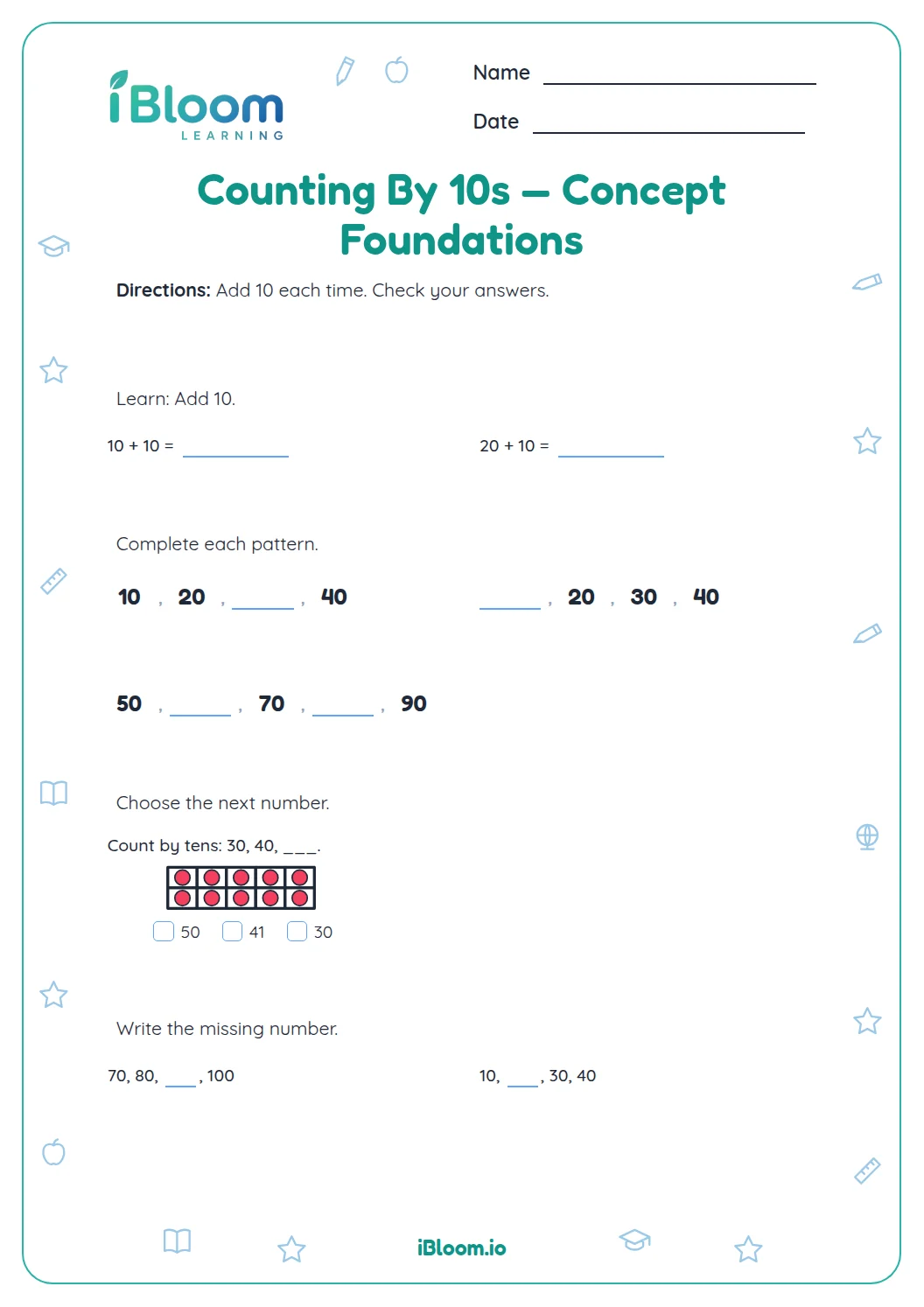
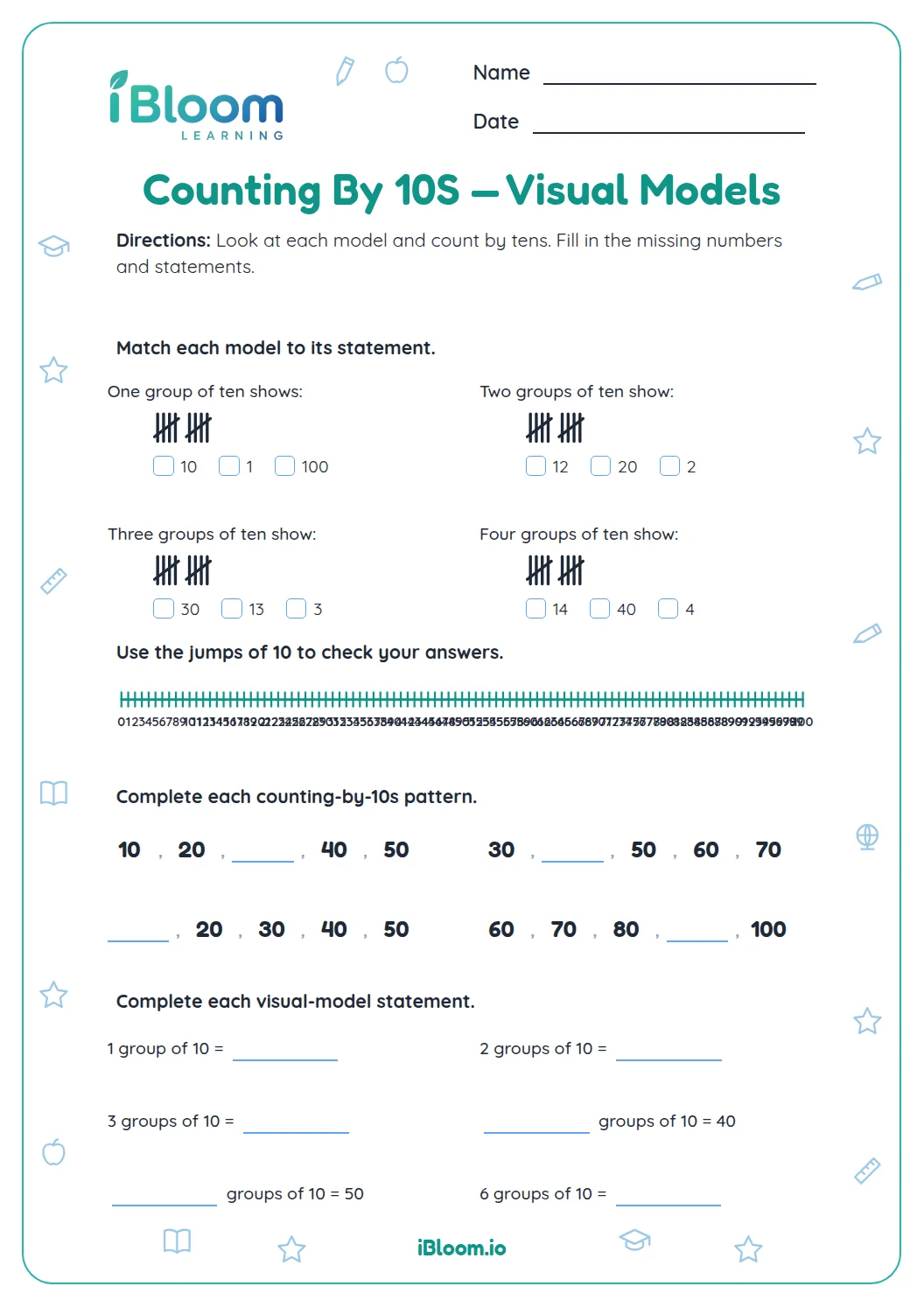
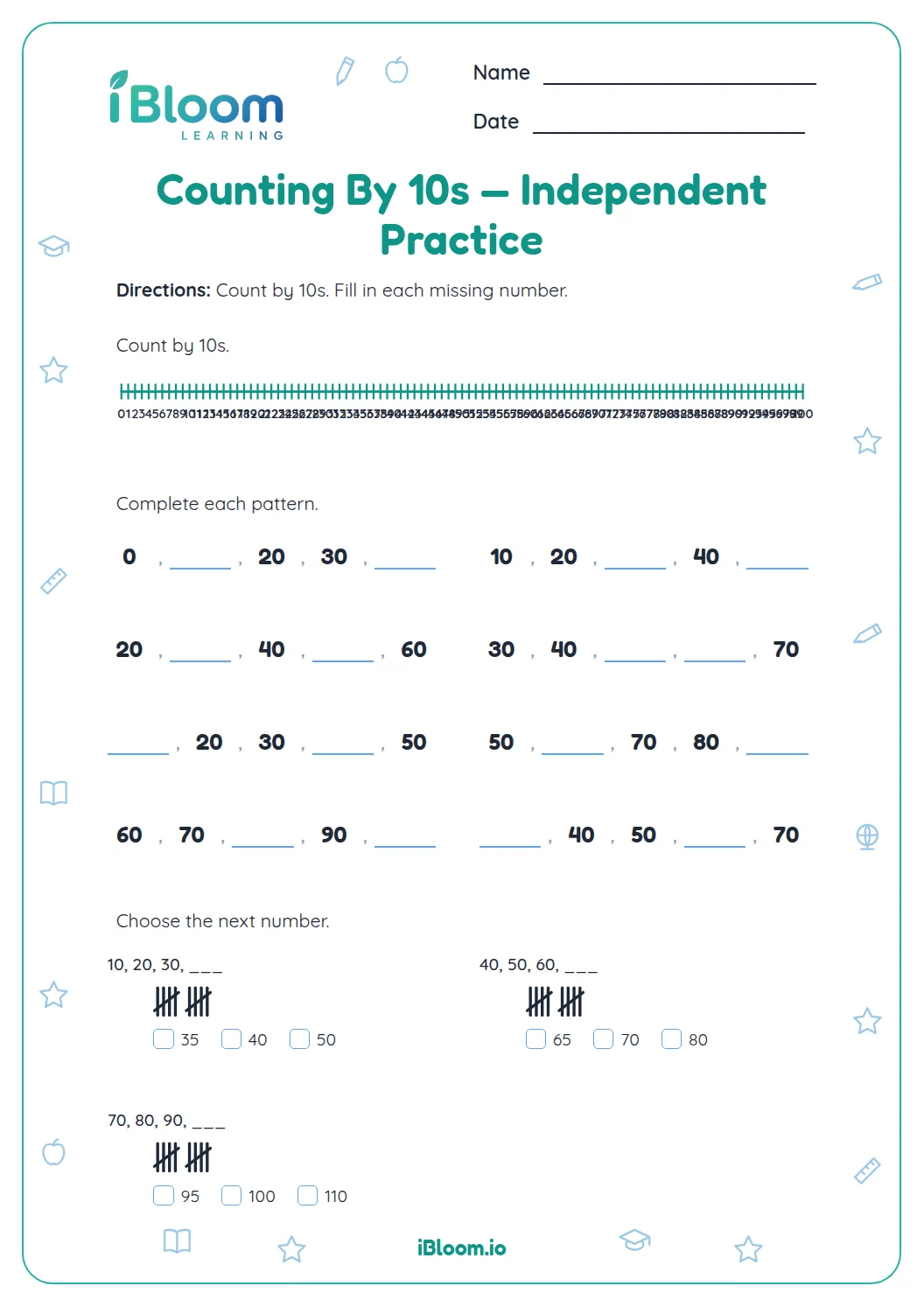
This Grade 1 counting worksheet helps children read and write numbers through 50 using picture sets, tally marks, a number line, and counting sequences. The 14 questions begin with small visual counts and progress to missing numbers, counting by tens and fives, and locating a point on a number line. A separate answer key supports checking. The page aligns with CCSS 1.NBT.A.1.
Aligned to 1.NBT.A.1
How do picture sets support counting?
Count each object once, moving across each row so none are skipped or counted twice. Question 1 has 14 apples. Touching or pointing to each picture can help keep the count organized.
How do tally marks and blocks show numbers?
Tally marks group counts, and a number line shows equal jumps. Question 4 has 12 tally marks: two bundles of five and two extra marks. Counting each bundle before the extras helps keep track.
How can children continue a number pattern?
Look at how the numbers change from one space to the next. In question 12, 33, 34, ___, 36 increases by one each time, so the missing number is 35. Counting by tens or fives uses a larger, steady jump.
How does a number line help?
Each number-line mark represents an equal step. In question 13, the line starts at 0 and counts by fives to point A; five equal jumps land on 25. Children can count each jump aloud before writing the number.
How to use this worksheet
- 1Count the objects from left to right, one time each.
- 2Group tally marks into fives before counting extras.
- 3On the number line, count the equal jumps to point A.
- 4Check how much each sequence changes between numbers.
- 5On the number line, count one equal jump at a time.
Common mistakes and quick fixes
The mistake
Skipping an object or counting one twice.
The fix
Point to each picture once and say one number for each object.
The mistake
Reading three tens as the digit 3 only.
The fix
Three tens are 30; combine them with the 6 ones to make 36.
The mistake
Adding one when the sequence counts by five or ten.
The fix
Compare two neighboring numbers first to find the size of each jump.
Visual counts and number patterns support reading and writing numerals through 50.
Count, read, and write numbers through 50 using objects, place-value blocks, and sequences.
On this sheet:
Show the official wordingHide the official wording
Count to 120, starting at any number less than 120. In this range, read and write numerals and represent a number of objects with a written numeral.
What to practice next
Make more practice
Further reading
Questions parents and teachers ask
How many questions are on the worksheet?
There are 14 questions across two practice pages. Children count pictures and tally marks, read tens and ones blocks, follow number-line jumps, and fill missing numbers in sequences. A separate answer key makes it easy to check each response.
What number comes after 28?
The number after 28 is 29. Counting forward by ones means adding one to the number named; say “28, 29” to hear the next step. Question 2 asks children to write that next number. Students can say the two numbers aloud before writing.
How do base-ten blocks show 36?
The worksheet does not use base-ten blocks; it shows apple pictures, tally marks, and a number line. In question 8, the sentence asks children to combine 3 tens and 6 ones, which makes 36. Saying “30, then 36” connects the place-value language to the numeral.
How can a child count tally marks accurately?
Count a complete bundle as five, then count any remaining marks. For 12 tallies, say 5, 10, then 11, 12. Grouping marks prevents losing track of the running count. This is the same group-and-ones strategy used in question 4.
What does point A show on the number line?
Point A is 25. The number line starts at 0 and marks equal jumps of 5; five jumps land on 25. Students can count 5, 10, 15, 20, 25 before writing the point’s value. The equally spaced ticks make each skip-count visible.
What standard does the worksheet support?
The sheet supports CCSS 1.NBT.A.1, which includes counting, reading, and writing numerals in a range through 120. Its questions focus on the requested range through 50 and include representing counts with written numerals. Here the worksheet applies that counting idea to values through 50.