


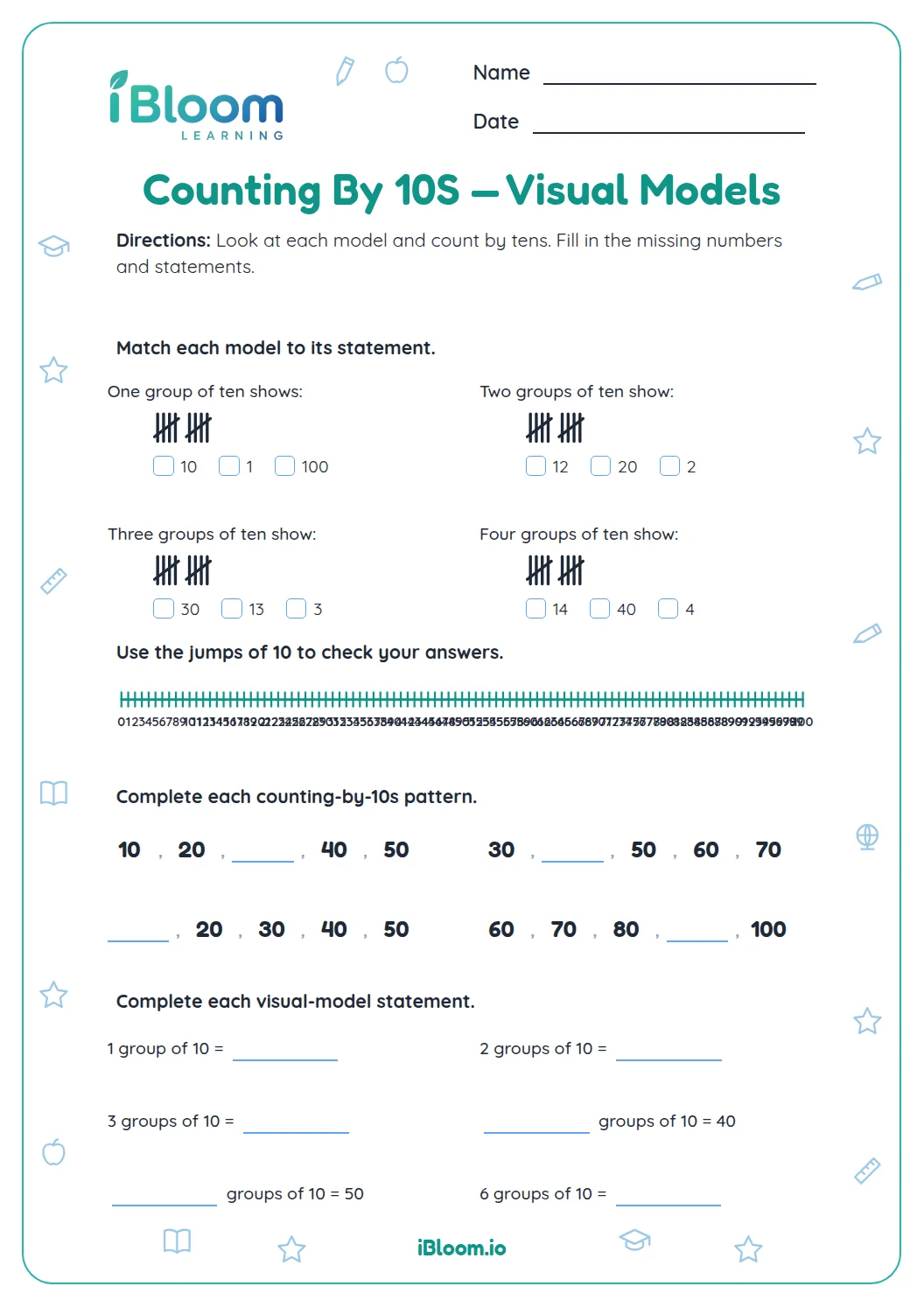
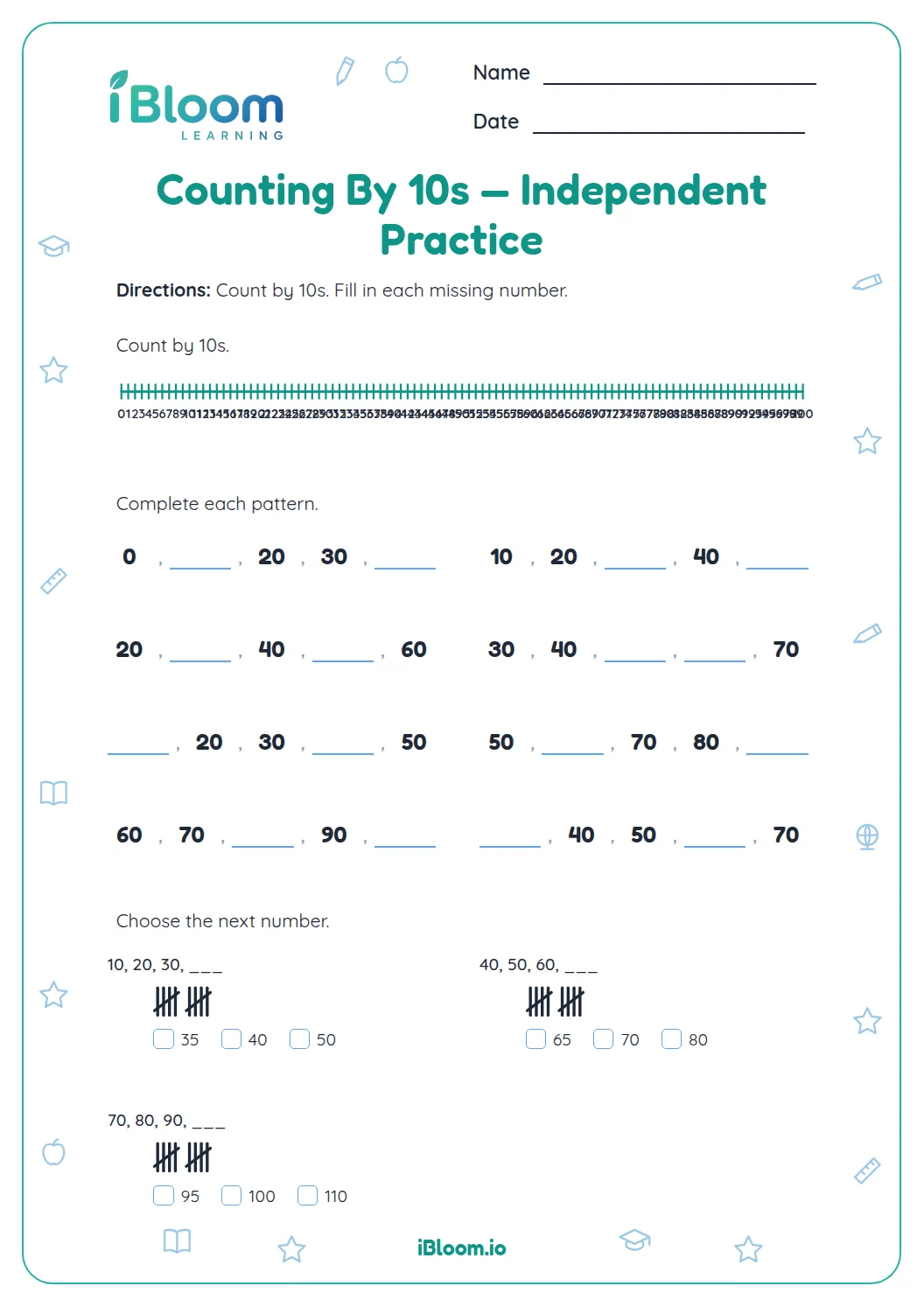
About this worksheet
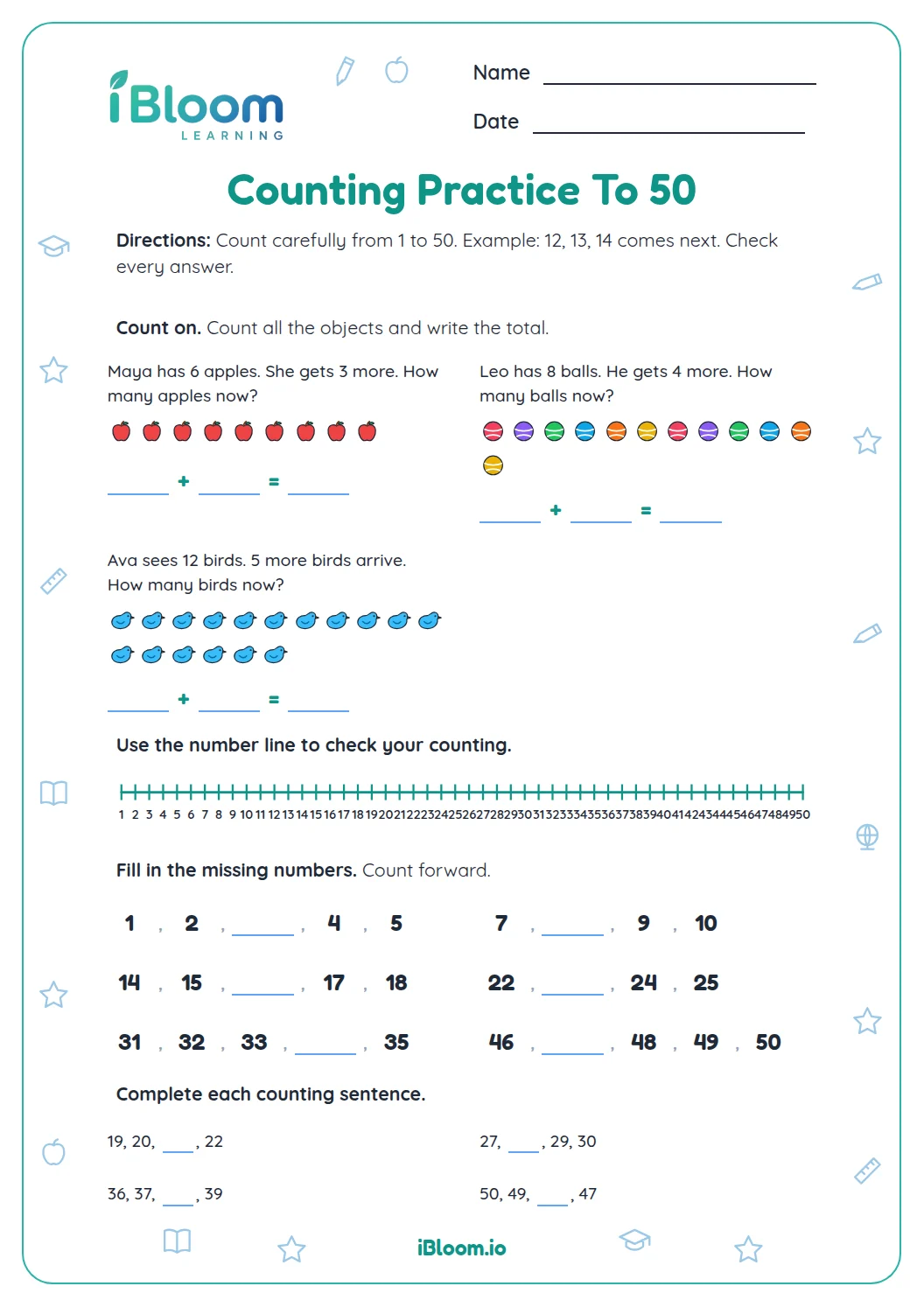
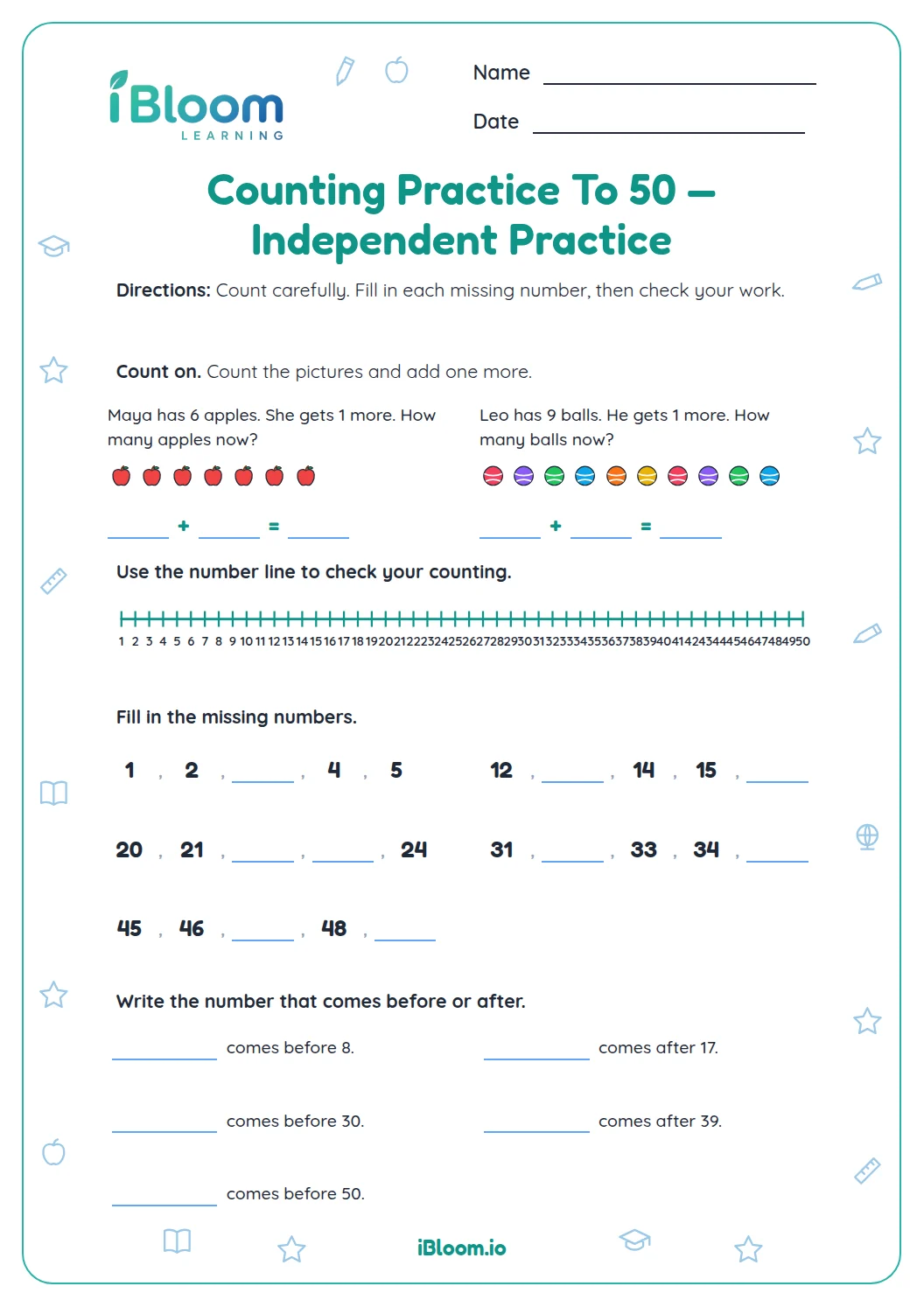
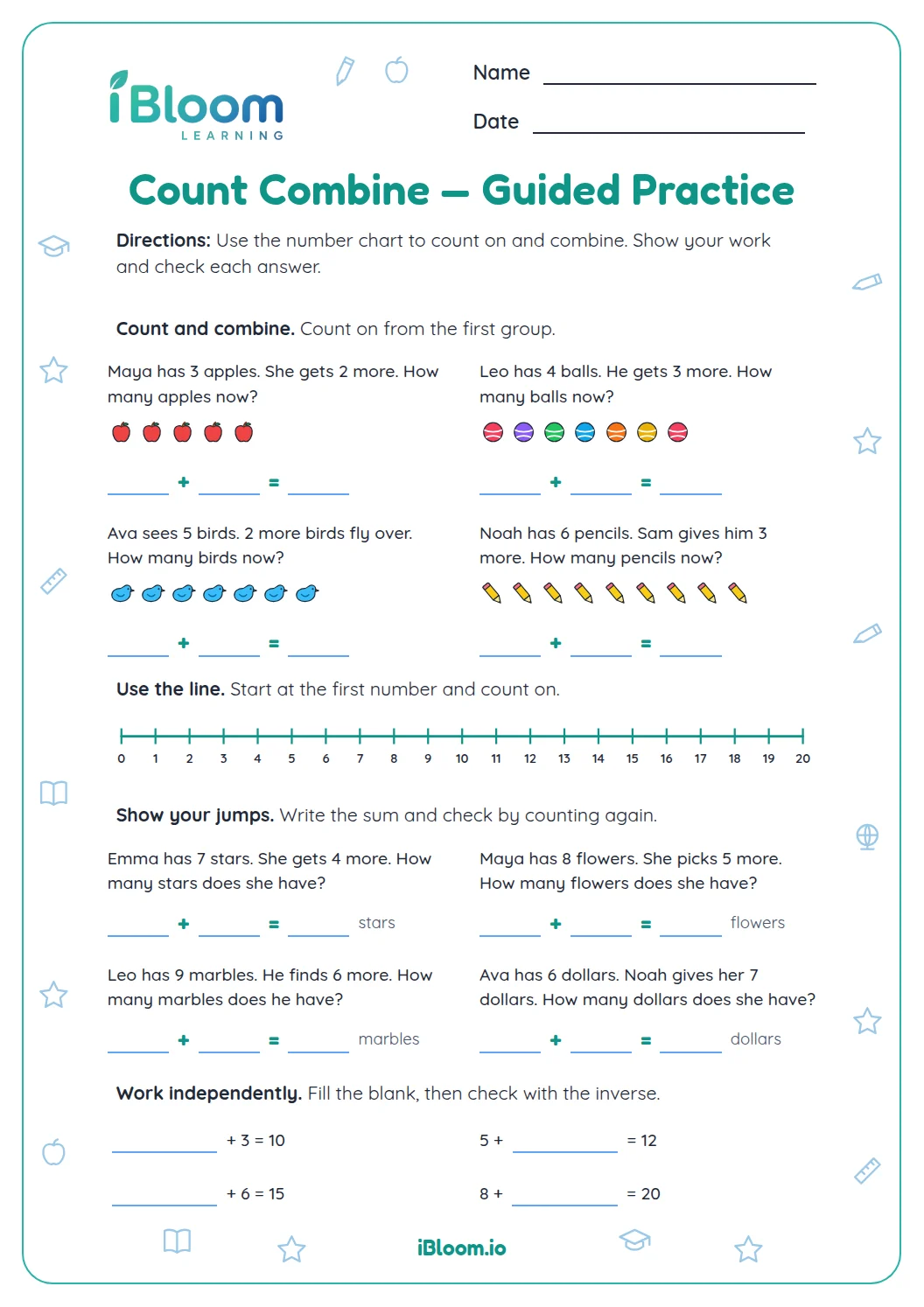
This Grade 1 printable has 14 everyday counting problems through 50. Part A uses eight stories about adding or taking away ten. Part B has six short counts with one missing number each. Children write their answers, then check them with the separate key. The stories use familiar objects such as seeds, apples, and books.
How do story problems use counting?
The stories ask learners to add or take away ten, then choose the amount that fits the situation. Read each quantity carefully before selecting an answer.
- 1A club has 24 seeds and gets 10 more. How many seeds now?
- 224 + 10 = 34 seeds.
How can children find ten fewer?
For the 36-book story, remove one group of ten from 36 to get 26. The ones digit stays six. The same idea works in reverse when a story adds ten.
What should you check in a number sequence?
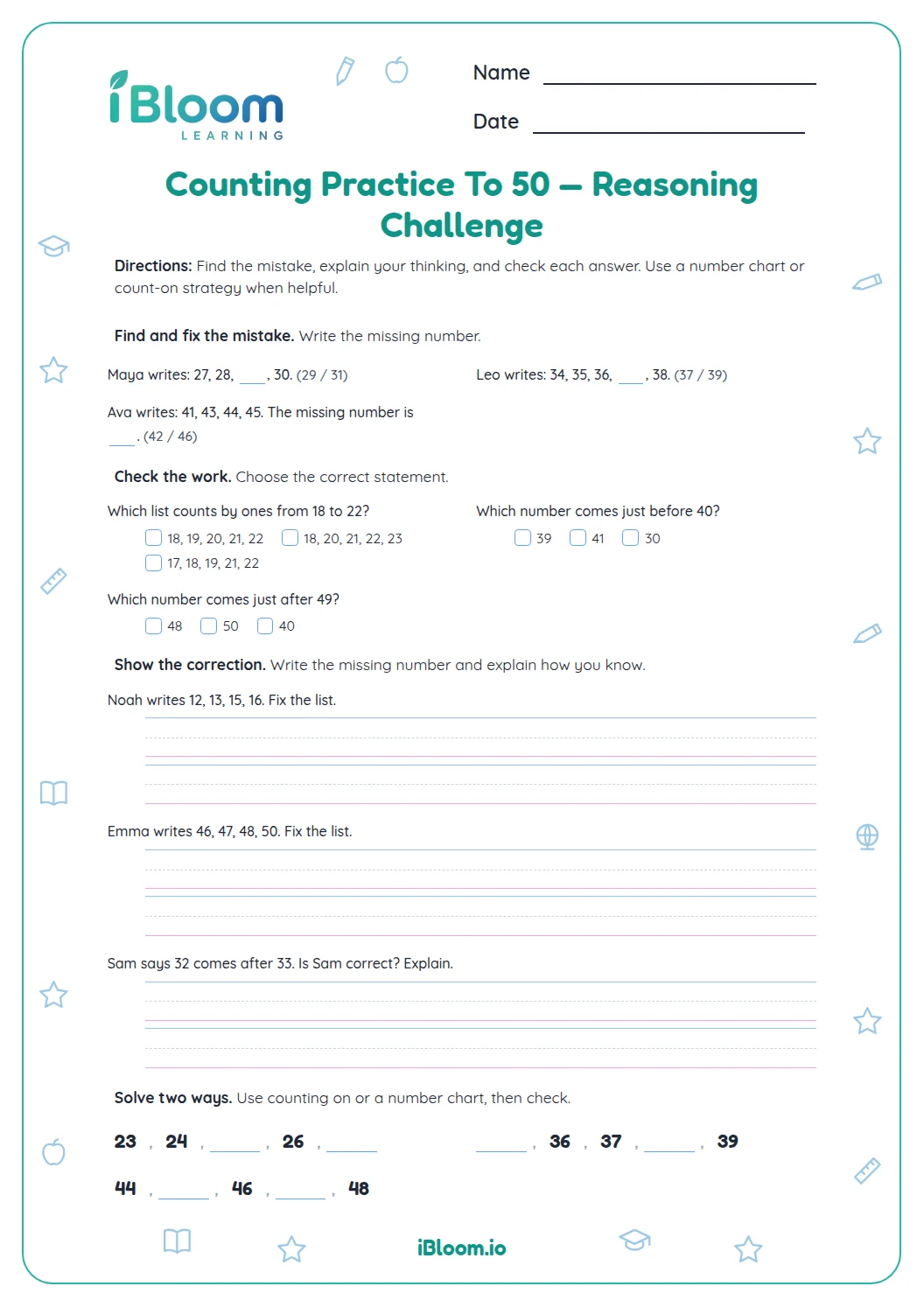
The missing number must keep the counting order. Check the number before and after the blank to make sure both neighbors fit.
How to use this worksheet
- 1Read whether the story adds or removes ten.
- 2Change the tens count and keep the ones count.
- 3Write one number on the answer line.
- 4In Part B, count by ones to fill the gap.
- 5Read the completed count and check every answer with the key.
Common mistakes and quick fixes
The mistake
Counting the starting number as the first step forward.
The fix
Begin at the starting number, then count each move after it.
The mistake
Taking away when a story says more arrive.
The fix
Notice whether the amount increases or decreases.
The mistake
Skipping a number in a sequence.
The fix
Say the numbers in order from the first given number to the last.
What to practice next
Make more practice
Questions parents and teachers ask
How many questions are included?
There are 14 questions in two parts. Eight stories ask children to find ten more or ten fewer, and six short counts ask for a missing number. Each question has one written answer. The separate key provides all answers in the same order as the worksheet.
Do the numbers stay within 50?
Yes, all quantities and answers stay within 50. The missing-number counts include small numbers as well as numbers in the teens, twenties, thirties, and forties. The bead story reaches 50, giving children practice with the upper end of the counting range named in the title.
How can I use this worksheet at home?
Read the first story together and ask whether the amount grows or gets smaller. Let the child solve it, then continue with the remaining stories. When starting Part B, point out that the step changes to one. Check each part after the child finishes it.
Does it include an answer key?
Yes, a separate key lists the number for every story and counting gap. Ask the child to explain one tens change before checking it. For a missing number, have the child read the whole count aloud, including the answer, to check that the order makes sense.
How can children check ten more or ten fewer?
Children can group counters into tens and ones, then add or remove one group of ten. For 36 books with ten removed, three tens become two tens while six ones remain. This gives 26 and connects the story to the written number on the answer line.