
About this worksheet
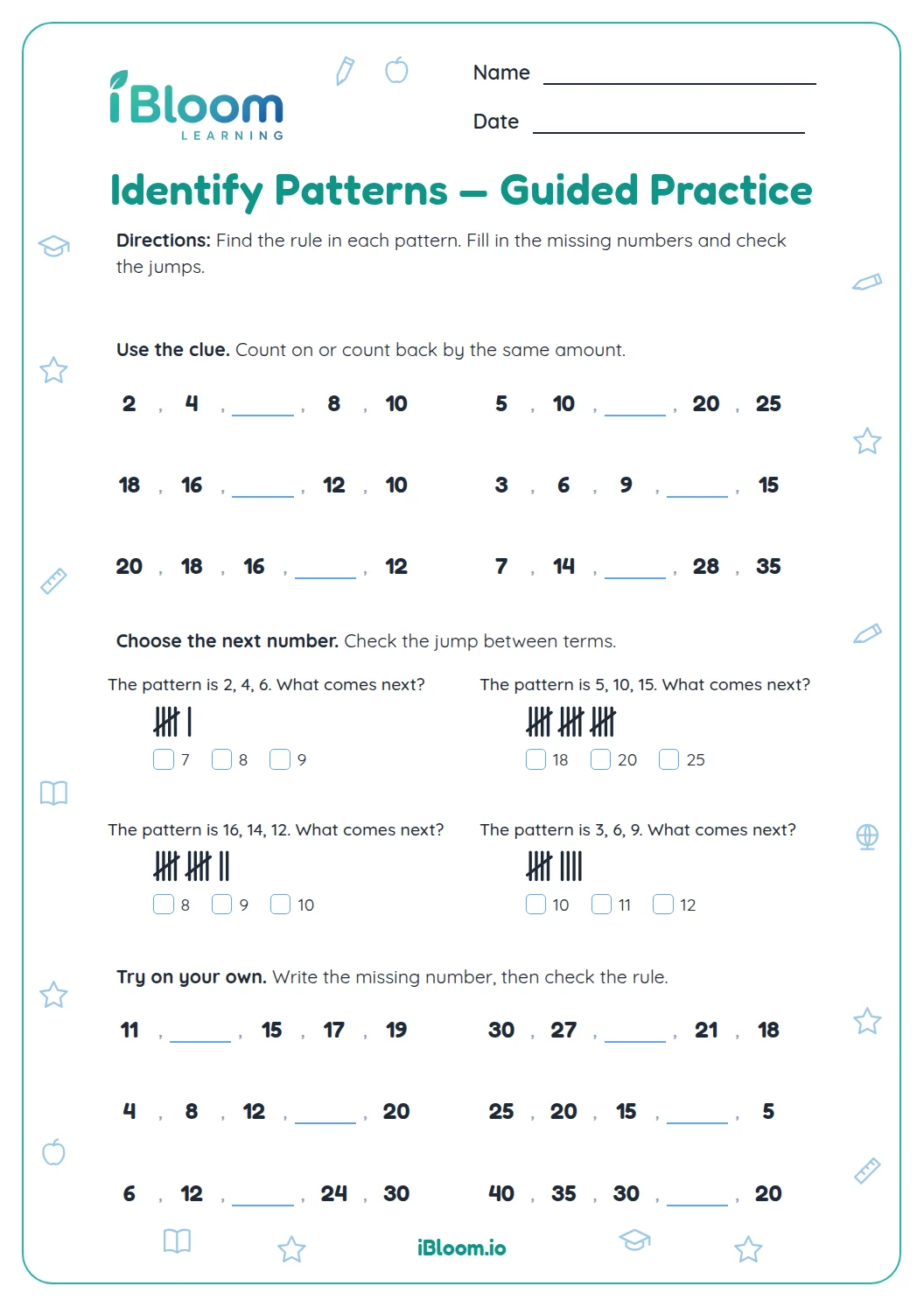
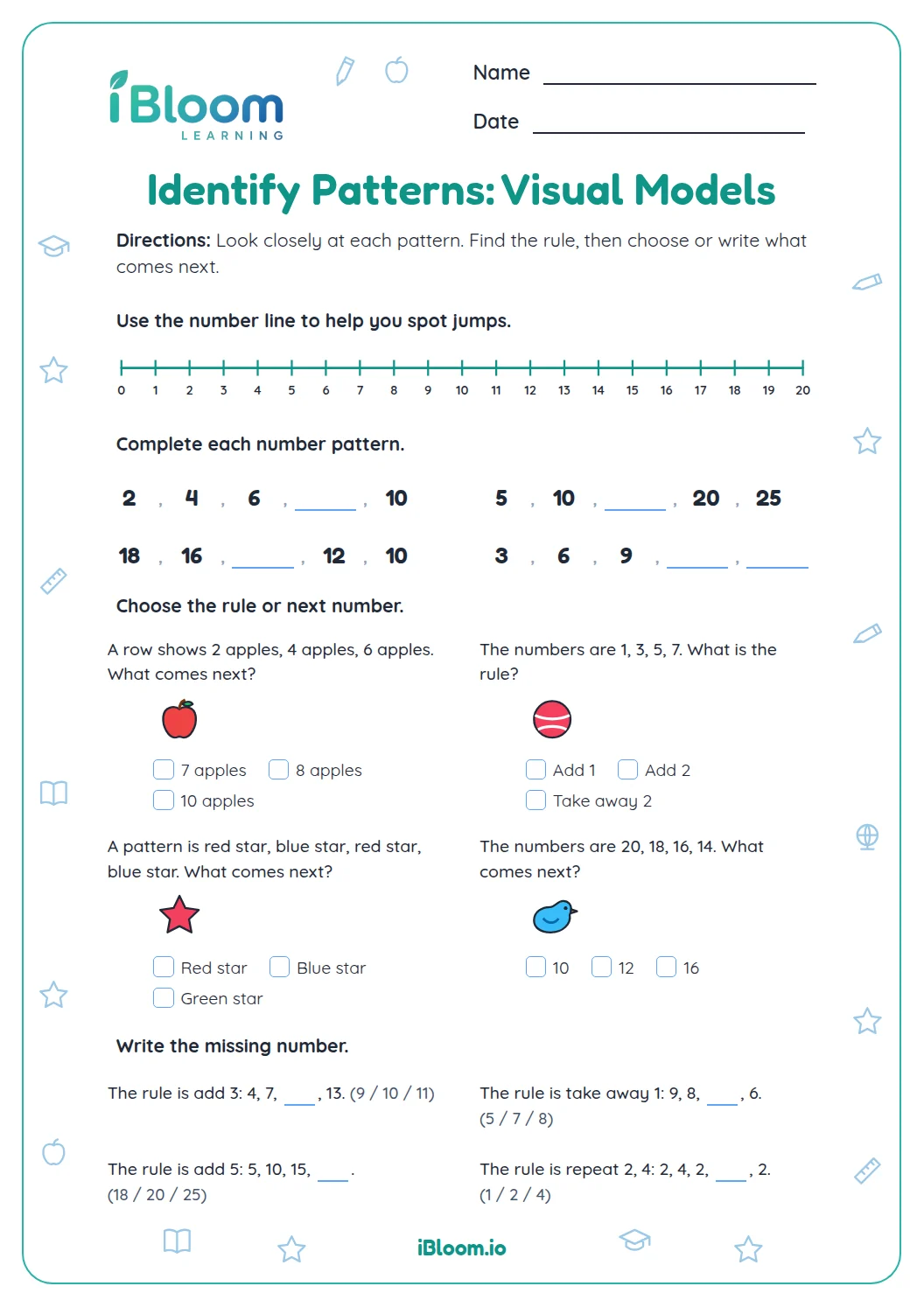
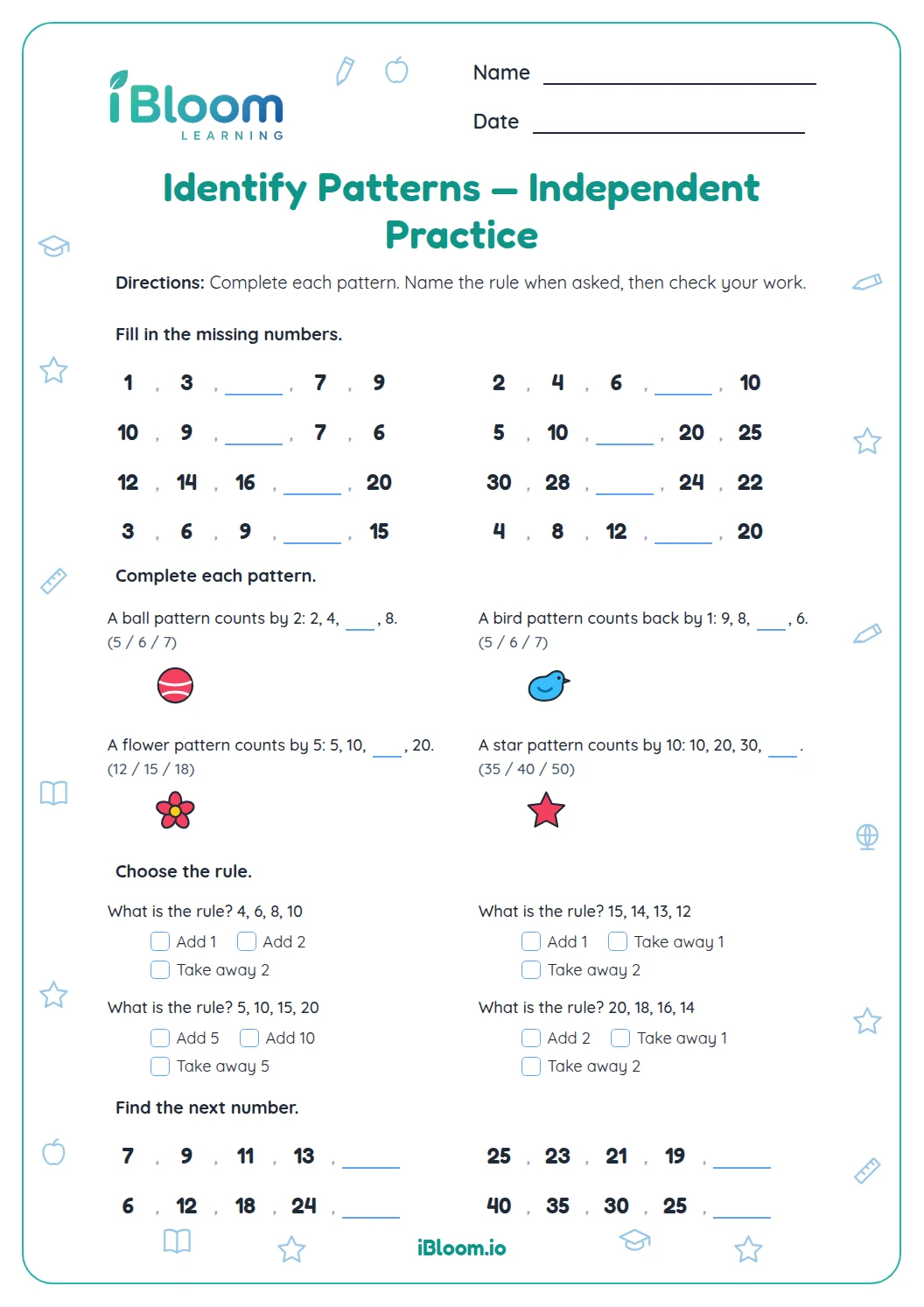
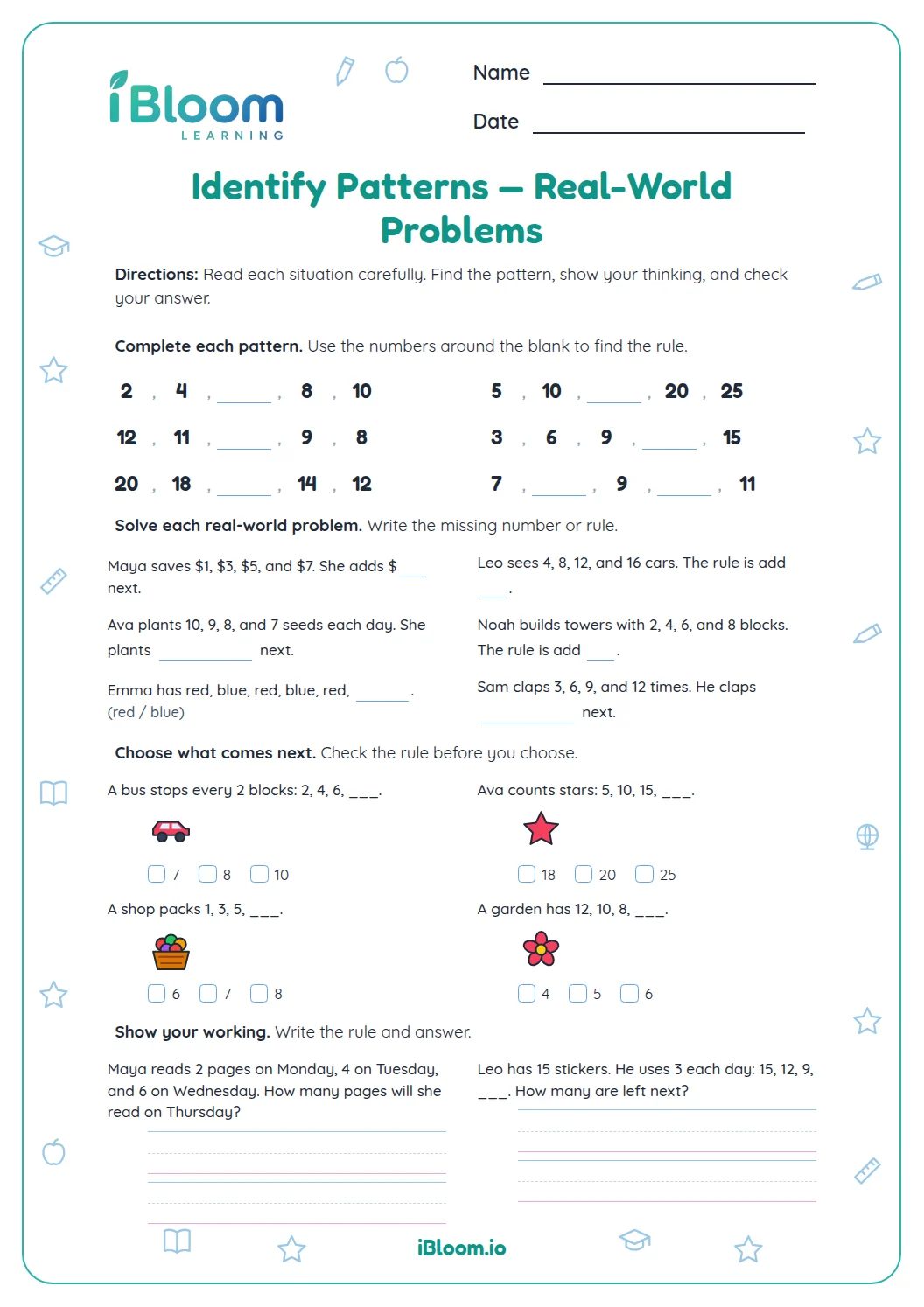
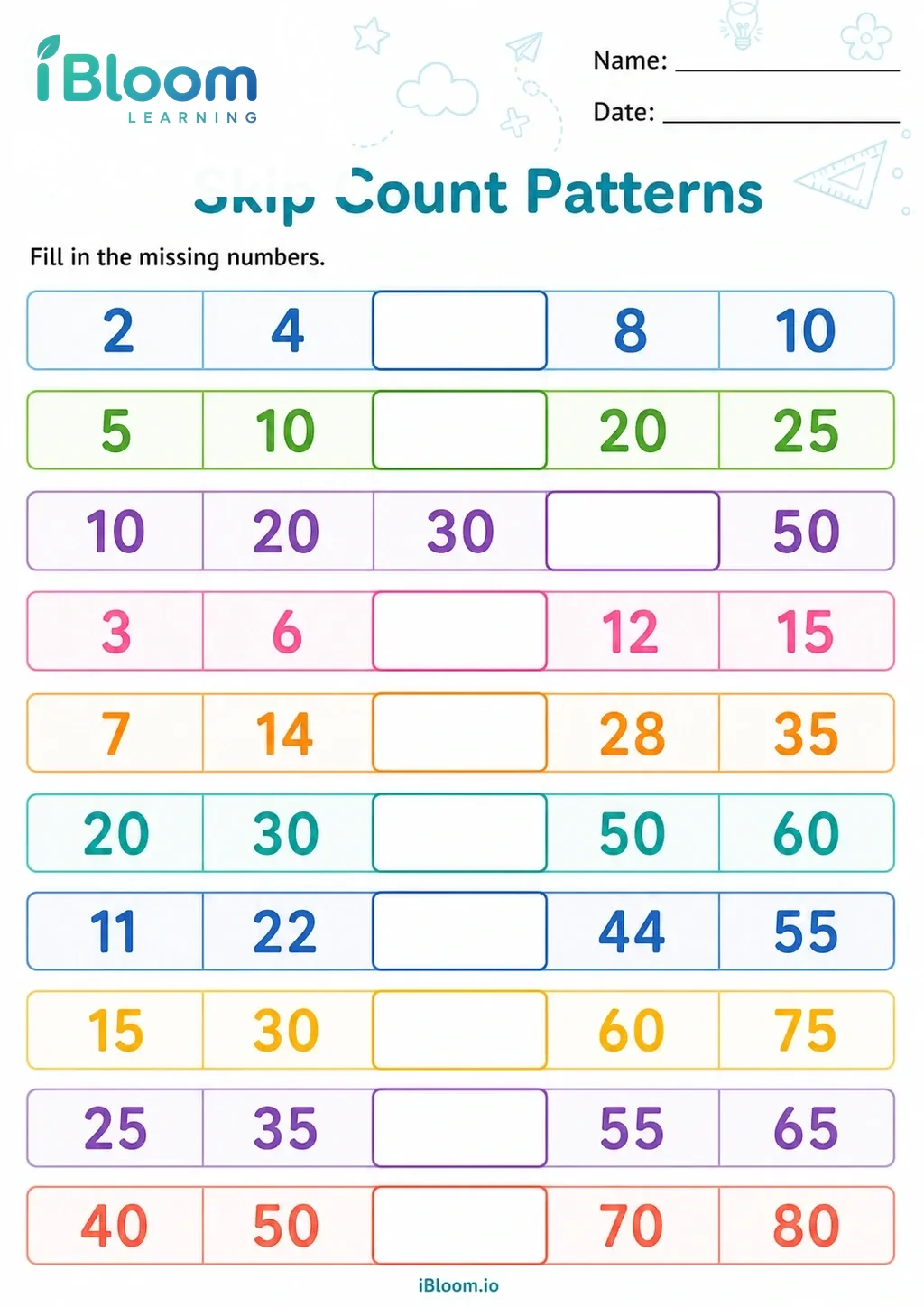
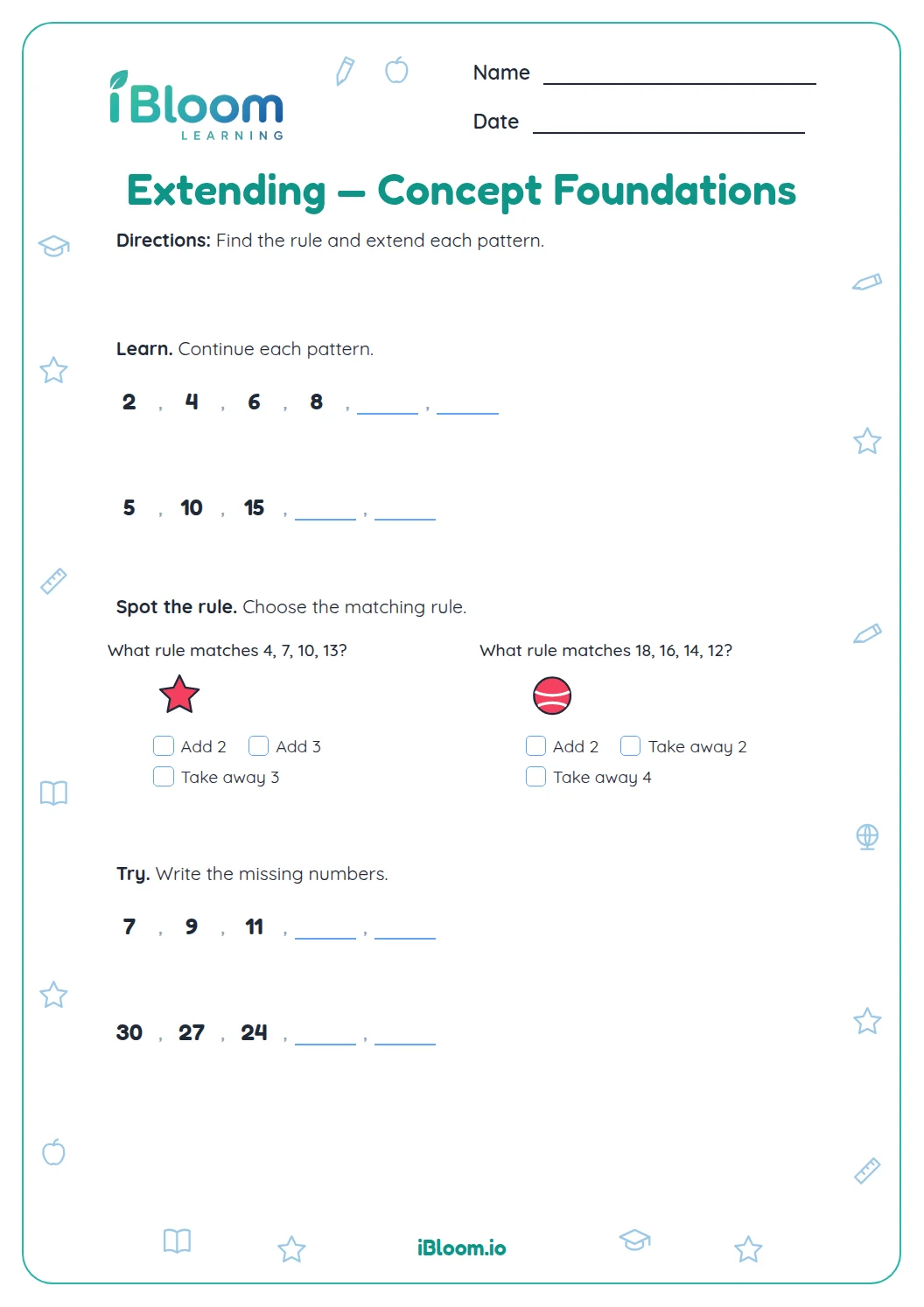
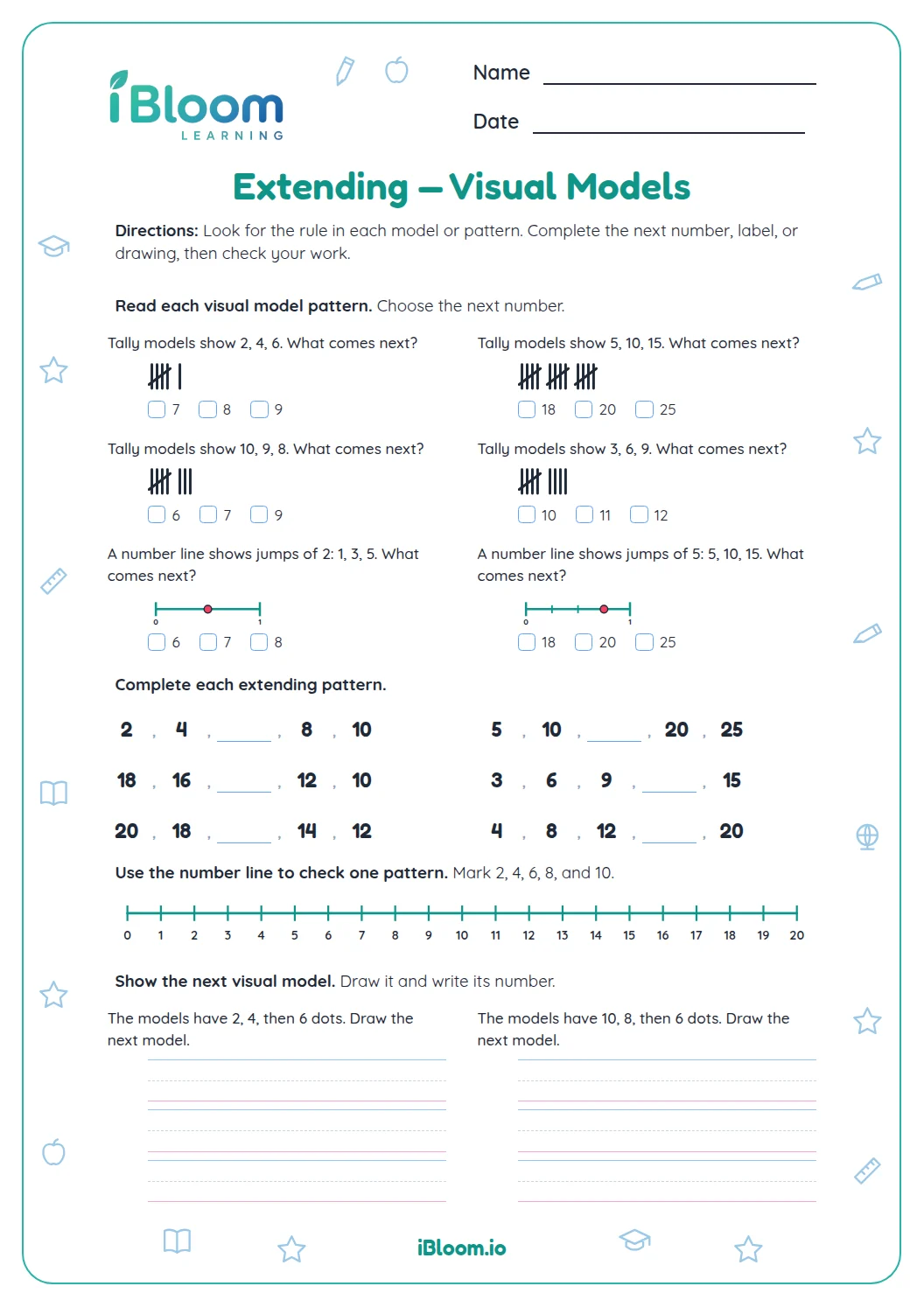
This Grade 1 worksheet has 17 short number sequences. Children count forward or backward by a consistent amount, or notice a repeating group, then fill in a missing number. Every number stays within 20. A separate answer key lists each missing number. The counting practice connects to CCSS 1.OA.C.5.
Aligned to 1.OA.C.5
How can you find the rule in a number sequence?
Compare one number with the next. The numbers may count on or back by the same amount, or a short group may repeat.
In 2, 4, 6, __, each number is 2 more than the one before it, so the missing number is 8. Check the rule across the whole sequence.
How to use this worksheet
- 1Read the numbers aloud.
- 2Notice how the numbers change or repeat.
- 3Write the missing or next number and check the rule.
Common mistakes and quick fixes
The mistake
Looking only at the last number before the blank.
The fix
Compare each pair of neighboring numbers to find a rule that fits all of them.
The mistake
Counting forward in a sequence that is going backward.
The fix
Check whether the numbers rise or fall before filling the blank.
The mistake
Stopping a repeating pattern at the wrong place in its group.
The fix
Say the repeating group aloud, then continue from its first item.
Curriculum alignment
This worksheet practices the skill named below.
Relate counting to addition and subtraction.
On this sheet: Children notice simple count-on, count-back, and repeating patterns with numbers within 20.
Show the official wordingHide the official wording
Relate counting to addition and subtraction (e.g., by counting on 2 to add 2).
What to practice next
Questions parents and teachers ask
What number range appears?
All numbers in the 17 sequences stay within 20. The worksheet includes counting forward and backward by small amounts as well as repeating groups. Children can say each sequence aloud to hear the count or repetition before writing a missing number.
What is a repeating number pattern?
A repeating pattern uses the same small group in the same order again and again. For example, 1, 2, 1, 2 continues with 1. Saying the group aloud can help children notice where the pattern starts over and which number comes next.
How can I help if the rule is unclear?
Ask the learner to compare two numbers at a time. Are they getting larger or smaller, and by how much? If a group seems to repeat, read the sequence aloud and listen for the part that starts again.
How many sequences are included?
There are 17 sequences arranged in four parts. They include counting up, counting back, and repeating groups, with missing numbers at different points. The answer key lists one missing number for each item. The worksheet is two pages long.
How do I use the answer key?
Have the learner finish a part before checking its answers. If a response differs, read the sequence together and state the rule aloud, then test it on every number. This helps distinguish a counting slip from a rule that does not fit the full sequence.