


About this worksheet
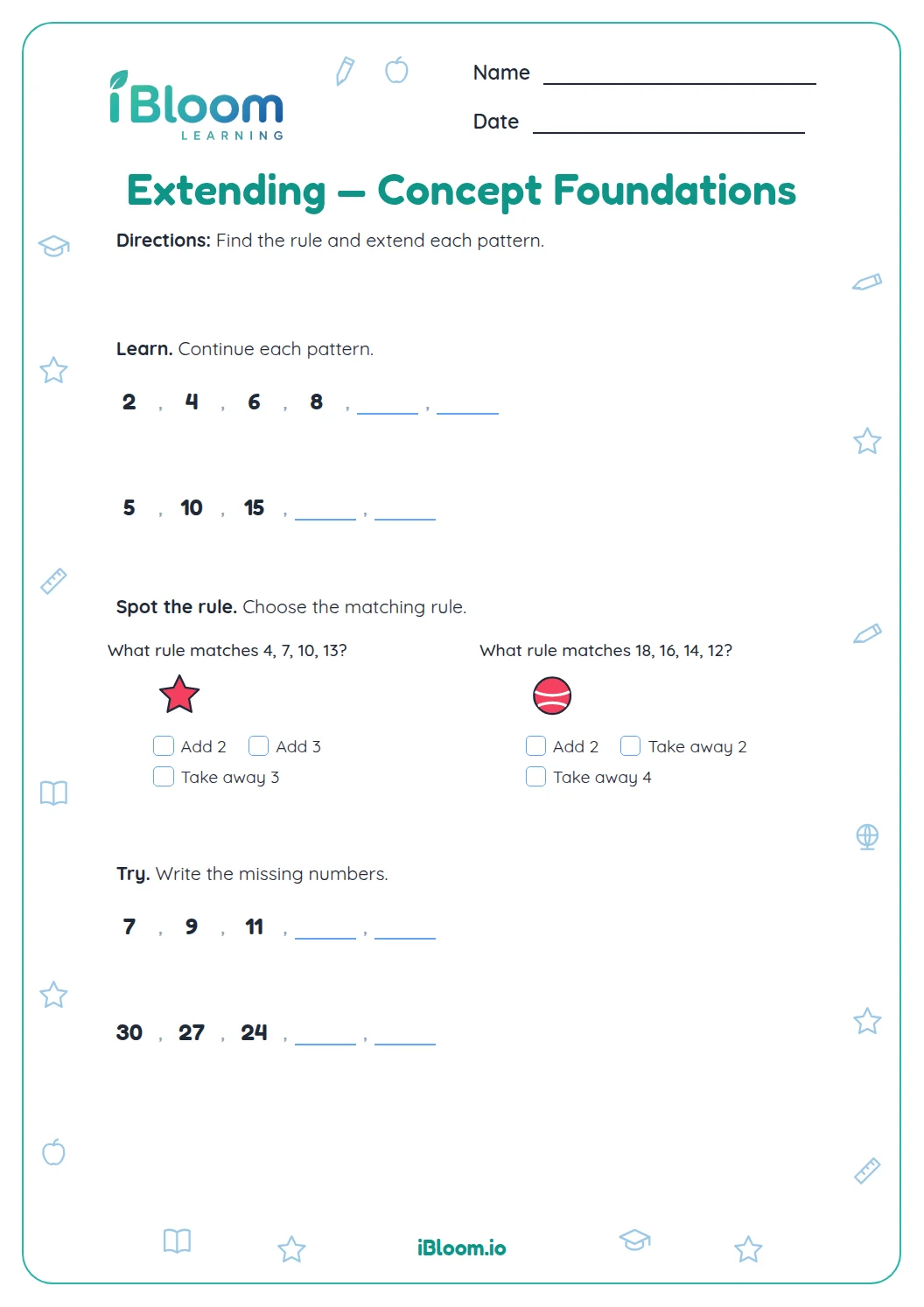
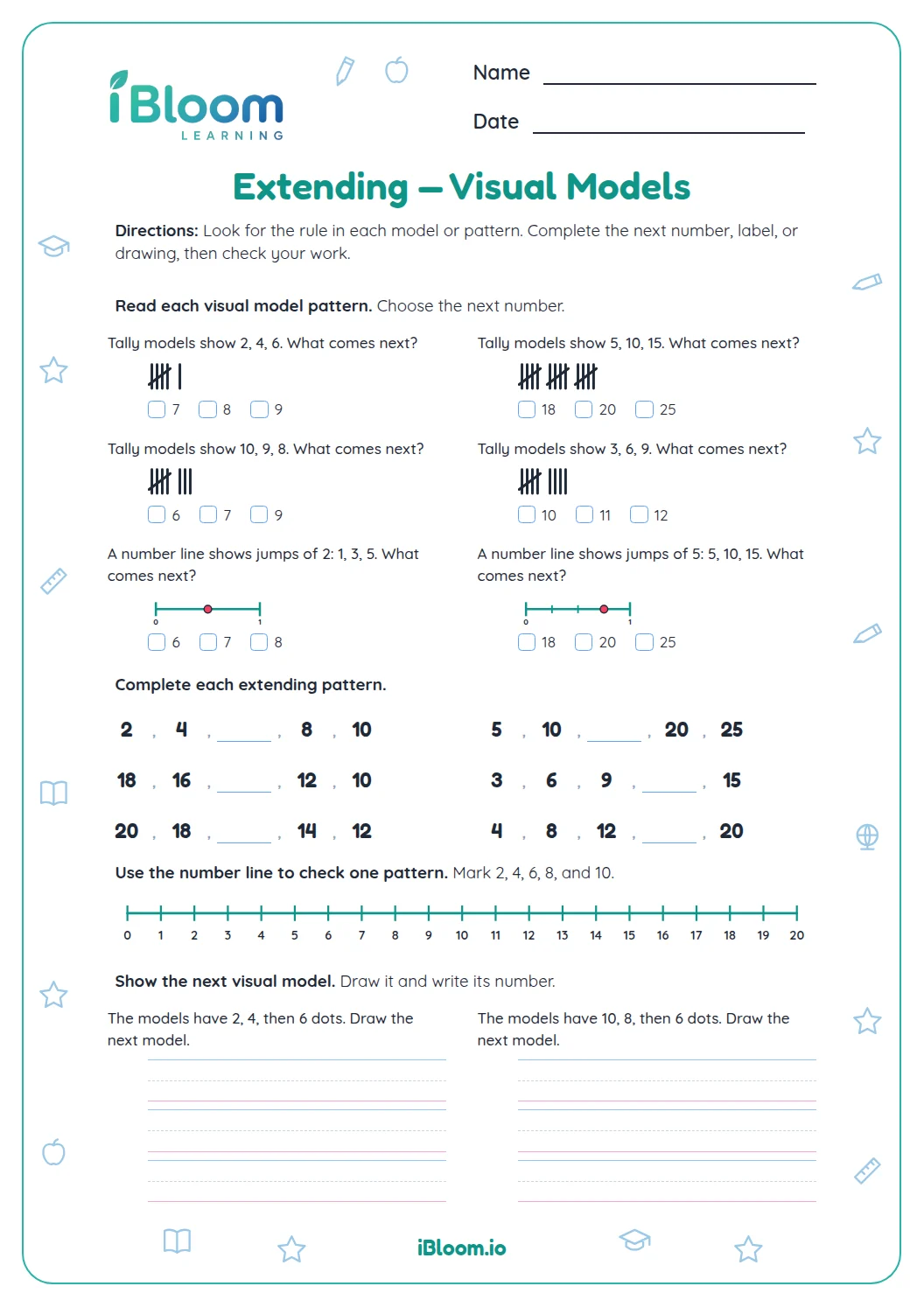
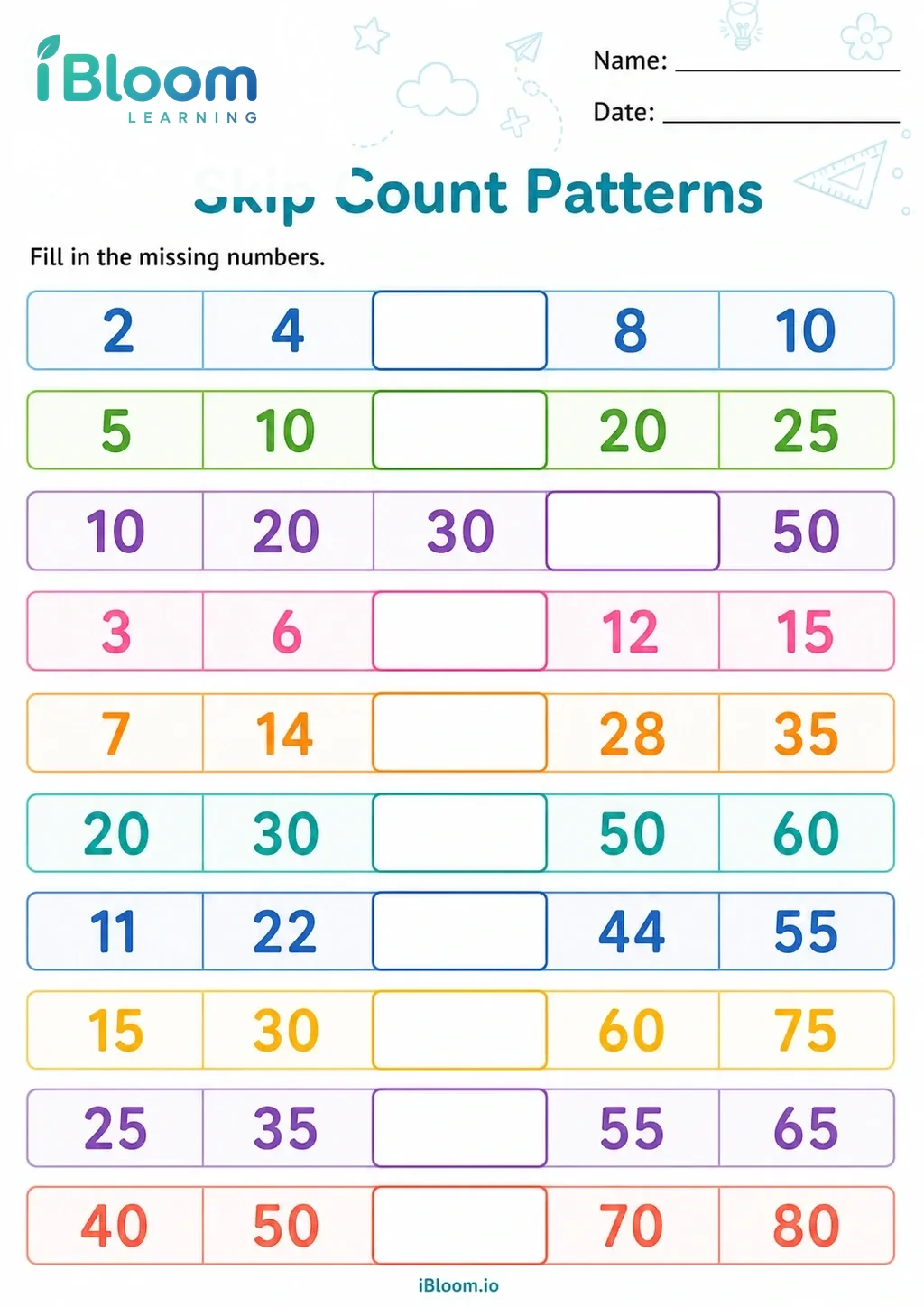
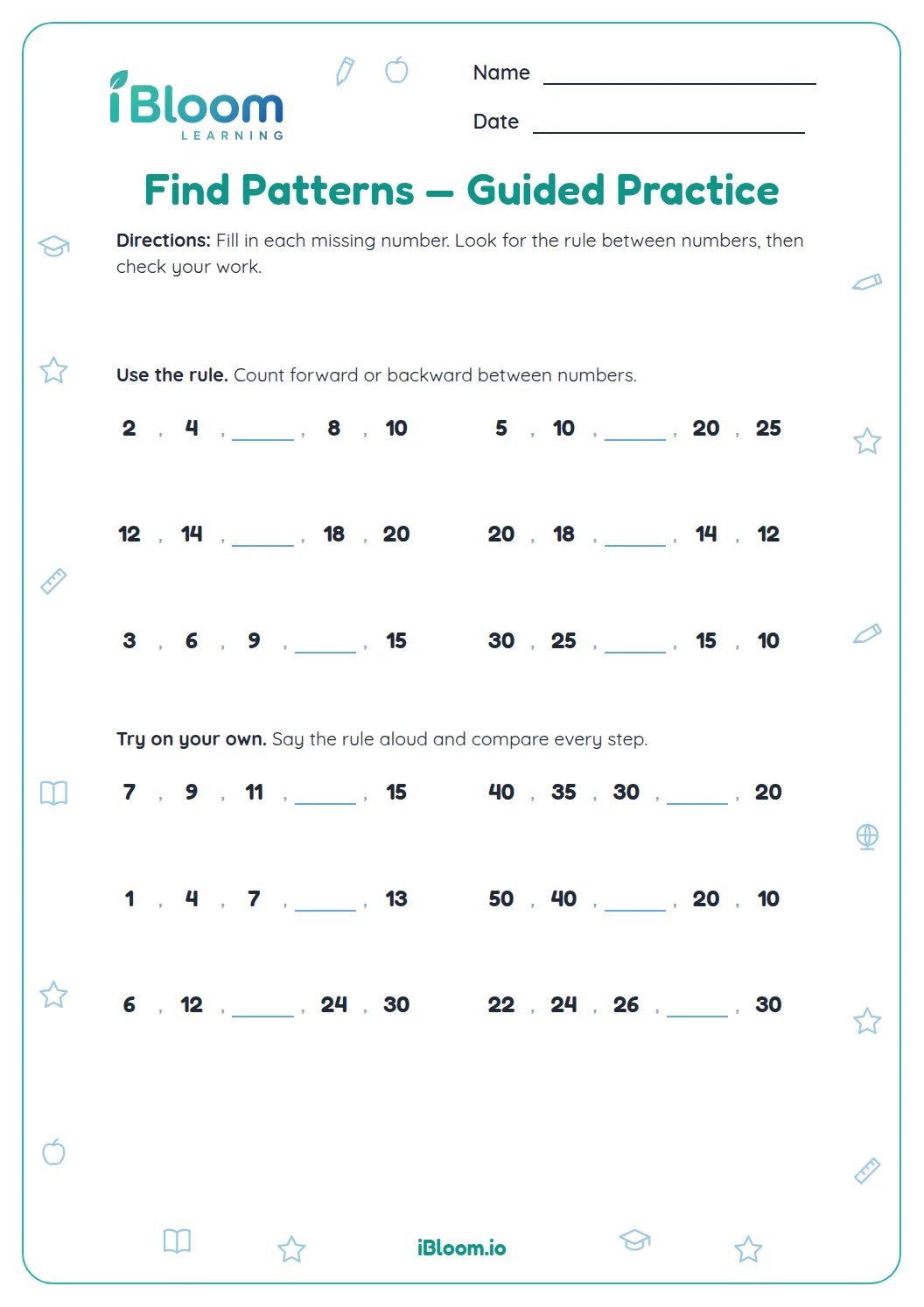
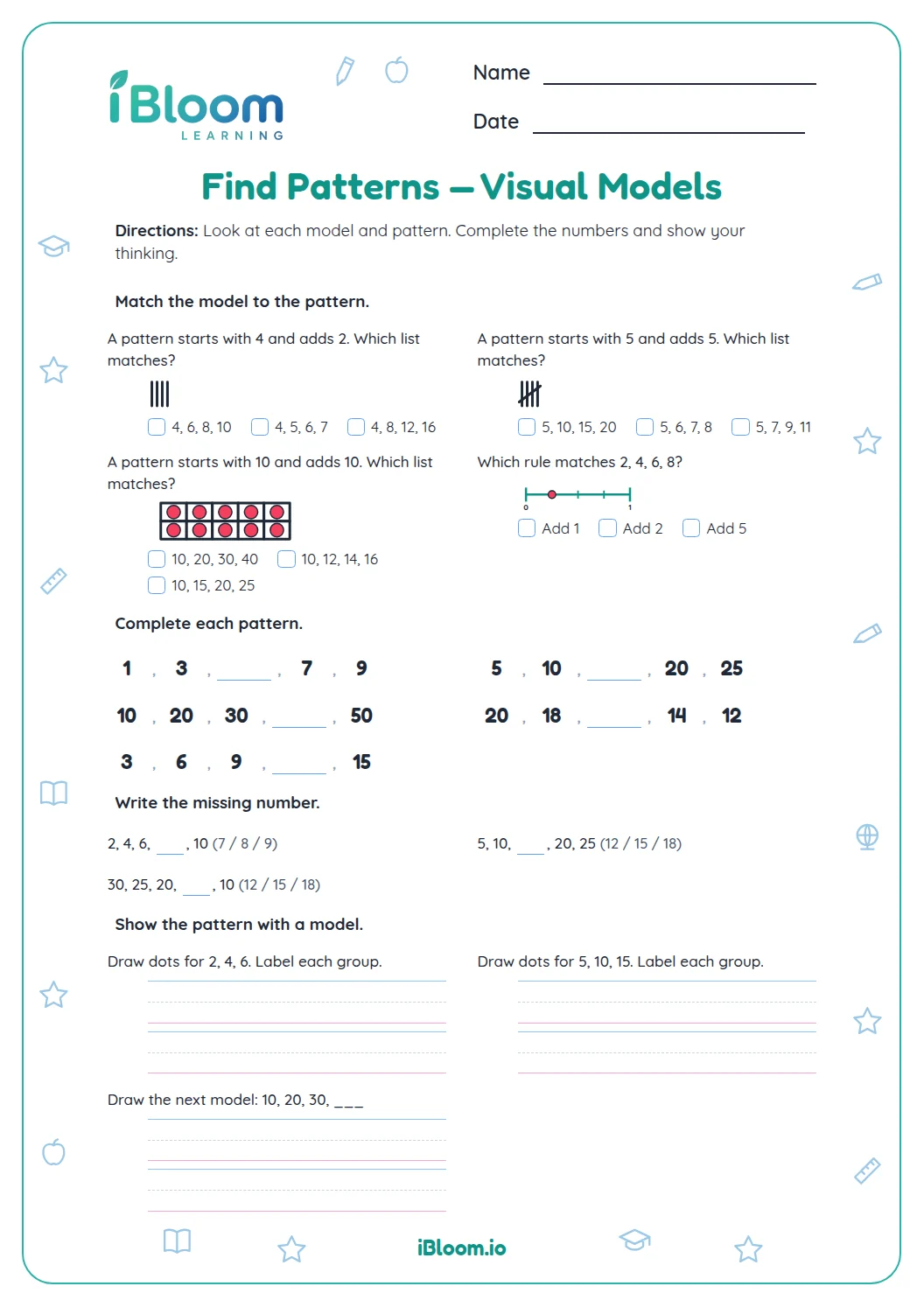
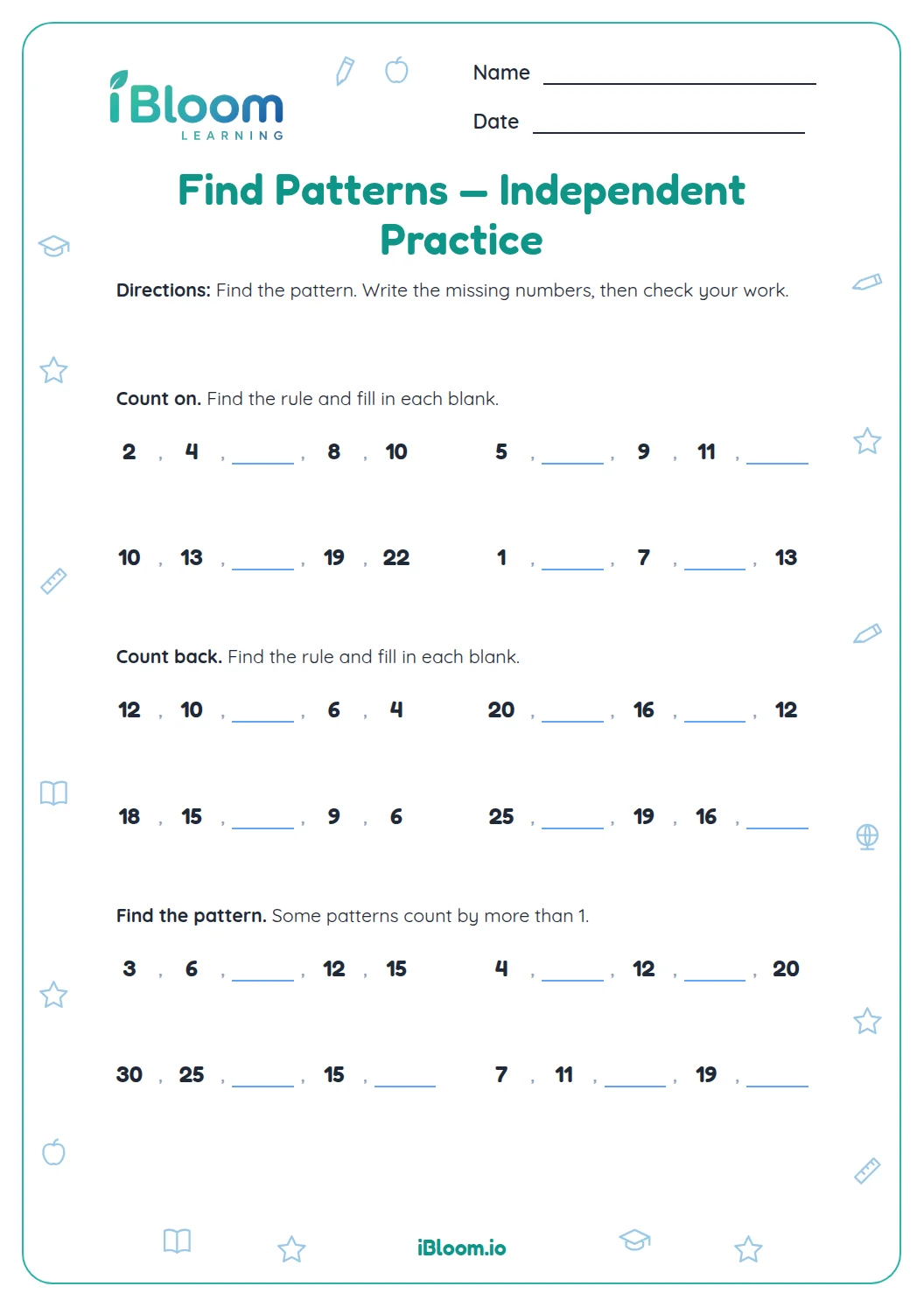
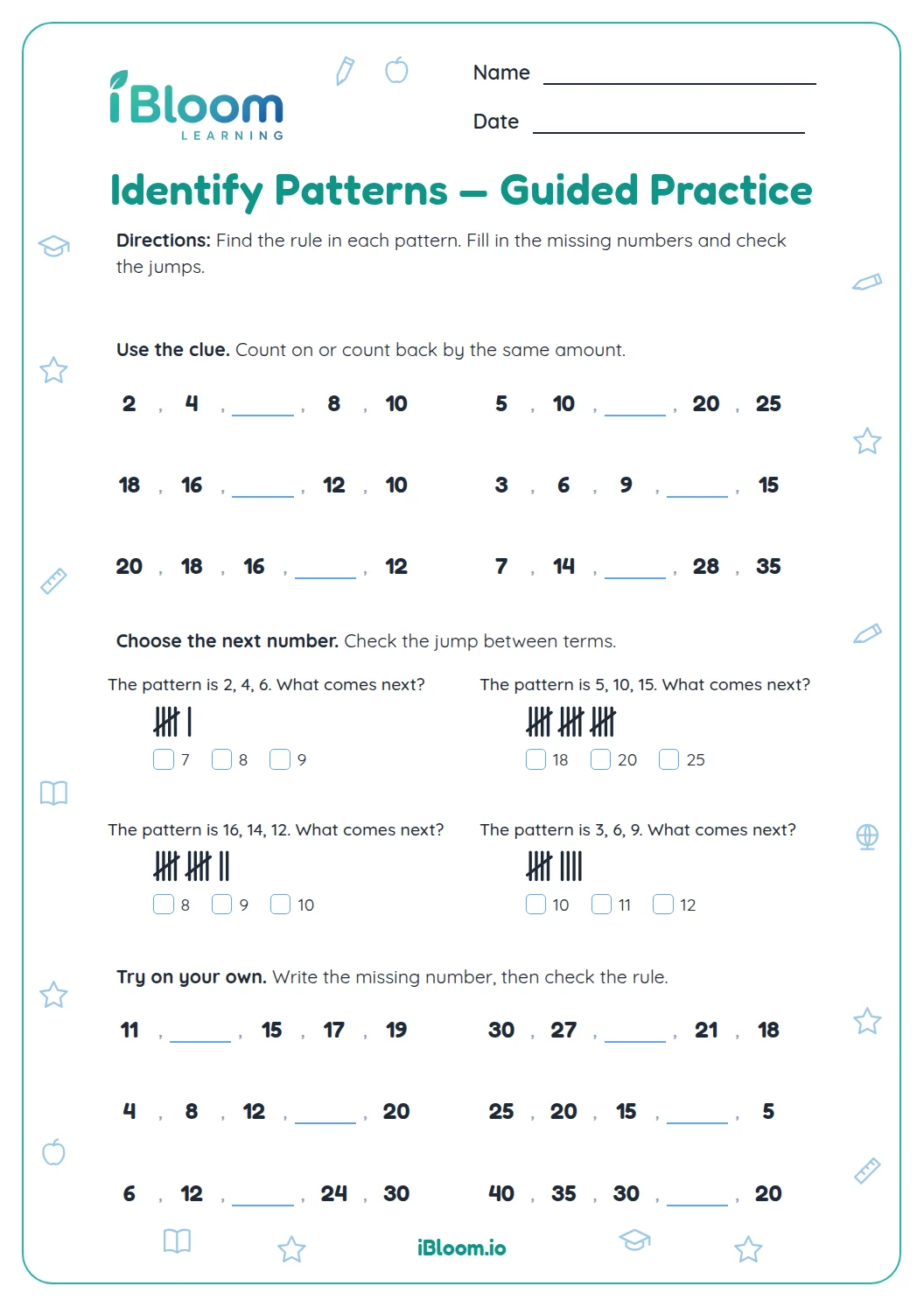
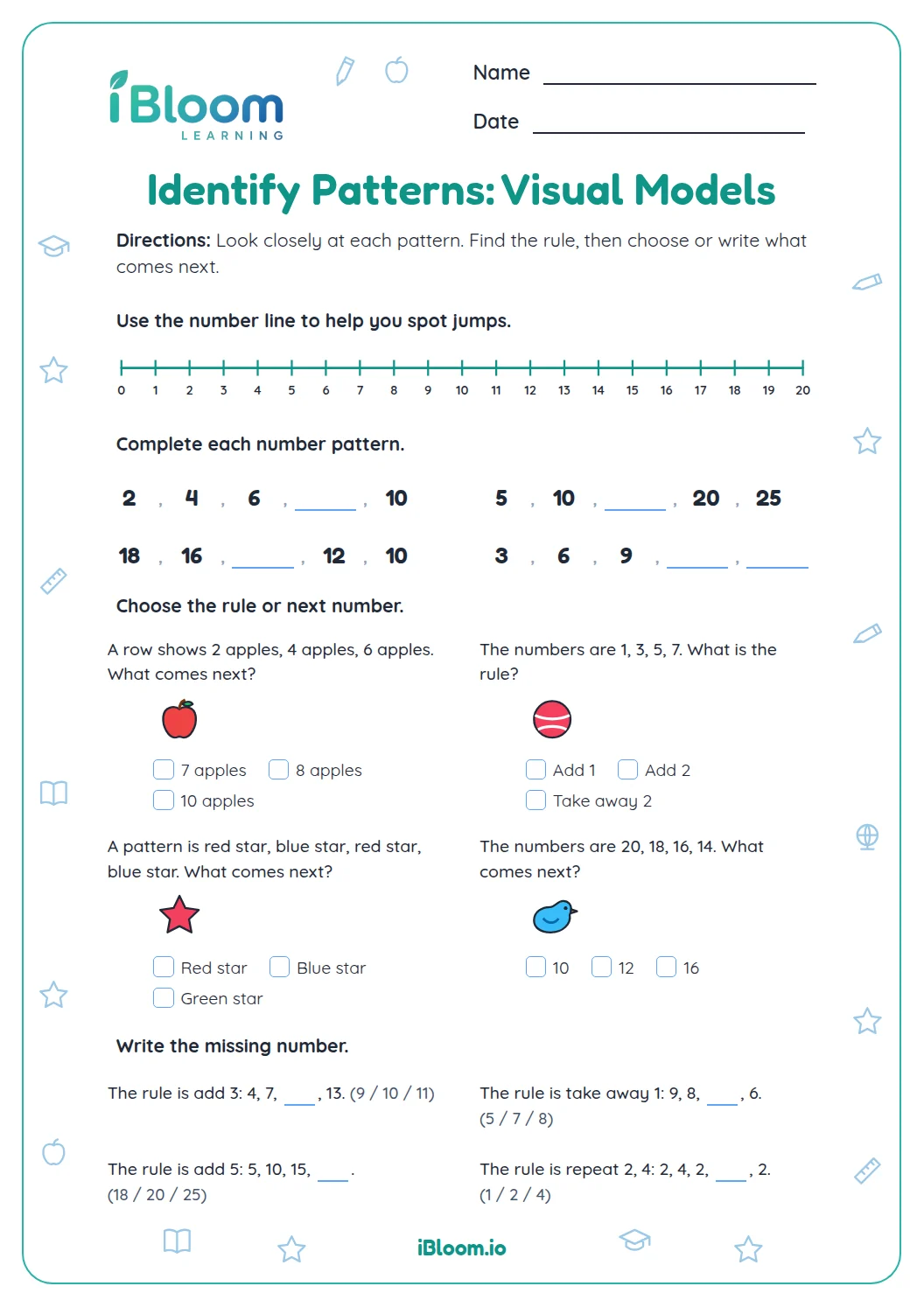
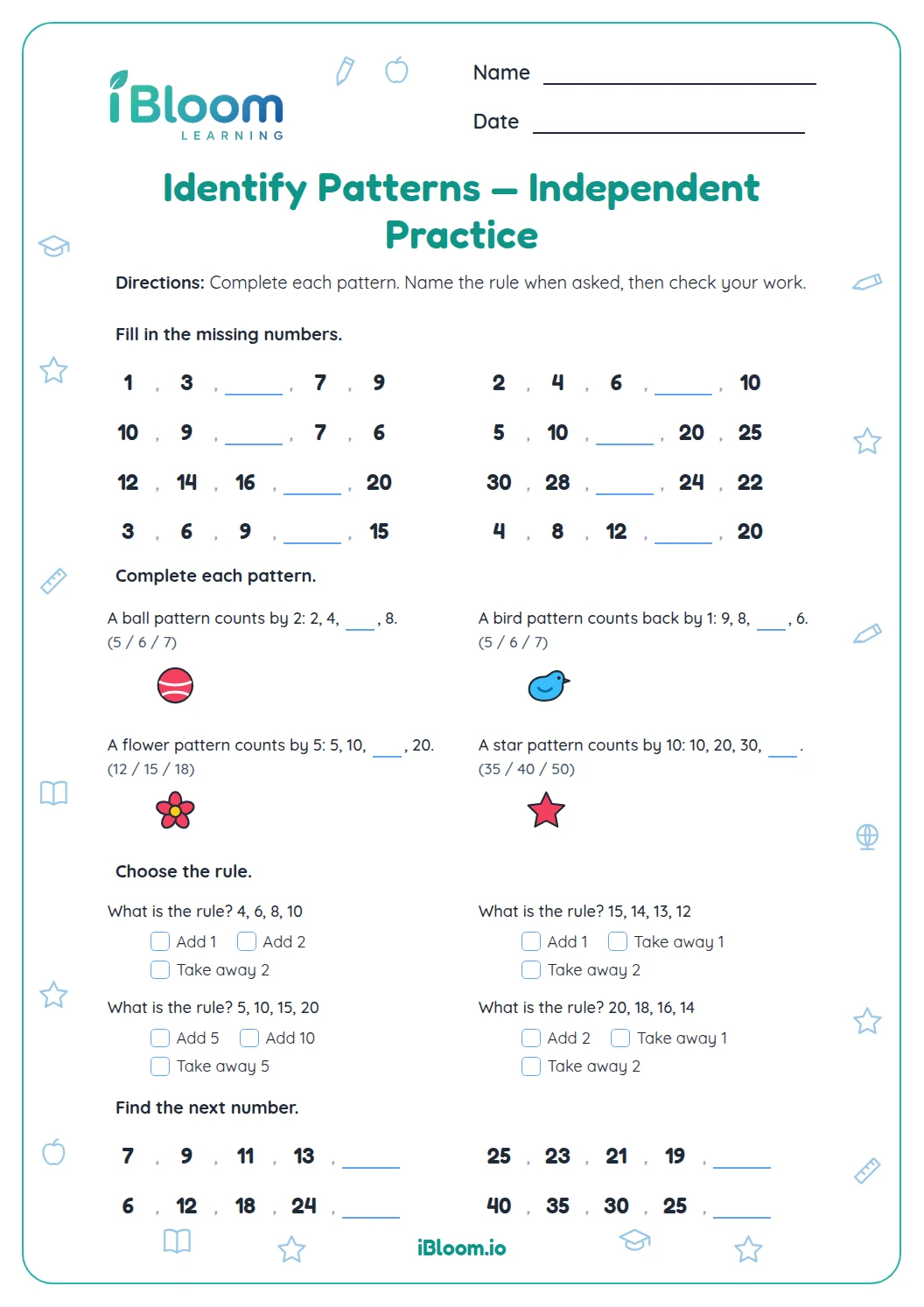
This free Grade 1 printable gives children independent practice extending number and picture patterns. It includes 12 number sequences that count forward or backward by a steady amount, followed by four visible picture sequences with picture choices. Students write the missing numbers or select the next picture. A separate answer key shows each continuation.
What patterns will students extend?
The first 12 questions are number sequences that increase or decrease by the same amount each step. The final four show picture sequences directly, so students can see and continue the repeating groups.
- 12, 5, 8, ___, ___
- 2The numbers go up by 3 each time.
- 3The missing numbers are 11 and 14.
How do students find a number rule?
Check the distance from one number to the next. A sequence such as 20, 19, 18 goes down by one each step, while 25, 20, 15 goes down by five.
How do picture patterns work?
Look for the smallest group that repeats, then say it aloud in order. The picture choices let students continue the visible sequence without needing to name a rule in writing.
How can you use this worksheet?
- 1Read the first few numbers from left to right.
- 2Compare neighbors and decide whether the numbers go up or down.
- 3Count the same amount each step to fill each blank.
- 4For picture rows, say the pictures in order and find the repeating group.
- 5Check that every new number or picture follows the same rule.
What slips should you watch for?
The mistake
Looking only at the last number instead of comparing the steps.
The fix
Compare each pair of neighbors to find the repeated change.
The mistake
Switching from counting up to counting down.
The fix
Say the rule aloud before filling the blanks, such as “back 3 each time.”
The mistake
Choosing a picture that appears in the row but breaks the repeating group.
The fix
Find the repeating group first and choose the picture that restarts it.
What to practice next
Make more practice
Further reading
Questions parents and teachers ask
What kinds of patterns are included?
The worksheet has 12 number sequences and four picture sequences. The numbers count forward or backward by a steady amount, and the picture rows repeat a short order. Children write missing numbers in Part A and choose a picture in Part B.
How many questions are on the worksheet?
There are 16 questions total: 12 number-pattern completions and four picture-pattern choices. Some number sequences ask for two missing numbers, so students must continue the same rule for more than one step before checking the separate answer key.
How can a child find the rule?
Compare neighboring numbers and ask how much the sequence changes each time. For a picture pattern, say the picture names in order and notice the repeating group. Fill in one step, then check that the next step follows the very same rule.
Are the numbers suitable for Grade 1?
The sequences use counting by ones, twos, threes, fives, or tens, with values no greater than 40. Children extend familiar counting sequences and repeating picture groups by one or two places. They write numbers in the provided blanks and choose from pictures for the visual rows.
Does the worksheet have an answer key?
Yes. The separate key gives the missing number or numbers for each sequence and the correct picture choice for all four picture patterns. Use it after the child completes a row to check both the answer and the pattern rule.