
About this worksheet
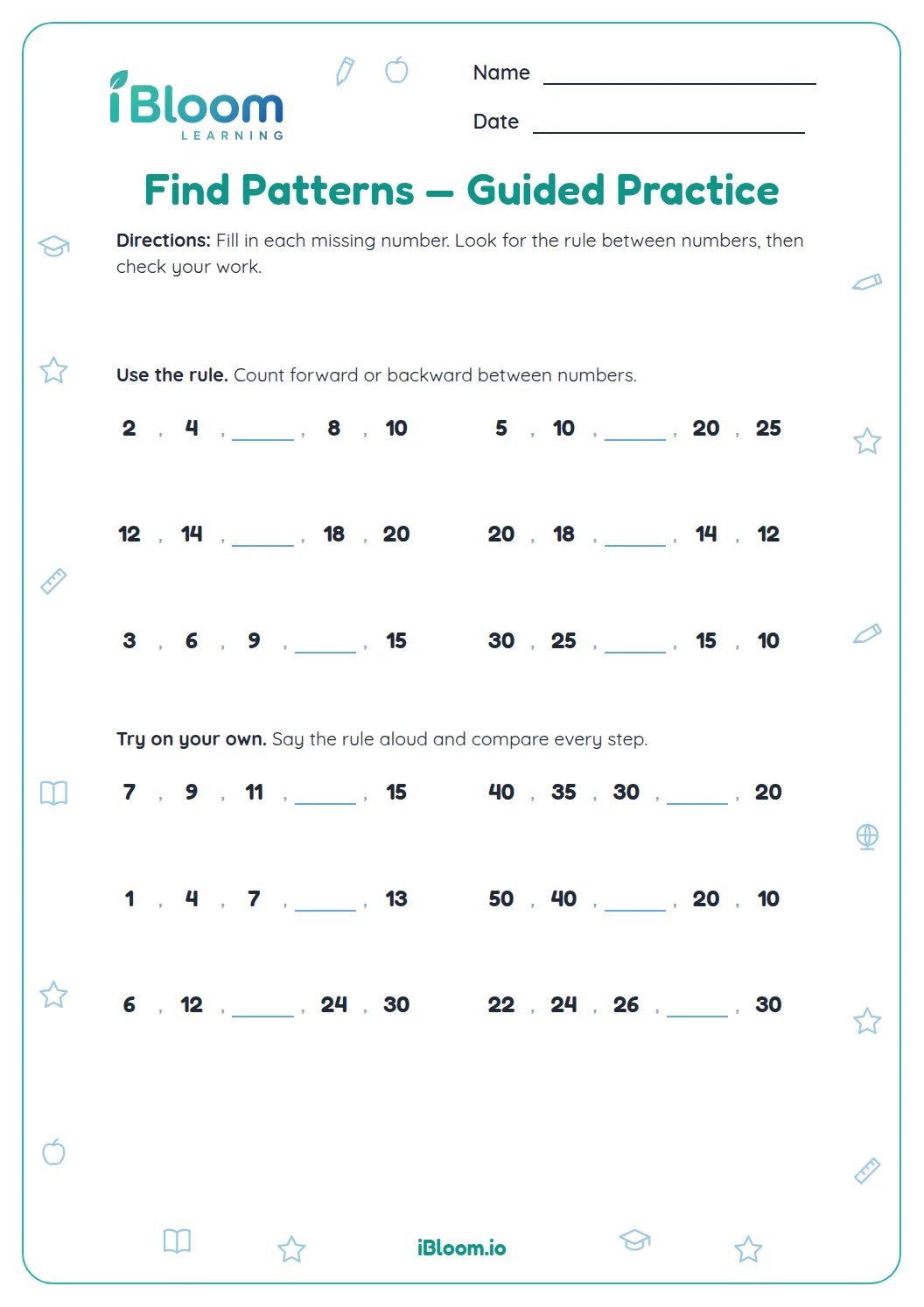
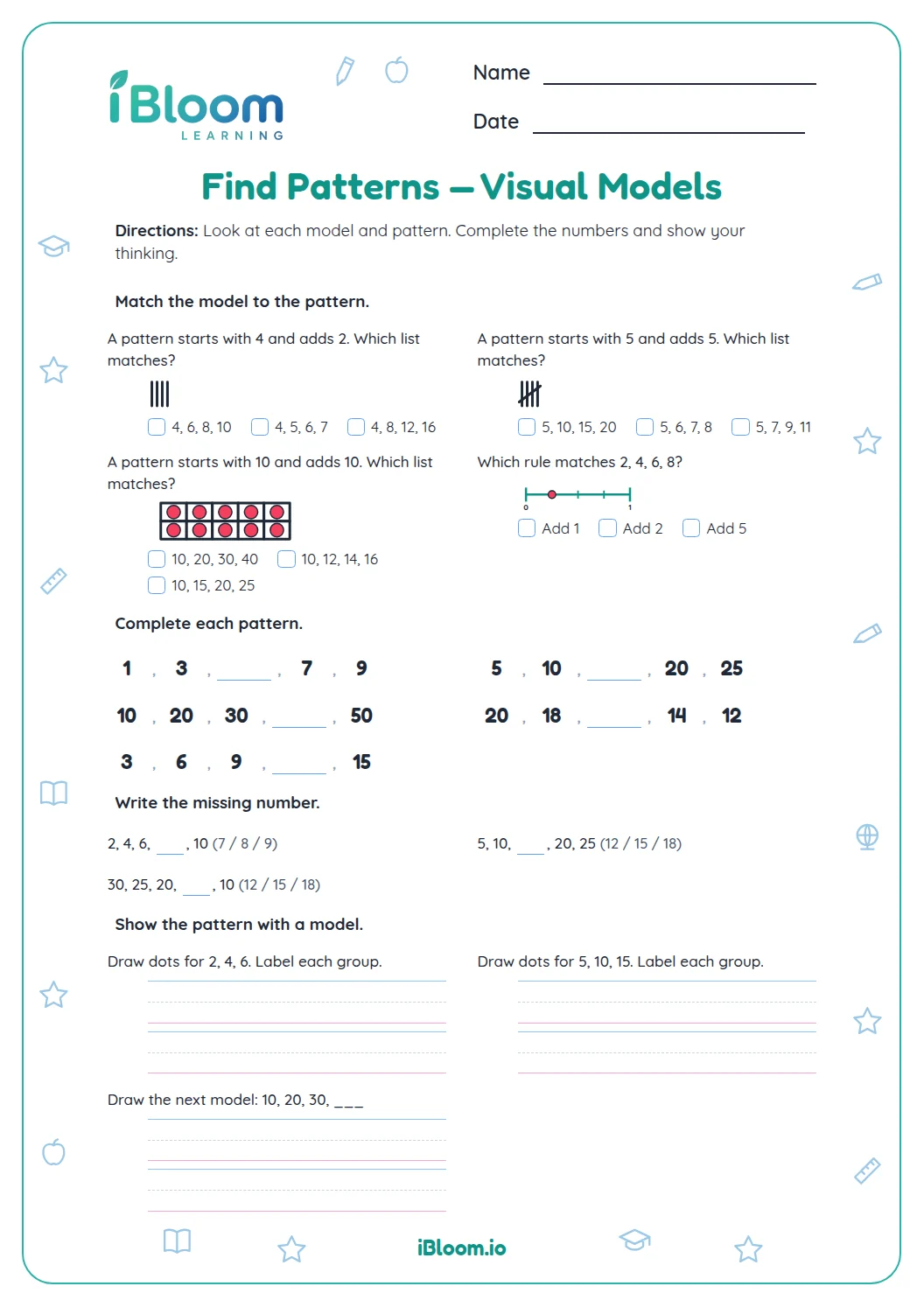
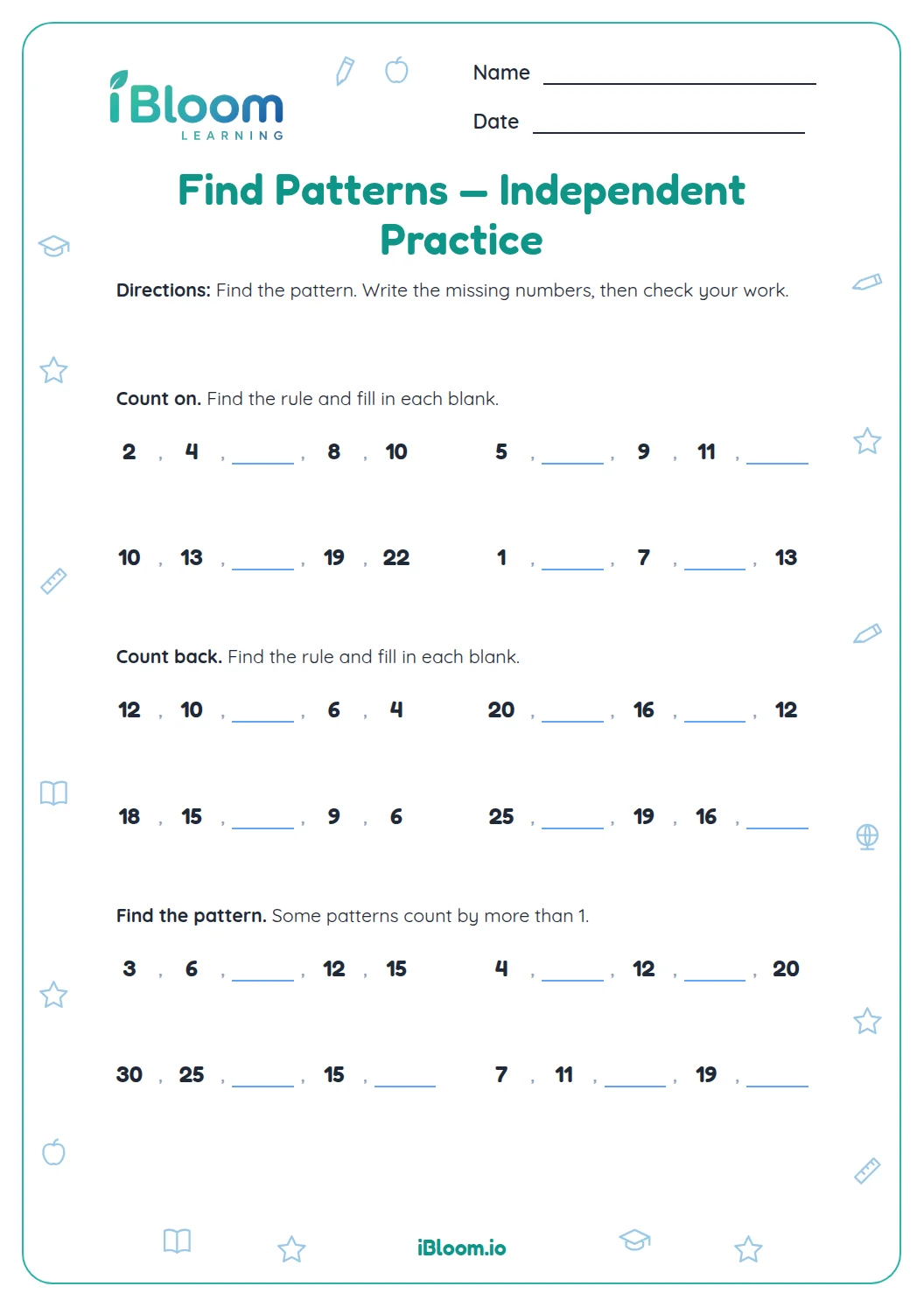
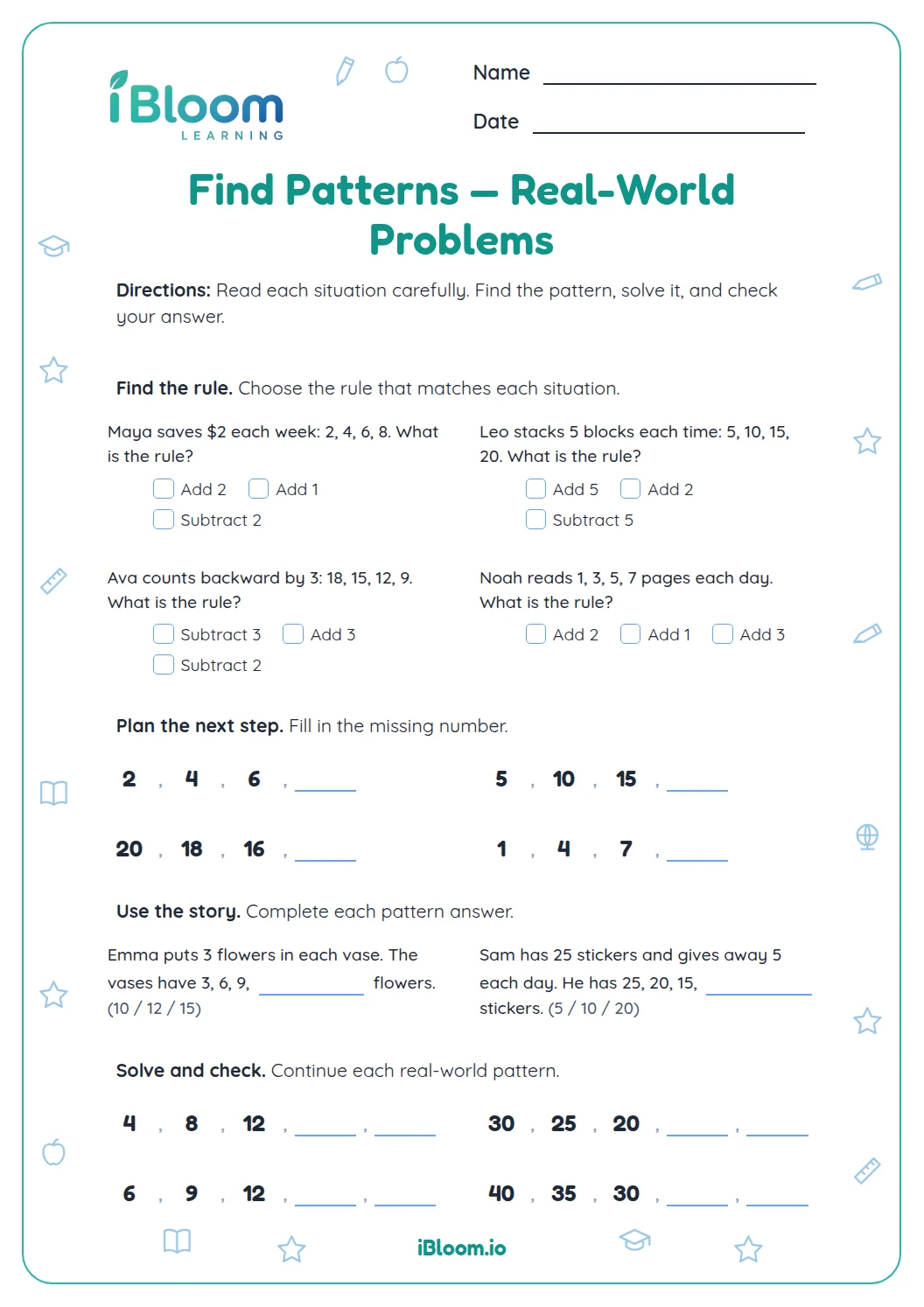
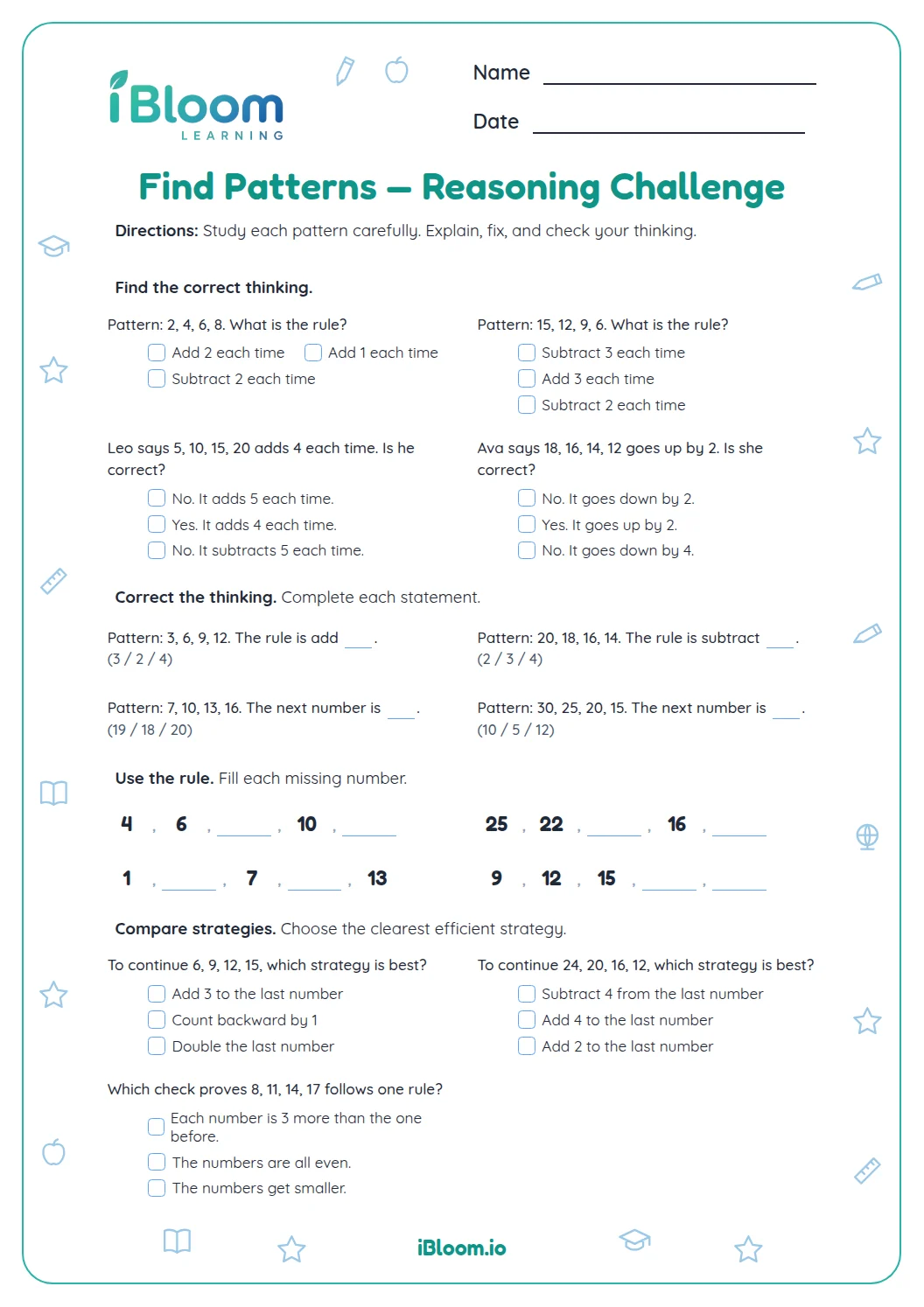
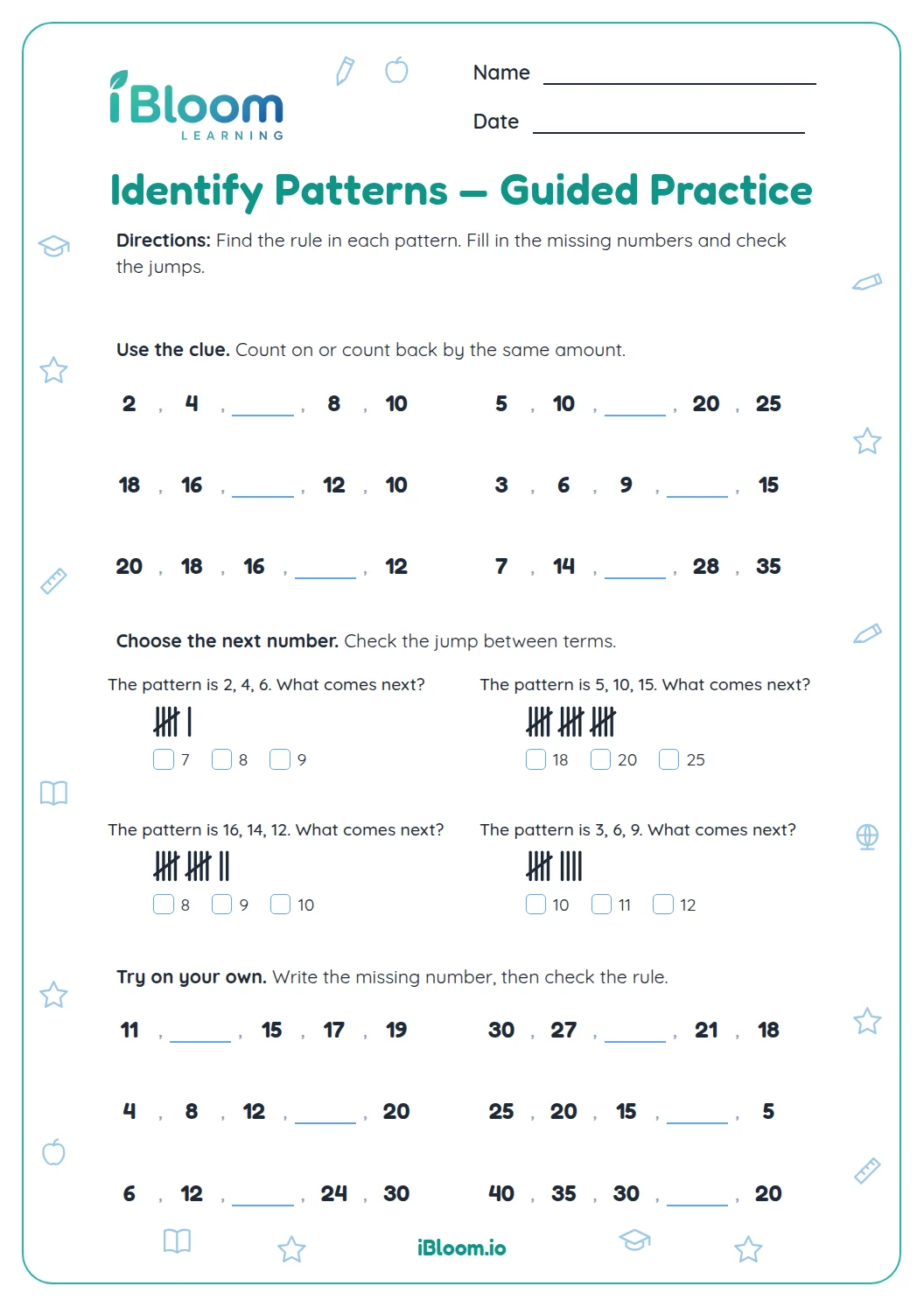
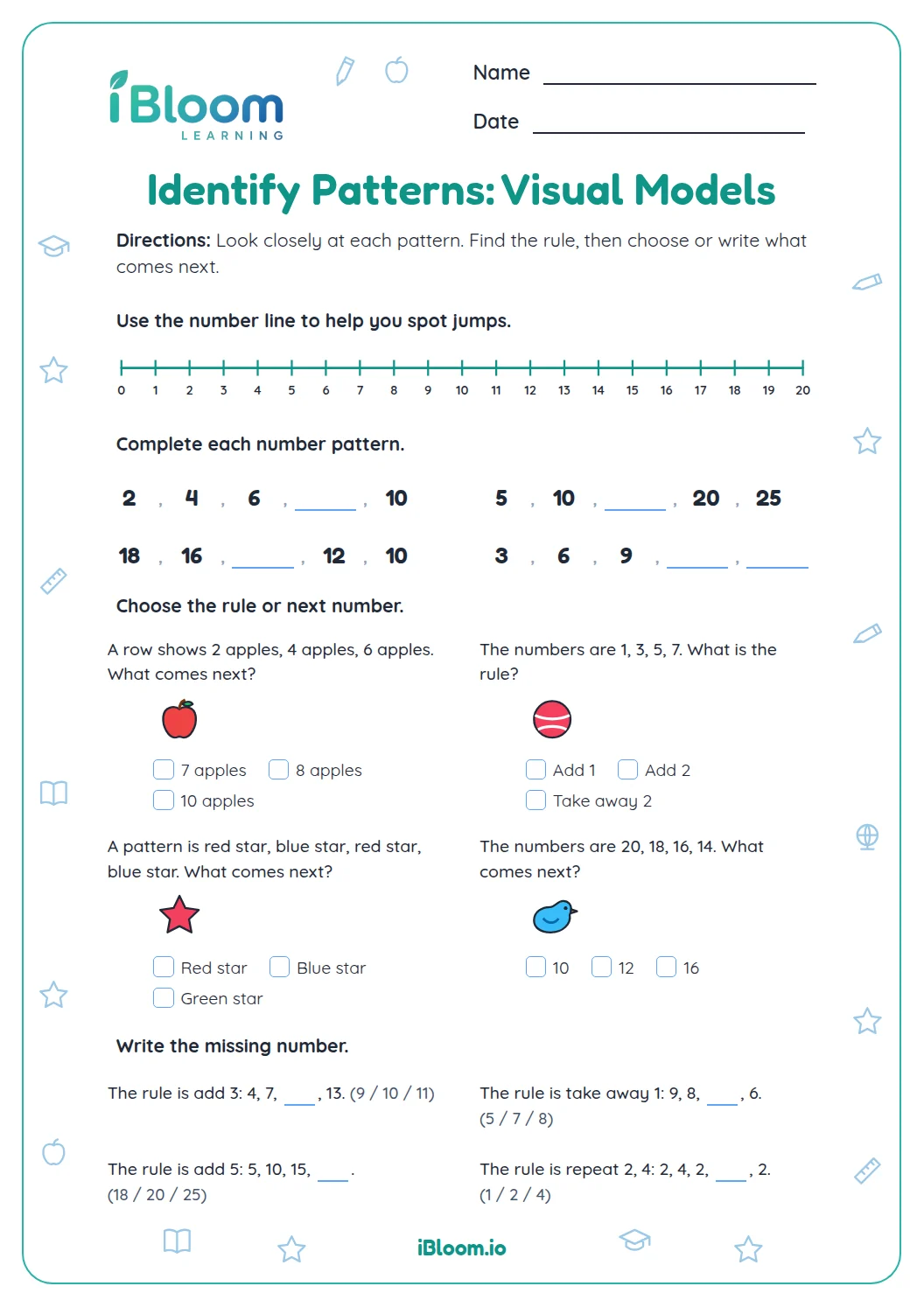
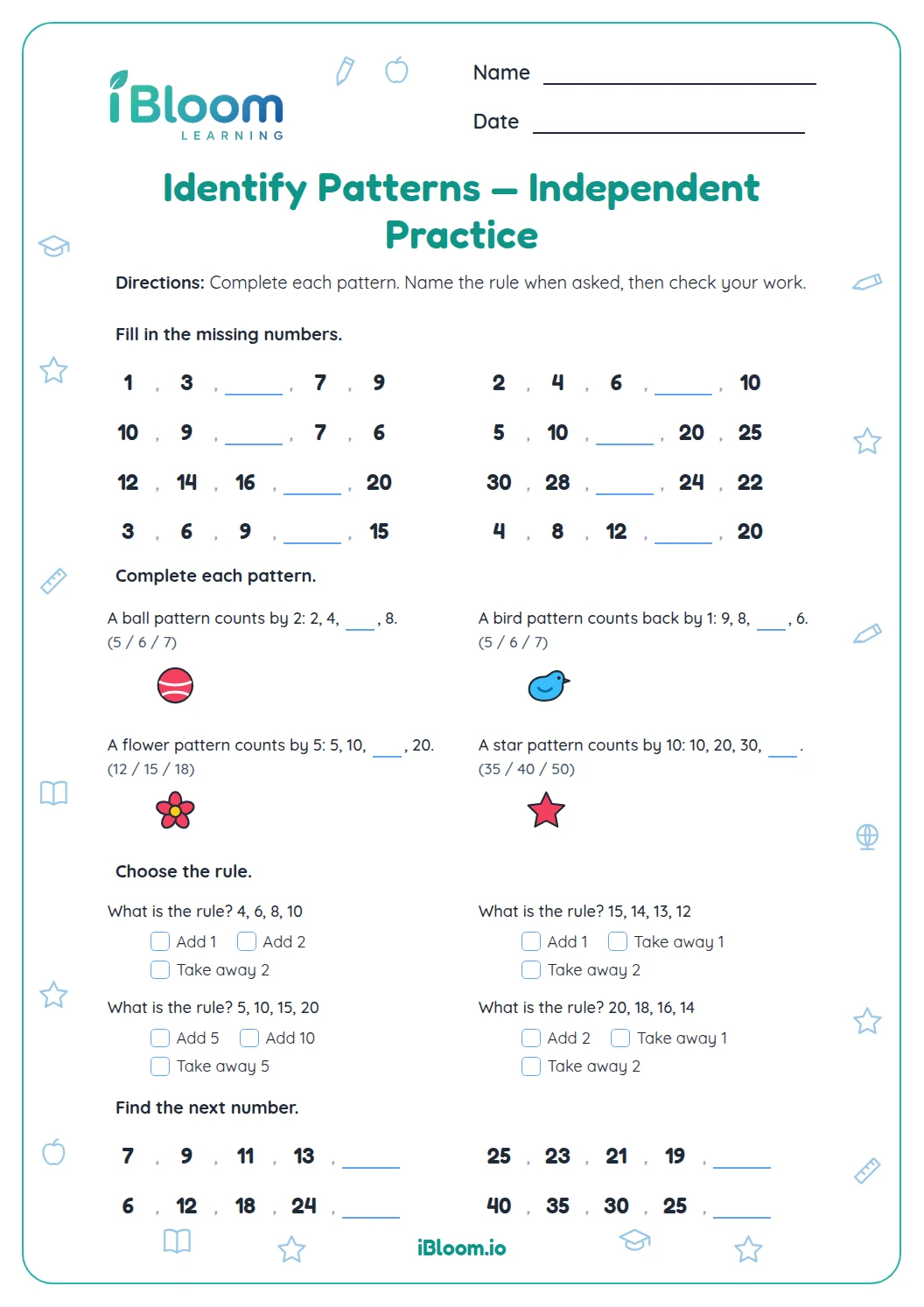
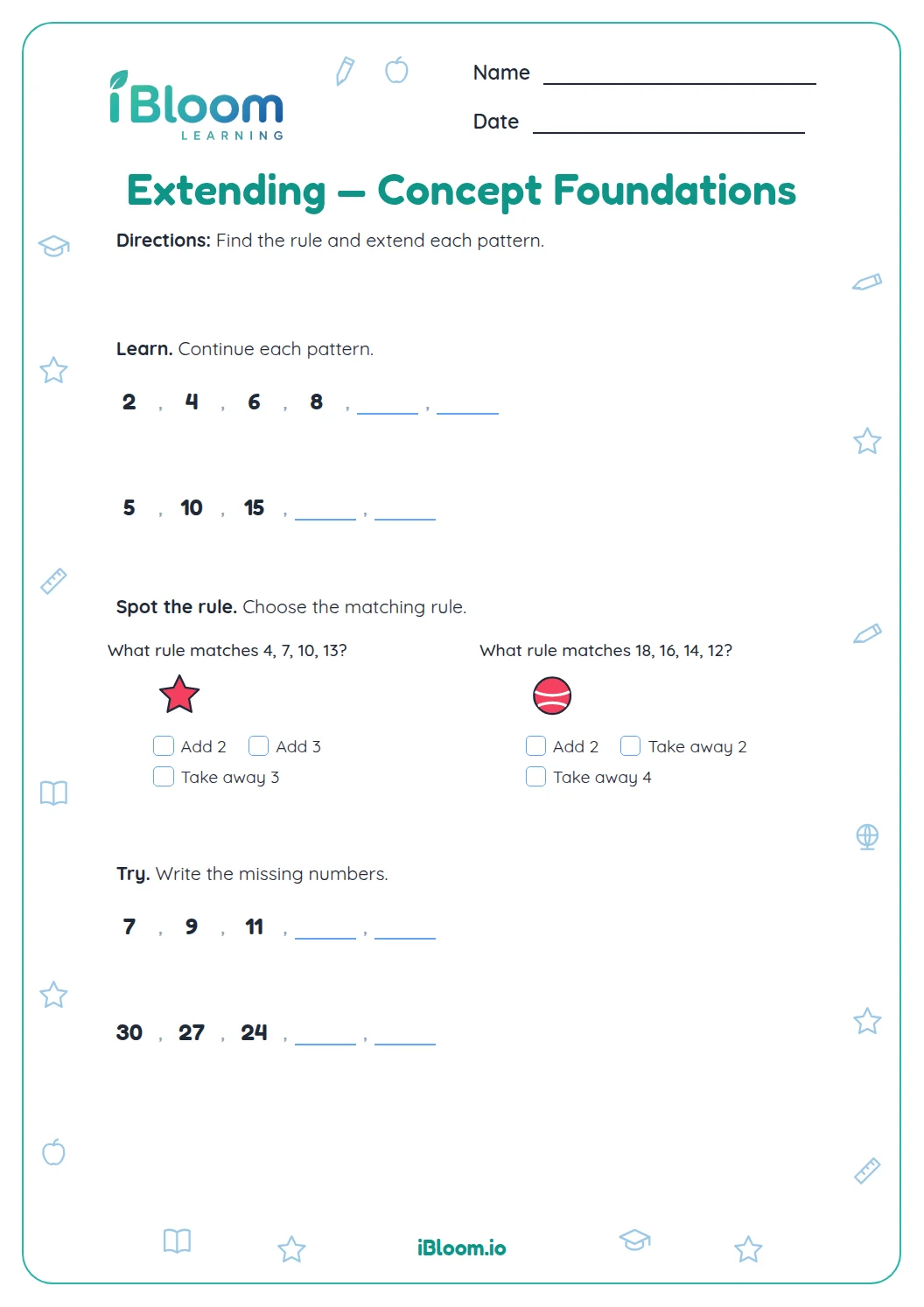
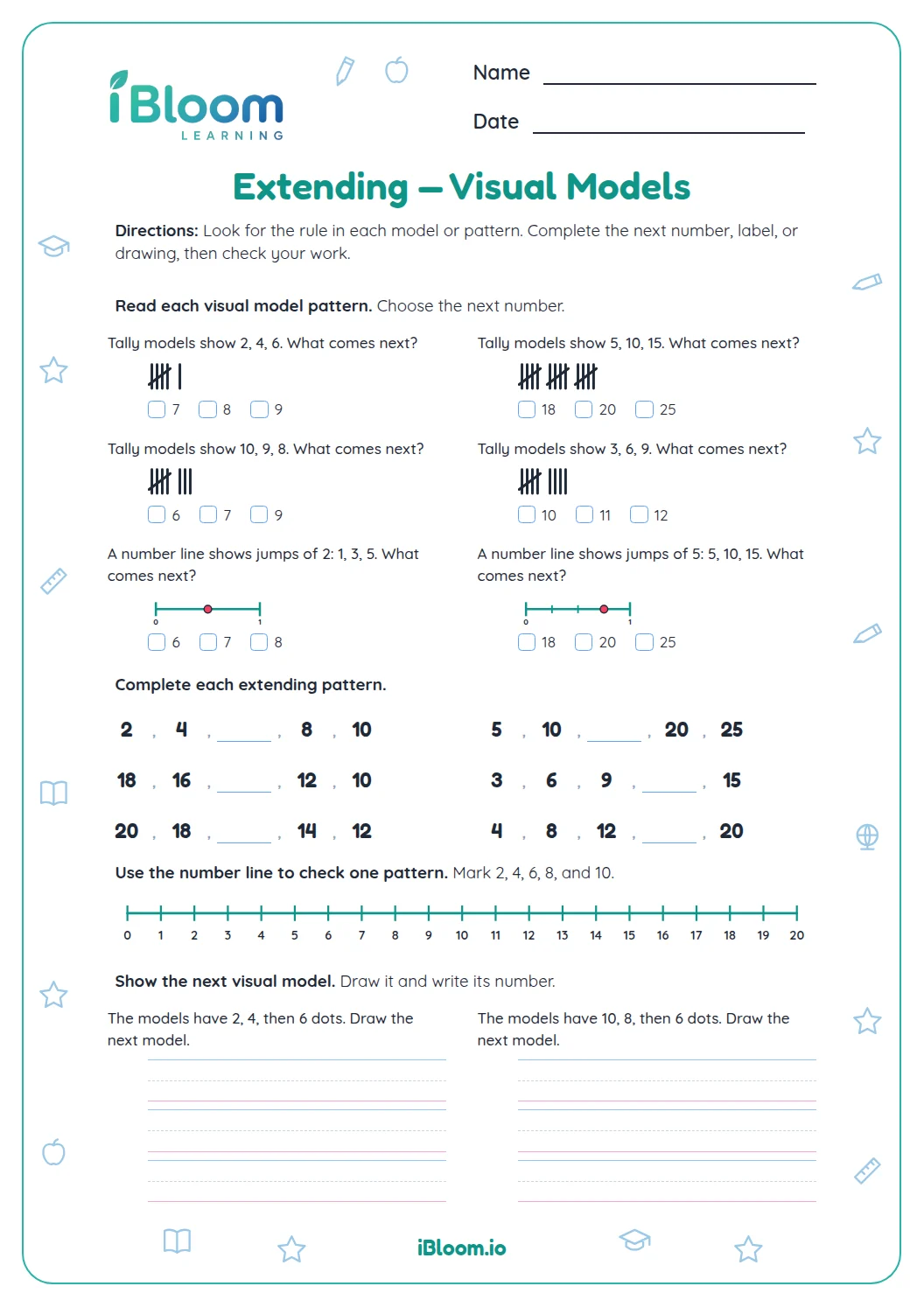
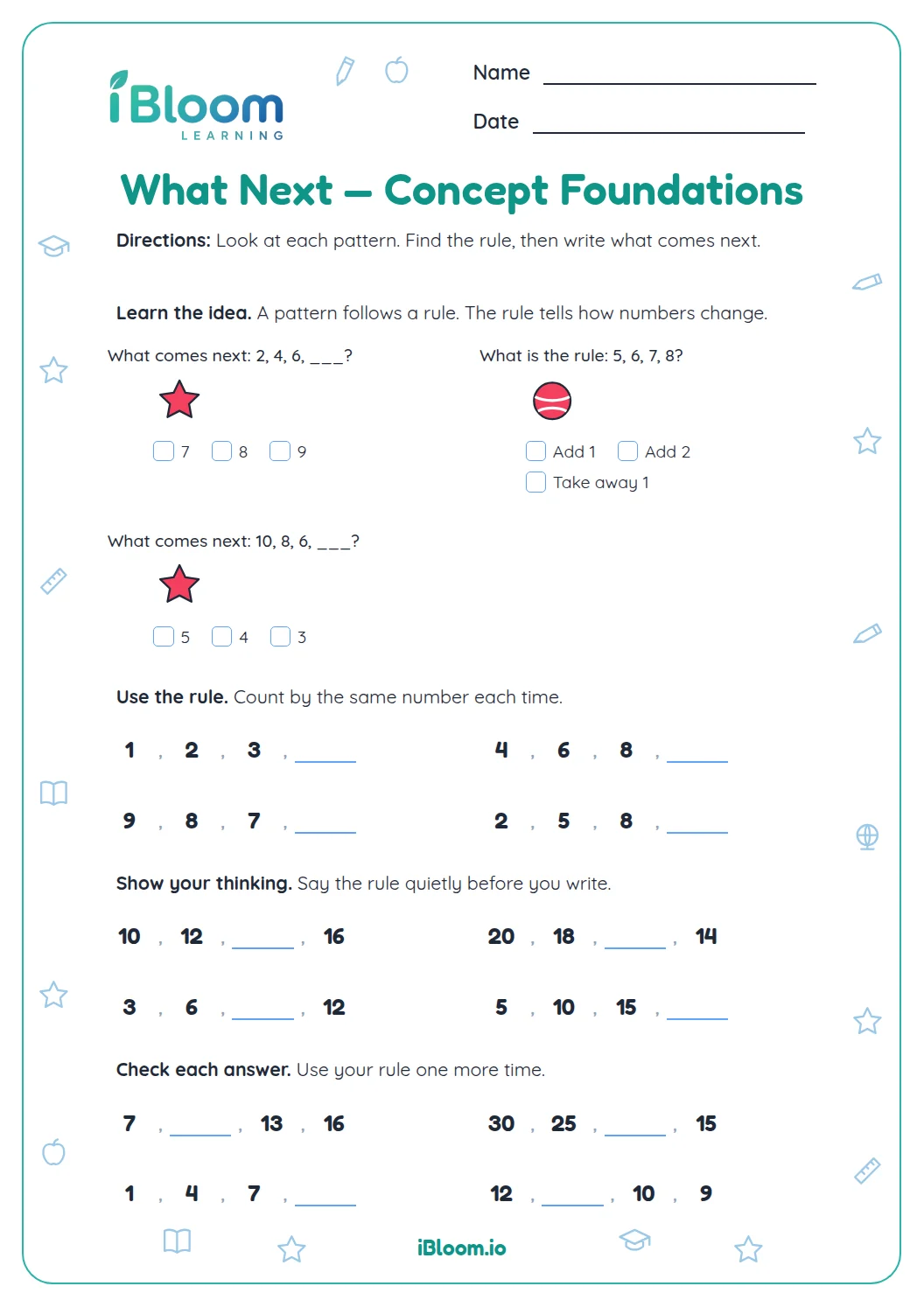
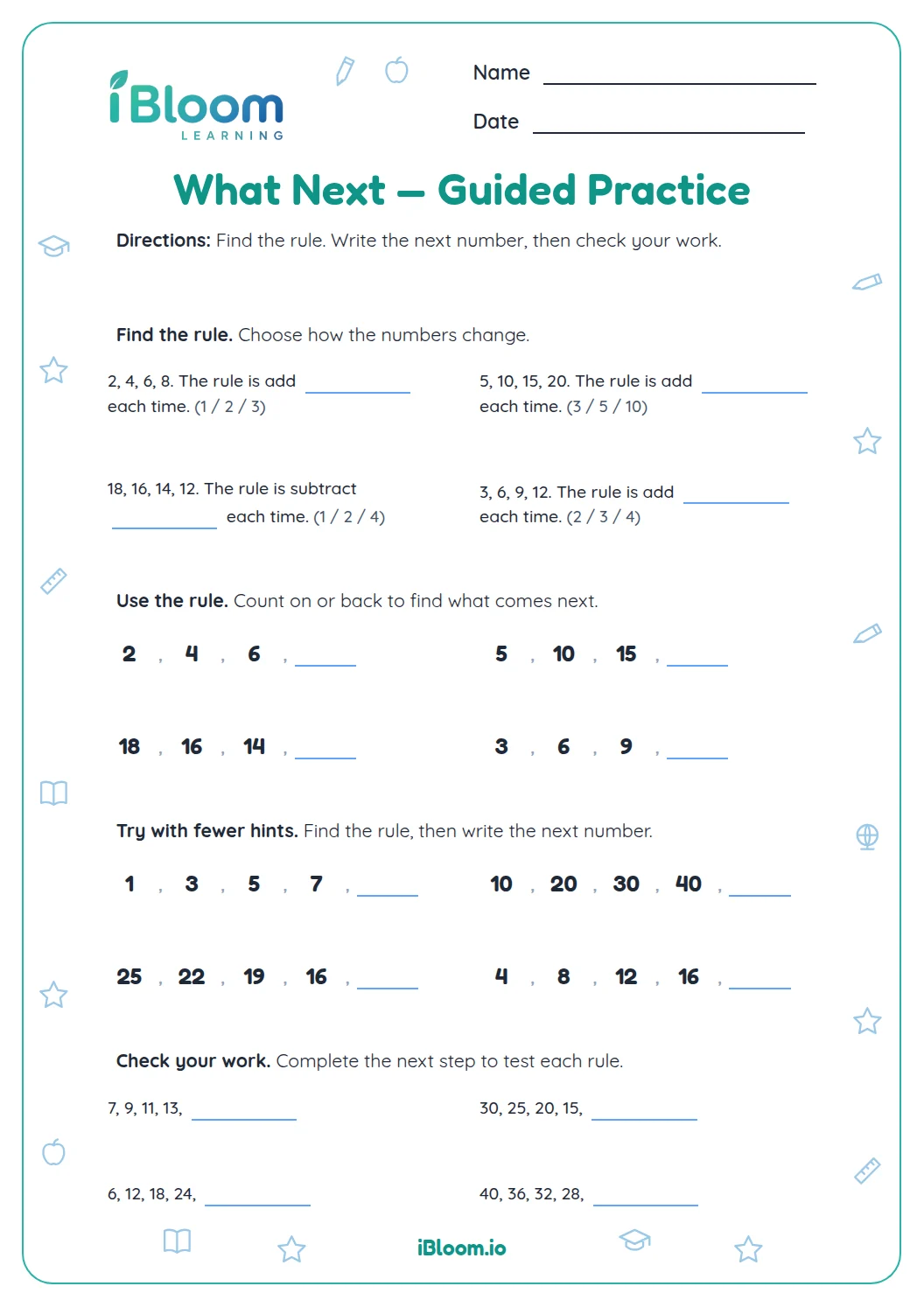
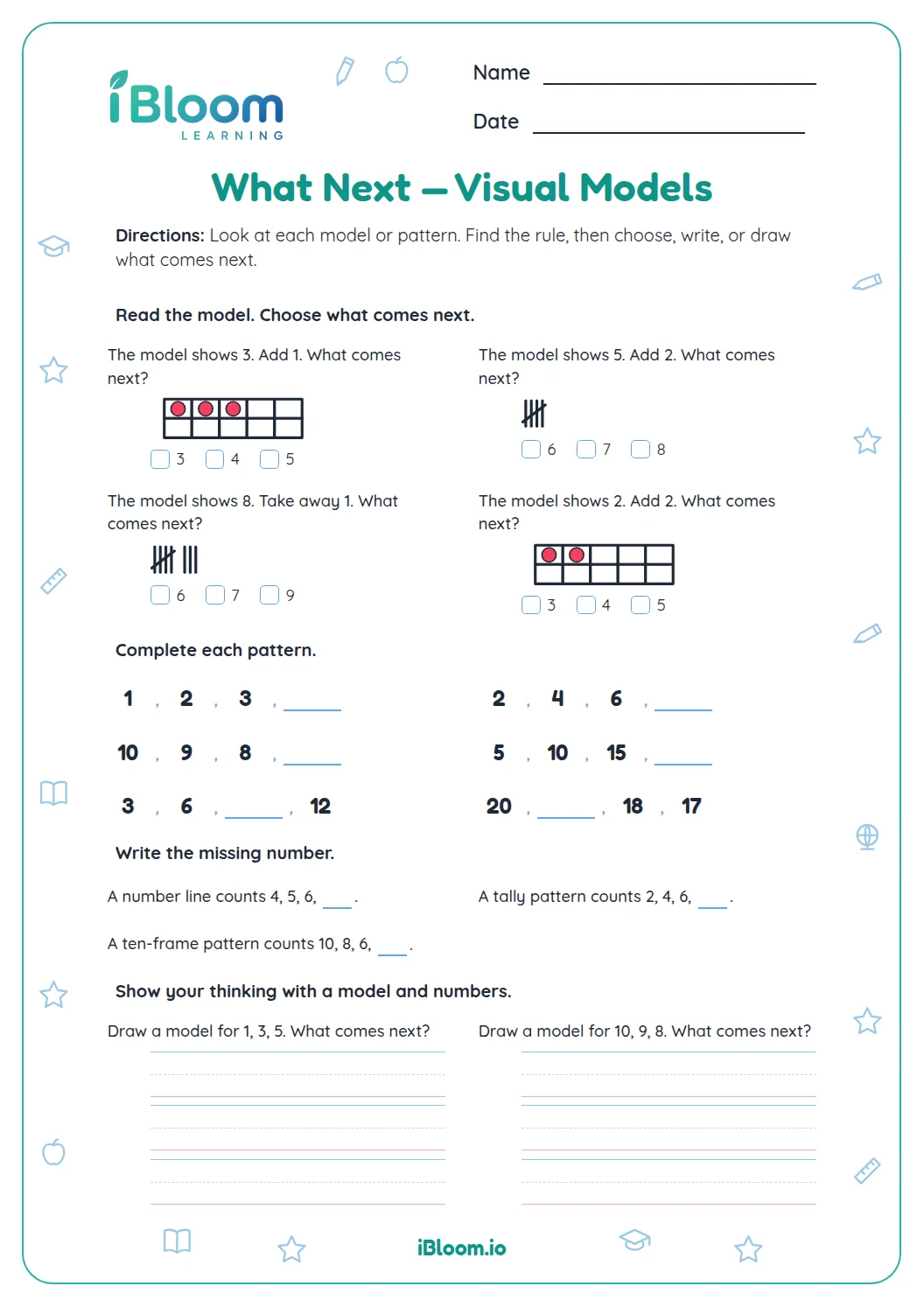
This Grade 1 worksheet builds number-pattern recognition with 16 items. Learners continue eight repeating patterns, then identify the counting rule for eight increasing or decreasing sequences. The answer key shows the next number or the rule to use.
Aligned to 1.OA.C.5
How do you spot a repeating pattern?
Look for a small group of numbers that returns in the same order. For 1, 2, 1, 2, 1, the group is 1, 2, so the next number is 2.
- 1In 3, 3, 4, 3, 3, ___, the group 3, 3, 4 repeats; write 4.
How do you find a counting rule?
Compare neighboring numbers to find how the sequence changes. Decide whether the same amount is added or taken away each time.
- 1In 10, 8, 6, 4, each number is 2 less than the one before it, so the rule is “Take away 2.”
How can learners check the next number?
After writing a number, check that the repeating group continues or that the same counting step still works.
How can I use this worksheet?
- 1In Part A, look for the group of numbers that repeats.
- 2Continue the group by writing the next number.
- 3In Part B, compare neighboring numbers to find the step.
- 4Choose whether that step adds or takes away the same amount.
- 5Check the answer key and try a missed pattern again.
Common mistakes and quick fixes
The mistake
Repeating only the last number instead of the full group.
The fix
Mark the shortest group that repeats, then start it again after the last shown number.
The mistake
Reversing an increasing and decreasing step.
The fix
Compare two neighbors and say whether the numbers get larger or smaller.
The mistake
Changing the step partway through a counting pattern.
The fix
Check each pair of neighboring numbers to confirm the same change each time.
Curriculum alignment
This worksheet gives learners focused practice with the skill named in the standard.
Notice repeating parts and simple counting rules to find the next number.
On this sheet: The questions directly practice the stated skill.
Show the official wordingHide the official wording
Relate counting to addition and subtraction (e.g., by counting on 2 to add 2).
What to practice next
Make more practice
Further reading
Questions parents and teachers ask
How many patterns are included?
There are 16 questions across two pages. The first eight ask children to continue a repeating group. The next eight show a counting sequence and ask which add-or-take-away rule continues it. The separate answer key gives the next numbers and rules.
What is a repeating number pattern?
A repeating pattern has a group that returns in the same order. In 1, 2, 1, 2, the group is 1, 2. Continue that group after the last number to find what comes next. The repeated group must stay in order.
Do all the counting rules add numbers?
No. Part B includes rules that add and rules that take away. Compare neighboring numbers to see which direction they move, then check whether the same amount is added or subtracted at every step. The sequence keeps one steady counting step.
Should children explain their answers?
The worksheet asks children to continue repeating groups and choose a counting rule. Saying the group or naming the amount added or taken away is a useful way to explain and check an answer. This gives a quick way to verify it.
How can I help if a child is stuck?
For a repeating pattern, look for the shortest group that returns. For a counting pattern, compare one pair of neighbors at a time and decide whether the number increases or decreases. The answer key can confirm the rule. Check each neighbor before checking.