

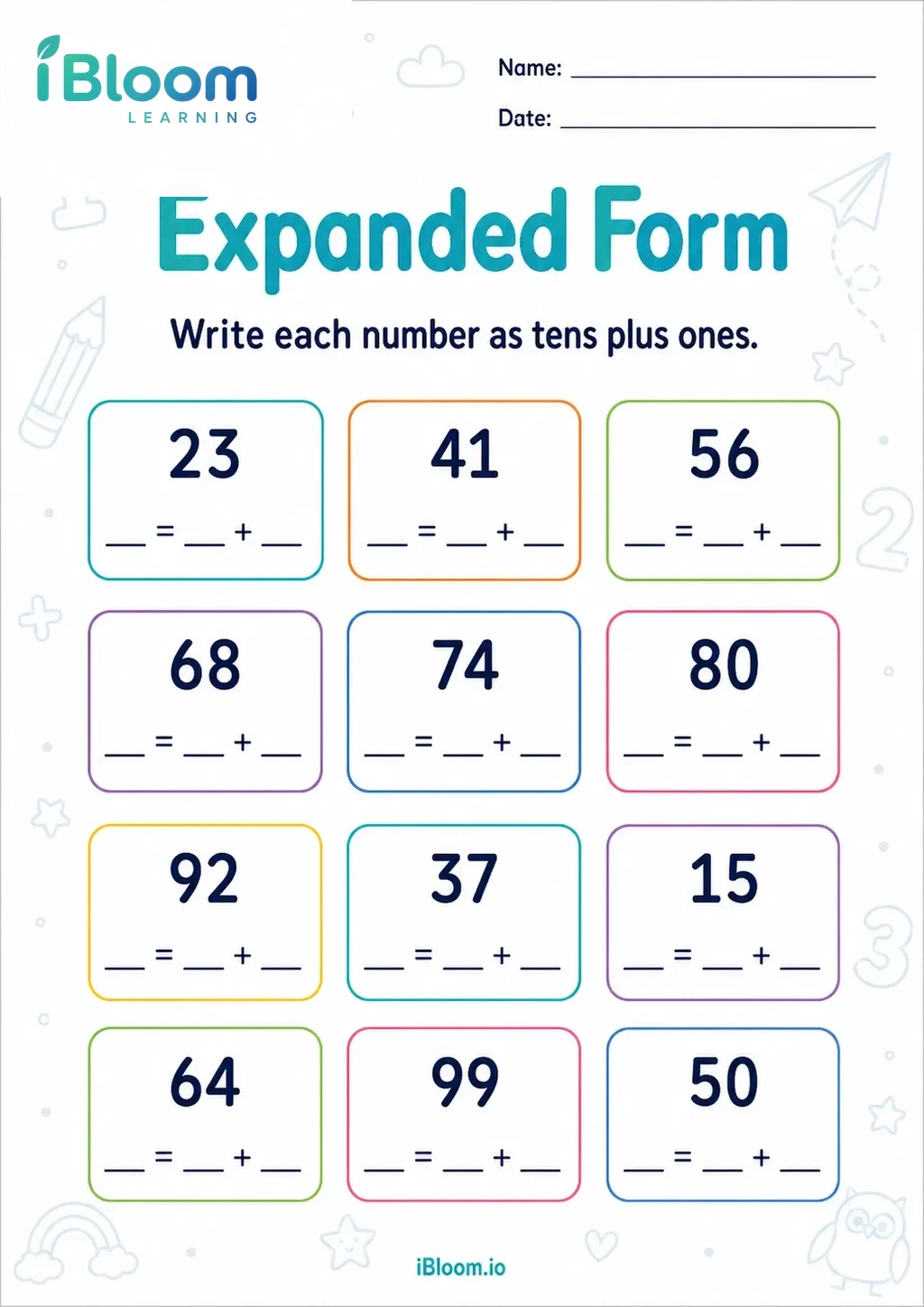
About this worksheet
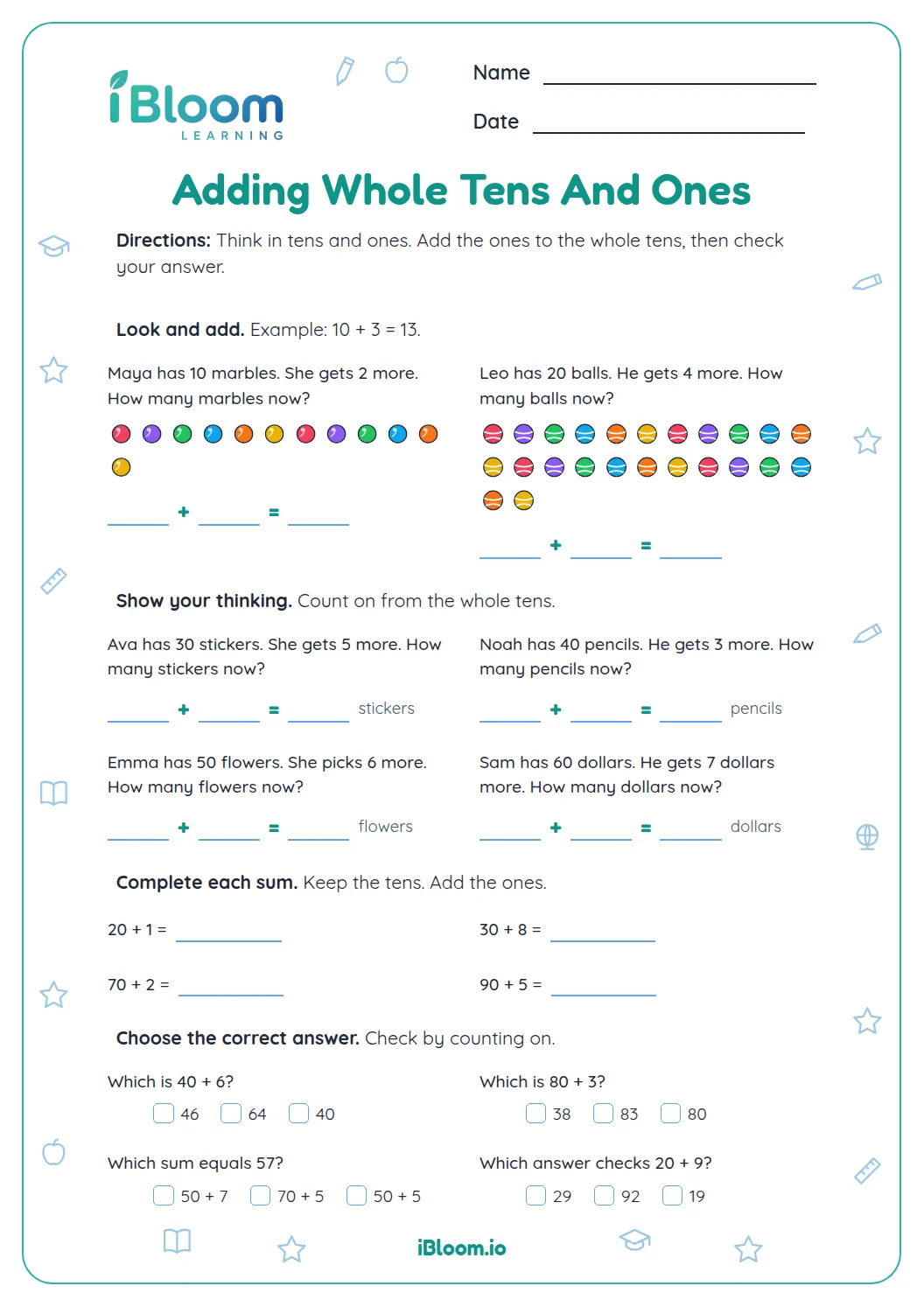
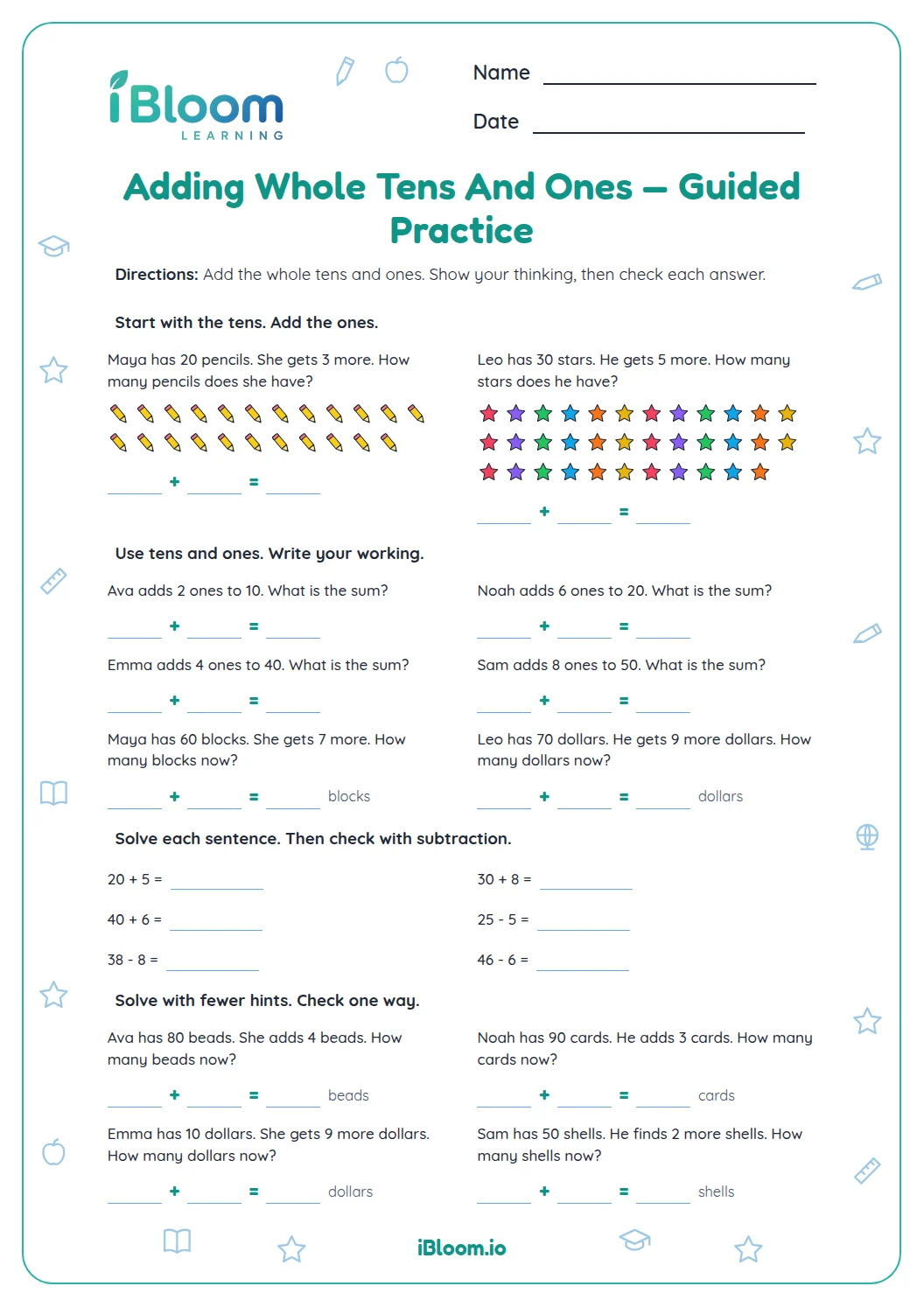
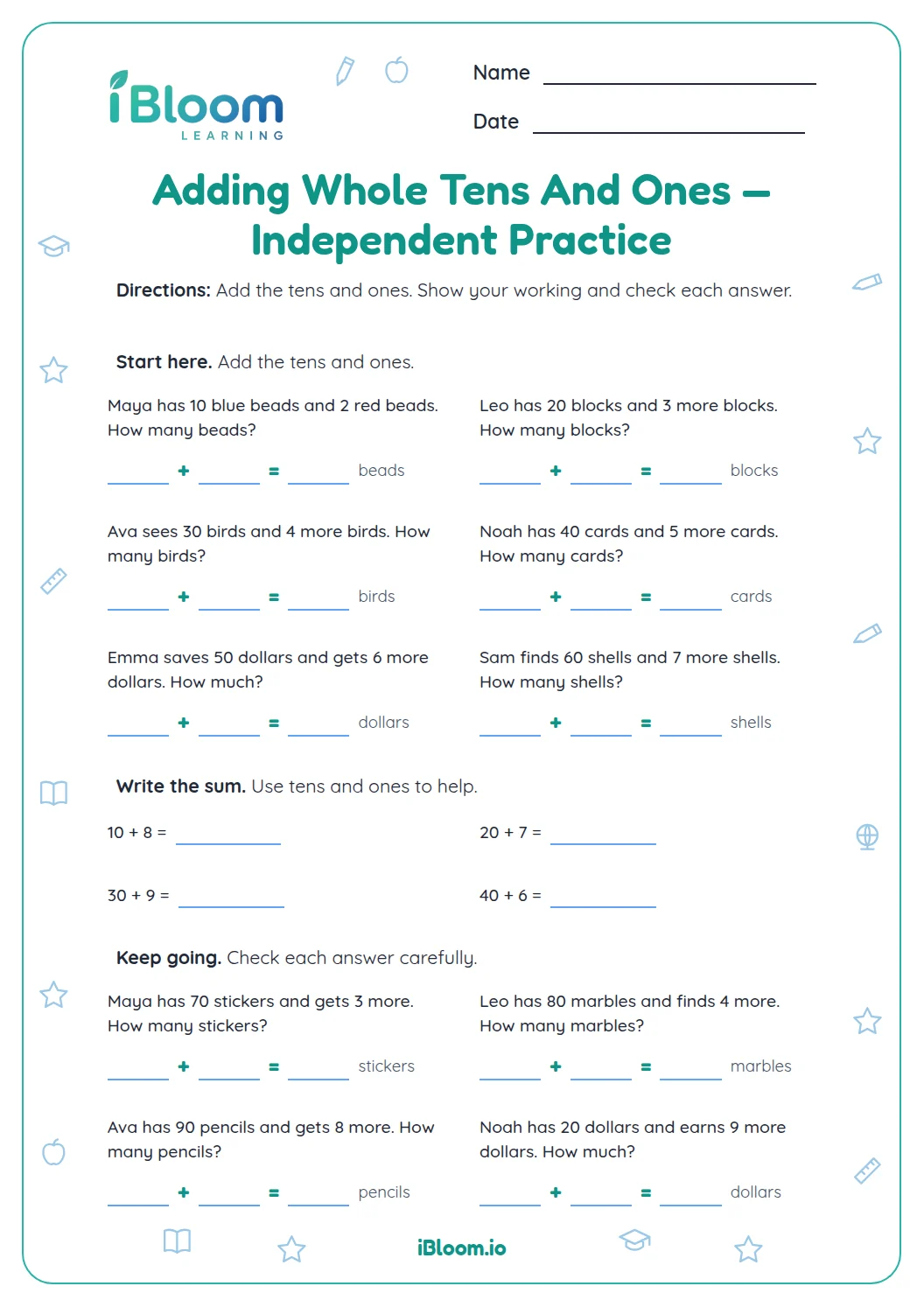
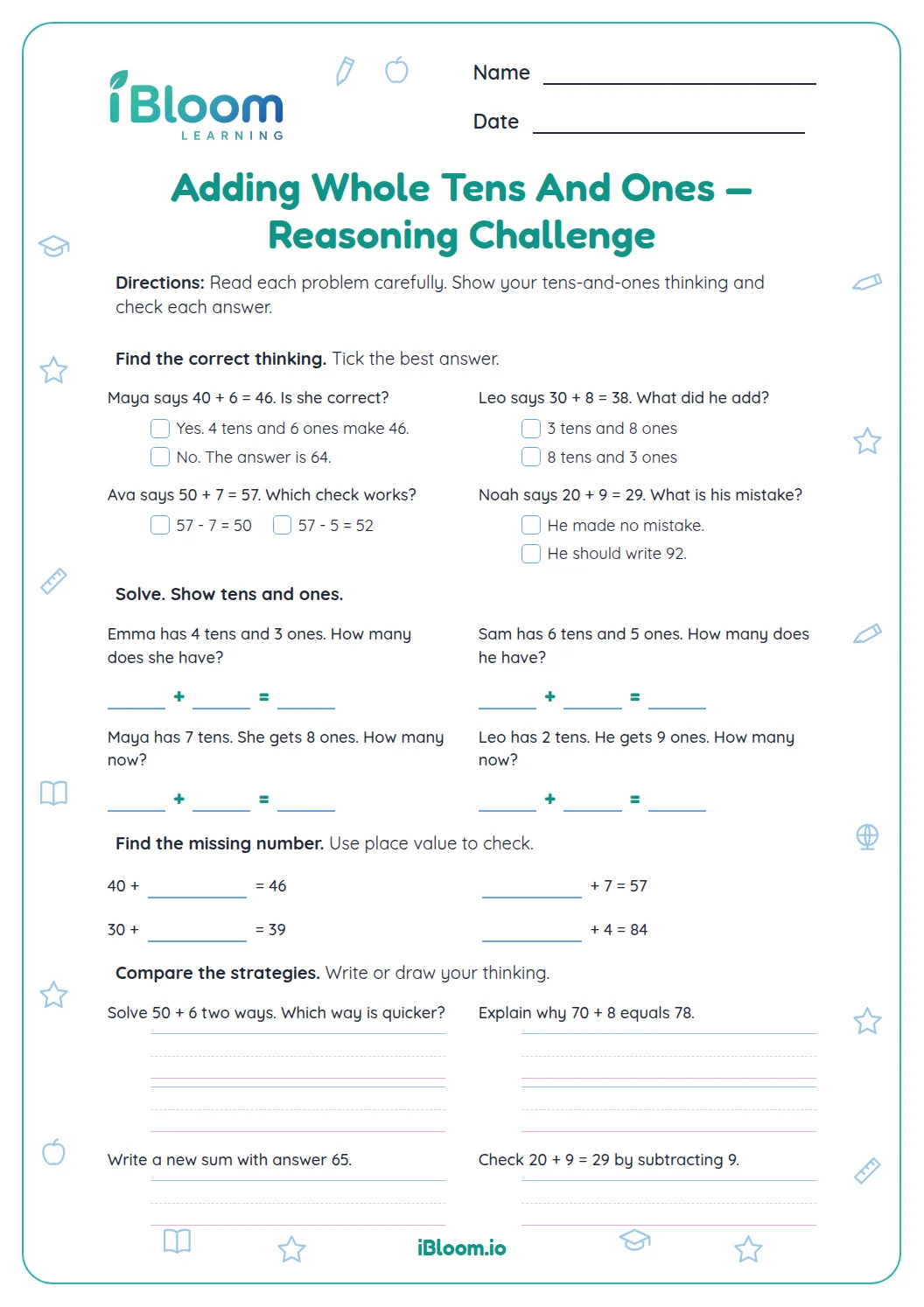
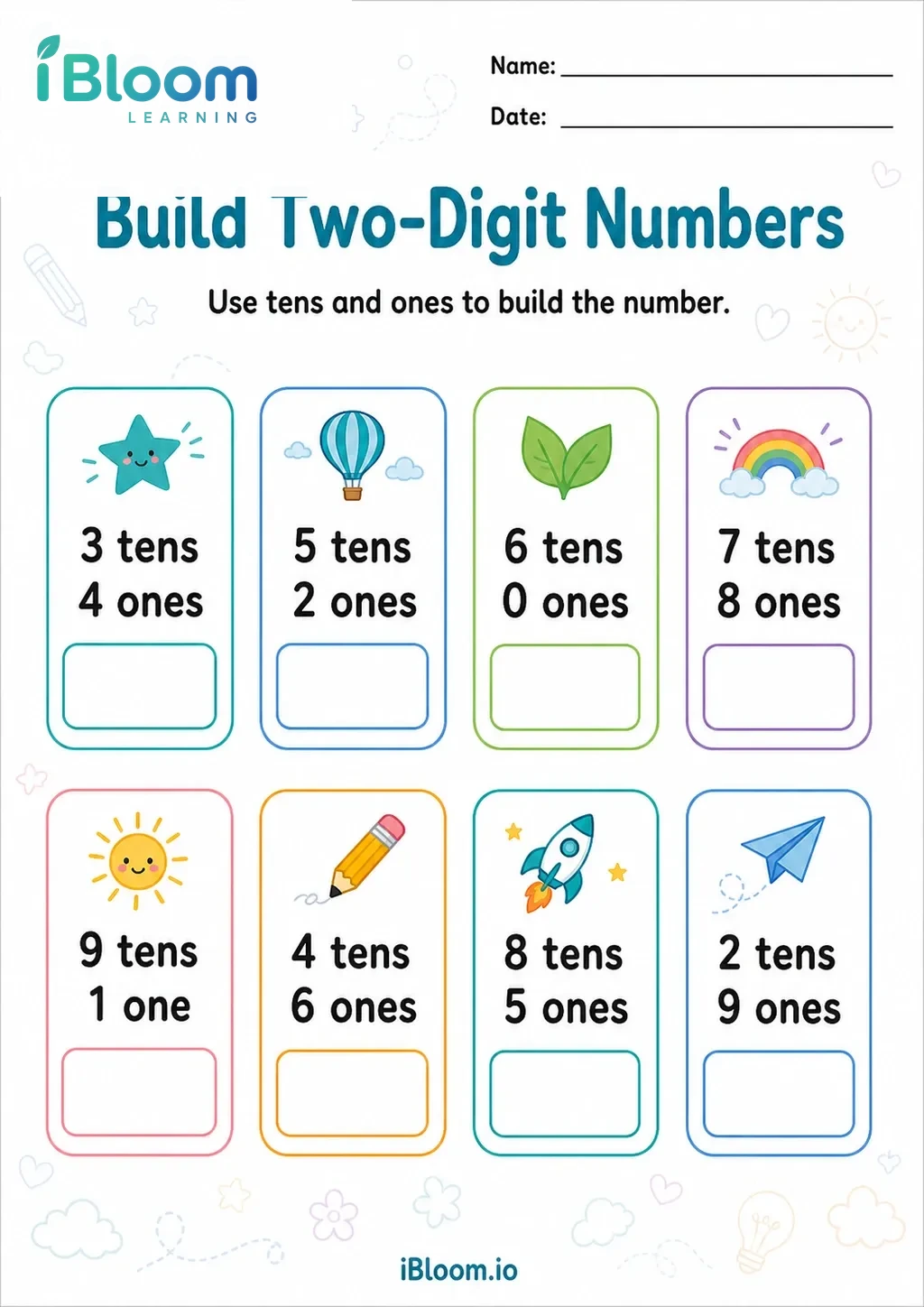
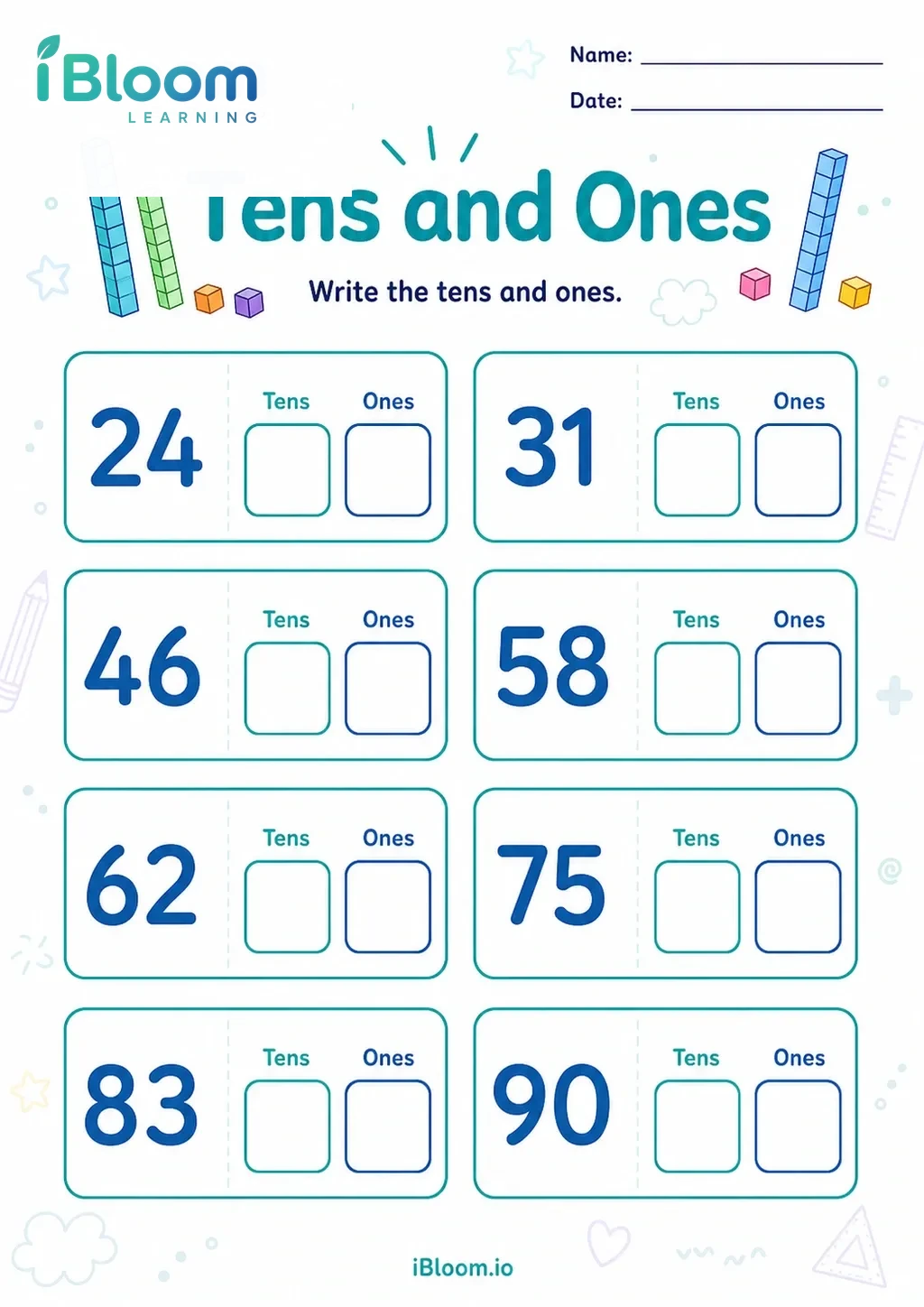
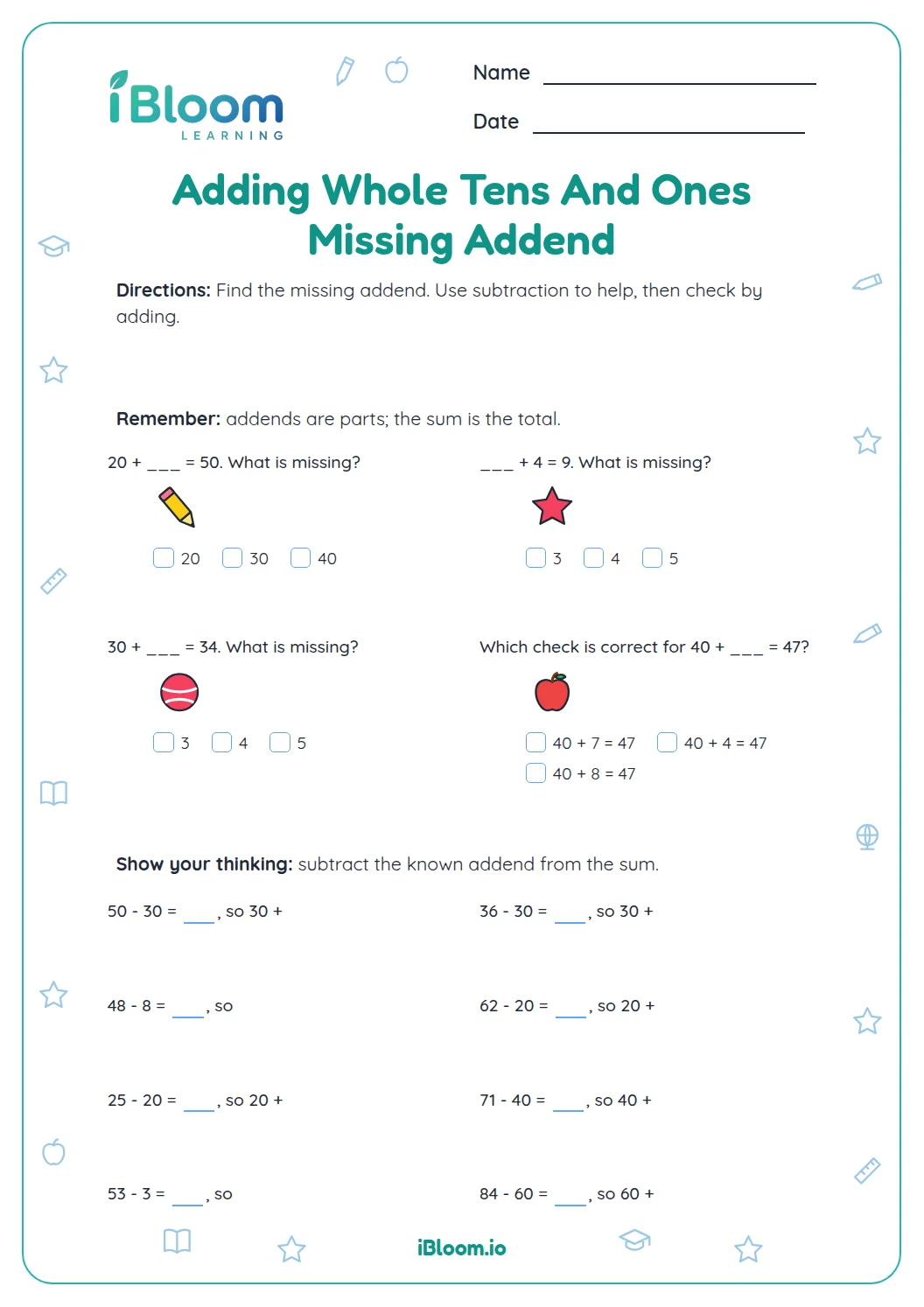
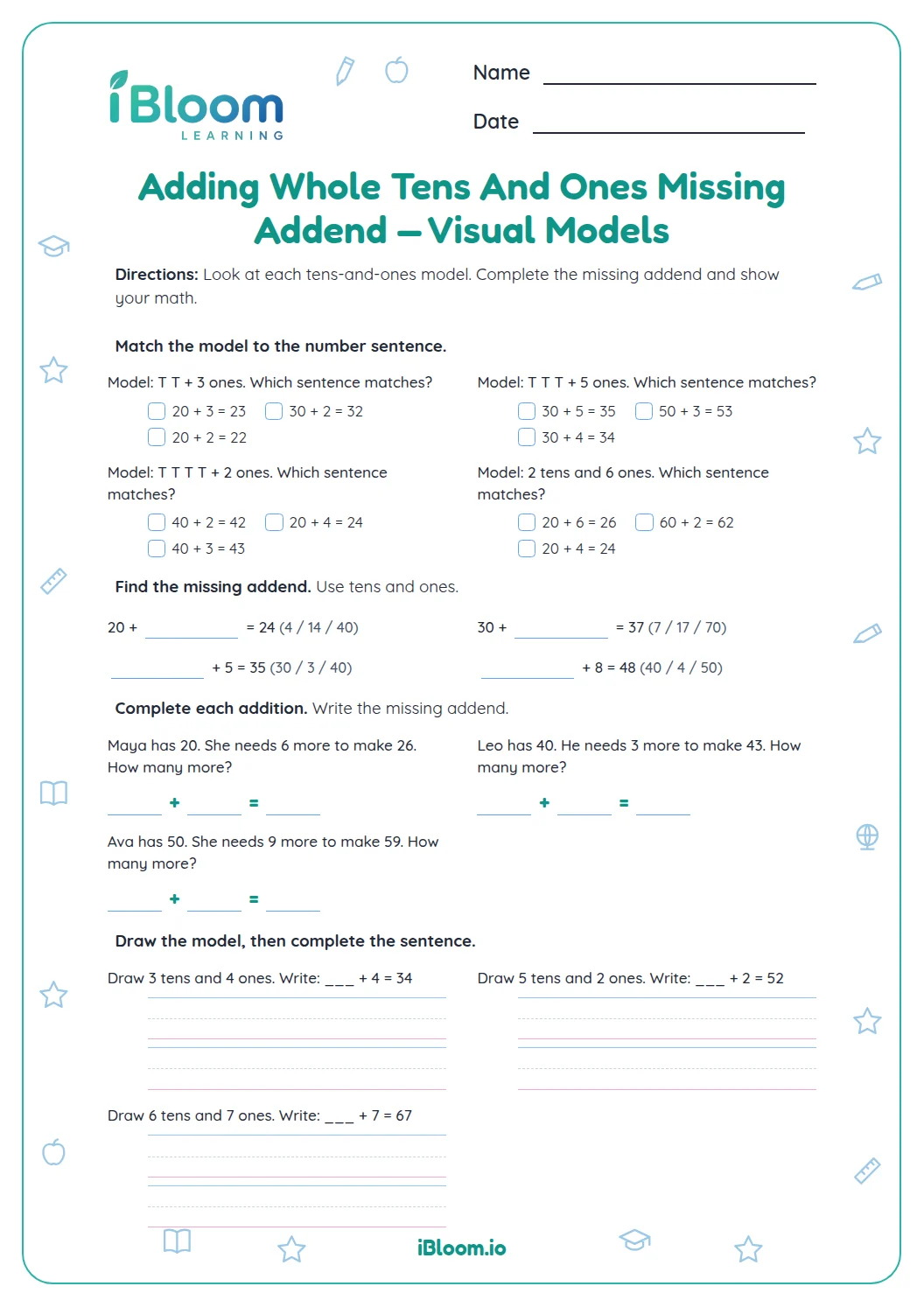
This Grade 1 printable connects base-ten blocks with addition of whole tens and ones. Part A shows eight models for children to read; Part B presents eight matching-style number sentences to solve. Each sum combines a whole number of tens with ones and stays within 100. The separate answer key lists each total.
Aligned to 1.NBT.C.4
What does one tens rod stand for?
A tens rod stands for ten, while each small cube stands for one. Count the two kinds of blocks separately before combining them.
How do I find the total in a base-ten model?
In question 2, four tens rods and six ones make 46. The same value is written as 40 + 6 in the next part.
- 1Four tens rods are 40; six ones are 6.
- 2Combine the tens and ones: 40 + 6.
- 3Answer: 46
Why does 40 + 6 equal 46?
Part B uses number sentences after the block models so children can connect the picture with the written sum.
How to use this worksheet
- 1Count the tens rods as groups of ten.
- 2Treat each single cube as one.
- 3Add the ones after naming the whole tens.
- 4In the equation, keep the tens number together and add the ones.
- 5Use the model to check the sum.
Common mistakes and quick fixes
The mistake
Count each tens rod as one.
The fix
Say ten, twenty, thirty as you count the rods.
The mistake
Read the ones cubes as tens.
The fix
Count each single cube by ones after counting the rods.
The mistake
Combine the digits without adding their values.
The fix
Name the tens amount and ones amount, then put them together as a two-digit total.
Common Core alignment
Add a two-digit number and a multiple of ten with a model.
On this sheet: Children combine base-ten blocks and solve whole-tens-plus-ones sums.
Show the official wordingHide the official wording
Add within 100, including adding a two-digit number and a one-digit number, and adding a two-digit number and a multiple of 10, using concrete models or drawings and strategies based on place value, properties of operations, and/or the relationship between addition and subtraction; relate the strategy to a written method and explain the reasoning used. Understand that in adding two-digit numbers, one adds tens and tens, ones and ones; and sometimes it is necessary to compose a ten.
What to practice next
Make more practice
Further reading
Questions parents and teachers ask
What is one tens rod worth?
One tens rod stands for ten ones. Four rods represent 40; with six single cubes, the model shows 46. The question asks for the number represented by the tens and ones together, not the number of physical pieces.
How should a child count the model?
Count each tens rod as ten, then count the single cubes one by one. Put the values together: three tens rods and four ones make 34. Part B practices the same place-value idea with written addition, so children can connect a model to an equation.
Does this sheet ask children to regroup?
The sums pair a whole number of tens with ones, so the ones do not make another ten. For example, 50 + 7 is 57. This lets children focus on combining the tens value and ones value before they meet sums that require composing another ten.
How many questions are on the worksheet?
There are 16 questions: eight base-ten models and eight number sentences. The first section asks children to name the number represented by each model; the second asks them to solve tens-and-ones additions. The key includes all 16 answers.
Is there a key for the block models?
Yes. The key gives the number represented by each model and the total for each number sentence. Children can check by counting rods as tens and cubes as ones, then comparing the resulting number with the key. It also supports checking written sums.