
About this worksheet
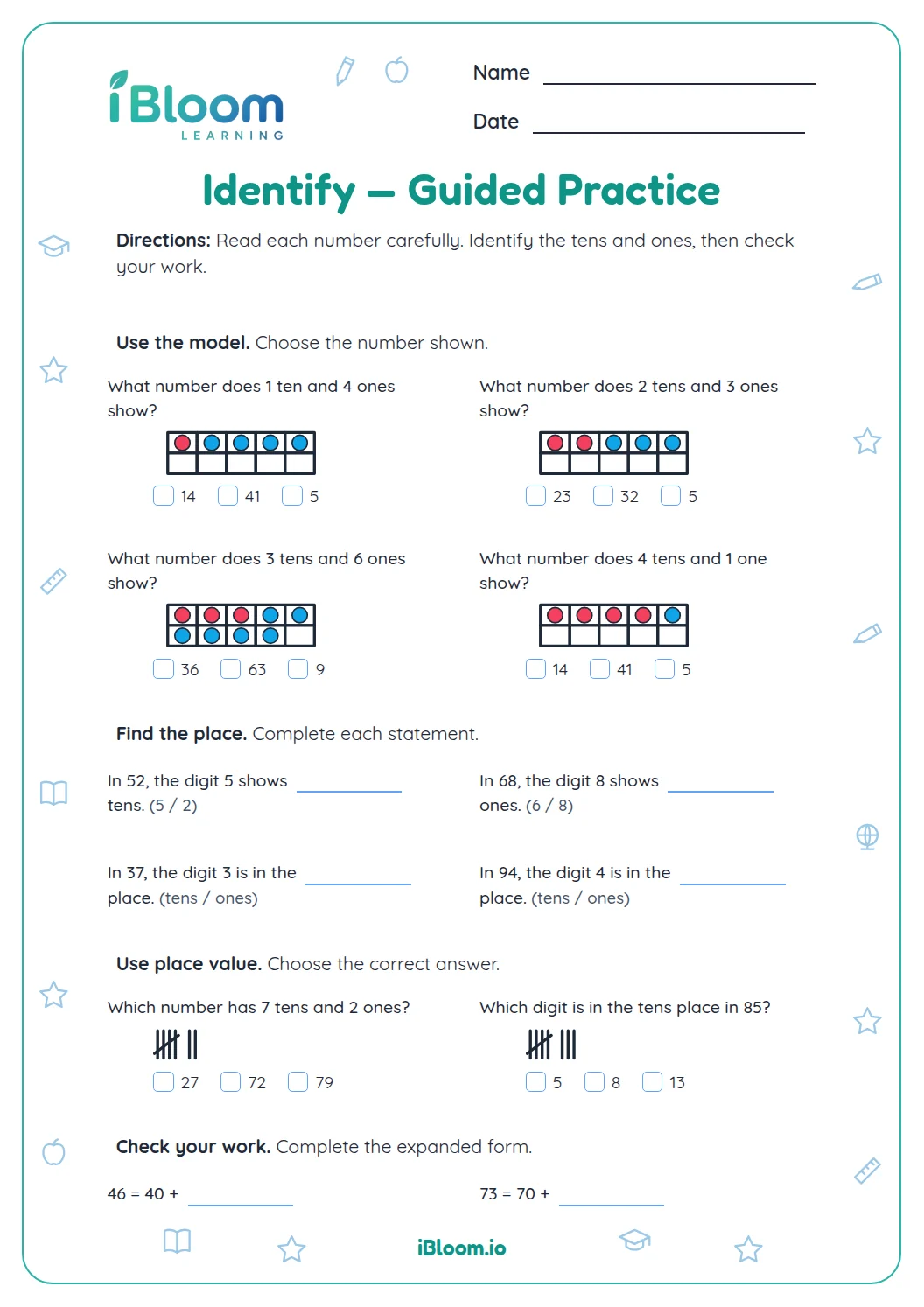
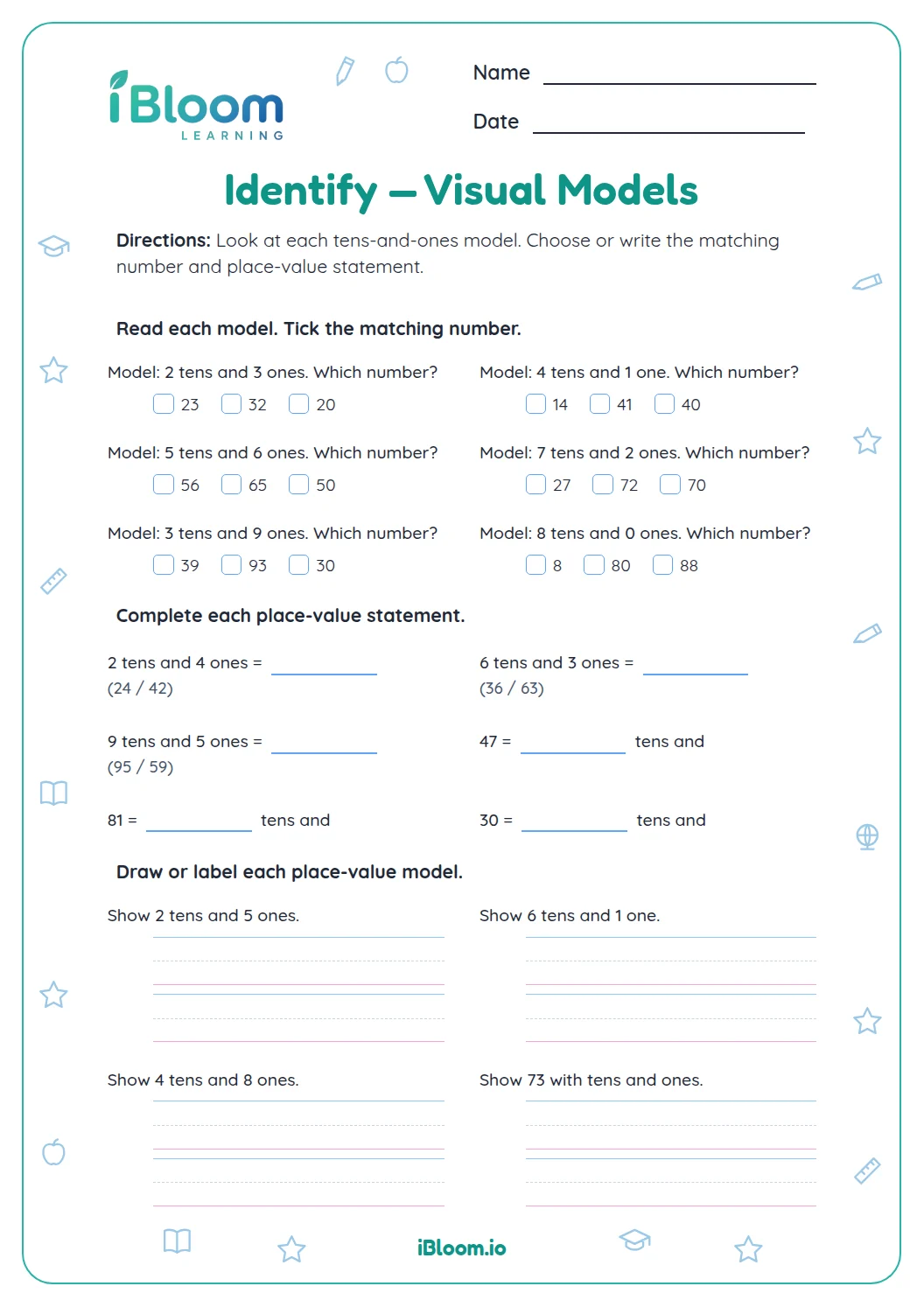
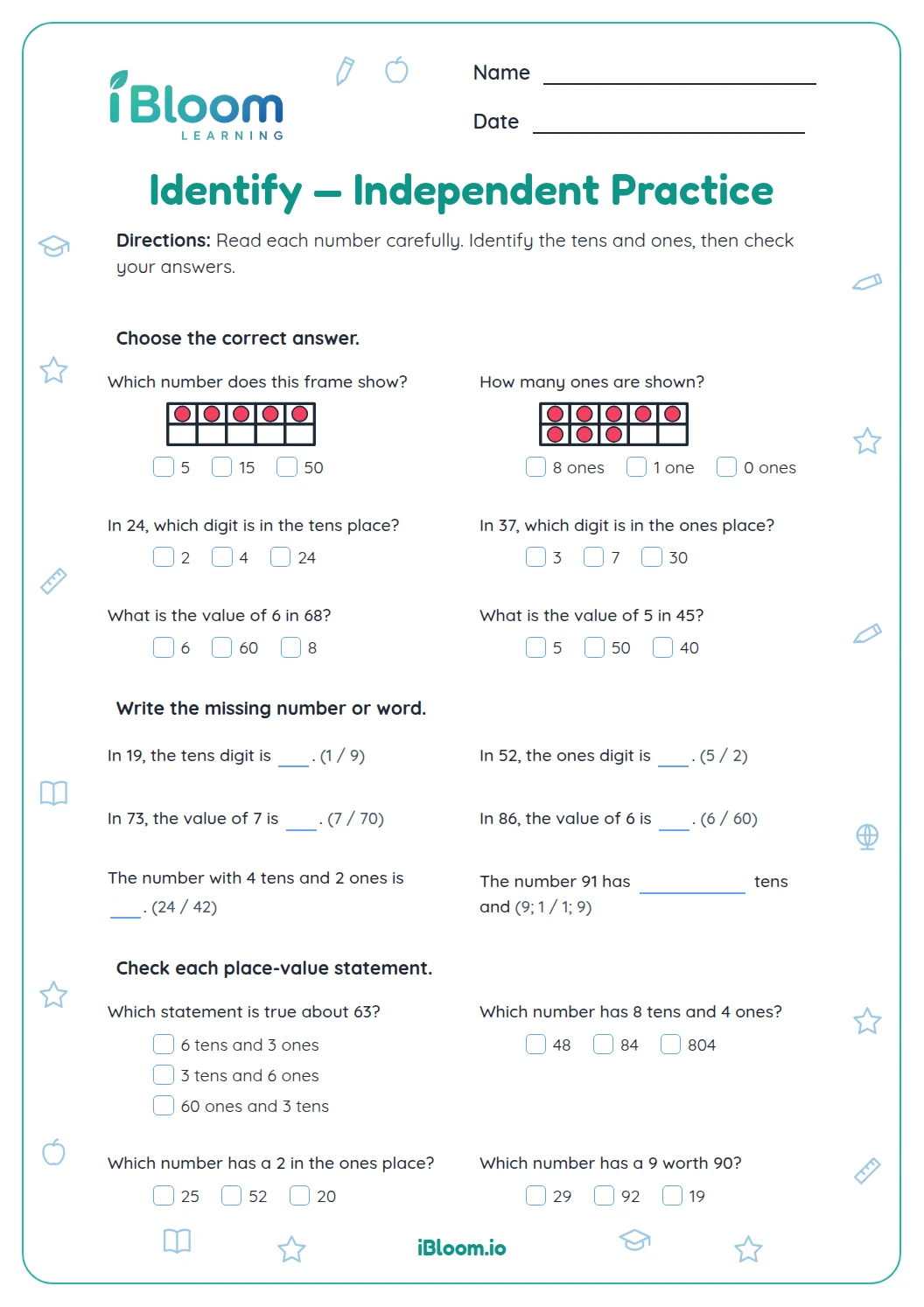
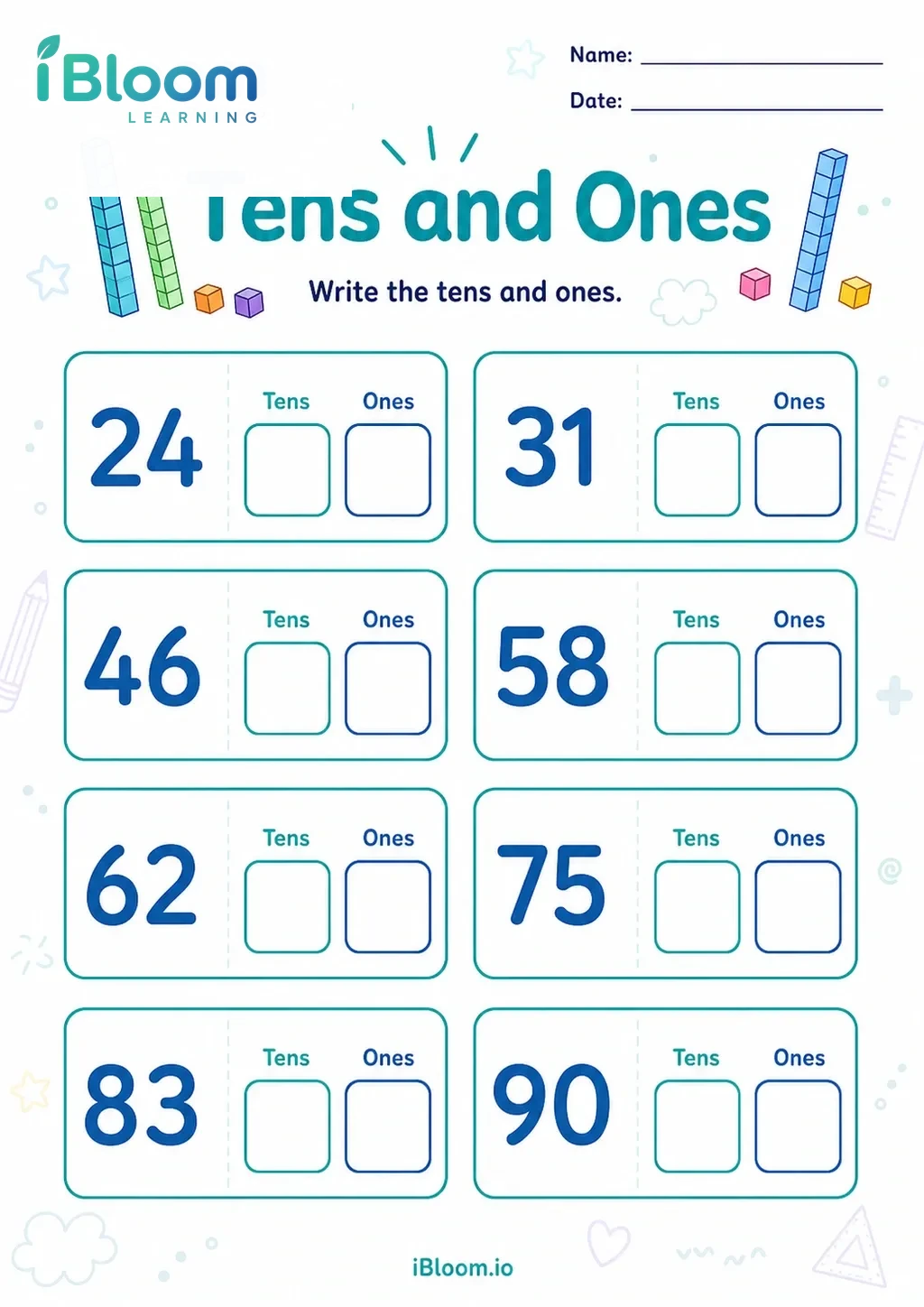
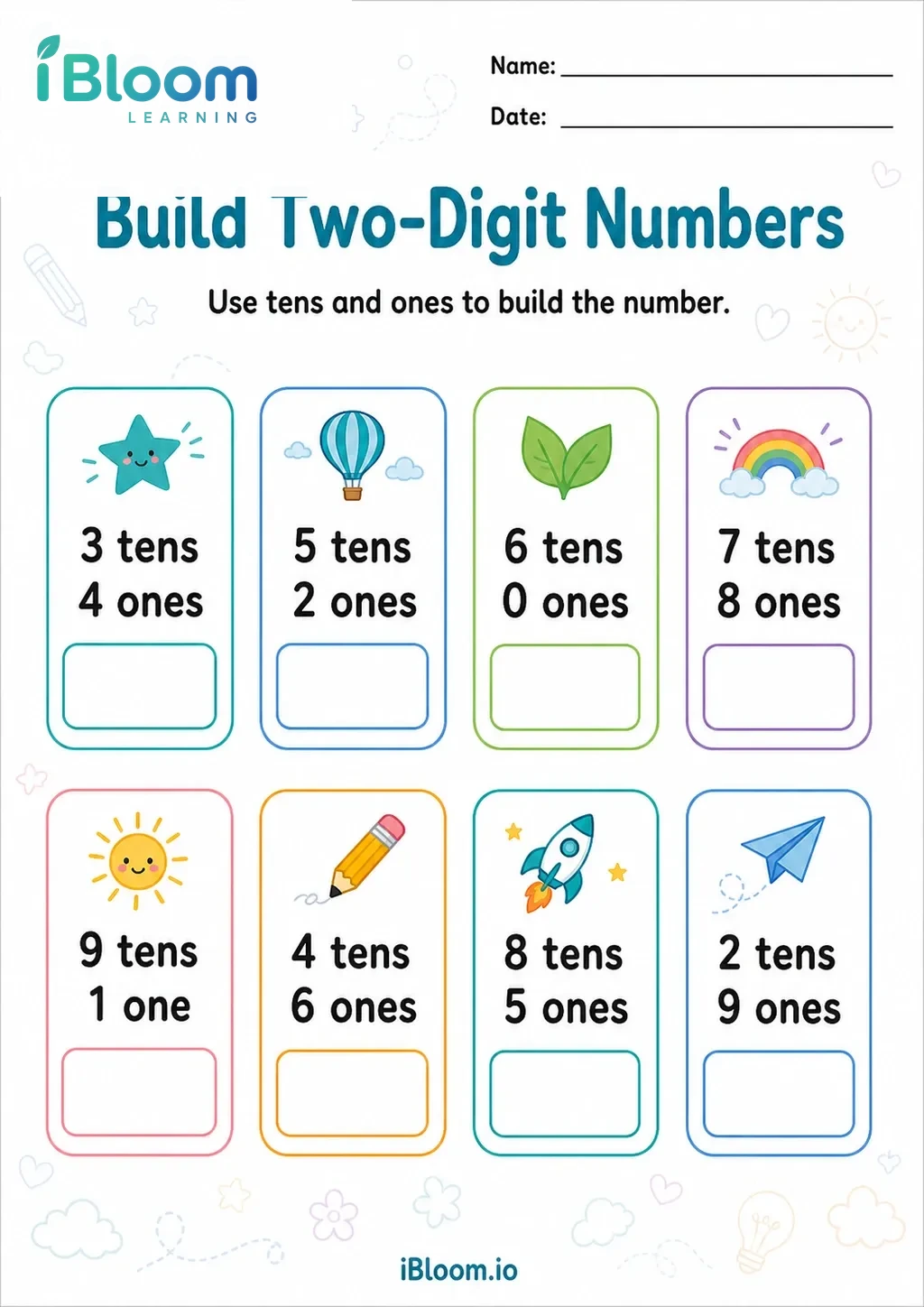
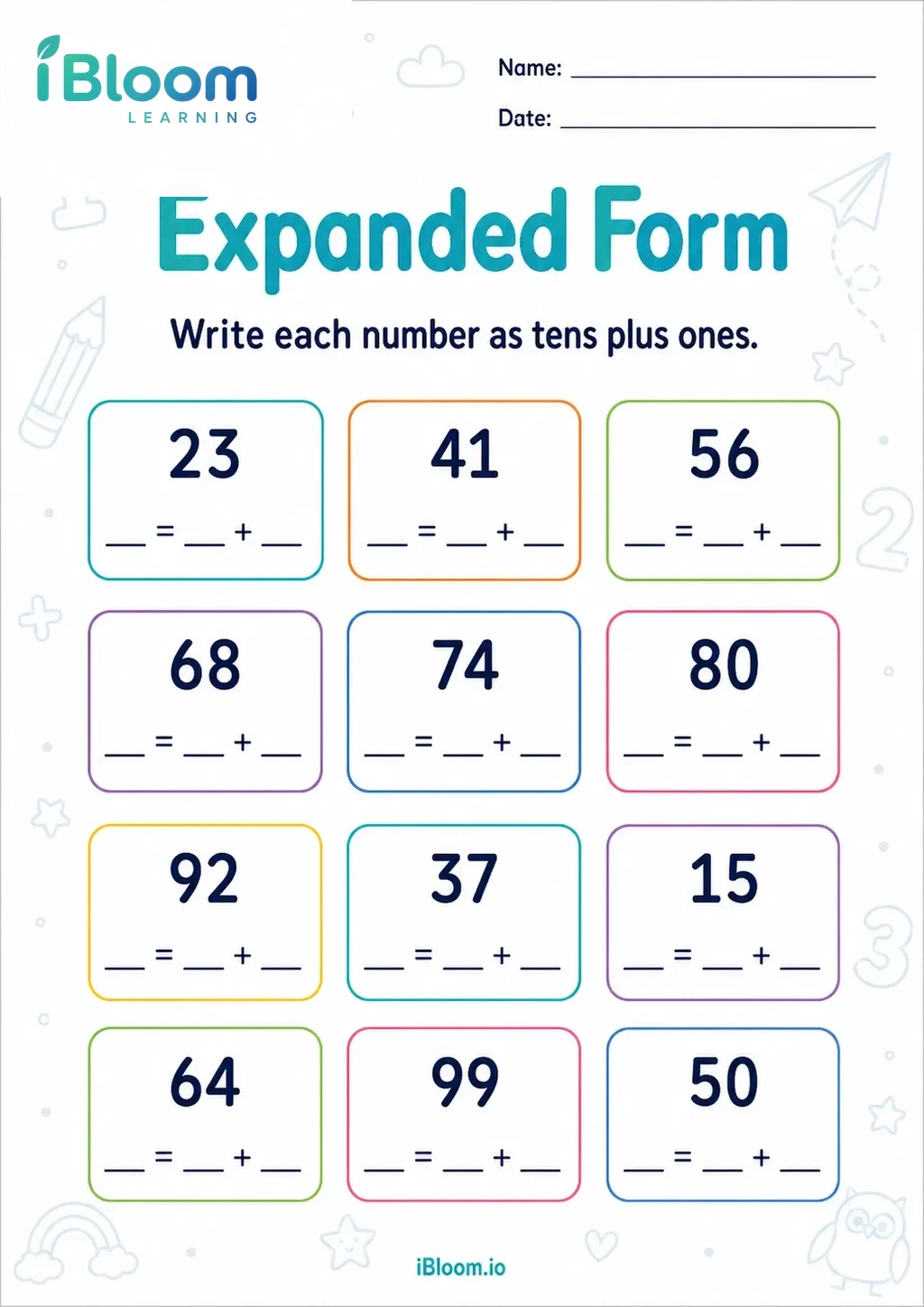
This Grade 1 printable focuses on identifying tens and ones in two-digit numbers. Learners read six number descriptions, complete five place-value blanks and solve three bundle stories; base-ten drawings support selected items. It practices Common Core 1.NBT.B.2, with a separate answer key for checking.
Aligned to 1.NBT.B.2
How do base-ten blocks show a number?
A long block is one ten, and a small cube is one one. Count each kind separately, then read the tens digit and the ones digit.
Question 2 shows 3 tens and 6 ones. That makes 30 + 6, or 36. The blocks and the number named in the prompt should agree.
- 13 tens = 30
- 26 ones = 6
- 330 + 6 = 36
What reasoning does this page practice?
Learners identify two-digit numbers, name a place value and apply bundles of ten to short stories. One pictured example shows nine tens and no ones, or 90, to make the zero in the ones place meaningful.
How to use this worksheet
- 1Count the long blocks; each stands for one ten.
- 2Count the single cubes; each stands for one one.
- 3Say the tens amount first and the ones amount next.
- 4For a story, match its bundles and single items to the model.
- 5Check that the number has the same tens and ones as the blocks.
Common mistakes and quick fixes
The mistake
Reading the ones digit as tens
The fix
Say the places in order: tens, then ones. Match each digit to the counted blocks.
The mistake
Treating a ten rod as one
The fix
Each rod stands for ten ones, so count rods by tens.
The mistake
Forgetting that zero ones still has a place
The fix
In 90, nine tens and zero ones make ninety. Keep the zero in the ones place.
Common Core alignment
This worksheet gives learners practice with the standard below.
Read tens and ones in two-digit numbers and represent their amounts with blocks.
On this sheet: Read tens and ones in two-digit numbers and represent their amounts with blocks.
Show the official wordingHide the official wording
Understand that the two digits of a two-digit number represent amounts of tens and ones.
What to practice next
Make more practice
Further reading
Questions parents and teachers ask
What is one long base-ten block worth?
One long block represents ten ones. Count the rods by tens, then count the single cubes as ones. For example, three rods and six cubes represent 36. The first questions use this kind of model to connect blocks with two-digit numbers. Ten ones can be regrouped as one ten.
How does this worksheet use zero?
One choice shows nine tens and zero ones, which makes 90. The zero holds the ones place even when there are no single cubes. Other questions ask learners to identify the ones digit in numbers such as 30. The 30 example shows zero ones.
What numbers do children practice?
The worksheet uses two-digit numbers, including 24, 36, 51, 68, 73 and 90. Learners name tens and ones, fill in a missing place value, and solve stories about bundles of ten and single objects. These two-digit numbers keep the tens and ones visible.
Does every question show base-ten blocks?
No. Several questions use pictured blocks, while other place-value items are number sentences or short stories. The instructions ask learners to read each number or model and identify its tens, ones or total. The pictured models appear on selected questions.
Does the page have an answer key?
Yes. The key gives the selected tens-and-ones descriptions, missing place values and totals for all 14 questions. For the story items, check that each bundle is counted as ten and each single object as one. The key follows the worksheet question order.