
About this worksheet
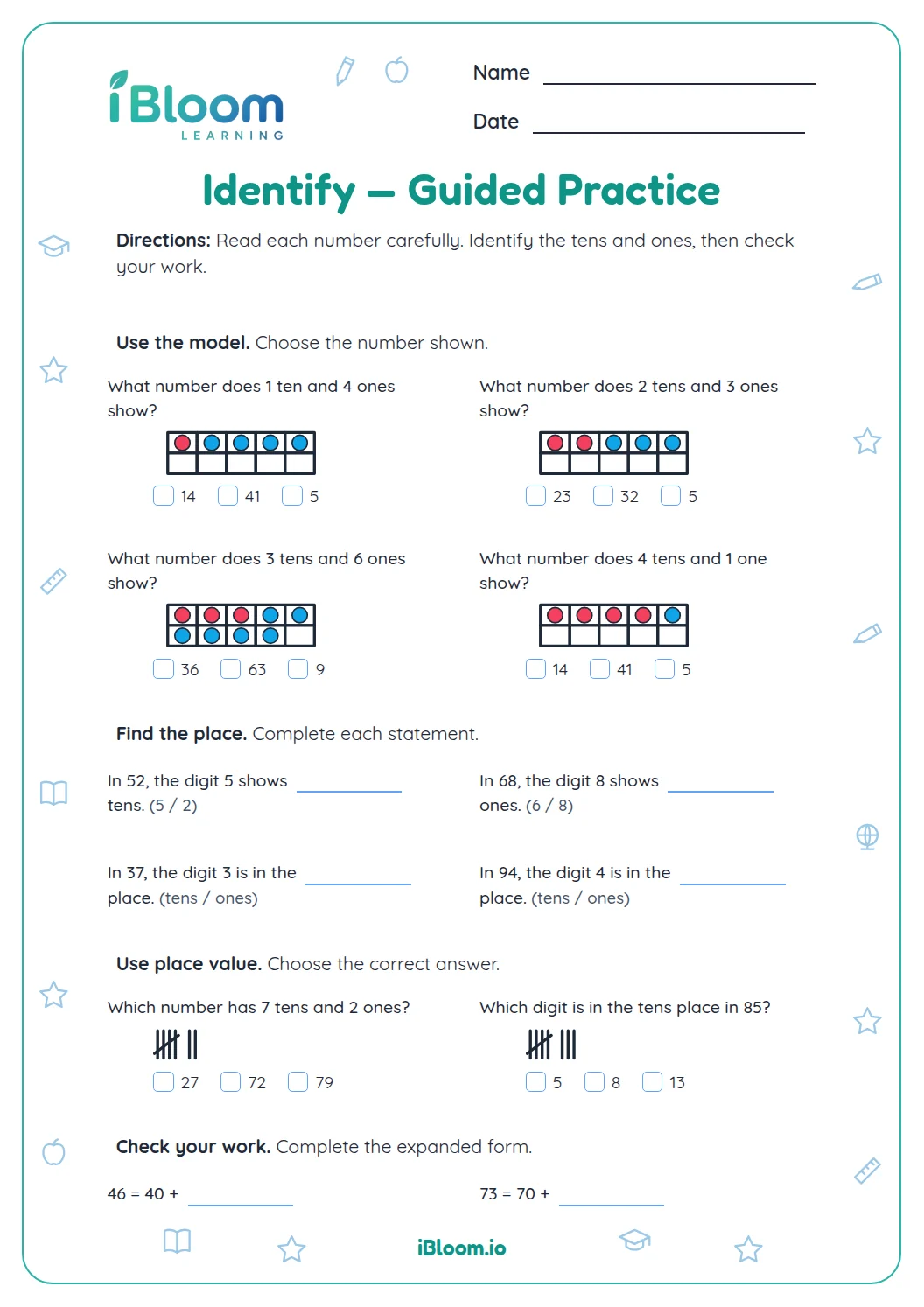
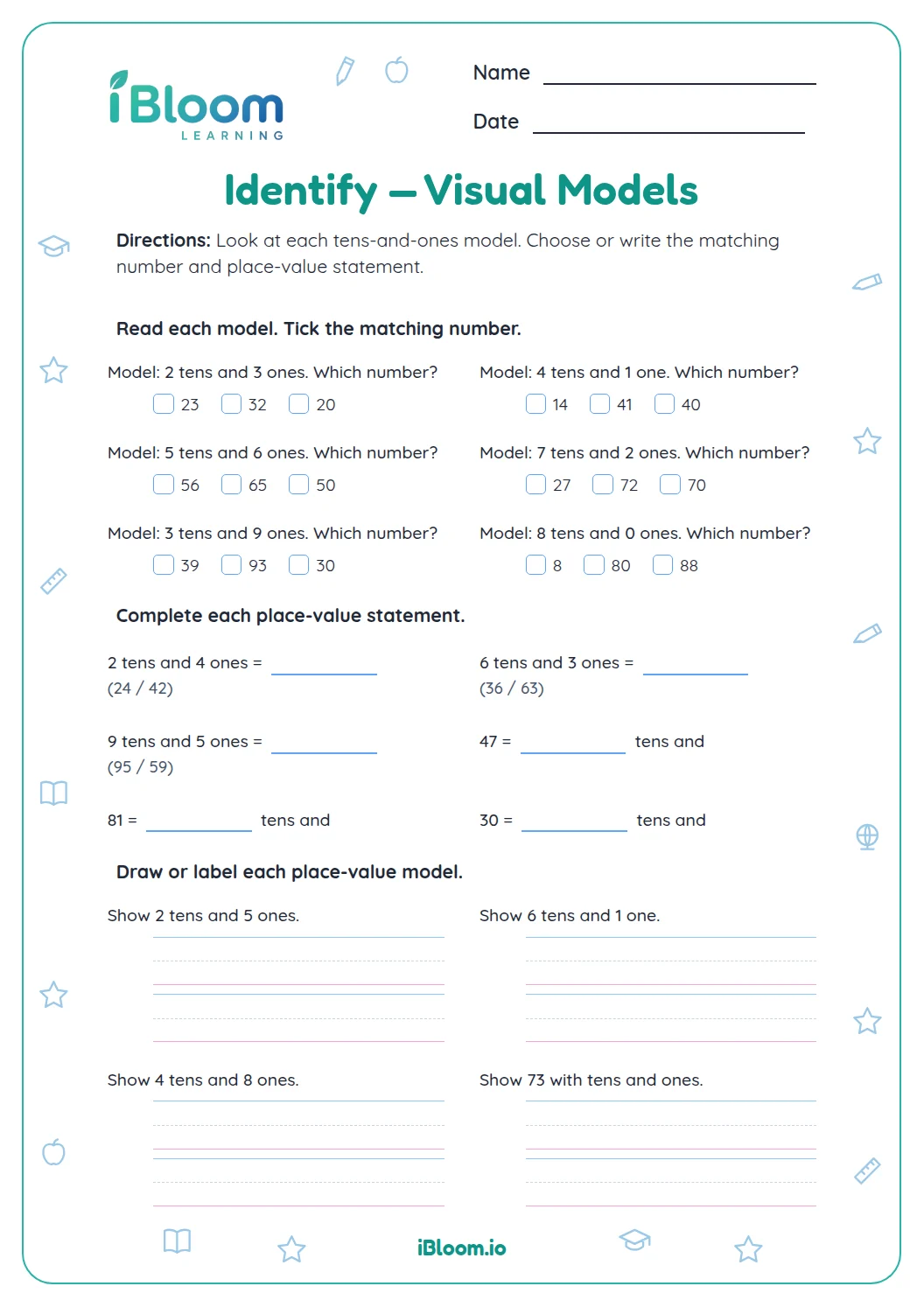
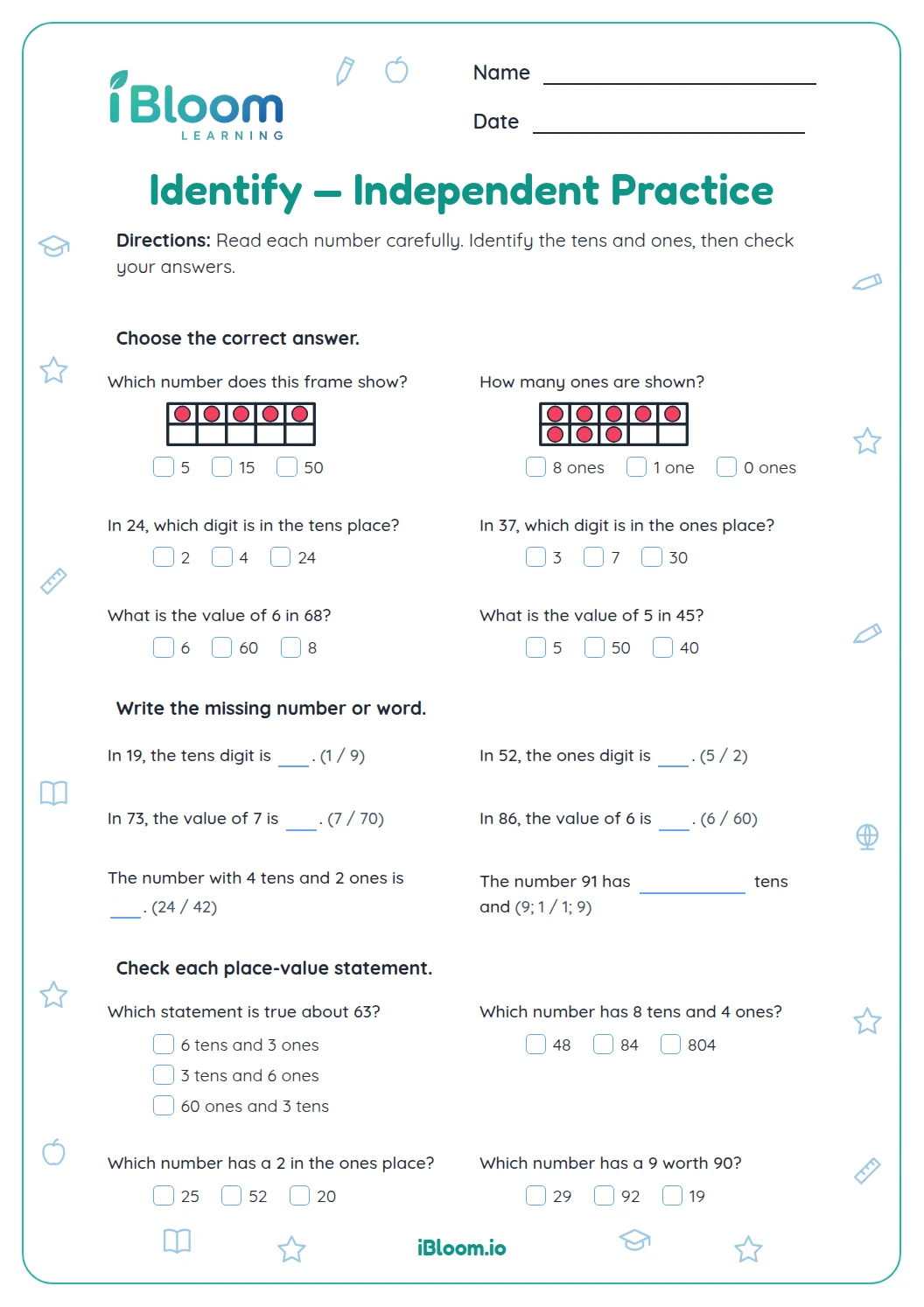
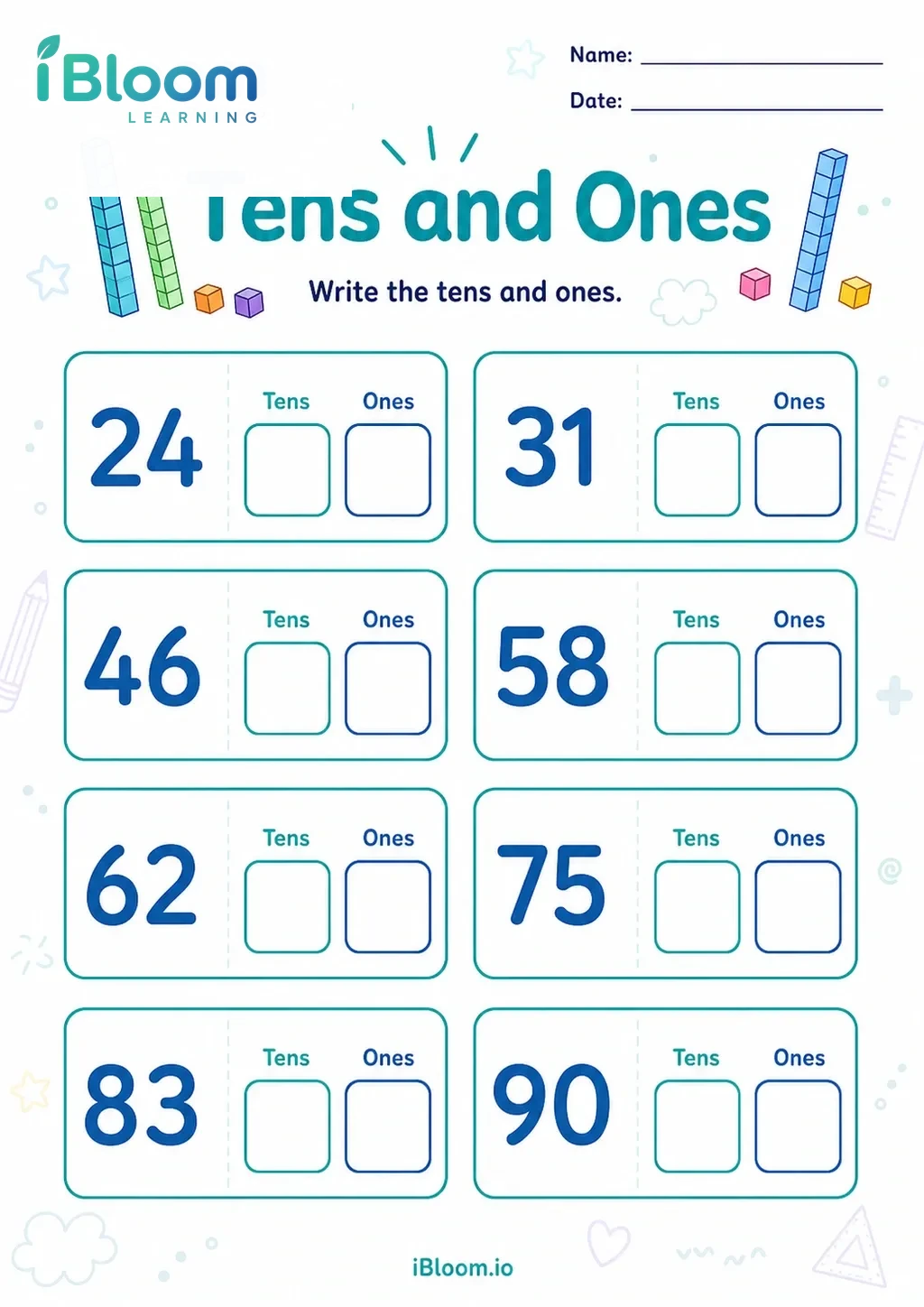
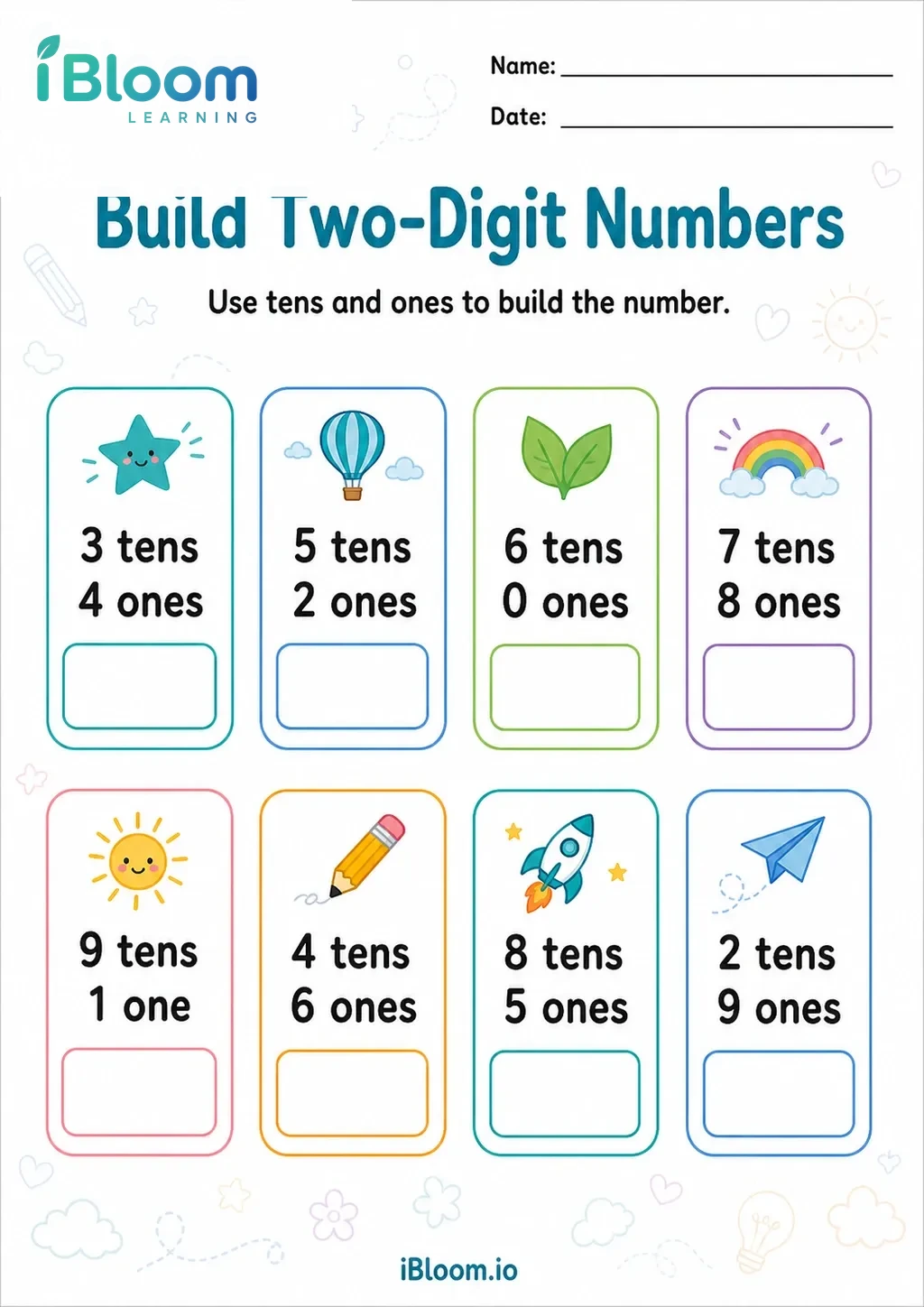
This Grade 1 place value worksheet helps children see a two-digit number as groups of tens and leftover ones. Students read base-ten block models, name the value of a digit, choose numbers that match tens and ones, and complete short number sentences. The 15 questions build from identifying each place to connecting a two-digit numeral with its tens-and-ones form. This work supports Common Core 1.NBT.B.2. The answer key lists each number and place value.
Aligned to 1.NBT.B.2
What does this worksheet ask children to do?
Part A identifies tens and ones with numerals and a base-ten model. Part B completes number sentences, reads base-ten block models and compares place values.
- Part A: choose the matching number or place value
- Part B: complete number sentences and read or compare models
How do you read 34 by place?
The left digit names the number of tens. The right digit names the number of ones.
- 134 has 3 tens and 4 ones.
- 2Three tens are 30, and four ones are 4; together they make 34.
How do base-ten blocks show a number?
A long rod stands for one ten, and a small cube stands for one. Count the rods first, then count the cubes. For example, five rods and two cubes make 52.
What does expanded form show?
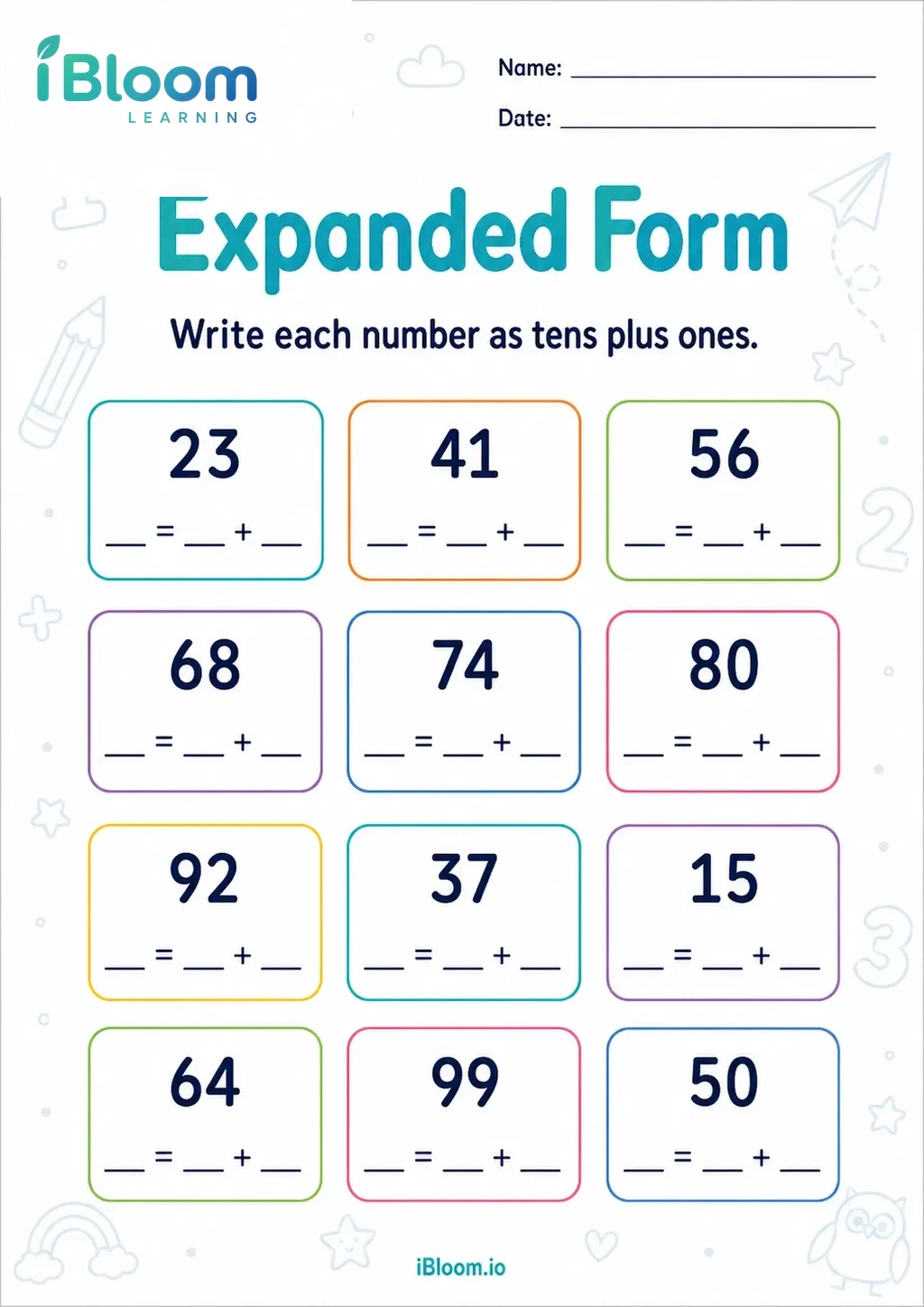
Expanded form separates the value of each place. The number 36 can be written as 30 + 6: three tens plus six ones. A zero in the ones place means there are no leftover single ones, as in 80.
How to use this worksheet
- 1Find the left digit and say how many tens it represents.
- 2Find the right digit and say how many ones it represents.
- 3For a block model, count rods before single cubes.
- 4Combine the place values to name the whole number.
- 5Check that the tens and ones add back to the numeral.
Common mistakes and quick fixes
The mistake
Reading the tens digit as its value rather than the count of tens.
The fix
In 34, the 3 tells how many tens; its value is 30.
The mistake
Reversing the digits in a two-digit number.
The fix
Read from left to right: tens first, then ones.
The mistake
Saying that 80 has 8 ones.
The fix
The 8 is in the tens place, so 80 has 8 tens and 0 ones.
Common Core alignment
These standards describe the place value practiced on this page.
Read a two-digit number as tens and ones.
On this sheet: Children identify tens and ones in two-digit numbers and read base-ten blocks.
Show the official wordingHide the official wording
Understand that the two digits of a two-digit number represent amounts of tens and ones. Understand the following as special cases:
What to practice next
Make more practice
Further reading
Questions parents and teachers ask
What does the 5 mean in 52?
The 5 is in the tens place, so it means five tens, or 50. The 2 is in the ones place, so 52 is five tens and two ones. On this sheet, students also read a block model that shows the same grouping.
How do the blocks show 29?
Two tens rods and nine single cubes make 29. Count each rod as ten, then add the nine ones. Question 11 uses this model so children can connect the concrete blocks with the two digits in the written number.
Why is 80 written with a zero?
The zero shows that 80 has no leftover ones. It keeps the 8 in the tens place, so the number means eight tens. Question 5 asks students to distinguish 80 from numbers such as 8 and 18. That keeps the number’s value clear.
What is expanded form?
Expanded form separates a number into the value of each place. For example, 36 is 30 + 6: three tens plus six ones. Questions 8 and 10 use this idea to complete short number sentences. This page practices that separation more than once.
Should students count the blocks one by one?
They may count every small cube, but grouping the long rods as tens is the key idea. Count the tens rods first, then the single cubes. This makes the place value visible and connects each group to the matching digit.