
About this worksheet
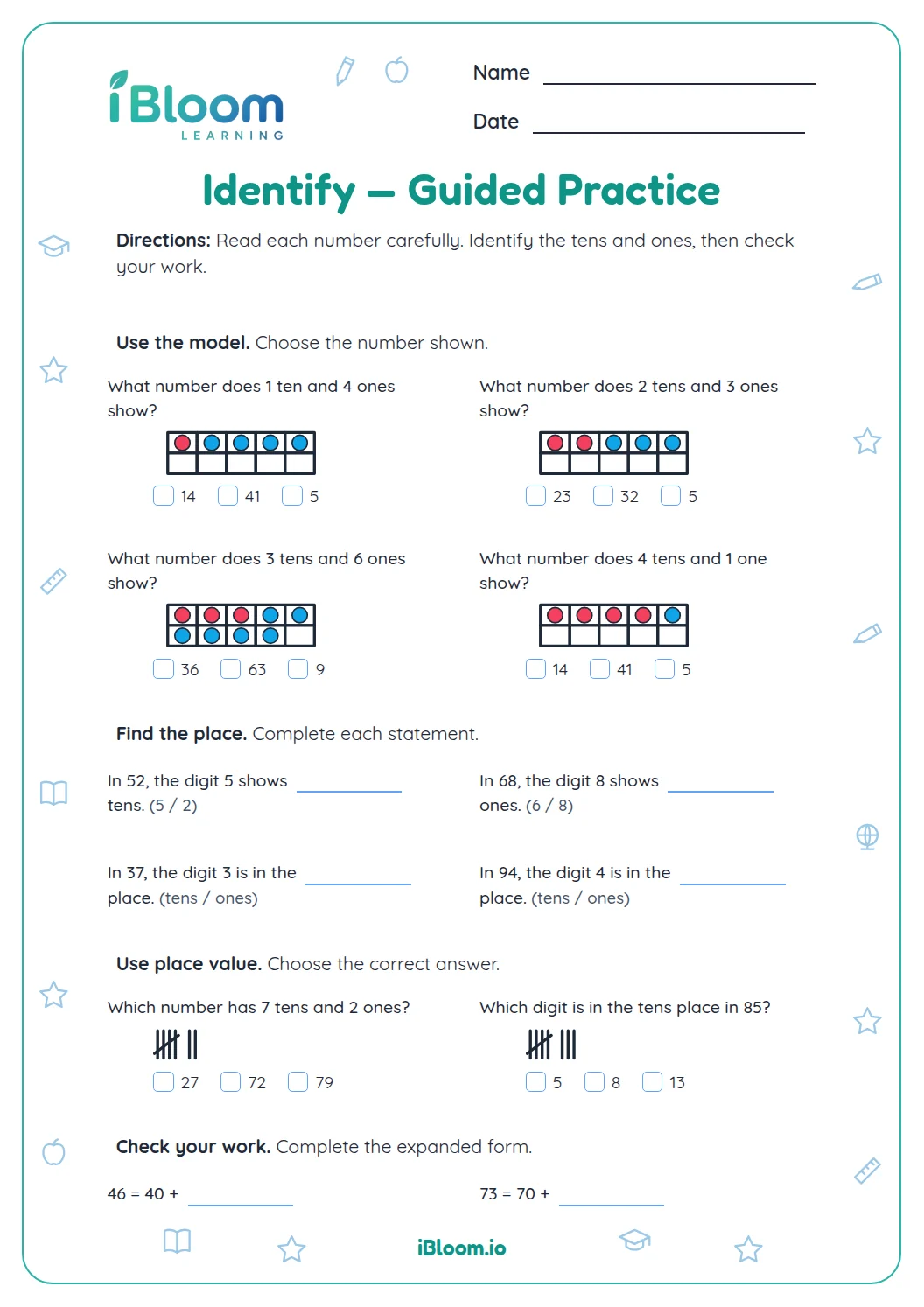
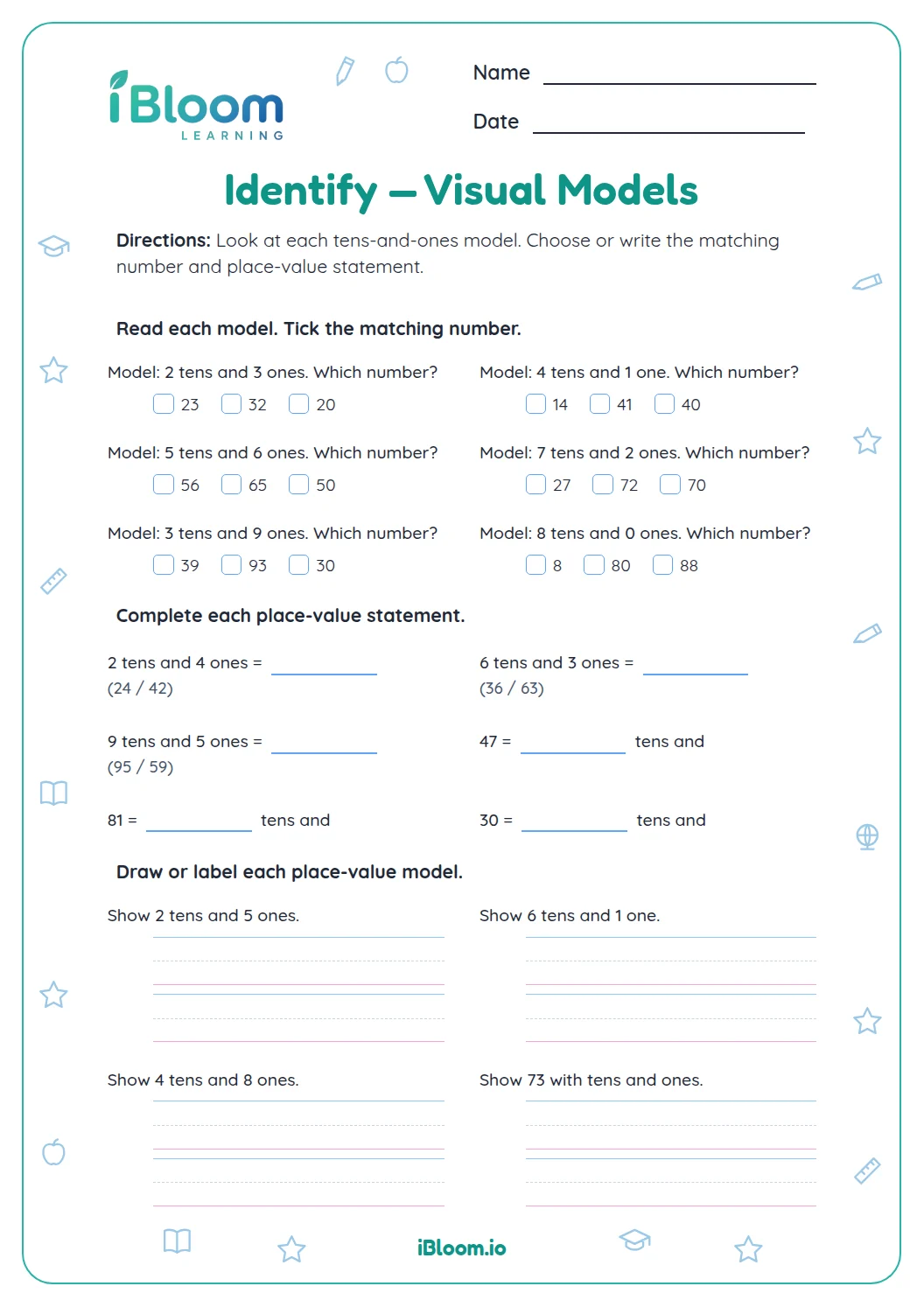
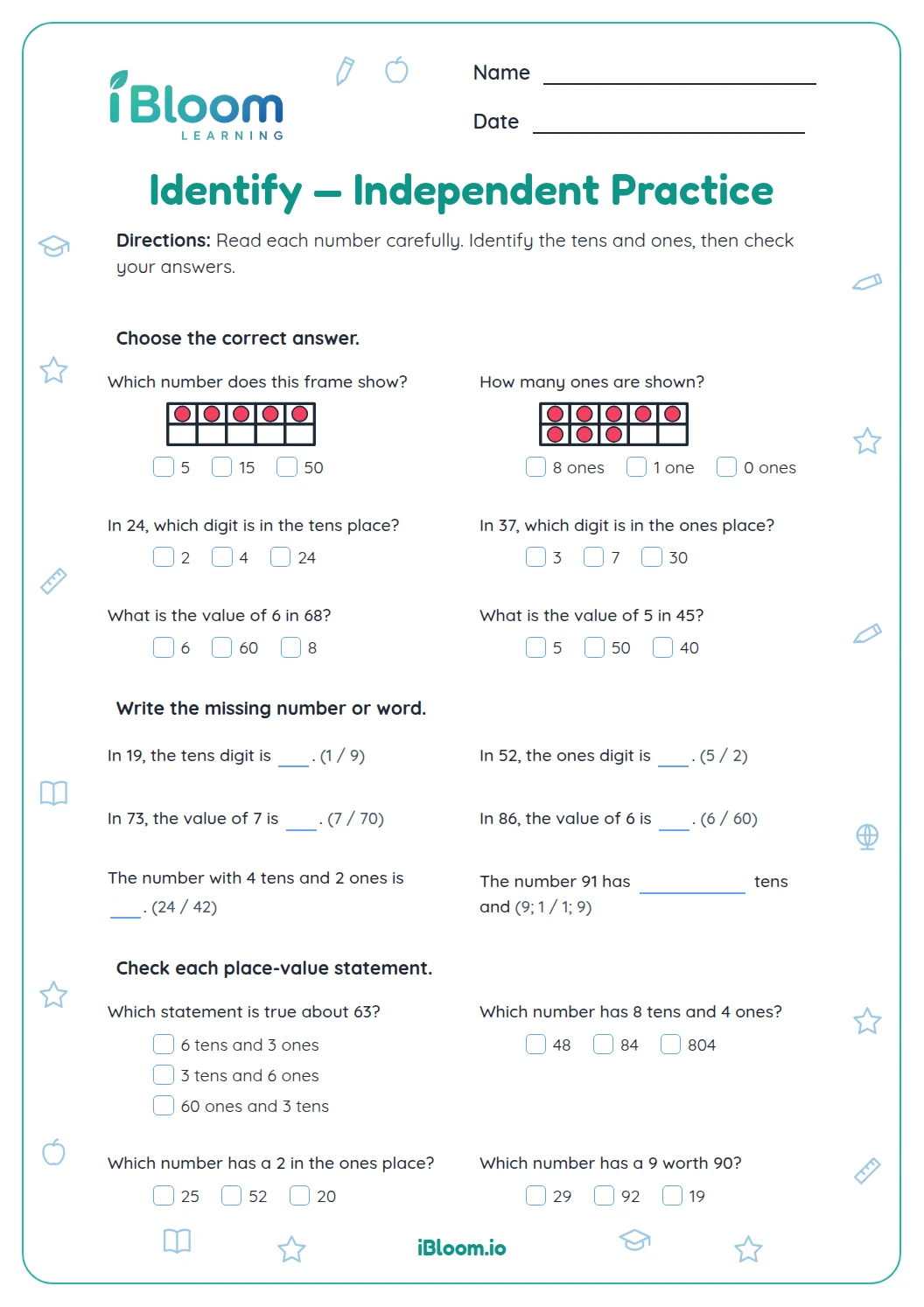
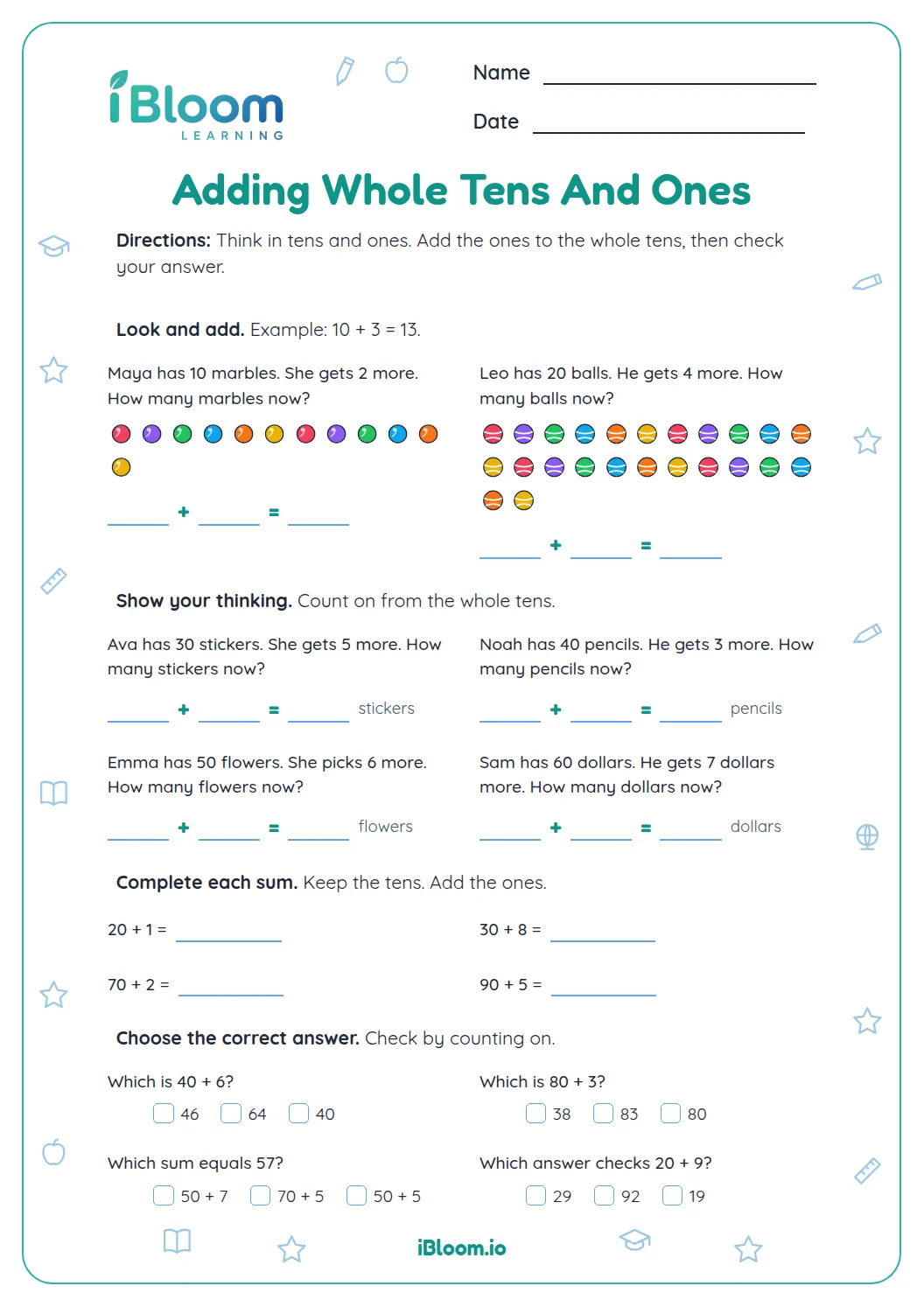
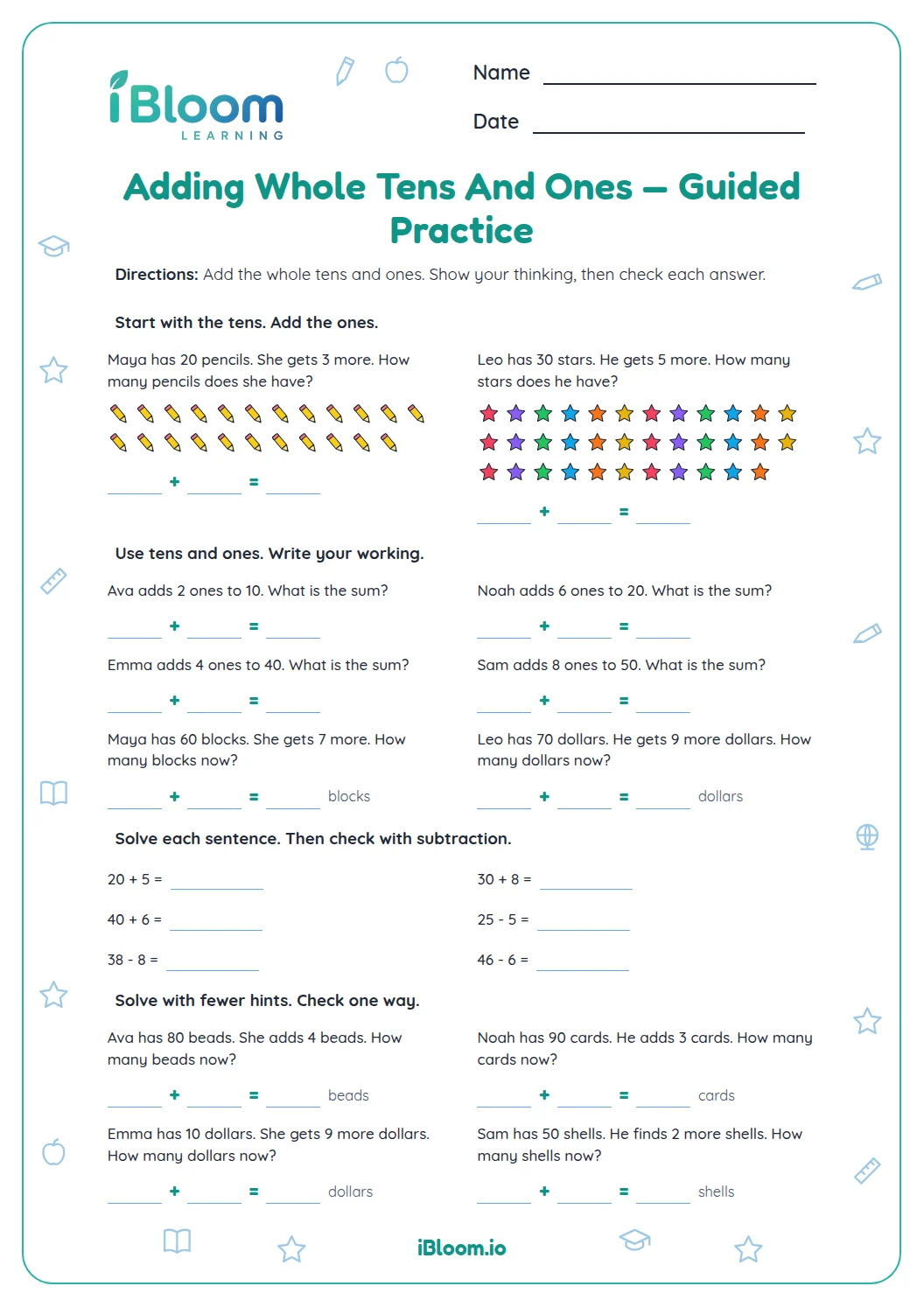
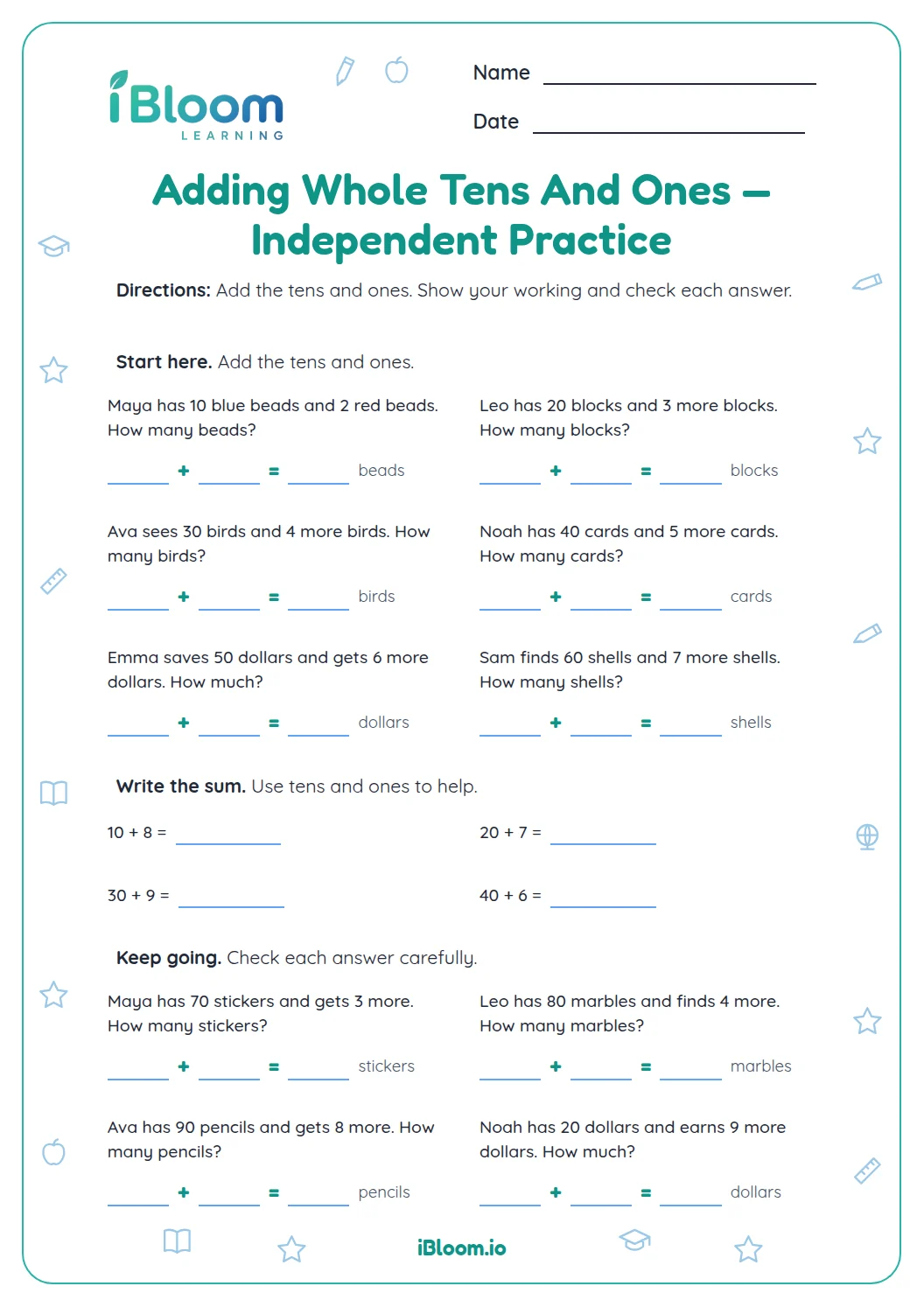
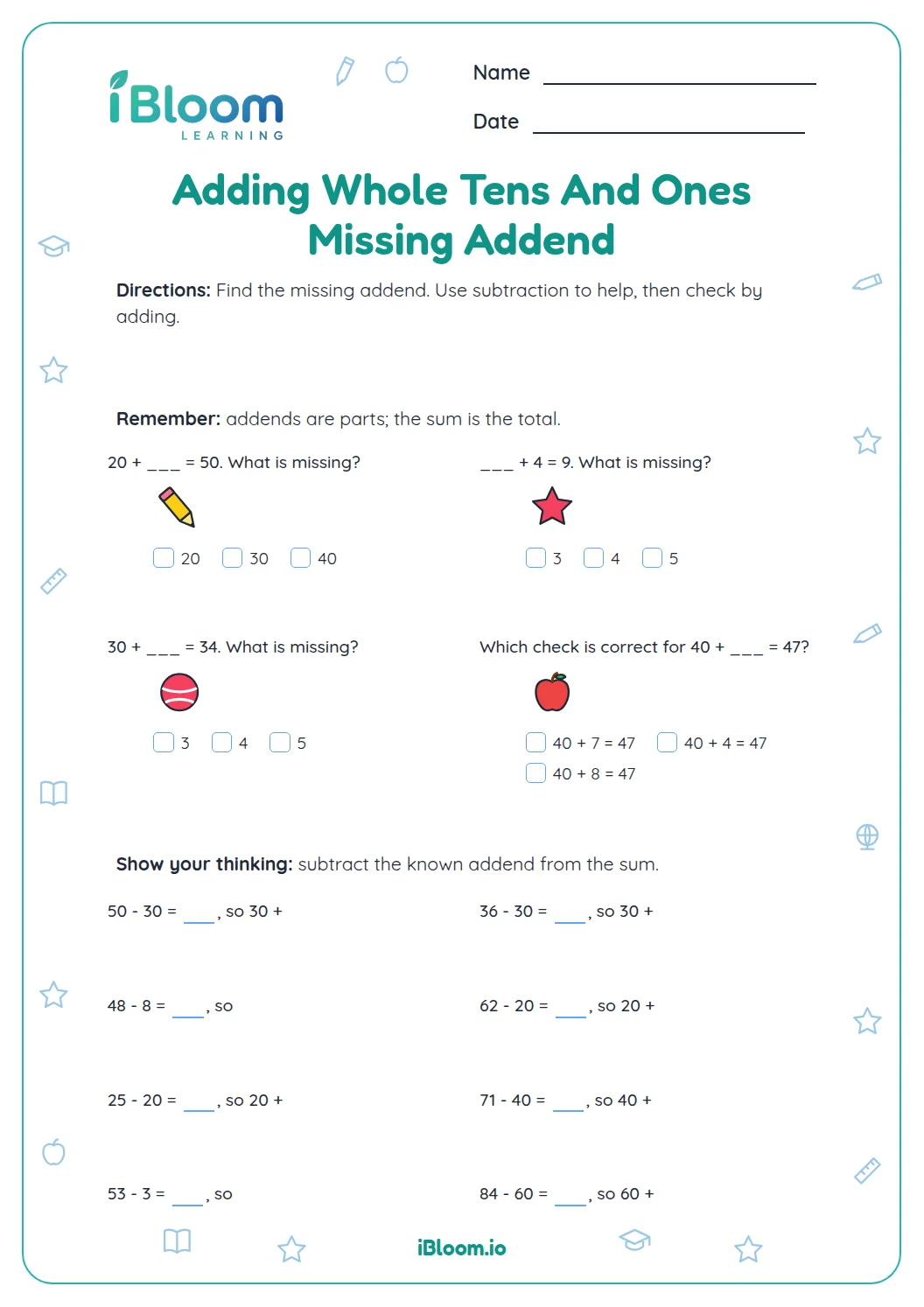
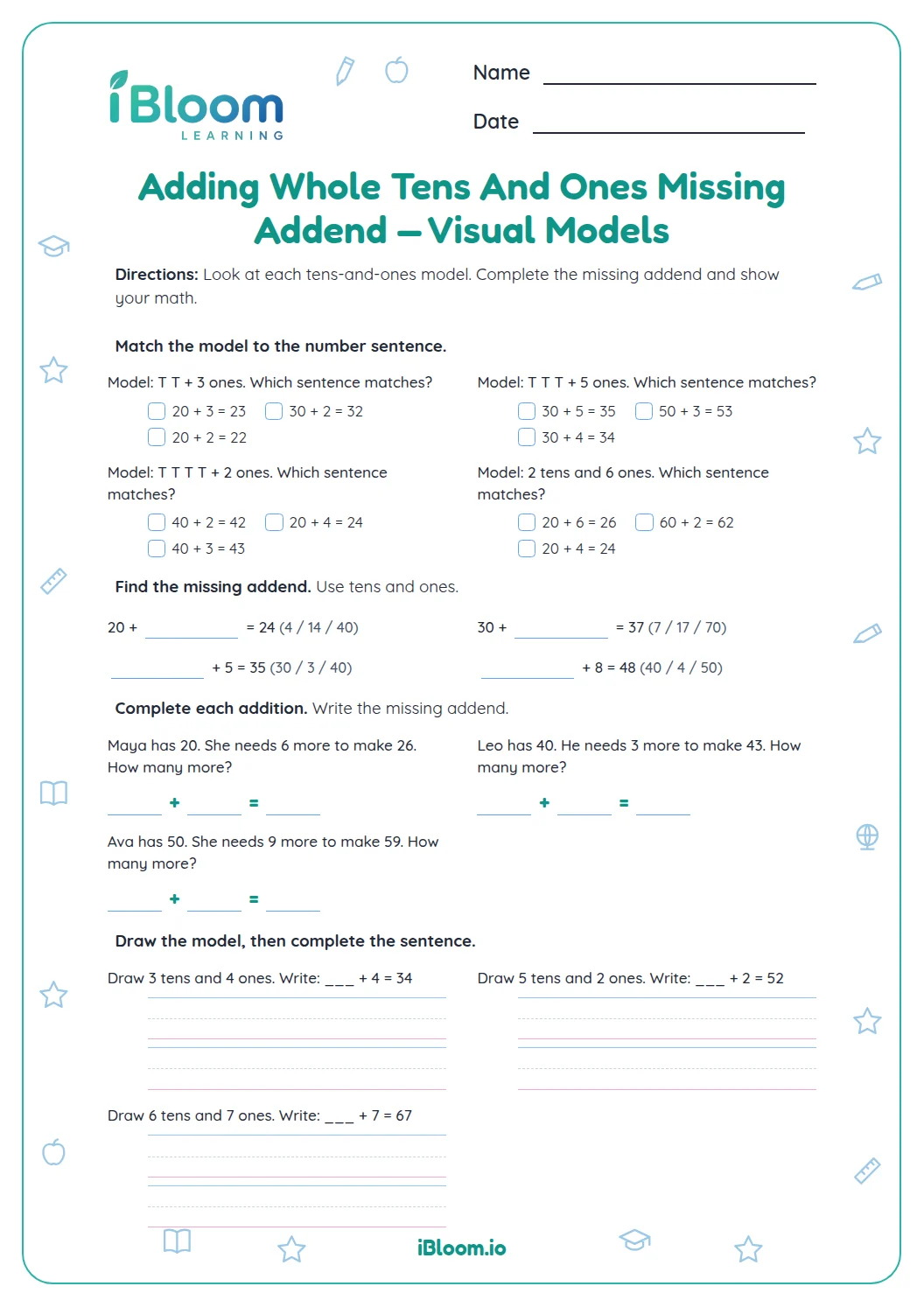
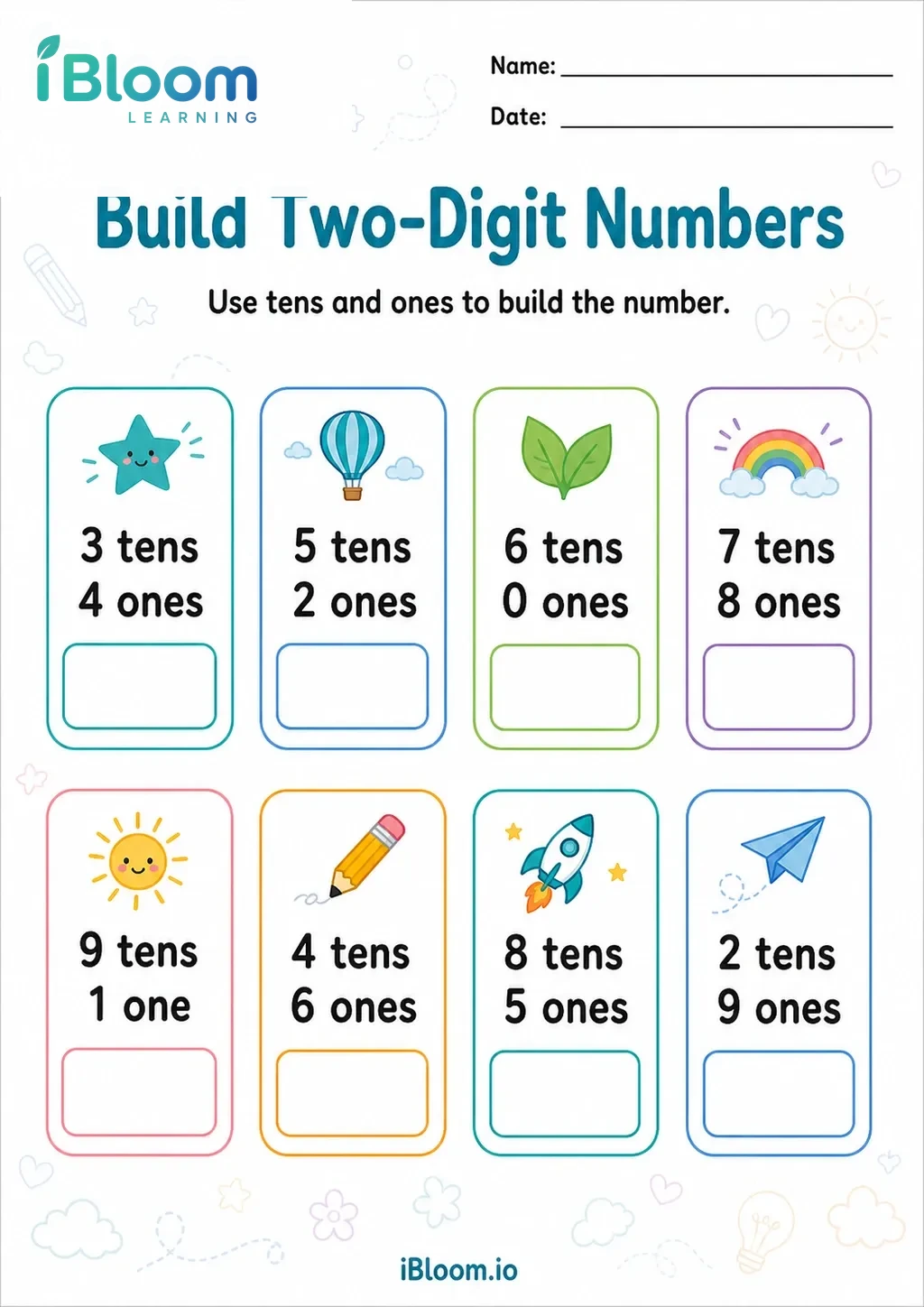
This Grade 1 printable turns place value into short everyday situations about crayons, books, tickets, and collections. Children identify tens and ones in two-digit numbers, combine groups into a total, and check a common mix-up between tens and ones. It practices Common Core 1.NBT.B.2. Three base-ten block drawings support the story problems, and a separate answer key is included.
Aligned to 1.NBT.B.2
What should children notice first?
The number 34 has 3 tens and 4 ones.
How can one example be worked out?
Question 1 shows three tens rods and four single blocks, so the number is 34.
- 1Question 1 shows three tens rods and four single blocks, so the number is 34.
How does the page build practice?
The page moves from reading tens and ones to matching them with totals in short collection stories.
How to use this worksheet
- 1Read the situation or the blocks.
- 2Find the number of tens.
- 3Find the number of ones.
- 4Put the tens digit first.
- 5Check that the number matches the total.
Common mistakes and quick fixes
The mistake
Reading 4 tens as 4 ones changes the value.
The fix
Point to the tens digit and say “four tens, or forty.”
The mistake
Writing 406 for 4 tens and 6 ones adds an extra hundreds place.
The fix
Four tens and six ones total 46.
The mistake
Treating a zero ones digit as no number at all misses the tens.
The fix
In 90, nine tens still make ninety.
This worksheet practices the following Common Core skill.
A two-digit number tells how many tens and how many ones.
On this sheet:
Show the official wordingHide the official wording
Understand that the two digits of a two-digit number represent amounts of tens and ones.
What to practice next
Make more practice
Further reading
Questions parents and teachers ask
What does the first digit in a two-digit number show?
The first digit shows how many tens. In 52, the 5 means five groups of ten, or fifty. The second digit shows the leftover ones, so 52 has two ones as well. This makes the value of each digit clear.
Why do 3 tens and 4 ones make 34?
Each ten is a group of ten objects, so 3 tens equal 30. Add 4 ones to 30 and the total is 34. The tens digit goes in the tens place and the ones digit goes in the ones place.
What is the mistake in 4 tens and 6 ones = 406?
The 4 belongs in the tens place, not the hundreds place. Four tens are 40, and six ones are 6. Together they make 46, a two-digit number. The zero holds the ones place. Check each digit place to avoid this mix-up.
How do the blocks help?
A long base-ten rod stands for one ten, and a small cube stands for one. Children can count the rods first and then the single cubes. The drawings make it easier to connect a group of ten with the tens digit.
Is there an answer key?
Yes. A separate answer key gives the number for each situation, identifies tens and ones, and includes the corrected value for the place-value error. An adult can use it to review answers after the child has completed the printable. It is arranged in the same order as the worksheet.