


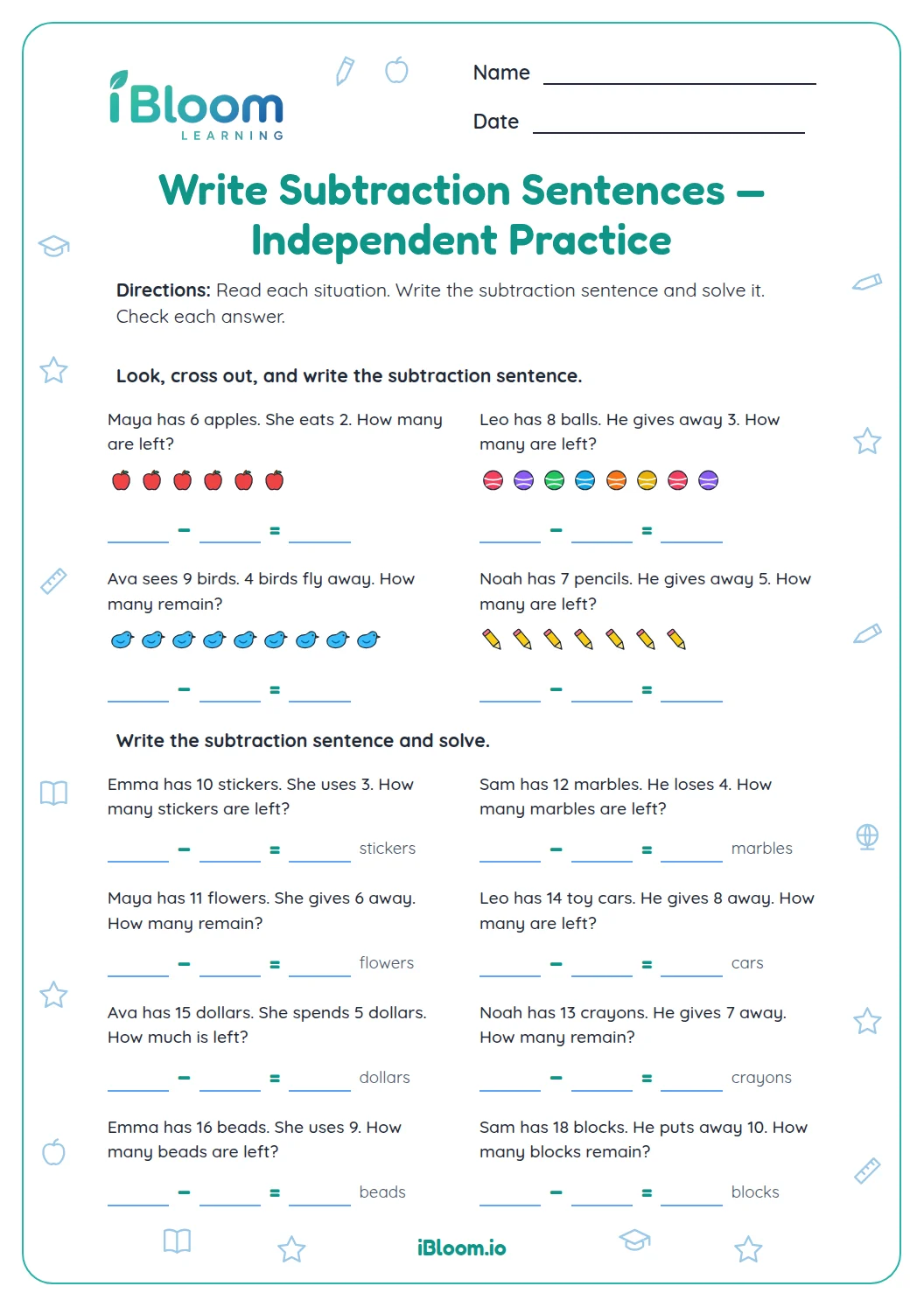
About this worksheet
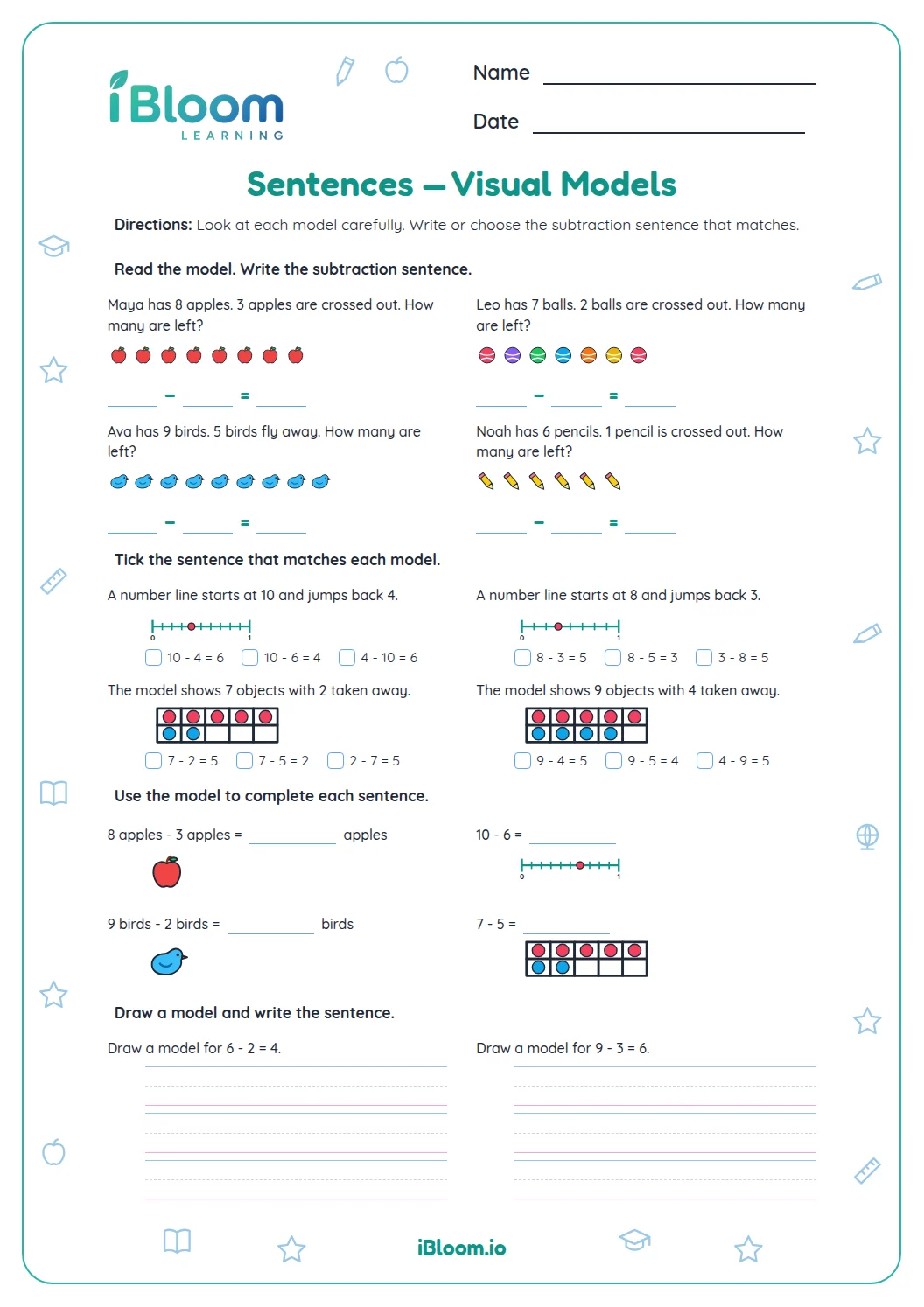
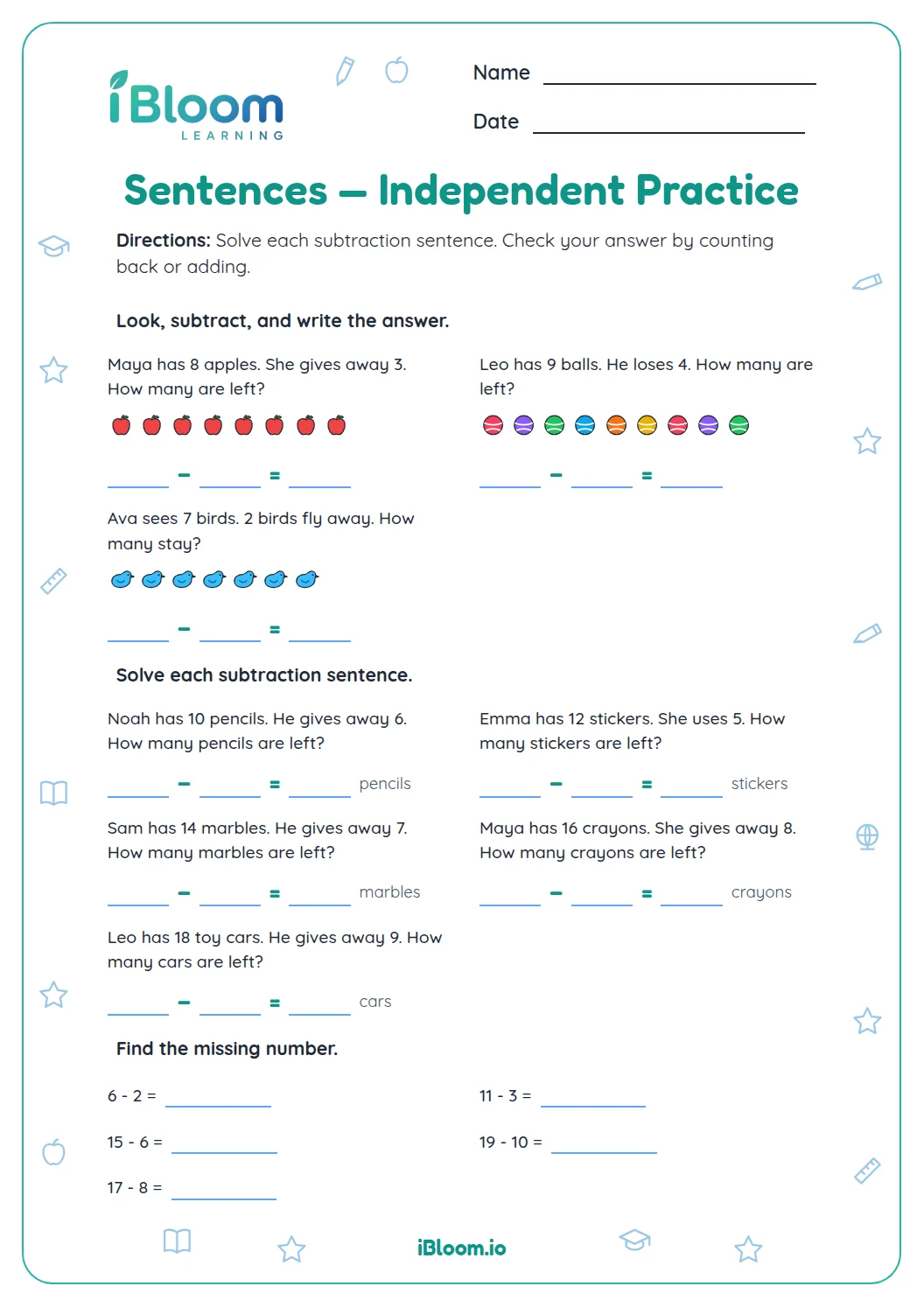
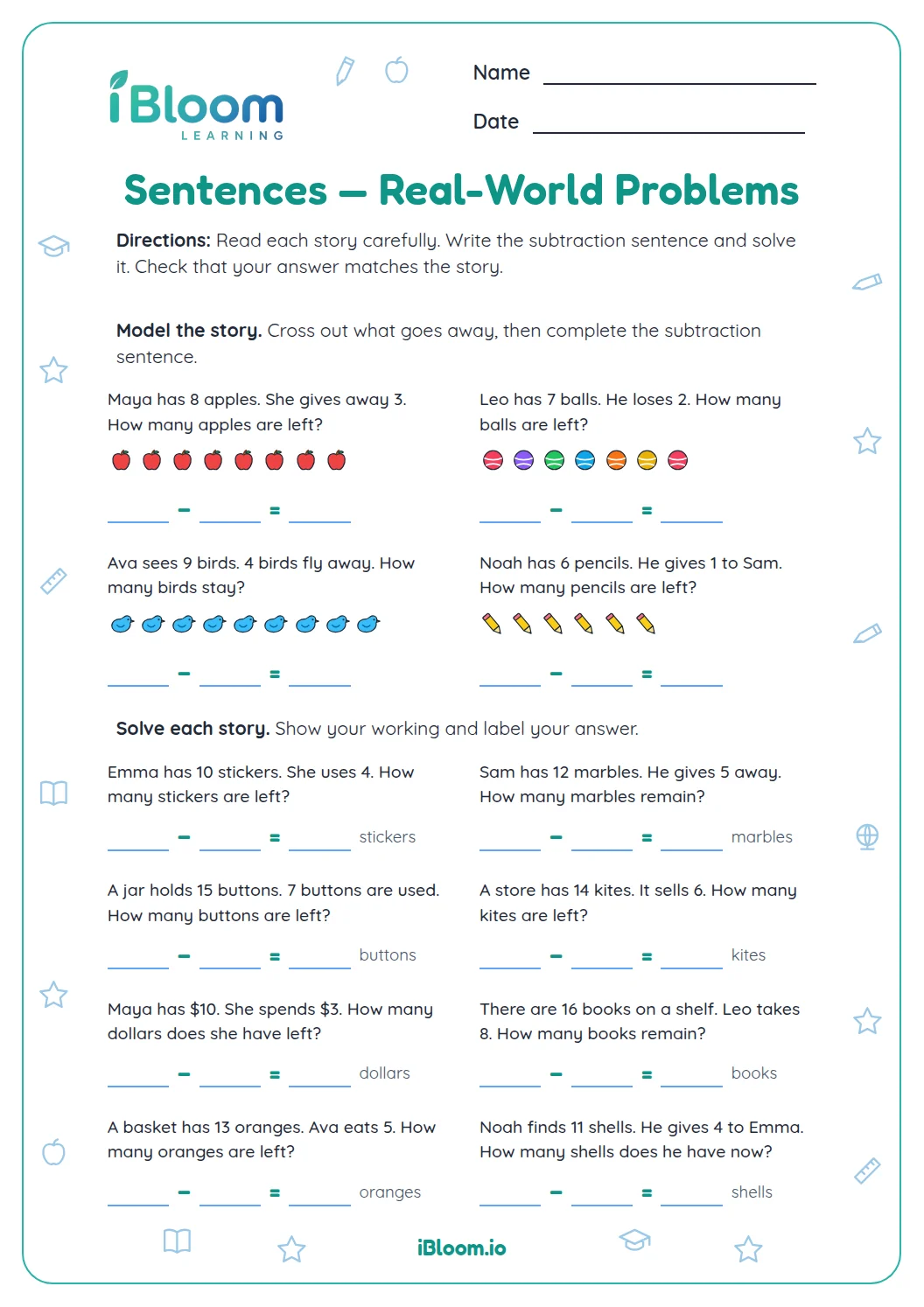
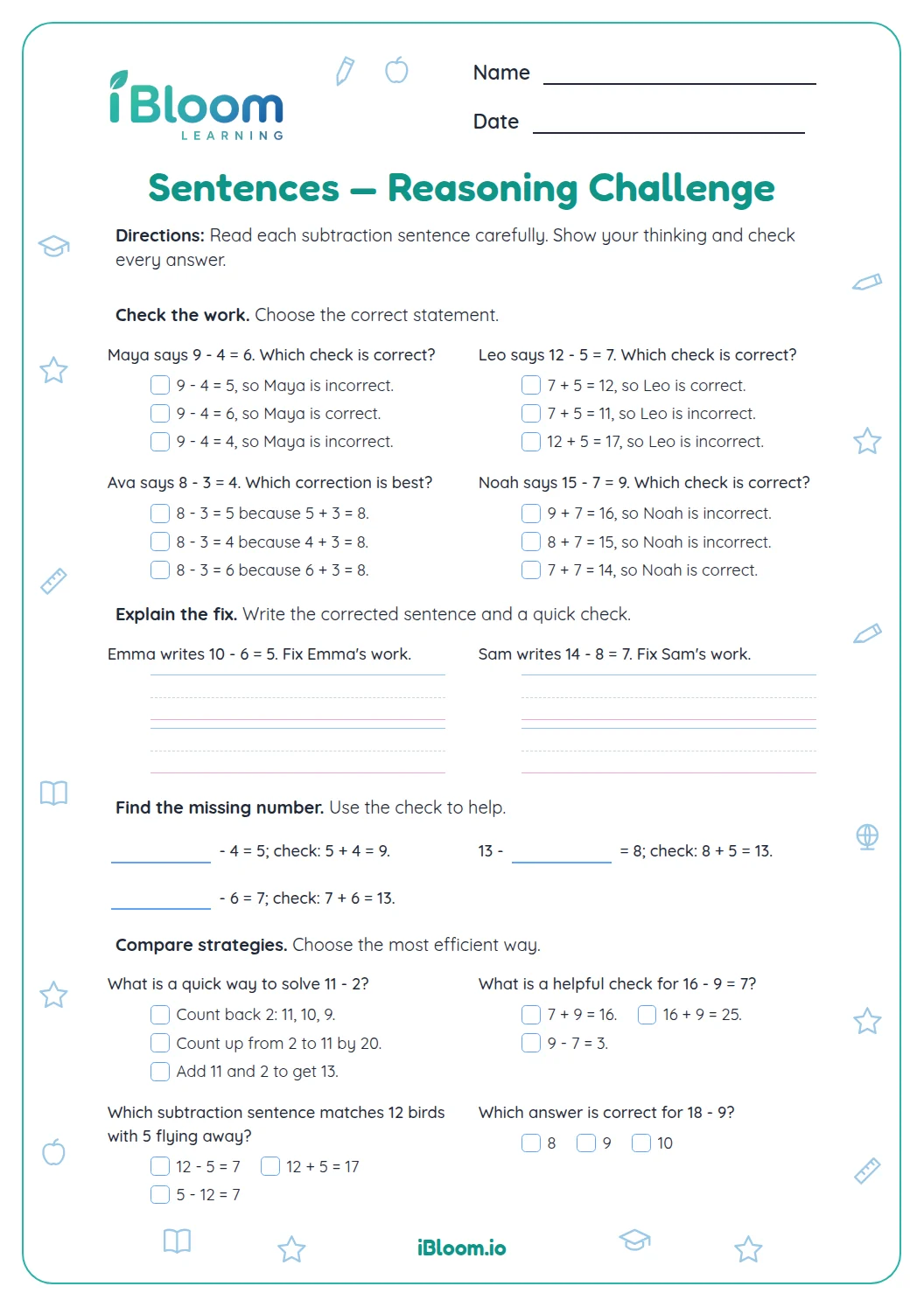
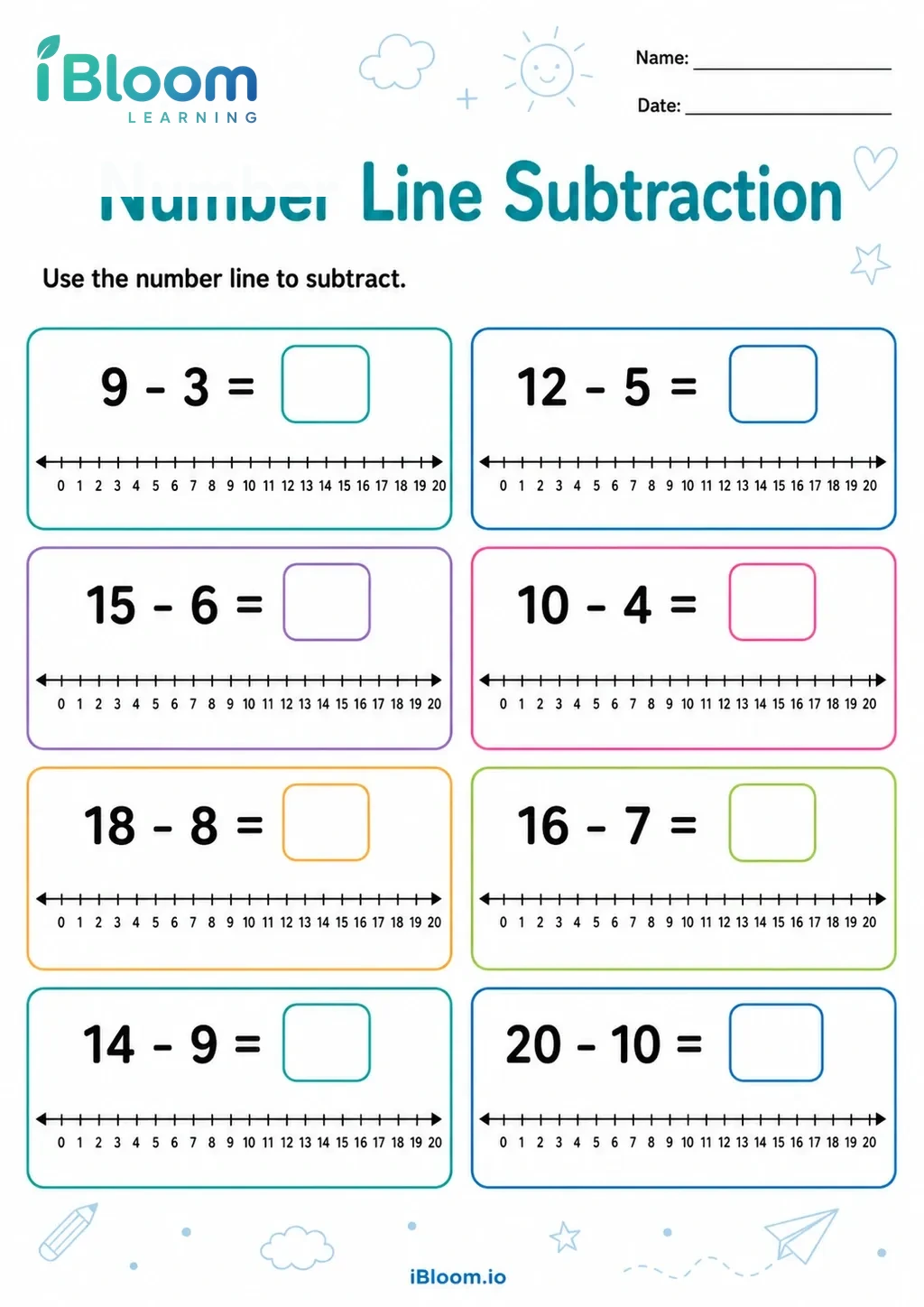
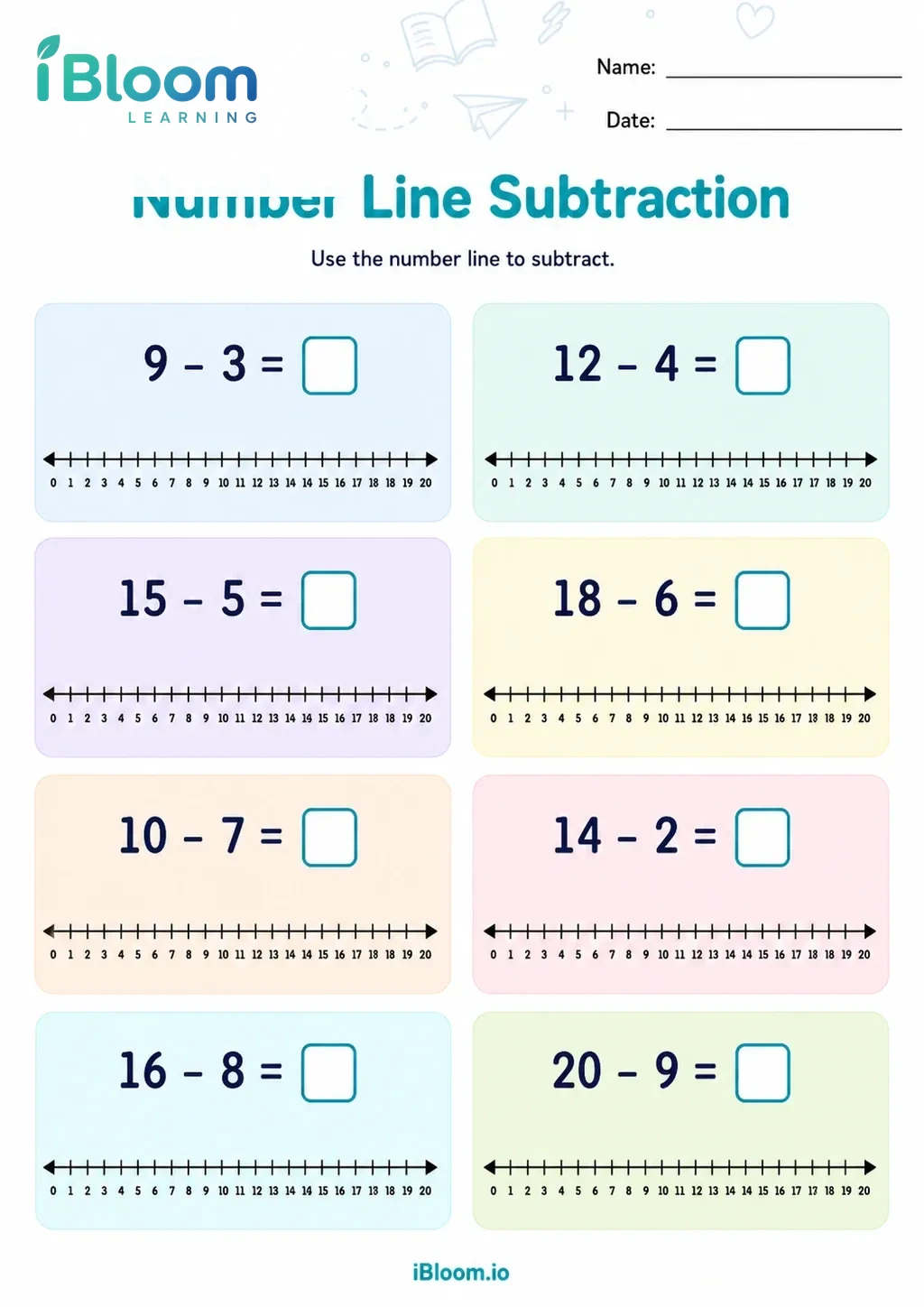
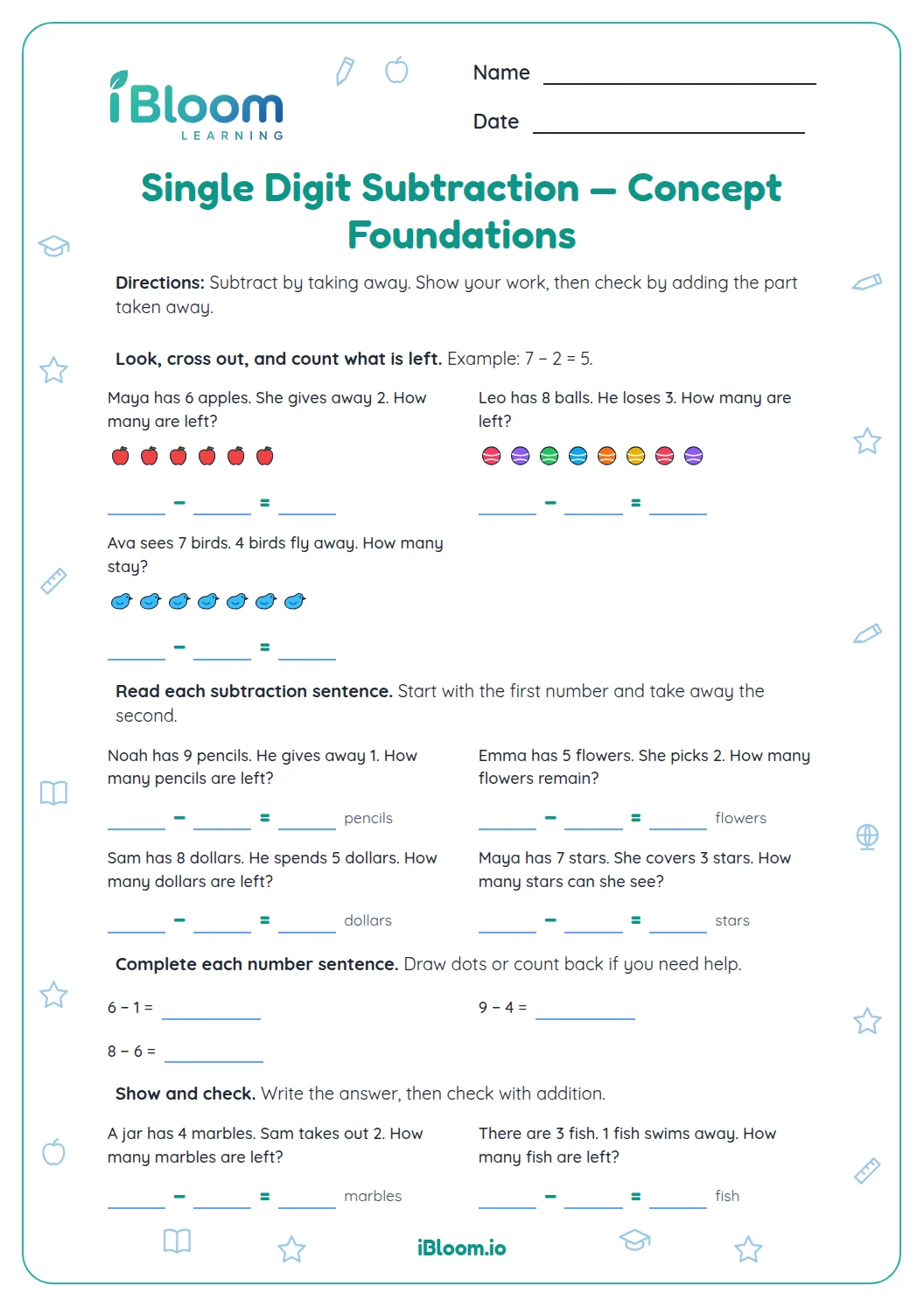
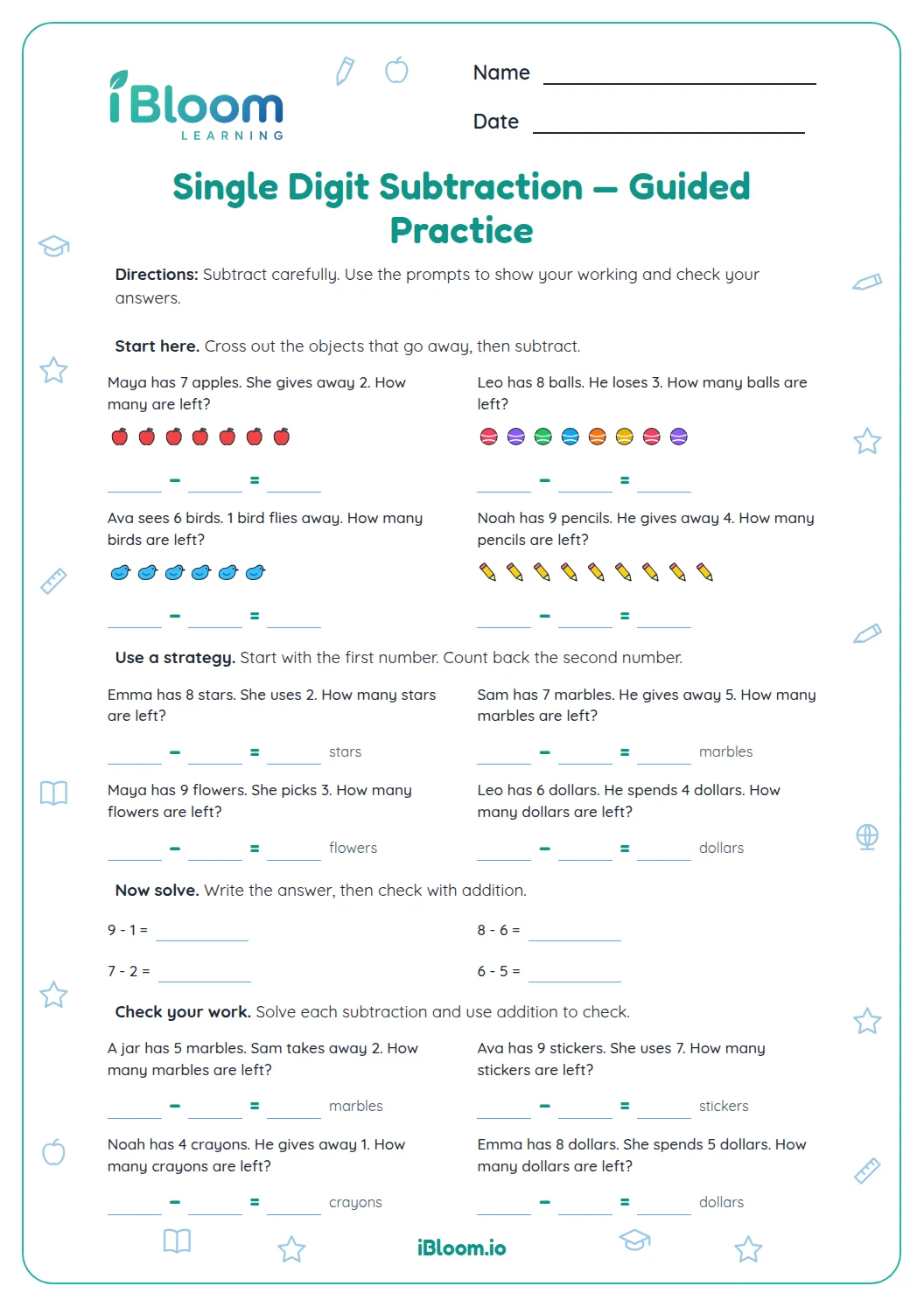
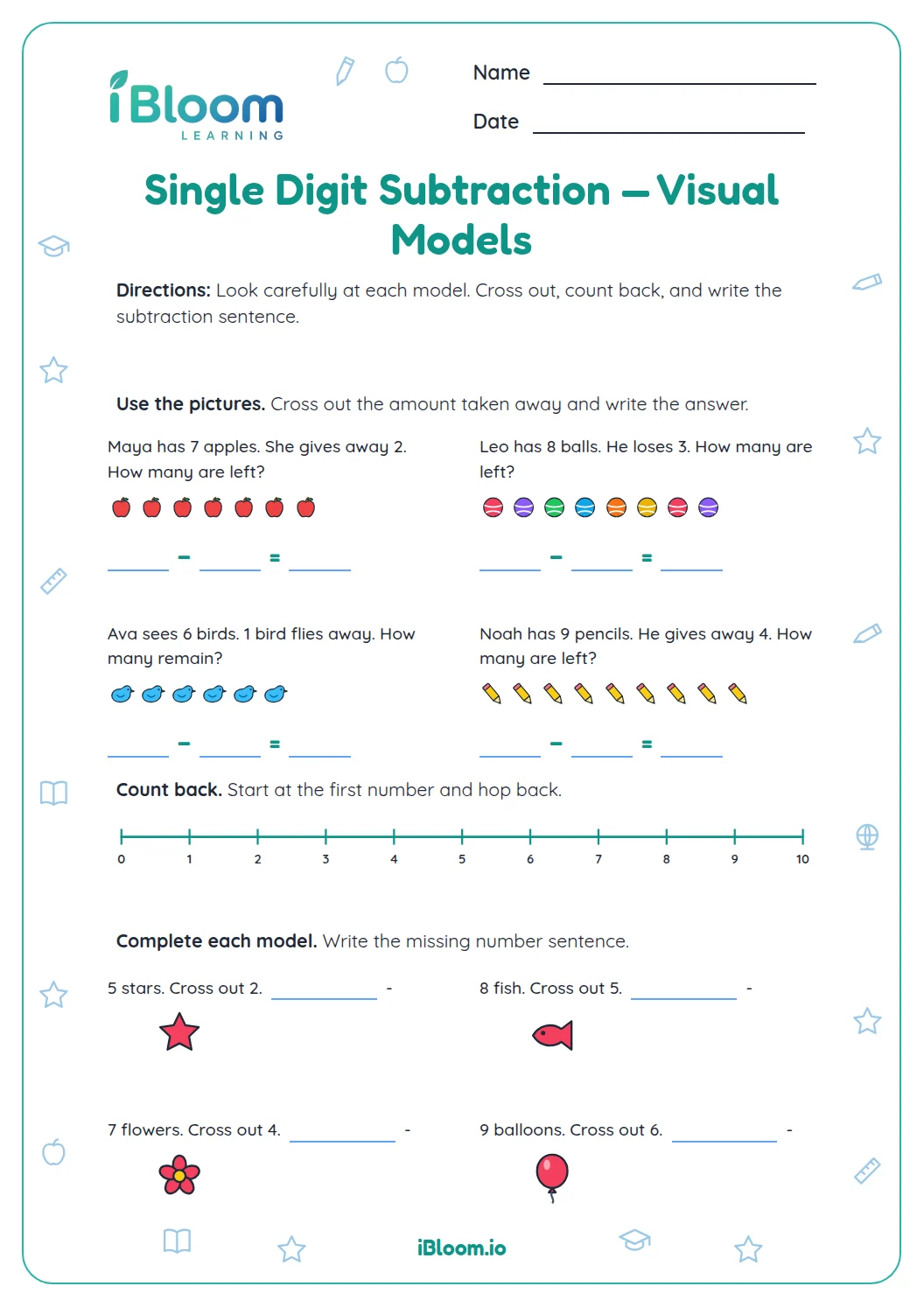
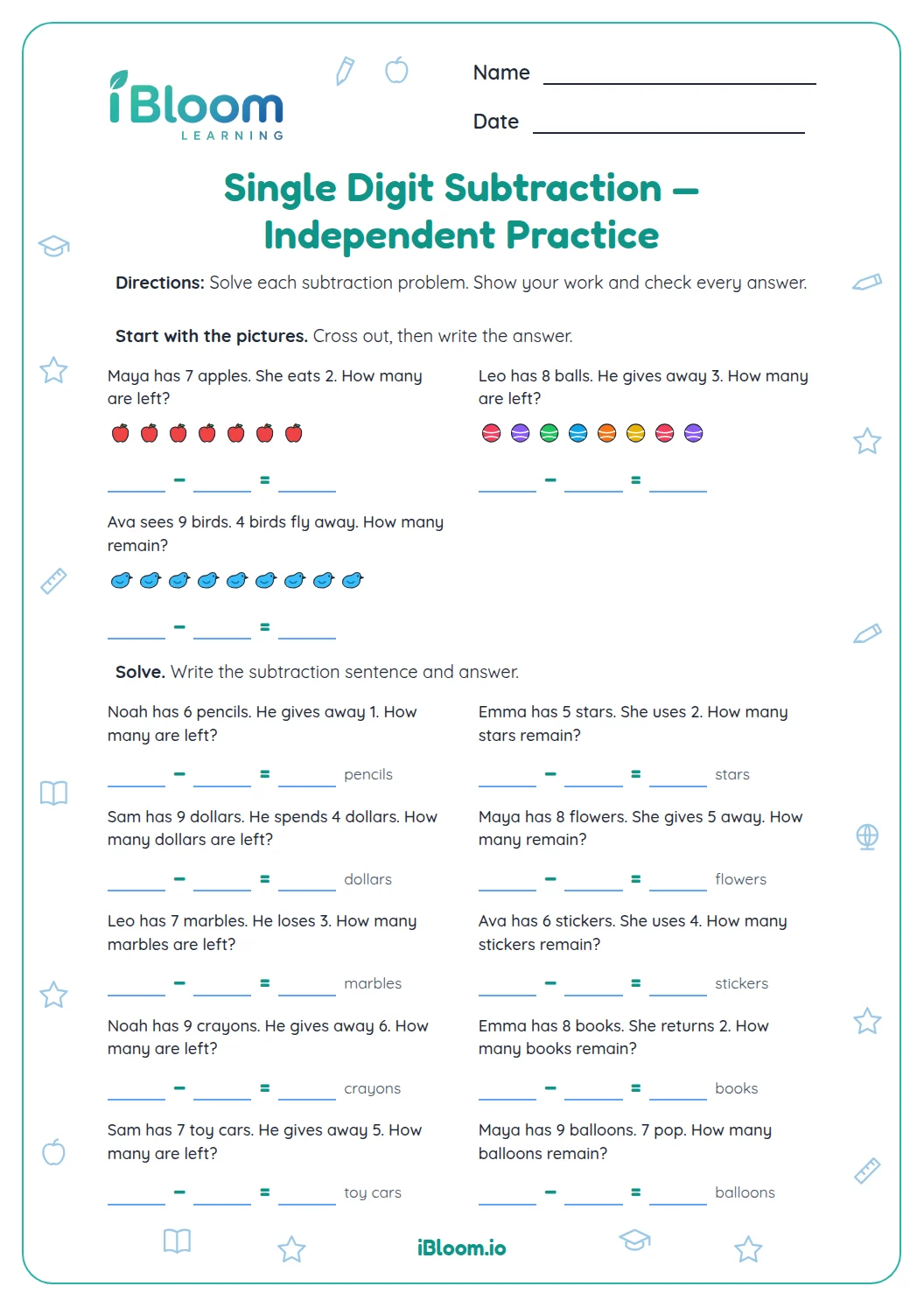
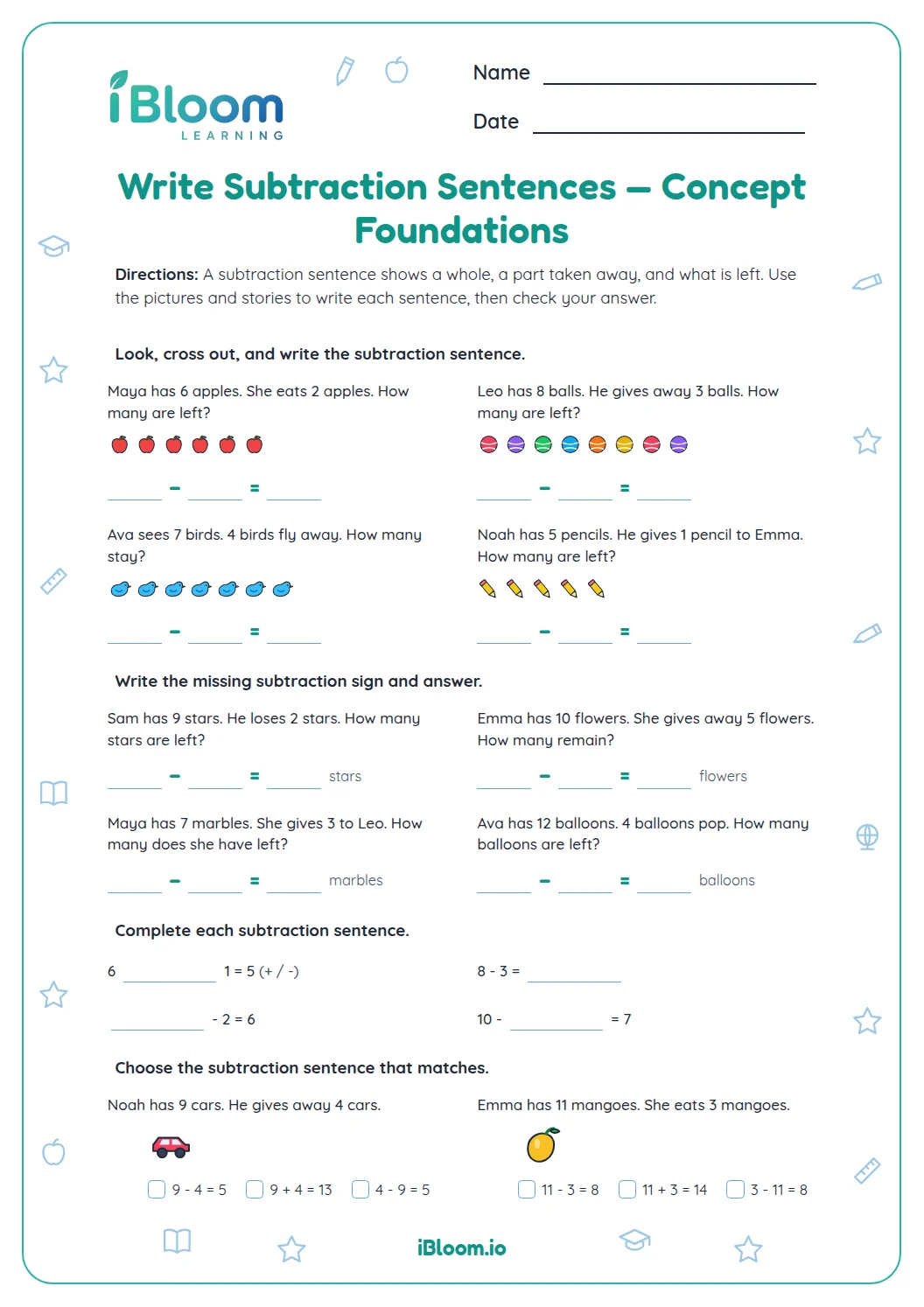
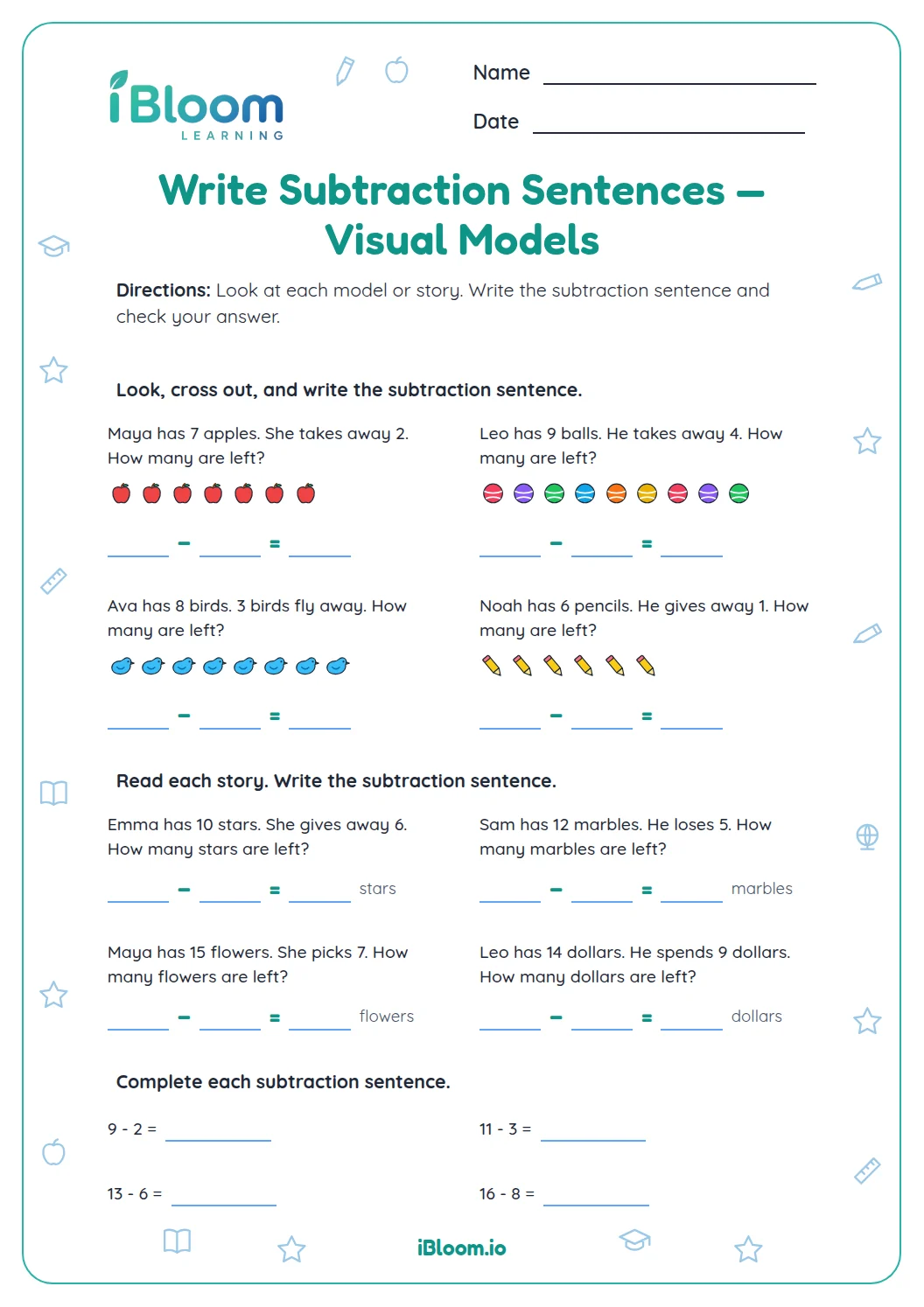
This Grade 1 worksheet connects take-away stories to subtraction sentences. Children choose an equation, find differences within 10, and write equations for four short situations. The final story problems include a number line marked at each starting amount, which children can use to count back. The separate answer key lists each equation and result.
Aligned to 1.OA.A.1
How does the sheet build subtraction sentences?
Part A matches six take-away situations to equations. Part B asks for four differences. Part C gives four more take-away stories with a number line marked at the starting amount.
How can a child connect a story to an equation?
Identify the amount at the start and how many are taken away. Subtract the second amount from the first to find what remains. In Part C, each number line marks the starting amount; count back by the number taken away.
- 1There are 8 cones. 3 are put away.
- 2Start with 8; take away 3.
- 3Equation: 8 − 3 = 5
- 4Answer: 5 cones
What should children notice as they practice?
In a subtraction sentence, the minuend is the starting amount and the subtrahend is what is removed. The difference tells how many remain. Children can check by adding the difference back to the amount taken away.
How to use this worksheet
- 1Read the story and find the starting amount.
- 2Find how many are taken away.
- 3Write the numbers in that order in a subtraction sentence.
- 4Solve, then check by counting back from the start.
Common mistakes and quick fixes
The mistake
Reversing the story numbers.
The fix
Say “start with __, take away __” before writing the equation.
The mistake
Treating the answer as the amount taken away.
The fix
Check what the question asks remains after the action.
The mistake
Choosing an equation with the right numbers in the wrong order.
The fix
Compare the first number to the story’s starting amount.
Common Core alignment
This practice connects the listed grade-level standard to short, focused worksheet tasks.
Represent subtraction situations with equations and solve within 20.
On this sheet: The story problems model taking-from situations with equations and unknown results.
Show the official wordingHide the official wording
Use addition and subtraction within 20 to solve word problems involving situations of adding to, taking from, putting together, taking apart, and comparing, with unknowns in all positions, e.g., by using objects, drawings, and equations with a symbol for the unknown number to represent the problem.
What to practice next
Make more practice
Further reading
Questions parents and teachers ask
How many questions are on this worksheet?
There are 14 questions across three worksheet pages. Children choose an equation for six take-away situations, solve four subtraction facts, and write equations for four more stories. The key is separate and lists the matching equations and answers.
What grade is this subtraction practice for?
The page is written for Grade 1 and keeps every quantity within 10. Children identify what they start with, what is taken away, and what remains. The stories use familiar objects and actions, with a number line to support the last four problems.
What does the answer key include?
The key gives the correct number sentence for each multiple-choice story, the difference for each equation, and the result for every final story. For those stories, the amount remaining is also represented by the subtraction equation, so an adult can check both the operation and answer.
How can a child check a subtraction answer?
For a story, retell the action: start with the first amount, then remove the second amount. Count back on the number line or add the answer to the amount taken away. If that sum returns to the starting amount, the subtraction is consistent.
Can this page be used for independent practice?
A child who knows basic subtraction can try the choices and number sentences independently. An adult may first model how the first number is the starting amount and the second is taken away. The answer key supports checking after the child completes a page.