

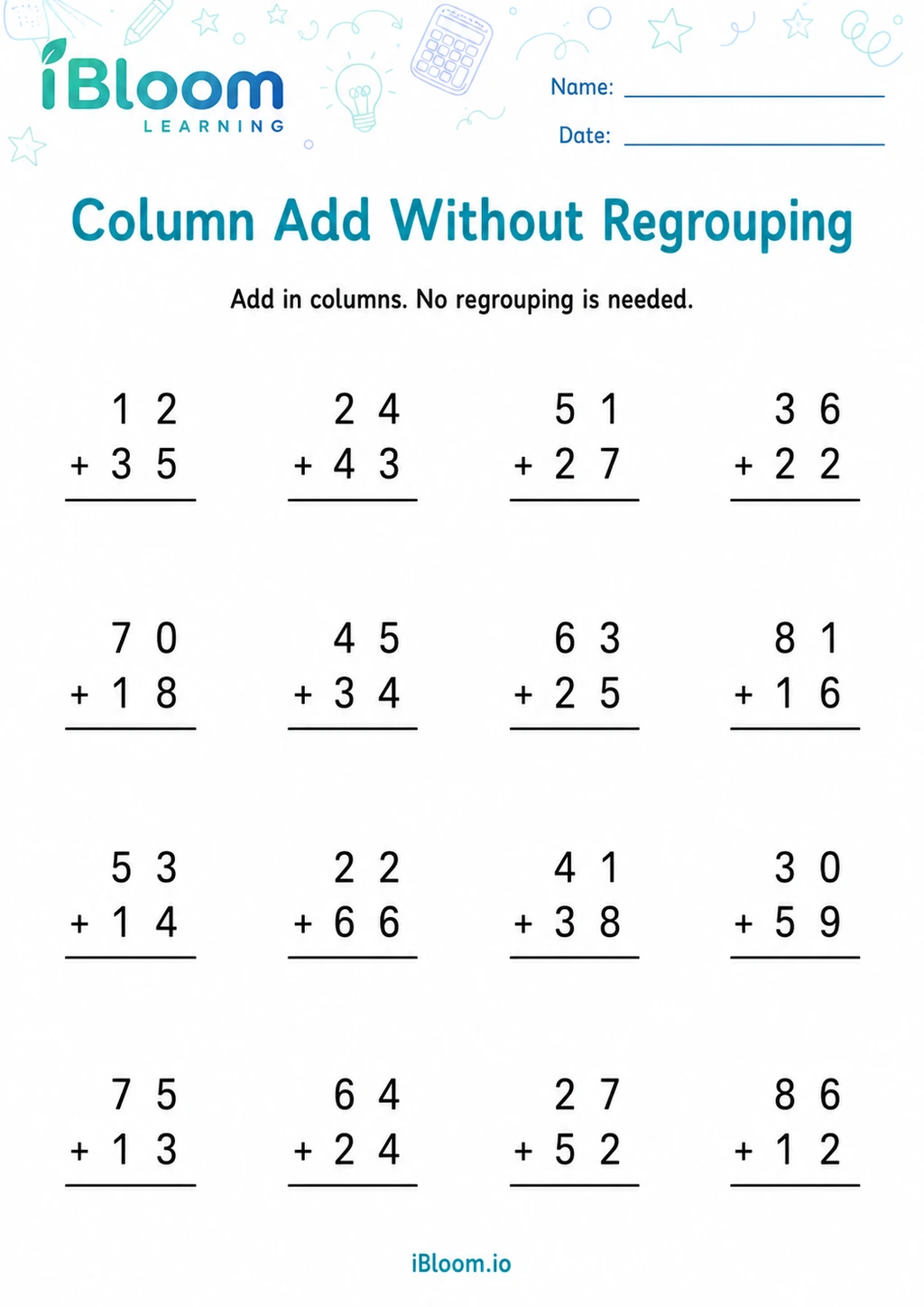
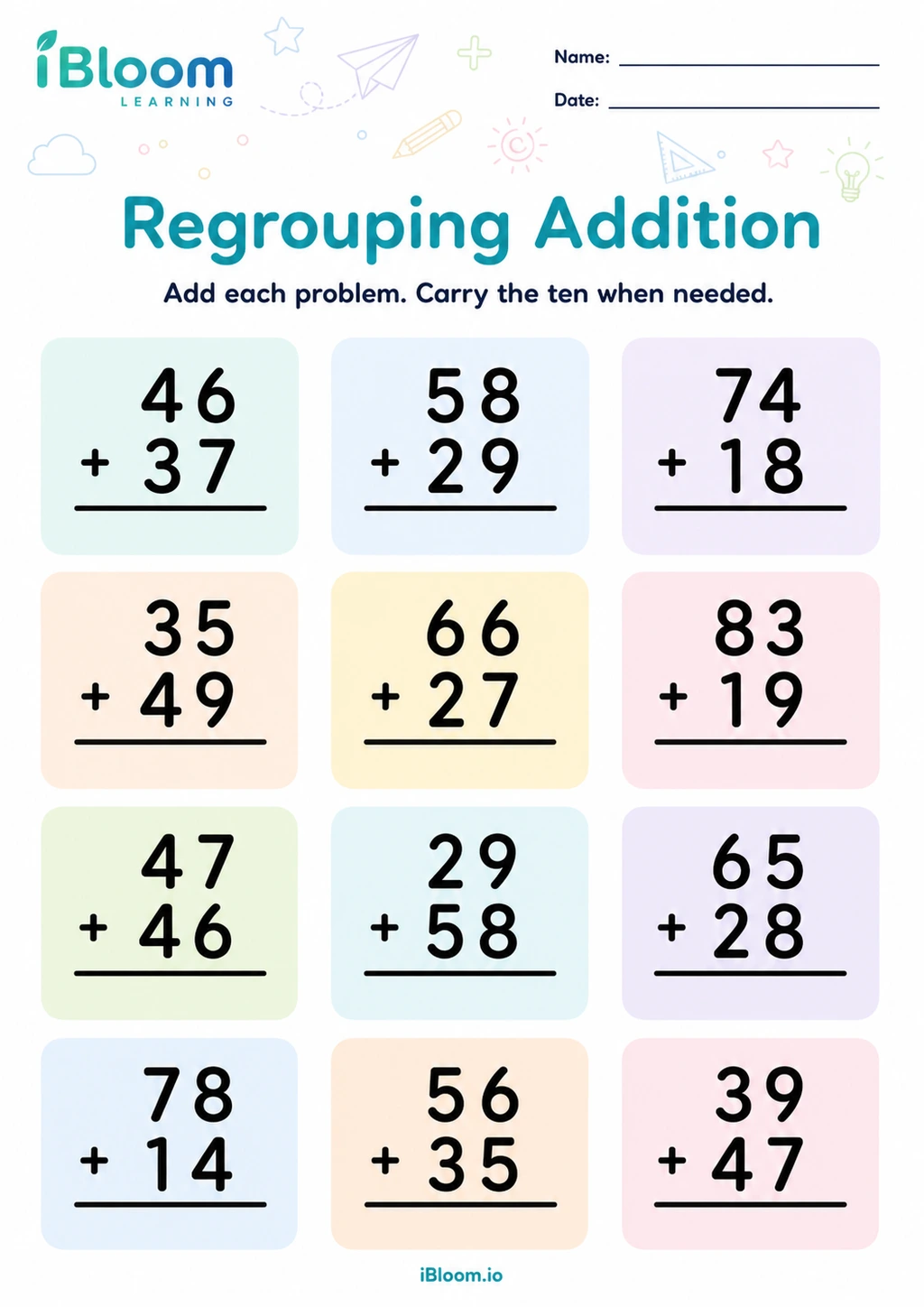
About this worksheet
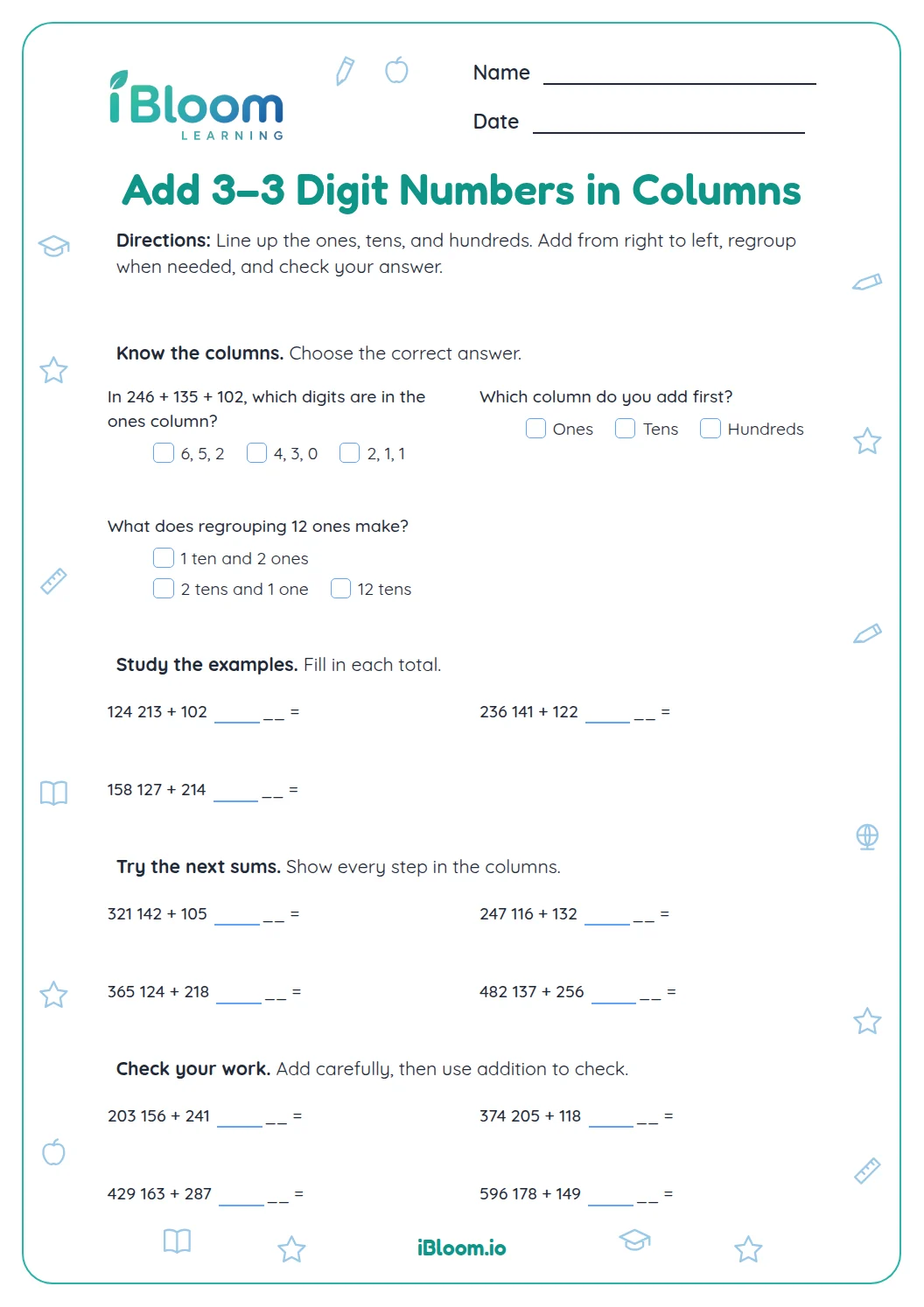
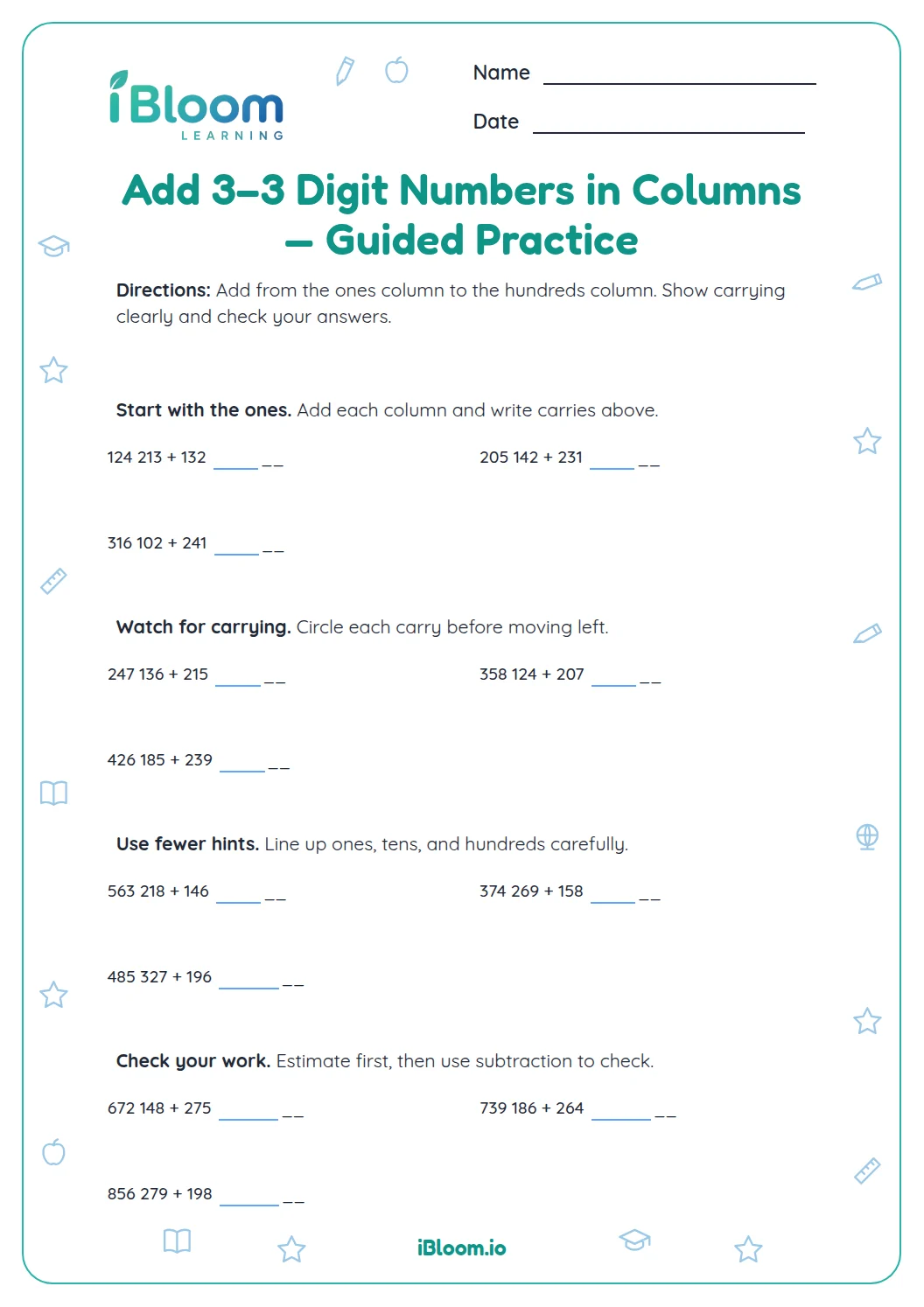
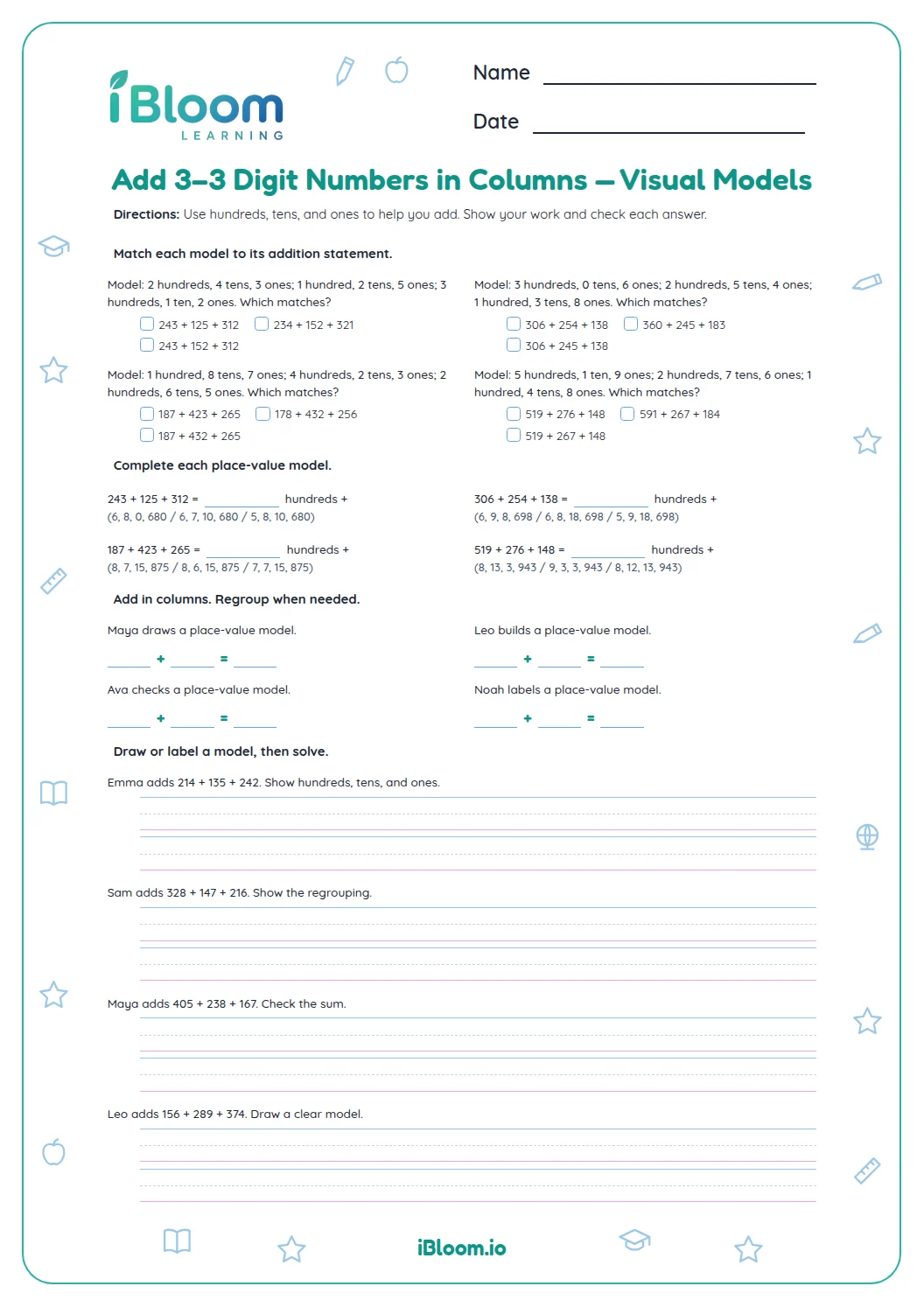
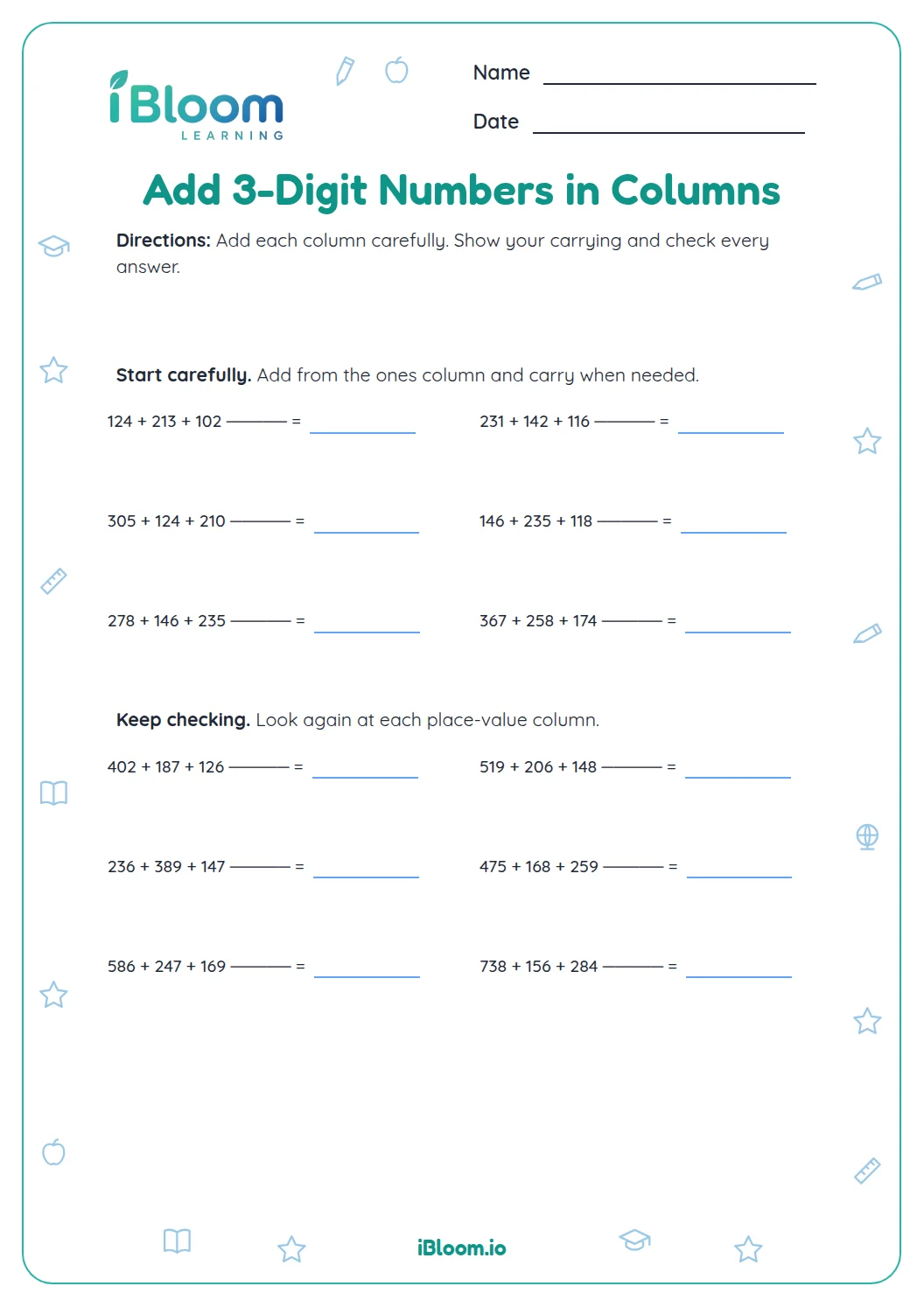
This Grade 2 worksheet practices adding three-digit numbers in columns, including sums that require regrouping. Learners diagnose a carrying error, add in columns, compare strategies, check a sum with subtraction, and solve story problems. It has 16 questions and an answer key. These tasks practice CCSS 2.NBT.B.7 by connecting place-value strategies with written addition.
Aligned to 2.NBT.B.7
How do you add three numbers in columns?
Start with the ones column. For 236 + 145 + 117, add 6 + 5 + 7 = 18 ones; write 8 ones and regroup 1 ten. Continue with the tens, then hundreds, including any regrouped amount.
How can you check a total?
For 274 + 315 + 106 = 695, subtract one addend: 695 − 106 = 589. Since 274 + 315 = 589, the total checks.
How do you find a missing addend?
For 325 + 146 + ___ = 600, first add 325 + 146 = 471, then find 600 − 471 = 129. Use the total and known addends to check the missing amount.
How to use this worksheet
- 1Line up the ones, tens, and hundreds digits.
- 2Add the ones and regroup each full ten.
- 3Add the tens, including any regrouped ten.
- 4Add the hundreds and check the total.
- 5For a missing addend, subtract the known sum from the total.
Common mistakes and quick fixes
The mistake
Writing a two-digit ones total without regrouping.
The fix
Keep the ones digit and carry the tens to the tens column.
The mistake
Forgetting a regrouped ten in the next column.
The fix
Add the carried ten before adding the tens digits.
The mistake
Subtracting the total from a known addend to find a missing amount.
The fix
Subtract the sum of known addends from the total.
Common Core alignment
Add up to three three-digit numbers using place-value strategies.
On this sheet: Add up to three three-digit numbers using place-value strategies.
Show the official wordingHide the official wording
Add and subtract within 1000, using concrete models or drawings and strategies based on place value, properties of operations, and/or the relationship between addition and subtraction; relate the strategy to a written method.
What to practice next
Make more practice
Further reading
Questions parents and teachers ask
How many questions are on this worksheet?
There are 16 questions across five parts. They include regrouping and error checks, four column sums, strategy and checking questions, and three word problems. The answer key gives the expected answer for each item, including the missing addend.
What is the first step when adding three numbers?
Line up all three addends by place value and begin with the ones column. Add the ones, write the ones digit, and regroup any tens before moving to the tens column. The first worksheet example asks learners to reason about this carrying step.
How can subtraction check an addition answer?
Subtract one addend from the proposed total. The result should equal the sum of the remaining addends. For example, 695 − 106 = 589, and 274 + 315 also equals 589, so the total is consistent. This check uses the inverse relationship between addition and subtraction.
How does the missing-addend item work?
For 325 + 146 + ___ = 600, add the known values to get 471, then subtract 471 from 600. The missing addend is 129; adding it to 471 returns the stated total. This same check works for any missing addend in a sum.
What does the answer key show for story problems?
It gives the final total or missing amount, including units when the story uses them. Learners should still set up the addition or subtraction themselves in the worksheet’s work area before checking. The answer key can then help locate a regrouping or place-value error.