


About this worksheet
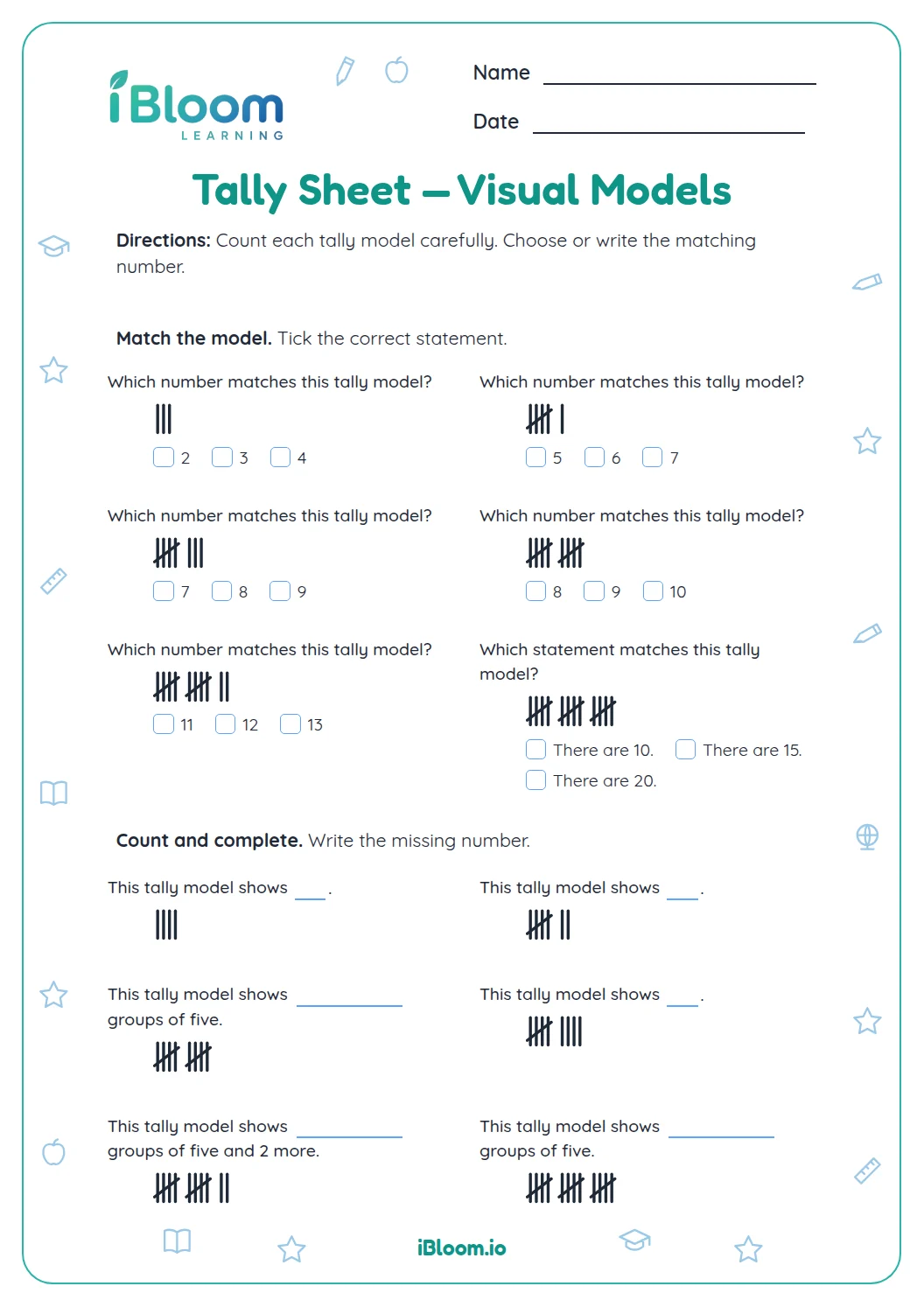
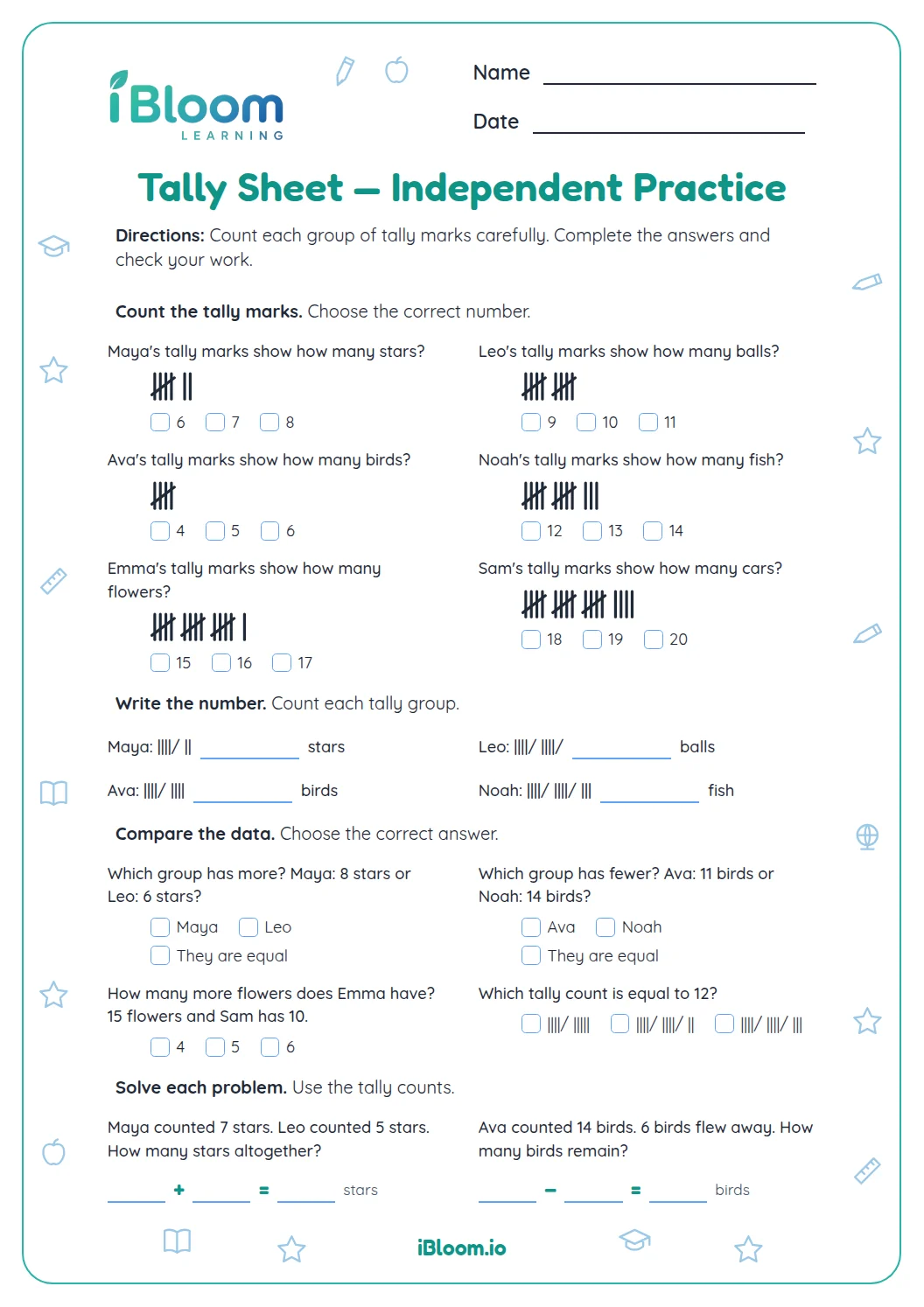
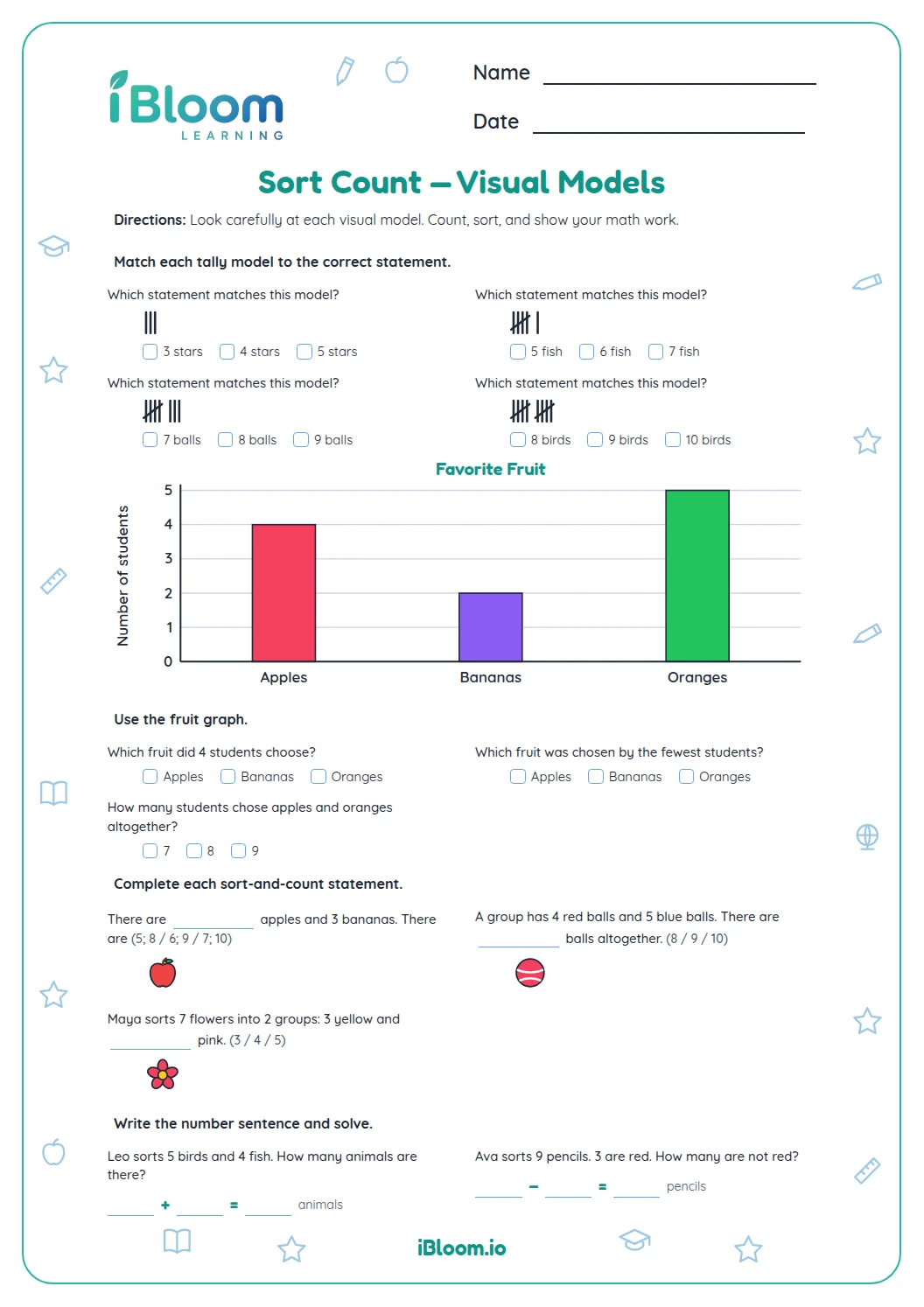
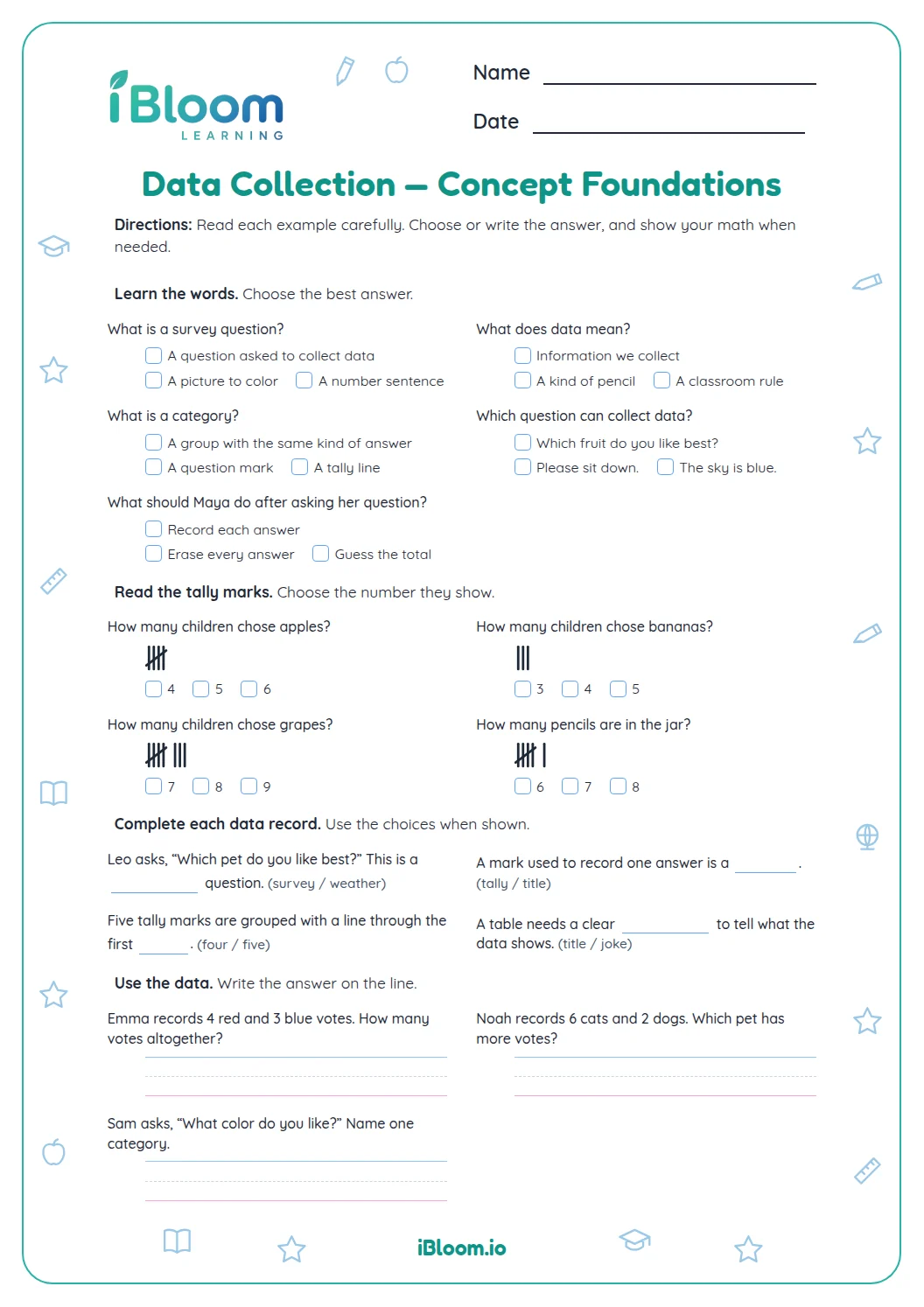
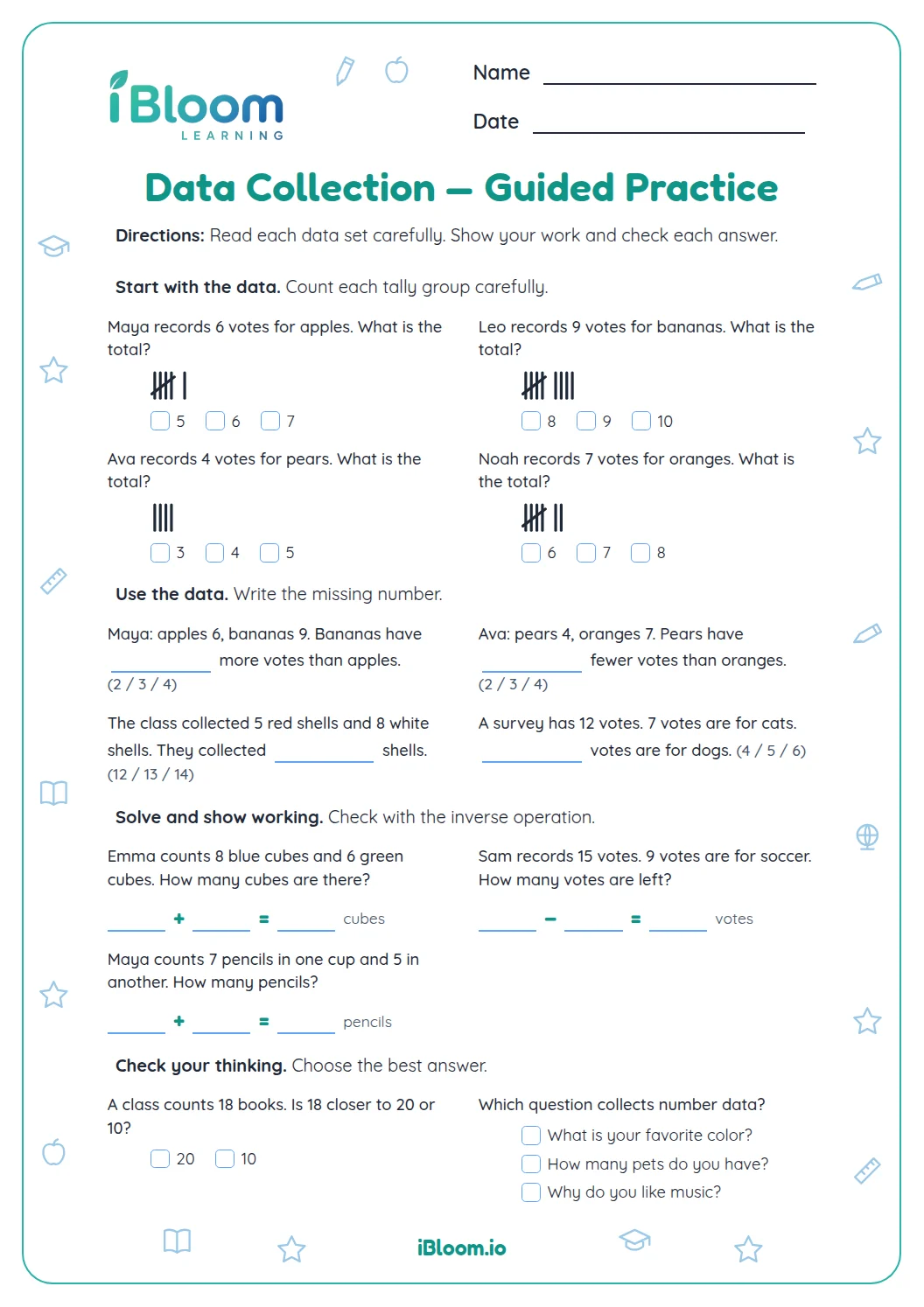
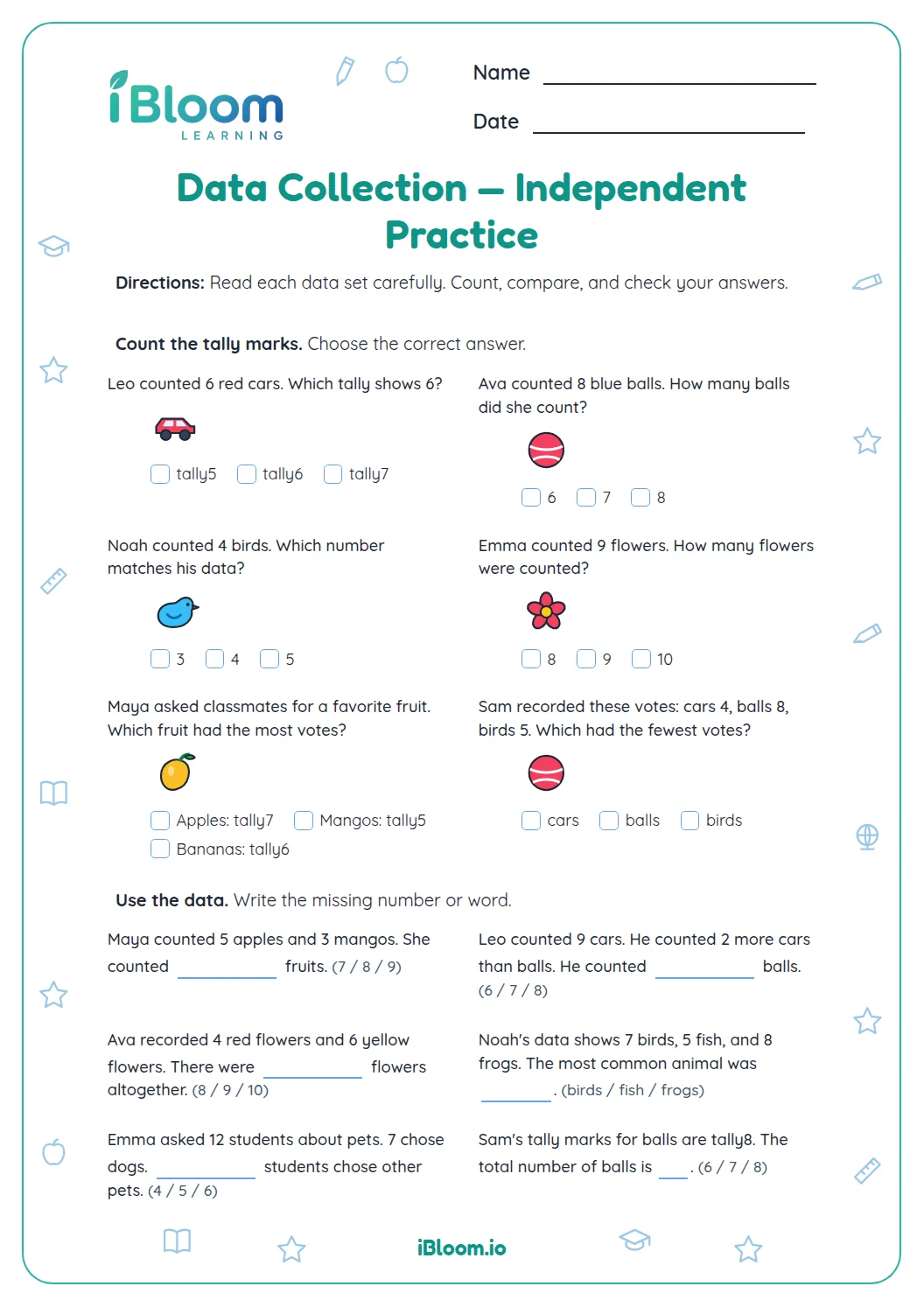
This free printable Grade 2 worksheet gives children 16 tally-mark questions in four parts. They count illustrated records, complete number sentences that separate bundles of five from extra marks, compare two totals, and read bundles and leftovers. The tally drawings use four upright marks crossed by a fifth mark. The comparison tasks practice Common Core 1.MD.C.4 by interpreting counts and finding how many more or fewer are recorded. A separate answer key gives the totals, comparisons and a sample number sentence.
Aligned to 1.MD.C.4
How does a group of five tally marks work?
One mark stands for one item. Four upright tally marks and a fifth crossing mark make a complete bundle of five. Part A asks children to identify those values before using groups and leftovers in number sentences.
How do bundles make a number sentence?
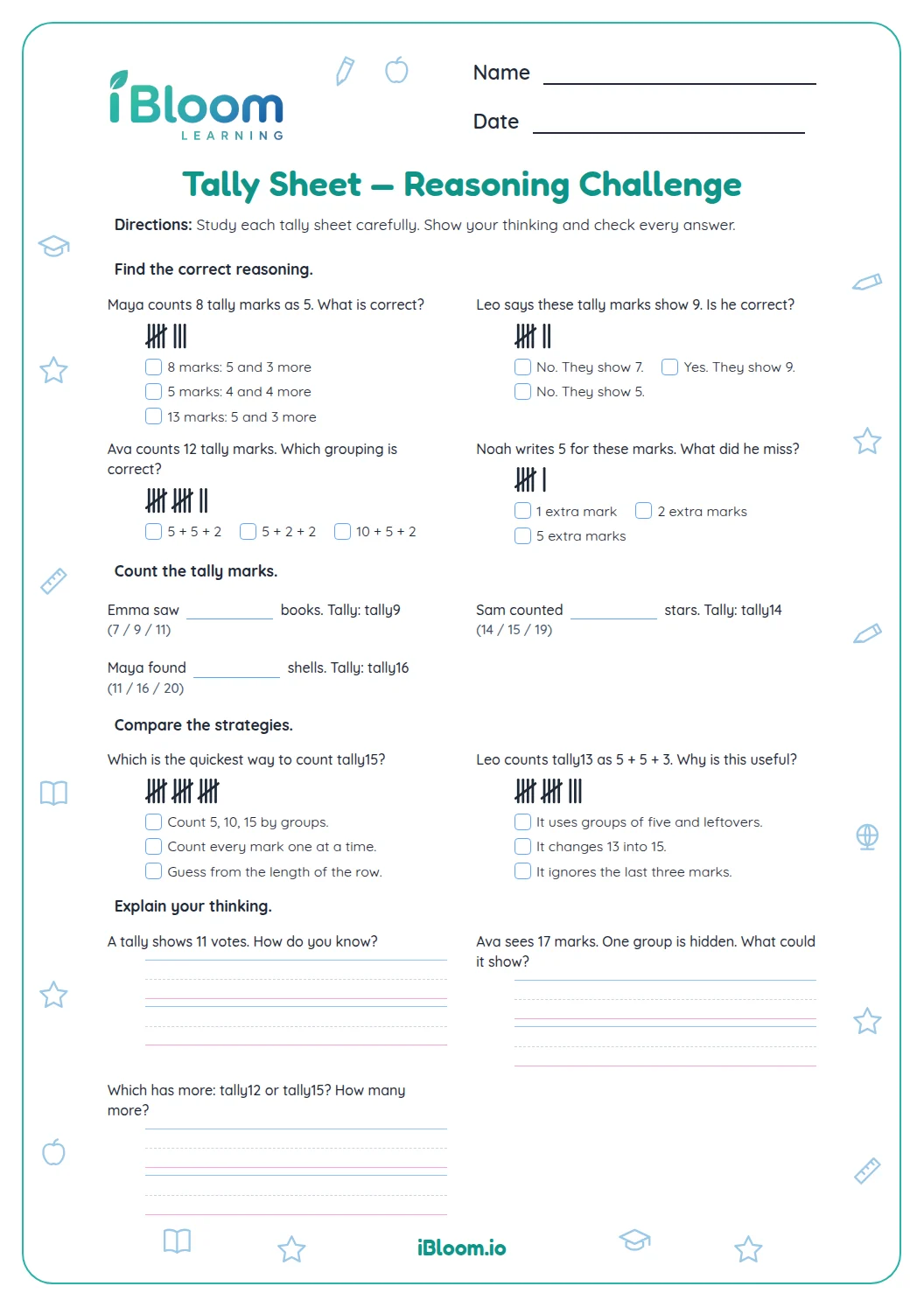
Part B separates complete fives from leftovers. For 17 marks, three full bundles make 15 and two marks remain: 5 + 5 + 5 + 2 = 17. The blanks ask for the leftover or total amount.
- 117 tally marks contain three full bundles of five.
- 25 + 5 + 5 = 15
- 317 − 15 = 2 leftover marks.
How can children compare two tally totals?
Compare the totals first. If one record has 12 marks and another has 7, subtract 7 from 12 to find how many more are in the larger record. The comparison part includes equal records as well as more and fewer questions.
How can children check a tally total?
Part D uses illustrated tally records and asks children to choose their totals. Question 15 checks whether they can show 17 as three complete groups of five and two extra marks: 5 + 5 + 5 + 2 = 17.
- 1Three bundles of five make 15.
- 2Two marks remain.
- 35 + 5 + 5 + 2 = 17.
How to use this worksheet
- 1Count the four upright marks and the crossing fifth mark in each complete bundle.
- 2Complete Part A by identifying the value of one mark and one complete crossed bundle.
- 3Complete Part B by counting full groups of five before the leftover marks.
- 4Compare totals in Part C; when asked how many more or fewer, subtract the smaller total from the larger.
- 5In Part D, count the illustrated records and choose the number sentence that groups 17 marks.
Mistakes to check together
The mistake
Counting the crossing stroke as a sixth mark.
The fix
The four upright marks and the crossing mark make one bundle of five.
The mistake
Treating three bundles as three items.
The fix
Count by fives: 5, 10, 15.
The mistake
Subtracting the larger total from the smaller when finding how many more.
The fix
Subtract the smaller count from the larger count so the difference is positive.
Common Core alignment
Interpret counts and compare how many more or fewer are in two records.
On this sheet: Students interpret tally counts and compare records to find how many more or fewer are shown.
Show the official wordingHide the official wording
Organize, represent, and interpret data with up to three categories; ask and answer questions about the total number of data points, how many in each category, and how many more or less are in one category than in another.
What to practice next
Make more practice
Further reading
Questions parents and teachers ask
How does a child read a tally bundle?
Count the four upright strokes and then the stroke crossing them as five marks altogether. After each complete bundle, count any extra upright marks one at a time. For 12 marks, count five, ten, then eleven and twelve. The tally drawings in Part D give children practice counting complete records.
What is the difference between a tally total and its bundles?
The total includes every mark, while the bundles show groups of five within that total. Seventeen marks make three full bundles, or 15, with two extra marks. Part B practices writing the leftover in a number sentence after counting the bundles.
How can I help with the comparison questions?
First name each total, then decide which is larger or whether they are equal. When a question asks how many more or fewer, subtract the smaller total from the larger. For Ava’s 7 and Noah’s 12, 12 − 7 = 5, so Noah has five more.
What does “complete bundle” mean on the sheet?
A complete bundle has all five tally marks, including the diagonal crossing mark. A record of eight marks has one complete bundle and three extra marks. Part D asks children to identify full bundles or leftover marks in the illustrated records.
Does the answer key show a sample number sentence?
Yes. The key gives a sample way to write the 17-mark tally as 5 + 5 + 5 + 2 = 17. Other answers give the exact total, leftover, comparison choice or difference. Accept an equivalent addition sentence if it correctly shows full groups of five and any marks left over.