


About this worksheet
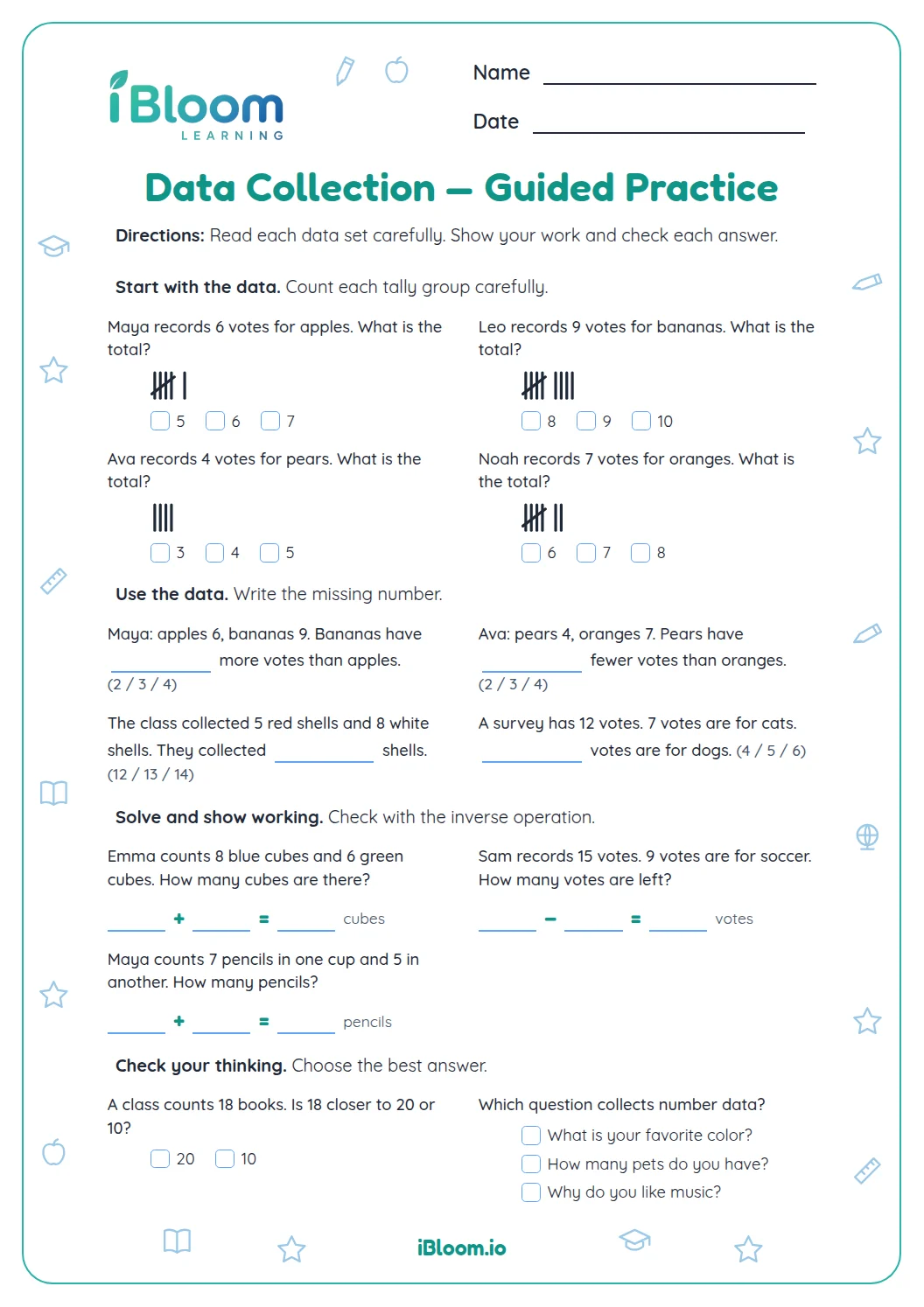
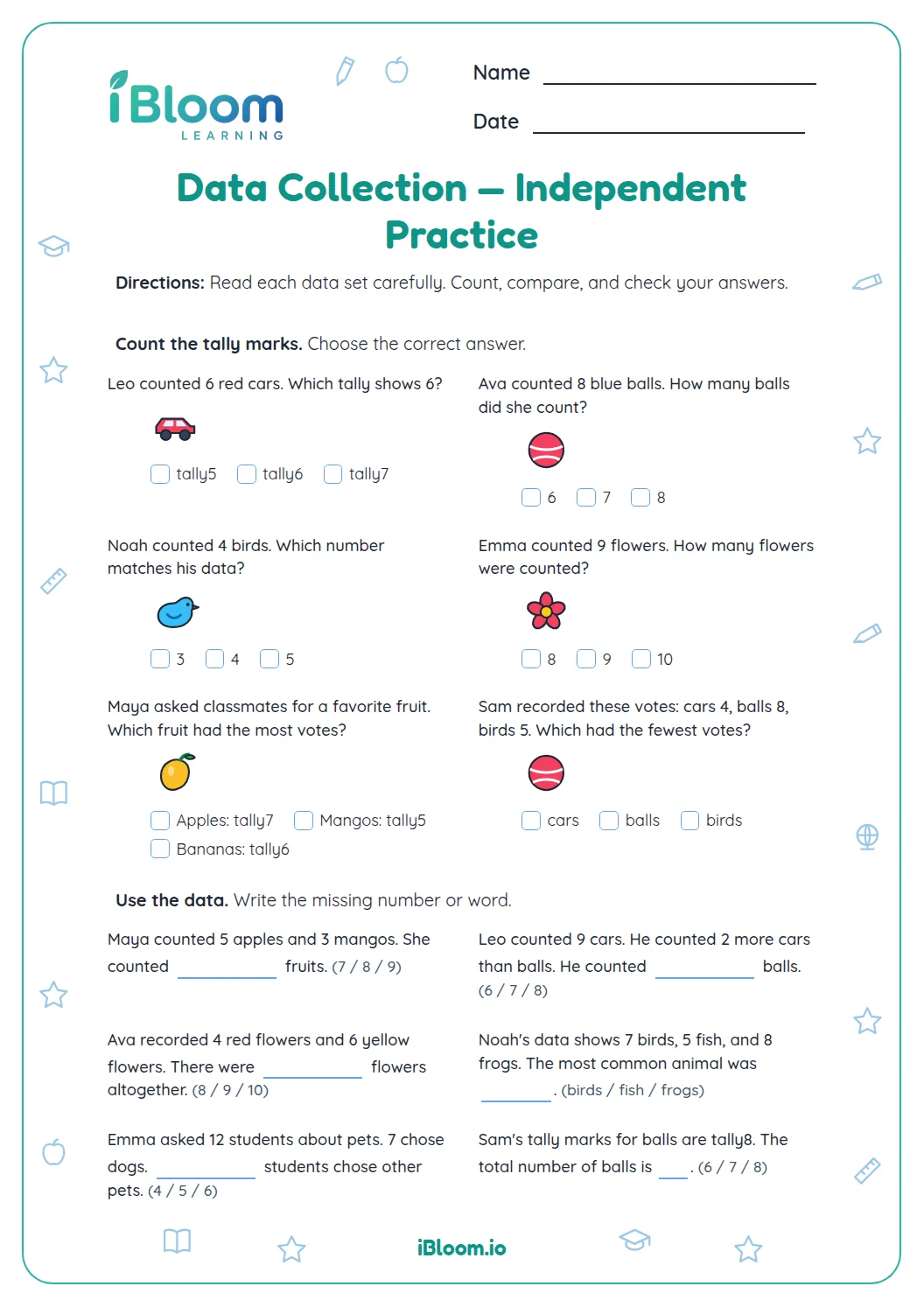
This Grade 2 tally worksheet helps students read and reason with data recorded in tally marks. Children count complete bundles of five and extra marks, find how many more are needed, compare category totals, and combine votes. Sixteen questions include tally drawings and short data situations, with a final question about a useful counting strategy. A separate answer key is included.
How do you read a tally group?
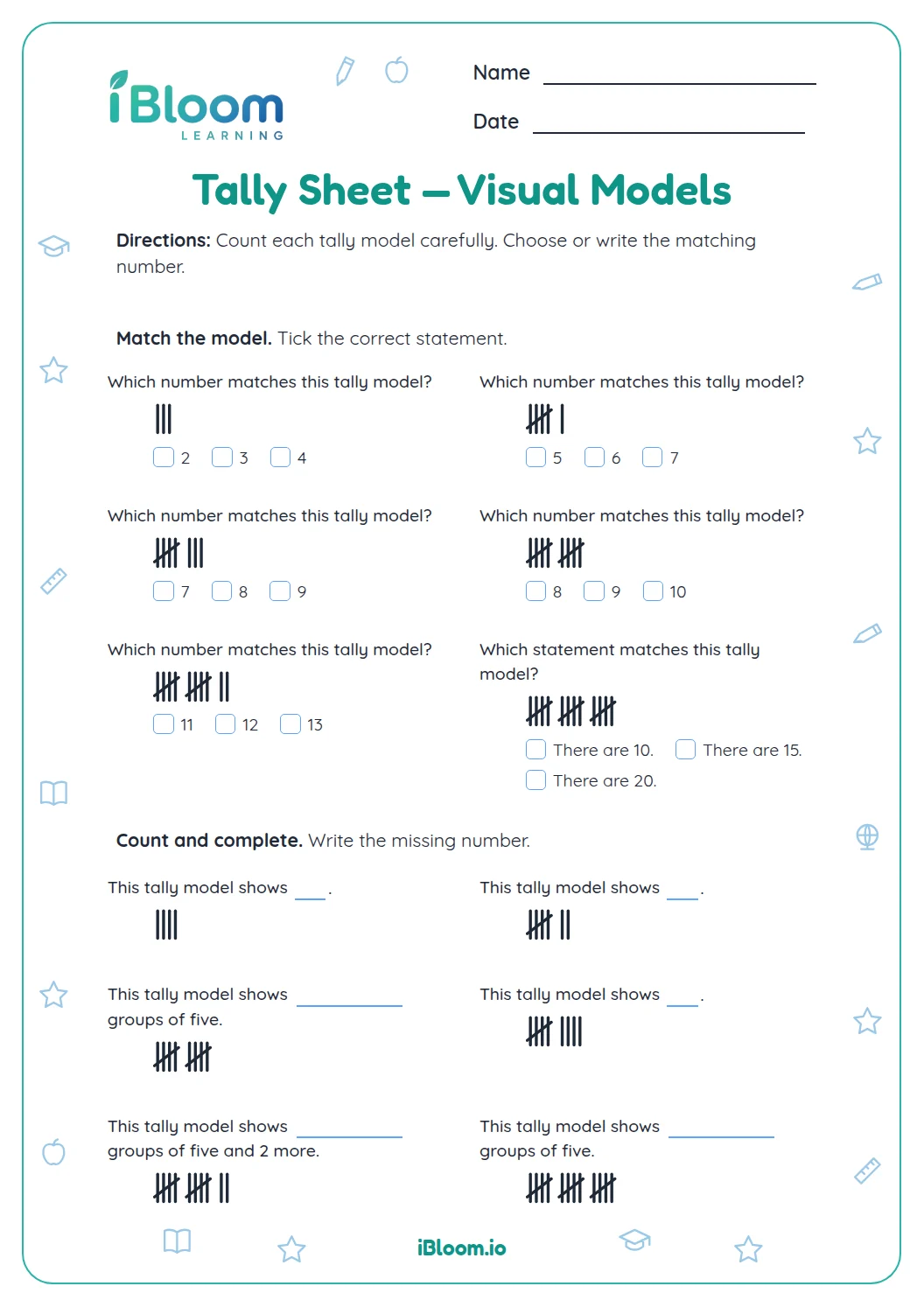
A tally bundle has four straight marks and a fifth mark crossing them. Count a full bundle as 5, then add any marks left over. Question 1 shows one full bundle, so it represents 5.
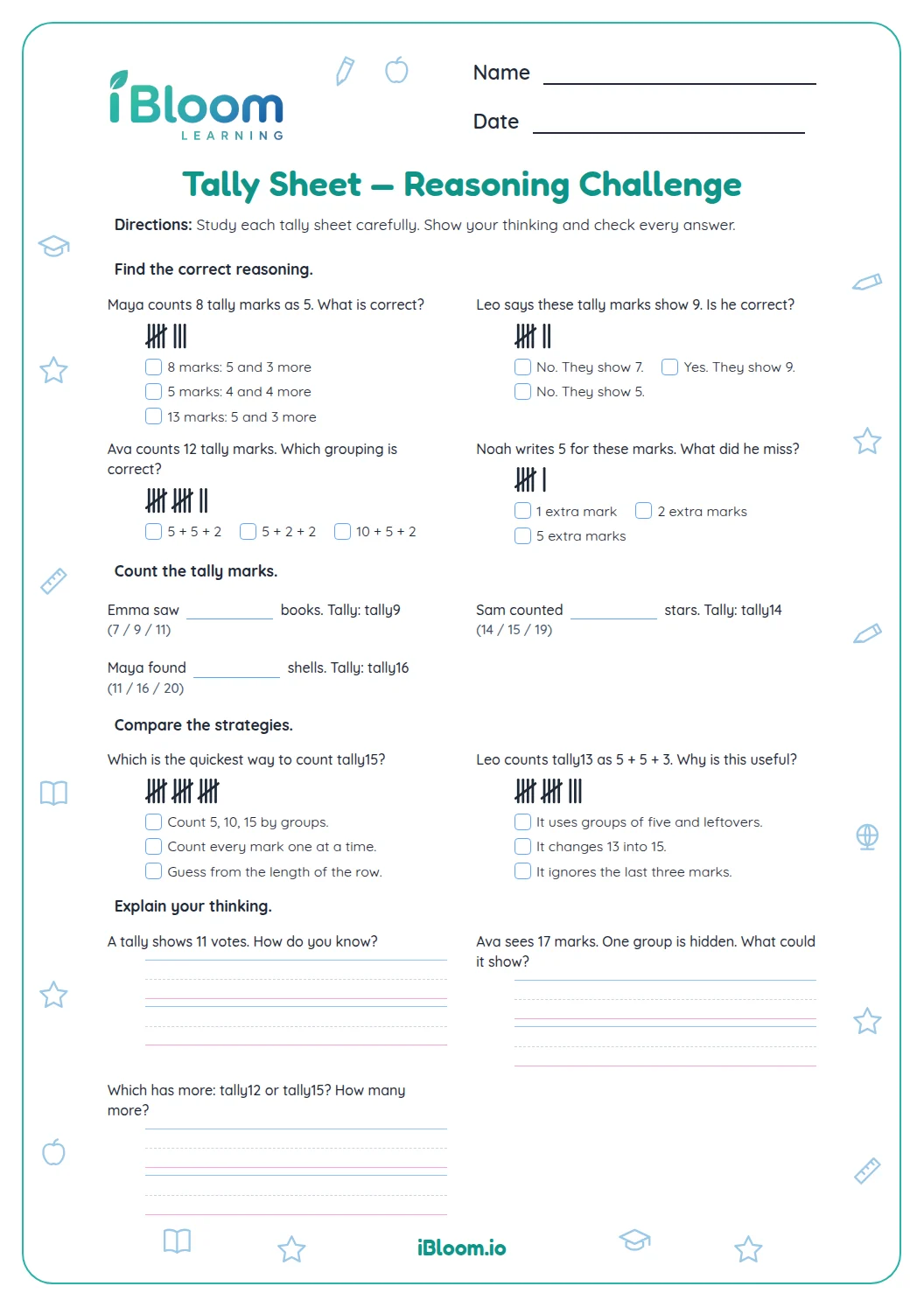
For question 4, six marks need four more to reach ten. Count on from six: 7, 8, 9, 10.
- 1One bundle = 5
- 2Three extra marks = 3
- 35 + 3 = 8 votes
How can tally totals answer comparison questions?
Read each total, then compare or combine them. If 11 students chose dogs and 8 chose cats, subtract 8 from 11 to find that 3 more chose dogs. For combined votes, add the two categories.
What will students practice?
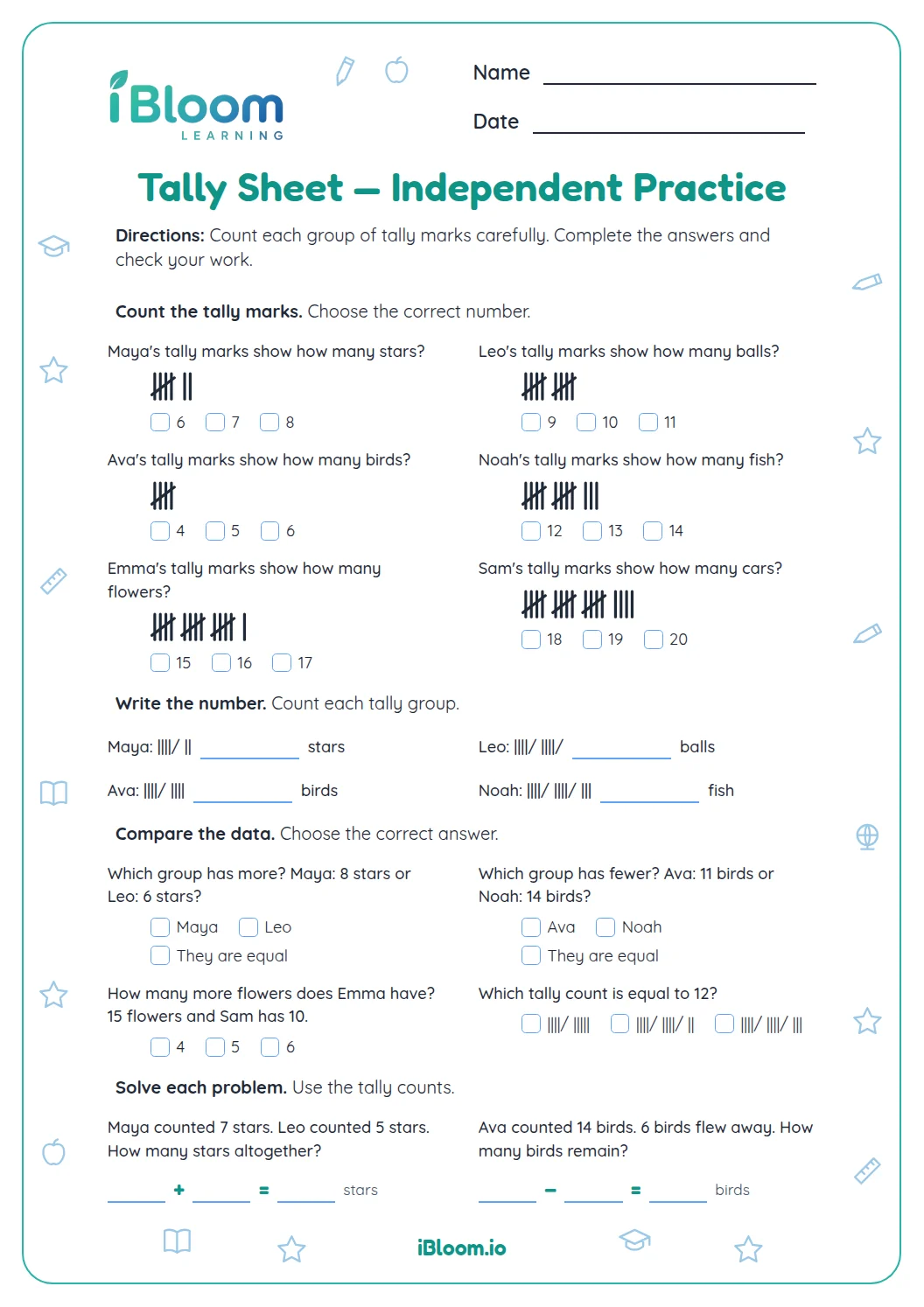
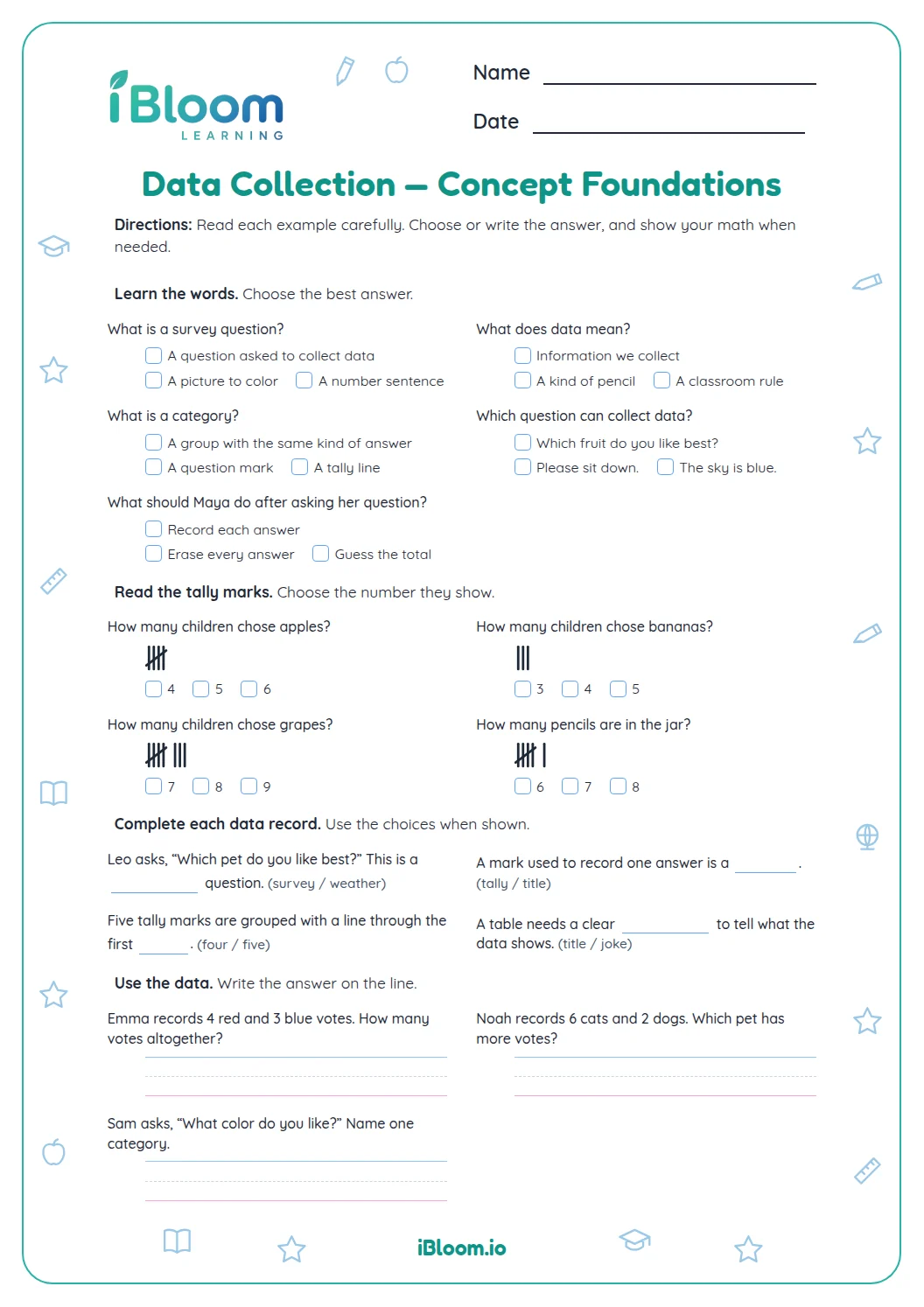
Sixteen questions ask students to count tally marks, complete a tally total, compare categories, combine votes, and choose a clear counting strategy. Tally drawings appear in the first two questions.
How to count and use tally data
- 1Look for each crossed bundle of five.
- 2Count full bundles by fives.
- 3Add the marks left outside the bundles.
- 4Compare totals by counting on or subtracting.
- 5For combined votes, add the category totals and explain your strategy.
Common tally-counting mistakes
The mistake
Counting the crossed bundle as four marks.
The fix
The crossing mark is the fifth tally, so count the whole bundle as five.
The mistake
Skipping extra marks after counting bundles.
The fix
Count the bundles by fives, then count each remaining stroke.
The mistake
Comparing categories before finding each total.
The fix
Write or say both totals first, then decide which is greater and by how much.
What to practice next
Make more practice
Questions parents and teachers ask
How do tally marks show a group of five?
The first four tally marks are straight strokes. The fifth crosses the first four, making one bundle. Count each complete bundle as five, then add any extra strokes. Several worksheet questions include tally drawings for students to count this way.
How many questions are on the tally worksheet?
There are 16 multiple-choice questions in two parts. Students read tally drawings, reason about totals, compare and combine data, and choose a strategy for counting. The answer key is separate. On each drawing, count complete bundles first, then add any extra marks.
How can my child compare two tally totals?
Count each category total first. Then find the difference by counting on from the smaller total or subtracting. For example, 11 votes compared with 8 votes means the first group has 3 more. Say both totals before deciding which category leads.
What if there are no tally marks drawn for a question?
Some questions describe a tally total in words and ask students to reason about it, such as finding how many marks make 10 or adding two categories. Children can sketch bundles of five on scrap paper if that helps them keep track. This also makes their strategy visible when they check.
What is the answer to the first tally drawing?
The drawing has five marks, which make one full tally bundle. Count the four upright strokes and the crossing stroke together as five. The answer key lists the totals and computations for all questions. Use the same bundle-first method on the next tally examples.