




About this worksheet
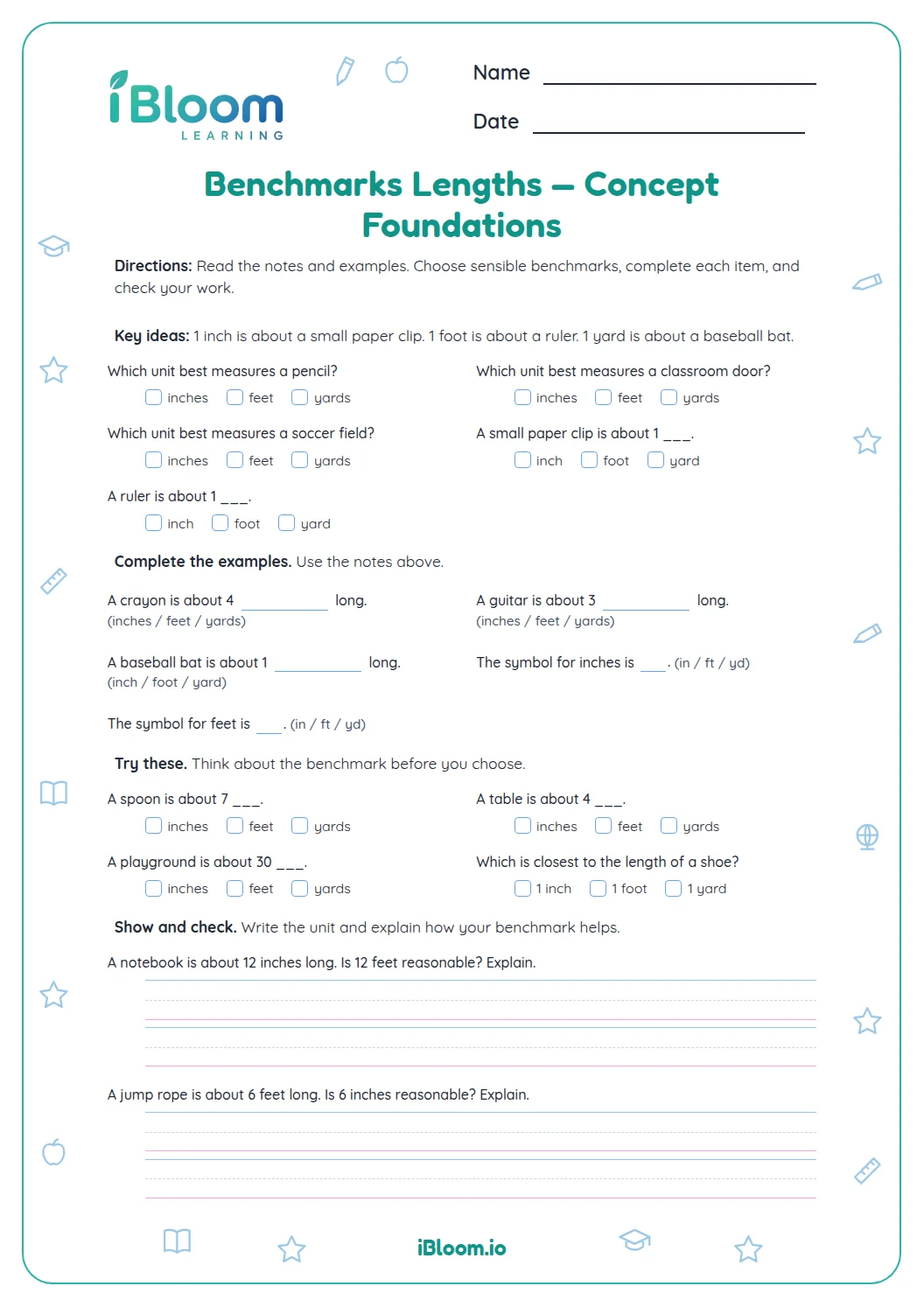
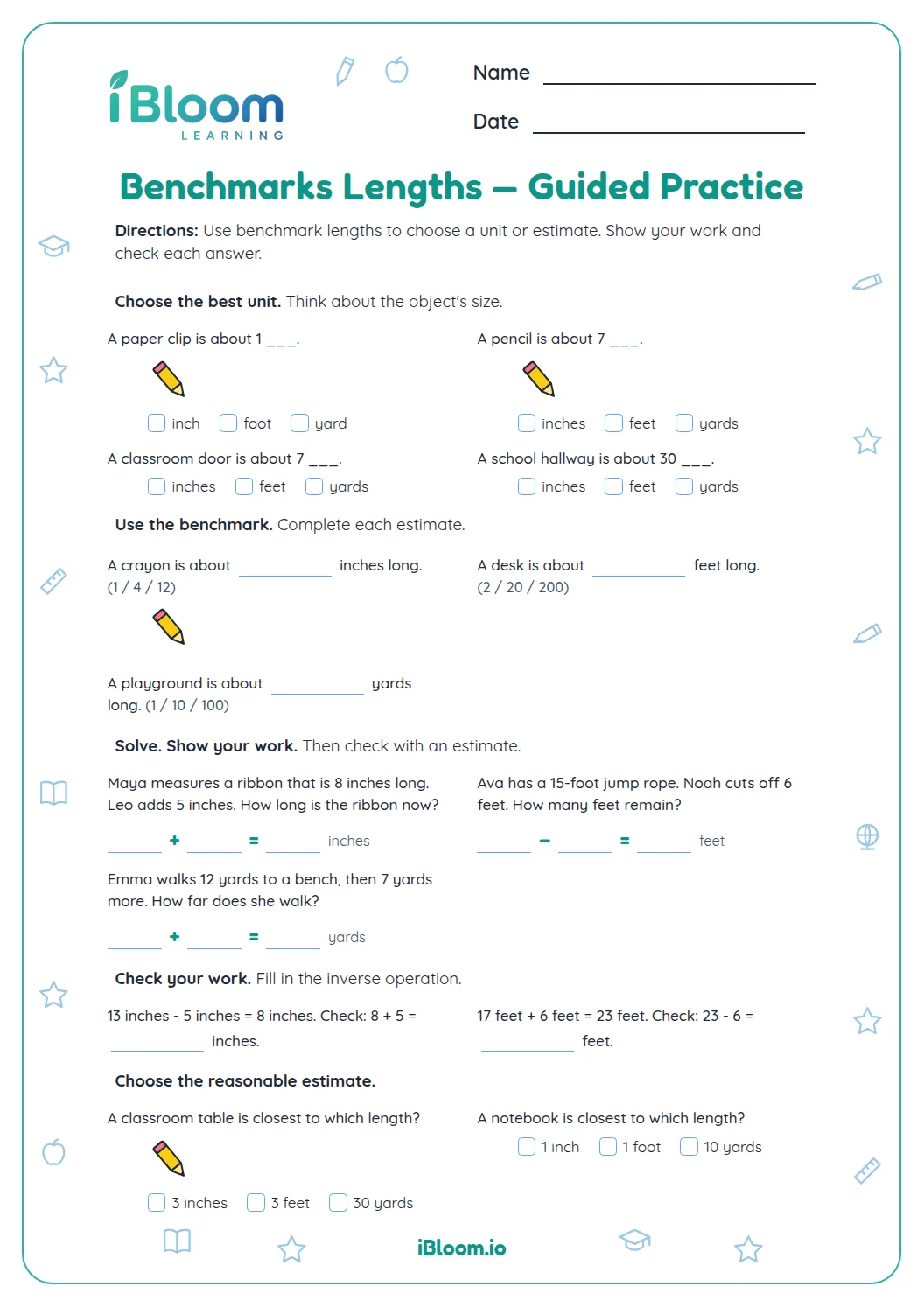
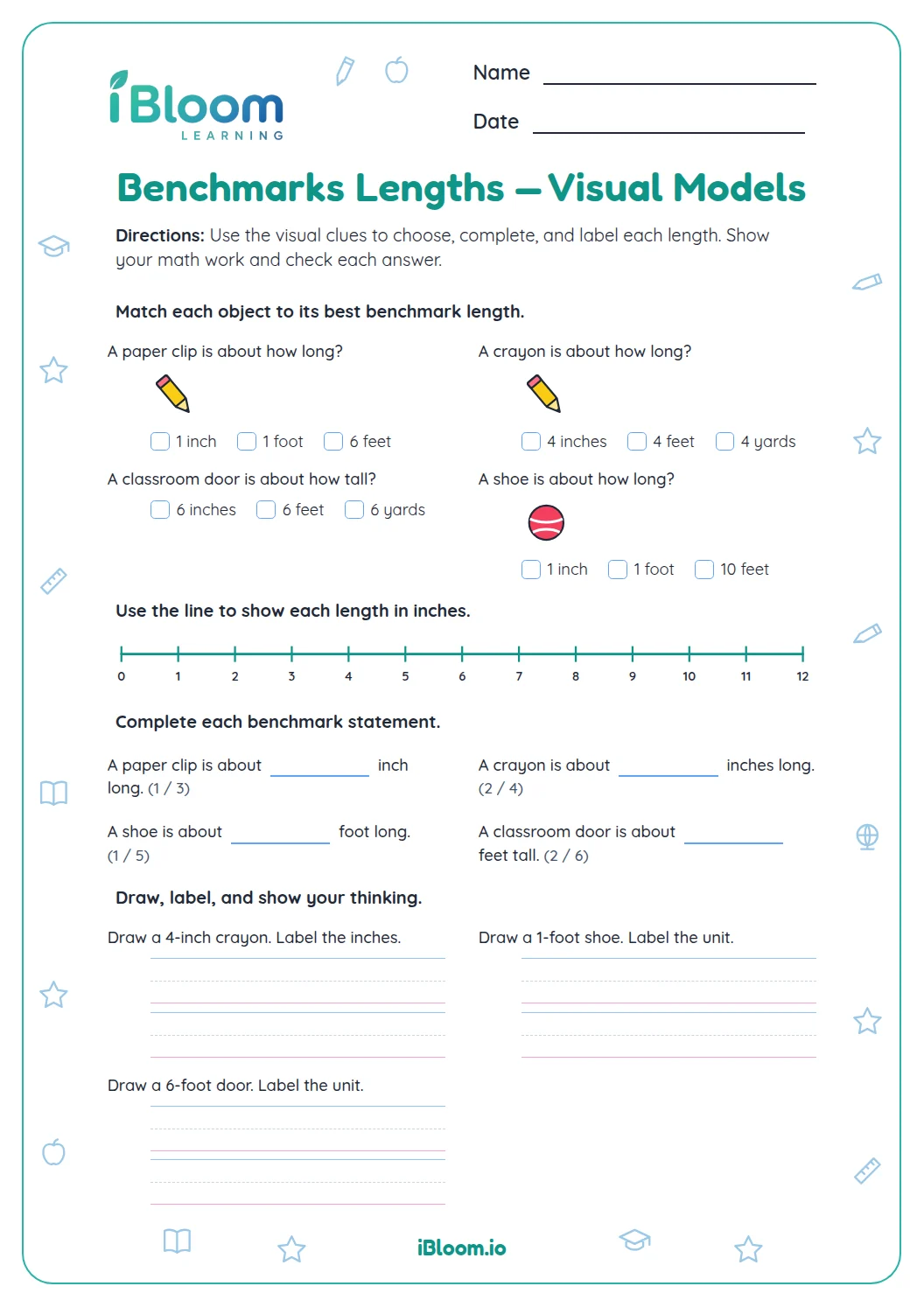
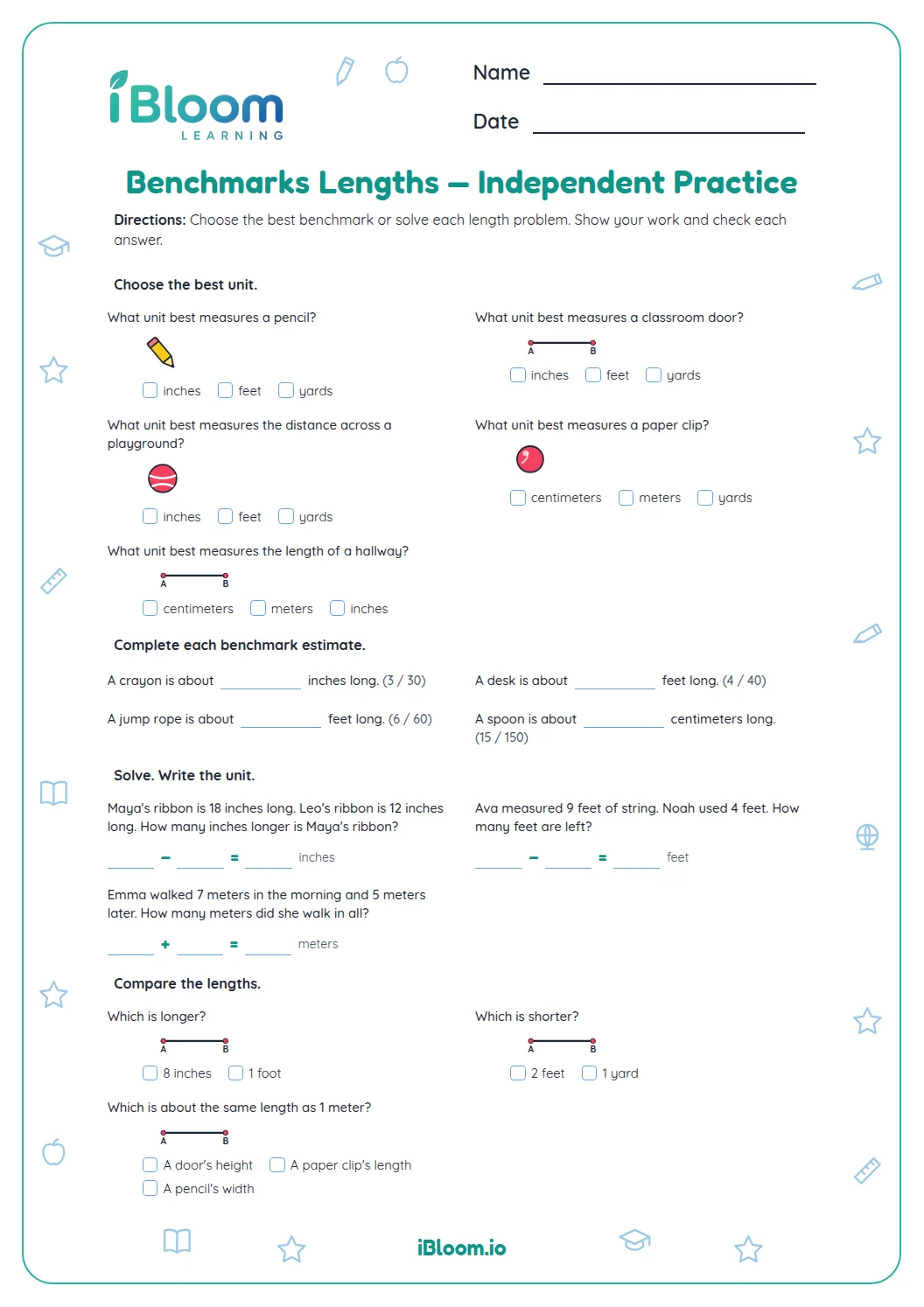
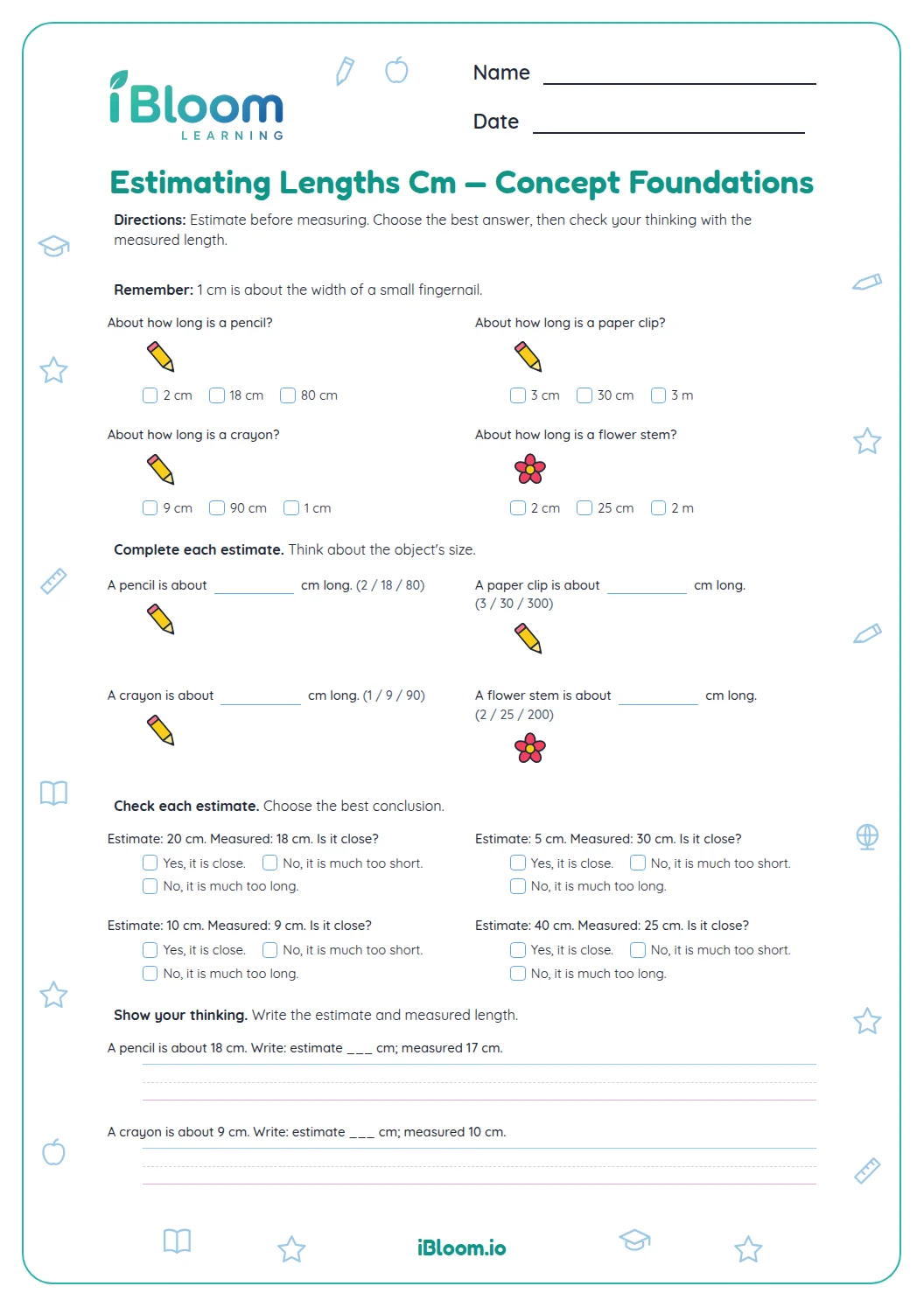
This Grade 2 worksheet practices estimating and comparing lengths with familiar benchmarks. Children read ruler and number-line models, judge reasonable lengths for everyday objects, and compare inches, feet, centimeters, and meters. The 16 questions include multiple-choice decisions, short responses, and two calculations. The sheet supports CCSS 2.MD.A.3 by measuring or estimating lengths using inches, feet, centimeters, and meters.
Aligned to 2.MD.A.3
What skill does this page practice?
This Grade 2 worksheet practices estimating and comparing lengths with familiar benchmarks. Children read ruler and number-line models, judge reasonable lengths for everyday objects, and compare inches, feet, centimeters, and meters. The 16 questions include multiple-choice decisions, short responses, and two calculations. The sheet supports CCSS 2.MD.A.3 by measuring or estimating lengths using inches, feet, centimeters, and meters.
How can a child estimate an object’s length?
Compare it with a familiar benchmark, such as a 6-inch pencil or a 1-foot ruler. This 16-question sheet includes marked models and everyday objects, with a separate answer key.
How can learners check their work?
Read the marked ruler carefully, then choose the closest estimate. Use familiar objects such as a crayon, foot, or classroom to judge whether a length is reasonable.
What is one useful example?
Compare the endpoint with the model: the pencil reaches 6 inches, so 6 is the closest estimate.
How to use this worksheet at home or in class
- 1Read the marked ruler carefully, then choose the closest estimate.
- 2Use familiar objects such as a crayon, foot, or classroom to judge whether a length is reasonable.
- 3For the final comparisons, subtract only when two exact lengths are given.
- 4Use the answer key to check each response after completing the page.
Common mistakes and quick fixes
The mistake
Choosing 12 inches for a 6-inch pencil because 12 is a familiar ruler number.
The fix
Compare the endpoint with the model: the pencil reaches 6 inches, so 6 is the closest estimate.
The mistake
Calling a classroom about 1 foot long.
The fix
A foot is about the length of a ruler. A classroom spans many rulers, so a length measured in feet is more reasonable.
The mistake
Rushing past the clue in the prompt.
The fix
Read the full item again and point to the detail that supports the answer.
Common Core alignment
Estimate lengths in inches, feet, centimeters, and meters.
On this sheet:
Show the official wordingHide the official wording
Estimate lengths using units of inches, feet, centimeters, and meters.
What to practice next
Further reading
Questions parents and teachers ask
What does this worksheet ask children to estimate?
Children estimate lengths in inches, feet, centimeters, and meters. Examples include a pencil, book, ribbon, classroom, spoon, and door. The ruler and number-line drawings provide visual benchmarks for judging reasonable estimates of familiar objects. Have the child name the unit and object clue before choosing an answer. The key accepts the intended estimate for each printed example.
Does the sheet practice exact measurement too?
It uses ruler and number-line drawings as visual anchors, then asks for reasonable estimates and comparisons. A few questions use stated lengths to find a difference or number of equal ruler lengths. The modeled lengths are visible in each picture.
How do I explain inches and feet?
A foot equals 12 inches, and a foot-long ruler makes a helpful benchmark. Compare the object with the ruler before choosing inches or feet. For example, a spoon is much closer to several inches than several feet. A 1-foot ruler is 12 inches long
What is the answer to the ribbon model?
Point A is at 7 on a number line marked in inches, so the ribbon is about 7 inches long. The endpoint provides the estimate, while the choices include shorter and longer alternatives for comparison. The number line begins at zero and advances by one inch per tick
What standard does this page support?
CCSS 2.MD.A.3 asks students to estimate lengths using inches, feet, centimeters, and meters. The worksheet uses those four units in familiar examples, such as a pencil, classroom, marker, and door height. The standard names four units. Children use familiar customary benchmarks for inches and feet, and metric benchmarks for centimeters and meters, throughout the worksheet.
Is an answer key included?
Yes. A separate printable answer key shows the expected choices and responses. Invite the child to try each question first, then compare answers and revisit the relevant benchmark when an estimate needs discussion. The answer key is arranged beside the worksheet pages for checking The answer lines and selected options are visible on the matching page.